SABCA S.47 / Caproni Ca.335

In October 1937, the Belgian aircraft manufacturer Société Anonyme Belge de Constructions Aéronautiques (SABCA) made a marketing agreement with the Italian company Caproni, with SABCA selling some of Caproni’s military aircraft in certain markets, including the Caproni Ca.135, Ca.310 and the Ca.312, which were to be designated SABCA S.45bis, S.46 and S.48 respectively.

As part of this agreement, Caproni were to develop a replacement for the Belgium Air Force’s Fairey Fox biplanes, which were used as two-seat fighters and reconnaissance aircraft, but were obsolete.

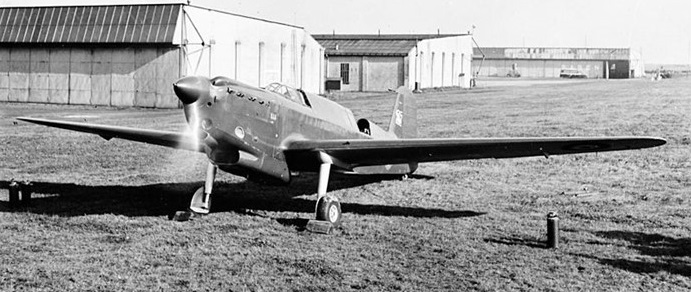
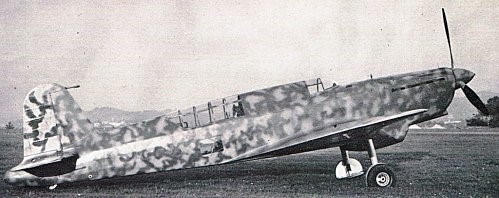
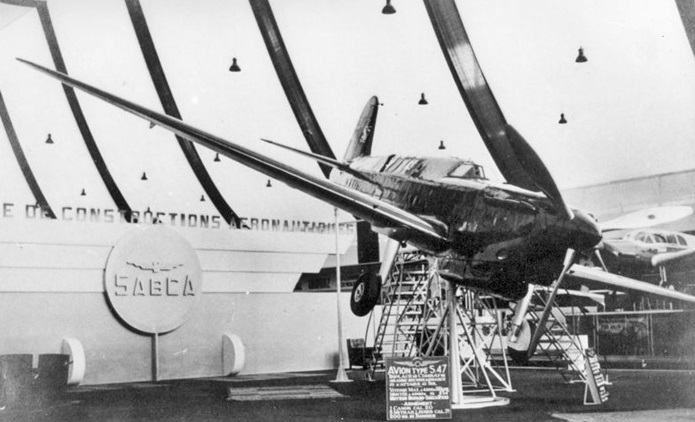
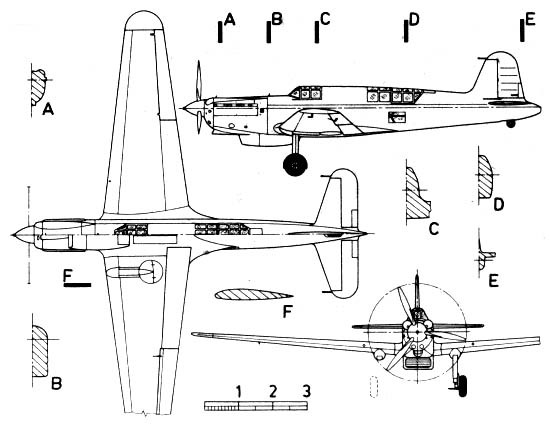
The task of designing the new type for SABCA, the Caproni Ca 335 Maestrale (Mistral), was given to Chief Engineer Cesare Pallavicino, who based the design on his earlier A.P.1 attack aircraft. It was a low-winged cantilever monoplane of mixed construction, with a metal skinned steel-tube fuselage and wood and fabric wings, powered by a single Hispano-Suiza 12Ycrs V12 engine. It had a hydraulically actuated retractable tailwheel undercarriage, with the mainwheels retracting backwards into the wing. The whole back edge of the wing was covered with flaps. The pilot and observer were provided with individual, widely separated cockpits, with the observer having defensive armament of a single machine gun, and the pilot firing a Hispano-Suiza HS.404 moteur-canon firing through the propeller hub and two wing mounted machine guns, a small bomb bay housing two 50 kg (110 lb) bombs, while a further ten 50 kg (22 lb) bombs could be carried under the wings. The observer/rear gunner could also perform as auxiliary pilot, having a set of controls of his own.
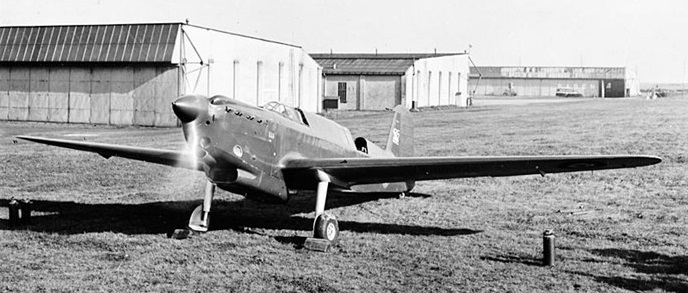
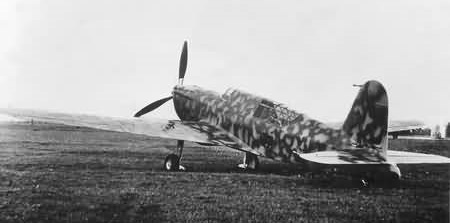
The Ca 335 prototype was built at Caproni’s Ponte San Pietro factory, making its maiden flight there on 16 February 1939, with test pilot Ettore Wengi at the controls. It was then dismantled and sent to SABCA’s factory at Brussels by train. The next month, it was on display at the Salon International at Brussels. After reassembly, it flew again on 19 September 1939 under the civil registration OO-ATH and painted with Belgian military roundels from September 19th on, with SABCA´s chief test pilot Paul Burniat at the controls. With a speed of 501 (other source says even 515) km/h and a ceiling of 10.500 m, the aircraft showed very fine performances. Initial testing was successful, resulting in SABCA purchasing a license for manufacture of the Ca 335, and demonstrating it, now designated SABCA S.47, to officials of the Belgian Ministry of Defence on January 13th and representatives of a number of other nations. While the Belgian Air Force were impressed by the S.47, and had a requirement for 24 of them, SABCA’s factory was busy with orders for 41 Breguet 693s for the Belgian Air Force and for France, and 10 Koolhoven F.K.58s for France, delaying a formal order being placed.
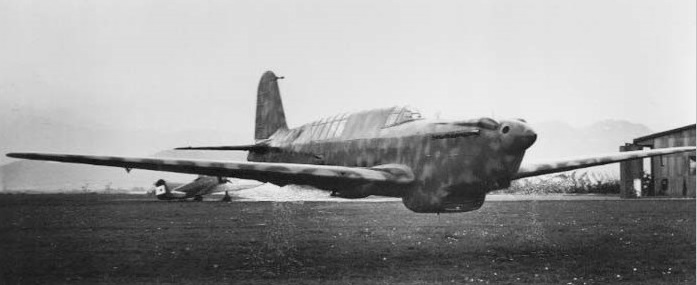
SABCA had purchased the manufacturing licence on November 30th, 1939. On January 1940 the Sabca S.40 was officially presented at Evere airfield to the Belgian authorities as well as to representatives of several foreign countries. On March 14th, 1940, the S.47 was flown together with the SABCA S.40 training aircraft to Orleans-Bricy (French test center), to be presented to officers of the French Armée de l’Air. There, because of bad weather conditions, the aircraft is slightly damaged in a landing accident, when it collided with a truck.

It had not been repaired when the Germans invaded France and the Low Countries, stopping SABCA’s production plans. The prototype S.47 was captured by the advancing German forces on 13 June 1940. Attempts by Caproni to reclaim the S.47 were unsuccessful, it remaining in France until 1943, eventually being scrapped.
Gallery

S.47
Engine: 1 × Hispano-Suiza 12Ycrs, 640 kW (860 hp) (take-off power)
Propeller: 3-bladed bladed constant speed
Length: 10.6109 m (34 ft 9.75 in)
Wingspan: 13.2017 m (43 ft 3.75 in)
Height: 3.20 m (10 ft 6 in)
Wing area: 23.80 m2 (256.2 sq ft)
Empty weight: 2,250 kg (4,960 lb)
Gross weight: 3,240 kg (7,143 lb) (reconnaissance mission)
Max takeoff weight: 3,350 kg (7,385 lb)
Maximum speed: 501 km/h; 270 kn (311 mph) at 4,200 m (13,780 ft)
Range: 1,576 km; 851 nmi (979 mi) at 4,000 m (13,120 ft) (reconnaissance mission)
Endurance: 4 hr 30 s
Service ceiling: 9,501 m (31,170 ft)
Crew: two
Time to 2,000 m (6,650 ft): 3 min 30 sec
Time to 6,000 m (19,685 ft): 15 min 20 s
Guns:
1× 20 mm Hispano-Suiza HS.404 through propeller hub and two 7.62 mm FN Browning wing mg
1× FN Browning machine gun in rear cockpit
Bombs: 200 kg (440 lb) under wings and fuselage
SABCA S.40

S.40E

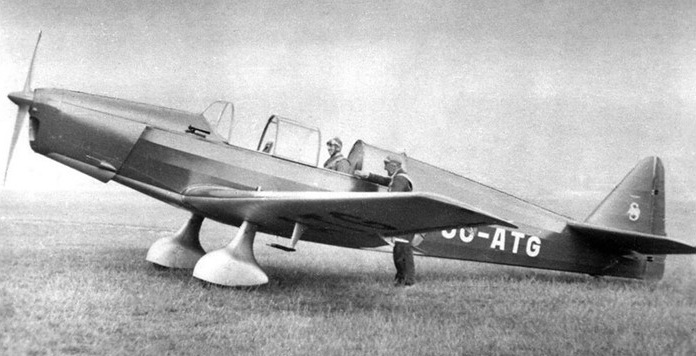
The SABCA S.40E (E for Ecolage and training) was a military trainer aircraft launch in 1937, and built in Belgium. First flown in 1939, it was a low-wing cantilever monoplane of conventional design with fixed, tailwheel undercarriage. Construction is welded carbon steel, wood. (spruce, Limba and plywood birch), coated in plywood and canvas coated with nitrocellulose. The pilot and instructor sat in tandem cockpits, enclosed by sliding canopies. A single engine driving a two-blade propeller was mounted in the nose. The main undercarriage units were fully independent, mounted under the wings, and enclosed in spats. The landing gear is fitted with long-stroke shock absorbers and wheels hydropneumatic brakes.

The fuel and oil systems and feeding Renault Benagali Pei 4 engine allow the execution of all common acrobatics, normal or inverted flight.

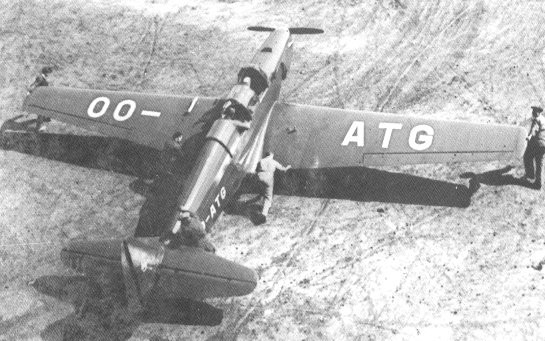
The prototype is registered OO-ATG February 24, 1939 and performs its tests in the hands of Charles Wouters, chief pilot of the company. SABCA, presents it to the Aerospace Military, in April 1939, in Evere, together with Tipsy “M” OO-POM and SV4 OO-ATD. Although a biplane design, the SV4 will go into production as a military trainer.

SABCA presented the S 40 before representatives of the French Air Force on March 14, 1940, at Bricy Orleans, with an S 47. The latter, which damaged on the ground, delayed the return of the two aircraft to Belgium. This incident, however, facilitated its evacuation to Toulouse during the German invasion in May 1940.

SABCA lost all trace of 40E and notified the registration authority by letter on 27 June 1946.

Engine: 1 × Renault 4Pei, 104 kW (140 hp)
Wingspan: 10.20 m (33 ft 6 in)
Wing area: 21 m²
Length: 7.14 m (23 ft 5 in)
Height: 2.40 m (7 ft 11 in)
Empty weight: 780 kg (1,720 lb)
Gross weight: 1,240 kg (2,730 lb)
Maximum speed: 360 km/h (230 mph)
Cruising speed: 226 km / h
Crew: two, pilot and instructor

SABCA S.30

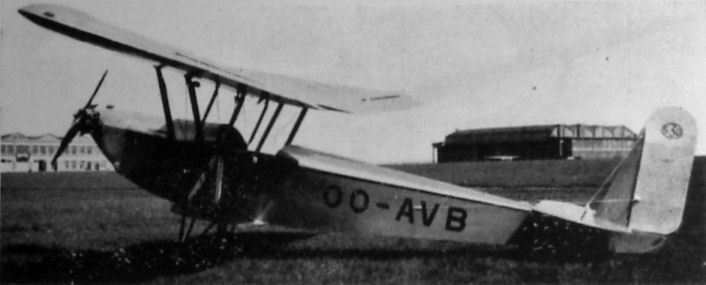
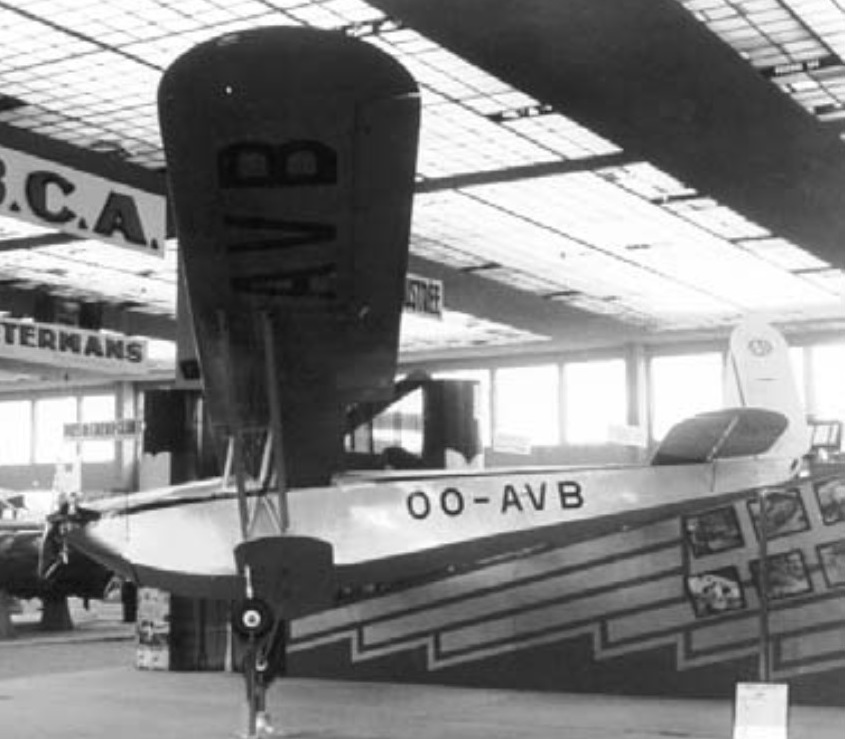
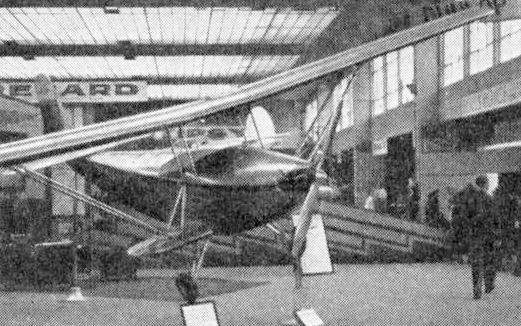
In 1937, SABCA once again tried to enter the light tourism and sport aviation market. The design of the S 30 was to be entirely Belgian.

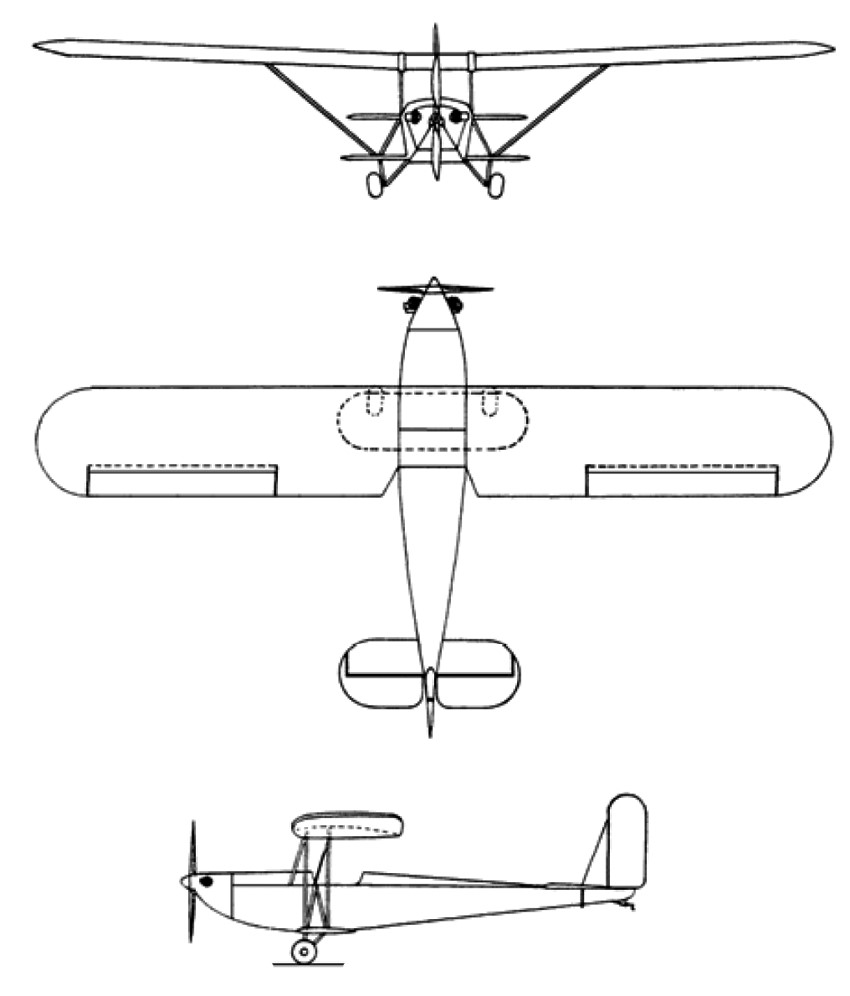
Entrusted the study to Robert Servais, the company’s chief engineer, he chose a small side-by-side two-seater parasol monoplane of mixed construction predominantly in wood. The motor support and the mast are in steel tubes and duralumin.

SABCA chose the new 40 hp Sarolea Aiglon engine. Unfortunately, it is not yet complete. After several unsuccessful tests carried out in 1937, it was abandoned in favour of a Czech engine: the Praga B.2.

It made its first public appearance at the first Brussels International Air Show (1937) where it stood out for its “flawless” finish.

On February 5, 1938 the S 30 made its first flight in the hands of Charles Wouters, chief test pilot at SABCA.

The ownership of the S 30 is initially joint between the SABCA and Mr. Albert Hellemans, director of the review “The Belgian aviation”. They registered it OO-AVB on February 5, 1938, but very quickly, on March 29, 1938, the SABCA notified the Aviation Administration that it was registered exclusively under its name.

Its selling price, at the first Brussels air show, was announced at 48,000 BF.

The troubled period of 1938-1939 then the war destroyed all hope of mass production.

The registration was cancelled by SABCA on February 26, 1946.

SABCA S.30
Engine: Praga B2, 40 hp
Wingspan: 10.90 m
Wing area: 15.50 sq.m
Length: 7.60 m
Height: 2.76 m
MTOW: 450 kg
Maximum speed: 115 km / h
Cruising speed: 95 km / h
Endurance: 3 hr 30 min
Seats: 2

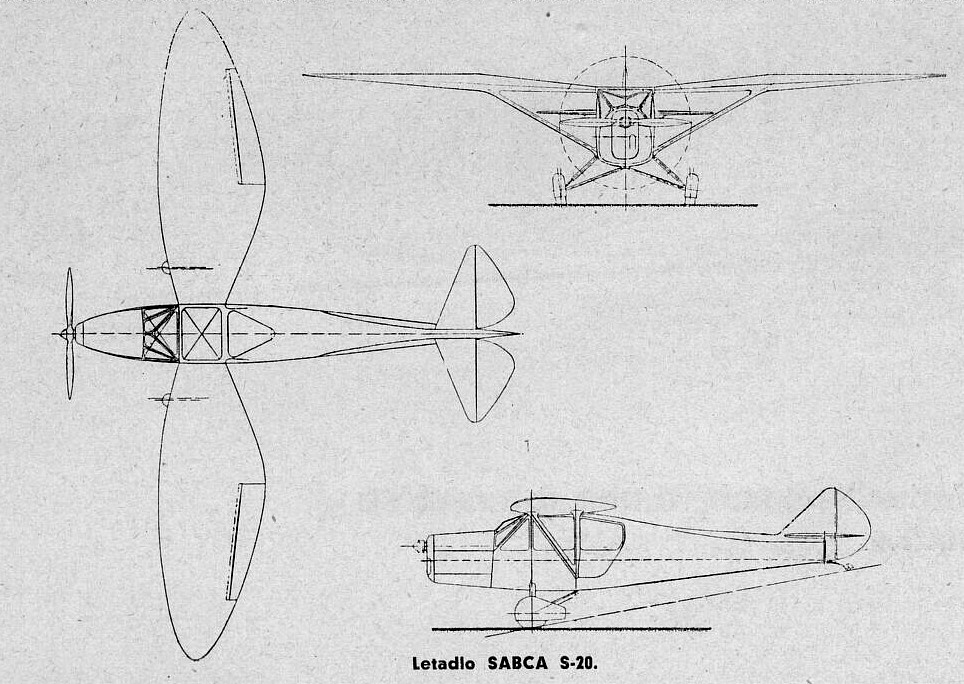
SABCA S.20

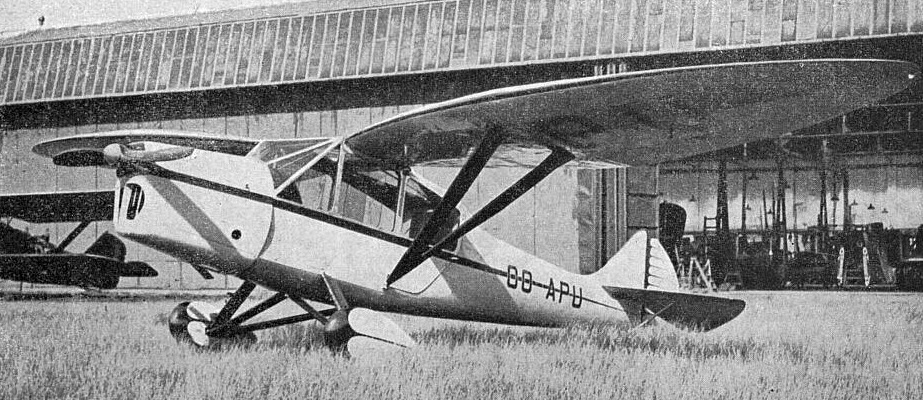
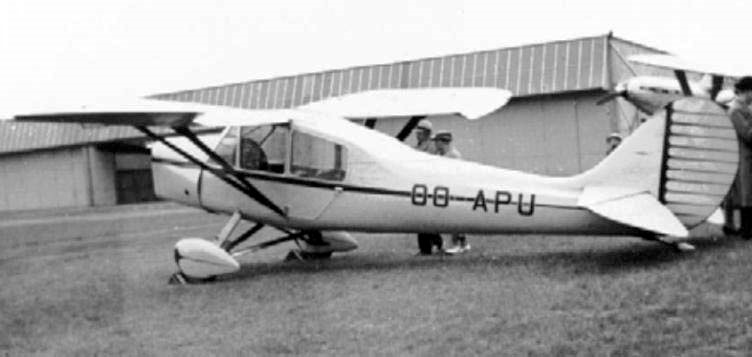
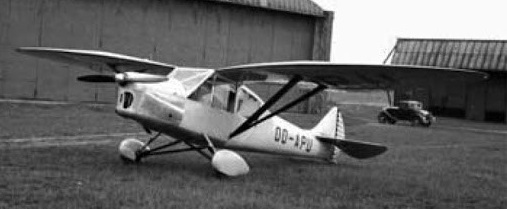
In 1935, the Belgian company SABCA (“Societe Anonyme Beige de Constructions Aeronautiques”) designed and built the light multipurpose aircraft SABCA S.20.

It was a three-seater S.20 high-wing bracing cockpit with a 120 hp Walter Major liquid-cooled engine.

The first copy of the aircraft received its registration number OO-APU on August 26, 1935. The serial production of the aircraft did not take place due to the lack of orders. And the only one built S.20 was lost during the Second World War.

Engine: Walter Major, 120 h.p.
Wingspan: 11. 00 m
Wing area: 14.00 sq.m
Length: 7.80 m
MTOW: 900 kg
Maximum speed: 225 km / h
Cruise: 200 km / h
Range: 600 km
Seats: 3

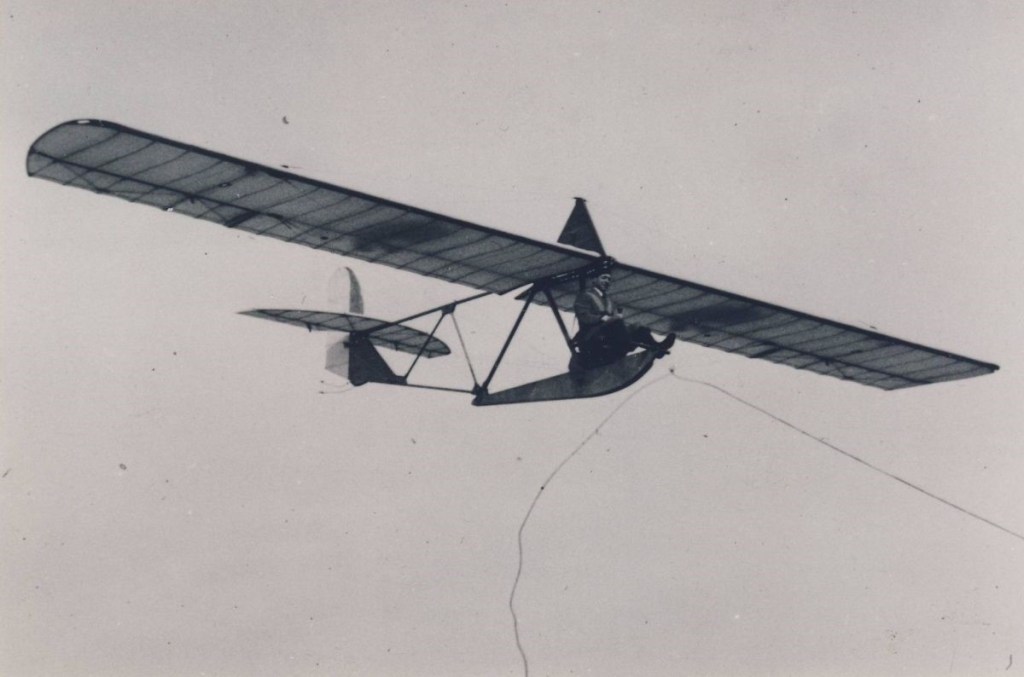
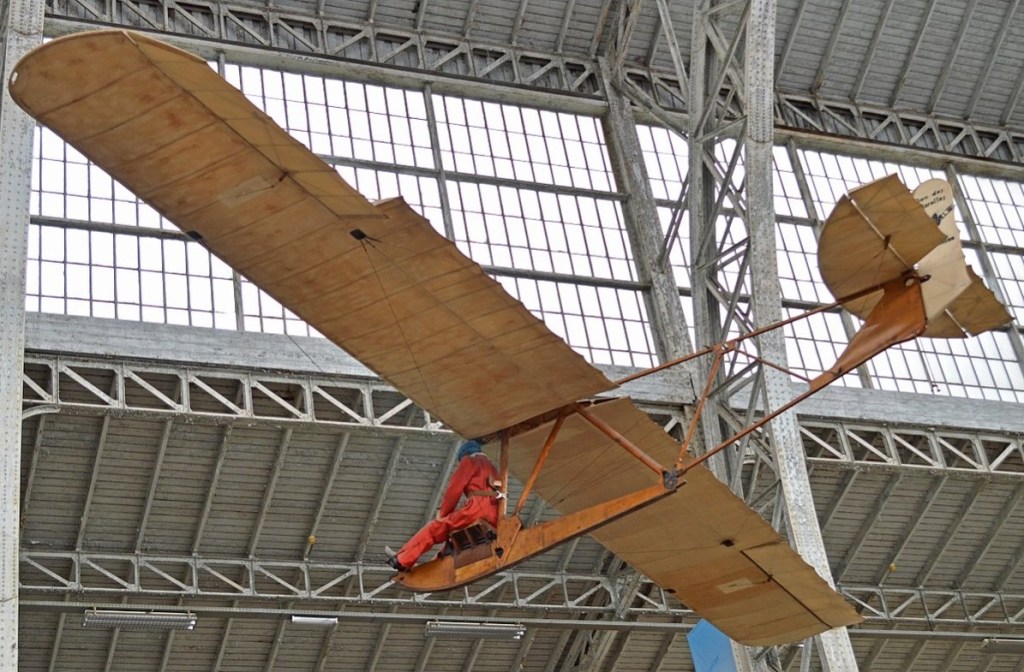
SABCA S.13 Junior

The SABCA S.13 Junior was a single seat high-wing basic training ultra-light glider of 1930.

At the start of the 1930s, SABCA wanted to relaunch the construction of gliders and designed this initiation glider to obtain A and B certificates for young pilots.

First flying in 1930, the glider was directly inspired by the German Zögling, the most visible difference being the stabilizer in the shape of a half-disc.

This glider will have a short career, especially since it was banned from flight for about a year, following a fatal accident.

SABCA S.2

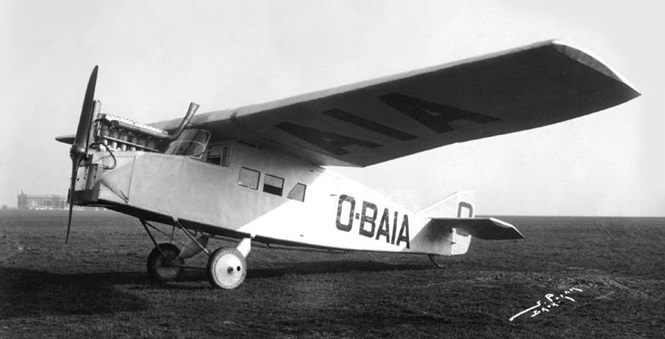
The SABCA S.2 was an airliner built in Belgium in 1926. It was a conventional, high-wing cantilever monoplane with fixed, tailskid undercarriage. The flight deck was open, but the passenger cabin was fully enclosed. Power was provided by a single 240 hp Siddeley Puma engine in the nose, driving a two-blade propeller, and whose exhaust was collected in a single stack that extended up over the wing. Metal was construction throughout, with corrugated skin. Only a single example was built, which served with SABENA.

SABCA / Societe Anonyme Belge de Constructions Aeronautiques

Belgium
Formed December 1920, SABCA had a close SABENA association and that airline used SABCA’s only S.2 single-engined monoplane transport. Built Handley Page 3-engined airliners for SABENA Belgian Congo service; also other private-owner prototypes.

At the end of 1920 the Société Anonyme Belge de Constructions Aéronautiques (SABCA) was created to ensure the construction, testing and overhaul of aeronautical equipment for the development of civil aviation and air transport (SABENA will be founded three years later). It will begin with the overhaul and overhaul of Belgian Military Aeronautics aircraft, before starting, in 1922, to build foreign aircraft under license.
The first designs and new realizations will be due to members of the staff of SABCA, encouraged and supported by the company. Among others, the moto-aviette Jullien SJ-1 (in 1923), of Henri JULLIEN, engineer director of the design office of the SABCA, and the “Limousine” Demonty-Poncelet of Mathieu DEMONTY (technical director) and Paul PONCELET (head of the wood section) (in 1924).

On his own, but with the support of SABCA, Paul PONCELET designed and built the “Castar” in 1922-1923, then in 1923 the “Vivette”.

SABCA’s first project was a small aeroplane called the Sabca J1, which was powered by the engine of a FN motorcycle. The company also constructed “Sabca” 1500 with a 200 HP engine and some gliders. It later assembled the Handley-Page, Fokker F VII, and the Savoia-Marchetti used by Sabena. Held Breguet and Avia licences, and from 1927 directed attention to metal construction. Outcome was S-XI 20- passenger monoplane with three 500 hp engines, as well as similar S-XII 4-passenger monoplane with three 120 hp engines. Built under license Renard R.31 reconnaissance monoplane and Savoia-Marchetti S.73 transport.

In October 1937, the Belgian aircraft manufacturer Société Anonyme Belge de Constructions Aéronautiques (SABCA) made a marketing agreement with the Italian company Caproni, with SABCA selling some of Caproni’s military aircraft in certain markets, including the Caproni Ca.135, Ca.310 and the Ca.312, which were to be designated SABCA S.45bis, S.46 and S.48 respectively. As part of this agreement, Caproni were to develop a replacement for the Belgium Air Force’s Fairey Fox biplanes, which were used as two-seat fighters and reconnaissance aircraft, but were obsolete.

Built S.47 2-seat low-wing monoplane fighter of 1937 in collaboration with Caproni. Company revived in 1950s. In 1960s assembled, maintained, and repaired Republic F-84; also collaborated with Avions Fairey on Hawker Hunter and made Vautour components for Sud- Aviation. Much work of various kinds on Lockheed Starfighter, Dassault Mirage, and Breguet Atlantic; also missile and space activities. Dassault Aviation took 53 percent shareholding, while in 1998 Fokker’s shareholding was then reportedly being sold. Recent work has included weapon system integration, development of the cockpit front panel, final assembly, and flight testing of Belgian ArmyA-109 helicopters; update of F-5s; production and upgrading of F-16s; upgrade of Mirage 5s and F1s; production of servo actuators; and construction of subassemblies for Dassault, Boeing, Airbus, and Fokker aircraft.