Rockford
IL.
USA
Circa 1937 built the SW-1 / SW-2 airplane
Rockford
IL.
USA
Circa 1937 built the SW-1 / SW-2 airplane
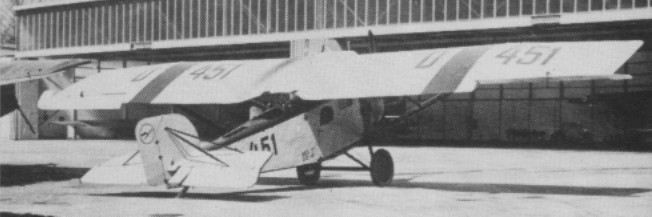
A post-war six-passenger airliner.
Nine or ten were acquired by Deutsche Luft Hansa when it began operations in 1926.
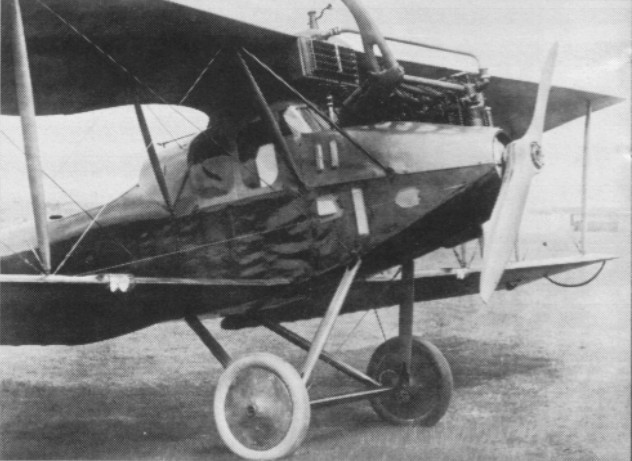
A post-war four passenger airliner evolved from the N.I. The pilot sat in the open, but the passengers had an enclosed, heated and lighted cabin.
Sablatnig Flugzeugbau GmbH
Austrian Josef Sablatnig experimented and flew before First World War. Moved to Germany and in 1913 became a director of Union Flugzeugwerke GmbH, where he did technical work and flying. When Union company went into liquidation (1915) he founded Sablatnig Flugzeugbau GmbH in Berlin, famous for seaplanes used by German Navy but built other types also. SF1 floatplane (1915) developed into very successful SF2 (license-built by LFG and LVG); SF4 was single-seat fighter floatplane, built both as biplane and triplane; SF5 was widely used SF2 replacement; SF8 was last Sablatnig floatplane built in numbers (trainer of 1918). Landplanes included trainers, single engined night bombers, and a monoplane. N1 was two-seat land fighter used at Kiel. After war developed civil types, including P1 four-passenger biplane and P3 six passenger high-wing monoplane. One light sports type built, but aircraft work ceased 1921.
In 1932 Joseph Sabath built a craft with two paddle-wheels of helices and a motorcycle engine, reportedly he got this contraption going almost 150mph.
Philadelphia
USA
Circa 1920s built the Helic-plane
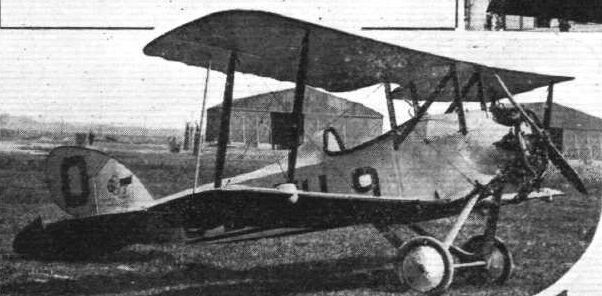
The SABCA Camgul CG2 was a one-of-a-kind single seat biplane light aircraft of 1925, powered by one 60 hp Anzani engine.
It appeared in the French light ‘plane competition at Orly in 1925, piloted by Van Opstal.
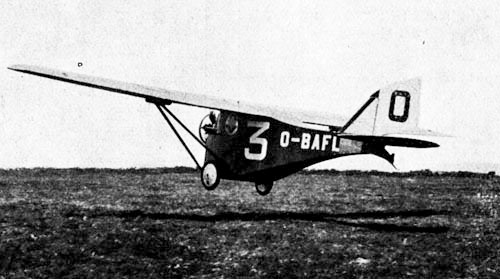
The SABCA Demonty-Poncelet monoplane, Demonty-Poncelet limousine or SABCA-DP was a Belgian light aircraft. The limousine, not an official name but that used by contemporaries who described it as a limousine de tourisme, was designed and built by Mathieu Demonty and Paul Poncelet of the Société Anonyme Belge de Constructions Aéronautiques. Demonty did the overall design and calculations and Poncelet the detailed design and all the construction.
It was an all-wood aircraft with a high, two-part, braced wing. The leading edge of each half-wing was straight and unswept over the inner half of the span where the chord increased outwards from the root, but the outer section was straight-tapered to squared tips. Each was built around two spars, with the leading edge plywood-covered to form a box girder with the forward spar. Aft, the wing was fabric covered. The outer wing sections carried ailerons, hinged obliquely so their chord increased strongly outwards. The wings were attached to the top of the fuselage and braced to the lower fuselage with streamlined, inverted V-struts to the spars 2.0 m (6 ft 7 in) from the fuselage sides. Folding the wings around a joint at the forward spar root for transport or storage reduced the width to 2.39 m (7 ft 10 in) and took less than five minutes.
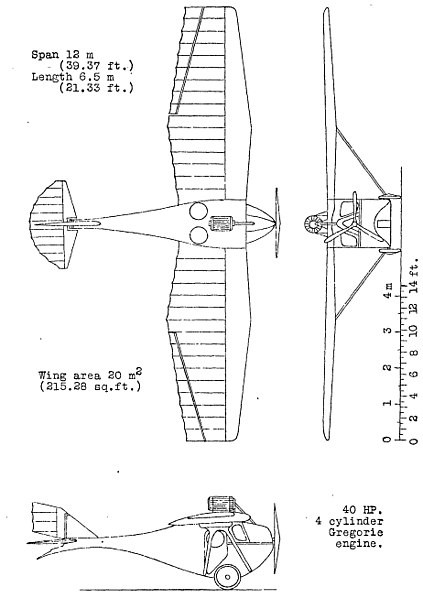
The limousine was originally powered by a 32 kW (43 hp) four-cylinder, inverted, water-cooled engine, produced in 1913 by Grégoire, which drove a three-bladed propeller; both the propeller and the inverted engine were unusual at the time, though Grégoire had used this engine arrangement in his 1910 monoplane. The engine was cooled with a cylindrical Lamblin radiator mounted above the central wing, where the fuel tank was located. Behind the engine, its upper parts under a narrow cowling, the mahogany plywood-covered, elm-framed fuselage was rectangular in section but tadpole-shaped in profile, deep below the wing but slender aft. It also slimmed aft in plan, though not so strongly. Its enclosed, spacious cabin, which seated pilot and passenger side-by-side, was below the wing with Cellon windows angled to the line of flight on each side of the cowling, aided by side and roof windows. It also provided a space for baggage and for tools. There was a port side door for access.
The limousine had a conventionally laid out empennage. It had no fixed tailplane but its balanced elevator, with a slightly swept leading edge and almost semi-circular, fabric-covered rear, was hinged at the extreme tail. The fin, built integral to the fuselage, was triangular and the fabric-covered rudder was rhomboidal, leaving a space below for elevator movement.
Its landing gear was conventional, with its mainwheels on steel half-axles centrally hinged within the fuselage at its deepest part and with rubber shock absorbers on the fuselage underside, giving a track of 1.55 m (5 ft 1 in). A sprung tailskid was mounted on an extension of the rear fuselage.
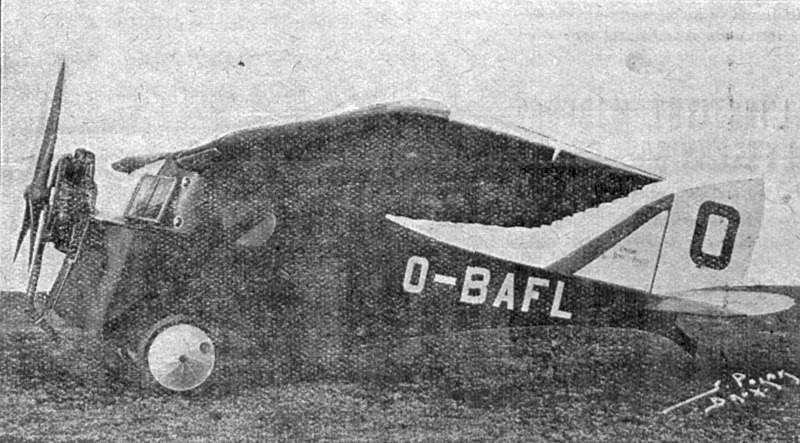
The date of the limousine’s first flight is not known but it was active by mid-June 1924, when it stood out at a Belgian event for touring aircraft. Piloted by V. Simonet, it gained second place overall. At the beginning of July it was one of thirteen small aircraft entered for the Tour de France des avionettes. Piloted by van Opstal, it was forced to withdraw on the Belgian leg when part of the cowling came away and destroyed the propeller.
By the summer of 1925 the limousine had been re-engined with a 37 kW (50 hp) Anzani six-cylinder air-cooled radial engine. It flew with this at the Vauville meeting for gliders and small aircraft and won first place overall in the latter category. It remained active at meetings until at least 1928, when it was a contestant at Reims.
The name Cyrano, sometimes added to the makers name, was specific to the first aircraft, registered O-BAFL, which remained on the Belgian register until 1930. There may have been a second example; O-BAFV appeared in the register in 1926 as a SABCA Demonty-Poncelet 1 but, in the absence of photographs or definite contemporary comments on a second limousine, its type remains uncertain. Its registration was cancelled in 1933.
Though it had competition successes in 1924 and 1925, it did not go into production.
Powerplant: 1 × Grégoire 4-cyl, 32 kW (43 hp) at 1,240 rpm
Propeller: 3-bladed wooden
Wingspan: 12.0 m (39 ft 4 in)
Wing area: 18 sq.m (190 sq ft)
Length h: 6.50 m (21 ft 4 in)
Height: 2.55 m (8 ft 4 in)
Empty weight: 330 kg (728 lb) without fuel
Gross weight: 520 kg (1,146 lb)
Fuel capacity: 40 kg (88 lb)
Maximum speed: 125 km/h (78 mph, 67 kn)
Landing speed: 50 km/h (31 mph; 27 kn)
Crew: One
Capacity: one passenger
SABCA constructed SABCA 1500 with 200 HP engines.
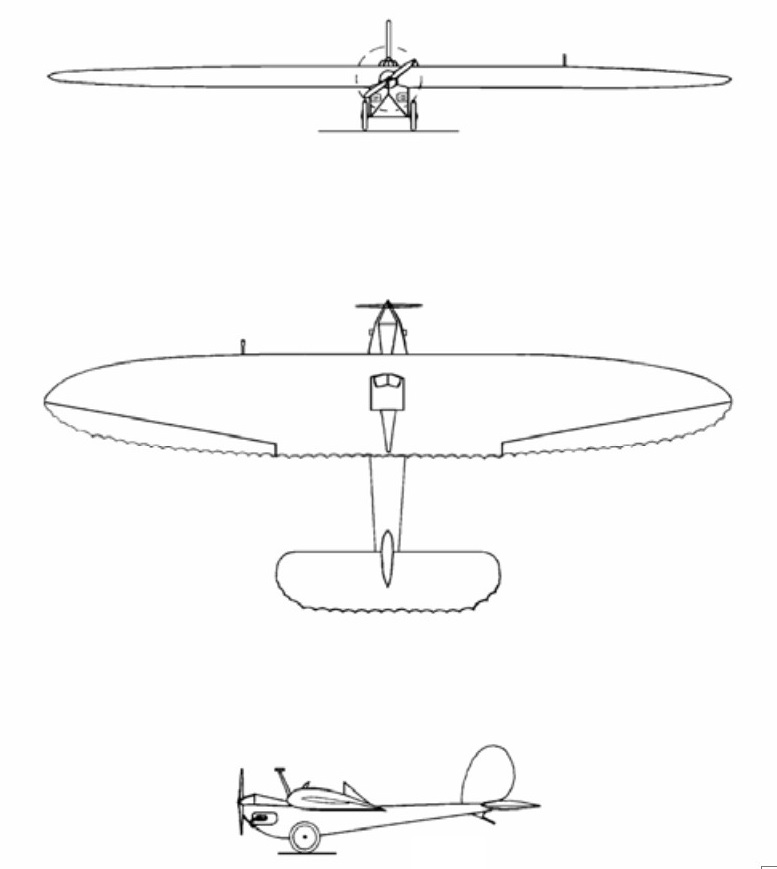
The first aircraft of SABCA, the Sabca – Jullien SJ 1 is a thick wing monoplane, designed and calculated for an 8 to 18 HP 1500 cc engine by Henri Jullien, chief engineer of the design office.
Construction began on May 10, 1923, and three months later it made its first flight piloted by Charles Wouters, SABCA test pilot. It made a 58-minute flight at an altitude of 500 to 600 m.
A small 494 cc “Douglas” engine was fitted for its development period. The propeller required a chain reduction gear which absorbed 15 to 20% of its already low power of 5 CV.
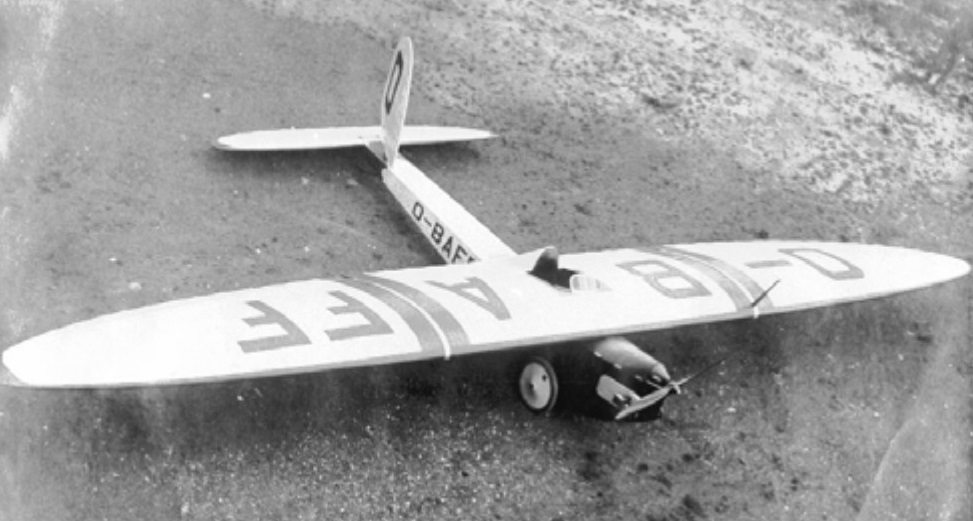
SABCA registered it O-BAFF (certificate n°83) on July 26, 1923 as a tourist and sport aircraft, under the name “SABCA-Jullien”.
The performance was insufficient. At the beginning of September, SABCA assembled a Salmson three cylinder engine of 16 hp. The first tests are encouraging and mass production is planned.
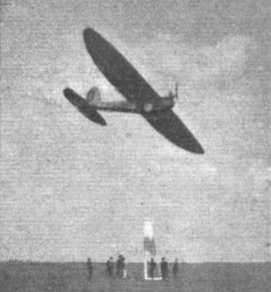
A second SABCA-Jullien, serial number 1A, was built. It differed from the SJ 1 by an increased wing area (21 m²), a landing gear raised by 50 cm, the back of the fuselage with an oval section, a new fin design and a more powerful engine. It was registered O-BAFJ (Certificate n°92) on May 15, 1924 as a tourist plane and made its first flight in April 1924. It participated with the SJ 1 in the low power aircraft competition of the Aero-Club of Belgium. The sports commission, in its meeting of July 3, 1924, classifies the SJ 1A, piloted by Crooy, first in front of the Castar, and attributes to it the Challenge cup 1924. As for the SJ 1, it is granted an incentive premium.
At some stage the SJ 1A received a Sergant engine.
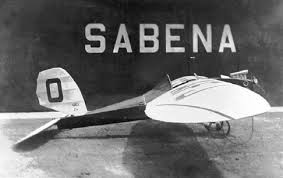
The SJ 1 was canceled by SABCA on July 22, 1929.
SABCA sold the SJ 1A to Henri Jullien on September 9, 1926 who informed the Aviation Administration of its cancellation on January 27, 1933.
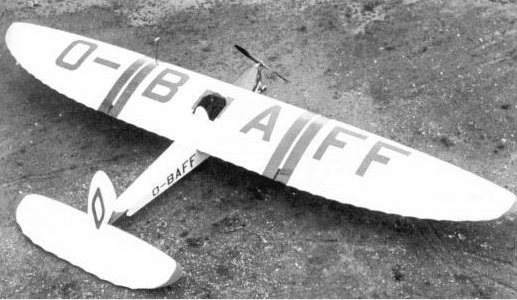
SJ 1
Engine: Douglas 495 cm³, 3.5 hp
Wingspan: 13.40 m
Length: 6.65 m
Height: 1.30 m
Wing area: 20 m²
Empty weight: 170 kg
Maximum weight: 280kg
Maximum speed: 85 kph
Landing speed: 39 kph
Fuel consumption: 4 lt/h
Seats: 1
SJ 1
Engine: Salmson 1100 cm³, 16 hp
Wingspan: 13.40 m
Height: 1.30 m
Wing area: 20 m²
SJ 1A
Engine: Sargent, 16 hp
Wingspan: 13.25 m
Length: 6.35 m
Height: 1.80 m
Wing area: 21 m²
SJ 1A
Engine: ABC, 30 hp
Wingspan: 13.25 m
Length: 6.35 m
Height: 1.80 m
Wing area: 21 m²
 All Aero