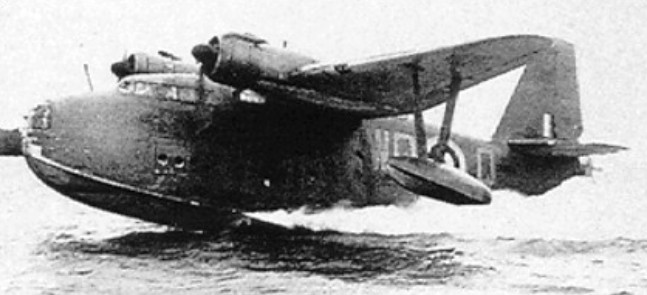
Saunders-Roe S.36 Lerwick

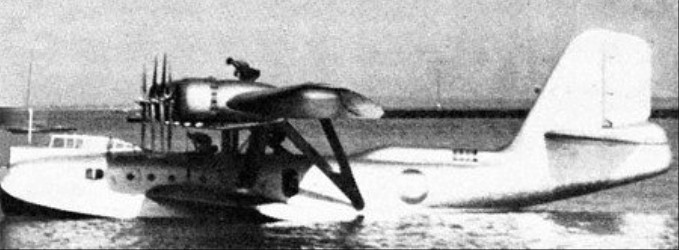
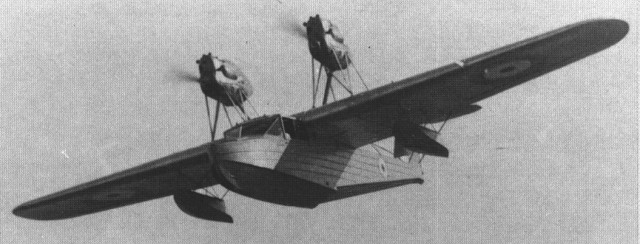
The twin-engine Sarò Lerwick was intended to meet a medium-range maritime reconnaissance requirement, Specification R. 1/36. First flown before the end of Ì938, the prototype featured twin fins and. rudders but from the outset was found to be lacking m lateral stability, and displayed a determination to roll and yaw in cruising flight, making the aircraft impossible to fly ‘hands off”. In due course a single fin and rudder was fitted, but not until this was considerably enlarged was there any improvement in the handling.

Starting with the seventh production example, wing incidence was increased and enlarged propellers fitted to the Hercules II radials, but the propellers were found unsuitable for operating on rough water. Stalling tests showed the Lerwick to have vicious traits, the stall under alighting conditions being accompanied by sharp wing-drop.

Twenty one examples were produced and the Lerwick was first delivered for service with No, 209 Squadron in December 1939 at Oban, but after the type had flown a small number of semi-operational patrols it was decided to abandon further efforts to rectify its problems. The last eight aircraft were powered by Hercules IVs and the final example was completed in November 1940. One aircraft was flown by No, 240 Squadron but was lost on 20 February of that year, and some flew with No. 4 Operational Training Unit at Invergordon.
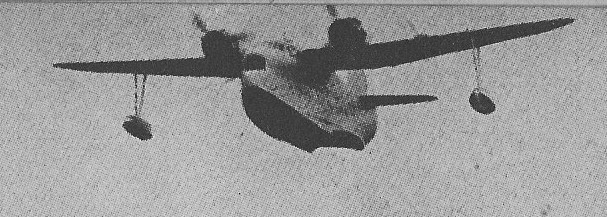
Saunders Roe S 36 Lerwick
Engines: 2 x Bristol Hercules II, 1356 hp
Length: 63.615 ft / 19.39 m
Height: 20.013 ft / 6.1 m
Wingspan: 80.84 ft / 24.64 m
Wing area: 844.974 sq.ft / 78.5 sq.m
Max take off weight: 33205.1 lb / 15059.0 kg
Max. speed: 188 kts / 348 km/h
Cruising speed: 144 kts / 267 km/h
Service ceiling: 13993 ft / 4265 m
Wing loading: 39.36 lb/sq.ft / 192.0 kg/sq.m
Crew: 6
Armament: 7x cal.303 MG (7,7mm), 907kg Bombs
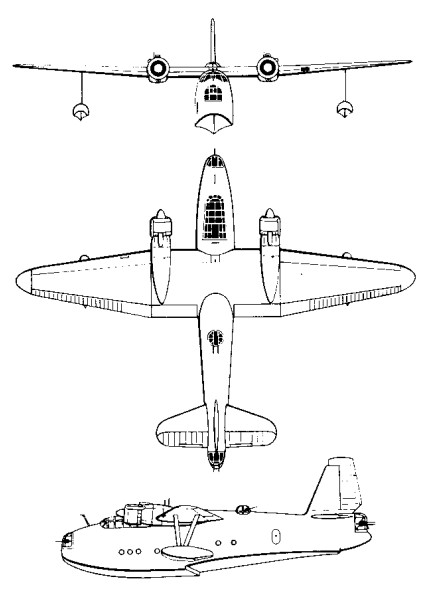
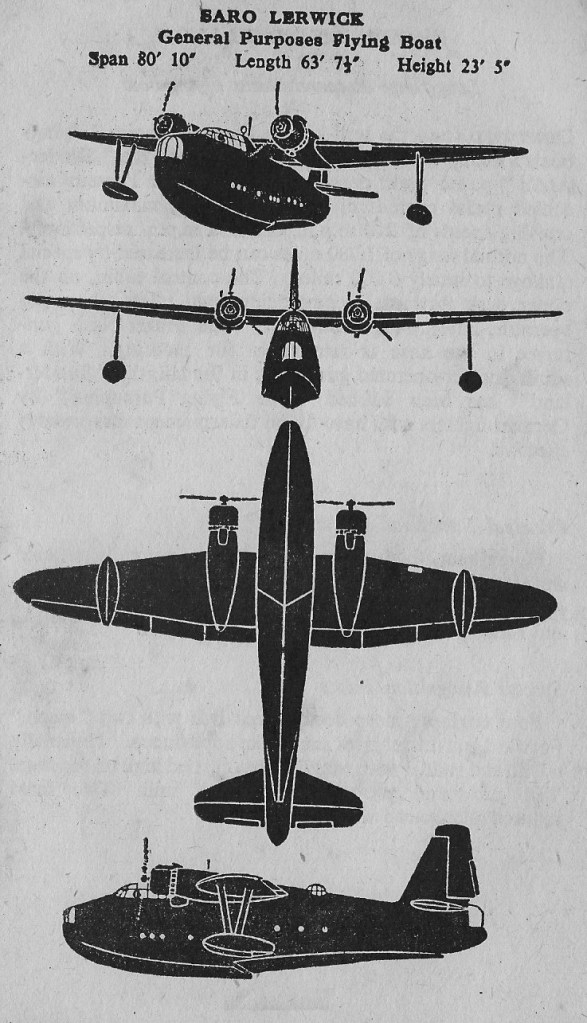
Saunders-Roe S.36 Lerwick

Saunders-Roe S.27 London

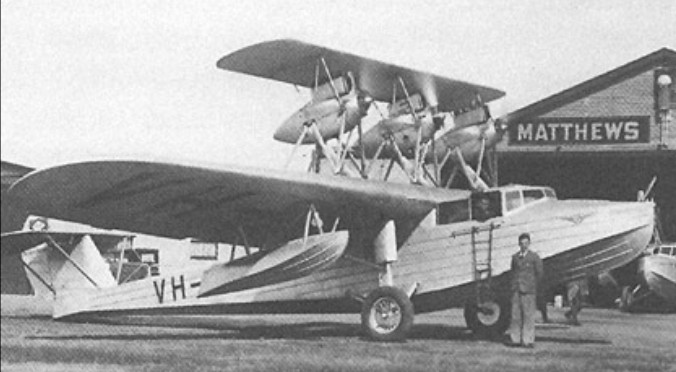
Reflecting the design concept of British flying-boats that had originated in the 1920s, the Sarò London twinengine biplane was an all-metal aircraft with fabric-covered wings and tail, and a metal-skinned hull. The type served with RAF Coastal Command during the first two years of World War II. Designed to Air Ministry Specification R. 24/31, the prototype first flew in 1934 with two 559kW Bristol Pegasus III radiais, the engines being mounted on the top wing to be well clear of spray while taking off and landing; the prototype went on to serve for periods between 1934 and 1936 with Nos 209 and 210 Squadrons at Felixstowe and Gibraltar.

Production deliveries started in March 1936 with Pegasus III engines, but from the eleventh aircraft the Pegasus X was fitted and the aircraft’s designation changed to London Mk II, this variant equipping Nos 201 and 204 Squadrons in 1936 at Calshot and Mount Batten repectively. In 1937 they joined No. 202 Squadron at Kalafrana (Malta) and No. 228 Squadron at Pembroke Dock respectively. By the outbreak of war in September 1939 Londons still equipped No. 201 Squadron, then at Sullom Voe in the Shetland Islands, and No. 202 Squadron still at Gibraltar, while No. 240 Squadron had re-equipped with Londons in July 1939 and was stationed at Invergordon, These flyingboats carried out sea patrols over the North Sea and the Mediterranean, some aircraft being fitted with a large dorsal fuel tank to increase their range. Bombs, depth charges and (occasionally) mines up to a total weight of 907kg could be carried under the lower wing roots. Indeed, the old biplanes undertook a considerable share of the patrol work over the North Sea, keeping watch for the likely breakout into the Atlantic by German surface and submarine raiders as well as the return to German port by blockade runners. Gradually maritime reconnaissance aircraft such as the Lockheed Hudson came to assume these responsibilities while Short Sunderland flying-boats equipped the squadrons flying over the Atlantic and Mediterranean. The Londons were replaced on No. 201 Squadron in April 1940, followed two months later by those on No. 240 Squadron. Only No. 202 Squadron continued to fly Londons at Gibraltar until June 1941.

Saunders Roe A 27 London Mk II
Engines: 2 x Bristol Pegasus X, 902 hp / 787kW
Wingspan: 80 ft / 24.38 m
Wing area: 1424.938 sq.ft / 132.38 sq.m
Length: 57 ft 9 in / 17.31 m
Height: 18 ft 9 in / 5.72 m
Max take off weight: 18400 lb / 8346.0 kg
Weight empty : 11100 lb / 5035.0 kg
Max. speed: 134 kts / 249 km/h / 155 mph
Cruising speed: 112 kts / 208 km/h
Service ceiling: 19900 ft / 6065 m
Wing loading: 12.92 lb/sq.ft / 63.0 kg/sq.m
Range: 956 nm / 1770 km / 1100 miles
Crew: 6
Armament: 3x cal.303 MG, 907kg Bomb.

Saunders-Roe A-19 Cloud

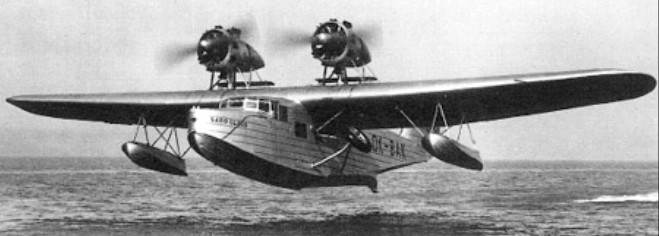
The 1931 Cloud amphibious flying-boat was produced in two forms: as a civil eight-seater and as a military trainer. In the latter role the RAF received 16 from 1933. The large cabin provided accommodation for eight pupils; six pupils and wireless and electrical equipment, navigation instruments and signalling apparatus; or four pupils and the above equipment for navigational training. Alternatively, the Cloud could be used for flying training, to simulate the conditions to be met with a larger service type of flying-boat. Power was provided by two 253kW Armstrong Siddeley Double Mongoose engines.

The Monospar S.T.7 designation covered the wing structure of the Saro Cloud.

A.19
Engines: 2 x Armstrong-Siddeley Serval V, 254kW
Max take-off weight: 4309 kg / 9500 lb
Empty weight: 3084 kg / 6799 lb
Wingspan: 19.51 m / 64 ft 0 in
Length: 15.28 m / 50 ft 2 in
Height: 5 m / 16 ft 5 in
Wing area: 60.39 sq.m / 650.03 sq ft
Max. speed: 190 km/h / 118 mph
Ceiling: 4265 m / 14000 ft
Range: 612 km / 380 miles

Saunders-Roe A-17 Cutty Sark

A-17C

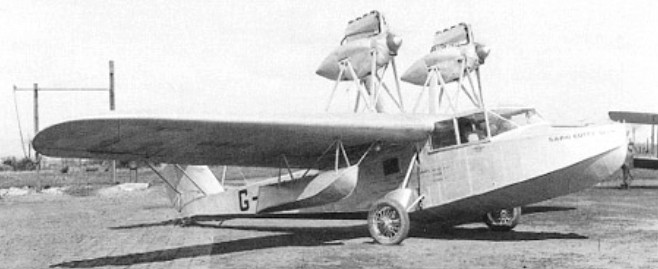
Saro or Saunders-Roe produced the Cutty Sark four-seat cabin flying-boat (or amphibian) as its first new design after formation in 1928. It was adopted for flying-boat and navigational training by Air Service Training Ltd (two 112kW Armstrong Siddeley Genet Major engines) and was exported as a coastal-reconnaissance aircraft (de Havilland Gipsy Major engines).

A-17MK

A-17C
Engines: 2 x Armstrong Siddeley Genet Major I, 104kW
Max take-off weight: 1769 kg / 3900 lb
Empty weight: 1236 kg / 2725 lb
Wingspan: 13.72 m / 45 ft 0 in
Length: 10.46 m / 34 ft 4 in
Height: 3.4 m / 11 ft 2 in
Wing area: 29.73 sq.m / 320.01 sq ft
Max. speed: 172 km/h / 107 mph
Ceiling: 2745 m / 9000 ft
Range: 507 km / 315 miles

Engines: 2 x Cirrus Hermes, 104 hp
Seats: 4

Saunders-Roe

In 1928 pioneer pilot/constructor A. V. Roe (later Sir) acquired an interest in S. E. Saunders Ltd and firm was reconstituted as Saunders-Roe. First new product was Cutty Sark flying-boat, with Fokker-type wing, built in small numbers; also larger Cloud (1931) of which RAF had 16.

Most successful product was twin-engined London biplane flying-boat of 1934 which served with RAF until 1941. Shrimp two-seat four-engined aircraft was built to serve as research vehicle for larger types. Company built the Supermarine Walrus and Sea Otter in quantity. SR/A1 of 1947 was world’s first jet-propelled flying-boat fighter, but was not ordered into service. Princess ten-turboprop commercial flying-boat of 1952 was a great technical achievement, but never entered service. SR.53, first flown in 1957, was experimental turbojet/rocket interceptor which demonstrated climb of about 15,240m/min.

1955

Cierva joined Saunders-Roe in 1957.

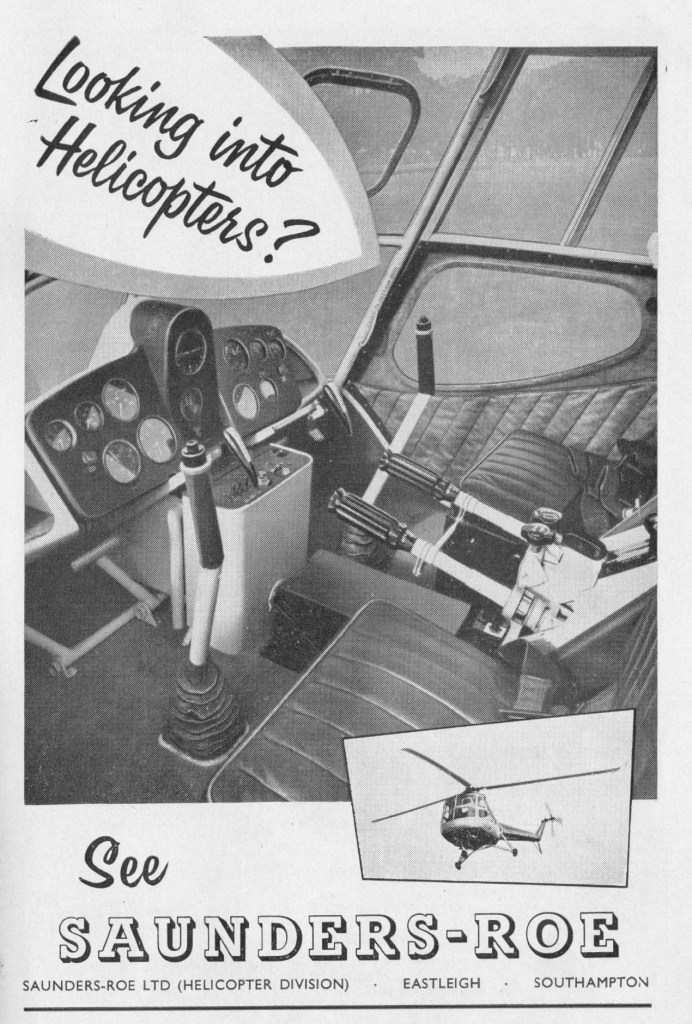
Promising SR.177 development was abandoned despite international interest. Company entered helicopter field in early 1950s with small Skeeter (originally Cierva), though in 1928 S.E. Saunders had made Isaaco Helicogyre (which never flew) for the Air Ministry. Five-seat P.531 built 1958, but in 1959 company was acquired by Westland Aircraft, which developed the P.531 as the Wasp/Scout.

Saunders A-10

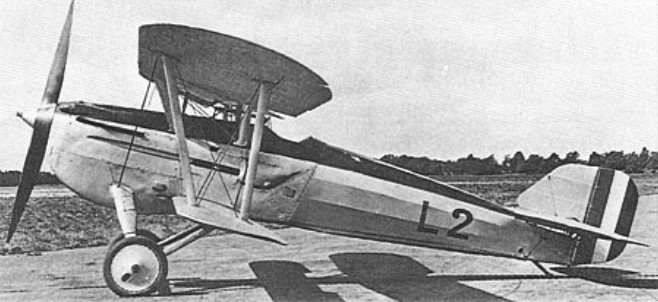
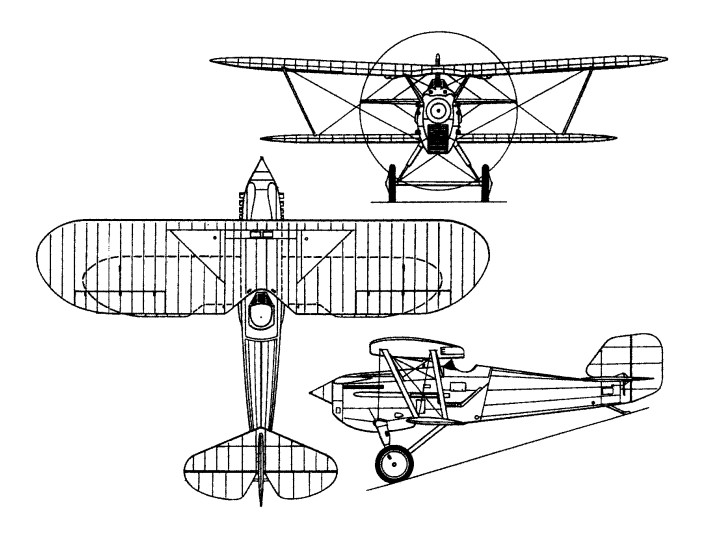
Having specialised in flying boats for a decade, in 1926 S E Saunders Limited began the design of a land-based single-seat all-metal fighter sesquiplane. This, the A.10 proposal, featured what was, for its time, the unusually heavy armament of four 7.7mm machine guns, power being provided by a 480hp Rolls-Royce F.XI 12-cylinder Vee-type engine. After revising the design in 1927 to comply with Specification F.20/27, Saunders built a prototype which flew on 27 January 1929.

Saunders A-10 Article

Possessing an all-metal structure with fabric covering and all four guns located in the fuselage, the A.10 suffered handling and performance shortcomings which led to numerous modifications, including fuselage lengthening. It was assessed at the A&AEE against other F.20/27 contenders and also for F.10/27 (which called for six-gun armament), but it aroused little enthusiasm and was struck off Air Ministry charge in November 1933 – by which time its manufacturer had become Saunders-Roe Limited.

Max take-off weight: 1633 kg / 3600 lb
Empty weight: 1213 kg / 2674 lb
Wingspan: 9.75 m / 32 ft 0 in
Length: 7.44 m / 24 ft 5 in
Height: 2.97 m / 10 ft 9 in
Wing area: 25.36 sq.m / 272.97 sq ft
Max. speed: 322 km/h / 200 mph

Saunders A.10