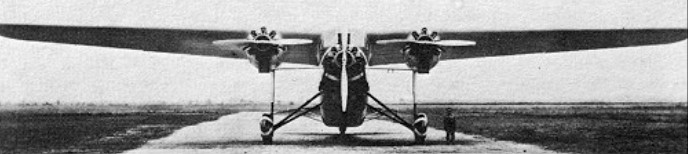
The S.72 prototype bomber/transport flew in 1932. Powered by three 410kW Pegasus II radials, it followed the popular high-wing, fixed landing-gear formula of the time. An altitude record with 5,000kg payload was established in June 1934.
The Nanking Chinese government bought 20 production aircraft with defensive dorsal turret and ventral step machine-gun posts, but nothing was heard of them in action against the Japanese.
Max take-off weight: 12800 kg / 28219 lb Loaded weight: 6800 kg / 14992 lb Wingspan: 29.68 m / 97 ft 5 in Length: 19.95 m / 65 ft 5 in Height: 5.5 m / 18 ft 1 in Wing area: 118.5 sq.m / 1275.52 sq ft Max. speed: 295 km/h / 183 mph Ceiling: 8000 m / 26250 ft Range: 2000 km / 1243 miles Armament: 1 x 20mm cannon, 6 x 7.7mm machine-guns, 1000kg of bombs
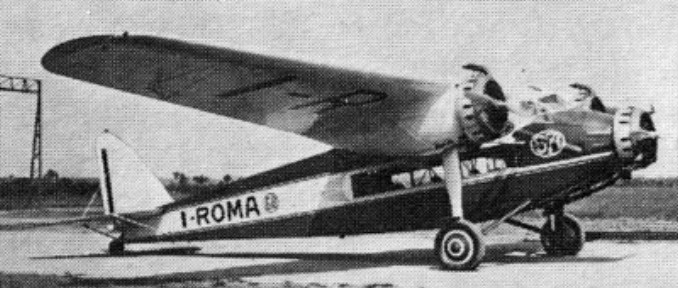
Eight-passenger commercial monoplane of 1930 powered by three 179kW Walter Castor, 253kW Walter Pollux II, or 276kW Piaggio Stella VII engines. Several were produced.
Max take-off weight: 4600 kg / 10141 lb Loaded weight: 2900 kg / 6393 lb Wingspan: 21.2 m / 70 ft 7 in Length: 14 m / 46 ft 11 in Height: 4.1 m / 13 ft 5 in Wing area: 60 sq.m / 645.83 sq ft Max. speed: 235 km/h / 146 mph Ceiling: 6000 m / 19700 ft Range: 1600 km / 994 miles
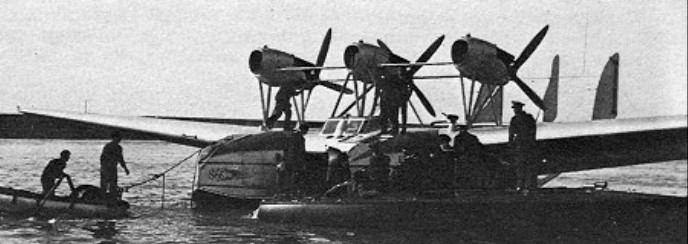
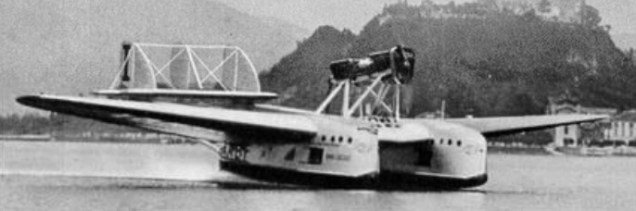
First appearing in 1931, the S.66 prototype was a larger development of the S.55 accommodating 14 passengers and powered by three A.22R engines. The Savoia-Marchetti S.66 was powered by three 750 h.p. FiatA 24R engines. Each of its twin hulls could seat up to nine passengers, while the cockpit was in the wing centre section.
Production aircraft were fitted with 522kW Fiat A.24R engines, raising accommodation to 18. S.66s entered commercial service and at least one was taken on charge by the Regia Aeronautica.
Around 25 were built.
Max take-off weight: 10950 kg / 24141 lb Loaded weight: 7450 kg / 16425 lb Wingspan: 33 m / 108 ft 3 in Length: 16.65 m / 55 ft 8 in Height: 4.9 m / 16 ft 1 in Wing area: 126.7 sq.m / 1363.79 sq ft Max. speed: 238 km/h / 148 mph Ceiling: 5350 m / 17550 ft Range: 1200 km / 746 miles
The Schneider Trophy never experienced any casualties during competition, but several pilots were killed training for the races. Italy had five casualties: Vittorio Centurione in 1926 in a Macchi M-39; Giuseppe Motta in 1929 in a Macchi M-67; Tomasso Dal Molin in 1930 in a Savoia S.65; Giovani Monti and Stanislao Bellini in 1931 in a Macchi MC-72.
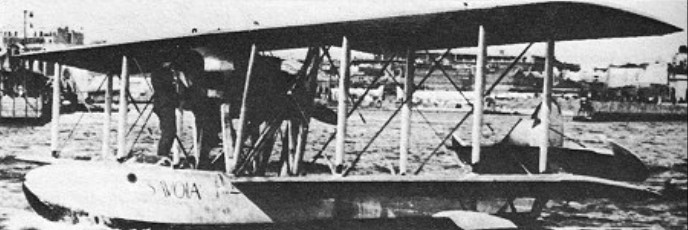
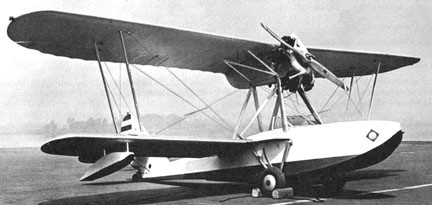
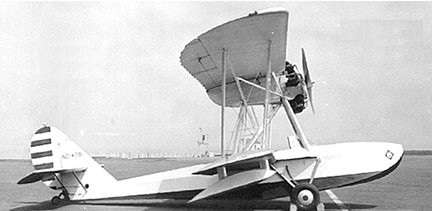
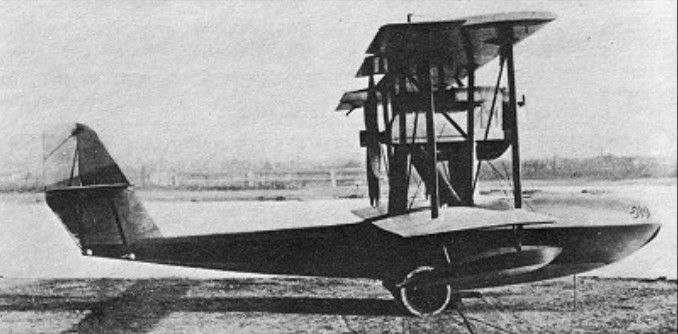
First flown in 1928, the type served with the two units and operated mainly as military flying-boats with the Regia Aeronautica, although commercial examples were produced, the initial S.62 and later S.62bis were powered by 372.6kW R1 and 559kW Isotta-Fraschini Asso engines respectively. As a three-seat reconnaissance aircraft, it was armed with Lewis machine-guns in the nose cockpit and two more in a midships cockpit. The S.62bis had the open midships position replaced by a twin-gun turret.
A four seat reconnaissance bomber and around 40 were built under licence in Spain with 600 h.p. Hispano-Suiza 121B engines.
The Savoia S-62 flying boat had entered service with the VVS RKKA under the designation MR-4, was successfully produced in the Russian Taganrog workshops.
American Aeronautical Corp licence built one S-62 in 1928 c/n 6202. ATC 2-320 was issued in 1931. Equipped with a 500 hp engine it was configured for commercial operations with a seven place cabin.
American Aeronautical Corp S-62
S.62 Engine: 1 x Isotta-Fraschini Asso 750, 634kW Max take-off weight: 5030 kg / 11089 lb Loaded weight: 2630 kg / 5798 lb Wingspan: 16.66 m / 55 ft 8 in Length: 12.26 m / 40 ft 3 in Height: 4.19 m / 14 ft 9 in Wing area: 69.5 sq.m / 748.09 sq ft Max. speed: 220 km/h / 137 mph Ceiling: 4900 m / 16100 ft Range: 2000 km / 1243 miles Armament: 4 x 7.7mm machine-guns, 600kg of bombs
American Marchetti S-62 1928 3 seat armed scout One built in the US Engine: Isotta-Fraschina, 500 hp Prop: 2 blade wooden fixed pitch Wingspan: 54 ft 8 in Length: 40 ft 3 in Wing area: 748 sq.ft Empty weight: 5798 lb Loaded weight: 11,089 lb Useful load: 2530 lb Max speed: 137 mph Cruise: 118 mph Stall: 49 mph Ceiling: 16,100 ft Range: 530 mi Seats: 8 Armament: 3 x .30 Lewis machine guns
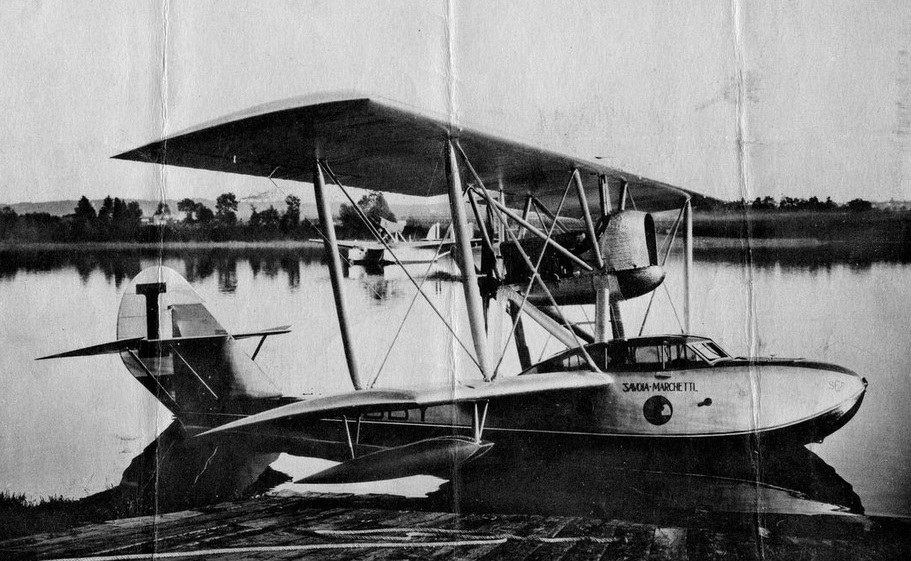
This 1925 biplane flying-boat was produced in two forms: the standard S.59 with a 298kW Lorraine-Dietrich engine and the S.59bis with a 372.6kW Isotta-Fraschini Asso 500Ri engine. Examples of both versions went into commercial and military service during the 1920s.
S.59bis Max take-off weight: 2950 kg / 6504 lb Loaded weight: 1950 kg / 4299 lb Wingspan: 15.5 m / 51 ft 10 in Length: 10.36 m / 34 ft 0 in Height: 3.5 m / 12 ft 6 in Wing area: 60 sq.m / 645.83 sq ft Max. speed: 200 km/h / 124 mph Ceiling: 4550 m / 14950 ft Armament: 1 x 7.7mm machine-gun, 280kg of bombs
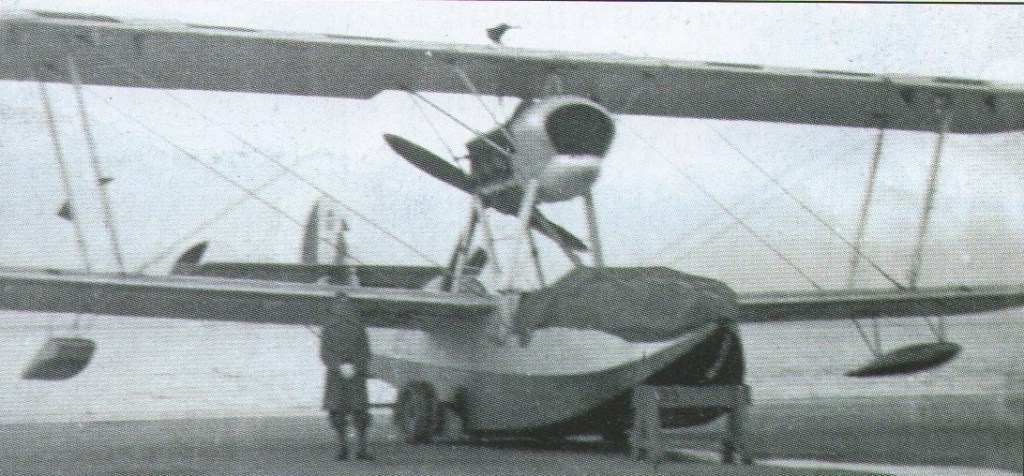
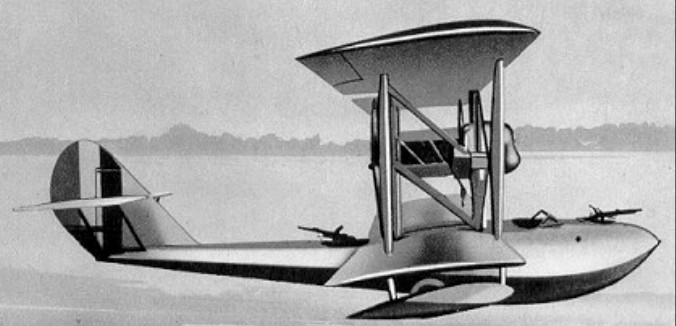
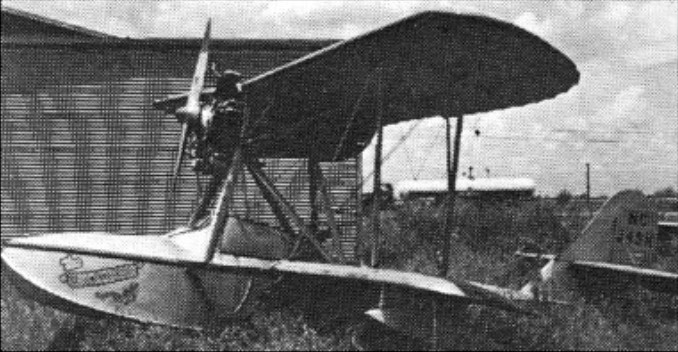
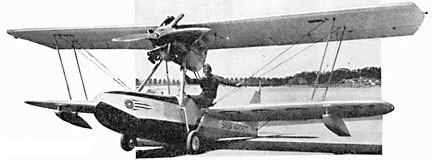
The Savoia-Marchetti S.56 of 1924, a three-seat trainer/tourer flying-boat, was an unequal-span biplane mainly of wooden construction. Pilot and co-pilot were seated side-by-side in separate cockpits equipped with dual controls, a third cockpit being located just behind them. Power was provided by a 52kW Anzani engine, but two S.56A boats built with 60kW Anzanis had a slight increase in wing span and were given amphibious capability by the introduction of manually-retracted wheel landing gear.
At least 12 S.56As were sold to private owners and clubs and four were used by the Regia Aeronautica for training; they were powered by a variety of engines, including the 86kW Fiat A.53, 101kW Fiat A.54, and Walter Venus radials.
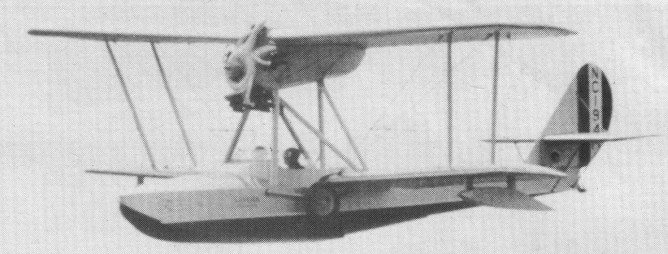
The American Aeronautical Corporation began licence-production of the three place S.56 in 1929 (ATC 287), powered by the 90 hp / 67kW Kinner K5 engine, and three two-seat machines were followed by at least 40 three-seater.
American Aeronautical Corp built an all-stainless-steel version of Savoia Marchetti S-56 powered by a 210hp Kinner, NX749N. It was exported to Italy.
The S-56 selling for $7,375 with starter and nav lights. Twenty-five were built on Long Island, New York including NC192/194M, NC324N/325N, NC349N, NC352N/356N, NC371N, NC378N, NC380N, NC382N/383N, NR898W, NC900V/906V, and NC908V, of which three were converted to S-56-B (ATC 2-95) and one to S-56-C (ATC 2-96) for initial production models.
American Aeronautical Corp S-56-B NC897V
In 1930 the S.56B, powered by a 93kW Kinner B5, was flown in the USA. Sellong for $7,875, ten were built including NC67K, NC324N, NC351N, NC356N, NC386N, NC858W, NC898W, NC897V, NC900V, and NC906V, of which three were converted to S-56-31 (2-332) for two two-place modifications. One was built with an enclosed cockpit canopy and one, converted to single-seat capacity, with additional fuel tanks and redesignated S.56C, was used on a round-the-world trip by American businessman Zachery Reynolds.
American Aeronautical Corp S-56-31 NC14381
American Aeronautical Corp S-56-C, or S-56-31 conversions in 1930 were NC67K, NC858W, and NC898W plus NC14381 which wore an out-of-sequence c/n 55, with 100hp Kinner engines.
An all-metal version of the S.56 was built by the American Edwin Budd Corporation in 1932 and designated Budd BB-1.
S.56A Max take-off weight: 975 kg / 2150 lb Wingspan: 10.72 m / 35 ft 2 in Length: 7.8 m / 26 ft 7 in Height: 2.99 m / 10 ft 10 in Wing area: 26.5 sq.m / 285.24 sq ft Max. speed: 138 km/h / 86 mph Ceiling: 1670 m / 5500 ft
American Aeronautical Corp S-56 Engine: Kinner K-5, 90hp Wingspan: 34’1″ Length: 25’0″ Useful load: 699 lb Max speed: 86 mph Cruise speed: 75 mph Stall: 40 mph Range: 290 mi Ceiling: 7000 ft Seats: 3
American Marchetti S-56, BB-1 / American Aeronautical Corp S-56-B 1926 Engine: Kinner B-5, 125hp Prop: 2 blade wooden fixed pitch Wingspan: 31 ft 1 in Length: 25 ft 7 in Wing area: 285 sq.ft Empty weight: 1350 lb Loaded weight: 2150 lb Useful load: 738 lb Max speed: 95 mph Cruise: 80 mph Stall: 40 mph Ceiling: 7000 ft Range: 280 mi 2-3 seat civil transport/trainer 36-40 built in the USA
American Aeronautical Corp S-56-C / S-56-31 Engine: Kinner, 100hp
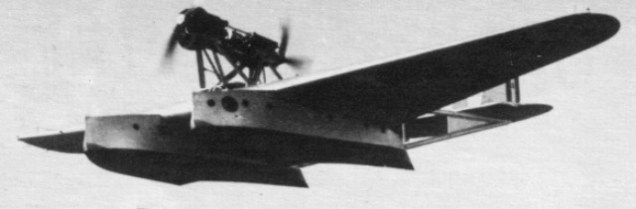
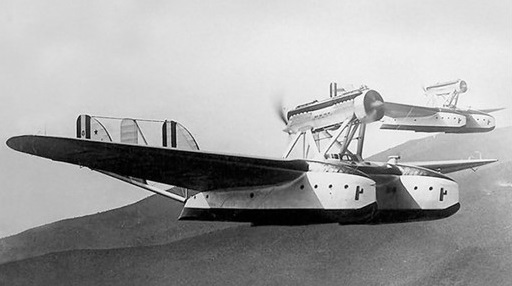
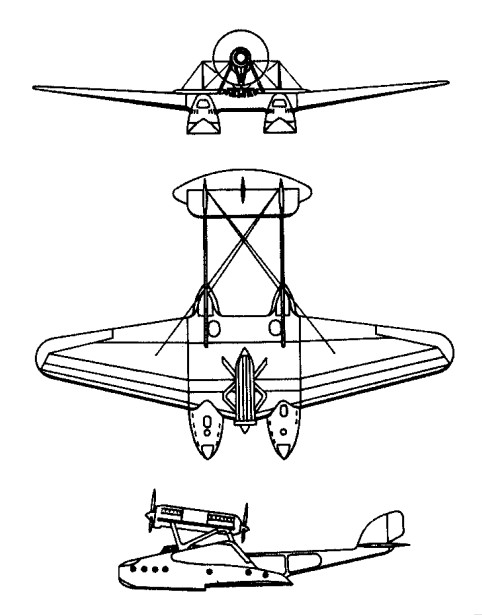
The S.55 prototype flew in 1925, in an era still committed to the biplane flying-boat, it had a cantilever shoulder-wing monoplane with twin hulls and delicate booms supporting a twin-fin triple-rudder tail assembly. Side-by-side pilots’ cockpits were located in the leading edge of the wing centre-section. Twin tandem engines were carried on struts over the wing.
The S 55 was basically a torpedo bomber, pow¬ered by two 700 hp Fiat A 24R engines in tandem, but the 1933 version, designated S 55X was specially cleaned up and fitted with 559kW / 800 hp Isotta¬Fraschini Asso 750 engines. The two pilots sat side¬by side in the centre section, under the engines. The S 55 had open gun positions in the front and rear of each hull, but these were faired over in the S 55X.
Total production exceeded 200. The type formed the main equipment of Italy’s maritime-bombing squadriglie for many years, 13 remaining on charge (but in reserve) in 1939. The S.55C and S.55P civil passenger versions operated Mediterranean routes for a decade.
The S.55 achieved great fame through spectacular long-distance flights: Lieut-Col the Marchese de Pinedo flew the Santa Maria from Sardinia to Buenos Aires and then through South America and the USA in 1927.
General Italo Balbo conceived in 1930 the idea of making a mass flight in formation over the Atlantic, at a time when transatlantic flying was still a hazardous adventure. A fleet of twin hull flying boats was ordered from the Savoia-Marchetti company for the attempt, and the first began in December 1930 when specially modified S.55As covered 10,400km between Italy and Brazil.
Balbo led twelve of these in person across the South Atlantic from Rome to Rio de Janeiro. In 1933, he led an even greater armada of 24 similar machines across the North Atlantic, from Rome to Chicago by way of Iceland, Greenland and Labrador, and back again to Rome via New York, the Azores and Lisbon. The 24 S.55X machines overflew the Alps and continued in stages via Iceland, Greenland and Labrador to Chicago for the 1933 Century of Progress Exposition. The international press coined the phrase ‘Aerial Armada’ to describe the flights. Neither flight was achieved without loss of life, but from that moment the idea of an airline service across the Atlantic no longer seemed such a remote possibility.
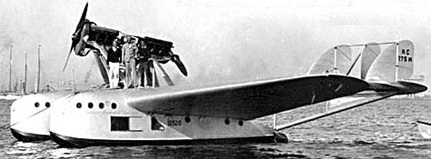
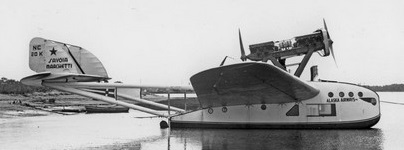
American Aeronautical Corp built the S-55 in 1927. Poweerd by two 515hp Isotta-Fraschini Asso (ATC 2-27 in 1930), optional engines were 500hp Wright Cyclone or Curtiss Conqueror 525hp (ATC 2-206). The price was $57,000. Three were built (NC20K, NC105H, NC175M). Savoia planes were more often called American Marchetti to disguise their Italian origin of design although they were built in the US under license.
Engines: 2 x 700 hp Fiat A 24R Span 79 ft. 11 in Length 54 ft. 2 in Height 16 ft. 5 in Wing area 990 sq. ft Weight empty 11,440 lb Loaded weight 16,940 lb Max. speed 147 mph Ceiling 13,776 ft Max. range 2,174 miles
S.55X Engine: 2 x Isotta-Fraschini Asso 750R, 656kW Max take-off weight: 8260 kg / 18210 lb Loaded weight: 5750 kg / 12677 lb Wingspan: 24.0 m / 79 ft 9 in Length: 16.75 m / 55 ft 11 in Height: 5.0 m / 16 ft 5 in Wing area: 93.0 sq.m / 1001.04 sq ft Max. speed: 279 km/h / 173 mph Cruise speed: 233 km/h / 145 mph Ceiling: 5000 m / 16400 ft Range w/max.fuel: 4500 km / 2796 miles Range w/max.payload: 2000 km / 1243 miles Armament: 4 x 7.7mm machine-guns, 1 torpedo or 2000kg of bombs Crew: 5-6
American Aeronautical Corp S-55 Engines: 2 x Isotta-Fraschina Asso, 515 hp Props: 2 blade wooden fixed pitch Wingspan: 79’11” Wing area: 1001 sq.ft Length: 54’2″ Useful load: 5250 lb Max speed: 128 mph Cruise speed: 110 mph Stall: 68 mph Ceiling: 16,400 ft Range: 650 mi Passenger capacity: 17


 All Aero