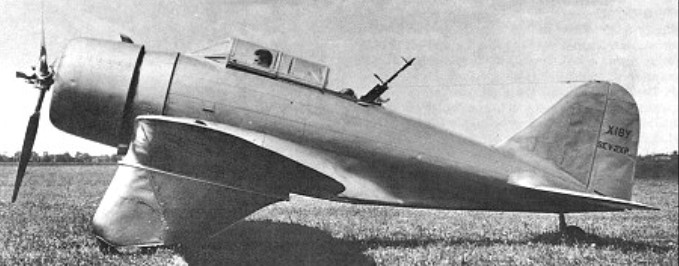
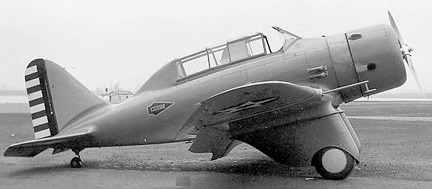
The SEV-2XP (the designation indicating 2-seat experimental Pursuit) designed by Alexander Kartveli was a derivative of the first product of the Seversky Aircraft Corporation, the commercial SEV-3 three-seat monoplane.
An all-metal semi-monocoque aircraft with a fixed spatted undercarriage, the SEV-2XP NX18Y c/n 2 was flown in May 1935 by pioted by de Seversky with the unsatisfactory Wright R-1670 14-cylinder radial offering 735hp for take-off. Provision was made for an armament of two synchronised machine guns, one of 7.62mm and the other of 12.7mm, and one 7.62mm gun on a flexible mount in the rear cockpit.
The USAAC Material Division initiated a contest for a new single-seat fighter. Maj Alexander P de Seversky, believing the SEV-2XP capable of out-performing any single-seat fighter, entered this aircraft as a contender. In the event, the SEV-2XP was damaged in an accident on 18 June while en route to the contest. It was then returned to the manufacturer and reworked as the single-seat SEV-1XP.
Engine: 800hp Wright XR-1670 Max take-off weight: 2404 kg / 5300 lb Empty weight: 1633 kg / 3600 lb Wingspan: 10.97 m / 36 ft 0 in Length: 7.49 m / 25 ft 7 in Height: 2.62 m / 9 ft 7 in Wing area: 20.44 sq.m / 220.01 sq ft Max. speed: 441 km/h / 274 mph Range: 1529 km / 950 miles Seats: 2
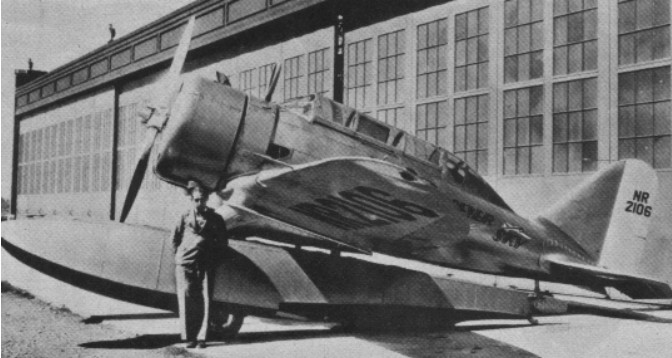
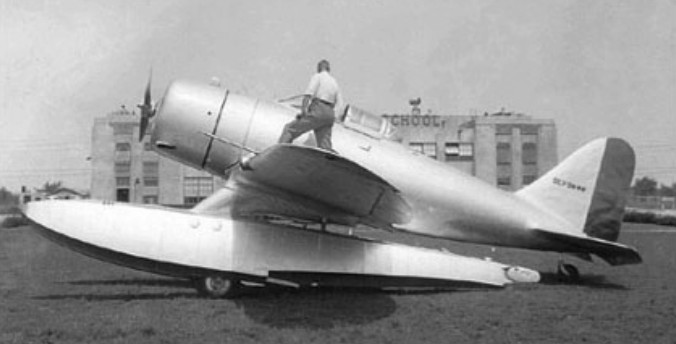
Built by EDO for refugee Russian WWI pilot Alexander de Seversky, the SEV 3 set several speed records in 1933. Seversky and fellow Russkies had formed an American corporation in 1931 but since they didn’t have a factory of their own at the time, the first airplane was built by EDO and given the SEV 3 classification, with the “3” standing for its three seat configuration. Seversky set amphibian speed records in the plane, powered by a 420 hp Wright Whirlwind, and then went after military business.
Designed by Michael Gregor and Alexander de Seversky, it was first flown in June 1933 as SEV-3, registered NX/NR2106 c/n 301, first with EDO wheeled floats for 1935 Thompson race, in which Lee Miles managed to place fifth at 196 mph.
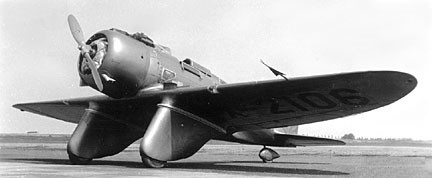
The Army tested the Seversky but since it had no need for an amphibian at the time, the builder converted it into a landplane in 1934. Powered by a 350hp Wright R-975E with a faired landing gear it was re-designated SEV-3L
Seversky SEV-3L NX2106
This was the Army’s first monoplane training aircraft and its first all metal trainer built using modern construction techniques.
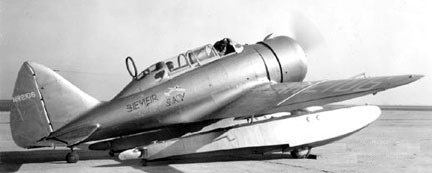
It became the SEV-3XAR to win the Air Corps’ 1935 BT-8 contract, then back to amphibious SEV-3M in 1935 with a 710hp Wright R-1820, to set a world speed record of 230.4 mph.
Seversky SEV-3XAR NR2106
The design, with wheels, became an Army BT-8 with 450hp P&W R-985. The basic aircraft evolved into the P 43, later, with a stretch of the fuselage and a 2,000 hp Pratt & Whitney R 2800 engine, it became the P 47 Thunderbolt.
Seversky SEV-3M-WW
Seversky went on to build other versions of the plane. Six of the 1934 SEV-3M-WW export version (NX15391, NX15689, NX15928 c/ns 37 to 39, plus three unlicensed).
“In Sever the Sky we find [NX15391, NX15689, NX15928]; US Register shows c/ns as 1, 2, and 3, but were actually c/ns 3, 4, and 5 aircraft by factory.’ This seems logical since [X2106] was c/n 1 and [X18Y] c/n 2. Then came [X189M] as c/n 6, 30 BT-8s as c/ns 7/36, and 3 SEV-3M-WWs for Columbia’s second order as c/ns 37/39.”
The 1937 SEV-DS NX1291 c/n 42 was built for the Shell Oil Co and piloted by James Doolittle.
The 1934 BT-8 Basic trainer was the AAC’s first monoplane trainer and was based on the SEV-3XAR, with faired landing gear. Thirty were built.
Incorporated February 1931 by Russian-born Alexander P. Seversky (or De Seversky), First World War military pilot who became U.S. citizen 1927. A test pilot and consulting engineer, he established the Seversky Aero Corporation in 1922.
Developed novel amphibious landing gear, promoted by Seversky Aircraft Corporation for fast all metal fighter-type aircraft. Aircraft design owed much to Alexander Kartveli, who developed landplane fighters with retractable landing gear.
In 1935 Seversky established new speed record for amphibious aircraft, and land-fighter development culminated in order for 77 single-seaters for USAAC, designated P-35.
In 1939-1940, following orders for amphibians from USSR and landplanes from Japan, Sweden contracted for 120 export versions of P-35. Several fighter, multipurpose and trainer variants developed, and BT-8 (first purpose-built machine of its class) adopted in U.S.A.. Seversky Executive (2 passengers in cabin behind pilot) won 1937 Bendix Trophy race. In 1939 company offered USAAC XP-41 single-seat fighter.
In October 1939 the company was reorganized as Republic Aviation Corporation. Since de Seversky had made somewhat of a pariah of himself in the USA by selling combat aircraft to Japan, the Army ordered no more P-35s from Seversky. By early 1939, his company had gotten itself into some deep financial trouble. In Apr 1939, while de Seversky was out of the country on a business trip, the board of directors of his company voted him out of office as CEO and changed the name of the company to Republic. The newly-formed company then recapitalized itself and Alexander Kartveli was appointed as vice president and technical director. Having been forced into involuntary early retirement, de Seversky spent the rest of his life writing and consulting, and Kartveli and the Republic company went on to design and produce the famed P-47 Thunderbolt. Special supercharger evolution for late Seversky fighters led to the famous Republic P-47 Thunderbolt long-range escort fighter/bomber.
1965: Republic Div, Fairchild-Hiller Corp.
1972: Fairchild-Republic Co.
Seversky’s method of assigning c/ns was at best enigmatic and illogical, especially to outsiders—c/n 1 shows up two years after c/n 301, and 301 changed to c/n 35 for one modification, there were found two c/n 2s, and curious large gaps between numbers.
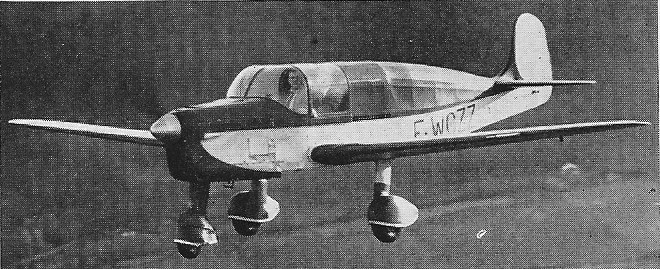
Designed and built by Laboureix and Lagrevol, the SETCA Milan was first flown in 1947, obtained its CNRA in August 1949, and in 1952 received a normal certificate de navigabilite.
A second prototype was built and flown. Of all-wood construction. The cabin seats two side-by-side, with dual controls.
The Milan was shelved since no buyers showed interest.
Engine: 90 hp Regnier 4-EO Max speed: 122 mph Cruise: 112 mph Range: 434 mi Empty weight: 1210 lb Loaded weight: 1742 lb Wingspan: 32 ft 9.5 in Length: 24 ft 1.75 ln
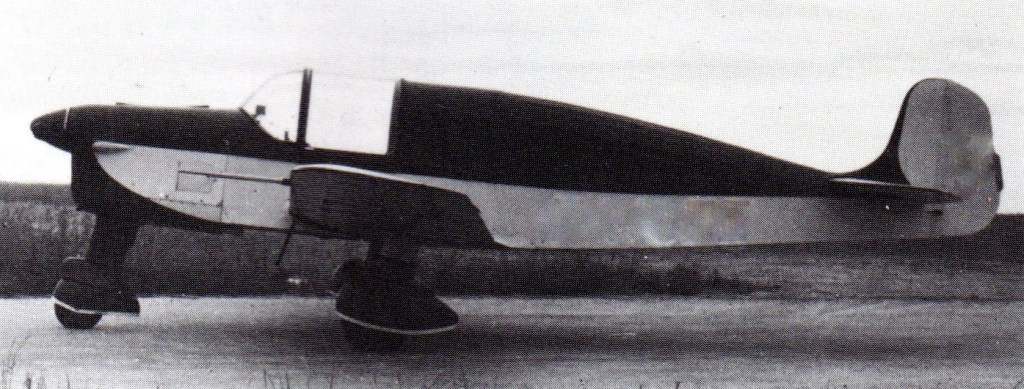
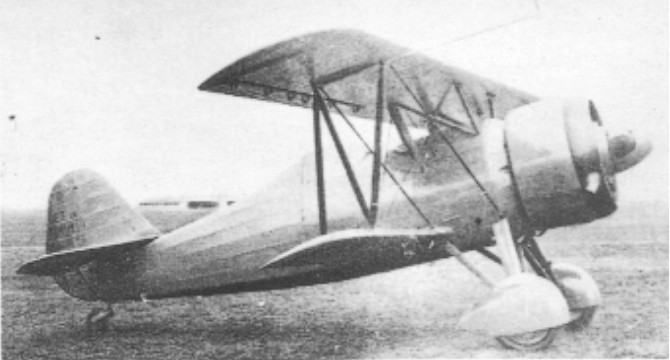
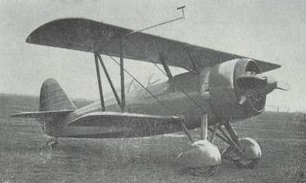
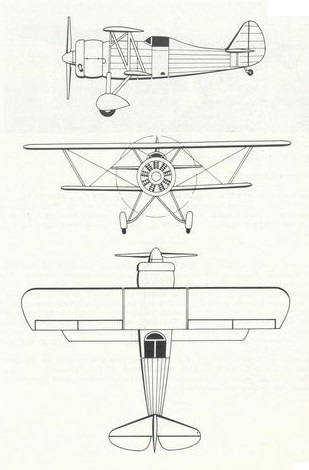
The 1934 S.E.T. XV had a metal frame. /its equipment included oxygen and a complete radio set. The wing was an original S.E.T. profile with flaps.
The armament was two fixed machine guns firing through the propeller. They were under the engine cowling.
Engine: Gnome-hone 9 Krsd, 500 hp Wingspan: 9.40 m Length: 7.00 m Height: 3.05 m Wing area: 18.65 sq.m Empty weight: 1150 kg Max weight: 1550 kg Max speed: 350 kph Stall: 113 kph Max ceiling: 9400 m Climb to 2000m: 3 min 10 sec Climb to 7000m: 15 min 30 sec
 All Aero