Short S.10 Gurnard

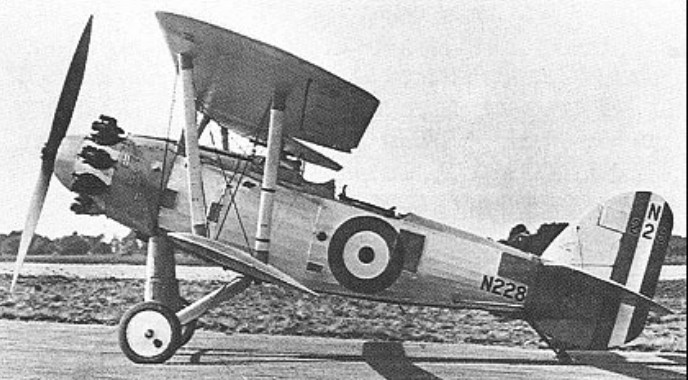
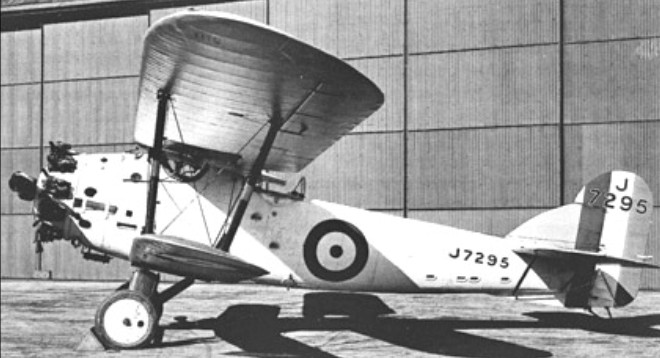
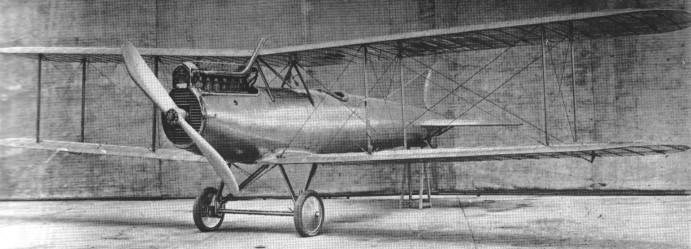
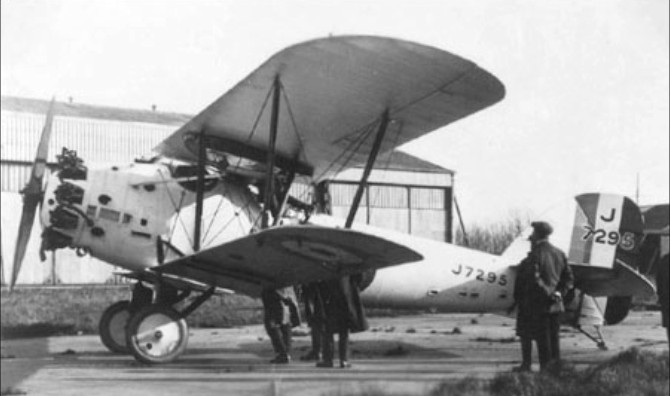
A contender to Specification 0.22/26 calling for a high-speed shipboard reconnaissance-fighter capable of being flown with either wheel or float undercarriage and suitable for catapult operation from cruisers and larger warships, the S.10 Gurnard was awarded a two-prototype contract.

One of the prototypes, the Gurnard I, was to be powered by a 525hp Bristol Jupiter X nine-cylinder air-cooled radial engine, and the other, the Gurnard II, was to have a 525hp Rolls-Royce Kestrel IIS water-cooled 12-cylinder Vee-type engine. A single-bay biplane of metal construction with fabric skinning, the Gurnard had an armament of one fixed forward-firing 7.7mm machine gun and a similar-calibre weapon on a Scarff ring for the second crew member.

The Gurnard II was the first to fly, on 16 April 1929, as a floatplane, the Gurnard I following in landplane form three weeks later, on 8 May.

Gurnard II

Both prototypes were tested at the A&AEE, but the Hawker Osprey was selected in preference and no production of the Gurnard was ordered. The Gurnard II was flown – commencing on 15 June 1931 – as an amphibian with a single main float.

Gurnard II
Wingspan: 11.27 m / 37 ft 0 in
Length: 9.60 m / 32 ft 6 in
Wing area: 39.85 sq.m / 428.94 sq ft
Max take-off weight: 2360 kg / 5203 lb
Empty weight: 1662 kg / 3664 lb
Max. speed: 213 km/h / 132 mph at 10,000 ft
Ladng speed: 54 mph / 87 kph
Endurance full pwr: 30min at SL / + 3 hr at 10,000 ft

Short S.10 Gurnard

Short Cromarty

1921

Cromarty
Crew: 4
Engines: 2 x 600hp Rolls-Royce Condor I
Max take-off weight: 8165 kg / 18001 lb
Empty weight: 5543 kg / 12220 lb
Wingspan: 34.59 m / 114 ft 6 in
Length: 17.98 m / 59 ft 0 in
Wing area: 208.38 sq.m / 2242.98 sq ft
Max. speed: 153 km/h / 95 mph
Cruise speed: 131 km/h / 81 mph
Ceiling: 4800 m / 15750 ft
Range: 1500 km / 932 miles
Armament: 1 x 37mm, 1 x 7.9mm

Short S.8 Calcutta / S.8/8 Rangoon

S.8 Calcutta

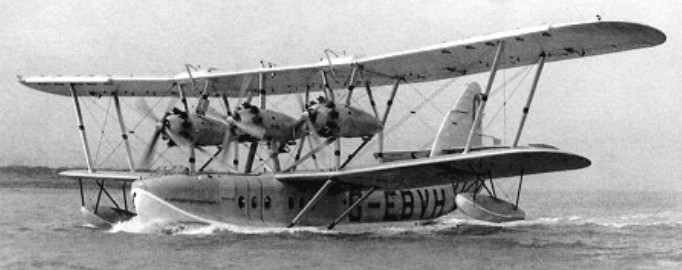
The 1928 15 passenger Calcutta biplane flying boat originated from an Imperial Airways requirement to service the Mediterranean legs of its services from and to India. The Calcutta itself was derived from the Short Singapore military flying boat. It was the first stressed skin, metal-hulled flying boat.

The Calcutta first flew on 15 February 1928 Imperial Airways operated five of the seven Calcuttas produced, and a single sale to the French government was followed by the French company Breguet licence-building four Calcuttas as the Bizerte. In 1931 Breguet secured a licence to build the Short Calcutta, and this was used as the basis for the company’s Bre.521 submission to meet a 1932 French Navy requirement for a long-range reconnaissance flying-boat.

Short S8/8 Rangoon

From the Calcutta Short developed the Rangoon as a long-range reconnaissance type for the RAF. Six were produced and went into service in 1931. These were basically similar to the Calcutta, except that the pilots were accommodated in an enclosed cockpit, in the nose was an open cockpit with Scarff gun-ring and aft of the biplane wings were staggered cockpits for two gunners. Maximum level speed of the Rangoon was 185km/h.

Gallery

Engines: 3 x Bristol Jupiter XI F, 390kW
Wingspan: 28.3 m / 93 ft 10 in
Length: 20.4 m / 67 ft 11 in
Height: 7.2 m / 24 ft 7 in
Wing area: 171.0 sq.m / 1840.63 sq ft
Max take-off weight: 10200 kg / 22487 lb
Empty weight: 6280 kg / 13845 lb
Max. speed: 190 km/h / 118 mph
Cruise speed: 156 km/h / 97 mph
Ceiling: 4000 m / 13100 ft
Range w/max.fuel: 1040 km / 646 miles
Crew: 4-5
Passengers: 12-15

Short S.8 Calcutta

Short S.5 Singapore I / S.19 Singapore III

Singapore I

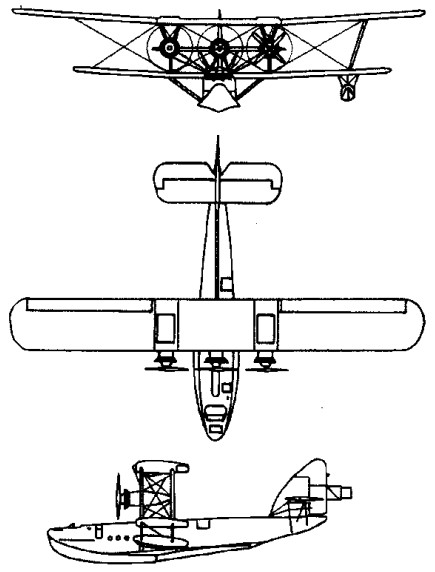
The Singapore III reconnaissance and coastal patrol flying-boat was basically the production version of the earlier Singapore II, itself developed from the twin Buzzard-engined Singapore I of 1926.

Singapore III

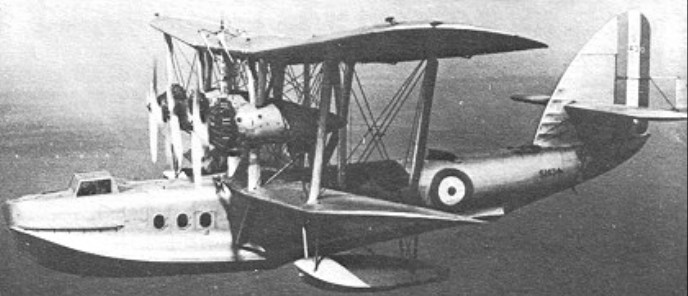
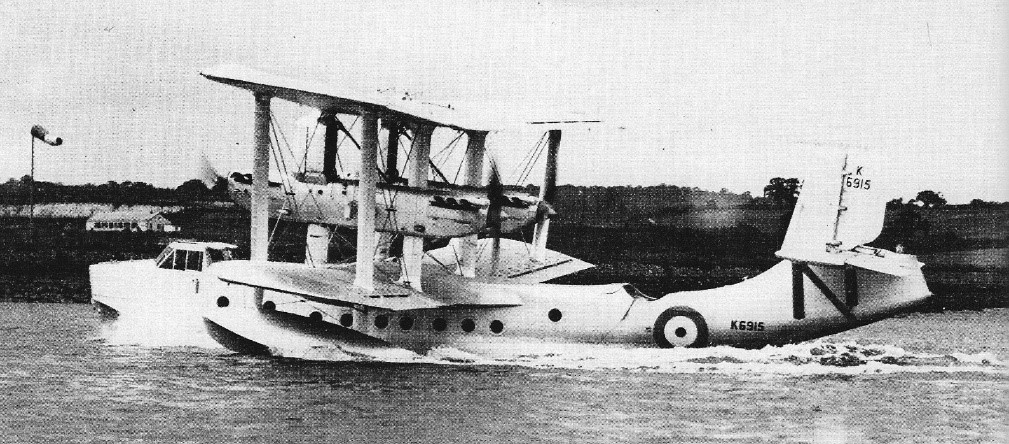
The huge biplaned Singapores entered service with the RAF in 1934. Built with a deep, well faired beamy hull constructed of duralium, the boat had a good seaworthy reputation and was quite maneouvrable on the water. While the book claimed a cruise of 105 knots, RNZAF crews seldom watched the wave tops go past at more than 80 knots. The endurance was some six and half hours at around a thousand feet, the low altitudes being little hindrance as the primary observation device in those early days was the Mark One eyeball.

Singapore III

Thirty-seven Singapore IIIs were delivered to the RAF, entering service in the spring of 1935. The last few aircraft were withdrawn in late 1941, when they were transferred to the Royal New Zealand Air Force. Powered by four 730 hp Roll Royce Kestrel VIII/IX glycol cooled engines mounted in two tandem pairs between the fabric covered wings.

Gallery

Short S 19 Singapore III
Engines: 4 x Rolls-Royce Kestrel VIII/IX, 418kW/ 560 hp
Wingspan: 27.43 m / 90 ft 0 in
Length: 23.16 m / 76 ft 0 in
Height: 7.19 m / 24 ft 7 in
Wing area: 170.38 sq.m / 1833.95 sq ft
Max take-off weight: 12475 kg / 27503 lb
Empty weight: 8355 kg / 18420 lb
Max. speed: 126 kt / 233 km/h / 145 mph
Cruising speed: 91 kt / 169 km/h Ceiling: 4570 m / 15000 ft
Range: 869 nm / 1610 km / 1000 miles
Crew: 6
Bomb load: 2000 lb / 907kg
Armament: 3 x .303 MG (7,7mm) Lewis mg

Short S.19 Singapore III

Short-Bristow Crusader

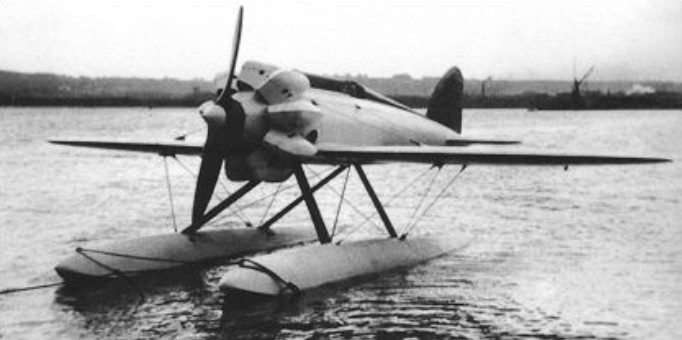
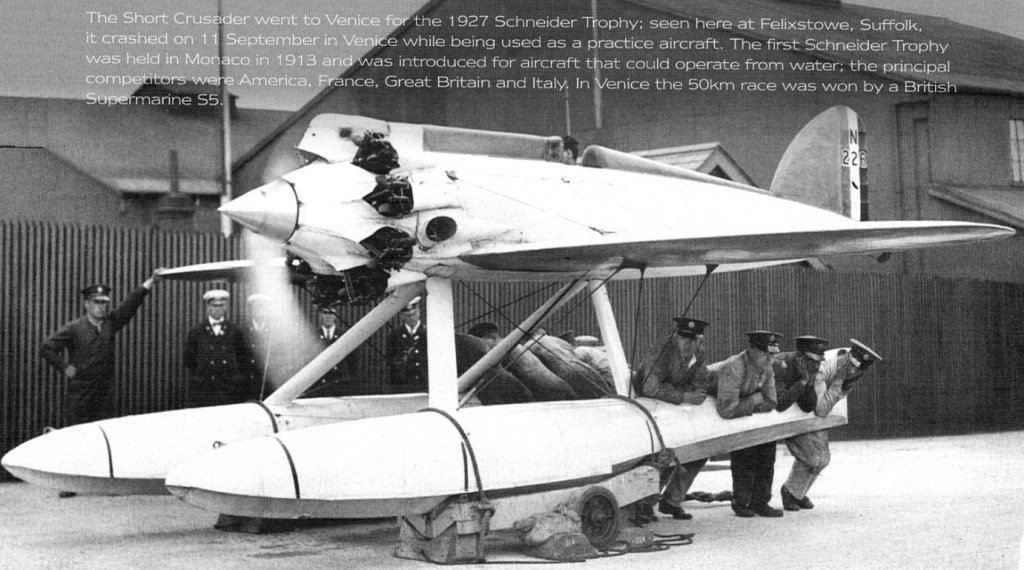
Public pressure resulted in the British government’s return to funding Schneider trophy entries from the public purse, and the 1927 entries were sponsored around two different engine types. The Bristol Mercury engine design was placed under the guidance of Colonel W.A. Bristow, who subsequently subcontracted airframe detail design of this low-wing, wooden racing floatplane to Short. The Crusader was not as fast as its Supermarine S.5 counterparts that won the race in Italy, but it travelled to the event as a back-up aircraft. Unfortunately, it was written off in an accident. Although not a landmark aircraft, the Crusader was important in developing the Mercury engine, a key component of 1930s British flying boats.

Engine: 1 x 810hp Bristol Mercury 9-cylinder air-cooled radial
Wingspan: 8.07 m / 27 ft 6 in
Length: 7.62 m / 25 ft 0 in
Max take-off weight: 1227 kg / 2705 lb
Max. speed: 435 km/h / 270 mph
Crew: 1
Passengers: 1

Short S.3b Chamois

One prototype flown in 1927. No production.

Engine: 1 x 425hp Bristol Jupiter 9-cylinder air-cooled radial
Wingspan: 13.74 m / 45 ft 1 in
Length: 9.17 m / 30 ft 1 in
Wing area: 40.88 sq.m / 440.03 sq ft
Max take-off weight: 1911 kg / 4213 lb
Empty weight: 1235 kg / 2723 lb
Max. speed: 187 km/h / 116 mph
Ceiling: 4450 m / 14600 ft
Armament: 1 x Lewis gun, 2 x 50kg bombs
Crew: 2

Short Silver Streak

Designers began metal construction although Britain tended to redesign biplanes of the wood era in metal. An exception was Oswald Short’s Silver Streak of 1920. An all-metal ‘monocoque’ structure with a duralumin stressed skin fuselage and wings, but this method was not generally adopted until the 1930s.

Engine: One 240 hp Siddeley Puma
Length 26.4 ft (8.04 m)
Wing span 37.5 ft (11.43 m)
Weight empty 1,865 lb (846 kg)
Cruise speed: 90 mph (145 kph)
Range: 450 miles (725 km)
Seats: 1

Short & Harland Ltd / Short Brothers Ltd

Founded by brothers Horace, Eustace and Oswald Short in November 1908 as Short Brothers Ltd., though Eustace and Oswald had made balloons since 1898. The capital was £600, equally shared between the brothers Horace Leonard, Albert Eustace, and Hugh Oswald.

Short Brothers Article

At Leysdown, Isle of Sheppey, completed first biplane glider, construction of which had begun at Battersea, London, in 1909. It was designed by Horace Short from photographs of the Wright Flyer.

Received order for six Wright biplanes, in one of which Hon. C. S. Rolls made first return crossing of English Channel.

The Short Brothers moved their factory from Battersea to Leysdown in 1909 and completed a tailess biplane of their own design.

In February 1909, Eustace Short and Wilber Wright signed a licence agreement for six of the Wright biplanes. The deal was worth £8400 to the Wright Brothers. The Short brothers already had cash buyers for the aircraft.

Company pioneered multi-engine and multi propeller types, and tractor biplanes with folding wings for naval use. Did more to aid development of early naval flying than any other British firm. New works at Rochester, Kent, started 1914. Most famous type was 184 torpedo-bomber, which was used at Battle of Jutland and was also the first to sink a ship at sea. During First World War established airship works at Cardington, Bedfordshire.

After First World War developed Cromarty flying-boat but diversified in other fields. Gave special attention to all-metal aircraft (Silver Streak of 1920 and derivatives) and concentrated later on large civil and military flying-boats (Singapore biplane series for RAF from 1926; Calcutta and Kent for Imperial Airways). Six-engined Sarafand of 1936 was then largest British flying-boat. Wing form developed for Scion and Scion Senior monoplanes used for famous fleet of Empire flying-boats in 1936, for equally-famous Sunderland military development; also on Short-Mayo composite aircraft and Stirling four-engined monoplane bomber.

Jointly established Short and Harland Ltd. in 1936 with shipbuilder Harland & Wolff; became British Government run 1943, leading to integration of Short Brothers (Rochester & Bedford) Ltd. and Short and Harland into Short Brothers and Harland Ltd. in 1947.

In Second World War built and had built under subcontract Short Stirling four-engined bombers and Sunderland flying-boats; also Handley Page Herefords. In 1947 Short & Harland joined Short Brothers (Rochester & Bedford) Ltd. and altered name to Short Brothers and Harland Ltd., concentrating activities at Belfast, Northern Ireland. Sealand twin-engined amphibian flying-boat of 1948 was produced in small numbers. Sandringham and Solent flying-boats used by BOAC stemmed from the Sunderland. Of great technical significance was the SC.1 VTOL (jet-lift) research program, which followed exploratory research by Rolls-Royce. First free vertical take-off made October 25,1958. Company became heavily involved in production of English Electric Canberra and Bristol Britannia. From 1963 built Belfast heavy transports (four turboprops) and many Skyvan light piston-engined transports (first flown January 1963). Twin-turboprop Shorts 330 30-passenger regional airliner flown August 1974, with Sherpa offered as freighter derivative. Much important manufacture and modification work carried out for leading international constructors and operators under subcontract.

Name Short Brothers Ltd. readopted June 1977, but named Short Brothers PLC, as part of Bombardier Aerospace Group since Bombardier acquired, in October 1989, Short Brothers of Northern Ireland.

Operating three principal business units, as Aerospace producing aircraft components and engine nacelles, Missile Systems, and Belfast City Airport. Shorts 360 36- passenger transport (first flown June 1981) followed Shorts 330/Sherpa, with final complete aircraft built by Shorts becoming the Tucano for the RAF, a variant of the EMBRAER turboprop trainer.