Short S.23 Empire Class / S.30 Empire Class

S.23

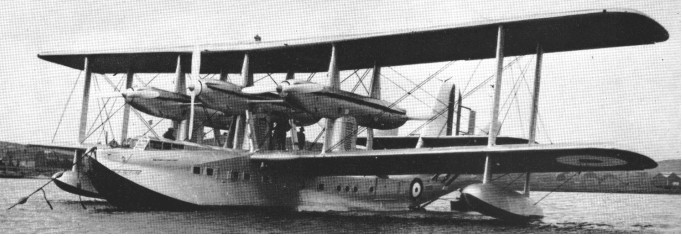
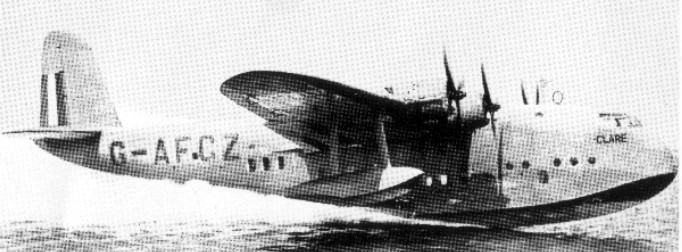
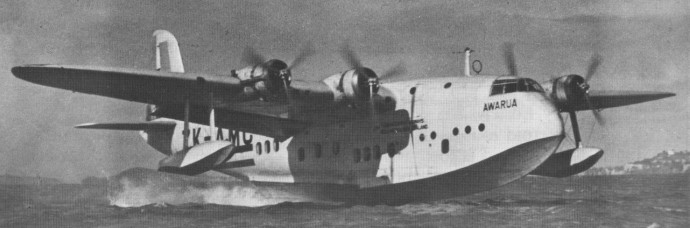
In 1935 the British government took the bold decision to carry all mail within the Empire at the ordinary surface rate. Combined with increasing passenger traffic, this called for a sudden expansion of Imperial Airways and the equally bold decision was taken to buy 28 of a totally new flying-boat, known as the C Class Empire, ‘off the drawing board’ from Short Brothers, at a cost of over £2,000,000. They were four engined cantilever monoplane with a hull of advanced lines.

Features included light-alloy stressed-skin construction; a cantilever high wing with electric Gouge flaps; four 685kW Bristol Pegasus Xc radial engines driving DH Hamilton two-position propellers; and a streamlined nose incorporating an enclosed flight deck for captain, first officer, navigator and flight clerk. A steward’s pantry was amidships and in the normal configuration seats were arranged in front and rear cabins for 24 passengers. On long hauls sleeping accommodation was provided for 16, with a promenade lounge. On some routes experience showed that the mail capacity had to be raised from 1.5 to 2 tonnes, reducing the passenger seats to 17.
S.23

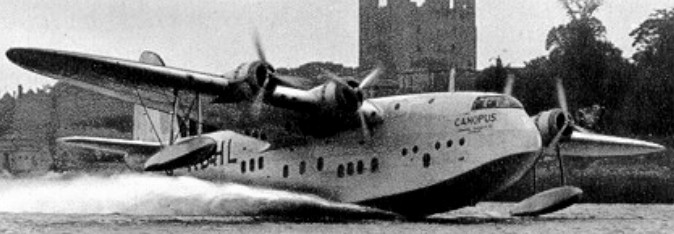
The prototype, the Short S.23 named Canopus, flew on July 4, 1936. Less than four months later, on October 30, it was in passenger service. Others followed at fortnightly intervals and by 1937 the fleet was already covering 113,196 miles per week on scheduled services.

The original C Class boats had four 910 hp Bristol Pegasus engines and could carry 17 pass¬engers, plus two tons of mail and freight for 810 miles at 164 mph. They were soon followed by seven more with 900 hp Perseus engines and double the range of the first batch.

All 28 were delivered, plus three for Qantas (Australia). Two were long-range boats with increased weight and transatlantic range. Eleven S.30s (eight for Imperial and three for Tasman Empire Airways) had 663kW Perseus XIIc sleeve-valve engines and greater range – the first four also being equipped for flight refuelling to greater weight. The final two boats were S.33s with increased weight and Pegasus engines.

On 5 August 1935, Imperial Airways began regular trans-Atlantic airmail flights using Short Empire flying boats which were refuelled in the air.

Short Empire ‘Cambria’, specially modified for trans-Atlantic operations
S.30

During World War II most of these great aircraft served on long routes all over the world. Four were impressed for RAF use with radar (two being destroyed in Norway in May 1940) and most were re-engined with the same 752kW Pegasus 22 engines as the Sunderlands (the derived military version). Their achievements were amazing: one made 442 crossings of the Tasman Sea, two evacuated 469 troops from Crete and one was flown out of a small river in the Belgian Congo in 1940. Others maintained schedules on the North Atlantic, between Britain and Africa, the dangerous Mediterranean route from Gibraltar to Malta and Cairo, and the Horseshoe route between Australia, India and South Africa. Most were retired in 1947.

The prototype completed 2,024,745 miles of safe flying in her ten years of service.

Gallery

S.23 C-Class
Engines: 4 x Bristol Pegasus XC, 790 hp / 686kW
Wing span: 114 ft 0 in (34.75 m)
Length: 88 ft 0 in (26.82 m)
Height: 31 ft 9.75 in (9.68 m)
Wing area: 139.35 sq.m / 1499.95 sq ft
Empty weight: 10659 kg / 23499 lb
Max TO wt: 40,500 lb (18,375 kg)
Max level speed: 200 mph (322 kph)
Cruise speed: 265 km/h / 165 mph
Ceiling: 6095 m / 20000 ft
Range: 1223 km / 760 miles
Crew: 5
Passengers: 17-24

S.30
Engines: 4 x 910 h.p. Bristol Pegasus
Length: 88 ft. (26.82 m.)
Wing span: 114 ft (34.74 m.)
Weight empty: 23,500 lb. (10,660 kg.)
Max speed: 200 mph
Max cruise: 165 mph (265 kph)
Ceiling: 20,000 ft. (6,000 m.) fully loaded
Range: 800 miles (1,300 km.)
Crew: 5
Pax cap: 24

Short S.23 Empire

Short Mayo / S.20 Mercury / S.21 Maia

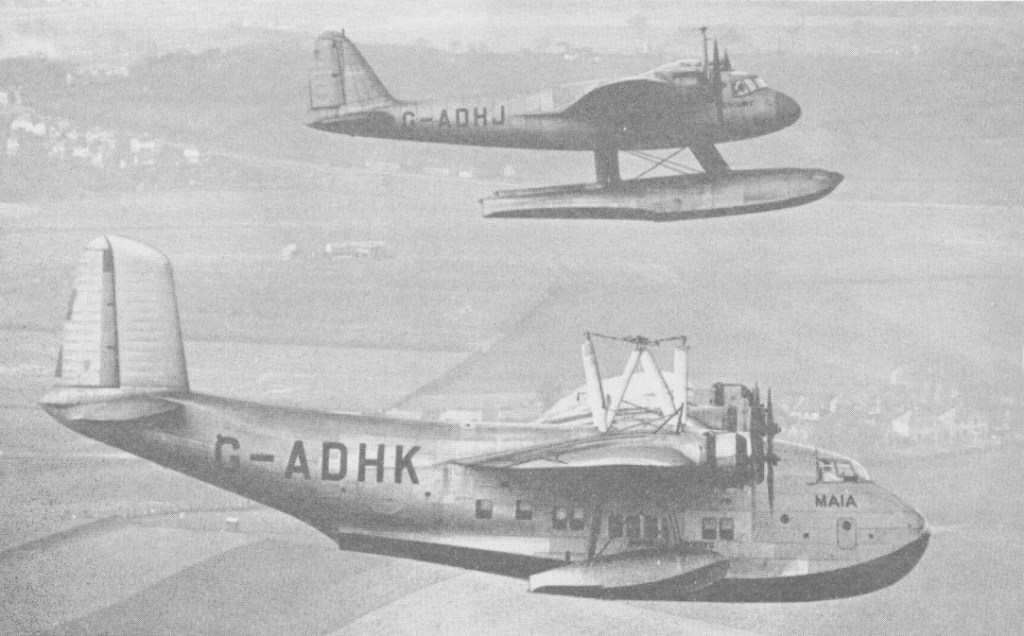
Tests had proved that an Imperial Airways’ Empire flying-boat could achieve a transatlantic crossing only if its entire payload consisted of fuel. Since it is well known that an aircraft can be flown at a much greater weight than that at which it can take off from the ground, Robert Mayo proposed that a small heavily loaded mailplane be carried to operational altitude above a larger ‘mother plane’ and then released to complete its long-range task. The proposal was accepted by the Air Ministry and Imperial Airways, which jointly contracted Shorts to design and build such a composite unit.

The Short S.21 Maia, the lower component, was a slightly enlarged and modified version of the Empire boat; the Short S.20 Mercury, the upper long-range unit, was a new high-wing twin-float seaplane with four 254kW Napier Rapier H engines giving a cruising range of 6116km with 454kg of mail.

This eight engined part time biplane composite was first tested on 4 January 1938. During take off and before separation Mercury’s flying controls were automatically locked in the neutral position, Maia’s pilot having full command; the parasite’s engines were started from inside the mother ship and combined with those of Maia to get the two components airborne.

The first airborne separation took place on 6 February 1938, over Rochester, Kent, and after a number of experimental flights Mercury was air-launched over Foynes Harbour, County Limerick, Ireland crewed by Captain Donald Bennett, on 21 July 1938. Mercury carried 5455 litres (1200 Imperial gallons) of fuel in its wings and 508 kg (1120 lb) of newspapers, mail and newsreel footage in her twin floats. Bennett flew on to Montreal nonstop, covering the 4715 km (2930 miles) from Ireland in 13 hours 29 minutes, then set off again for New York, where for the first time ever English newspapers were on sale at the news stands on the day after publication.

From 6 October 1938 Mercury and Bennett made news again with a nonstop flight of 9728 km (6045 miles) from Dundee, Scotland to Orange River, South Africa in 42 hours 5 minutes.

Arrival at Capetown

The Composite subsequently operated a scheduled nonstop mail service between Southampton and Alexandria, Egypt which continued until the outbreak of World War II.

Mercury was eventually broken up at Rochester and Maia destroyed by enemy action during May 1941.

Short S.16 Alpha / Scion

Short decided that there was a need for an inexpensive light transport landplane and the high-wing Scion was developed using the small but effective Pobjoy engine. It was originally called “Alpha”, but this was changed to “Scion”.

The first of this twin engined high wing monoplane was flown in prototype form (G-ACJI) on 18 August 1933, at Gravesend Aerodrome. Later deliveries were flown from the new grass aerodrome near the works at Rochester.

The first production machine was delivered to Gandar Dower for his Aberdeen-Glasgow service, taking delivery of G-ACUV at Rochester on 27 July 1934 at Rochester.

The rest of the production batch of five were registered G-ACUW to UZ. The last was converted to a Scion II with six passenger seats.

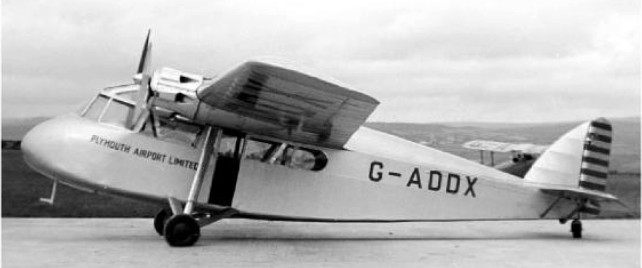
Short S.16 Scion 2 G-ADDX – 12 August 1936

It sold in modest numbers (for approx £2500), and the Scion was joined by the four-engined Scion Senior (capable of carrying nine passengers) in 1935. Short, however, wanted to turn its resources back to the flying-boat market. Douglas Pobjoy purchased the Scion rights in 1936, but the list price then limited sales potential and Pobjoy only built a further six in 1936 to add to Short’s 16, plus another six Scion Senior’s built by Short.

The Scion series served all over the British empire and for the RAF during World War II, one example surviving in Australia until 1965.

Short S.16 Scion I
Engines: 2 x Pobjoy Niagara III 7 cyl radial, 90 hp
Max level speed: 128 mph
Cruise: 116 mph
Ceiling: 13,000 ft
Passenger seats: 5
Crew: 1
Range: 390 miles

Short Scion 2
Engines: 2 x 90hp Pobjoy Niagara III
Max take-off weight: 1451 kg / 3199 lb
Wingspan: 12.80 m / 42 ft 0 in
Length: 9.60 m / 32 ft 6 in
Height: 3.16 m / 10 ft 4 in
Max. speed: 206 km/h / 128 mph
Ceiling: 9144 m / 30000 ft
Range: 628 km / 390 miles
Crew: 1
Passengers: 6

Short L.17 Scylla / Syrinx

The closure of Italian and Italian colonial seaports to Imperial Airways in the Mediterranean in 1929 brought a need for a longer range flying boat, with mail carriage a priority. The Kent biplane flying boat was Short’s response, and three were built.

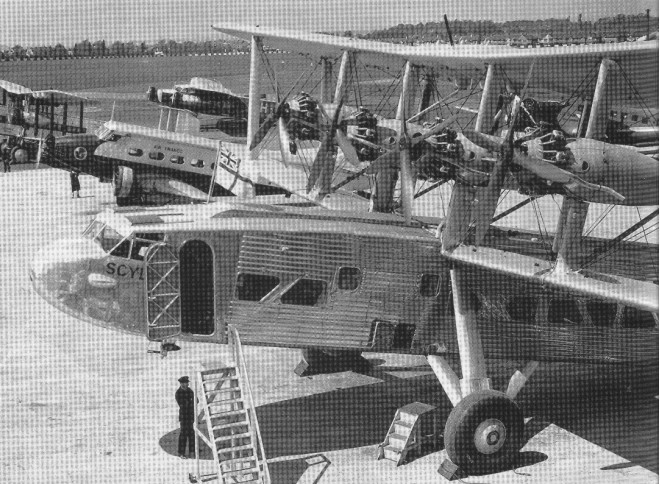
During the spring of 1933, Imperial Airways asked Short Brothers to develop a landplane version of its Kent flying boat. Differing little from the Kent, apart from the wheeled undercarriage and principally different in having a rectangular fuselage and a fixed undercarriage., Scylla and Syrinx were constructed outdoors since Shorts had no means of building and flying a landplane at its own facilities and was forced to use Rochester airport due to the urgency of the requirement.

Both of the new aircraft entered scheduled service on 7 June 1934, on the Paris route. The cabins featured three passenger compartments, two toilets and a buffet. The average cabin width was almost 11 ft / 3.35 m.

Scylla did suffer a minor accident at Paris Le Bourget on 3 August 1934.

The two Scylla examples stayed in service longer, and had very short RAF careers in 1939-40. They were the last of Short’s biplane designs and the last in service.

Gallery

Short S.18 Knuckleduster / R.24/31

The British Air Ministry issued its Specification R.24/31 for a “General Purpose Open Sea Patrol Flying Boat” in 1931 and ordered one prototype from each of Saunders-Roe, Supermarine and Shorts. The contract specified the use of the experimental Rolls-Royce Goshawk engine. Whereas the other two companies opted for traditional biplane designs, Shorts decided to produce a more modern, all-metal monoplane aircraft with the experimental steam-cooled, cast block Rolls-Royce Goshawk engine, itself a development of the smaller Kestrel engine.

Designed by Arthur Gouge, the Knuckleduster’s straight-sided hull was of all-metal (Alclad) box-section construction, from the bow as far as the pointed main step at the rear of the planing bottom; aft of the main step the fuselage was of monocoque construction. The central section of the hull was boxed and braced by diagonal frames to bear the loads from the wing-root attachments.

The wing sections inboard of the engines were attached at a 30° dihedral angle, thus providing sufficient clearance for the airscrews from water-spray during takeoff. The wings were designed for high torsional stiffness, each comprising a box-spar with four tapered stainless steel tubular booms. Fuel tanks were mounted within the wings; sprung and braced wingtip floats were fitted. The wing surfaces were of fabric.

The experimental 720hp Rolls-Royce Goshawk steam-cooled engine was specified for the “Knuckleduster,” which led to many problems due to the engine’s unreliability. The engines, with conspicuous condensers protruding vertically from the nacelles, were mounted at the “knuckle” between the dihedral inner and the horizontal outer wing sections.

The tail unit comprised a horizontal plane braced by struts with two vertical fins and rudders, also supported by diagonal bracing to the fuselage. As a result of early test results, fin area was increased; a major redesign of the tail unit was requested by John Parker and implemented at considerable cost.

In addition to the enclosed cockpit in which the pilot and the navigator sat side by side, there was a gunner’s cockpit in the bow, stations for the engineer and radio operator and a navigator station with a chart-table, sighting ports and two folding bunks. A third folding bunk and two fixed bunks were mounted in the crew’s living quarters, which also included a galley and, further aft, stowage space for drogues and a lavatory.

Further armament was provided by a midships gun mounting and a rear gunner’s cockpit in the tail; bombs could be mounted in underwing bomb racks and there was also provision for a torpedo to be transported (but not launched). All guns mountings carried a single Lewis Gun.

First launched the previous day, the first flight of the prosaically named R.24/31 (serial K3574) took place on 30 November 1933, piloted by Shorts’ Chief Test Pilot John Lankester Parker and crewed by George Cotton and W. Howard Bell. Parker noted that the fins were flexing so he landed immediately. After the fins had stiffening added the aircraft flew again successfully on the 15 December. Other problems found during testing were that the boat could not be trimmed straight and level, the fin area was increased by 18% and the tail was re-designed including fitting a cupola over the tail gun position.

On 12 June 1934 at the conclusion of test flying the Knuckleduster was flown to Felixstowe for official trials with the Marine Aircraft Experimental Establishment (MAEE). The aircraft was judged not to meet the specification particularly regarding top speed and range even though these were not a priority in the specification. In October 1934 the boat was returned to Rochester for repair following an accident, a collision with another flying-boat. It was repaired and several modification incorporated before it returned to Felixstowe in March 1935.

In April the Knuckleduster joined 209 Squadron at RAF Mount Batten, Plymouth for service trials alongside the Stranraer and London. This included an appearance at the Royal Air Force display at Hendon. It was returned to the MAEE in October 1935. Despite suffering engine problems it continued to carry out trial flights until September 1938, when it was retired from flying duties and assigned to No. 2 School of Technical Training at RAF Cosford for instructional purposes.

Although it was not ordered into production mainly hindered by the unreliable engines, a new Air Ministry Specification R.2/33 was released before it flew which would lead to the Short Sunderland. The Sunderland was another large monoplane flying-boat that had benefited from the work on the R.24/31.

Engine: 2 × Rolls-Royce Goshawk VIII, 775 hp (578 kW)
Wingspan: 90 ft 0 in ft (27.4 m)
Airfoil: Göttingen 436 (outer wing sections)
Wing area: 1,147 ft² (106.5 m²)
Length: 63 ft 3 in (19.3 m)
Height: 19 ft 6 in [6] (5.95 m)
Empty weight: 11,720 lb (5,320 kg)
Loaded weight: 18,500 lb (8,395 kg)
Maximum speed: 150 mph (130 knots, 240 km/h)
Range: 1,040 miles (904 NM, 1,675 km)
Service ceiling: 15,500 ft (5,030 m)
Armament: 3 x Lewis Guns
Crew: 5

Short L.12 Kent

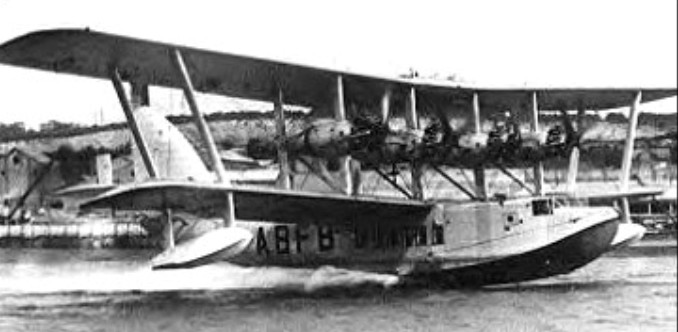
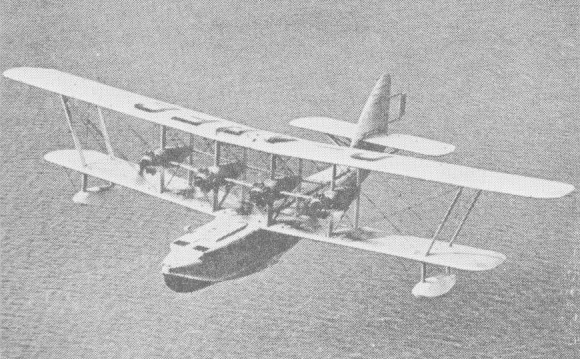
The closure of Italian and Italian colonial seaports to Imperial Airways in the Mediterranean in 1929 brought a need for a longer range flying boat, with mail carriage a priority. The Kent biplane flying boat was Short’s response, and three were built. Imperial Airways also persuaded Short to produce a landplane version of the L.12 Kent – the Scylla.

Short Kent Satyrus

Gallery

Short L.12 Kent
Engines: 4 x 555hp Bristol Jupiter XFBM nine-cylinder radial
Max take-off weight: 14515 kg / 32000 lb
Wingspan: 34.44 m / 113 ft 0 in
Length: 23.90 m / 78 ft 5 in
Height: 8.53 m / 28 ft 0 in
Max. speed: 220 km/h / 137 mph
Ceiling: 5335 m / 17500 ft
Range: 724 km / 450 miles
Crew: 2
Passengers: 16