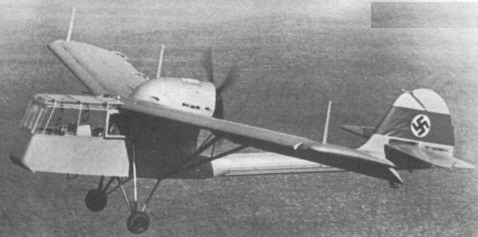
The Siebel Si-201 was designed and built by Siebel in response to the German Air Ministry specification issued in February 1937 for an air observation / army co-op aircraft that had superlative Short Take-off/Landing (STOL) capabilities, excellent slow-flight performance and all-round visibility. Three aircraft were designed and built to meet this particular specification – the Fiesler Fi-156 (already being tested before the specifications were released), the Bayerische Flugzeugwerke designed and built Bf-163 and the Siebel Si-201, these latter two flying in 1938.
The Si-201 was an unorthodox design with its Argus As10 V-8 air-cooled engine mounted above the wing as a pusher, driving a four-bladed fixed-pitch airscrew which rotated above a slim, circular-section tailboom. It had a boxy, fully glazed forward fuselage with room for a pilot and observer in tandem and was a high-wing braced monoplane with a tail-wheel landing gear.
This design allowed superlative vision from the forward cockpit and so the pilot was seated towards the rear of the cockpit. The aircraft had high lift devices such as full span automatic leading edge slots and four section Fowler-type flaps with the outermost flaps also acting as ailerons and which occupied almost the entire trailing edges, the outboard sections serving as ailerons. The fuselage was of welded steel-tube construction with metal skinning and the plywood-covered wing was of wood. The pilot and observer were seated in tandem in the extensively-glazed forward fuselage, the observer being positioned ahead of the pilot with his seat offset to starboard.
The first of two prototypes of the Si-201 flew during the early summer of 1938, revealed excellent short take-off and landing characteristics, and was found to possess acceptable slow-flying characteristics closely comparable with those of the Storch, but at the upper end of the speed scale tail flutter proved troublesome. Considerable effort was expended in damping out oscillation in the tailboom which developed under certain flight conditions, and the second prototype, which featured some simplification of the high-lift devices, was flown with a somewhat sturdier tailboom. The most serious shortcoming of the Si-201 proved to be the extremely limited cg travel permitted by its configuration, and when Siebel was ordered to abandon further development of the aircraft the problem of tail flutter remained largely unsolved.
The Si-201 was evaluated against the Fieseler Fi 156 and Messerschmitt Bf 163 but did not compare well to these aircraft. The Si-201 was also flown by General Ernst Udet, then head of the Reich Air Ministry’s technical department. He was unimpressed with its ground handling and landing characteristics, essential elements in the success of the Storch. The Si 201 would also have been more costly to construct than the Fi 156 Storch. The Si-201 had a higher top speed than the Storch, but speed wasn’t an important consideration for its expected roles, and work on the Si 201 stopped after two prototypes had been built.
The Ilmavoimat evaluation team test-flew the aircraft and experienced the same issues at the upper end of the speed scale with tail flutter. While this was a concern, the aircraft remained under consideration until the decision by the Reich’s Air Ministry not to order the aircraft into production put a halt to further consideration.
Siebel Si 201 Crew: two (Pilot and Observer) Engine: 1 x Argus As 10C, 179 kW (240 hp) Maximum speed: 115mph Range: 280 miles Service ceiling: 18,000 ft
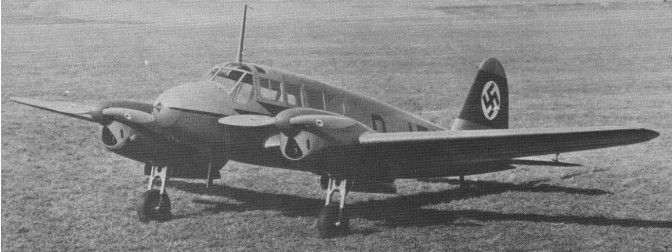
Siebel’s Fh 104A Hallore was a five seat light transport of 1937, 46 of which were eventually completed at the company’s factory near Leipzig. The Fh 104 and a liaison machine, the Si 202 Hummel (which had lost out to Fiesler’s Fi 156 STORCH) shared production line space with license built Do 17s, all examples of the Siebels going to the Luftwaffe.
Siebelwerke-ATG GmbH name was that of F. W. Siebel (1891-1954), associated with early sport-flying in Germany and who helped form the Klemm company, for which he took charge of new works at Halle (Saale). In 1937 Siebel established own company as Flugzeugwerke Halle GmbH, later renamed Siebelwerke-ATG GmbH. First aircraft was Fh 104 5-passenger monoplane of 1937. Si 201 was experimental military reconnaissance aircraft; Si 202 Hummel of 1938 a sideby- side 2-seater. In Second World War Siebel contributed to production of standard German military types; also built own Si 204 communications aircraft, though this was mainly built by SNCAC in France.
Klemm joined Siebel in 1940.
ATG joined Siebel in 1945 to become Siebel ATG (SIAT).
After war produced Si 222 Super-Hummel and 3-seat Si 308. As member of Nordflug group helped with Noratlas.
In 1909, J. D. Siddeley resigned from Wolseley and took over the Deasy Motor Co and the company became known as Siddeley-Deasy. During World War I the company produced trucks, ambulances, and staff cars. In 1915 airframes and aero-engines started to be produced as well.
Major F.M. Green served as chief engineer at the Royal Aircraft Factory and then become a part of the Siddeley-Deasy Motor Car Company. Not limited to the production of motor vehicles, the Siddeley-Deasy brand also delved into manufacture of engines and aircraft. The company was based out of Coventry and was founded by Henry Hugh Peter Deasy. While Deasy left in 1908, J D Siddeley came aboard and changed the company name to Siddeley-Deasy. From there, the company would gradually morph into the Armstrong Whitworth Aircraft firm (known formally as the Sir W.G. Armstrong Whitworth Aircraft Co. Ltd after their 1920 merger with Armstrong Whitworth) and became responsible for a large portion of Siskin production thereafter.
In April 1919 Siddeley-Deasy was bought out by Armstrong Whitworth Development Company of Newcastle upon Tyne and in May 1919 became Armstrong Siddeley Motors Ltd a subsidiary with J. D. Siddeley as Managing Director.
Based at Coventry, Warwickshire; was concerned in production of RAF R.E.7 and R.E.8 and Airco D.H.10 during First World War. Own experimental types included R.T.1 of 1917-1918, a redesigned R.E.8; S.R.2 Siskin, developed from ideas of Major F. M. Green and precursor of famous Armstrong Whitworth line of fighters; and Sinaia twin-engined bomber, completed 1921, also associated with Armstrong Whitworth. In 1919 Armstrong Whitworth and Siddeley-Deasy combined to form in 1920 Sir W. G. Armstrong Whitworth Aircraft Ltd.
Societa Idrovolanti Alta Italia Siai-Marchetti Societa Per Azioni
The original company was founded in 1915 as SIAI (Società Idrovolanti Alta Italia – Seaplane company of Northern Italy). After World War I gained the name Savoia, when it acquired the Società Anonima Costruzioni Aeronautiche Savoia, an Italian aircraft company founded by Umberto Savoia in 1915.
The name Marchetti was added when chief designer Alessandro Marchetti joined the company in 1922. Savoia-Marchetti gained prominence with the successful S.55 flying boat. Savoia-Marchetti became famous for its flying boats and seaplanes, which set numerous endurance and speed records. Favoured by Air Marshal Italo Balbo, the company began rapidly prototyping and developing a number of other aircraft, increasingly focusing on warplanes in the lead-up to World War II. However, most of S.M.’s manufacturing capabilities were destroyed in World War Two. It was renamed SIAI-Marchetti in 1943.
Since 1946 engaged in overhaul and repair work and developed new aircraft. SIAI-Marchetti only survived in postwar Italy by building trucks and railway equipment. However it still struggled with insolvency for 6 years after the war before declaring bankruptcy in 1951.
In 1953, the company reopened. Types have included SA.202 Bravo trainer produced jointly with FFA in Switzerland; S.205 four-seater and S.208 development. First flew SF.250 aerobatic trainer in July 1964; became highly successful SF.260 production aircraft for civil and military use (initials in SF.260 denoted design by Stelio Frati). In 1968 company formed a Vertical Flight Division, but increasing helicopter work became associated with Agusta and Elicotteri Meridionale. SM.1019 light multipurpose high-wing monoplane followed 1969, SF.600 Canguro transport 1979 (recently taken over by VulcanAir), and S211 jet trainer and light attack aircraft 1981.
Agusta, which had acquired 30% of SIAI-Marchetti in 1970, had increased its stake to about 60% by 1973 and reached complete ownership in 1983.
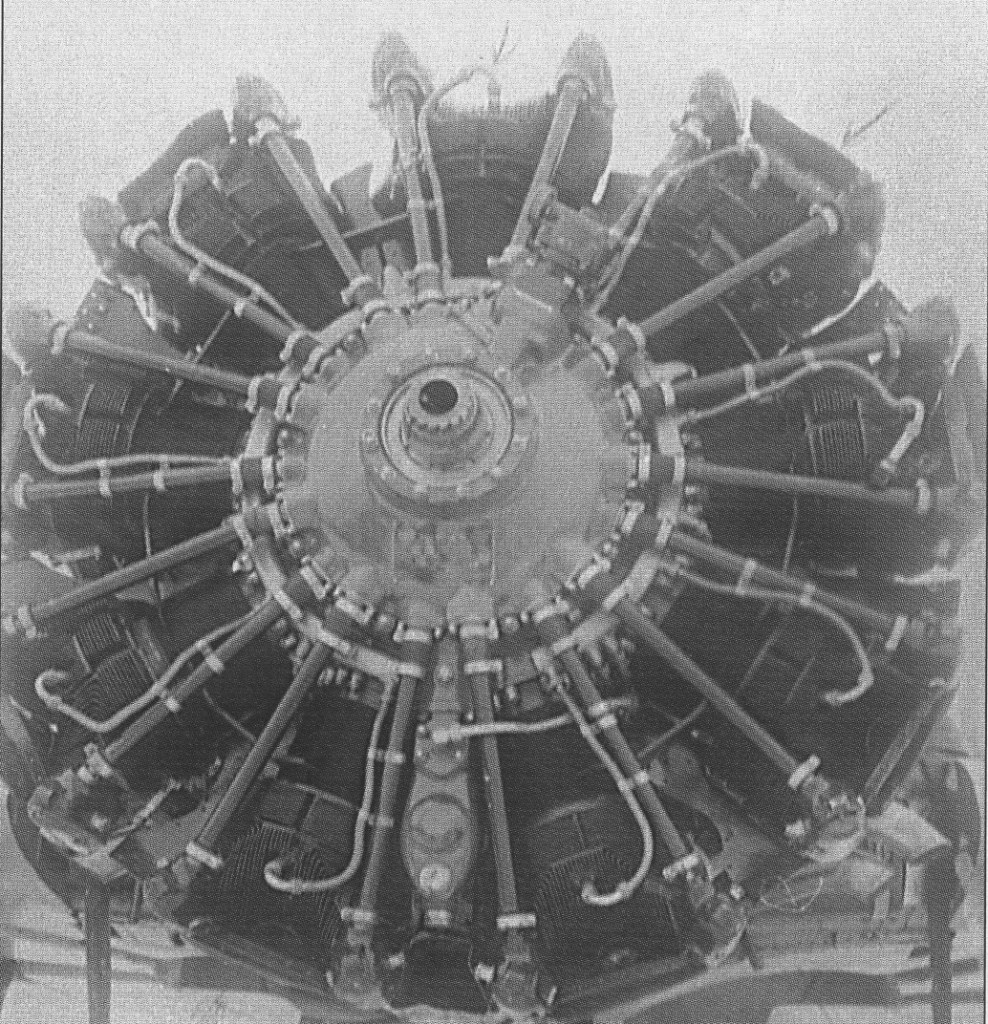
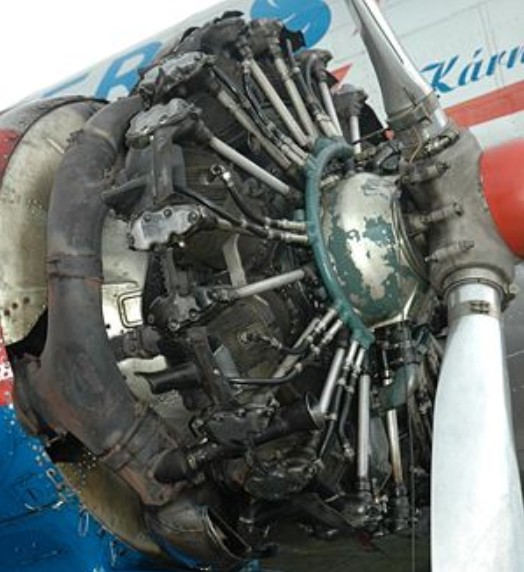
The ASh-62 (designated M-62 before 1941) was a development of the Wright R-1820 Cyclone that had been built in Russia under licence as the Shvetsov M-25. A nine-cylinder, air-cooled, radial aircraft engine, the main improvements included a two-speed supercharger and a more efficient induction system. Power was increased from the Cyclone’s 775 hp to 1,000 hp.
First run in 1937, licenced versions were still in production by WSK “PZL-Kalisz” in Poland as the ASz-62 (as of 2007). The Ash-62 was also produced in China as the HS-5. It is estimated that 40,361 were produced in the USSR.
Polish-built ASz-62IR engines are compatible with FAR-33 requirements. Further developments in Poland are the K9-AA, K9-BA and K9-BB engines, with take-off power of 1178 hp (860 kW), indicated power 698 kW.
The M-63 was an improved version of the M-62 with power output increased to 821 kW (1,100 hp) at 2,300 rpm for takeoff and 671 kW (900 hp) at 2,200 rpm at 4,500 m (14,764 ft) due to a greater compression ratio of 7.2:1 and a higher redline.
Specifications: M-62 Type: Nine-cylinder single-row supercharged air-cooled radial engine Bore: 156 mm (6.12 in) Stroke: 175 mm (6.87 in) Displacement: 29.8 l (1,819 in³) Length: 47.76 in (1,213 mm) Diameter: 54.25 in (1,378 mm) Dry weight: 560kg (1,235 lb) Valvetrain: Overhead valves Supercharger: Two-speed centrifugal type supercharger Fuel system: Carburetor Fuel type: 92 RON, 87 (R+M)/2 (AKI) octane rating gasoline Cooling system: Air-cooled Power output: * 746 kW (1,000 hp) at 2,200 rpm for takeoff 634 kW (850 hp) at 2,100 rpm at 4,200 m (13,780 ft) Specific power: 25.03 kW/l (0.55 hp/in³) Compression ratio: 6.4:1 Specific fuel consumption: 469 g/(kW•h) (0.77 lb/(hp•h)) Power-to-weight ratio: 1.3 kW/kg (.81 hp/lb)
ASz-62 IR Cylinder: 9 Capacity: 1823 cu.in Take-Off Power: 1000 HP at 2200 RPM Max TO power: 5 min Fuel flow at Max TO pwr: 110 gph Rated Power: 820 HP at 2100 RPM Max. Continuous: 738 HP at 2030 RPM 75% Power: 615 HP at 1910 RPM 50% Cruise: 410 HP at 1670 RPM Fuel flow at 50% Cruise: 45 gph Propellor Gear Ratio: 0.637 to 1 / 11:16 Typical climb: 1800 RPM and 800 mm Hg manifold pressure Typical cruise: 1600 RPM and 700 mm Hg Fuel: 100 Octane Aviation Grade minimum
Showa Hikoki Kogyo Kabushiki Kaisha Before and during Second World War built the Douglas DC-3 under license. After war was first Japanese aircraft manufacturing company to resume operations, under U.S. Government contracts. Aided in manufacture of NAMC YS-11 Japanese-designed transport.
In 1936 the RAF also decided to investigate the feasibility of the four-engined bomber. The Air Ministry Specification B.12/36 had several requirements. The bomb load was to be a maximum of 14,000 lb (6,350 kg) carried to a range of 2,000 miles (3218 km) or a lesser payload of 8,000 lb (3,629 kg) to 3,000 miles (4,800 km) (incredibly demanding for the era). It had to cruise at 230 or more mph at 15,000 ft (4,600 m) and have three gun turrets (in nose, amidships and rear) for defence. The aircraft should also be able to be used as a troop transport for 24 soldiers, and be able to use catapult assistance for takeoff. The idea was that it would fly troops to far corners of the British Empire and then support them with bombing. To help with this task as well as ease production, it needed to be able to be broken down into parts, for transport by train. Since it could be operating from limited “back country” airfields, it needed to lift off from a 500 ft (150 m) runway and able to clear 50 ft (15 m) trees at the end, a specification most small aircraft would have a problem with today.
Initially left out of those asked to tender designs, Shorts were included because they already had similar designs in hand and they had ample design staff and production facilities. Shorts were producing several four-engined flying boat designs of the required size and created their S.29 by removing the lower deck and boat hull of the S.25 Sunderland. The new S.29 design was largely identical otherwise: the wings and controls were the same, construction was identical and it even retained the slight upward bend at the rear of the fuselage, originally intended to keep the Sunderland’s tail clear of sea spray.
In October 1936, the S.29 was low down on the shortlist of designs considered and the Supermarine Type 317 was ordered in prototype form in January 1937. However it was decided that an alternative design to Supermarine was needed for insurance and that Shorts should build it as they had experience with four-engined aircraft. The original design had been criticized when considered and in February 1937 the Air Ministry suggested modifications to the original Short design, including considering the use of the Bristol Hercules engine as an alternative to the Napier Dagger, increasing service ceiling (28,000 ft) and reducing the wingspan. Shorts accepted this large amount of redesign. The project had added importance due to the death of Supermarine’s designer causing doubt in the Air Ministry. The S.29 used the Sunderland’s 114 ft (35 m) wing and it had to be reduced to less than 100 ft (30 m), the same limit as that imposed on the P.13/36 designs (Handley Page Halifax and Avro Manchester). In order to get the needed lift from a shorter span and excess weight, the redesigned wing was thickened and reshaped. It is often said that the wingspan was limited to 100 ft so the aircraft would fit into existing hangars. “The wing span was limited by the Air Ministry to 100 ft” but the maximum hangar opening was 112 ft (34 m) and the specification required outdoor servicing. The limitation was to force the designer to keep overall weight down.
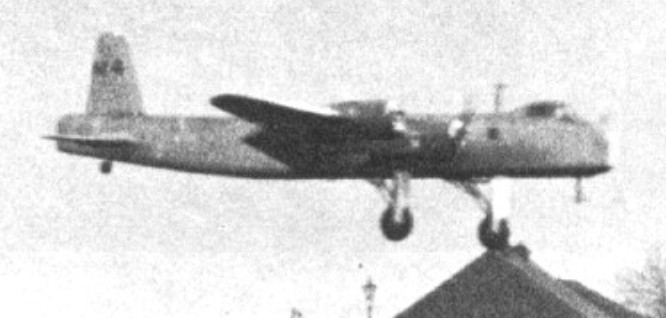
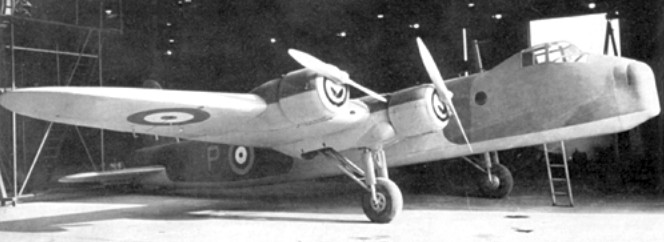
In June the S.29 was accepted as the second string for the Supermarine 316 and formally ordered in October. After receiving orders for two prototypes and 100 production aircraft to the S.29 design which became the Short Stirling, Shorts built in 1938 a 1/2-scale prototype at its own expense. Powered by four 90hp Pobjoy Niagara III engines, this Short S.31 (also known internally as the M4 – the title on the tailfin) was mostly of wooden construction apart from a semi-monocoque fuselage, and seated two in tandem. In overall silver finish and marked M4, the Short S.31 flew on September 19, 1938, at Rochester, piloted by Shorts’ Chief Test Pilot J. Lankester Parker.
The takeoff run was thought to be too long, and fixing this required the angle of the wing to be increased for takeoff, normally meaning the aircraft would be flying nose down while cruising (as in the Armstrong Whitworth Whitley). Short had originally decided on an incidence of 3° giving the best possible cruise performance, but the RAF asked that the incidence be increased to 6.5°, being more concerned with improving take-off performance than the cruising speed. In order to accommodate the RAF request for increased wing incidence a major re-design of the central fuselage would have normally be undertaken, but because of time restraints, Short decided on a “quick fix” by lengthening the main landing gear legs to give a higher ground angle. At the end of 1938, this change was incorporated on the Short S.31 prototype.
The single stage landing gear leg was discarded due to the increased length of the undercarriage rods which proved too long to be retracted into the engine nacelle wheel wells. A two stage undercarriage was built which retracted vertically and then backwards into the nacelle. The undercarriage retraction motors were originally located inside the nacelle, but were later relocated inside the fuselage to allow for manual retraction in the event of motor failure.
Other changes included the installation of four 115 hp (86 kW) Pobjoy Niagara IV radial engines in January 1939. In order to address longitudinal control problems horn-balanced elevators were installed but these were soon replaced by a larger tailplane with conventional elevators in March 1939.
In 1940, now in green/brown camouflage with yellow undersides, the Short S.31 was fitted with Va-scale mock-ups of the Boulton Paul Type O ventral and Type H dorsal twin-cannon turrets proposed for a version of the Stirling II, and was tested in the RAE 7.3m wind tunnel. Further flights were made from March 13, 1942, onwards (with a shortened u/c), and the Short S.31 was scrapped after a takeoff accident at Stradishall in February 1944.
Max take-off weight: 2586 kg / 5701 lb Wingspan: 15.09 m / 50 ft 6 in Length: 13.31 m / 44 ft 8 in Max. speed: 290 km/h / 180 mph
In 1936 the RAF also decided to investigate the feasibility of the four-engined bomber. The Air Ministry Specification B.12/36 had several requirements. The bomb load was to be a maximum of 14,000 lb (6,350 kg) carried to a range of 2,000 miles (3218 km) or a lesser payload of 8,000 lb (3,629 kg) to 3,000 miles (4,800 km) (incredibly demanding for the era). It had to cruise at 230 or more mph at 15,000 ft (4,600 m) and have three gun turrets (in nose, amidships and rear) for defence. The aircraft should also be able to be used as a troop transport for 24 soldiers, and be able to use catapult assistance for takeoff. The idea was that it would fly troops to far corners of the British Empire and then support them with bombing. To help with this task as well as ease production, it needed to be able to be broken down into parts, for transport by train. Since it could be operating from limited “back country” airfields, it needed to lift off from a 500 ft (150 m) runway and able to clear 50 ft (15 m) trees at the end, a specification most small aircraft would have a problem with today.
Initially left out of those asked to tender designs, Shorts were included because they already had similar designs in hand and they had ample design staff and production facilities. Shorts were producing several four-engined flying boat designs of the required size and created their S.29 by removing the lower deck and boat hull of the S.25 Sunderland. The new S.29 design was largely identical otherwise: the wings and controls were the same, construction was identical and it even retained the slight upward bend at the rear of the fuselage, originally intended to keep the Sunderland’s tail clear of sea spray.
In October 1936, the S.29 was low down on the shortlist of designs considered and the Supermarine Type 317 was ordered in prototype form in January 1937. However it was decided that an alternative design to Supermarine was needed for insurance and that Shorts should build it as they had experience with four-engined aircraft. The original design had been criticized when considered and in February 1937 the Air Ministry suggested modifications to the original Short design, including considering the use of the Bristol Hercules engine as an alternative to the Napier Dagger, increasing service ceiling (28,000 ft) and reducing the wingspan. Shorts accepted this large amount of redesign. The project had added importance due to the death of Supermarine’s designer causing doubt in the Air Ministry. The S.29 used the Sunderland’s 114 ft (35 m) wing and it had to be reduced to less than 100 ft (30 m), the same limit as that imposed on the P.13/36 designs (Handley Page Halifax and Avro Manchester). In order to get the needed lift from a shorter span and excess weight, the redesigned wing was thickened and reshaped. It is often said that the wingspan was limited to 100 ft so the aircraft would fit into existing hangars. “The wing span was limited by the Air Ministry to 100 ft” but the maximum hangar opening was 112 ft (34 m) and the specification required outdoor servicing. The limitation was to force the designer to keep overall weight down.
The original layout of the bomber was tried out by the construction of a half-scale model S.31 fitted with four 97kW Pobjoy engines. Flying trials with this proved the feasibility of the design. Short had originally decided on an incidence of 3° giving the best possible cruise performance, but the RAF asked that the incidence be increased to 6.5°, being more concerned with improving take-off performance than the cruising speed. In order to accommodate the RAF request for increased wing incidence a major re-design of the central fuselage would have normally be undertaken, but because of time restraints, Short decided on a “quick fix” by lengthening the main landing gear legs to give a higher ground angle.
At the end of 1938, this change was incorporated on the Short S.31 prototype.
While testing with the S31/M4, construction began on two full size prototypes now officially known as the Stirling MkI/P1. Shortly after construction of the prototypes began, the Air Ministry decided to order the Stirling into production with a contract of 100 Stirling MkI’s as the second string for the Supermarine 316 and formally ordered in October. 1938. The prototype S29 was rolled out of the company’s Rochester factory on 13 May 1939.
Given the RAF serial number L7600, the prototype made its maiden flight on 14 May 1939 (with four Bristol Hercules II engines). After a graceful takeoff and short test flight it suffered an undercarriage failure on landing and was damaged beyond repair. The failure was traced to the light alloy undercarriage back arch braces which were replaced on succeeding aircraft by stronger tubular steel units.
The second prototype (L7605) was fitted with the strengthened undercarriage and made its maiden flight on 3 December 1939. For this flight the gear was left down, but happily for both Short and the RAF, the revised undercarriage held up when put to the tests of retraction, lowering and landing. During the spring of 1940, the prototype spent four months undergoing service tests at Boscombe Down.
Deliveries of production aircraft to the RAF began in August 1940. It was built initially by the parent firm at Rochester and by Short and Harland at Belfast, where the Air Transport Auxiliary (ATA) opened No.8 Ferry Pool (FP) to clear them.
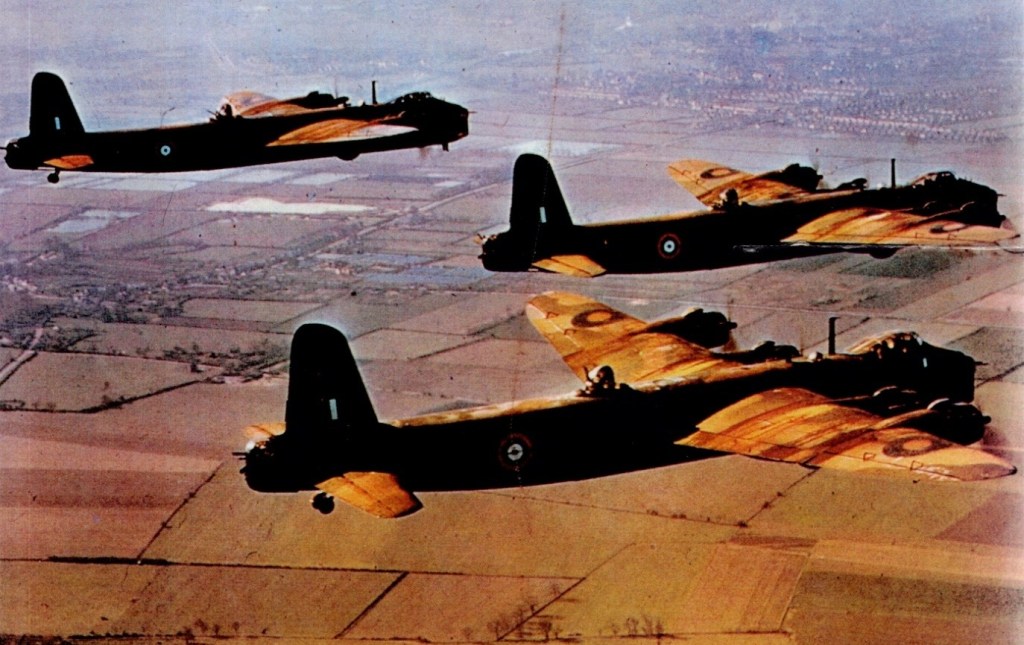
The first production version for the RAF was the Stirling I powered by four 1185kW Bristol Hercules XI radial engines and without a dorsal turret fitted. First in action in February 1941, the Stirling carried 7 tons of bombs for 590 miles, and was armed with eight machine guns. It went into service with 7 Squadron at Leeming in August 1940, and remained in production throughout the war. Prior to its first operational sortie, ATA is recorded as having ferried 12.
Both the factories were bombed in the summer of 1940, after which production was further distributed to the Austin Motors shadow factory at Longbridge, Birmingham, and to a new Shorts factory at South Marston, Swindon.
The Stirling II, only a few of which were completed, was a conversion of the Mk I with Wright R-2600-A5B Cyclone engines. The Mk III had four 1,230kW Bristol Hercules XVI engines and featured a mid-upper turret.
In order to train pilots on the new aircraft, each Stirling squadron formed its own conversion flight and in December 1941, a training unit was created at Thruxton with the specific purpose of training ATA pilots who would have to ferry them. This unit moved to Hullavington in May 1942, to Marharn in August and to Stradishall in October.
When by 1943 the output of heavy bombers had risen to over 400 a month, more ATA four-engined rated pilots were urgently needed to move them. When in February 1943 an ATA Halifax training unit, which had been opened at Pocklington stood down, to fill the gap in four-engined training, ATA reverted to a previous arrangement for its pilots to be given conversion courses with 1647 Stirling Conversion Unit at Stradishall.
From 1943, when the Stirling was no longer a suitable bomber, unlike the Mk III, the Stirling IV was produced from new as a long-range troop transport and glider tug (Horsa glider), the nose and upper turrets being removed and replaced by fairings, although the four-gun tail turret was retained. Up to 24 paratroops or 34 airborne troops could be carried. The final version of the Stirling was the Mk V, an unarmed military transport and freighter with a redesigned nose.
Total production of the Stirling – the Mk III of which was the major variant – was about 2,380.
On the night of 7-8 April 1945, RAF Stirlings of 38th Group dropped two battalions of French parachutists, including both regular soldiers and members of the French Resistance, into Holland south of Groningen. The aim was to support the advance of the Canadian Second Division.
Stirling I Max speed: 260 mph Range: 1930 miles Crew: 7/8 Armament: 8 x .303 Browing mg Bombload: 14,000 lb
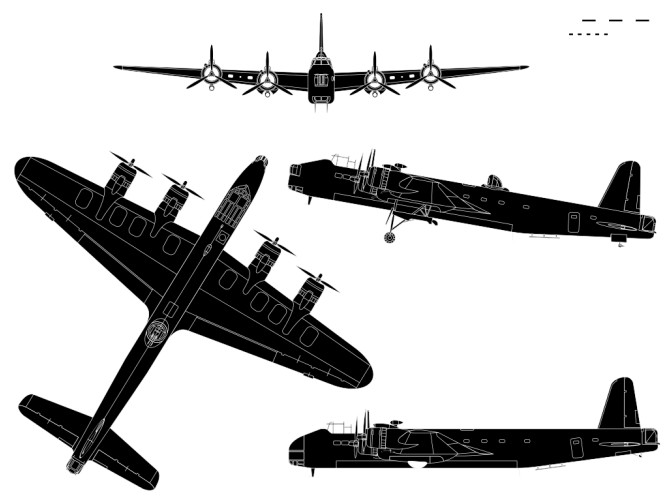
Stirling Mk III Engines: 4 x Bristol Hercules XVI, 1230kW / 1627 hp Max take-off weight: 31751 kg / 69999 lb Empty weight: 19595 kg / 43200 lb Wingspan: 30.2 m / 99 ft 1 in Length: 26.59 m / 87 ft 3 in Height: 6.93 m / 23 ft 9 in Wing area: 135.63 sq.m / 1459.91 sq ft Max. speed: 235 kt / 435 km/h / 270 mph Cruising Speed: 200mph (323kmh) Service ceiling: 5180 m / 17000 ft Max range: 1747 nm / 3235 km Range w/max.payload: 950 km / 590 miles Range: 2,010 miles (3,242km) with 3,500lb (1,589kg) bombload Armament: 8 x .303in / 7.7mm machine-guns Max. bomb load: 14,000 lb / 6,350 kg Crew: 7-8
The Sunderland maritime-patrol and reconnaissance flying-boat was designed to meet the requirements of Air Ministry Specification R.2/33 and was virtually a military version of the Empire boat. The prototype flew for the first time on 18 October 1937, just over a year after the first Empire began its trials.
Entering service in June 1938, by the outbreak of war there were three squadrons of RAF Coastal Command operational with it and others in the process of re-equipping or forming. The Sunderland was notable for being the first flying-boat to be equipped with power-operated gun turrets.
The first production version was the Sunderland I powered by Bristol Pegasus 22 engines and armed with eight 7.7mm machine-guns: two in a Fraser-Nash nose turret, four in a Fraser-Nash tail turret, and two on hand-operated mountings in the upper part of the hull aft of the wing trailing edge.
French Navy Sunderland
The Sunderland II had Pegasus XVIII engines, but was otherwise similar to the Mk I, although late models were fitted with a two-gun dorsal turret in place of the manually operated guns.
The Mk III used the same power plant as the Mk II, but had a modified hull with a stream-lined front step and a dorsal turret as standard.
The final military version was the Sunderland V, the IV having become the Seaford. The Mk.5 was used mainly as a maritime reconnaissance flying boat they were powered the more powerful l200hp Pratt & Whitney R-1830 Twin Wasp. Wing span remained the same, however, the aircraft was slightly longer at 85’ 4”. Due to the increased power, the MAUW was 65,000lbs, but the maximum speed remained relatively unchanged. Armed with six Browning .303 machine-guns carried in two turrets (four in the rear and two in the forward), and four .303s fixed, that were controlled by the pilot. There were also two 0.5 Browning, which were manually operated, positioned in the beam hatches. Eight depth charges were carried on racks which were run out from the bomb room, along rails which extended under the wings. As with all the guns, these could be reloaded in flight.
Production continued until October 1945 and seven hundred and forty-nine Sunderlands were built, and they served throughout the war. The final Coastal Command Sunderland operational mission was in June 1945 over four weeks after the German surrender. Long-range Sunderland operations also took place overseas from bases in Africa and the Far East.
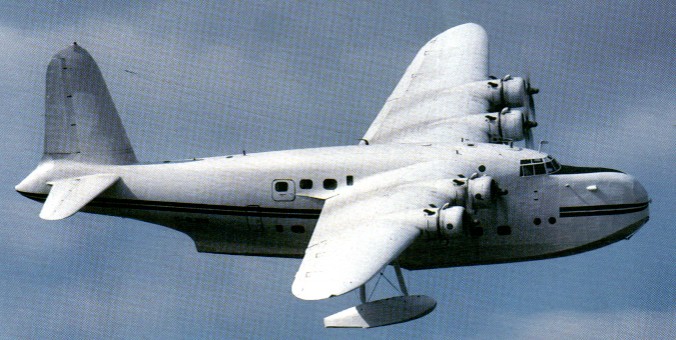
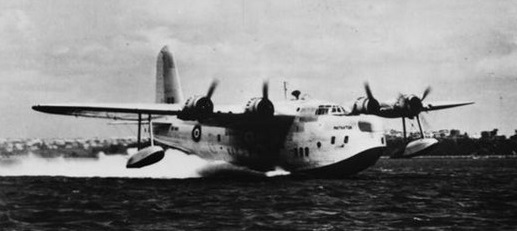
In 1943 a number of Sunderlands were de-militarised, equipped to carry 20 passengers and turned over to BOAC. The Short S.25 Sandringham was produced during the Second World War by the demilitarized conversions of Short Sunderland military flying boats previously operated by the Royal Air Force.
Sandringham ZK-AMD
Post-war the type took part in the Berlin Airlift carrying 4920 tonnes (4847 tons) of freight. During the Korean War Sunderlands based in Japan undertook nearly 900 operational sorties totally over 13350 hours of flying. The Sunderland finally retired from RAF service in 1959 when the last aircraft were scrapped at RAF Seletar, Singapore.
Sandringham Engines: 4 x Bristol Pegasus XVIII Cruise: 200 mph Pax capacity: 16-24
Sunderland Mk. III Engines: 4 x 1065hp Bristol Pegasus radials Wing span: 112 ft 10 in Length: 84 ft 4in MAUW: 58, 000 lb Top speed: 210mph at 7,000ft
Sunderland Mk V Engines: 4 x Pratt-Whitney R-1830-90B Twin Wasp, 895kW / 1200 hp Max take-off weight: 29480 kg / 64993 lb Empty weight: 16740 kg / 36906 lb Wingspan: 34.38 m / 113 ft 10 in Length: 26 m / 85 ft 4 in Height: 10.52 m / 35 ft 6 in Wing area: 156.72 sq.m / 1686.92 sq ft Max. speed: 185 kt / 343 km/h / 213 mph Cruising speed: 116 kt / 214 km/h Service Ceiling: 5455 m / 17900 ft Range: 2337 nm / 4300 km / 2672 miles Armament: 2 x .5in / 12.7mm Browning machine-guns, 10 x .303in / 7.7mm machine-guns Bombload: 2250kg / 8 x depth charges Crew: 13