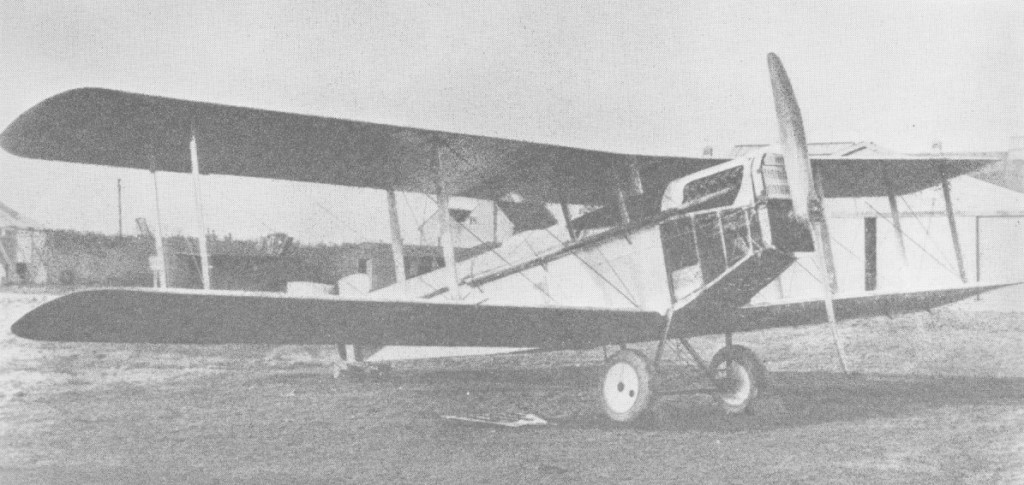
Designed by Floyd Copeland, the 1928 Southern Commercial Aircraft Co Sea Hawk was a four-place, open cockpit, biplane flying boat, powered by a Wright J-5 engine.
Only the one was built, priced at $7,000.
Designed by Floyd Copeland, the 1928 Southern Commercial Aircraft Co Sea Hawk was a four-place, open cockpit, biplane flying boat, powered by a Wright J-5 engine.
Only the one was built, priced at $7,000.
fdrs: Walter & Merle Krouse
Hialeah FL.
USA
In 1928 Southern Commercial Aircraft Co built the Sea Hawk.
The Aerocar was a roadable aircraft with demountable wing and twin-boom, twin-tail unit, a development by Hall of his twin-boom auto-plane concepts. A high wing, cabin monoplane, it is uncertain if this was ever specifically produced under the Southern banner, or if it was one of Hall’s projects in the works, as it was first flown at San Diego CA in 1939. Only one was built, NX59711, which made several test flights, but proved to be underpowered and the project was abandoned in the post-war slump.
Engine: 130hp Franklin 6AC
Wingspan: 30’0″
Max speed(est): 128 mph
Range (est): 310mph
Seats: 2
Southern Aircraft was formed by a group of former Luscombe Airplane Corporation employees in the late 1930s. Their first president was Willis C. Brown. Garland, Texas donated 27 acres of land to SAC and the Garland facility opened its doors in 1939.
In May 1939 the Southern Aircraft Corporation was formed in Houston, and in July 1940 this plant completed its first plane, a biplane designed for use as an army trainer. In December 1940 Southern Aircraft began excavation for a plant near Garland and in February 1941 moved from Houston and began production of military primary-training planes. In the new works made components for Consolidated B-24, Grumman Hellcat, and Avenger. The number of employees grew to 3,000 during WWII.
1940: Southern Aircraft Div, Portable Products Corp (pres: Willis C Brown), Garland and Greenville TX
In the late 1940s and early 1950s, the company’s focus shifted to commercial products such as school bus bodies, tractors, livestock trailers farm implements, and a short-lived Franklin-powered flying car called the Aerocar (1946). During the Korean conflict and the Vietnam War, aircraft and munitions were the primary products.
In 1949, the company’s name changed to IMCO, and over the years workers produced a variety of products, including farm tractors, flamethrowers, soft drink machines and school buses.
Even so, its major emphasis has always been products that support the defense and aerospace industries.
From 1955 through 1969 under the name Intercontinental Manufacturing it had a variety of owners which included Lionel Toy.
In 1968 Bergman Forging moved from their California operations to the Garland facility.
The Garland plant employs about 625 people, who develop and manufacture the steel bodies used in almost all 500-, 1,000- and 2,000-pound bombs in U.S. Navy and Air Force arsenals. The company also forges aluminum and magnesium components used in airplane and ordnance.
From 1988 through 2003 the company was owned by Datron Inc. who sold the firm to General Dynamics in 2003.
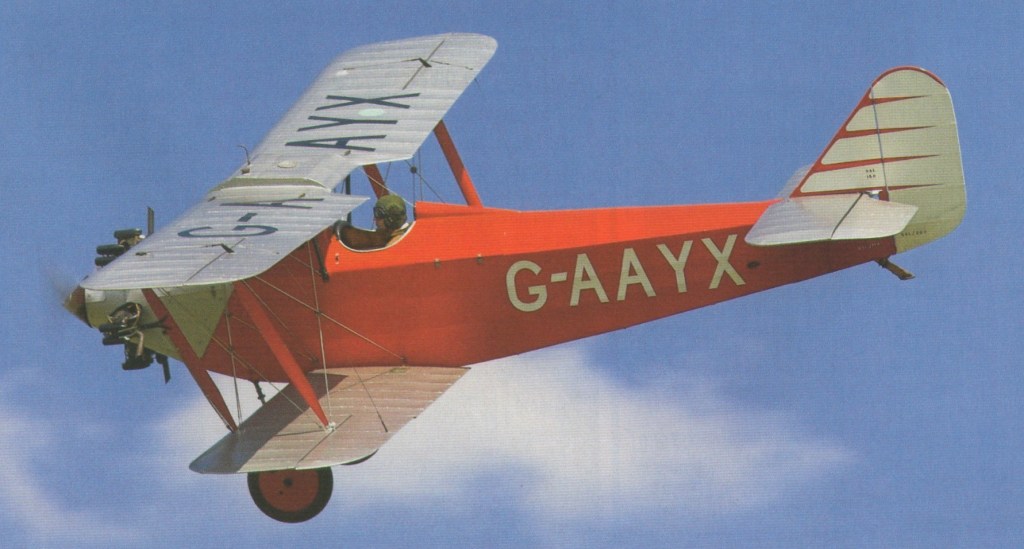
F. G. Miles developed the Avro Baby into Martlet and Metal Martlet light aerobatic and sporting types. Last example flew 1931.
Southern Aircraft Martlet Article
The first Martlet G-AAII was a modified Avro Baby powered by an 85 hp ABC Hornet. Development of the type was by the Miles Brothers, D L Brown and H Hull at Shoreham and it was first flown in August 1929. During the following two years five Martletts were built; G-AAVD, G-AAYX, G-AAYZ and G-ABIF, all with different specifications and various powerplants. It was to have been succeeded by the Metal Martlett in 1931 but this machine was scrapped after a limited amount of flying.
UK
Associated with Shoreham Aerodrome, Sussex, and F. G. Miles, who developed the Avro Baby into Martlet and Metal Martlet light aerobatic and sporting types. Last example flew 1931.
Also known as the Brown Primary, the Southdown Skysailing Club Skysailer was a single-seat primary glider designed by L. Brown and built by Southdown Skysailing Club in the UK in 1931.
(S W) Sorrenti Aviation Corp
San Francisco Bay Airdrome
Alameda CA.
USA
Operating in 1930.
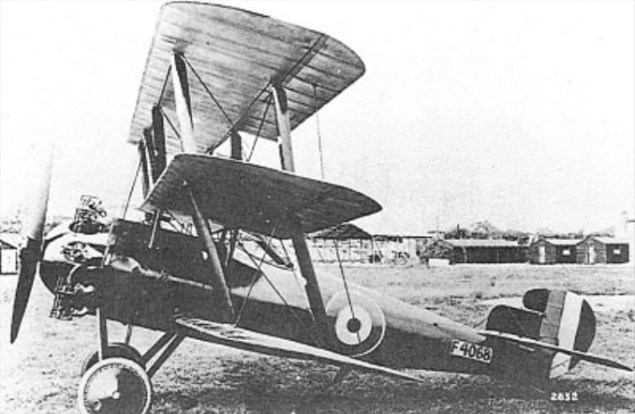
On 14 May 1918, Sopwith was awarded a contract for three prototypes of a new single-seat fighting triplane, conforming to the RAF Type I specification and named the Snark. Powered by a 320hp A.B.C. Dragonfly I nine cylinder radial and featuring a plywood monocoque fuselage, the Snark was an equi-span staggered triplane and its designed armament was two synchronised 7.7mm guns on the fuselage and four weapons of similar calibre mounted two per side under the bottom wing. The first Snark was passed for flight test in September 1918, but unavailability of a Dragonfly engine and the decision to make various minor modifications delayed manufacturer’s trials until September of the following year, the aircraft arriving at Martlesham Heath for official trials on 12 November 1919. The second prototype reached Martlesham on 17 March 1920, and the third prototype, with a 360hp Dragonfly la engine, late in the year. Apart from engine problems, the Snark triplanes suffered fuselage deterioration and all three were written off in 1921.
Engine: 320hp A.B.C. Dragonfly I
Max take-off weight: 1036 kg / 2284 lb
Wingspan: 8.08 m / 27 ft 6 in
Length: 6.25 m / 21 ft 6 in
Height: 3.30 m / 11 ft 10 in
Wing area: 29.91 sq.m / 321.95 sq ft
Max. speed: 209 km/h / 130 mph
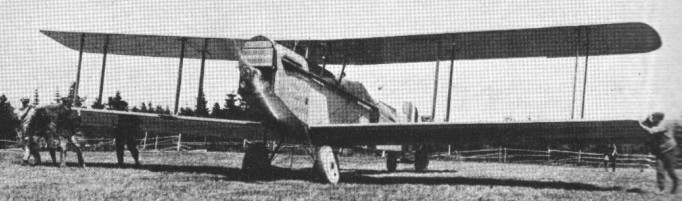
Circa 1919. Attempting to fly the Atlantic, Hawker and Grieve were forced down with radiator trouble after 1000 miles. They were mourned as dead for a week, because the steamer which rescued them had no radio.