In 1936 Sparmann’s Flygplanverkstad built S-1 single-seat low-wing monoplane trainer. Several delivered to Swedish Air Force.
Inter-Wars
Sparmann’s Flygplanverkstad
Sweden
In 1936 built S-1 single-seat low-wing monoplane trainer. Several delivered to Swedish Air Force.
SPAD S.54
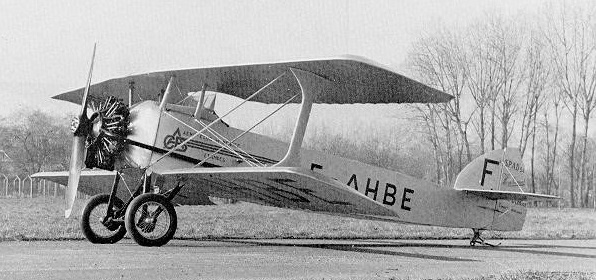
The SPAD S.54 was a French biplane trainer aircraft of the early 1920s, developed by Société Pour L’Aviation et ses Dérivés (SPAD).
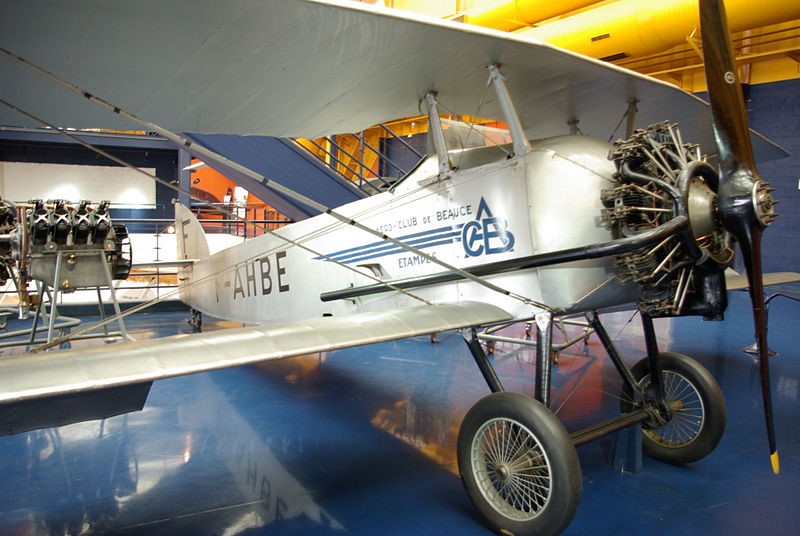
Designed by Louis Béchéreau, the S.54 first flew on 23 February 1922.
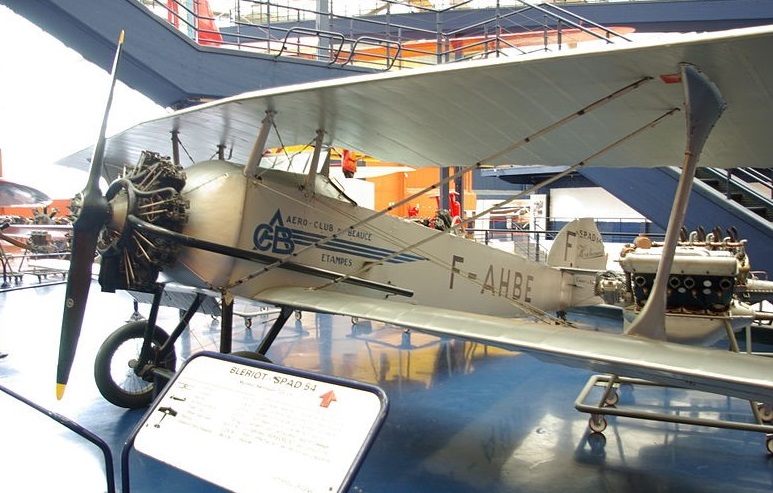
Twenty-five were built, operated by the Aéronautique Militaire.
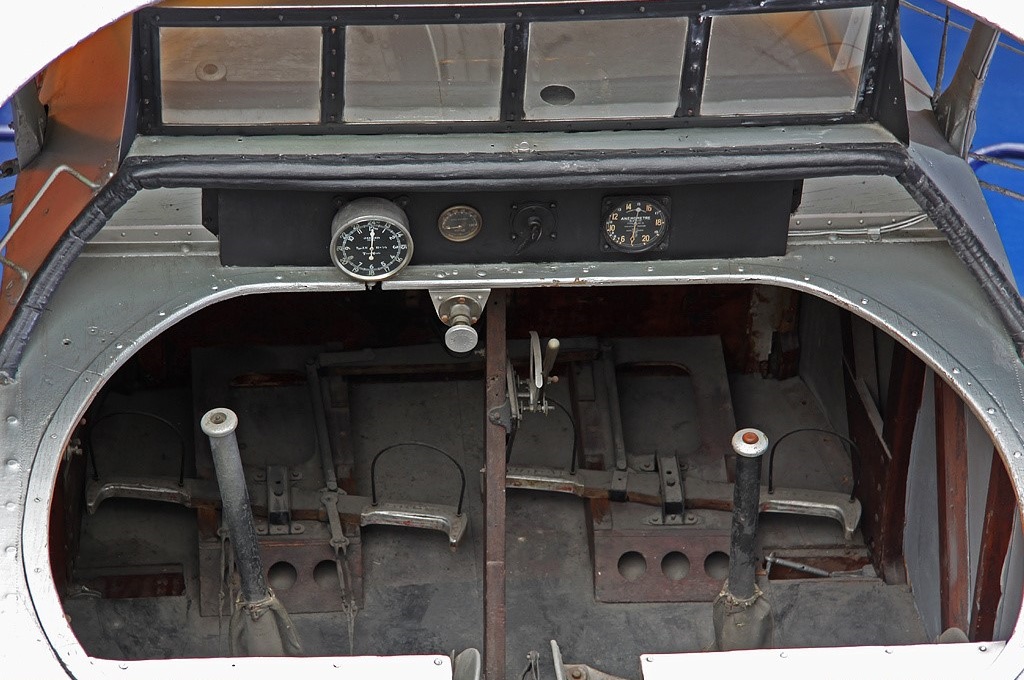
Engine: 1 × Clerget 9B, 97 kW (130 hp)
Wingspan: 8.96 m (29 ft 5 in)
Wing area: 23.52 m2 (253.2 sq ft)
Length: 7.24 m (23 ft 9 in)
Height: 2.57 m (8 ft 5 in)
Empty weight: 520 kg (1,146 lb)
Gross weight: 757 kg (1,669 lb)
Maximum speed: 120 km/h (75 mph, 65 kn)
Crew: 2
SPAD / Societe Provisoire des Aeroplanes Deperdussin
Societe Provisoire des Aeroplanes Deperdussin
Societe Parisienne des Avions Deperdussin
Societe des Productions Armand Deperdussin
Societe Pour Aviation et ses Derivees
Silk merchant Armand Deperdussin (1867-1924) was associated from 1910 with a series of notable monoplanes. Built precursor in 1909 for show in a Paris store.
By 1914 monoplanes bearing Deperdussin name were used not only privately but by several military authorities. Designed by Louis Bechereau, these aircraft were especially noted for speed performances in 1912-1913, and in some instances for monocoque construction. Deperdussin, a great promoter, became involved in financial difficulties and in 1915 the company was declared bankrupt.
In 1913 Deperdussin was arrested for embezzlement and the company was taken over by Louis Bleriot and renamed Societe Pour I’Aviation et ses Derives in 1915, thus retaining these initials. Chief technician was at first Bechereau, later Andre Herbemont.
The Deperdussin name had links with several companies, including the British Deperdussin Company with which John Porte was connected. Initials SPAD were also ascribed to Societe Provisoire des Aeroplanes Deperdussin and Societe Parisienne des Avions Deperdussin, as well as Societe des Productions Armand Deperdussin.
Company became world famous for SPAD single-seat fighters and fast reconnaissance adaptations. More than 2,000 fighters built at Suresnes factory alone; great numbers under license in France and elsewhere. Classic tractor single-seat biplane flown late 1915 as SPAD V; developed into SPAD VII of 1916, thus establishing company’s name in aviation history. Characteristic design feature was two-bay wing cellule with special form of bracing. Combination with Hispano-Suiza 8-cylinder vee engine was major factor in success. SPAD XII had a 37 mm engine-mounted gun. From May 1917 improved two machine-gun type XIII replaced VII. Large numbers ordered by U.S. SPAD XX of late 1918 was two-seat fighter to Herbemont design and precursor of new Bleriot-SPAD line of single-strut monocoque-fuselage biplane fighters, built after Bleriot took over SPAD company in 1921 SPAD became Bleriot-SPAD.
Sowers-Haugsted Sportplane
The 1935 Sowers-Haugsted Sportplane N14830 was a two-place open cockpit monoplane powered by a 45hp Anzani engine.
Sowers-Haugsted
Marcellus Sowers & C Haugsted
Nevada IA.
USA
Built the 1935 Sowers-Haugsted Sportplane.
Southern Eagles Avn Club A
Designed by R S Crowley, the 1933 Southern Eagles model A was a two-place open cockpit biplane, built by Southern High School students under the guidance of aircraft-mechanic instructors.
The one built, NC2392 c/n 1, was powered by a Salmson engine, and the registration was cancelled on 31 August 1934.
Southern Eagles Avn Club
Baltimore MD.
USA
Built the Southern Eagle A biplane in 1933.
Southern Crane 1929 monoplane / Manncraft Airplane Co 1929 monoplane
The 1929 monoplane was a two-place open cockpit, powered by a 60hp Anzani engine, replaced by a Chevrolet in December 1930. As NX817N it was sold to J C Norris of Collierville in November 1932, who may have reverted to an Anzani.
The registration was cancelled by the CAA in September 1934.
This could be the Fleming, according to findings by John M Jarratt, but this enigma has yet to be solved as the name of Fleming is not apparent. Mann Co officials of record also included Ricardo Houstee, Mann Jr, and E F Moreland.
Southern Crane / Manncraft Airplane Co
1929: Manncraft Airplane Co
pres: H W Mann
Collierville (Memphis) TN.
USA
Oct 1930: Ended operations.

