In 1929 the Spear Aircraft Corp built an aircraft of some kind but details are unknown.
Inter-Wars
Spartan Aircraft S.5 Clipper
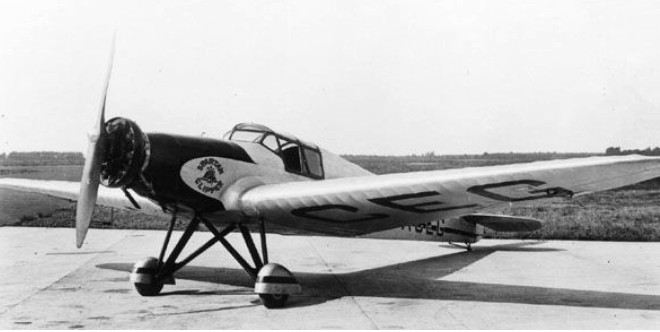
H.E. Broadsmith designed the Clipper as a two-seater; he employed the outer wings of the Monospar ST-4. Spartan Aircraft Limited built one example at their East Cowes works in 1932. The aeroplane was initially fitted with a 75-hp Pobjoy R motor. Registered G-ACEG it flew for the first time on 14 December 1932. After modification to undercarriage, cabin glazing and cowling, it received a Certificate of Airworthiness on 29 June 1933.
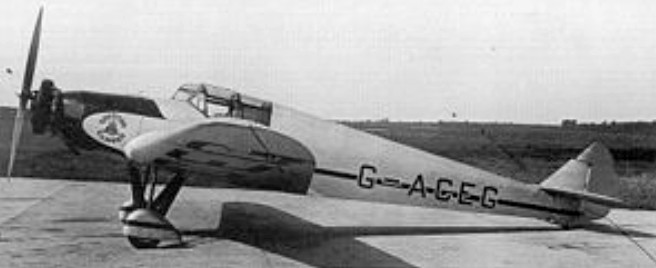
In 1933 the Clipper was raced in the King’s Cup Race.
In 1938, it was re-engined with a Pobjoy Niagara III of 90-hp, after which it was used as a company hack until 4 May 1942, when it was destroyed in an air raid on Cowes.
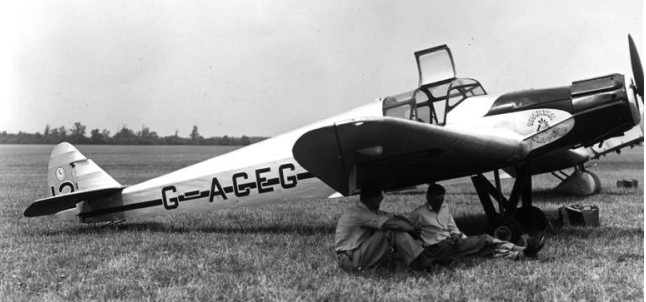
Engine: 1 × Pobjoy R, 75 hp (56 kW)
Wingspan: 34 ft 0 in (10.36 m)
Wing area: 150 sq.ft (13.94 sq.m)
Length: 28 ft 2 in (8.58 m)
Empty weight: 770 lb (350 kg)
Loaded weight: 1,300 lb (591 kg)
Maximum speed: 110 mph (96 knots, 177 km/h)
Rate of climb: 800 ft/min (4.1 m/s)
Crew: 2
Spartan C4 / E4-301
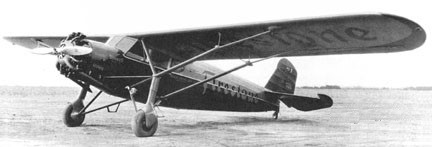
The 1920 C4 model (ATC 300) was powered by a 240hp Wright J-6 engine. Selling for $9,750, five were built, the first model, NC750N, had a smaller rudder.
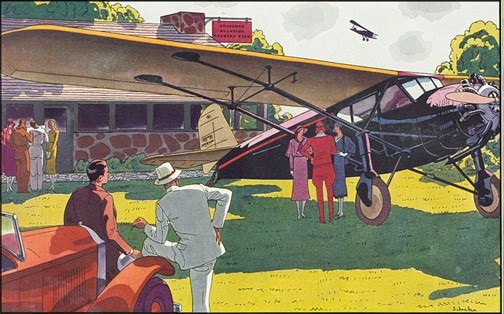
Five of the 1930 C4-225 (ATC 310) were built (NC750N to NC752N, and NC10482 to NC10483), selling for $11,700. They were powered with a 225hp Wright J-6 engine.

Three of the 1930 C4-300 and C4-301 / E4-301 (ATC 394) were built (NC981N, NC988N, and NC10593), powered with a 300hp P&W Wasp Jr and selling for $11,900.
C4
Engine: 240hp Wright J-6
Wingspan: 50’0″
Length: 32’3″
Useful load: 1190 lb
Max speed: 130 mph
Cruise: 110 mph
Stall: 50 mph
Range: 700 mi
Seats: 4
C4-225
Engine: 225hp Wright J-6
Length: 32’7″
Useful load: 1398 lb
Max speed: 143 mph
Cruise: 121 mph
Stall: 56 mph
Range: 600 mi
C4-300 / C4-301 / E4-301
Engine: 300hp P&W Wasp Jr
Useful load: 1448 lb
Max speed: 145 mph
Cruise: 128 mph
Stall: 57 mph
Range: 610 mi
Spartan 8W Zeus
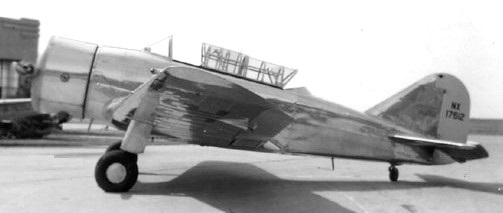
The 1937 Spartan 8W Zeus was an evolution of militarized Executive with larger engine and greenhouse cockpit. One was built for the USAAC analysis as an advance trainer, NC17612 c/n 8W-1. A small number were exported as light bomber.
8W Zeus
Engine: 550hp P&W R-1340 Wasp
Wing span: 39’0″
Length: 27’3″
Useful load: 1513 lb
Max speed: 234 mph
Cruise: 218 mph
Stall: 65 mph
Range: 760 mi
Ceiling: 29,400 ft
Seats: 2
Spartan 7W Executive / Zeus / UC-71
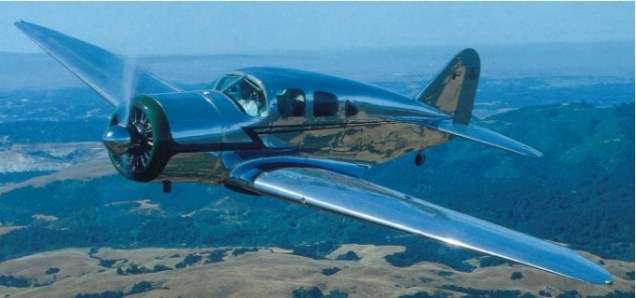
Designed by James Ford in 1935, the 7X Executive (Standard Seven) prototype of the 7 series (X/NC13984] c/n 0) featured a small tail and long dorsal fin. First flying on 19 February 1935, it was reportedly delivered to Mexico.
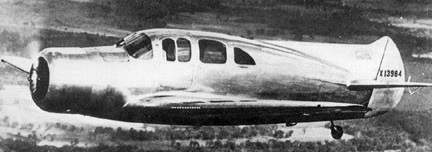
A total of 34 were built in the US between December 1935 and March 1940. The first flew on 19 March 1935, powered by a 285hp Jacobs, but all production aircraft were powered by the Pratt & Whitney 985 Wasp Junior.
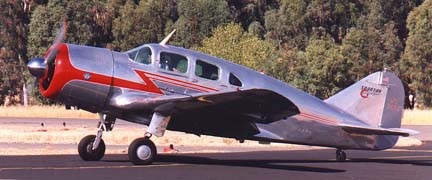
The Spartan 17W Executive (ATC 628) was comparable to the D17S in speed, weights and cabin size, and it was powered by the same reliable Pratt & Whit¬ney. It was well liked by pilots, and being an all metal, low wing monoplane, was of more modern design than the Beech. Despite one less wing, however, it was no faster. The Executive never really had a chance to compete, though. Spartan was expecting to get a Government contract for a biplane trainer and in 1940 stopped production of the Executive to de¬vote all its facilities to that purpose. The con¬tract never came, and only 34 Exec¬utives were ever built, selling from $23,500.
One Spartan Executive 4/5-seat all-metal monoplane of 1936 was converted in 1938 to Zeus 2-seat military type as the 7W-F NX17605=42-68361 c/n 10 for military acceptance tests. Two guns were mounted in the nose and one in an open station aft, plus wing racks for ten 25lb bombs. It was later converted back to 7W.
The 7W-P Executive of 1936 (ATC 646) was a three-place customized 7W (NX13986 c/n P-1) first flown on 14 September 1936. Fitted with a 400hp P&W Wasp, it was exported to China.
Sixteen were conscripted by AAF during WW2 as UC-71 (42-38265 to 38269, 42-38367 to 38369, 42-38287 to 38288, 42-43846, 42-57514 to 57515, 42-68361, and 42-78037), of which the first 11 were impressed, all but 2 returned to civil use.
YI-SOF c/n 7W-19 was a $30,000 customized job in 1939 for King Ghazi of Iraq (including a regal throne) as Eagle of Iraq, in turn went to RAF in 1940.
7W Executive
Engine: Pratt & Whitney Wasp SB Junior, 450 hp
Wingspan: 39’0″
Length: 26’10”
Useful load: 1413 lb
Max speed: 212 mph
Cruise: 190 mph
Stall: 57 mph
Range: 900 mi
Seats: 5
Undercarriage: retractable
7X Executive (Standard Seven)
Engine: 285hp Jacobs L-5
Wing span: 39’0″
Length: 26’8″
Max speed: 160 mph
Cruise: 150 mph
Stall: 45 mph
Range: 800 mi
Seats: 4
Spartan Registrations
X13984, 0 – disposition uncertain
X13986, P-1 – exported to China July 1937
NC13992, 1 – > X-ABES
NC13993, 2 – > N13993
NC13994, 3 – > X-ABEW
NC13997, 4 – > X-ABEX
NC13998, 5 – > X-ACFX
NC17601, 6 – > NC/N17601 > N2LL
NC17602, 7 – crash-landed in AK, abandoned June 2, 1944
NC17603, 8 – > X-BBAX; destroyed(?) Aug 1939
NC17604, 9 – > KD100 (RAF); salvaged for parts Mar 1952
NC17605, 10 – > 42-68361 > NC/N17605; 1938 Bendix race (?)
NC17612, 8W-1 – disposition uncertain
NC17613, 12 – > 42-38265 > NC/N17613
NC17614, 13 – > 42-38269 > NC/N17614 > N13PH
NC17615, 14 – > 42-38368 > NC/N49075 > N111PB > N22PJ > N17615
NC17616, 15 – > 42-57515 > NC236 > NC/N836
NC17617, 16 – > KD101 (RAF) > NC/N17617
NC17630, 17 – > KD102 (RAF) > NC/N17630 > N1MJ
NC17631, 18 – > 42-38267 > NC/N4444 > N3LL > N4444
NC17632, 20 – > 42-57514; crashed Nov 17, 1942
NC17633, 21 – > 42-38367 > NC/N17633
NC17655, 24 – > 42-38268 > NC17655; crashed Apr 11, 1952
NC17656, 25 – > 42-38288 > NC/N17656 > N47W
NC17657, 26 – > 42-38266 > NC17657 > N46481 > YVT-VTC > N5053
NC17658, 27
NC17659, 22 – > N17659; damaged by fire July 8, 1974, rebuilt c.1980
NC17661, 23 – > 42-78037 > NC58300; crashed Oct 20, 1946
NC17662, 28 – N17662
NC17663, 29 – crashed May 21, 1942
NC17664, 30 – > 42-38369 > NC/N17664 > N97DC
NC17665, 31 – > 42-38287 > NC/N46426 > N17665; crash-landed Sep 26, 1971, rebuilt
NC17666, 32 – destroyed in a fire Apr 1949
NC17667, 33 – > 42-38286; wrecked Oct 1, 1942
NC17668, 34 – > N668MD > N1667D > N34SE
NC20200, 11 – > 42-43846 > N20200
NX21962, 12-1 – > N21962
no US reg, 19 – > YI-SOF > AX666 (RAF); a became training aid in 1941
Spartan C2
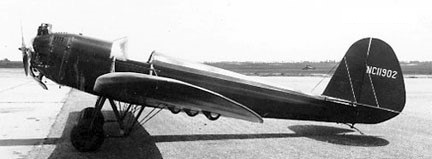
By 1931 Spartan was producing low-wing side-by-side 2-seaters, further developed as C2-60. Designed by Willis Brown and selling for $2,245, the prototype NC11000 was under ATC 2-370.
Sixteen C2-60 were built ATC 427; NC11000, NC11015 and NC11016, NC11021 to 11023, and NC11900 to NC11909.
Two, NC992N and NC993N (ATC 2-408), were built as C2-165 instrument trainers with 165hp Wright J-5 engines and hooded cockpits for the Spartan School of Aeronautics.
C2-60
Engine: 55hp Jacobs L-3
Wingspan: 40’0″
Length: 22’5″
Useful load: 464 lb
Max speed: 93 mph
Cruise: 81 mph
Stall: 39 mph
Range: 320 mi
Ceiling: 13,000 ft
Seats: 2
C2-165
Engine: 165hp Wright J-5
Seats: 2
Spartan C3
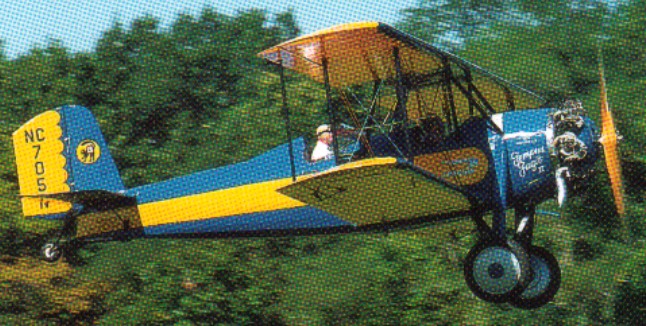
First flying on 25 October 1936, the three-seat, open cockpit Spartan C3 was built with various engines.
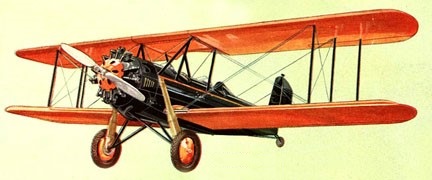
Designed by Willis Brown, the 1928 125hp Ryan-Siemens powered C3-1 (ATC 71) was priced at $5,200. About 100 were built.
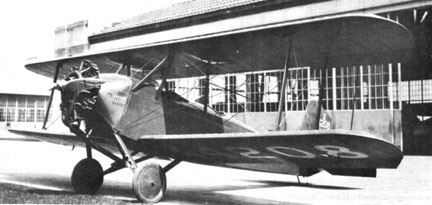
Four of the 1928 C3-2 (ATC 73) were built (N8063, NC10003, NC10080, NC11985) powered by a 120hp Walter, redesignated C3-120 in 1929

The 1929 thee-seat C3-3 (ATC 2-77) was powered by a 170hp Curtiss Challenger engine.
The 1929 C3-4 (ATC 2-78) was powered by a 115hp Axelson A engine.
The 1929 C3-5 (ATC 2-79), later re-designated C3-165, was powered by a 165hp Wright J-5 engine.
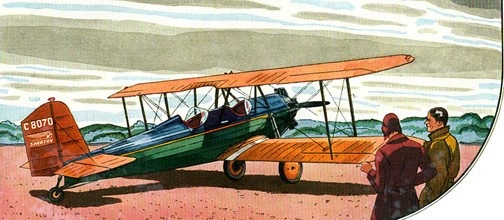
Over forty of the 1929 C3-165 (ATC 195) were built, priced at $6,750 and increasing to $5,975 in 1930.
Only one C3-166 (ATC 290) was built, NC707N. Built in 1929 it was similar to the C3-165, powered by a 165hp Comet 7-E engine, and priced at $5,675.

Fourteen of the 1930 C3-225 (ATC 286) were built, powered by a 225hp Wright J-6 engine, and priced at $7,750.
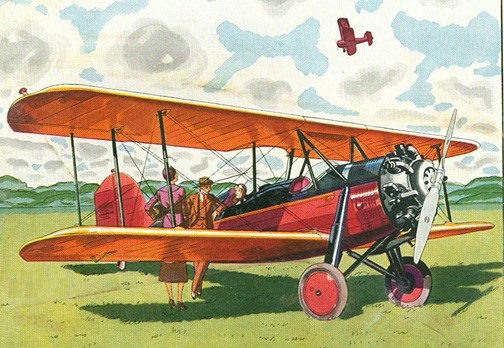
C3-1
Engine: 125hp Ryan-Siemens
Wingspan: 32’0″
Length: 23’6″
Useful load: 800 lb
Max speed: 115 mph
Cruise: 98 mph
Stall: 42 mph
Range: 450-500 mi
Ceiling: 11,000 ft
C3-2 / C3-120
Engine: 120hp Walter
C3-3
Engine: 170hp Curtiss Challenger
Seats: 3
C3-4
Engine: 115hp Axelson A
C3-5 / C3-165
Engine: 165hp Wright J-5
C3-165
Engine: 165hp Wright J-6
Length: 23’2″
Useful load: 905 lb
Max speed: 115 mph
Cruise: 100 mph
Stall: 45 mph
Range: 500+ mi
C3-166
Engine: 165hp Comet 7-E
C3-225
Engine: 225hp Wright J-6;
Length: 23’3″
Useful load: 959 lb
Max speed: 130 mph
Cruise: 110 mph
Stall: 55 mph
Range: 460 mi
Spartan G-3
Early in 1927 Spartan G-3 three-seat open-cockpit biplane was built by Mid-Continent Aircraft Company.
Designed by Willis Brown, the prototype first had a 100hp LeRhône rotary, later changed to a 125hp Ryan-Siemens.
Engine: 125hp Ryan-Siemens
Wingspan: 32’0″
Length: 23’6″
Useful load: 800 lb
Max speed: 115 mph
Cruse: 93 mph
Stall: 37 mph
Range: 600 mph
Seats: 3
Spartan Aircraft Co
1927: Mid-Continent Aircraft Co, Tulsa OK.
Early in 1927 Spartan G-3 three-seat open-cockpit biplane was built by Mid-Continent Aircraft Company.
Mid-Continent was reorganized as Spartan Aircraft Co in 1928 at Tulsa, Oklahoma.
Built C-3 with Ryan-Siemens engine. Continued to build biplanes but by 1931 was producing series of 4/5-seat cabin monoplanes; also low-wing side-by-side 2-seaters, further developed as C2-60. Spartan Executive 4/5-seat all-metal monoplane of 1936 converted in 1938 to Zeus 2-seat military type; a few of which supplied to China and Mexico. In 1940 U.S. Navy ordered 201 Spartan NP-1 biplane trainers for new Naval Reserve schools.
In 1945 production switched from airplanes to house trailers.
1968: Spartan interests sold to Automation Industries Inc.
1972: Company purchased by National Systems Corp.
1994: Spartan School still active.
Sparrow, W W
Healdron OK.
USA
Built the Sparrow Model 1 monoplane in 1928 but no further details are known.

