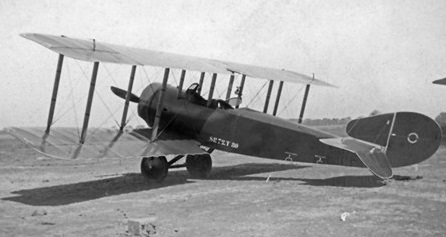
Between 1918 and 1925 the Royal Netherlands Navy used the Spijker-Trompenburg biplane for training duties.
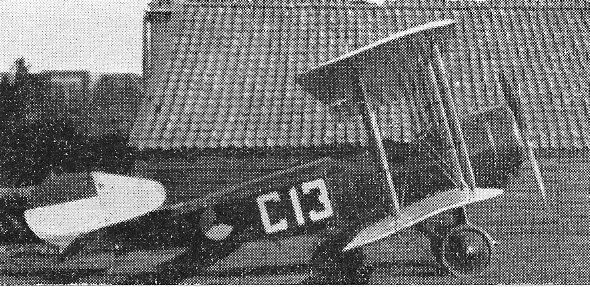
Designed by Henry Wijnmalen, the Spijker was first publicly displayed at the Amsterdam Aircraft Exhibition in August 1919.
Between 1918 and 1925 the Royal Netherlands Navy used the Spijker-Trompenburg biplane for training duties.
Designed by Henry Wijnmalen, the Spijker was first publicly displayed at the Amsterdam Aircraft Exhibition in August 1919.
The 1922 Hi-Lift was an experiment by Sperry in modifying a Curtiss JN-4D into a monoplane with an internally-braced, one-piece high-wing with I-beam spars, to produce a craft capable of carrying five, when it was originally designed for two. Despite successful trials and demonstrations, nothing came of the idea.
Engine: 90hp Curtiss OX-5
Wingspan: 36’0″
Length: 26’0″
Useful load: 800 lb
Max speed: 85 mph
Stall: 42 mph
Range: 200 mi
Seats: 5
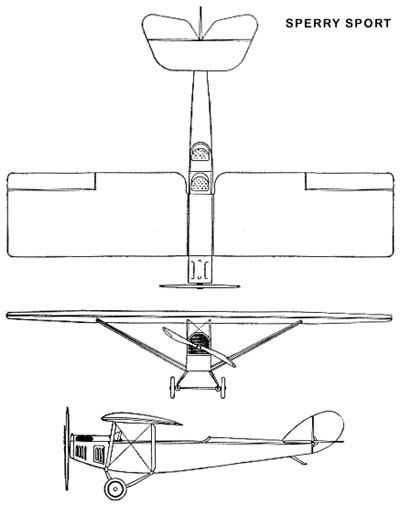
The 1921 Sperry Sport was a two-place, open cockpit, high-wing monoplane. It was a JN-4 fuselage and strut-braced Sperry wing.
Engine: 110hp Curtiss OXX
Wingspan: 38’0″
Length: 26’0″
Max speed: 85 mph
Cruise: 75 mph
Stall: 37 mph
Seats: 2
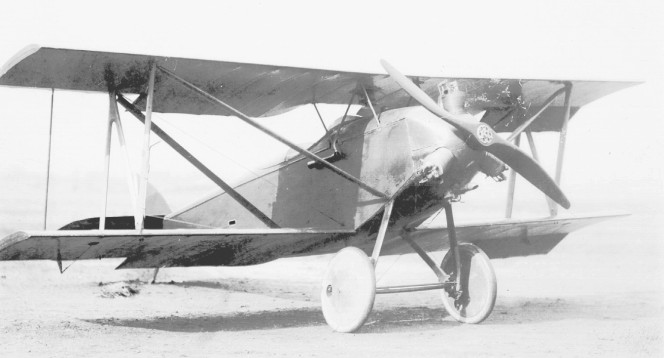
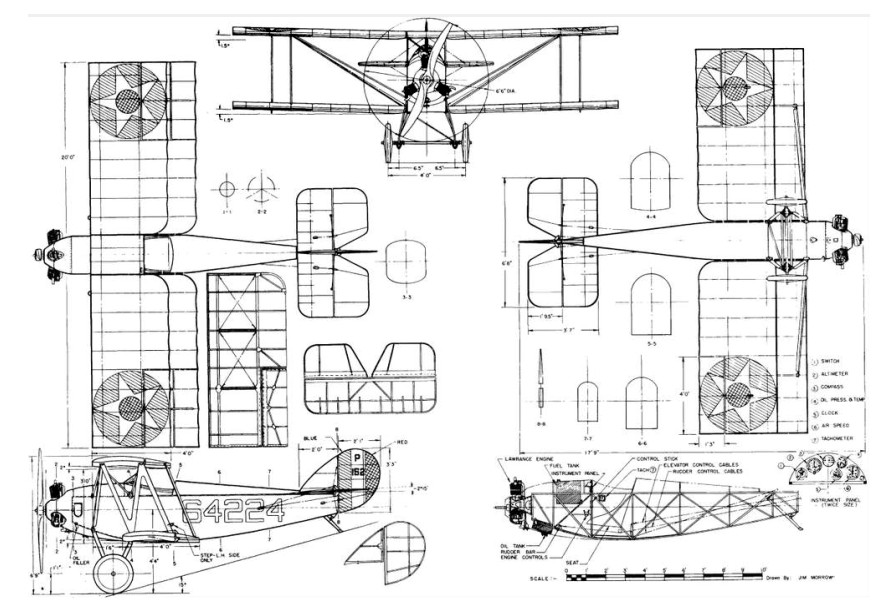
Designed at McCook Field by Alfred Verville of the Engineering Division, U.S. Air Service, and called also Verville-Sperry, the Sperry Messenger M-1
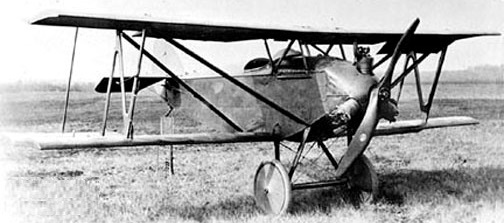
The Messenger M-1 open cockpit biplane was powered by a 60hp Lawrance L-4S and, later, L-3 (as Wright Gale) engine and had ailerons on all wings.
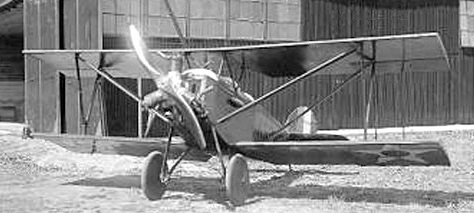
First flown on 1 November 1920 (piloted by John A Macready) from 1921 tiny Messenger single-seat biplane was in production as an Army liaison and utility aircraft. Alfred V. Verville is best known for his later Verville-Packard and Verville-Sperry racing aircraft of the early 1920s.
Twenty-two were built as military M-1, and twenty as M-1A (AS64223-64227, AS68472-68477, and AS68528-68533), plus 1 civil sport version that failed to spark any public interest, and the idea was never pursued.
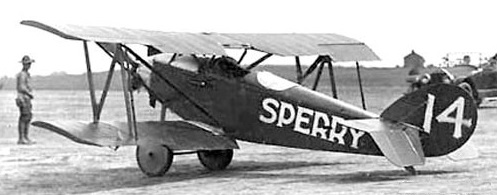
Of the first twelve, eight were modified as remote-control flying bombs with the designation MAT (“Messenger Aerial Torpedo”).
With a hook mounted above the upper wing, Messenger AS68533 piloted by Lt Rex K Stoner “landed” on a trapeze suspended from the D-3 Army Air Service airship in the first successful contact between an airplane and an airship while in flight, on 18 September 1923, over Langley Field VA.
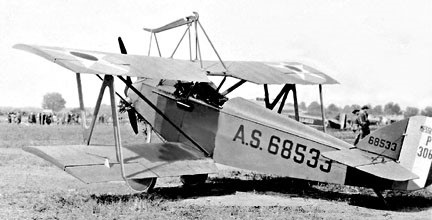
Sperry lost his life on 13 December 1923, crashing in the English Channel while demonstrating this plane, which was later rebuilt and modified by Clarence Chamberlin in 1928 for use in demonstrations to publicize lightplane aviation.
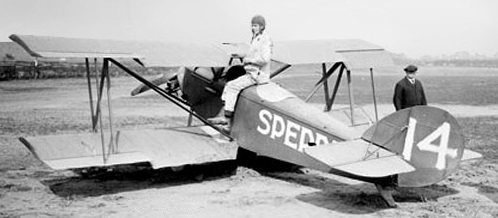
Aeromarine modified a Sperry Messenger with an experimental variable-camber in 1924.
Several ex-military aircraft appeared later in civil roles, as well.
M-1 Messenger, M-1A, MAT
Engine: 60hp Lawrance L-4S, later, L-3 (as Wright Gale)
Wingspan: 20’0″
Length: 17’9″
Max speed: 97 mph
Cruise: 80 mph
Stall: 37 mph
Ceiling: 13,400 ft
Seats: 2
Sperry, Lawrence, Aircraft Co
1918: Lawrence Sperry Aircraft Co, Farmingdale NY.
Lawrence Sperry was son of Elmer Sperry (Sperry Gyroscope Co.). Worked on aeroplanes from 1911; company founded named Lawrence Sperry Aircraft Co in 1919. In 1920 made cantilever monoplane wing for Curtiss JN, and built experimental triplane amphibian. From 1921 tiny Messenger single-seat biplane (designed by Engineering Division, U.S. Air Service, and called also Verville-Sperry) was in production. Also to official designs built Verville-Sperry Racers. A Messenger brought to England by Lawrence Sperry in 1923 came down in the Channel and Sperry lost his life, after which the company closed.
USA
Formed 1937 by P. H. Spencer (formerly of Amphibions Inc) and V. A. Larsen (previously with Fokker, Standard and Sikorsky) to develop two-seat amphibian with remotely-driven pusher propeller.
Spencer and Vincent A. Larsen design the single engine SL-12C amphibian.
Spencer leaves Spencer-Larsen in September 1940 and starts the work on his own S-12 Air Car amphibian design.
The Spencer S-12 Amphibian Air Car, NX29098, takes to the air for the first time on 8 August 1941, from sea on Belmore, Great South Bay, Long Island.
Spence accepts a job offer from The Mills Novelty Company, Chicago, IL, in 1943. In April the Air Car is flown from Long Island to Chicago, Illinois.
Described by its inventor in Jan 1984, then 87, as “… a little puddle-jumper I made just for fun at Brainerd Field, Hartford CT, in 1922… The fuselage was laid out on the floor with spruce longerons and corner gussets and was fabric covered. The cockpit opening was formed by the wood rim of a bicycle wheel… (The) engine quit and parts began falling (but made a) normal landing. There was a teenager in the assembled crowd and I gave the plane to him. I don’t know if he re-engined it or what became of the plane.”
The S-10 Monoplane was a single-place, open cockpit, low wing monoplane, powered by a 25hp Lawrance La-3, and using wings from a Curtiss Oriole.
Appeared in 1926 as a Spenser with a 35hp Lawrance—possibly the re-rated La-3.
Wing span: 32’0″
Length: 20’0″
Useful load: 220 lb
Max speed: 55 mph
Cruise: 50 mph
Stall: 28 mph
The 1933 Speed Bird Corp biplane was an open side-by-side cockpit biplane, the last of the Bird line. It was possibly the Bird F NX790N.
Engine: 90hp Lambert R-266
Wingspan: 34’0″
Length: 23’0″
Seats: 2
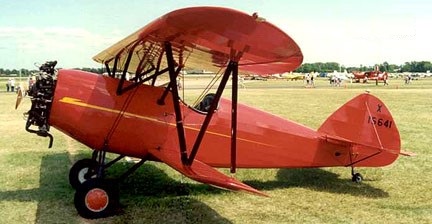
Only one Speed Bird Corp Model A was built, NX15641 in 1935. It was a two place open cockpit biplane, powered by an 85hp LeBlond 5DF engine.
1932: Speed Bird Corp (Perth Amboy Title Co),
Keyport NJ,
USA
As receiver of Bird Aircraft Co.

