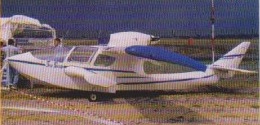
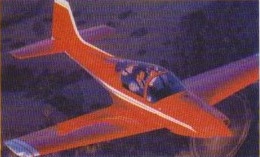
First seen in 1997 at the Bassano show, the Seastorm is aimed at the American kit plane market. Entirely composite, a 900kg MAUW four seater was under development.
Engine: Midwest 110, 115 hp Wing span: 9.27 m Wing area: 12.24 sq.m MAUW: 500 kg Empty weight: 300 kg Fuel capacity: 120 lt Max speed: 270 kph Cruise speed: 210-240 kph Minimum speed: 62-73 kph Climb rate: 4.5 m/s Seats: 2 Fuel consumption: 18-32 lt/hr Price (1998): $89,000 Kit price (1998): $45,000
Engine: Midwest 105, 105 hp HP range: 105-115 Top speed: 171 mph Cruise: 148 mph Stall: 44 mph Range: 1040 sm ROC: 1200 fpm TO dist land/water: 400 ft / 820 ft Ldg dist land/water: 425 ft / 620 ft Service ceiling: 13,700 ft Fuel cap: 26.5 USG Empty wt: 682 lb Gross wt: 1340 lb Height: 6 ft Length: 24.6 ft Wing span: 30 ft Wing area: 131 sq.ft Seats: 2 Undercarriage: tail
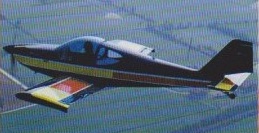
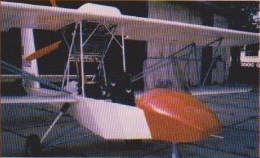
The Storm is derived from the P 220 Pottier, using pop-riveted sheet dural.
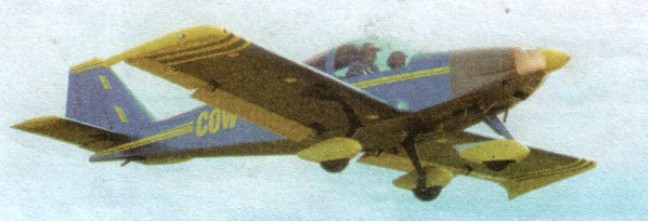
The Storm 400Ti is a three seat version of the Storm 280, designed specifically for the US kitplane market.
Storm 400Ti
Storm 280 Engine: Rotax 912, 80 hp Wing span: 8.6 m Wing area: 11.6 sq.m MAUW: 450 kg Empty weight: 262 kg Fuel capacity: 90 lt Max speed: 225 kph Cruise speed: 200 kph Minimum speed: 65 kph Climb rate: 5 m/s Certification: vVZ Seats: 2 Fuel consumption: 13 lt/hr Price (1998): 88,328 DM Kit price (1998): 33,335 DM
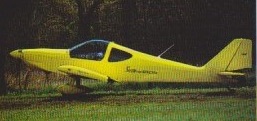
Storm 300 Engine: Jabiru, 120hp Fuel cap: 55 lt main + 2 x 28 lt wing.
Storm 300 Engine: Rotax 912 Fuel cap: 90 lt.
Storm 300 Engine: Midwest 105, 105 hp HP range: 80-120 Top speed: 200 mph Cruise: 171 mph Stall: 35 mph Range: 650 sm ROC: 1500 fpm TO dist: 450 ft Ldg dist: 360 ft Service ceiling: 12,000 ft Fuel cap: 23 USG Empty wt: 617 lb Gross wt: 992 lb Height: 6.4 ft Length: 20.9 ft Wing span: 26 ft Wing area: 119 sq.ft Seats: 2 Undercarriage: nose or tail.
Storm 300 Special Engine: Midwest 105, 105 hp HP range: 80-120 Top speed: 200 mph Cruise: 171 mph Stall: 42 mph Range: 650 sm ROC: 1500 fpm TO dist: 450 ft Ldg dist: 360 ft Service ceiling: 12,000 ft Fuel cap: 38 USG Empty wt: 710 lb Gross wt: 1155 lb Height: 6.4 ft Length: 20.9 ft Wing span: 26 ft Wing area: 119 sq.ft Seats: 2 Undercarriage: nose or tail
Storm 400Ti Engine: Lycoming O-235, 116 hp Wing span: 7.20 m Wing area: 11.06 sq.m MAUW: 720 kg Empty weight: 400 kg Fuel capacity: 90 lt Max speed: 242 kph Cruise speed: 220 kph Minimum speed: 81 kph Climb rate: 5.5 m/s Seats: 3 Fuel consumption: 20 lt/hr Kit price (1998): 65 000 000 L
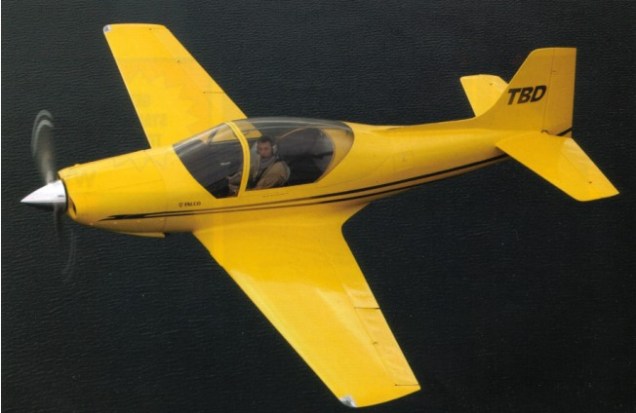
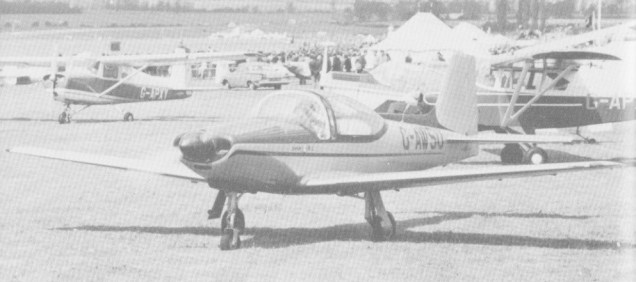
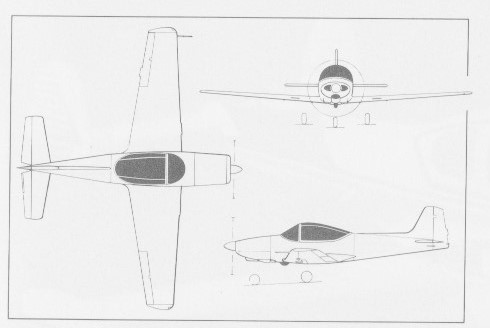
A two-place aircraft with an optional third seat for a child, the Falco offers an unbeatable combination of high-speed cross-country travel with complete aerobatic capability. Designed by an Italian, Stelio Frati in 1954, a Falco equipped with an optional Christen inverted fuel and oil system is capable of unlimited inverted flight and the full range of aerobatic maneuvers. Landing gear are fully retractable, activated by a simple mechanical system. Designer Frati has been responsible for such airplanes as the Waco Meteor/SF 260 and the F20 Pegaso.
Designed in 1955 and between 1956 and 1968, 101 Falcos were built as production aircraft.
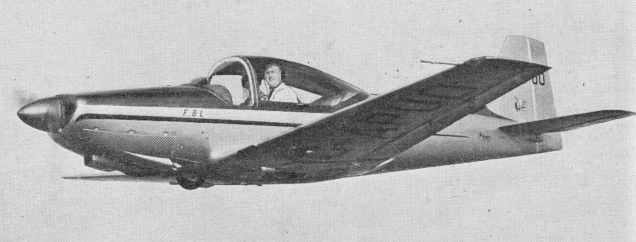
The initial F.8L Series 1 was produced by Aviamilano (20 built), along with 20 F.8.L series II development.
The F.8,L America was basically similar to the Series II but modified to CAR.Pt.3 requirements.
The F.8L Super Falco Series IV was generally similar to the The F.8,L America but with the 160 hp engine. 20 were built by Laverda.
Now earmarked for homebuilt construction in the United States through Sequoia Aircraft Corp., the Falco is made of wood, except for the firewall forward, the landing gear and the sliding canopy. Fuselage and wing skins are dacron. Power is supplied by either a 150- or 160-hp Lycoming behind a fixed-pitch or constant-speed prop. Gear and flaps are operated electrically.
Two examples of the Aviamilano F.8 Falco appeared in Britain during 1960.
Aviamilano F.8 Falco
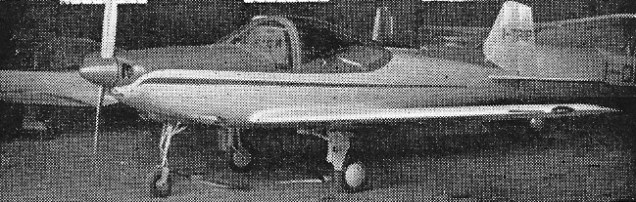
On 25 April 1965, the first, I-TRIP, of ten F.8 Super Falco under construction by Vietri first flew.
Vietri F.8 Super Falco I-TRIP
The Falco has been produced in kit form since 1974.
September 1982
Price 1982: $24,000 (Excludes engine and propeller). Units delivered to June 1981: 80. Kit price 2008: US$108,440
Markets in plans and kit forms a homebuilt version of the Italian Stelio Frati F.8L Falco wooden two-seat monoplane, plus the metal 300 Sequoia. 1997-8: 2000 Tomlynn St, PO Box 8681, Richmond, VA 23230, USA.