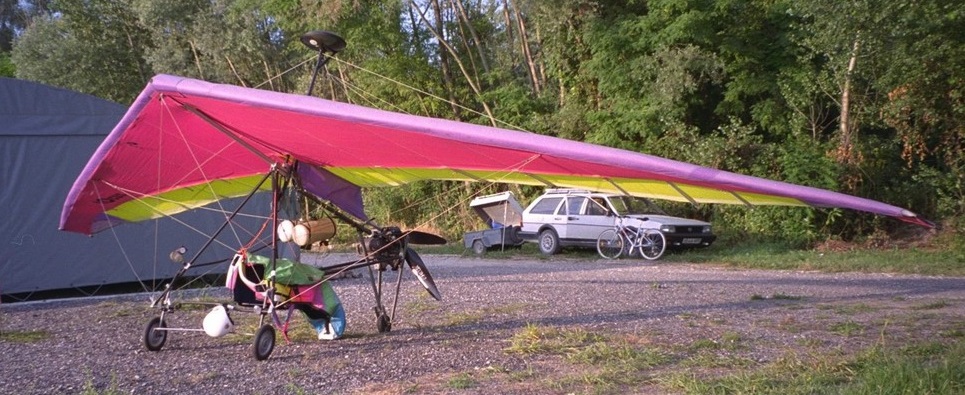
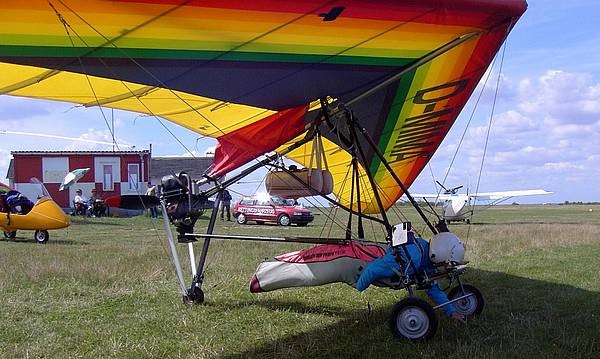
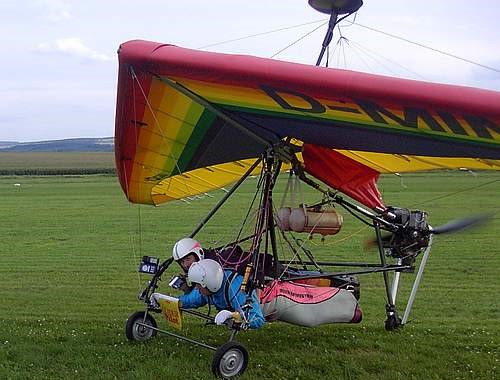
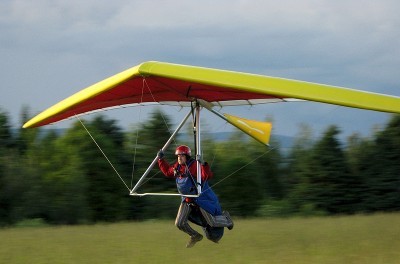
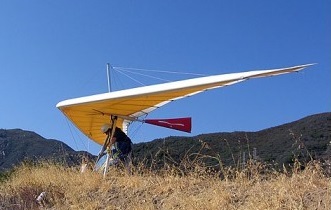
The Mini II, which was built by W. Seiffert until 1992, was designed as a minimum: with low engine power. The Mini II was 15,000 DM at that time. The production of the Mini II was discontinued in 1992.
With a hang glider wing (Schönleber Focus 18) power is from a 24 hp König three-cylinder two-stroke engine, with electric start. The battery was originally charged from a solar cell. In practice, however, the sunshine is far from sufficient to always have a full battery.
With the large surface area of the Schönleber Focus (18 square meters) wing, thermal flying is possible.
The Mini II is officially approved for double-seater operation – as the only one yet.
The Mini II is very manoeuvrable thanks to the large wheels on the ground.
The fuel is held in 2 x 12 lt tanks, and the consumption of the three-cylinder engine is about 8 lt/ hour.
ALF (founded in autumn 2010, at the Altes Lager airfield, south of Berlin) has the rights for the construction and distribution of the Mini II and has been working on the successor since 2005. Markus Hanisch has taken over the construction and distribution rights from the DULV and is building the Mini II again in a modern form.
The older, somewhat slow Focus 18 surface (as in the original Mini II) from UL-manufacturer Schönleber is used. In the approval process is the Bautek Bico wing. The development has not yet moved beyond a prototype device.
Engine: König SC 430, 24 hp Wing: Schönleber Focus Wing area: 18 sq.m Climb rate solo: – 4 m/s Climb rate MAUW: 2 m/s Price 1987: 15.000 DM
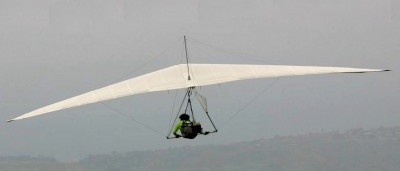
The 1999 Seedwings Europe Viagro glider is in good balance when it rests on your shoulder. The heavy weight feel lighter then.
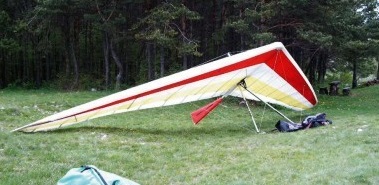
Viagro Wing area: 14 m² Wing span: 10.3 m Aspect ratio: 7.8 Hang glider weight: 36 kg Minimum pilot weight: 65 kg Maximum pilot weight: 85 kg Minimum speed: 33 km/h Maximum speed: 80 km/h Packed length: 5.2 m Packed length short: 3.9 m Number of battens: 26 Nose angle: 127°
Viagro Race Wing area: 14 m² Wing span: 10.3 m Hang glider weight: 38 kg Minimum speed: 32 km/h Maximum speed: 80 km/h Packed length: 5.2 m Packed length short: 3.9 m Number of battens: 26
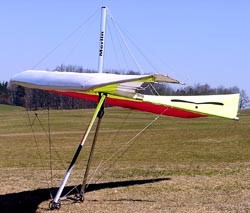
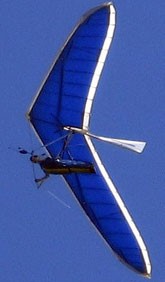
Merlin 133 Wing area: 12.4 sq.m Wing span: 9.9 m Pilot weight: 60-80 kg Nose Angle: 132 deg Aspect ratio: 8 Certification: DHV 3 Price (1998) 64000 ÖS
Merlin 133 Wing area: 12.4 m² Wing span: 9.95 m Aspect ratio: 8 Hang glider weight: 28 kg Minimum pilot weight: 50 kg Maximum pilot weight: 75 kg Nose angle: 127°
Merlin 148 Wing area: 13.8 sq.m Certification: DHV 2-3 Pilot weight: 70-90 kg Wing span: 10.25 m Nose Angle: 133 deg Aspect ratio: 7.6 Price (1998) 65800 ÖS
Merlin 148 Wing area: 13.8 m² Wing span: 10.25 m Aspect ratio: 7.6 Hang glider weight: 30 kg Minimum pilot weight: 70 kg Maximum pilot weight: 90 kg Nose angle: 127°
Merlin 158 Wing area: 13.8 sq.m Certification: DHV 2-3 Pilot weight: 80-110 kg Wing span: 10.4 m Nose Angle: 133 deg Aspect ratio: 7.4 Price (1998) 66000 ÖS
Merlin 158 Wing area: 14.6 m² Wing span: 10.4 m Aspect ratio: 7.4 Hang glider weight: 33 kg Minimum pilot weight: 80 kg Maximum pilot weight: 105 kg Nose angle: 127°
1998: Schlichterstrasse 63, A-6262 Schlichter, AUSTRIA
Seedwing Europe was authorized to produce the model Sensor 510E160 and 610-144 by Seedwings Inc (USA) until July 1993. At the end of the contract, Andreas and Manfred Bangheri continued to produce the “Sensor” under the name of “Seedwings Europe” without the agreement of Bob Trampenau.
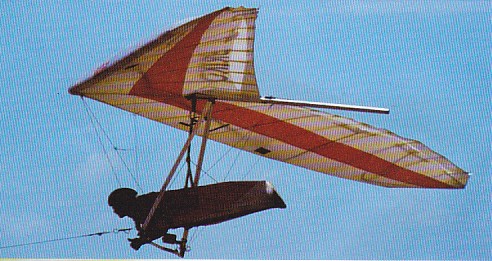
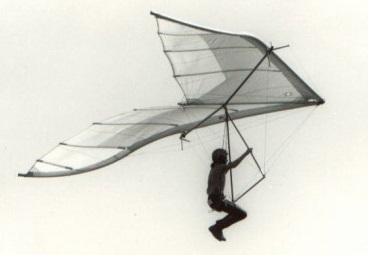
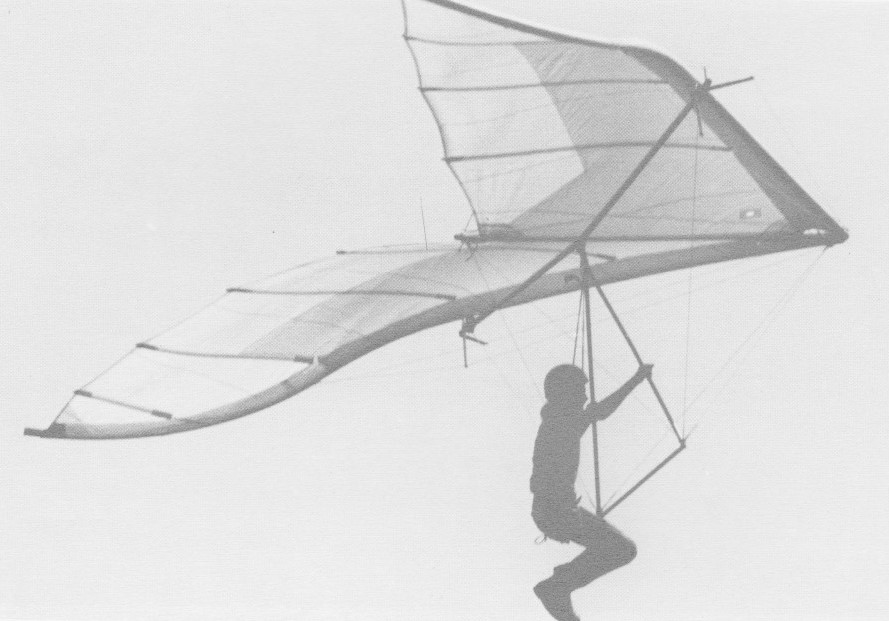
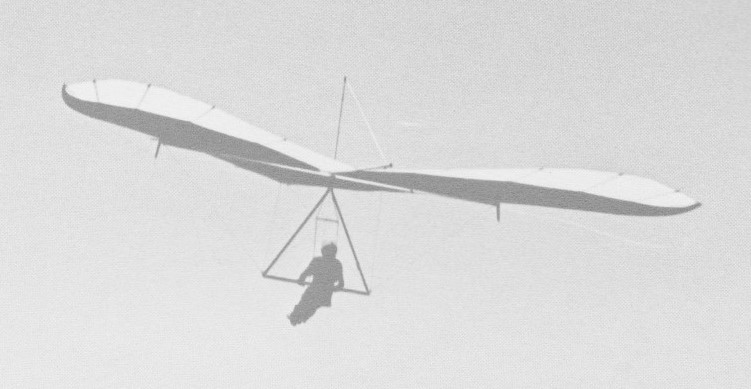
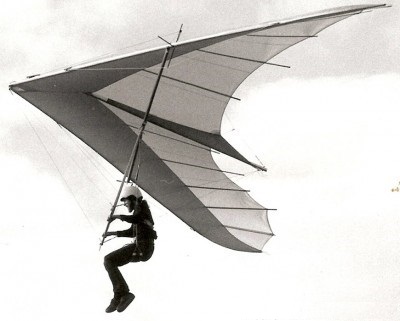
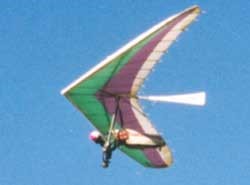
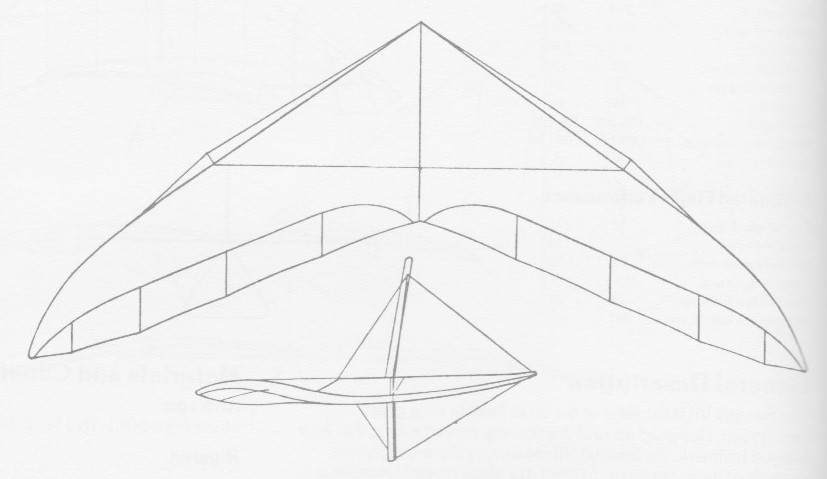
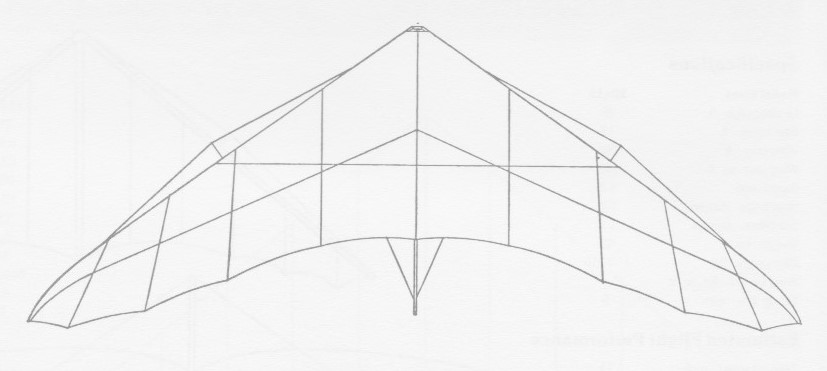
The Sensor 1 was a 1975 hang glider which featured a double surface sail and swept truncated tips. It was very stable in comparison to most high performance gliders, faster than most standards, and with good penetration. It has positive dive recovery with full sail deflation because of rigid truncated washout. This glider has been the test bed for diffusor tip theory in flex membrane wings.
Sensor I
The Sensor I airframe is made from 6061-T6 1.75in x .049 anodised aluminium tubing and all rigging cable is 3/32in 7 x 7 vinyl coated stainless steel aircraft quality. All hardware is aircraft quality, and the sail is made from 4.25oz and 3.0oz stabilised dacron, then available in white only.
There was the option of seated or prone harness.
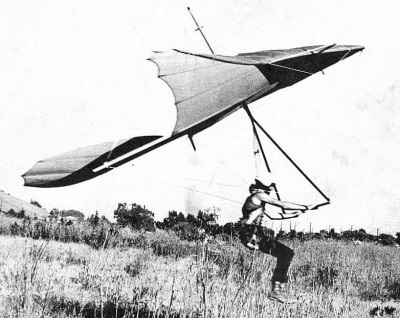
The Sensor 2 was from 1976 featured Flare Tips advanced tip design. This eliminates tip stall during steep banked turns and parachuting. The wingtips are extended with a Flare Tip Batten which allows the tip to flex in the angle of attack. The airfoil is a semi-double surface inflated type.
Sensor II
The Sensor II’s Flare Tips gives it a tip inertia that is lower than most. This is very light and flexible concept allows for rapid turn response, light tip gust effects, lower induced drag and improved washout distribution. The airfoil gives high L/D and low moment. The keel is reflexed and cambered for positive pitch moment.
The airframe is made from 6061-T6 and 2024-T3 aluminium tubing that is doweled and bushed. All rigging cable is 3/32in 7 x 7 vinyl coated stainless steel aircraft quality. All hardware is aircraft quality.
The sail is made from 3.8oz Howe & Bainbridge stabilised dacron with reinforcement in stress areas and double zig-zag stitched. The sail is fully battened. Seated or prone harness support sysems were options.
Sensor 2
The Sensor 210B is from 1976.
Sensor 210B
The Sensor 210C is from 1977.
Sensor 210C
The Sensor 210E is from 1979.
Sensor 210E
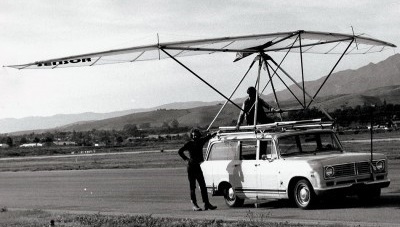
Construction plans were available for the Sensor 210E, all in inches and AN standards, and available in two sizes. The Sensor at that time was “the ultimate flying machine”. Bob Trampenau has been the inventor of curved flexible wingtips. Despite the fixed crossbars (floating crossbars) and big span it was easy to roll. Now, it handles like an ocean vessel.
Both the Sensor 310A and Sensor 310B were 1977 models.
Sensor 310A
The Sensor 411A was also a 1977 hang glider, followed by the Sensor 411B in 1978.
Sensor 411A
Sensor 411B
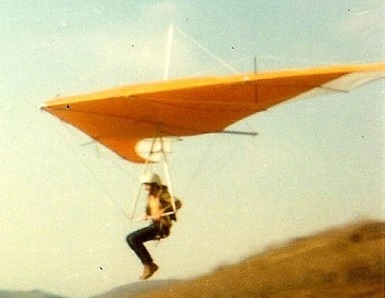
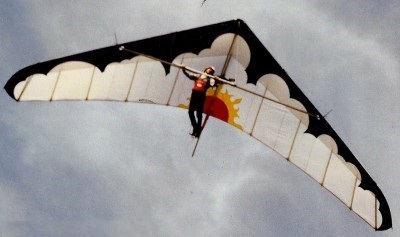
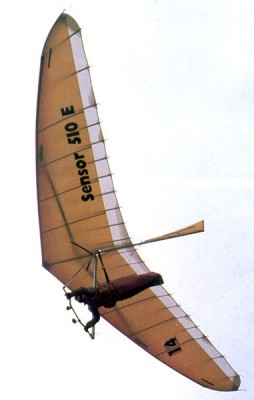
The 1985 Sensor 510 was for advanced pilots.
Sensor 510
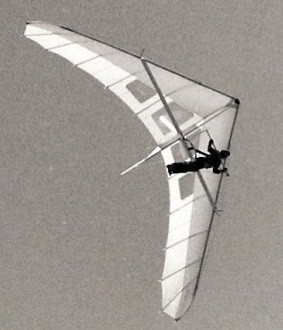
The Sensor 610 came in 1992.
Sensor 610
Seedwing Europe was authorized to produce the model “Sensor 610-144” until 1993. At the end of the contract, they continued to produce the “Sensor” under the name of “Seedwings Europe” without the agreement of Bob Trampenau.
The Sensor 610 CF3 was a 2000 version for advanced pilots.
Sensor 610 CF3
The 2005 Sensor 610 CF4 was for advanced pilots.
Sensor 610 CF4
The 2007 Sensor 610 CF5 was for advanced pilots.
Sensor 610 CF5
The 2008 Sensor 610 F5 was for advanced pilots.
Sensor 610 F5
Seedwings produced the Sensor 610 and, in 1993, the Sensor 611.
Sensor 611
The 1986 Sensor 710 was for advanced pilots.
Sensor 710
Sensor I Keel length: 7.5 ft Wing span: 29.5 ft Wing area: 145 sq,ft Aspect ratio: 6 Nose angle: 110˚ Sail billow: .025˚ Weight: 45 lb Pilot weight: 130-160 lb Takeoff speed: 15 mph Stall speed: 16 mph Max speed: 45 mph Best glide ratio (L/D): 8-1 Best L/D speed: 25 mph Min sink: 275 fpm
Sensor II Keel length: 9.2 ft Wing span: 32.8 ft Wing area: 165 sq,ft Aspect ratio: 6.5 Nose angle: 110˚ Sail billow: 0.5˚ Weight: 36 lb Pilot weight: 140-180 lb Takeoff speed: 12 mph Stall speed: 14 mph Max speed: 45 mph Best glide ratio (L/D): 9-1 Best L/D speed: 25 mph Min sink: 225 fpm
Sensor 210E 183 Wing area: 17m² Wingspan: 10,5m
Sensor 510 Wing area: 14.96 m² Wing span: 10.6 m Aspect ratio: 7.5 Hang glider weight: 30 kg Number of battens: 20
Sensor 610 Wing area: 13.5 m² Wing span: 10.4 m Aspect ratio: 8 Minimum pilot weight: 60 kg Maximum pilot weight: 85 kg Nose angle: 127°
Sensor 610 CF3 135 Wing area: 12.63 m² Wing span: 10 m Aspect ratio: 8 Hang glider weight: 30 kg Minimum speed: 32 km/h Maximum speed: 104 km/h Max glide ratio (L/H): 15 Minimum sink rate: 0.76 m/s Packed length: 5.2 m
Sensor 610 CF3 142 Wing area: 13.19 m² Wing span: 10.4 m Aspect ratio: 8.1 Hang glider weight: 32 kg Minimum speed: 32 km/h Maximum speed: 104 km/h Max glide ratio (L/H): 15 Minimum sink rate: 0.76 m/s Packed length: 5.3 m
Sensor 610 CF3 150 Wing area: 13.93 m² Wing span: 10.7 m Aspect ratio: 8.2 Hang glider weight: 33 kg Minimum speed: 32 km/h Maximum speed: 104 km/h Max glide ratio (L/H): 15 Minimum sink rate: 0.76 m/s Packed length: 5.5 m
Sensor 611 Wing area: 14.4 m² Wing span: 10.85 m Aspect ratio: 8.2 Minimum pilot weight: 75 kg Maximum pilot weight: 105 kg Nose angle: 127°
Sensor 710 145 Wing area: 10.12 m² Wing span: 13.47 m Aspect ratio: 7.6 Hang glider weight: 29 kg Minimum pilot weight: 70 kg Maximum pilot weight: 85 kg Packed length: 5 m Number of battens: 14 Nose angle: 132°
Sensor 710 152 Wing area: 10.43 m² Wing span: 14.12 m Aspect ratio: 7.7 Hang glider weight: 30 kg Minimum pilot weight: 77 kg Maximum pilot weight: 102 kg Packed length: 5.2 m Number of battens: 14 Nose angle: 132°
Do not confuse with “Seedwing Europe” who was authorized to produce the model Sensor 510E160 and 610-144 until July 1993. At the end of the contract, Andreas and Manfred Bangheri continued to produce the “Sensor” under the name of “Seedwings Europe” without the agreement of Bob Trampenau.
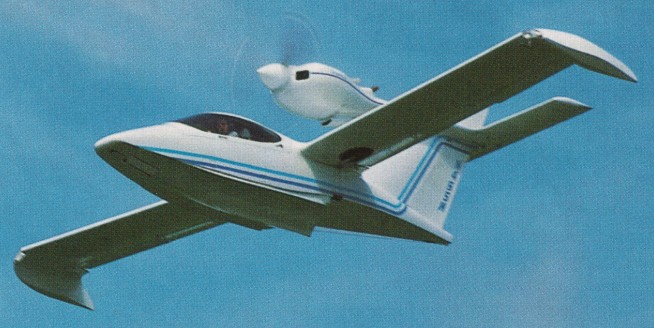
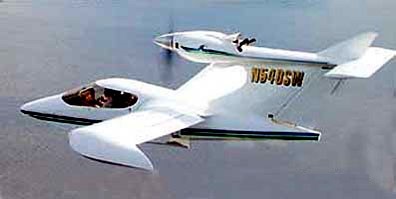
The Seawind 2000 am¬phibian offered by Seawind International of Ontario, Canada, was designed by Rodger Creelman and first flown in 1993.
The pylon mounted engine sits well forward of the fin leading edge, giving an impression that it might part company if subjected to gyroscopic or turbulence loadings. However the mount has been subjected to and survived a 20G test loading, twice the required FAA rertifica¬tion requirements. The Seawind has a wingspan of 35 feet, a MAUW of 3100 lbs and provides a cruise of 145 knots on its fin mounted single Lycoming IO 360 consuming 10 US gal¬lons each hour.
The four seat Seawind 2500 amphibian design is of composite manufacture, and first flown in 1994. The amphib¬ian’s power source is a 200 hp tail-mounted Lycoming IO 360; cruise is noted at 145 knot.
The certified Seawind 300C is manufactured Exclusively by Sea Air Composites, inc, a single engine 4/5 place amphibian.
Initially with tail-mounted 300hp Lycoming IO-540 (prototype with 200hp IO-360), later powered by 400hp Allison 250-B17B turboprop.
Of fiberglass and cellfoam construction the Seawind received the EAA award for craftsmanship in 2000. The standard kit with molded components, less engine sold for $58,980.
Seawind N548SW
Seawind 2000
Seawind 2500 Engine: Lycoming IO-540-T, 300 hp HP range: 250-300 Height: 10.2 ft Length: 27.2 ft Wing span: 35 ft Wing area: 160 sq.ft Weight empty: 2230 lb Gross: 3400 lb Fuel cap: 110 USG Speed max: 187 mph Cruise: 178 mph Range: 1600 sm Stall: 59 mph ROC: 850 fpm Take-off dist: 1010 ft, (1600 ft water) Landing dist: 770 ft (620 ft water) Service ceiling: 14,800 ft Seats: 4 Landing gear: retractable nose wheel
Seawind 3000 Engine: Lycoming IO-540, 300 hp Height: 10.2 ft Length: 27.2 ft Wing span: 35 ft Wing area: 160 sq.ft Weight empty: 2300 lb Gross: 3400 lb Fuel cap: 110 USG Speed max: 200 mph Cruise: 191 mph Range: 1460 sm Stall: 57 mph ROC: 1250 fpm Take-off dist: 820 ft, (1100 ft water) Landing dist: 770 ft (620 ft water) Service ceiling: 20,000 ft Seats: 4 Landing gear: retractable nose wheel
Seawind 300C Engine: Engine Continental IO-550-N. 310 hp Propeller: McCauley 3-blade 76” Constant Speed Wing Area: 163 sq. ft. Wing Span: 35 ft Height: 10 ft 2 in Overall Length: 27 ft 2 in Ground Clearance: 8.5 in Wing Loading: 20.81 lbs/sq ft Power Loading: 10.97 lbs/hp Max Gross Weight: 3400 lbs Std Empty Weight: 2300 lbs Equipped Empty Weight: 2350 – 2400 lbs Useful Standard: 1150 lbs Useful Equipped: 1000 – 1150 lbs Fuel Capacity Mains: 80 US gals Long Range – Aux Tanks: 30 US gals Sea Level Speed 100% Pwr: 200mph / 174 kt. Cruise 75% Pwr (8,000 ft): 190mph / 165kt. Cruise 65% Power (8,000 ft): 180mph / 156kt. Cruise 55% Power (8,000 ft): 169mph / 147kt. Fuel Burn at 55% Power: 12.8 gph Max. Range (no reserve main) 1040sm / 905nm. Extended Fuel Range: 1460sm / 1270nm. Rate of Climb: 1250 fpm B/Rate of Climb Speed: 99mph / 86kt. B/Angle of Climb Speed: 74mph / 65kt. Stall Speed: Clean 72mph / 63kt, Flaps & Wheels: 60mph / 54kt. Service Ceiling: 18,000 ft. Take off Distance 3200 lbs: Land 870 ft / Water 1100 ft Take off Distance 3400 lbs: Land 1175 ft / Water 1400 ft. Over 50’ Obstacle: Land 1175 ft / Water 1400 ft Landing Distance: Land 770 ft / Water 620 ft. Over 50’ Obstacle: Land 1300 ft / Water 1150 ft. Cabin Length: 105” Cabin Width: Front 52″ / Rear 54″ Cabin Baggage: 16 x 48″ wide, 24” high, 10 cu ft Aft Baggage: Opening 19” x 40”, Length 71″, Volume 30 cu ft Nose Deck Forward Storage: 3 cu ft