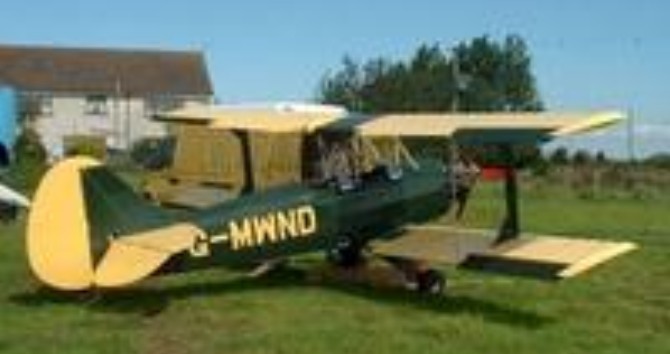
The Sherwood Ranger is a lightweight two seat open cockpit biplane, designed to reduce the cost of owning and operating your own aeroplane to the absolute minimum. One of its major features is that the wings can be folded and the aeroplane loaded onto a trailer in less than three minutes, thus eliminating hangarage costs by allowing the aeroplane to be stored at home. The performance and handling characteristics allow safe operation from unprepared grass fields as short as 250yds.
The Ranger XP was first flown in 1991, and the LW in 1994.
TCD Ltd, UK, markets kits for the Sherwood Ranger ST single- or tandem two-seat biplane.
Engine: Rotax 532, 64 hp HP range: 50-100 Height: 7.33 ft Length: 20 ft Wing span: 23 ft Wing area: 140 sq.ft Weight empty: 495 lb Gross: 1000 lb Fuel cap: 12 USG Speed max: 95 mph Cruise: 85 mph Range: 210 sm Stall: 38 mph ROC: 1600 fpm Take-off dist: 100 ft Landing dist: 200 ft Service ceiling: 14,000 ft Seats: 1-2 Landing gear: tail wheel
The Little Aeroplane Co Sherwood Ranger Stall: 56 kt / 65 mph / 105 kmh Cruise: 78 kt / 90 mph / 145 kmh MTOW Weight: 450 kg / 992 lbs Climb Ratio: 1000 ft/min / 5 m/s Take-off distance (50ft obstacle): 700 ft / 213 m Landing distance (50ft obstacle): 800 ft / 244 m
Sherwood Ranger LW Engine: Rotax 532, 64 hp HP range: 50-100 Height: 7.3 ft Length: 20 ft Wing span: 26 ft Wing area: 168 sq.ft Empty weight: 400 lb Gross weight: 860 lb Fuel capacity: 6-12 USG Top speed: 85 mph Cruise: 70 mph Stall: 38 mph Range: 140 sm Rate of climb: 1000 fpm Takeoff dist: 100 ft Landing dist: 200 ft Service ceiling: 14,000 ft Seats: 2 Landing gear: tailwheel
Sherwood Ranger XP Engine: Rotax 618, 75 hp HP range: 65-100 Height: 7.3 ft Length: 20 ft Wing span: 23 ft Wing area: 140 sq.ft Empty weight: 500 lb Gross weight: 1000 lb Fuel capacity: 12 USG Top speed: 95 mph Cruise: 85 mph Stall: 38 mph Range: 210 sm Rate of climb: 1300 fpm Takeoff dist: 100 ft Landing dist: 200 ft Service ceiling: 14,000 ft Seats: 2 Landing gear: tailwheel
TCD Sherwood Ranger Engine: Rotax 582, 64 hp Wing span: 7.92 m Wing area: 15.70 sq.m MAUW: 390 kg Empty weight: 200 kg Max speed: 150 kph Cruise speed: 115 kph Minimum speed: 65 kph Climb rate: 4 m/s Certification: PFA Seats: 2 Fuel consumption: 16 lt/hr Kit price (1998): £10,516
The WS-15 or Woshan 15, is a turbofan engine designed by Shenyang Aeroengine Research Institute or Institute 606 and manufactured by Xi’an Aero-Engine Company to power the Chengdu J-20 fifth generation fighter aircraft and possibly the J-10B for the PLAAF.
The People’s Republic of China began development of the WS-15 in the 1990s. The WS-15 is designed to produce a maximum 180 kN thrust with afterburner and is expected to power fifth generation fighters such as the J-20. The “Core” of the WS-15 was displayed for the first time in 2010. It is rumored that the WS-15 core completed high altitude testing in 2009. A high thrust turbofan for transport aircraft based on the WS-15 core was also being developed. This turbofan designated SF-A and is developed for Y-20 military transport aircraft and C919 airliner.
The design and development of the WS-15 engine used experiences learned from the previous WS-10 turbofan engine program started in the early 1980’s.
The Shenyang Liming WS-10 (or WS10, WS stands for Woshan, Chinese: 涡扇, meaning turbofan), codename Taihang, is a turbofan engine designed and built in the People’s Republic of China. The WS-10A is already being used to power the J-11B and the J-16; eventually it will be used to power the Chengdu J-10 aircraft that currently feature Russian Saturn AL-31FN turbofan engines.
The WS-10 project had its roots in the earlier WS-6 turbofan, which was abandoned at the start of the 1980s. Development of the WS-10 started in 1987 by Shenyang Aeroengine Research Institute (606 Institute) of the China Aviation Industry Corporation and was based upon the core of CFM International CFM56 engines imported from the United States in 1982. This core itself deriving from the F16’s GE F101 engines. The original WS-10 was found to lack the performance needed for modern jet-powered fighters and was never used to power an aircraft. The design was modified and an improved version, the WS-10A, was tested on a prototype Shenyang J-11 fighter in 2002.
In 2005 it was reported that, according to Russian sources familiar with China’s WS-10A turbofan development project, WS-10A was being developed to be slightly more powerful than the Saturn/Lyulka AL-31. The sources noted that China was encountering problems with meeting weight reduction goals for the WS-10A’s primary and secondary compressors and had problems meeting thrust requirements. It was also stated that Chinese thrust vectoring technology was under development for the WS-10A. The Chinese media also reported in 2005 that the WS-10A had completed 4 months endurance testing and the engine was later certified for production in 2006.
According to an interview publicised in January 2007 with J-10 pilot Li Cunbao (李存宝), the J-10 had not yet been equipped with the domestic WS-10 engine, because although the WS-10 could match the performance of its Russian counterpart (the AL-31), there was a serious drawback; the WS-10 took longer to “spool up”, i.e. there was a delay in reaching the same thrust output as the Russian engine. WS-10A is reported to have 13,200 kilograms (29,100 lb) of thrust and a 7.5:1 thrust-to-weight ratio, making it comparable to the AL-31F turbofan. The WS-10A was first displayed in public at the 2008 Zhuhai Air Show. The WS-10A design consists of a 7-stage high pressure compressor, short annular combustor with air blast atomizer and air film cooling blades. It is the first production turbofan from China to feature single crystal nickel-based turbine blades, which allow higher intake temperatures and greater engine thrust. WS-10A has also been equipped with a FADEC (full authority digital engine control) system. An asymmetric thrust vector control (TVC) nozzle, similar to the TVC nozzle of the Russian AL-31F-TVN engine, has also been reported undergoing testing.
On 2 April 2009, the director of AVIC (Aviation Industry Corporation of China) Lin Zuoming (林左鸣), stated that there were problems with the quality control procedures on the WS-10A production line, meaning the Taihang turbofan was still of unsatisfactory quality. He said that solving these problems would be a key step. In addition to poor build quality, the engines suffered from poor reliability, the Chinese engines have been lasting 30 hours at a time vs 400 for the Russian originals. Despite AVIC’s issues with quality control, mass production of the WS-10 series engines would contribute significantly in improving Chinese industrial capabilities.
The overall situation had steadily improved by the end of 2009, after which the WS-10A had reportedly proved mature enough to power the J-11B Block 02 aircraft. By late 2013, the improved WS-10A engine has reached a new level of maturity and performance, it powered the J-16 throughout its entire flight test program and now the J-16 is starting to reach IOC and begin small batch production.
Derivatives of the WS-10 are under development, such as a high-bypass turbofan variant for propelling large transport aircraft and marine gas turbine variant for propelling ships. The high-bypass turbofan is called WS-20 which is derived from the WS-10A’s core to power the Y-20 strategic transport currently under development by XAC.
A thrust-vectoring variant with higher thrust (132 kilonewtons (30,000 lbf)), called the WS-10B, is in testing and is ready for combat aircraft installation, while an even further upgrade with higher thrust (155 kilonewtons (35,000 lbf)), designated the WS-10G, was also under testing.
Variants: WS-10 – original design producing a thrust of 126 kilonewtons (28,000 lbf) WS-10A – improved variant producing a thrust of 130 kilonewtons (29,000 lbf) WS-10B – upgraded variant producing a thrust of 135 kilonewtons (30,000 lbf) WS-10G – upgraded variant producing a thrust of 155 kilonewtons (35,000 lbf) with Thrust Vectoring and stealthy nozzles that have jagged edges and tiles WS-20 – derived variant with high-bypass ratio and none afterburner to power the Y-20 transport. 138 kilonewtons (31,000 lb)
Specifications: WS-10A Type: Afterburning turbofan Diameter: 950 millimetres (37 in) inlet Dry weight: 1,630 kilograms (3,590 lb) Compressor: 3 fan and 9 compressor stages Combustors: annular Turbine: 1 high-pressure and 2 low pressure stages Maximum thrust: 132 kilonewtons (30,000 lbf) with afterburner Bypass ratio: 0.78:1 Turbine inlet temperature: 1750 K (1,477 °C (2,691 °F)) Thrust-to-weight ratio: 7.5
In the early 1970s, Shenyang began looking into the development of a new fighter to replace their J-6/MiG-19s. When, in 1974, the PLAAF proposed the development of a new lightweight fighter with a top speed of Mach 2, Shenyang began serious design work, testing several wing configurations. The design that emerged had side-mounted intakes and a double-delta wing. While as early as 1976 Shenyang had finalized the design and was looking into the avionics and materials to be used in the aircraft, it was still without an engine. Plans called for the Rolls-Royce Spey derived WS-9 engine to be used, but when the engine finally emerged in 1980, it proved unsuitable for a single-engined fighter. In the late 1970s, the Chinese had got their hands on an Egyptian MiG-23MS complete with its Tumansky R-29 turbojet, which was hastily copied. However, when the new engine proved to be underperforming, the project was once again delayed. Further issues came in 1981 when the success of the J-8 caused the funding for the J-13 to be cut. Throughout the 80’s the project soldiered on with low priority, with new requirements emerging that called for the design to be competitive with the newest fourth generation fighters. Finally, the project was abandoned in the early 1990s as Chengdu’s J-10 proved to be more promising.
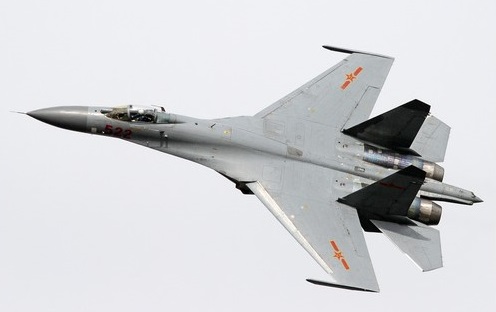
In 1995, China secured the rights for domestic production of the Su-27SK by Shenyang under the designation J-11. As originally conceived, the J-11 was to be merely a Chinese-built Su-27SK – complete with Russian engines and systems. While the J-11 took flight in 1998 and quickly entered service alongside Russian-production Su-27s, Shenyang went to work on the development of an indigenous improvement to the design. Designated the J-11B, the new aircraft used domestically-designed WS-10 engines, domestically-designed onboard systems, and extensively employed composites to lower the empty weight by 700kg. The J-11B added the capability to mount a variety of Chinese-designed ordnance, including anti-ship missiles.
J-11B
The J-11B has had its share of controversy. Its legitimacy has been called into question, as concerns have been raised over unlicensed production of the Su-27 design. Production has stopped of the original J-11s, apparently shifting to J-11B production, but, as is common with the Chinese, the domestically designed WS-10 engine has had many teething issues. Shenyang has looked to Russia for alternatives – the AL-31 series engines used on SU-30MKIs were a top choice for an alternative powerplant. At least one squadron did operate WS-10-powered J-11Bs briefly, but the aircraft were quickly grounded after the engines proved to have impractically short lives (30 hours compared to 400 for Russian engines). In spite of the issues, however, the J-11B has gone on to form the basis for further Chinese Flanker variants.
The Sheffield Micro Light/ Skyhook Sailwings Trident (Solo Engine)/ Sabre C is a single seat single engined flex wing aircraft with weight shift control. Rogallo wing with keel pocket. Pilot suspended below wing in trike unit, using bar to control pitch and yaw/roll by altering relative positions of trike unit and wing. Wing braced from above by kingpost and cables, from below by cables; floating cross tube construction with 55% double surface enclosing cross tube preformed ribs. Undercarriage has three wheels in tricycle formation; no suspension any wheels. Push right go left nosewheel steering independent from yaw control. No brakes. Aluminium tube trike unit, with optional pod. Engine mounted below wing driving pusher propeller. The company’s single seat trike units are all identical except for the power pack, three choices being offered: Solo, Robin EC25PS or Hunting GS260A. All three are single-cylinder engines, the Hunting having an electric start.
In design the Trident is a conventional mono pole machine, and is typically flown with the Skyhook Sailwings Sabre C wing. Its reduction drive is a Sheffield Micro Lights own design, using a ‘dead’ shaft and hub assembly rather than the normal plummer blocks.
All three versions were in production in 1982; by when Peter Jackson has built six with the Solo, ten with the Robin and five with the Hunting. The aircraft are available only in ready to fly form. Regardless of engine fitted, all Sheffield Micro Lights single seat trikes can be fitted with the following optional extras: glass fibre pod, wheel fairings and an alloy folding propeller.
The Sheffield Micro Light/ Skyhook Sailwings Trident Dual/Dual Striker is a side by side two seat single engined flex wing aircraft with weight shift control. Rogallo wing with keel pocket. Pilot suspended below wing in trike unit, using bar to control pitch and yaw/roll by altering relative positions of trike unit and wing. Wing braced from above by kingpost and cables, from below by cables; bowsprit construction with 65% double surface; pre formed ribs. Undercarriage has three wheels in tricycle formation; no suspension any wheels. Push right go left nosewheel steering independent from yaw control. Brake on nosewheel. Aluminium tube trike unit, without pod. Engine mounted below wing driving pusher propeller.
The Trident Dual/Dual Striker is Sheffield Microlights’ training air¬craft and is of generally similar arrangement to the single seaters, the most notable difference being the inclusion of a nosewheel brake.
By 1982 only one Trident Dual/Dual Striker had been produced, and that used the Hunting HS525A engine. Wheel fairings are an optional extra.
Trident / Sabre C Engine: Solo, 20hp at 6900rpm Propeller diameter and pitch 50x33inch, 1.27×0.84m V belt reduction, ratio 2.3/1 Max static thrust 125 lb, 57kg Power per unit area 0.10hp/sq.ft, 1.1 hp/sq.m Fuel capacity 2.4 USG, 2.0 Imp gal, 9. 1 lt main tank; (inc. 0.15 USG, 0. 13 Imp gal, 0. 57 lt integral res) Length overall 12.7 ft, 3.87 m Height overall 11.0ft, 3.35m Wing span 34.0ft, 10.36m Total wing area 195 sq.ft, 18.1 sq.m Wheel track 5.0 ft, 1.52 m Wheelbase 5.0 ft, 1.52 m Nose¬wheel diameter overall 12 inch, 30 cm Main wheels diameter overall 12 inch, 30 cm Empty weight 139 lb, 63kg Max take off weight 375 lb, 170 kg Payload 236 lb, 107 kg Max wing loading 1.92 lb/sq.ft, 9.4 kg/sq.m Max pow¬er loading 18.8 lb/hp, 8.5 kg/hp Load factors, 3.0 design; >+4.0, ultimate Max level speed 55 mph, 88 kph Max cruising speed 43 mph, 69kph Economic cruising speed 27mph, 43kph Stalling speed 22mph, 35kph Max climb rate at sea level 450ft/min, 2.29m/s Min sink rate 200 ft/min at 25 mph, 1.0 m/s at 40 kph Best glide ratio with power off 8/1 at 27 mph, 43 kph Take off distance 85 ft, 26 m Landing distance 110ft, 35m Range at average cruising speed 115 mile, 185 km
Engine: Robin EC25PS, 18 hp at 6000rpm Propeller diameter and pitch 54x30inch, 1.37×0.76m V belt reduction, ratio 2.3/1 Max static thrust 133 lb, 60 kg Power per unit area 0.09 hp/sq.ft, 1.0 hp/sq.m Fuel cap: 2.4 USG, 2.0 Imp gal, 9. 1 lt main tank; (incl 0.15 USG, 0. 13 Imp gal, 0. 57 lt integral res). Length overall 12.7 ft, 3.87 m Height overall 11.0ft, 3.35m Wing span 34.0ft, 10.36m Total wing area 195 sq.ft, 18.1 sq.m Wheel track 5.0 ft, 1.52 m Wheelbase 5.0 ft, 1.52 m Nose¬wheel diameter overall 12 inch, 30 cm Main wheels diameter overall 12 inch, 30 cm Empty weight 179 lb, 81 kg Max take off weight 455 lb, 206 kg Payload 276 lb, 125 kg Max wing loading 2.33 lb/sq.ft, 11.4 kg/sq.m Max pow¬er loading 25.3 lb/hp, 11.4 kg/hp Load factors, 3.0 design; >+4.0, ultimate Max level speed 55 mph, 88 kph Max cruising speed 44 mph, 71kph Economic cruising speed 28mph, 45kph Stalling speed 24mph, 39kph Max climb rate at sea level 460ft/min, 2.34m/s Min sink rate 225 ft/min at 26 mph, 1.1 m/s at 42 kph Best glide ratio with power off 7/1 at 28 mph, 45 kph Take off distance 80 ft, 24 m Landing distance 125 ft, 40 m Range at average cruising speed 101 mile, 163km
Engine: Hunting HS260A, 25hp at 6900rpm Propeller diameter and pitch 54x32inch, 1.37×0.81m V belt reduction, ratio 2.3/1 Max static thrust 139 lb, 63 kg Power per unit area 0.13hp/sq.ft, 1.4 hp/sq.m Fuel capacity 2.4 USG, 2.0 Imp gal, 9. 1 lt main tank; (incl 0.15 USG, 0. 13 Imp gal, 0. 57 lt integral res) Length overall 12.7 ft, 3.87 m Height overall 11.0ft, 3.35m Wing span 34.0ft, 10.36m Total wing area 195 sq.ft, 18.1 sq.m Wheel track 5.0 ft, 1.52 m Wheelbase 5.0 ft, 1.52 m Nose¬wheel diameter overall 12 inch, 30 cm Main wheels diameter overall 12 inch, 30 cm Empty weight 183 lb, 83kg Max take off weight 459 lb, 208kg Payload 276 lb, 125 kg Max wing loading 2.35 lb/sq.ft, 11.5 kg/sq.m Max power loading 18.3 lb/hp, 8.3kg/hp Load factors, 3.0 design; +4.0, ultimate Max level speed 55 mph, 88 kph Max cruising speed 43 mph, 69kph Economic cruising speed 27mph, 43kph Stalling speed 22mph, 35kph Max climb rate at sea level 490ft/min, 2.5 m/s Min sink rate 200 ft/min at 25 mph, 1.0 m/s at 40 kph Best glide ratio with power off 8/1 at 27 mph, 43 kph Take off distance 85 ft, 26 m Landing distance 110ft, 35m Range at average cruising speed 104 mile, 167 km
Trident Dual / Dual Striker Engine; Hunting HS525A, 45 hp at 6000 rpm Prop¬eller diameter and pitch 56x36inch, 1.42×0.91m Toothed belt reduction, ratio 2.3/1 Max static thrust 285 lb, 129 kg Power per unit area 0.18hp/sq.ft, 1.9 hp/sq.m Fuel capacity 2.4 USG, 2.0 Imp gal, 9.1 lt main tank; (incl 0.15 USG, 0.13 Imp gal, 0.57 lt integral res) Length overall 14.0 ft, 4.27 m Height overall 10.5ft, 3.20m Wing span 38.0ft, 11.58m Chord at root 9.0ft, 2.74 m Chord at tip 3.5ft, 1.07m Dihedral 2 deg Sweepback 15 deg Keel pocket depth 1.2ft, 0.37m Total wing area 250 sq.ft, 23.2 sq.m Keel pocket area 3.5 sq.ft, 0.33 sq.m Wing aspect ratio 6.0/1 Wheel track 5.0 ft, 1.52 m Wheelbase 5.5 ft, 1.68 m Nose¬wheel diameter overall 17 inch, 43cm Main wheels diameter overall 16 inch, 41 cm Empty weight 252 lb, 114kg Max take off weight 688 lb, 312kg Payload 436 lb, 198kg Max wing loading 2.75 lb/sq.ft, 13.4 kg/sq.m Max power loading 15.3 lb/hp, 6.9kg/hp Load factors +4.5, 2.0 design Max level speed 58 mph, 93 kph Max cruising speed 44 mph, 71 kph Economic cruising speed 30 mph, 48kph Stalling speed 27mph, 43kph Max climb rate at sea level 780 ft/min, 4.0 m/s Min sink rate 320ft/min at 29mph, 1.6m/s at 47 kph Best glide ratio with power off 5/1 at 33mph, 53kph Take off distance 100ft, 30m Landing distance 80ft, 25m (using brake)