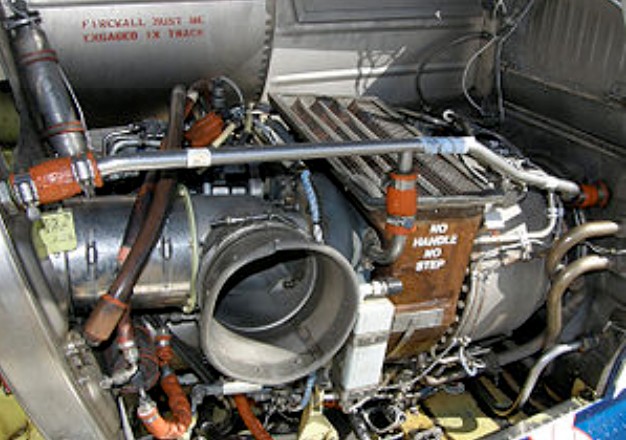
First run in 1960, the Lycoming (now Honeywell) LTS101 is a turboshaft engine family ranging from 650 to 850 shaft horsepower, used in a number of popular helicopters, and, as the LTP101 turboprop, light aircraft. Both models carry the US military designation T702. The engine was originally designed at the Lycoming Turbine Engine Division in Stratford, Connecticut, but is now produced by Honeywell Aerospace.
Applications: Bell 222A, B and UT Eurocopter AS350 AStar HH-65A/B Dolphin MBB/Kawasaki BK 117 Air Tractor AT-302 Piaggio P166 EcoJet concept car built under the direction of General Motors and Jay Leno
The Allied Chemical & Dye Corporation originated with the 1920 merger of five chemical companies: Barrett Chemical Company (est. 1858), General Chemical Company (est. 1899), National Aniline & Chemical Company (est. 1917), Semet-Solvay Company (est. 1895), and the Solvay Process Company (est. 1881), with the backing of chemist William Nichols, who became concerned about dependence on the German chemical industry during World War I, and financier Eugene Meyer. The company renamed itself the Allied Chemical Corporation in 1958, then simply the Allied Corporation in 1981. Allied merged with the Bendix Corporation in 1983, beginning the company’s involvement in aerospace.
The merger of Allied and Signal made aerospace the new company’s largest business sector. The combined company adopted the name Allied-Signal on September 19, 1985. It dropped the hyphen to become AlliedSignal in 1993 to reinforce a one-company image and signify the full integration of all of its businesses. On December 1, 1999, AlliedSignal acquired Honeywell and took its more-recognizable name.
LHTEC (Light Helicopter Turbine Engine Company) is a joint venture between Rolls-Royce and Honeywell founded in 1985. The company was originally a partnership between the Allison Engine Company and AlliedSignal Aerospace. In 1995 Rolls-Royce acquired Allison, and AlliedSignal merged with Honeywell in 1999, and adopted its name.
By 1999, the headquaters were in Morristown, New Jersey, the net income was US$ 1.3 billion, revenue US$ 15.1 billion, from 70400 employees.
AlliedSignal was a member of the Dow Jones Industrial Average for all of its existence until February 19, 2008.
Alisport initiated development of the STOL YUMA in 1994. A single engine, two-seater side-by-side, high-wing monoplane with a metal structure, all aircraft structural parts are heat-treated and corrosion inhibiting coatings are used throughout. All aluminum skins are bonded to the underlying structure prior to final riveting. The cockpit structure is a welded tubular steel frame, and aluminum is used for the wings, tail-cone, and empennage. The control surfaces are fabric-covered. The flight characteristics of the YUMA are enhanced by an optimized wing profile and carbon-fiber leading edge slats (Handley-Page type) that directly address the requirements of S.T.O.L. flight. The large flaps permit steep final approaches to facilitate descent over tall obstacles. The fuel system is two wing tanks and a header tank at the firewall providing a total endurance of up to five hours.
Engine: Rotax 912 UL (80 HP) Wing span: 9,75 m Cabin width: 1,18 m Length: 6,45 m Height: 2,45 m Wheelbase: 2,00 m Wing area: 13,4 sq.m Aspect ratio: 6,6 Empty weight: 282 kg Max takeoff weight: 450 kg Wing loading: 33,5 kg/sq.m Maximum speed: 175 kph Cruise speed 75%: 150 Km/h Stall (without flaps): 55 Km/h Stall speed (with flaps): 50 Km/h VNE: 105 kt / 121 mph / 195 kmh Rate of climb: 6 m/s TO dist (with 1 pob): 40 m TO dist (full load): 45 m Landing distance: 55 m Max ceiling: 5000 m Fuel capacity: 85 lt Endurance max payload at cruise speed 75%(5000 rpm): 5,2 hr
Engine: Rotax 912 ULS (100 HP) Wing span: 9,75 m Cabin width: 1,18 m Length: 6,45 m Height: 2,45 m Wheelbase: 2,00 m Wing area: 13,4 sq.m Aspect ratio: 6,6 Empty weight: 282 kg Max takeoff weight: 450 kg Wing loading: 33,5 kg/sq.m Maximum speed: 185 Km/h Cruise speed 75%: 160 Km/h Stall (without flaps): 55 Km/h Stall speed (with flaps): 50 Km/h VNE: 105 kt / 121 mph / 195 kmh Rate of climb: 8 m/s TO dist (with 1 pob): 30 m TO dist (full load): 40 m Landing distance: 55 m Max ceiling: 5000 m Fuel capacity: 85 lt Endurance with max payload at cruise speed 75%(5000 rpm): 4,5 hr
Engine: Rotax 914 UL (115 HP) Wing span: 9,75 m Cabin width: 1,18 m Length: 6,45 m Height: 2,45 m Wheelbase: 2,00 m Wing area: 13,4 sq.m Aspect ratio: 6,6 Empty weight: 282 kg Max takeoff weight: 450 kg Wing loading: 33,5 kg/sq.m Maximum speed: 195 Km/h Cruise speed 75%: 170 Km/h Stall (without flaps): 55 Km/h Stall speed (with flaps): 50 Km/h Rate of climb: 10 m/s TO dist (with 1 pob): 30 m TO dist (full load): 40 m Landing distance: 55 m Max ceiling: 7000 m Fuel capacity: 85 lt Endurance with max payload at cruise speed 75%(5000 rpm): 4,1 hr
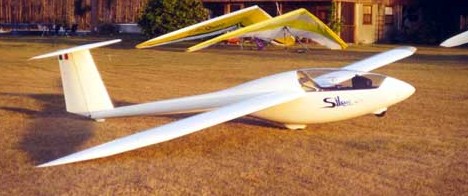
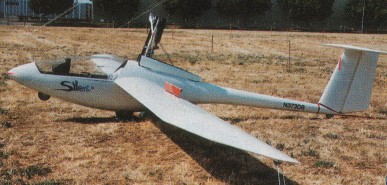
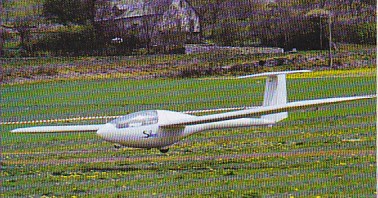
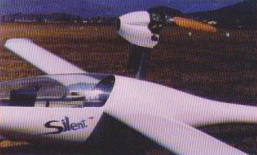
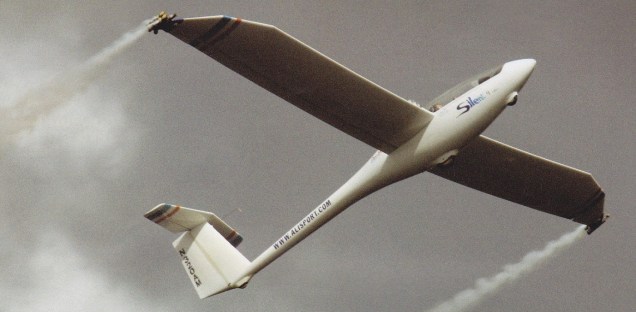
The Silent Club is a light sailplane with 12-meter fiberglass wings for recreational flying. It has a blend of agility/control responsiveness, climb performance, safety, and fun. The two-position flaps have a reflex position to maintain good glide performance at higher airspeeds. The pure sailplane and fuel-injected self-launcher versions were available as quick-build kits. Assembly is simple, both due to all controls having fully automatic connections and due to the light weight of the wings. The airframe is built entirely of composite materials, with use of carbon fiber in the aft portions of the fuselage pod, the tail boom, and various critical locations of the structure. The cockpit is completely built of glass fibre. The Silent Club’s low sink rate and its stability while thermalling allow it to fly with hang-gliders and to be practically unbeatable in climb when compared with Standard class or 15m class sailplanes. It is easy to both launch and to land, and is particularly suitable for new pilots performing their first single-seat flights. The Silent Club has very efficient conventional air brakes and can be landed in less than 70 m (230 ft). Due to its span of only 12 m (39 ft) it can be stored in a small space. A fully enclosed “clam-shell” trailer is available for road transportation. The Silent 2 is a high-performance light sailplane with 13-meter wings for recreational and sport flying. The carbon-fiber wings have an elliptical planform, removable winglets, and five flap settings to cover the entire speed range. The pure sailplane and fuel-injected self-launcher versions were available as quick-build kits. Several World records have been set with the Silent 2 in the FAI Class-DU. A basic airframe combined with reasonable pilot weight will generally result in a take-off weight under the 220kg (485 lbs) maximum allowable required for the FAI’s DU Class. The Silent 2’s airframe is built entirely of composite materials, with use of carbon fiber in the aft portions of the fuselage pod, the tail boom, and various critical locations of the structure. The oven-cured wing structure includes extensive use of carbon-fiber. The sandwich skins use vacuum-bagged carbon fabric for the interior layer and glass fabric for the exterior layer while the wing spar uses pultruded carbon rods for the spar caps. It tows well behind trikes, sport-aircraft, and regular towplanes, making it versatile for all types of glider operations. The Silent 2 TARGA is a high-performance light sailplane for recreational and sport flying. It has retractable landing gear, vertical-design winglets, and horizontal stabilizer with automatic trim. The pure sailplane and fuel-injected self-launcher versions were available as quick-build kits.
Powered by the proven Alisport A302efi engine producing 28hp at 6200rpm, this single-lever FADEC engine has electronic ignition, fuel-injection, electric start, and flywheel generator. The counterweighted monoblade carbon-fiber propeller has a swept diameter of 1.4m and electrically retracts into the fuselage along with the engine pylon. The wings have an elliptical planform, vertical design winglets, and a span of 13.3 meters. The wing structure includes extensive use of carbon fiber, both in the sandwich skins and in the tapered I-beam wing spar which uses pultruded carbon rods for the spar caps. The wing geometry is unique in that it varies non-linearly from the root to the tip, both in overall planform shape and in wing section profile. The flaperons stretch for 11.0 meters of the full wingspan and their range of motion varies from positive landing L, to +40 for thermalling, to 00, -40, and S reflex positions for cruising. The sailplane is trimmed in pitch via an innovative variable-position horizontal stabilizer. The stabilizer position is governed by the flaperon setting: the five settings of the flap control produce corresponding changes to the stabilizer incidence, thus defining the trim airspeed in relation to the flap requirements. The conventional elevator remains in trail, minimizing trim drag.
The Silent OP version has the engine mounted on a fixed pylon. Power is the Konig SD 570 or retractable Zanzoterra FZ 34 and single blade prop.
Silent OP
Silent-1N launching with two jet engines
Silent Light sailplane circa 1998. Weight: 130 kg Wing span: 12 m Wing area: 10.3 sq.m Vne: 200 km Stall: 54km Vz min: 0.6 m/sec Glide Ratio: 32 @ 90 kph
Silent Club Length: 20.8 ft. Wingspan: 12m / 39.3 ft. Wing area: 10.3sq.m / 110.9 sq.ft. Aspect ratio: 14-1 Seats: 1 Cockpit width: 22 in Empty wt: 135kg / 300 lbs. Mtow: 240kg / 530 lbs. Payload: 105kg Cruise: 60 mph. Stall: 36 mph L/D: 31-1@ 85 km/h Min sink: 126 fpm / 0.64 m/s @ 65 kph. Structure: all composite
Silent 2 Targa Self-Launch Engine: Alisport A302efi 28 Hp single-cylinder air-cooled Wing span: 13.3 m / 43.6 ft Length: 20.8 ft. Wing area: 8.9sq.m /95.7 sq.ft. Aspect ratio: 20 Empty Weight: 185kg / 385 lbs. Payload: 105kg MTOW: 300kg / 660 lbs Fuel cap: 4.2 USG L/DMax: 40 at 90 km/h MinSink: 0.60 m/s / 118 fpm @ 85km/h Cruise: 56 mph Stall: 40 mph No. of Seats: 1 Cockpit width: 22 in
Silent OP Engine: Konig SD 570, 28 hp Wing span: 12 m Wing area: 10.30 sq.m MAUW: 270 kg Empty weight: 165 kg Fuel capacity: 2 x 20 lt Seats: 1 Max speed: 200 kph
Alisport Srl is comprised of three aviation divisions (sailplanes, STOL aircraft, and propellers/accessories) that operate in shared facilities. Although Alisport’s origins are in the Silent line of light sailplanes, sport and recreation aviation is the common foundation binding the three divisions. Alisport Srl is based in Cremella (Lecco) located in northern Italy near Milan. 1998: Vial Confalonieri 22, I-23894 Cremella LC, ITALY 2008: Alisport Srl Via Confalonieri, 22 Cremella (Lecco), Italy
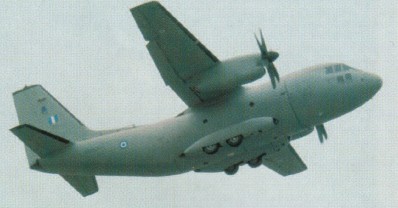
The C 27 J is a joint-venture of Alenia and Lockheed Martin based on the FIAT G222 transport, but with engines and avionics redesigned and made common with the Lockheed C-130J Hercules. The maiden flight of the prototype (I-CERX) took place from Turin, Italy, on September 25, 1999, and lasted 1 hr 32 min. Crewed by Alenia test pilots the prototype reached 15,000 ft. The first and second C-27 were converted G.222 aircraft, the third was the first new build.
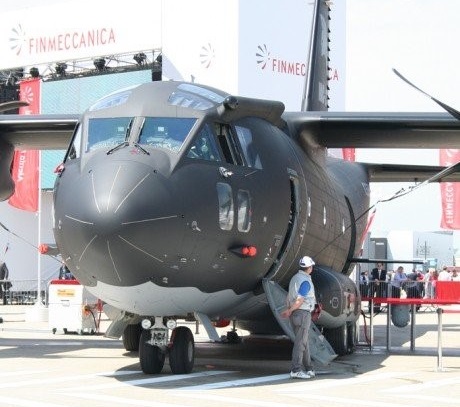
MC-27J is a multimission transport aircraft jointly produced and marketed by Alenia Aermacchi and ATK. It is an armed, roll on/roll off (RO/RO) aircraft based on the C-27J Spartan. Alenia unveiled a new version of the C-27J Spartan battlefield air-lifter, the MC-27J, at the Farnborough International Air Show in July 2012.
The C-27J base platform is slightly modified, while the airlift capabilities of C-27J are retained. The new aircraft is incorporated with pallet-based systems for additional mission-specific capabilities.
The MC-27J can be configured to conduct troop / cargo transport, paratroops / material air-drop, medical evacuation (MEDVAC) and VIP / passenger transport. The gun barrel on the aircraft can be removed to allow reconfigurations for other missions. The aircraft also integrates a fire protection system and an ice protection system.
The two-pilot glass cockpit of the MC-27J is equipped with off-the-shelf avionics and is fully compatible with night vision imaging systems. The avionics suite integrates colour multipurpose displays, multifunction control and display units, optional head-up display units, digital auto-pilot, GPS/INS, identification friend or foe (IFF) transponder, recording systems, terrain awareness warning system (TAWS) and traffic alert and collision avoidance system (TCAS).
The onboard PaWS (palletized weapon system) provides combat capabilities for the MC-27J aircraft. The PaWS is specifically designed for the ATK GAU-23 30mm cannon and other precision guided light munitions. The system minimises collateral damages. The palletised system can be loaded / unloaded through the rear ramp of aircraft. It can be installed in the aircraft within four hours.
MC-27J gunship
The GAU-23 Bushmaster 30mm cannon mounted on the PaWS RO/RO pallet is a chain gun that incorporates features of the M242 and Mk44 25mm cannons. The gun can fire 30mm x 173mm, PGU-13, PGU-15, and PGU-46 ammunition at a rate of 200 rounds a minute. The ammunition is fed into the gun through a dual feed system.
The palletised system also accommodates a reconfigurable mission suite incorporating sensors, communications and mission management system. The aircraft is equipped with electro-optical / infrared targeting sensors, and command, control and communications equipment.
The MC-27J serves as an independent command and control centre interfaced with the ground command network. The aircraft is also equipped to provide signal intelligence (SIGINT) intelligence surveillance and reconnaissance (ISR) capabilities. The target identification systems and weapons systems aboard the aircraft support ground missions.
The MC-27J is powered by two Rolls-Royce AE2100D2A turboprop engines. Each engine, generating 4,637shp power, drives two Dowty six-blade, all-composite propellers. Two full authority digital electronic control units control the engines and propellers.
The onboard electricity is supplied by three generators. The auxiliary power unit (APU) allows the engines to be restarted in flight during emergency conditions.
The fuel system includes four wing tanks and two dedicated fuel feed systems. The aircraft can be optionally fitted with an air-to-air refuelling probe for performing aerial refuelling.
Alenia C 27 J Spartan Engine : 2 x Allison AE 2100 D3, 4142 shp Length : 74.475 ft / 22.7 m Height : 32.152 ft / 9.8 m Wingspan : 94.16 ft / 28.7 m Wing area : 882.648 sq.ft / 82.0 sq.m Max take off weight : 66150.0 lb / 30000.0 kg Weight empty : 36382.5 lb / 16500.0 kg Max. speed : 305 kt / 565 km/h Cruising speed : 270 kt / 500 km/h Initial climb rate : 1968.5 ft/min / 10.0 m/s Service ceiling : 26247 ft / 8000 m Cruising altitude : 19685 ft / 6000 m Wing load : 75.03 lb/sq.ft / 366.0 kg/sq.m Maximum range : 2484 nm / 4600 km Range : 1350 nm / 2500 km Range (max. weight) : 540 nm / 1000 km Crew : 2 Payload : 53 pax (max 10.000kg)
MC-27J Engines: 2 x Rolls-Royce AE2100D2A turboprop, 4,637shp Propellers: Dowty six-blade, all-composite Length: 22.7m Wing span: 28.7m Height: 9.6m Maximum take-off weight: 30,500kg Maximum altitude: 30,000ft Cruising speed: 583km/h Maximum speed: 602km/h Maximum range: 1,852km Ferry range: 5,926km
Founded December 1990 by merger of Aeritalia and Selenia. Has undertaken modernization of Aeritalia-produced F-104ASAs to improve weapon systems and maintainability. Participates in the Airbus A321, AMX, ATR, Eurofighter, FLA, and Tornado programs, plus the Dassault Falcon 2000. Provides continuing production and support for the G222 (most importantly now as the Lockheed Martin Alenia Tactical Transport System C-27J Spartan in association with Lockheed Martin of the USA), produces aerostructures for the MD-11 and 717 airliners for Boeing, conducts modification and maintenance programs for commercial and military aircraft, and takes part in space programs among other activities.
Albera Aerospace was formed when John McIntree decided his West Point flight school and charter company needed a jet trainer. In 1995 the Belgian company Promavia licensed Alberta Aerospace to begin development of an ab initio trainer version of its Jet Squalus, under the name Phoenix FanJet. Eventually Promavia sold Alberta Aerospace the flying Jet Squalus prototype for conversion (to include new Williams- Rolls FJ44 turbofan engine in a revised airframe, new “glass” cockpit, larger flying control surfaces and more), allowing certification in about the year 1999. After Promavia ceased trading, Alberta Aerospace purchased other Promavia assets, allowing eventual production in Canada.