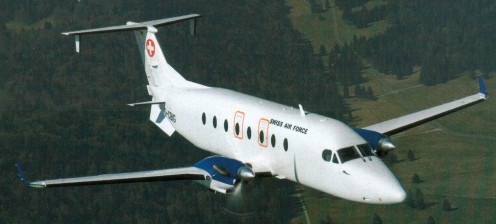
In 1975 a decision was made to develop what was to be the model 1900. This was to be a pressurised, high density 19-seater aircraft based on the model 200 Super King Air. Using the model 200 cockpit, tail section, a longer fuselage and a new continuous spar wing was developed. A slightly unusual feature of these aircraft was the “taillets” attached beneath the horizontal tailplane for improved directional stability and an auxiliary horizontal tail (stabilon) on each side of the rear fuselage to extend the aft centre of gravity limits. The first of the three 1900C development aircraft flew (under SFAR part 41C) on 13 September 1982 powered with the PT-6A-65 which was up rated to the 1000-shp -65A on production aircraft. Its type certificate was achieved on 22 November 1983. Production deliveries, fitted with 52-inch by 52-inch cargo doors, began in February 1984 but were phased out in October 1991 when the SFAR part 41 C regulation expired. Some 72 “C” models had been built, followed by around 175 1900C-1 versions with their “wet wings”.
Announced by Raytheon at the US Airlines Association meeting in March 1989 was the Model 1900D, Beech’s answer to the 19-passenger, stand-up, pressurised aircraft for the commuter and regional airline operators. Power chosen was the 1600-shp PT6A-67D flat rated at 1279 shp. Wingspan and area were increased with winglets added. The fuselage was some 28.5% larger, which gives the aircraft the “high forehead” look and “stand-up head room” (of 5 ft 11 in) in the cabin. The aircraft introduced the twin ventral strakes designed to improve the directional stability and turbulence penetration. The wet wing is design fabricated and assembled as a one-piece unit. It is able to hold 2,517 litres in two integral fuel tanks in each wing (the main tanks hold 1621 lbs and the smaller auxiliary tank 621 lbs). The primary controls are mechanically linked and the landing gear is hydraulically actuated with dual main wheels and a single nose wheel. The prototype 1900D (N5584D), a converted 1900C, first flew on 1 March 1990 with FAA certification being achieved in March 1991. Production switched to the 1900D in 1991 and first deliveries began in November 1991.
1900C Engines: 2 x Pratt & Whitney Canada PT6A-65B turboprop.
1900D Engines: 2 x Pratt & Whitney Canada PT6A-67D turboprop, 1279-shp. Props: Hartzell four-blade composite. Wingspan: 57 ft 10 in (17.65rn). Wing area: 303 sq.ft (28.l5sq.m). Length: 57 ft 10 in (17.63m). Height: 14 ft 10 in. (4.54m). Empty weight: 10,400 lb (4,717 kg). MTOW: 16,950 lb (7,688 kg). Wing loading: 54.7 lb/sq.ft (267 kg/sq.m). Power loading: 6.62 lb/hp (3 kg/hp). Max cruise speed 334 mph (537 kph) at 13,000 ft (3,960m). Rate of climb: 2,625 ft/min (800m/min) at sea level. Service ceiling: 25,000 ft (7,620m). SE service ceiling (MTOW): 17,500-ft. Range high cruise power 45 min res: 794 miles (1,278km) at 25,000 ft (7,620m). Pax cap: 19.
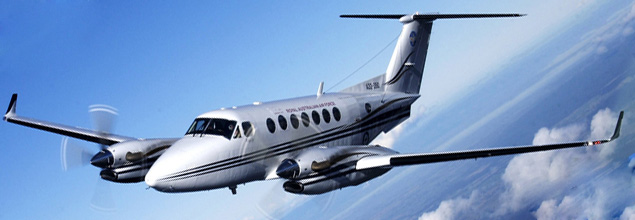
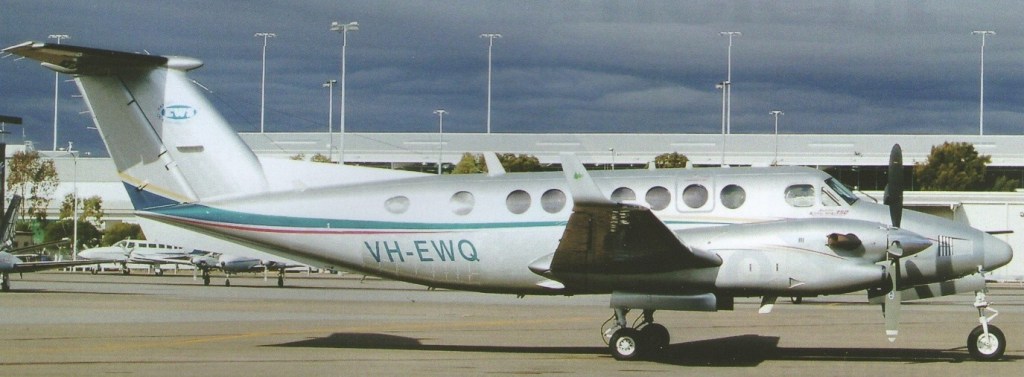
Based on the King Air 300, the Super King Air 350 incorporates a wing of increased span with winglets, and interior changes that increase max seating to 11 plus two crew. The fuselage has been lengthened although the engines remain two 1,050 shp (783 kW) P & W Canada PT6A-60A turboprops. Certificated in 1990, the first King Air 350 was delivered on 6 March 1990.
King Air 350 VH-EWQ
In 2004—the King Air’s 40th anniversary— Raytheon added two 16-cubic-foot wing lockers in the aft portion of the engine nacelles to increase loading flexibilities.
Raytheon Super King Air 350 Engines: Two Pratt and Whitney PT6A-60A turboprops (1050 / 783 kW horsepower each) Propellers: 4-blade Crew: Two pilots, or pilot and navigator/observer, or various crews in training roles Length: 46.654 ft / 14.22m Height: 14.337 ft / 4.40m Wingspan: 57.907 ft / 17.65m Wing area : 310.003 sq.ft / 28.8 sq.m Wing load : 48.38 lb/sq.ft / 236.0 kg/sq.m Max cert TO wt: 6804 kg / 15,100 lb. Max cert ldg wt: 6804 kg. Empty weight: 9,326 lb Payload: 1600kg Fuel capacity: 539 USgals Max. speed : 315 kts / 583 kph Top cruise: 359 kts Initial climb rate: 2,731 fpm Range: 3400km Ceiling: 35,000 feet Takeoff distance: 3,300 ft Landing distance: 2,692 ft Accommodation: Up to six passengers
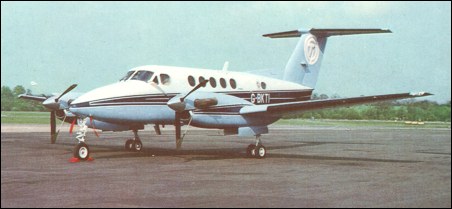
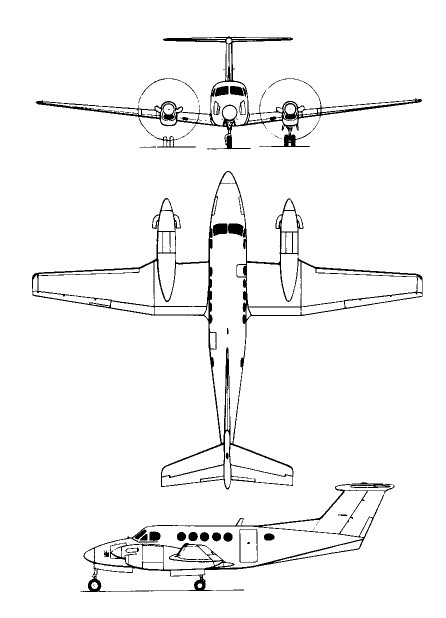
A development of the King Air 90/100, the prototype King Air 200 flew on 27 October 1972. With bigger engines, a bigger wing, more fuel capacity and more useful load, the B200 came along in 1980 with even more efficient Pratt & Whitney PT6A42 engines and another increase in load.
The T-tail Super King Air, with its two 850-shp Pratt & Whitney engines, can be operated from smaller airports; takeoff and landing over a 50-foot obstacle can be accomplished in 2579 and 2845 respectively, without prop reversing.
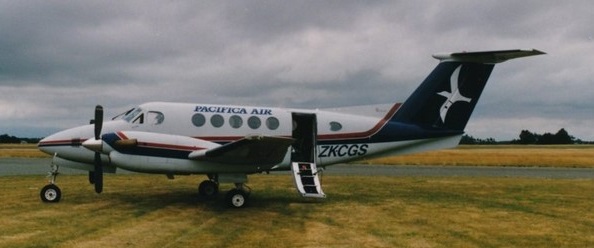
Beechcraft 200 Super Kingair ZK-CGS
First deliveries of Super King Airs were made in early 1974, and the better capability of this aircraft resulted in the company receiving contracts for the supply and support of 34 examples modified for service with the US Army. These are powered by 559kW PT6A-38 turboprop engines, and were allocated the designation C-12A subsequent military orders for the C-12A have to date included 27 and 30 for the US Army and USAF respectively. Other service variants are the UC-12B (66 ordered) for the US Navy/Marine Corps, powered by 634kW PT6A-41 turboprops; the C-12C (14) for the US Army with PT6A-41 engines; the generally similar C-12D (27) for the US Army, but with an added cargo door; and the special-mission RU-21J (three) bristling externally with antennae and equipped for the requirements of the US Army’s ‘Cefly Lancer’ programme. More recent variants are the RC-12D ‘Guardrail V electronic reconnaissance platform, C-12E upgraded transport for the USAF, C-12F transport for USAF and UC-12F for the Navy, RC-12H reconnaissance variant and UC-12M utility transport.
The USAF purchased 40 twin-turboprop Super King Air I 200Cs as C-l2Fs to meet part of its Operational Support Aircraft requirement following an initial period of lease. The cargo door developed for the US Army’s C-12D has been available as an option for civil production since 1979, and in April 1981 Beech introduced a new version, identified as the Super King Air B200. It differs by having PT6A-42 turboprop engines which offer improved cruising performance. A little known but important part of Beech’s product line is the company’s special mission range of aircraft standard models factory modified and certified for aerial survey, photography, specialized training and other unusual purposes. One aircraft developed is a Super King Air with tip tanks, several of which are being built for the French Institut Geographique National for long range photo flights. The tip tanks add about an hour to the KA’s endurance. Other military versions of the King Air series I include the C/UC/RC-12, RU-12, and T-44 for the US forces, together with maritime surveillance variants produced for export customers, for which search radar, low-light TV, Flir, and acoustic processing equipment are optional.
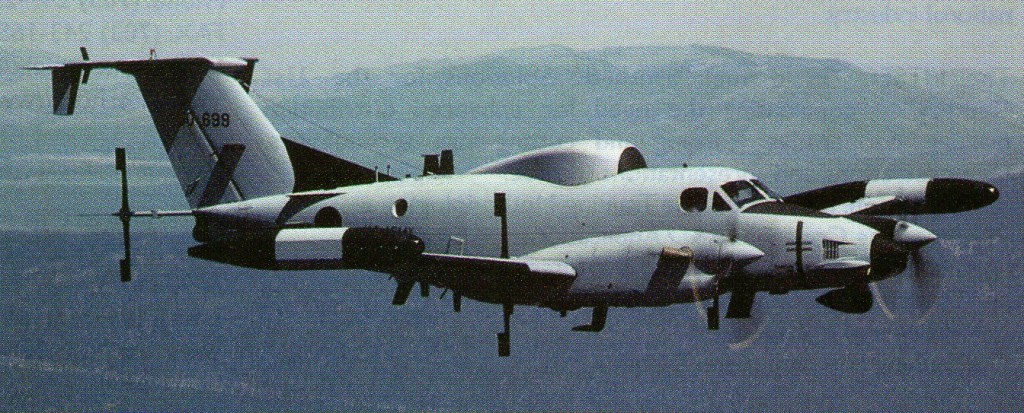
Beechcraft RC-12 Guardrail
In 1995, Raytheon rolled out its 1,500th King Air 200, complete with an EFIS avionics panel.
Variants
Super King Air Model 200T: designation of two specially-equipped aircraft for the French Institut Geographique National for high-altitude photographic and weather observation duties;
Super King Air Maritime Patrol 200T: maritime patrol/multi-mission aircraft, with new outboard wing panels to provide for installation of wingtip fuel tanks, strengthened landing gear, hatch for dropping survival equipment, bubble observation window in aft cabin, and search radar with a 360° scan underfuselage radome; orders include 13 for Japan Maritime Safety Agency, and one for Uruguayan navy;
Super King Air B200C: version of civil B200 with a cargo door as standard;
Super King Air B200CT: version of civil B200 with a cargo door and removable wingtip fuel tank provisions as standard;
Super King Air B200T: version of the civil B200 with removable wingtip fuel tank provisions as standard;
Super King Air 300: improved version with PT6A-60A turboprops each rated at 783kW and corresponding increase in take-off weight. The 300LW is a lightened version optimised for European operations;
1300 Commuter: King Air B200 version for commuter airlines. Accommodates up to 13 passengers with an optional belly luggage pack.
BE-200 Super King Air First built: 1974. Engines: 2 x P&W PT6A-42, 850 shp. Props: Hartzell 3-blade, 98.5-in. Seats: 8/15. Length: 43.8 ft. Height: 15 ft. Wingspan: 54.5 ft. Wing area: 303 sq.ft. Wing aspect ratio: 9.8. Maximum ramp weight: 12,590 lbs. Maximum takeoff weight: 12,500 lbs. Standard empty weight: 7538 lbs. Maximum useful load: 5052 lbs. Maximum landing weight: 12,500 lbs. Wing loading: 41.3 lbs/sq.ft. Power loading: 7.4 lbs/hp. Maximum usable fuel: 3645 lbs. Best rate of climb: 2450 fpm. Service ceiling: 35,000 ft. Max pressurisation differential: 6.5 psi. 8000 ft cabin alt @: 29,742 ft. Maximum single-engine rate of climb: 740 fpm @ 122 kts. Single-engine climb gradient: 364 ft/nm. Single-engine ceiling: 21,735 ft. Maximum speed: 294 kts. Normal cruise @ 27,000 ft: 279 kts. Fuel flow @ normal cruise: 563 pph. Endurance at normal cruise: 5.9 hrs: Stalling speed clean: 99 kts. Stalling speed gear/flaps down: 75 kts. Turbulent-air penetration speed: 170 kts.
A200 Engines two 850-shp Pratt & Whitney reverse flow, free turbines. Seats 6-13. Gross Wt. 12,500 lbs. Emp¬ty Wt. 7437 lbs. Fuel capacity 544 USG. Top speed 333 mph. Cruise 322 mph. Stall 86 mph. Initial climb rate 2450 fpm. Ceiling 31,000+ ft. Range 2022 sm. Takeoff distance (50’) 2579 ft. Landing distance (50’) 2074 ft. Seats: 6-13
Super King Air B200 Engines: 2 x Pratt & Whitney Aircraft Canada PT6A-42 turboprops, 850 shp / 634kW Max Take-off weight: 5670 kg / 12500 lb Empty weight: 8,283 lb Fuel capacity: 544 US gal Std useful load: 5,052 lbs. Wingspan: 16.61 m / 54 ft 6 in Length: 13.34 m / 43 ft 9 in Height: 4.57 m / 14 ft 12 in Wing area: 28.15 sq.m / 303.00 sq ft Max. speed: 545 km/h / 339 mph / 294 kt Cruise speed: 523 km/h / 325 mph Ceiling: 10670 m / 35000 ft Range: 3756 km / 2334 miles Initial climb rate: 2,460 fpm Takeoff distance: 2,579 ft Landing distance: 2,845 ft. Seats: 8
C-12 Huron Engines: 2 x Pratt & Whitney PT6A-21, 550 SHP Maximum Range: 215miles (346km) Rate-of-Climb: 2,010ft/min (613m/min) Service Ceiling: 35,105ft (10,700m; 6.6miles) Accommodation: 1 + 5
C-12D Engine: 2 x P&WAC PT6A. Installed pwr: 1270 kW. Span: 16.6 m. Length: 13.4 m. Wing area: 27.9 sq.m Empty wt: 3655 kg. MTOW: 5670 kg. Payload: 2040 kg. Cruise speed: 510 kph. Initial ROC: 730 m / min. Ceiling: 9450 m. T/O run (to 15m): 1005 m. Ldg run (from 15m): 790 m. Fuel internal: 1160 lt. Range: 3300 km. Capacity: 14 pax.
U-21J US Army version of the Super King Air 200 for battlefield reconnaissance and EW missions
The Model 77 Skipper’s development program was a result of the fourth Beech study of a two place airplane in 10 years. The first three studies included input from noted engi¬neers outside Beech, including Karl Bergey, Fred Weick and John Thorp. Howard “Pug” Piper was a consultant to Beech when the Skipper was in its early developmental stages, and Jim Bede provided some additional input as well. Originally developed as the PD 285, starting in late 1973, this single-engine trainer was first delivered in early 1979. The design for the first test bed airplane was frozen in 1974, and the first experimental airplane flew in February 1975. The two seat prototype was powered by a Continental O-200 of 100 hp and had a gross weight of 1600 lbs. A slow and deliberate development program followed. The airplane flew with three different engines and with two different tails, one a conventional tail with a stabilator, the other a T tail with an elevator. The Skipper did have slightly better spin recovery with the T tail. Beech engineers experimented with different control sys¬tems as well. They tried and rejected flaperons (combina¬tion flaps and ailerons). Scale models were spin tested, and a wind tunnel was used for the same purpose. The GAW 1 airfoil was used from the start. The Skipper was always designed as a two place air-plane, and there was no plan to stretch it to a four place. The production design of the airplane was not frozen until early 1978. A low-wing T-tail model, it was powered by a four-cylinder Lycoming engine rated at 115 hp at 2,700 RPM. The Skipper’s canopy-type cabin gives the instructor and student pilot optimum, all-around visibility, while both left and right doors provide for convenient entry. An external tunnel on the bottom of the fuselage houses primary controls and makes for additional cabin room, as well as allowing for easy maintenance. A new concept in airfoil design was utilized by the Skipper. Its airfoil section is an outgrowth of NASA’s high-speed, super-critical airfoil technology and provides a lower drag, higher lift capability. The T-tail configuration places the horizontal stabilizer above the slipstream in undisturbed air to give smoother flight and more positive control during landing maneuvers. The Skipper is the third Beechcraft T-tail model, following the Super King Air and Duchess. A substantial portion of its construction is bonded metal, including the lower cabin section of the fuselage, the entire wing, the leading edge of the vertical stabilizer, the trim tabs, and the rudder. The landing gear is a low-maintenance, spring system designed for sturdiness and utility. Control response is superbly balanced, and the ailerons are quite frisky in all speed ranges right down to the stall. Stalling the Skipper is almost fun. The wings give lots of prestall buffetto let you know that it is about to quit flying. For cross-country flights, the 29 gallons of usable fuel combine with a 65% power setting to yield a 4.6-hour endurance. Only 312 of these two-place trainers were built before production was halted abruptly in 1981.
Engine: 1 x Lycoming O-235-L2C, 115 hp. TBO: 2000 hrs. Prop: McCauley 2 blade, fixed pitch 72in. Seats: 2. Length: 24 ft. Height: 7.9 ft. Wingspan: 30 ft. Wing area: 129.8 sq.ft. Wing aspect ratio: 6.9. Max ramp wt: 1680 lbs. Max take off wt: 1675 lbs. Standard empty wt: 1100 lbs. Max useful load: 580 lbs. Max landing wt: 1675 lbs. Wing loading: 12.9 lbs/sq.ft. Power loading: 14.6 lbs/hp. Max useable fuel: 29 USG/174 lbs. Climb rate: 720 fpm @ 65 kts. Climb gradient: 665 ft/nm. Rate of climb @ 8000 ft: 340 fpm. Service ceiling; 12,900 ft. Max speed: 106 kts. Cruise @ 65% power @ 8,000ft: 96 kts. Fuel flow @ 65% power @ 8,000ft: 35 pph. Endurance @ 65% power @ 8,000ft: 4.6 hr. Stalling speed clean: 49 kts. Stall speed flaps down: 47 kts. Turbulent air penetration speed: 109 kts. Fixed undercarriage. Takeoff distance (50′) 1,280 ft Landing distance (50′) 1,313 ft
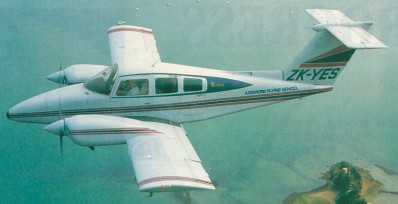
The Beech Duchess 76 was FAA certified in January 1978. The T tail four seater is powered by 180 hp Lycomings. It cruises at 153 knots and has a single engine climb at sea level of 235 feet per minute. Suggested price was $81,950. The twin features doors on both sides of the cabin, and optional avionics are similar to those on the Beechcraft Sierra. The Model 76 makes use of honeycomb-bonded wings for a smoother airfoil design with less drag and a lower manufacturing cost. Outstanding design characteristics of the new Duchess include an aerodynamically advantageous T-tail, which places the horizontal surfaces above the propeller slipstream for better stability and handling, and opposite-rotating propellers to eliminate the ‘critical engine” aspect of multi-engine flying.
Beech’s new Model 76 Duchess was temporarily grounded because the rudder trim tab push-rod became disconnected during a flight. Sixty three of the light twins were affected. Beech designed new, stronger push-rods for both rudder and elevator trim tabs.
In 1980, a 28-volt electrical system was added to provide increased cranking power in cold weather, more power for avionics and more parts commonality with other Beech products. A total of 437 produced between 1978 and 1982.
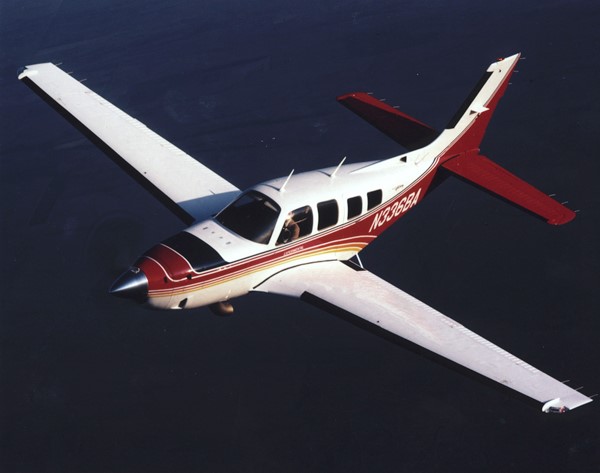
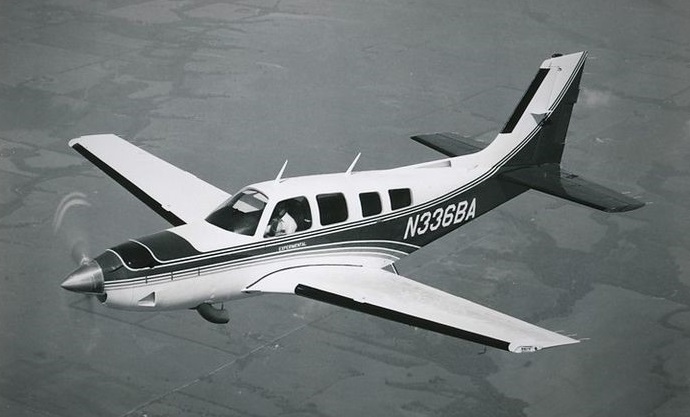
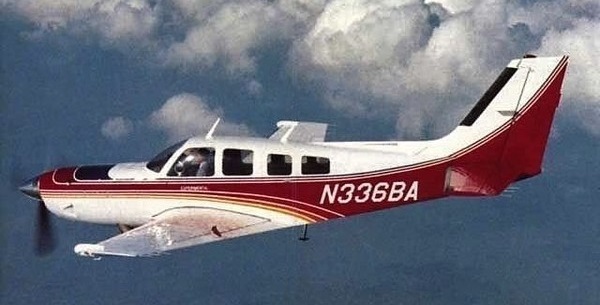
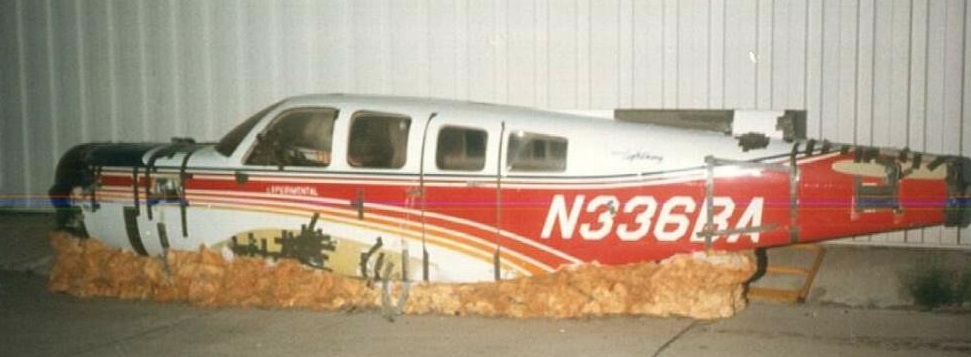
The Model 38P (Pressurized) (also known as the model PD.336) was created during 1981 by installing a Garrett AiResearch TPE-331-9 engine in the nose of a Beechcraft Baron 58P fuselage, which was mated to a Beechcraft B36TC Bonanza wing in place of the Baron’s wing with two engines. This resulted in a low-wing aircraft with six seats including the pilot’s.
The aircraft, registered N336BA c/no EJ-1, flew for the first time on June 14, 1982, piloted by Lou Johansen. After 133 flights over almost 18 months the aircraft was temporarily grounded so that the TPE331 could be removed and a Pratt & Whitney Canada PT6A-40 engine fitted in its place.
A total of 133 flights were logged and the last flight of the Model 38P was made on 14 November 1983. The PD 336 prototype was also fitted with a 630shp UACL PT6A-40 powerplant and was flown by Lou Johansen on 9 March 1984. This aircraft logged 68 flights before the last flight was made on 8 August.
Beechcraft originally planned to put the Lightning into production but the economic downturn among general aviation manufacturers in the United States in the 1980s led to the project being shelved shortly after the first flight with PT6A power.
Three variants were expected to be offered to customers: the Model 38P powered by a PT6A-40, the Model 38P-1 powered by a PT6A-116 and the Model 38P-2 powered by a TPE-331-9. In spite of 75 letters of intent, Beech announced during the summer of 1984 that further development work on the Model 38P Lightning was being suspended because of poor market conditions and purchase deposits collected were returned.
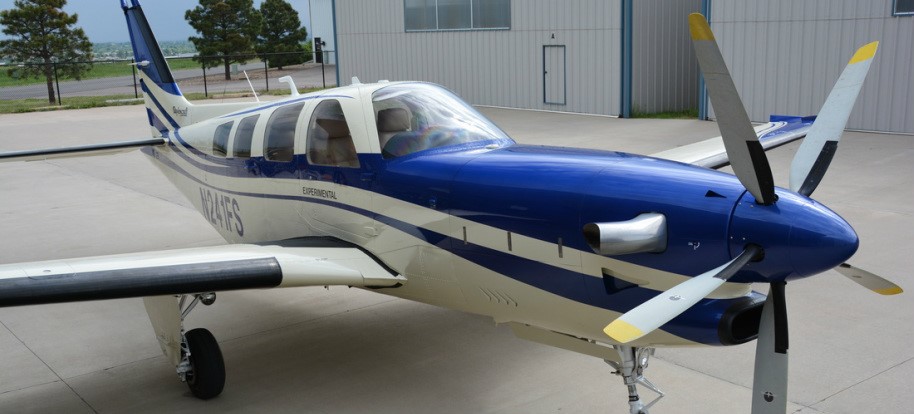
Advertised for sale in August 2019 was Lightning N241FS S.N.: RB-01, for $590,000.
Lightning N241FS
Lightning N241FS was reported as powered by a Walters Diemech 601 EXP Turboprop with an Avia Five Bladed, full feathering/reverse prop. This Lightning was manufactured and certified in 2006. Climb rates were 2,000 fpm which it can maintain into the flight levels. High speed cruise is 241 kts, thus the N number of N241FS (for “fast ship”). Normal cruise is 220-230 kts TAS depending on density altitude. Cruise fuel flows are 40-45 gph depending on altitude. A cruise prop setting of 1850 makes for a very quiet cabin. Useful load is 2500 lbs. With full fuel, you can put over 1300 lbs in the cabin. Useful Load: 2500 lbs. Takeoff and landing ground roll is typically 1000-1500′ depending on weight and density altitudes. This is a full feathering and reverse prop which saves on the brakes on short runways. It was currently flying and at last count, had a little over 150 hrs total time.
Model 38 P Engine: 1 × Pratt & Whitney Canada PT6A-40 turboprop, 550–650 shp (410–480 kW) Wingspan: 37 ft 10 in (11.53 m) Length: 29 ft 11 in (9.12 m) Height: 9 ft 2 in Wing area: 188.1 sq.ft Loaded weight: 5800 lb Max speed: 316 mph (509 km/h, 275 kn) Cruise 20,000ft: 279 mph Cruise 25,000ft: 238 mph Range normal: 1075 mi Rang eco: 1285 mi Service ceiling: 25,000 ft (7,600 m) Crew: 1 Capacity: 5 passengers
The Musketeer family was developed by Beechcraft as a lower cost and lower performance four seater than the Bonanza, intended to compete with the Cessna 172 and Piper Cherokee. Flown for the first time on 23 October 1961, the first of Beech’s “Three Musketeers” was introduced to the flying public in 1962 as the four-place, fixed gear, Avco Lycoming O-320-D2B 160-hp Model 23. First production aircraft were delivered in autumn 1962 at an initial price of $13,300. The Musketeer wing introduced bonded honeycomb construction to the lightplane market. Only the first Musketeers had full-swiveling nose wheels, the rest are steerable 15 degrees each way.
More than 500 of these 23s had been sold when a redesigned model, the A-23, went into production in 1964. Production, engineering and sales activities for the four-place Beech Musketeer were transferred from Wichita, Kan, to a plant in Liberal, Kan, in 1964.
The A-23, powered by a 165-hp fuel-injected Continental IO-346-A engine, had an increased landing flap angle and a restyled interior. This Musketeer became the Musketeer A23A Custom III in 1966 (Avco Lycoming O-360-A4J 180 bhp / 134kW) when it was joined by the two-seat (optional four-seat) Musketeer A23-24 Super III (Avco Lycoming 112kW) and the Musketeer A23-19 Sport III (Avco Lycoming 150 hp). The Beech 19 was introduced as a 1966 model year with a standard price of $11,500. Despite having a lower model number, it was a later variant and was a lower-powered trainer version of the Model 23. It lacked the 23’s third side window and had a Lycoming O-320-E2C powerplant of 150 bhp (110 kW). Along with the introduction of the lower-powered Model 19 in 1966, Beechcraft also introduced a higher-powered version of the Model 23 Musketeer and named it the Beechcraft 23-24 Musketeer Super III. This upgraded model had a Lycoming IO-360 fuel injected powerplant which produced 200 bhp (150 kW), 35 hp (26 kW) more than the standard Model 23 Musketeer of that year. This model initially sold for a price of $16,350 in 1966. The fixed-gear Model 23-24 was produced only between 1966 and 1969.
A total of 369 Musketeer Super IIIs were completed before it was superseded by the Model 24 Sierra. These were serial numbered MA-1 to MA-369 and were the only models to have a “MA” serial number, making them easier to distinguish than other members of the Musketeer line. In the last few airframes of the series a new instrument panel with the same “vertical tape” gauges that were used in the early Sierras was introduced. These models were known as the A24 and are not to be confused with the first Sierras, which were designated A24R models. Other than the instrument panel these aircraft were mechanically identical to the earlier A23-24 model. In 1966 a single demonstration Model 23-24 was equipped with a constant speed propeller. In succeeding years approximately one third of production aircraft were delivered with the constant speed propeller.
24 Sierra
The Super Musketeer typically has a useful load of 1050 to 1080 pounds – giving it one of the highest payloads of four-cylinder, fixed gear, simple single engined aircraft available. Most Model 23-24s were produced in a four-seat configuration. A very small number were produced with a 4+2 configuration with the baggage area convertible to seat two children. This configuration option was more common on the Sierra models that followed the Model 23-24. One of the few weaknesses of the Model 23-24 is that it had a simple heat distribution system that provided warm air via the firewall to the area under the instrument panel only. This meant heat to the rear seat passengers was less than optimal. Later aircraft featured increasingly better ducting designs that provided heat to all four seating positions. The Model 23-24 Musketeer Super III proved the utility of the 200 hp (150 kW) engine in the Musketeer airframe, with six seats optional, a constant speed prop, but the fixed gear configuration prevented using full advantage of the extra power of the injected Lycoming. The obvious solution was retracting the landing gear and this resulted in the Model 24.
In 1970, Beech redesigned the Musketeer fuselage, giving it a more rounded shape, and adding four and a-half inches across the front seats. Windows were re-shaped, with the 150-hp B 19 Sport retaining two on each side, the Custom and 200-hp Super with three. The 1970 and 1971 Supers were offered with a fourth cabin window as an extra-cost option, along with an additional bench seat in back, making them six-placers sort of. The Super was discontinued in 1972 (replaced by the retractable-gear Sierra).
Christened the “Sierra”, the first model year for the new retractable version was 1970. The initial A24-R Sierra Super R was powered by a Lycoming IO-360-A1B of 200 bhp (150 kW) and sold for a standard price of $24,950. The Model 24 completed the Beech line between the fixed gear Musketeers and the much larger, faster, more complex and expensive Beechcraft Bonanza. Both models were continued through 1971, when the fixed-gear model was dropped. As part of the Aero Center line, the 200-hp retractable version became known as the Sundowner. The name changes and the “cleaning up” of the Musketeer line was all part of a major corporate redirection by Beech management to devote more attention to the small airplanes. Beech Aero Centers were set up around the country, franchised just to sell the Sport, Sundowner and Sierra. More recent Sierras benefit from increased useful fuel, an optional autopilot, a larger diameter propeller, and wheel well fairings. The result is increased range, a greater rate of climb, and a higher cruise speed and service ceiling.
The Lycoming engine of 180 hp (130 kW) started with the B23 Musketeer Custom of 1968. Optional aerobatic kits were also available for the Musketeer Custom and Musketeer Sport when flown as two-seaters. A fourth version was introduced in late 1969: known as the Musketeer Super R, it was basically the same as the Musketeer Super but incorporated retractable tricycle landing gear. In 1970, Beech redesigned the Musketeer fuselage, giving it rounded sides and more cabin room. The panel was improved extensively and a third side window was added, and the models were renamed Musketeer B19 Sport, Musketeer C23 Custom and Musketeer A24 Super. The 1970 and 1971 Supers were offered with a fourth cabin window and a bench seat in the back for six seats.
1973 saw the introduction of the improved B24-R Sierra powered by the Lycoming IO-360-A1B6 engine variant. The improved C24-R was powered by the same engine and replaced the “B” model in 1977. Sierra production ended at the same time as the Model 23 Musketeer assembly line was closed, during the aviation economic downturn of 1983. A total of 744 Sierras were delivered.
The Musketeer name was dropped in 1971 and a further renaming took place. The Custom became the Sundowner C23, the Super R became the Sierra A24R, and the Sport became the Sport R19 and production of the Musketeer Super was discontinued. Like other models, the Sundowner is also available with an autopilot and its useful fuel has been boosted to 57 gallons. This extra gasoline translates into greater range and 30 pounds of additional useful load. The Sundowner is equipped with a fixed-pitch propeller and nonretractable landing gear. An Aerobatic version is offered which is approved for rolls, Immelmann turns, loops, spins, chandelles, etc. When properly equipped, the A19, B19, and M19 Sports are approved for limited aerobatics.
The B19 Sport and C23 Sundowner, with 150 and 180-horsepower respectively, continued in production through 1976, with 1977 list prices of US$22,000 and US$26,450.
Sundowner
A total of 922 Model 19 were built over the 15 years of production which ended with the 1979 model year. The Sierra was given a new cowling, quieter engine and more efficient prop in 1974, and various aerodynamic changes were made to the Musketeer family in 1977. Sport manufacture ended in 1978. The Sundowner 180 and Sierra 200 remained in production into the 1980s, with series production ceasing in 1983 after over 5,000 had been built.
A total of 2,331 Beechcraft 23s of all variants were manufactured by the time production was completed 20 years later in 1983. The main difference between the Musketeer line and other similar light aircraft is the Musketeer’s undercarriage. While the competitive Cessna 172s use sprung steel main gear, the Piper PA-28 Cherokees use oleos and the Grumman American AA-5s use fibreglass sprung main gear, the Musketeer family use a trailing idler link gear system with a compressed rubber puck suspension system. This gives the aircraft quite different landing characteristics compared to the competition; light touchdowns are often accompanied by the idler links skipping and producing a less-graceful than anticipated landing. The Musketeer design was further developed into a twin-engine aircraft, the Beechcraft Model 76 Duchess. Used by the Canadian Armed Forces as the CT-134, Musketeers have been delivered for civil or military training use to Algeria, Indonesia and Mexico.
Late in 1973, an AD Note was issued by the FAA restricting spins in the acro version of the Sundowner. While there’s some question as to the legitimacy of those complaints, Beech added small fences or strakes on each side of the cowl and on the stabilator’s leading edge to disturb the airflow over the tail on the aerobatic versions of the Sundowner, and this presumably satisfied the FAA. Another AD requires inspection of the forward wing attachment brackets (for possible cracks) on these airplanes.
Military operators Algerian Air Force (4 x B24R Sierra) Canadian Forces (48 x CT-134 and CT-134A) Royal Hong Kong Auxiliary Air Force (2 x B23-19) Mexican Air Force (20 x A23-19) Royal Moroccan Air Force (1 x 23)
Variants
23 Musketeer Four-seat light cabin aircraft First certified 20 February 1962 Engine: 160 hp (119 kW) Lycoming O-320-D2B Empty Weight: 1300 lbs Gross weight: 2,300 lb (1,043 kg) Fuel Capacity: 60.00 gal Top Speed: 123 kts Cruise Speed: 111 kts Stall Speed (dirty): 52 kts Range: 800 nm Rate Of Climb: 720 fpm Ceiling: 13500 ft Takeoff Ground Roll: 925 ft Landing Ground Roll 640 ft Takeoff over 50 ft obstacle: 1275 ft Landing over 50 ft obstacle: 1260 ft Undercarriage: fixed tricycle
Musketeer I Initial 4 seat version Engine: Lycoming O-320-B2C, 160 hp
A23 Musketeer II Four-seat light cabin aircraft First certified 7 June 1963 Engine: 165 hp (123 kW) Continental IO-346-A Gross weight: 2,350 lb (1,066 kg) Empty Weight: 1325 lbs Fuel Capacity: 60 USgal Rate Of Climb: 880 fpm Ceiling: 11870 ft Top Speed: 127 kts Cruise Speed: 120 kts Stall Speed (dirty): 50 kts Range: 565 nm Takeoff Ground Roll: 990 ft Landing Ground Roll 640 ft Takeoff Over 50 ft obstacle: 1460 ft Landing Over 50 ft obstacle: 1260 ft Undercarriage: fixed tricycle
Musketeer II 1963 re-design Extra windows, increased deflection flaps Engine: Continental IO-346-A, 165 hp Span: 32 ft 9 in. Length: 25 ft. Height: 8 ft 3 in. Empty wt: 1398 lbs. Gross wt: 2350 lbs. Useful load: 952 lbs. Wing loading: 15.87 lb/sq.ft. Pwr loading: 14.12 lb/hp. Baggage cap: 140 lbs. Max speed: 127 kts / 146 mph. Cruise 75% pwr: 118 kts / 137 mph. Stall: 54 kts / 62 mph. Initial ROC: 770 fpm. Service ceiling: 12,550 ft. Range: 570 sm. Fuel cap: 40 USG.
A23A Musketeer Custom III Four-seat light cabin aircraft First certified 5 November 1965 Engine: 165 hp (123 kW) Continental IO-346-A Propellers: 2-bladed fixed pitch Length: 25 ft 8 in (7.82 m) Wingspan: 32 ft 9 in (9.98 m) Height: 8 ft 3 in (2.51 m) Wing area: 146 sq ft (13.6 sq.m) Airfoil: NACA 63A415 Empty weight: 1,375 lb (624 kg) Max. takeoff weight: 2,400 lb / 1089 kg Fuel Capacity: 60 US gal Maximum speed: 127 kt (146 mph; 235 km/h) Cruise speed: 102 kt (117 mph; 189 km/h) long range cruise speed Stall speed: 63 kn (72 mph; 117 km/h) Never exceed speed: 152 kn (175 mph; 282 km/h) Range: 676 nm (778 mi; 1,252 km) with reserves Service ceiling: 13,000 ft (4,000 m) Rate of climb: 728 ft/min (3.70 m/s) Takeoff Ground Roll: 990 ft Landing Ground Roll 640 ft Takeoff Over 50 ft obstacle: 1460 ft Landing Over 50 ft obstacle: 1260 ft Rate Of Climb: 880 fpm Ceiling: 11870 ft Undercarriage: fixed tricycle
Sport 1971 re-named Musketeer III Sport Engine: Lycoming O-320-E2C later D, 150 hp Seats: 2 / 4
Musketeer Sport II Engine: Lycoming O-320-E3D, 150 hp@2700@SL TBO: 2000 hr Fuel type: 80 Propeller diameter: 74 in Landing gear type: Tri./Fixed Max ramp weight: 2155 lb Gross weight: 2150 lb Landing weight: 2150 lb Empty weight, std: 1325 lb Empty weight: 1416 lb Useful load: 734 lb Useful fuel, std: 57 US gal Payload, full std. fuel: 422 lb Wingspan: 32 ft. 9 in Overall length: 25 ft. 9 in Height: 8 ft. 3 in Wing area: 145.96 sq. ft Wing loading: 14.73 lbs./sq. ft Power loading: 14.33 lbs./hp Wheel base: 11 ft. 10 in. Wheel base: 6 ft. 4 in. Mains wheel size: 6.00 x 6 in Seating capacity: 4 Cabin doors: 1 Cabin width: 44 in Cabin height: 48 in Baggage capacity: 340lb Cruise Speed, 6,500 ft: 75% Power: 108 kt Cruise Speed 65% Power: 96 kt Cruise Speed 55% Power: 83 kt Max Range, 6,500 ft (w/res) 75% power: 599 nm Max Range, 6,500 ft (w/res) 65% power: 634 nm Max Range, 6,500 ft (w/res) 55% power: 634 nm Fuel burn 6500 ft 75% power: 9.0 US GPH Fuel burn 6500 ft 65% power: 7.6 US GPH Fuel burn 6500 ft 55% power: 6.6 US GPH Estimated endurance, 65% power: 7.5 hr Vs: 49 kt Vso: 57 kt Best rate of climb: 800 fpm Best rate of climb, 8,000 ft: 300 fpm Service ceiling: 14,900 ft Takeoff ground roll: 840 ft Takeoff over 50-ft obstacle: 1255 ft Landing ground roll: 767 ft Landing over 50-ft. obstacle: 1630 ft Base price: $14,250 (orig. factory price)
A23-19 (Model 19) Sport III Musketeer Two or four-seat light cabin aircraft First certified 9 December 1965 Engine: 150 hp (112 kW) Lycoming O-320-E2B, E2C or E3D Gross weight: 2,200 lb (998 kg) Empty Weight: 1325 lbs Fuel Capacity: 60.00 USgal Top Speed: 122 kts Cruise Speed: 114 kts Stall Speed (dirty): 48 kts Range: 800 nm Takeoff Ground Roll: 840 ft Landing Ground Roll 590 ft Takeoff Over 50 ft obstacle: 1255 ft Landing Over 50 ft obstacle: 1220 ft Rate Of Climb: 900 fpm Ceiling: 14900 ft Undercarriage: fixed tricycle
A23-24 Super III Musketeer Four or six-seat light cabin aircraft First certified 7 March 1966 Engine: 200 hp (149 kW) Lycoming IO-360-A2B or A2D, or when equipped with a constant speed propeller a Lycoming IO-360-A1B or A1D Empty Weight: 1410 lbs Gross weight: 2,550 lb (1,157 kg) Fuel Capacity: 60 US gal Top Speed: 137 kts Cruise Speed: 130 kts Stall Speed (dirty): 52 kts Range: 643 nm Rate Of Climb: 880 fpm Ceiling: 14850 ft Takeoff Ground Roll: 950 ft Landing Ground Roll 660 ft Takeoff Over 50 ft obstacle: 1380 ft Landing Over 50 ft obstacle: 1300 ft Undercarriage: fixed tricycle
A24 Four or six-seat light cabin aircraft First certified 5 February 1970 Engine: 200 hp (149 kW) Lycoming IO-360-A2B or A2D, or when equipped with a constant speed propeller a Lycoming IO-360-A1B or A1D Gross weight: 2,550 lb (1,157 kg) Undercarriage: fixed tricycle
19A Two or four-seat light cabin aircraft First certified 31 August 1967, approved in the aerobatic category 12 March 1968 Engine: 150 hp (112 kW) Lycoming O-320-E2B, E2C or E3D Gross weight: 2,250 lb (1,021 kg) Undercarriage: fixed tricycle
M19A Two-seat light cabin aircraft First certified 9 December 1969, including in the aerobatic category Engine: 150 hp (112 kW) Lycoming O-320-E2B, E2C or E3D Gross weight: 2,250 lb (1,021 kg) Undercarriage: fixed tricycle
B19 Sport / Sport III / Sport 150 Two or four-seat light cabin aircraft First certified 13 February 1970, including in the aerobatic category Engine: 150 hp (112 kW) Lycoming O-320-E2B, E2C or E3D Propeller: fixed pitch 2-blade Wing span: 32 ft 9 in / 10.0 m Length: 25 ft 9 in / 7.84 m Height: 8 ft 3 in / 2.51 m Gross weight: 2,250 lb (1,021 kg) Undercarriage: fixed tricycle
Beech B 19 Sport 150 (prior to 1977) Horsepower: 150 Gross Weight: 2150 lbs Top Speed: 110 kts Empty Weight: 1414 lbs Cruise Speed: 107 kts Fuel Capacity: 52 USG Stall Speed (dirty): 50 kts Range: 643 nm Takeoff Ground Roll: 1030 ft Landing Ground Roll 824 ft Over 50 ft obstacle: 1635 ft Landing Over 50 ft obstacle: 1693 ft Rate Of Climb: 680 fpm Ceiling: 11650 ft
Beech B 19 Sport 150 (1977 and later) Horsepower: 150 Gross Weight: 2150 lbs Top Speed: 110 kts Empty Weight: 1414 lbs Cruise Speed: 107 kts Fuel Capacity: 57.00 gal Stall Speed (dirty): 50 kts Range: 643 nm Takeoff Ground Roll: 1030 ft Landing Ground Roll 824 ft Takeoff Over 50 ft obstacle: 1635 ft Landing Over 50 ft obstacle: 1693 ft Rate Of Climb: 680 fpm Ceiling: 11650 ft
B23 Four-seat light cabin aircraft First certified 13 December 1967 and in the aerobatic category 22 November 1968 Engine: 180 hp (134 kW) Lycoming O-360-A2G Gross weight: 2,450 lb (1,111 kg), Undercarriage: fixed tricycle
C23 Four-seat light cabin aircraft First certified 13 February 1970 including in the aerobatic category Engine: 180 hp (134 kW) Lycoming O-360-A4G, A2G, A4J or A4K Gross weight: 2,450 lb (1,111 kg) Undercarriage: fixed tricycle
Beech C 23 Sundowner (prior to 1976) Horsepower: 180 Propeller: fixed pitch 2-blade Wing span: 32 ft 9 in / 10.0 m Length: 25 ft 9 in / 7.84 m Height: 8 ft 3 in / 2.51 m Gross Weight: 2450 lbs Top Speed: 128 kts Empty Weight: 1494 lbs Cruise Speed: 116 kts Fuel Capacity: 52 US gal Stall Speed (dirty): 51 kts Range: 565 nm Takeoff Ground Roll: 1130 ft Landing Ground Roll 703 ft Takeoff Over 50 ft obstacle: 1955 ft Landing Over 50 ft obstacle: 1484 ft Rate Of Climb: 792 fpm Ceiling: 12600 ft
1975 C23 Sundowner Engine: Lyc. O-360-A4J, 180 hp TBO: 2000 hr Propeller: Fixed Landing Gear type: Tri/Fixed Gross weight: 2450 lb Empty weight: 1494 lb Useful load: 956 lb Fuel: 52 US gal Wingspan: 32 ft. 9 in. Overall length: 25 ft. 9 in. Height: 8 ft. 3 in. Wing area:146 sq. ft Seating capacity: 4 Cabin width: 44 in Cabin height: 48 in Baggage capacity:270 lb Cruise speed 75% power: 118 kt Cruise speed 65% power: 110 kt Max range (w/ res) 75% power: 470 nm Max range (w/ res) 65% power: 508 nm Fuel consumption 75% power: 9.5 US gph Fuel consumption 65% power: 8.2 US gph Estimated endurance (65% power with 1-hr. res): 5 hr 54 min Stall speed (gear, flaps down): 51 kt Best rate of climb: 792 fpm Service ceiling (.): 12,600 ft Takeoff ground roll: 1130 Landing ground roll: 703 ft
1977 Sundowner Engine: Lycoming O-360-A4K, 180 hp@2700 rpm @SL TBO 2000 hr Fuel type: 100/100LL Propeller: Sensenich/76 in Landing Gear: Tri/Fixed Max ramp weight: 2450 lb Gross weight, normal category: 2450 lb Gross weight, utility category: 2030 lb Landing weight: 2450 lb Empty weight, std: 1500 lb Useful load, std: 950 lb Payload, full std. fuel: 638 lb Usable fuel, std: 52 USgal Wingspan: 32 ft. 9 in. Overall length: 25 ft. 9 in. Height: 8 ft. 2 in. Wing area:146 sq. ft Wing loading: 16.7 lbs./sq. ft Power loading: 14.1 lbs./hp Wheel base: 6 ft. 4 in. Wheel track: 11 ft. 10 in. Wheel size: 6.00 x 6 in Seating capacity: 4 Cabin doors: 2 Cabin width: 44 in Cabin height: 49 in Baggage capacity:270 lb Cruise speed @ 8,000 ft. 75% power: 118 kt Cruise speed @ 8,000 ft. 65% power: 111 kt Cruise speed @ 8,000 ft. 55% power: 93 kt Max range (w/ res): 75% power: 459 nm Fuel consumption 75% power: 9.5 US gph Fuel consumption 65% power: 8.2 US gph Fuel consumption 55% power: 6.9 US gph Estimated endurance (65%): 5.0 hr Stall speed (flaps up): 57kt Stall speed (flaps down): 52kt Best rate of climb (SL): 792 fpm Best rate of climb, 8,000 ft: 405 fpm Service ceiling: 12,600 ft Takeoff ground roll: 1130 ft Takeoff over 50 ft. obstacle: 1955 ft Landing ground roll: 703 ft Landing over 50 ft. obstacle: 1484 ft
Beech C 23 Sundowner (1977 and later) Horsepower: 180 Propeller: fixed pitch 2-blade Wing span: 32 ft 9 in / 10.0 m Length: 25 ft 9 in / 7.84 m Height: 8 ft 3 in / 2.51 m Gross Weight: 2450 lbs Top Speed: 128 kts Empty Weight: 1494 lbs Cruise Speed: 116 kts Fuel Capacity: 57.00 gal Stall Speed (dirty): 51 kts Range: 565 nm Takeoff Ground Roll: 1130 ft Landing Ground Roll 703 ft Takeoff Over 50 ft obstacle: 1955 ft Landing Over 50 ft obstacle: 1484 ft Rate Of Climb: 792 fpm Ceiling: 12600 ft
Custom III / Sundowner C23 / Sundowner 180 Engine: Avco Lycoming 134kW / 180-hp Wing span: 32 ft 9 in Length: 25 ft Height: 8 ft 3 in Gross wt. 2,450 lb Empty wt. 1,505 lb Fuel capacity Std: 40 USG Fuel capacity opt: 57 USG. Useful load: 1085 lb Baggage cap: 140 lb Wing loading: 16.78 lb/sq.ft Pwr loading: 13.61 lb/hp Top speed: 141 mph. Cruise 75% pwr: 124 kts / 143 mph Stall: 52 kts / 59 mph. Initial climb rate 792 fpm. Ceiling 12,600 ft Range 670 miles. Takeoff distance (50′) 1,955 ft Landing distance (50′) 1,484 ft Seats 4.
C23 Sundowner Engine 180-hp Lycoming O-360-A4G. Prop; Fixed pitch. Gross Wt. 2450 lbs. Empty Wt. 1425 lbs. Useful load; 1025 lbs. Baggage cap: 270 lbs. Fuel capacity 57 USG. Wing span: 32 ft 9 in. Length: 25 ft 9 in. Height: 8 ft 3 in. Fuel flow 65% power: 7.6 US Gal/hr. Power loading; 12.25 lbs / hp. Wing Loading; 16.08 lbs / sq.ft. Max Level Speed; 131 kts / 151 mph. Cruise 75% power; 125 kts / 143 mph. Stall: 52 kts / 60 mph. Initial climb rate 820 fpm. Service Ceiling 13,650 ft Max Range; 641 nm / 737 sm Takeoff distance (50’) 1130 ft. Landing distance (50’) 1484 ft. Undercarriage; Fixed tricycle. Wheel base: 6.3 ft. Wheel tread: 11.8 ft. Seats 4
A24R Sierra 200 Four or six-seat light cabin aircraft First certified 23 December 1969 Engine: 200 hp (149 kW) Lycoming IO-360-A1B or A1D Gross weight: 2,750 lb (1,247 kg) Undercarriage: retractable tricycle
B24R Sierra 200 Four or six-seat light cabin aircraft First certified 18 June 1973 Engine: 200 hp (149 kW) Lycoming IO-360-A1B6 Wingspan: 32 ft 9 in / 9.98 m Length: 25 ft 8 .5 in / 7.84 m Cabin length: 7 ft 11 in / 2.41 m Cabin max width: 3 ft 8 in / 1.18 m Cabin volume: 103.2 cu.ft / 2.92 cu.m MTOW: 2,750 lb / 1,247 kg Empty Weight: 1711 lb / 776 kg Fuel Capacity: 52.00 gal Useful load: 1047 lb Baggage capacity: 270 lb / 122 kg Top Speed: 140 kts Max cruise 7000 ft / 2135 m, 2600 lb / 1179 kg: 131 kts / 151 mph / 243 kph Cruise (75% pwr): 151 mph. Stall Speed (dirty): 55 kts Range (52 USG fuel, 75% pwr, 7000ft / 2135m. 45 min res): 561 nm / 646 mi / 1040 km Range (52 USG fuel, 55% pwr, 10,000ft / 3050m. 45 min res): 592 nm / 682 mi / 1097 km Rate of climb SL: 893 fpm / 272 m/min Service ceiling: 14,350 ft / 4375 m Takeoff Ground Roll: 1169 ft Landing Ground Roll 803 ft Takeoff Over 50 ft obstacle: 1804 ft Landing Over 50 ft obstacle: 1519 ft Undercarriage: retractable tricycle
C24R Sierra 200 Four or six-seat light cabin aircraft First certified 1 October 1976 Engine: 200 hp (149 kW) Lycoming IO-360-A1B6 TBO: 1800 hrs. Prop: Hartzell 2 blade, constant speed 76 in. Wing span: 32 ft 9 in / 10.0 m Length: 25 ft 9 in / 7.84 m Height: 8 ft 3 in / 2.51 m Wing area: 146 sq.ft. Wing aspect ratio: 7.4. Max ramp wt: 2758 lbs. Max take off weight: 2,750 lb (1,247 kg) Empty Weight: 1696 lbs Max landing wt: 2750 lbs. Wing loading: 18.8 lbs/sq.ft. Power loading: 13.8 lbs/hp. Fuel Capacity: 57 US gal Max useable fuel: 343 lbs. Max speed: 145 kts Cruise speed 75% power: 131kt Cruise @ 65% power @ 8,000ft: 125 kts Fuel flow @ 65% power @ 8,000ft: 54 pph. Endurance @ 65% power @ 8,000ft: 6.1 hr. Stall Speed (dirty): 60 kts Stalling speed clean: 65 kts Turbulent air penetration speed: 125 kts Max range (w/ res) 75% pwr: 561 nm Rate Of Climb: 927 fpm @ 80 kts Climb gradient: 695 ft/nm. Rate of climb @ 8000 ft: 500 fpm. Service Ceiling: 15385 ft Takeoff Ground Roll: 1063 ft Landing Ground Roll 816 ft Takeoff Over 50 ft obstacle: 1561 ft Landing Over 50 ft obstacle: 1462 ft Cabin width: 44 in Cabin height: 49 in Baggage capacity:270 lb Undercarriage: retractable tricycle
Walter H. Beech formed the Travel Air Manufacturing Company in Wichita, Kansas, USA, in 1924. Following the merger of Travel Air with Curtiss-Wright in mid-1929 Beech was given the position of president of the Aircraft Division.
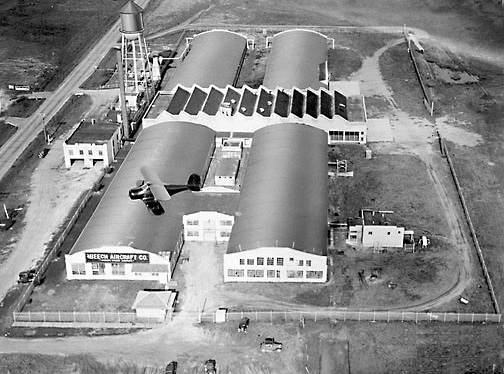
In April 1932, Beech was back in Wichita with a handful of ex Travel Air workers, founded the Beech Aircraft Company, renting space in the idle Cessna plant, and set about designing a luxury, five place biplane with a high speed of 200 mph, a touchdown not above 60, a range of 1,000 miles at a filling, and the comfort and grande luxe you might expect from the rarest and most elaborate sedan. The Company had Walter as president and his wife, Olive as secretary-tresurer.
Beech’s first Beechcraft flew on November 4, 1932. Its official name was Model 17, simply because Beech’’ last project with Travel Air had been Model 16.
Beech Aircraft Company set up shop optimistically in Wichita but suffered: only one aircraft was sold during the first two years. In 1934, however, sales picked up, and 54 airplanes had been delivered by the end of 1935. Walter Beech together with his wife Olive established the Beech Aircraft Corporation during 1932. In late 1950 Walter Beech died but in the 1980s, Mrs. Olive Beech remained in office as chairman of the board of the success story that has built some 45,000 aircraft.
mid-’30s
NOTE: Beech dash suffixes signified general engine groups: A = Wright R-760-E2; B = Jacobs L-5; C = Continental R-9A; D = Jacobs L-6; E = Wright R-760-E1; F = Wright R-1820; L = Jacobs L-4; R = Wright R-975-E3; S = P&W R-985; W = P&W R-985-SCG.
Delivered the 10,000th example of its Beechcraft Bonanza Model 35 in February 1977, and the Bonanza celebrated its 50th anniversary in 1995, with production continuing. Company also supplied military aircraft, and became involved in the construction of aircraft and missile components and missile targets for the U.S. Army. Designed, developed, and manufactured the cryogenic gas storage system for NASA’s Apollo and Skylab projects. Other work included provision of power reactant storage assembly for NASA’s Space Shuttle orbiter. On 8 February 1981, after a share exchange, Beech became a subsidi¬ary of the Raytheon Company but continued to be operated as an independent company until 1994.
Hawker Beechcraft filed for bankruptcy in May 2012. The Wichita, Kansas-based company left court protection in February 2013 and exited the jet business with a pledge to keep servicing the planes.
Textron Inc reached a deal to buy Beechcraft Corp. for $1.4 billion in December 2013. The Providence, Rhode Island-based company will purchase all outstanding equity interests in Beech Holdings LLC, the parent of Beechcraft, it said in a statement yesterday. The deal, which includes the repayment of Beechcraft’s working capital debt, will be financed by a combination of available cash and as much as $1.1 billion in new debt.
Adding Beechcraft models such as the twin-engine King Air will complement a Cessna lineup that ranges from two-seaters to the Caravan turboprop. That market segment is less competitive than private jets, where Cessna has struggled because it doesn’t build the large, long-range planes now favored by corporate buyers.
Textron will take over service for Hawker jets and hopes to convert those owners to Cessna jets, Donnelly said. The company is expecting low revenue from the T-6 military training plane as the U.S. military winds down it purchases and foreign sales of the plane would be a plus, he said.
Of the aircraft in service, 6,400 are King Airs and 2,250 are Hawker jets. The Beechcraft business is in good shape even with the bankruptcy and Textron wasn’t expected to invest extra to fix it.
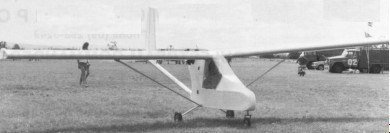
Designed by Gordon Bedson in Australia, the Resurgam is a strut braced high wing pusher, with a fully enclosed cockpit. A true home builders aircraft, the builder has the option of building from the plans up or by purchasing pre-molded fibre glass compo¬nents and the manufactured spar, ribs and undercarriage, by which he can almost half construction time. The Resurgam has been updated and improved over the years. The Resurgam was originally designed in 1948 to accommodate the JAP engine. A single-seat single-engined high-wing monoplane with conventional three-axis control. Wing has unswept leading and trailing edges, and constant chord; conventional tail. Pitch control by elevator on tail; yaw control by fin-mounted rudder; roll control by 58% -span spoilers (half-span ailerons optional); control inputs through stick for pitch/rod and pedals for yaw. Wing braced from below by struts; wing profile 4415; 100% double-surface. Undercarriage has three wheels in tricycle formation; suspension type wood/glass-fibre suspension on main wheels. Push-right go-right nosewheel steering connected to yaw control. Wood/aluminium-tube fuselage, partially enclosed. Engine mounted at wing height driving pusher propeller. The front half of the two-part structure is made of spruce and plywood, while the other half consists of a triangulated structure of aluminium-alloy tubes, which supports the engine and extends rearwards to form the empennage. The centre section of the wing is attached to the front fuselage, while the remainder of the wings are attached by six pip pins to facilitate derigging, which can be achieved without breaking any control cables. Wing design consists of a single spruce-and plywood spar, to which plywood-and-foam composite ribs are attached by epoxy, with the joints strengthened by use of glass-fibre. Foam is used for leading and trailing edges, the former being glass-fibre covered and the latter by plywood. An unusual feature of the Resurgam is that it is designed to accommodate two different roll-control systems. Spoilers are the normal fitment, operated by an aluminium-alloy torque tube which spring loads the spoiler into the closed position, but as you can see from our picture, ailerons can be incorporated instead, operated by the same torque tubes. In the 1982 London-Paris, when a Konig-engined Resurgam tied with the Huntair Pathfinder as winner of the speed event. The Konig SC430 is a popular fitment to this aircraft, the main alternative being the Skylark MkII. The Mk.1 and Mk.2 differ in rear fuselage construction with the Mk.2 having a single tube boom.
Engine: Skylark MkII, 24 hp/4800 rpm. Propeller dia x pitch: 39 x 15 inch, 0.99 x 0.39 m. Reduction: None Max static thrust: 135 lb, 61 kg. Power/area: 0.21 hp/sq.ft, 2.3 hp/sq.m. Fuel capacity: 4.8 US gal, 4.0 Imp gal, 18.2 litre. Wing span: 28.0 ft, 8.53 m. Constant chord: 4.0 ft, 1.22 m. Sweepback: 0 deg Tailplane span: 8.0 ft, 2.44 m. Total wing area: 112 sq.ft, 10.4 sq.m. Wing aspect ratio: 7.0/1. Nosewheel dia: 11 inch, 28 cm. Main wheels dia: 11 inch, 28 cm. Empty weight: 208 lb, 94 kg. Max take-off weight: 400 lb, 181 kg. Payload: 192 lb, 87 kg. Max wing loading: 3.57 lb/sq.ft, 17.4 kg/sq.m Max pwr load: 16.7 lb/hp, 7.5 kg/hp. Load factors design: +3.8 Max level speed: 67 mph, 108 kph. Cruising speed: 45 mph, 72kph. Stalling speed: 30 mph, 48 kph. Max climb rate SL: 460 ft/min, 2.3m/s. Take-off distance 250ft, 75 m.
Engine: Konig SC430, 30 hp at 4500 rpm. Propeller: three-blade Reduction: Belt. Power per unit area: 0.27 hp/sq.ft, 2.9 hp/sq.m Wing span: 28.0 ft, 8.53 m. Fuel capacity: 4.8 US gal, 4.0 Imp gal, 18.2 lt Constant chord: 4.0 ft, 1.22 m. Sweepback: 0 deg Tailplane span: 8.0 ft, 2.44 m. Total wing area: 112 sq.ft, 10.4 sq.m Wing aspect ratio: 7.0/1. Nosewheel diameter: 11 inch, 28 cm Main wheels diameter: 11 inch, 28 cm. Empty weight: 205 lb, 93 kg Max take-off weight: 400 lb, 181 kg. Payload: 195 lb, 88 kg Max wing loading: 3.57 lb/sq.ft, 17.4 kg/sq.m. Max power loading: 13.3 lb/hp, 6.0 kg/hp Load factors design: +3.8.