1984: Gordon Bedson and Associates, P.O. Box 6, Bundarra 2359, Australia.
LSA builder
1984: Gordon Bedson and Associates, P.O. Box 6, Bundarra 2359, Australia.
LSA builder
Developed the BD-10 two-seat supersonic jet for home construction from kits, first flown July 1992 and kit deliveries from August 1993.
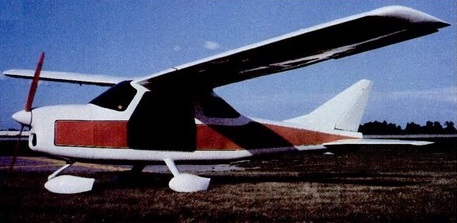
Designed by Jim Bede, the Dream was to be an affordable airplane.
The NAC Dream featured leading edge wing slots and spoilers for glidepath control, in addition to ailerons. The spoiler control lever is used by the same hand as the throttle. The ailerons had a 2-to-1 differential.
The fuel tank is mounted on the centre of gravity.
A prototype only was built in 1983 and in 1984 it was to be sold with a 35 hp Cuyuna 430-2UL engine at a target price of $7200 ready to fly.
Jim Bede was contracted by a development group and plans were to market the aircraft by a company named NAC under the name Dream.
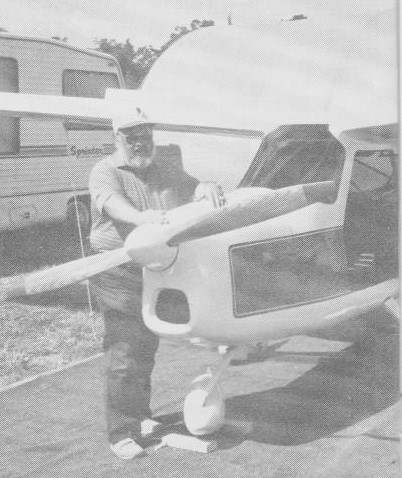

BD-12A
Engine: 80 hp
Speed max: 184 mph.
Cruise: 172 mph.
Range: 940 sm
Stall: 54 mph.
ROC: 1110 fpm.
Take-off dist: 850 ft
Landing dist: 900 ft.
Service ceiling: 18,000 ft.
Fuel cap: 24 USG
Weight empty: 590 lb
Gross: 1220 lbs.
Height: 7.83 ft
Length: 19.5 ft.
Wing span: 22 ft.
Wing area: 68.81 sq.ft
Seats: 2.
Landing gear: retractable nose wheel.
BD-12B
Engine: 100 hp
Fuel cap: 24 USG
Height: 7.83 ft.
Length: 19.5 ft
Wing span: 22 ft
Wing area: 68.81 sq.ft.
Seats: 2
Landing gear: retractable nose wheel.
BD-12C
Engine: Lycoming O-320, 150 hp.
Speed max: 215 mph.
Cruise: 200 mph
Range: 816 sm.
Stall: 54 mph
ROC: 1860 fpm.
Take-off dist: 700 ft
Landing dist: 800 ft.
Service ceiling: 21,000 ft
Fuel cap: 37.4 USG.
Weight empty: 680 lb
Gross: 1310 lbs.
Height: 7.83 ft.
Length: 21.5 ft.
Wing span: 23 ft
Wing area: 92.6 sq.ft.
Seats: 2
Landing gear: retractable nose wheel.
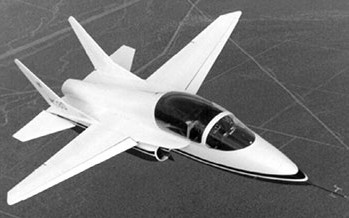
After the BD-5 the Federal Trade Commission banned Bede from accepting aircraft kit investments for a period of 10 years. Shortly after the FTC Consent Decree expired in 1989, Bede revealed plans for a homebuilt tandem-seat supersonic jet, the Bede BD-10. The initial specs for the BD-10 were using a single General Electric J85 engine, the same model as used on the Learjet Model 23, Bede promised customers climb rates of over 12,000 feet per minute, a range of 2,000 miles at 590 mph and max ceiling of around 45,000 feet. Most of all, the BD-10 adverts promised supersonic speeds up to Mach 1.4.
When the BD-10 was announced, it was billed as the world’s first and only supersonic jet kit aircraft. Designed and promoted by Jim Bede, the BD-10 was touted as an everyman’s personal supersonic fighter that could fill the “need for speed” at a relatively low cost.
Construction of the BD-10 is made largely of state-of-the-art honeycomb sandwich aluminum and is designed with all the seriousness of today’s frontline fighter aircraft. The aircraft is complex in structure but not beyond the means of competent builders exhibiting the proper building skills. Build time is around 6,000 hours, and it does take a large amount of change, but in the grand scheme it is a lot less expensive to build and operate than most military surplus jets available to the serious GA pilot.
The prototype was completed in 1992 and began flight-testing. The enthusiasm for the project was huge, but flaws manifested themselves from the BD-10’s very first flight. This didn’t dampen the enthusiasm of aviation publications, and big-name aviation legends such as Bob Hoover and Gene Cernan were hired by the company to pitch the aircraft. But actual performance never matched the optimistic specs. As aircraft weight increased with each design change, range decreased. Even at full thrust, the aircraft couldn’t achieve a speed greater than Mach 0.83.
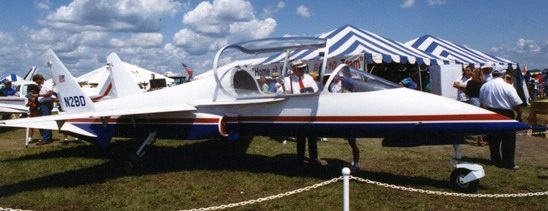
Bede became disenchanted with the project by 1993 as performance of the aircraft continued to disappoint. Mike Van Wagenen, a Vietnam-era fighter pilot and Bede’s primary business partner and inspiration for the BD-10, took the reins of the entire project and pressed ahead. Peregrine Flight International purchased the rights to BD-10 jet from Bede Jet Corporation in 1995, with the redesignated factory-production BD-10 used as the PJ-1 prototype.
The biggest red flag for the project was when wrinkling appeared on the aircraft’s vertical tail after performing demo flights at the 1994 Reno Air Races. The tail was beefed up, and the next prototype, dubbed the PJ-1, was quickly built based on the redesign, and Van Wagenen’s new company, Peregrine Flight International, was born. Rights to the BD-10 jet were purchased from the Bede Jet Corporation in 1995, with redesignated factory-production BD-10 used as PJ-1 prototype (first flown November 1994) and PJ-2 version for certification flying June 1995 with GE J85 as a home-builder kit.
The redesign wasn’t enough. While doing envelope expansion fight testing, on Dec. 30, 1994 (three months after the Reno structural damage), the PJ-1 experienced tail flutter and broke up in flight, killing Van Wagenen. Eight months later, his successor, Joseph Henderson, was killed in the second prototype in Minden, Nevada, when one flap failed to retract on an attempted go-around. After this crash, Peregrine ceased operations. In 1996, Bede sold BD-10 military rights to Monitor Jet in Canada, but the company test pilot refused to fly it, and the aircraft ended up in a museum and was never flown again.
Acquired by Fox Aircraft of Minden, but its president, too, was killed in a crash. In 1996 Monitor Jet Corp of Canada took over but, despite claim of 12 standing orders, no production was forthcoming.
The last kit-built variant of the BD-10 flew in 2003 but suffered an inflight breakup, killing its pilot, Frank Everett, off the coast of Southern California.
In all, five BD-10 variants were built, three crashed, killing each pilot, and two were relegated to static displays.
Later developed into the Vortex Aircraft Company Llc Phoenix Jet-TJ tandem two-seat military primary jet and electronic warfare trainer.
Engine: GE CJ610, 2950 lb thrust.
Speed max: 926 mph.
Cruise: 620 mph
Range: 1840 sm.
Stall: 85 mph
ROC: 30,000 fpm.
Take-off dist: 600 ft
Landing dist: 1500 ft.
Service ceiling: 45,000 ft
Fuel cap: 263 USG.
Weight empty: 1580 lbs
Gross: 4140 lbs.
Height: 8 ft
Length: 28.9 ft.
Wing span: 21.5 ft
Wing area: 98 sq.ft.
Seats: 2
Landing gear: retractable nose wheel.

Essentially a single-seat version of the BD-4, it incorporates the same ease of construction aimed at the novice builder while utilizing the same German-made Hirth engine originally used in the BD-5. This high-wing, all-metal ship seats one person in an en¬closed cockpit and stands on tricycle gear of the non-retractable type.
BD-4 Aircraft BD-6
Engine: Hirth, 60 hp
HP range: 40-90
Speed max: 165 mph.
Cruise: 148 mph
Range: 650 sm.
Stall: 51 mph.
ROC: 1500 fpm
Take-off dist: 700 ft
Landing dist: 100 ft.
Service ceiling: 21,000 ft
Fuel cap: 20 USG
Weight empty: 410 lbs.
Gross: 675 lb
Height: 6.2 ft
Length: 15.6 ft.
Wing span: 21.5 ft
Wing area: 64 sq.ft
Seats: 1.
Landing gear: nose or tail wheel.
Bede Corp LLC BD-6
Engine: HKS 700E, 60 hp
HP range: 50-80
Cruise: 140 mph
Range: 980 sm.
Stall: 51 mph.
ROC: 1200 fpm
Take-off dist: 450 ft
Landing dist: 500 ft.
Fuel cap: 20 USG
Weight empty: 570 lbs.
Gross: 800 lb
Length: 19.3 ft.
Wing span: 21.5 ft
Wing area: 56 sq.ft
Seats: 1.
Cockpit width: 24 in
Landing gear: nose or tail wheel.

The BD-5S is the sailplane version of the Bede BD-5 Micro single-seat light aircraft, and this engineless version made its first flight in 1975. It differs principally in having a wing span increased by 10ft 5in / 3.17 m, a revised cockpit layout and a redesigned undercarriage in which the backwards-retracting nosewheel of the BD-5 and BD-5J is replaced by a similarly retracting nose skid and the outwards retracting mainwheels are replaced by a pair of side by side twin mainwheels retracting into the fuselage. The main gear door opens forward and can also be used as an air brake. The rear-engined BD-5’s low-set tailplane and rear fuselage shape, with its fairing housing the propeller shaft (in the BD-5) or jet exhaust (in the jet-powered BD-5J), is retained.
The BD-5S, like the powered BD-5 variants, is designed to be suitable for amateur construction from plans and kits. Construction is all-metal and the low wings are attached to the fuselage simply by sliding the tubular spar on to the wing root section and securing it on each side by two bolts. The ailerons are conventional and the flaps extend almost the full trailing edge span and can be lowered through four positions to a maximum of 60°. The pilot is seated under a large detachable framed canopy. A feature is the side-mounted control stick.
BD-5S
Span: 27 ft l0 in / 8.48 m
Length: 13 ft 6.75 in / 4.13 m
Wing area: 60 sq.ft / 5.57 sq.m
Aspect ratio: 12.88
Wing section NACA 641212
Empty weight: 225 lb / 102 kg
Max weight: 425 lb / 193 kg
Max wing loading: 7.09 lb/sq ft / 34.65 kg/sq.m
Min sinking speed: 0.95 m/sec / 3.12 ft/sec at 30 mph
Max diving speed: 174 kt / 322 km/h)
Stalling speed: 34 kt / 63 km/h
Best glide ratio: 23:1
Water ballast: None
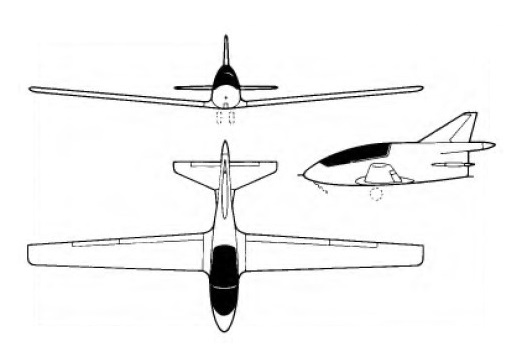
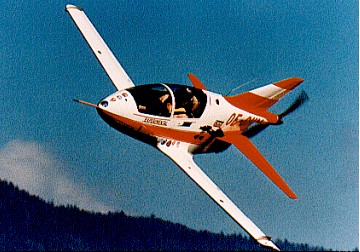
The BD-5 is a high performance single-place, low-wing, pusher-configuration sport plane. Design features include all-metal construction, mechanical retractable landing gear among the industry finest, detachable wings, and wrist action side stick control as in modern day fighter aircraft. Originally developed in the early 1970’s the aircraft was designed to day VFR requirements for use in sport and recreational flying, including limited aerobatic capability.
Originally it was powered by a 40-hp Hirth snowmobile engine and was fitted with a wingspan of 14 feet. More recently the wingspan was stretched to 17 feet and the more powerful Xenoah three-cylinder two-stroke engine was installed. The pilot is seated under a transport canopy forward of the engine in a heated cockpit. The landing gear is fully retractable, and the entire fuselage/wing structure is constructed of light alloy materials.
Oshkosh 1973 was the year the BD.5 appeared and it provided a spectacular show in the hands of Les Bervan, Bede’s test pilot. It performed both in long and short winged versions and with a retracting gear. The jet powered BD-5J also made its first public appearance.
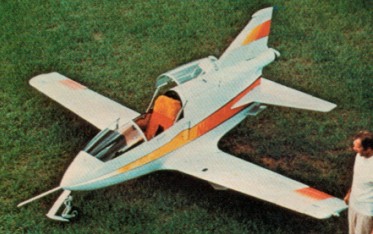
The BD 5J was powered by a 100 kg (202 lb) thrust Microturbo jet engine, spans 5.18 m (17 ft), and is fully aerobatic.
After the collapse of Bede, the BD-5 became available as modified conversions such as the Alturair BD-5.
BD-Micro Technologies, in late 1995, offered enhanced BD-5 kits. Enhanced BD-5 Kits are designed to be assembled in the shortest time with the least hassle.
Components (Wings, Flaps, Ailerons, Vertical Stabilizer, Horizontal Stabilator, Rudder, Fuselage, Landing Gear, and Nose Gear Box) come predrilled on factory jigs. Machined, welded, and difficult to form parts are supplied.
The .032” thickness wing skins with modified leading edge improves stall and slow flight control.
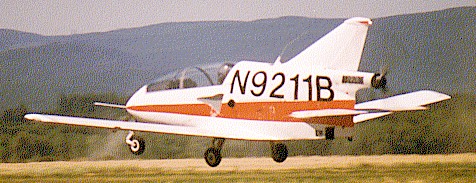
The BD-5T Turboprop kit features everything except paint & avionics. With the standard components (Wings, Flaps, Ailerons, Vertical Stabilizer, Horizontal Stabilizers, Rudder, Fuselage and Landing Gear) pre-drilled on factory jigs, and machined, welded, and difficult to form parts are supplied.
The BD-5T features a fuselage superstretch of 13.4 in and supplementary wingspar system, detachable wings and control system (20 minutes for assembly or removal), and detachable horizontal stabilizer.
Power is from a Quantum H-95 turboshaft engine and Quantum III Propeller.
The propeller is developed specifically for turbine engines, weighs 11 lbs including hub and 3 blades.
The Quantum turboprop powerplant system (engine & propeller) was designed for the BD-5T. It is a constant speed, torque variable turboshaft engine based on Solar T-62 series components.
Flightline Series® BD-5B kit features a complete airframe package- less engine, engine systems, paint & avionics. With the standard Wings, Flaps, Ailerons, Vertical Stabilizer, Horizontal Stabilizers, Rudder, Fuselage and Landing Gear) pre-drilled on factory jigs, and machined, welded, and difficult to form parts supplied, construction time is around 900-1000 hours.
Assembled quickly and easily with common skills.
Engines can be in the Hirth 2706, Xenoah range.
In 1992, Ed (“Skeeter”) and Richard Karnes started BD Micro Technologies Inc. (BMT), beginning a long journey to update the BD-5 with modern technology while using current building techniques. After many years of research and development, BMT has successfully incorporated many improved design features in an aircraft lineup called the “Flight Line Series” or “FLS” kits.
FLS safety advances include improved stall characteristics, increased pitch stability, reduced airframe fatigue, and modern technology integration focused on increasing systems reliability while reducing pilot workload. Lewis, who formed Lewis & Clark Performance LLC, collaborated with BMT to build the first complete FLS Microjet.
The Flightline Series BD-5J Microjet airframe kit features a complete airframe package requiring 600 to 800 hour construction time. Components (Wings, Flaps, Ailerons, Vertical Stabilizer, Horizontal Stabilizers, Rudder, Fuselage and Landing Gear) are pre-drilled on factory jigs and the fuselage preassembled to “On the Gear” stage. Machined, welded, and difficult to form parts are supplied. Parts are manufactured to aircraft industry standards. The Flightline Series BD-5J Microjet has FLS turbine structural airframe enhancements and a fuselage stretch, 5.2 in. (optional 13.5 in superstretch). The BD-5J has fuel quick disconnects, NACA jet engine intake scoops, Super Spar (supplementary wing spar system), Microjet disc brakes, a Hartwell canopy latch system, and a 5-point safety harness system.
With adjustable seating and side stick control, the retractable landing gear cycles in one second.
Detachable wings and control system takes 20 minutes for assembly or removal. The horizontal stabilizer is also
detachable.
The engine is also equipped with an attenuator designed to cut thrust.
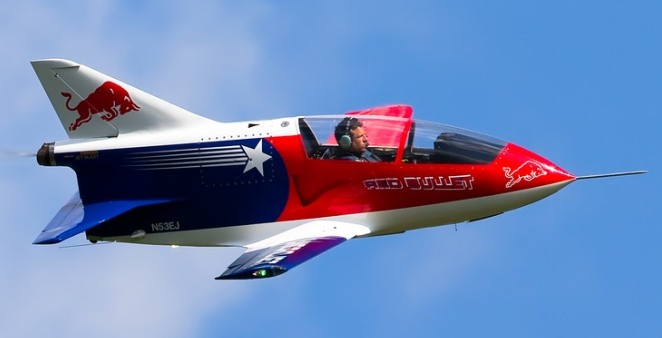
Alturair produced a modification of the standard Bede BD-5 to accept an alternative engine.
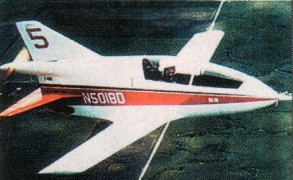
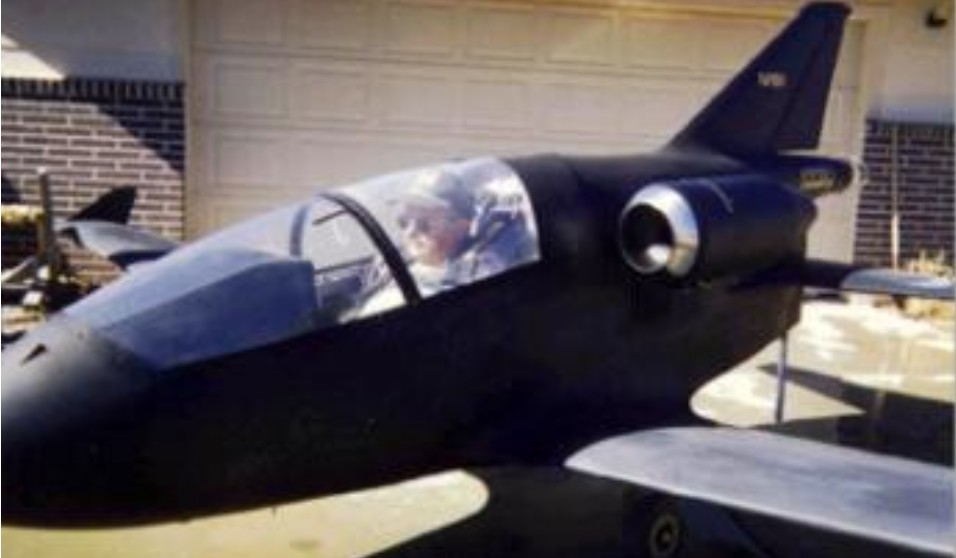
Bill Brooks flew a BD-5B with a Solar T62, then modified it with 3 HJFS-100 55 Kp units (pod 2 and 1 in the fuselage) and a canard in the front. It is more than probable that he never flew in this configuration.
It was bought by Dave Dearing in 2004 who changed it to standard 5J (the wing is still that of a 5B).
Engine side, Dave acquired a Christmas Penny NPT301.
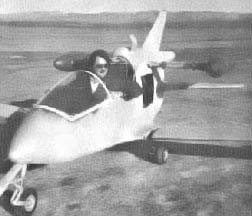
Leolan McRorey was the first owner of BD-5 to have equipped it with two Gluhareff EMG G8-2-130 pulse jets.
These jets are mounted on a steel rod to each side of the rear fuselage. This configuration was chosen to create a separation between the motors and to avoid the propagation of sound waves.
The small size of the BD-5 managed to board 50 liters of propane in two tanks, a 20 and 30 liter.
Instead of installing a dual throttle, he decided to change the position of the two engines, close to the fuselage.
BD-5
Engine: Xenoah. 70-hp
Gross Wt: 850lb
Empty Wt: 410lb.
Fuel capacity: 35 USG
Wingspan: 17ft
Length: 13 ft 3in
Top speed: 230mph
Cruise speed: 210mph
Stall: 69 mph.
Climb rate: 1750 fpm
Ceiling: 18,800 ft
Takeoff run: 820 ft.
Range: 1130 sm.
BD-5
Engine: Hirth 2706, 68 hp
HP range: 68-100
Speed max: 200 mph.
Cruise: 180 mph
Range: 720 sm
Stall: 59 mph.
ROC: 1900 fpm
Take-off dist: 750 ft
Landing dist: 700 ft.
Fuel cap: 26 USG
Weight empty: 460 lb
Gross: 830 lb
Height: 5.6 ft
Length: 13.99 ft
Wing span: 21.5 ft.
Wing area: 47.4 sq.ft
Seats: 1
Landing gear: retractable nose wheel.
Flightline BD-5B
Wing Span: 21.5 ft.
Length: 13.99 ft.
Height: 5.6 ft.
Wing Area: 47.4 sq ft.
Width- w/o Wings: 4.0 ft.
Horiz. Stab. Span: 7.3 ft.
Cabin Length: 64 in.
Cabin Width: 23.5 in.
Cabin Height: 36 in.
Empty Weight: 460 lbs.
Gross Weight: 830 lbs.
Useful Load: 370 lbs.
Fuel Capacity: 26 U.S. Gallons
T.O. Distance: 750 ft.
Landing Distance: 700 ft.
Rate of Climb: 1,900 ft/min.
Stall Speed: 59 mph.
Top Speed: 200 mph.
Range: 720 sm.
Absolute ceiling: 26,000 ft.
Limit “G”: ± 6.0
Ultimate “G”: ± 9.0
BD Micro Technologies BD-5B
Length: 14 ft
Wingspan: 21.5 ft
Wing area: 47.3 sq.ft
Cockpit with: 23 in
Stall: 51 kt / 59 mph / 95 kmh
Cruise: 156 kt / 180 mph / 290 kmh
VNE: 174 kt / 200 mph / 322 kmh
Range: 830 sm
Empty Weight: 209 kg / 460 lbs
MTOW Weight: 376 kg / 830 lbs
Climb Rate: 1900 ft/min / 10 m/s
Take-off distance (50ft obstacle): 750 ft / 229 m
Landing distance (50ft obstacle): 700 ft / 213 m
Fuel capacity: 24 USG
BD-Micro Technologies BD-5J
Engine: turbojet, 258 lbs thrust.
Speed max: 290 mph
Cruise: 240 mph.
Range: 380 sm
Stall: 67 mph
ROC: 2400 fpm.
Take-off dist: 1800 ft
Landing dist: 1000 ft
Service ceiling: 26,000 ft.
Fuel cap: 36 USG
Weight empty: 440 lb
Gross: 860 lbs.
Height: 5.6 ft
Length: 13.26 ft
Wing span: 17 ft.
Wing area: 37.8 sq.ft
Cockpit width: 23 in
Seats: 1.
Landing gear: retractable nose wheel.
Flightline BD-5J Microjet
Engine: Microturbo TRS 18-1, 326 lbf.
Wing Span: 17.0 ft.
Length: 12.83 ft.
Height: 5.6 ft.
Wing Area: 37.8 sq ft.
Width- w/o Wings: 4.0 ft.
Horiz. Stab. Span: 7.3 ft.
Cabin Length: 64 in.
Cabin Width: 23.5 in.
Cabin Height: 36 in.
Empty Weight: 432 lbs.
Gross Weight: 860 lbs.
Useful Load: 428 lbs.
Fuel Capacity: 36 U.S. Gallons
T.O. Distance: 1,800 ft.
Landing Distance : 1,000 ft.
Rate of Climb : 2,400 ft/min.
Stall Speed: 67 mph.
Top Speed: 320 mph.
Range : 280 sm.
Ceiling (abs.) : 26,000 ft.
Limit “G” : ± 6.0
Ultimate “G” : ± 9.0
Fuel Consumption (Max Power): 283 lbs./hr.
BD-5S
Sailplane.
BD-Micro Technologies BD-5T
Engine: turboprop, 95 hp
Speed max: 240 mph
Cruise: 225 mph.
Range: 928 sm
Stall: 63 mph
ROC: 2400 fpm.
Take-off dist: 550 ft
Landing dist: 750 ft
Service ceiling: 25,000 ft.
Fuel cap: 38 USG
Weight empty: 450 lbs
Gross: 910 lbs.
Height: 5.6 ft.
Length: 14.68 ft
Wing span: 19 ft.
Wing area: 41.8 sq.ft
Cockpit width: 23 in
Seats: 1.
Landing gear: retractable nose wheel.
Flightline BD-5T Turboprop
Engine: Quantum H-95
Power Rating (Sea Level): 95 SHP @ 6,000 RPM
Fuel Consumption (Max Power): 108 lbs./hr.
Wing Span: 21.5 ft. or 17.0 ft.
Length: 14.68 ft.
Height: 5.6 ft.
Wing Area: 47.4 or 37.8 sq ft.
Width- w/o Wings: 4.0 ft.
Horiz. Stab. Span: 7.3 ft.
Cabin Length: 64 in.
Cabin Width: 23.5 in.
Cabin Height: 36 in.
Empty Weight: 450 lbs.
Gross Weight: 910 lbs.
Useful Load: 428 lbs.
Fuel Capacity: 36 U.S. Gallons
T.O. Distance: 650 ft.
Landing Distance: 750 ft.
Rate of Climb: 2,400 ft/min.
Stall Speed: 63 mph.
Top Speed: 240 mph.
Range: 728 sm.
Ceiling (abs.): 26,000 ft.
Limit “G”: ± 6.0
Ultimate “G”: ± 9.0
BD-5FLS Microjet
Engine: Quantum Turbine System Featuring the PBS TJ-100
Thrust: 265 pounds
Jet Fuel: 31 gallons
Wing Span: 17 feet
Length: 13 feet
Height: 5 feet, 9 inches
Empty Weight: 416 pounds
Gross Weight: 890 pounds
Top Speed: 320 mph
Stall Speed: 67 mph
Max Range 200 nm
Max Loading: +/- 6 g’s
Alturair BD-5
Engine: Rotary, 90 hp
Speed max: 232 mph
Cruise: 229 mph
Range: 575 sm
Stall: 60 mph
ROC: 1920 fpm
Take-off dist: 590 ft
Landing dist: 535 ft
Service ceiling: 26,000 ft
Fuel cap: 28 USG
Weight empty: 355 lb
Gross: 660 lb
Height: 5 ft
Length: 13.6 ft
Wing span: 17 ft
Seats: 1
Landing gear: retractable nose wheel
Alturair BD-5B
Engine: Honda, 90 hp
Hp range: 90-100
Wing span: 21 ft
Length: 14.5 ft
Weight empty: 545 lb
Gross: 860 lb
Fuel cap: 27 USG
Cruise: 205 mph
Stall: 66 mph
Range: 980 sm
ROC: 1800 fpm
Take-off dist: 900 ft
Landing dist: 850 ft
Seats: 1
Cockpit width: 23 in
Landing gear: retractable nose wheel
Alturair BD-5G
Engine: Zenoah, 70 hp
Hp range: 70-100
Wing span: 17 ft
Length: 14.5 ft
Weight empty: 355 lb
Gross: 660 lb
Fuel cap: 28 USG
Cruise: 229 mph
Range: 660 sm
ROC: 1920 fpm
Take-off dist: 590 ft
Landing dist: 530 ft
Seats: 1
Cockpit width: 23 in
Landing gear: retractable nose wheel
The original Bede Aviation Corporation was established 1960 in Kansas to develop an advanced STOL aircraft. An early type was the BD-1 that first flew 1963 and was later produced by others as Yankee Trainer and Traveler. Subsequent designs included BD-4 two/four-seat sporting monoplane of 1970s, and the BD-5 Micro single-seat pusher-engined monoplane and its turbojet-powered derivative as the BD-5J.
The BD-5 and BD-5J were heavily promoted, and the company accepted thousands of orders and deposits before the project ran out of money, causing customers to lose their deposits. As a result, the Federal Trade Commission banned Bede from accepting aircraft kit investments for a period of 10 years.
Following difficult period, company later reestablished as Bede Aircraft Corporation in Missouri, reviving BD-4 and BD-6 for sale in kits and plans forms. BD-12A of 1994 became tandem two-seat variant of BD-5, with larger four-seat BD-14A then put under development.
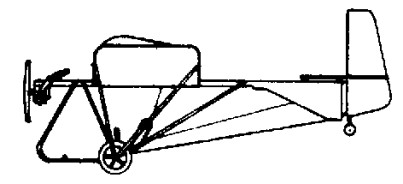
Single seat single engined high wing monoplane with conventional three axis control. Wing has unswept leading and trailing edges, and constant chord; cruciform tail. Pitch control by elevator on tall; yaw control by fully flying rudder with additional fin; roll control by spoilers; control inputs through stick for pitch/roll and pedals for yaw. Wing braced from below by struts; wing profile single surface. Undercarriage has three wheels in tail dragger formation; no suspension on tailwheel and bungee suspension on main wheels. No ground steering. No brakes. Aluminium tube framework, without pod. Engine mounted at wing height driving tractor propeller.
The Beaujon Mach .07 was aimed at amateur constructors, being available only as a sheet of plans.
Length overall: 18.5 ft, 5.61 m.
Sweepback: 0 degs
Total wing area: 165 sq.ft, 15.3sq.m

