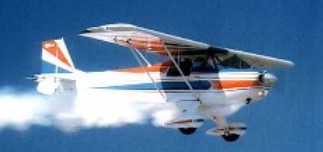
USA 1995: 8710 Carefree Hwy, Peoria, AZ 85382, USA. Manufactures in assembled and kit forms a large range of single- and two-seat microlights with Rogallo wings and open trikes.
1998: 1 rue du Stade F-21121 Fontaine lès Dijons France
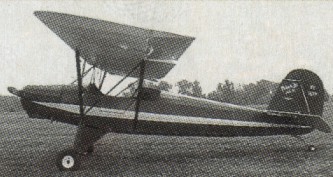
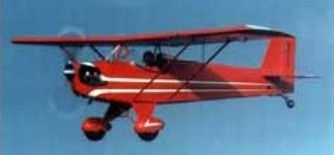
The Junior Ace is lightweight, easy to build, fun to fly and requires minimal maintenance. It has been modified from the original Corben Baby Ace so that it can utilize aircraft engines. The fuselage has also been widened, the horizontal stabilizer was modified for easier construction and modern aircraft wheels and brakes are now called for. With nearly a 34 ft wingspan and Clark Y airfoil, the Pober Junior Ace, designed by EAA founding president Paul Poberezny, is docile in stall and landing patterns. Airframe is 4130 steel tubing, wings are all wood and the recommended powerplant is a Continental C-85. Empty weight of the Junior Ace is 750 pounds and gross capacity is 1,320 pounds.
Junior Ace E
The Pober Junior Ace made its first flight with Captain Bud Judy at the controls. This first flight was successful and displayed the short field capabilities as well as low stall speed – ideal for small airstrips. The drawings for the airplane have full size wing rib drawings and two types of ailerons – the Friess aileron being a bit more responsive and lighter on aileron control. The indicated stall speed with one person on board is approximately 36 mpg. Indicated cruise with the Continental C-85-8 was a little over 80 mph. The Pober Junior Ace is open cockpit. The fuselage is chromoly steel tube, the tail group is chromoly steel tube and flat sheet stock to form ribs. The landing gear is chromoly tube with coil spring shocks. Wings are spruce spars and ribs. Two place side by side. The kit price in 2009 was US$20950.
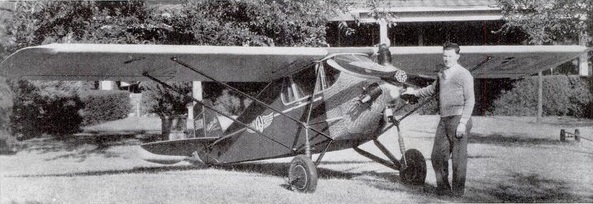
The Corben Baby Ace of 1929 was a professional design based on the Heath Parasol, but was a little more comfortable and had much better performance because of higher power. A 40-hp French Salmson AD-9 was used. Only six were factory-built, and a few were built from magazine plans in the 1930s.
The original Corben Baby Ace first flew back in 1931.
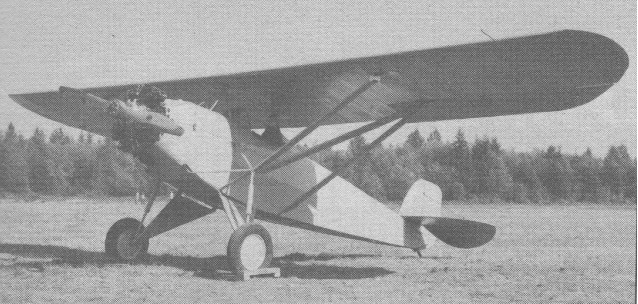
A single seat, high wing, sport plane powered by a modified Ford Model A 4 cyl inline engine. A simple and conventional design of open cockpit, strut-braced wing and tailplane, and a fixed, strutted, undercarriage. Later up-dated and marketed as the Pober Super Ace.
In 1954, Paul Poberenzy, who a year earlier had founded the still fledgling Experimental Aircraft Association, built a Baby Ace aircraft as a three part series in Mechanix Illustrated. The success of the articles caused an explosion in the homebuilt movement. The Baby Ace that Mr. Poberenzy built for Mechanix Illustrated is now in the EAA AirVenture Museum.
Corben Baby Ace D
The Baby Ace was extensively redesigned in 1955 as an ultralight monoplane specially designed for the amateur builder, the Baby Ace Model D. Baby Aces usually carry Continental engines rated from 65 to 85 hp and their performance is considered excellent by owners. Construction consists of a steel tube fuselage, all-wood wings and fabric covering. The wing is Clark Y mod from the root to the tip.
The Model C was refined by Ed Jacobs as the Model D. This first flew, as the DuCharme/EAA Baby Ace, on 16 November 1956.
In 1961 Ace Aircraft Mfg Co (Edwin T Jacobs), McFarland WI, purchased Baby Ace rights from Cliff DuCharme, West Bend WI.
Plans offered in 1968 for single-place Baby Ace ($28.50) and two-place Junior Ace, or Model E ($36.50). The kit price in 2009 was US$18950.
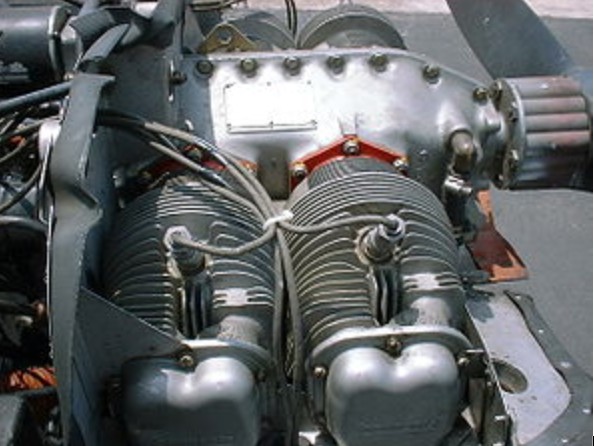
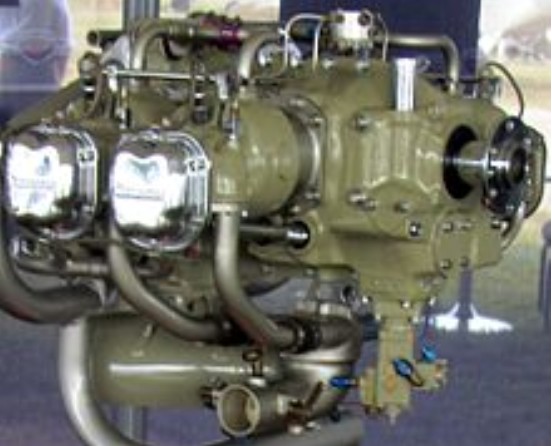
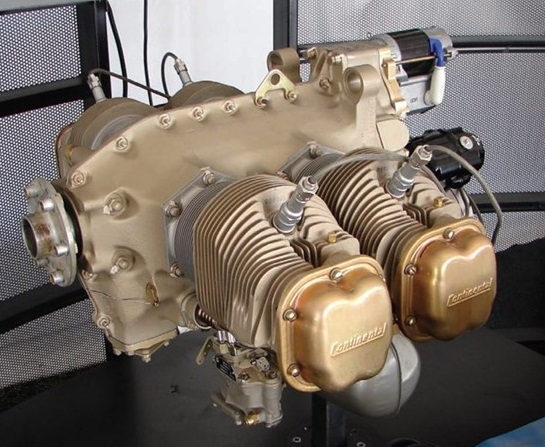
First run in 1947, the Continental C90 and O-200 are a family of air-cooled, horizontally opposed, four-cylinder, direct-drive aircraft engines of 201 in³ (3.29 L) displacement, producing between 90 and 100 horsepower (67 and 75 kW).
The C90 was introduced in 1947 as a follow-on to the A65, which had been in production since 1939. Many of the designs powered by the C90 are upgraded variants of earlier A65 powered designs, such as the Piper J-3 Cub and PA-11 Cub Special, Aeronca 7AC, and Luscombe 8A. The engine was developed from the earlier O-190 by increasing the stroke 1⁄4 inch.
This engine family is considered to be dependable, according to both industry publications and the FAA, certified under ATC 252.
While the C90 is approved for takeoff power of 95 horsepower (71 kW) for 5 minutes, the designation derives from its continuous power rating of 90 hp (67 kW). As noted above, certain models of the C90 replace the usual carburetor with a fuel injection system. In addition, there are models which provide for the installation of a controllable pitch propeller and one, the C90-12FP, designed for pusher installation. While slightly less horsepower than the O200, many floatplane operators prefer the performance of the C90 over the O200, due to its higher torque at lower rpm. This is primarily due to the C90’s camshaft design. The C90 is also known by its military designation of O-205.
Though the C90 was superseded by the O-200, and many of the designs utilizing the O-200 had gone out of production by 1980, with the 2004 publication of the United States Federal Aviation Administration light-sport aircraft regulations came a resurgence in demand for the O-200. The light-sport aircraft standard is for small, simple single- and two-seat aircraft for which the O-200 is well-suited.
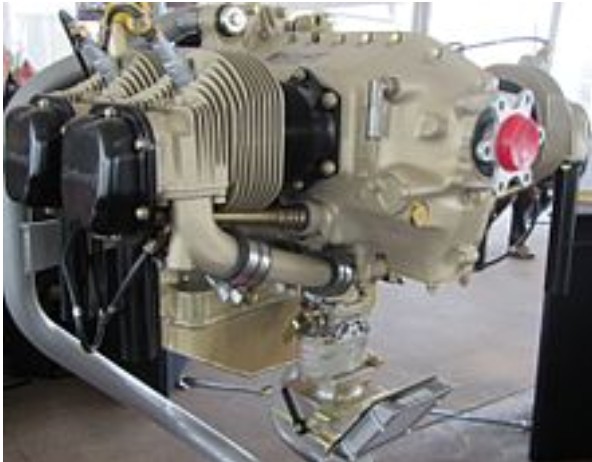
The O-200 is an updated and upgraded version of the engine, achieving increased power of 100 hp (75 kW) as a result of higher maximum rpm. The standard and most common model of the engine is the O-200-A; the -B model is designed for pusher installation, the -C model provides for the installation of a controllable pitch propeller, and the -D model is a lightweight model designed for Light Sport aircraft.
Continental O-200D
With 23,949 Cessna 150s built, this type is the most common application for the O-200.
In a cooperative venture, Rolls-Royce produced these same designs in England, under separate certification, with model designations beginning RR, e.g. the Rolls-Royce RR C90-12FH is the equivalent of the Continental C90-12FH; the Rolls-Royce versions are “directly interchangeable with the equivalent models manufactured by Continental.” The Rolls-Royce O-200-A powers the Beagle B.121 Pup 100, the Bölkow BO 208 C Junior, the Avions Robin DR 220, and the Morane-Saulnier MS-880.
Rolls Royce O-200-B
All versions of the C90 and O-200 are Four-stroke reciprocating engines and are all similar in size, displacement and weight. These engines are typically fitted with an updraft carburetor, though the C90-8FJ, -12FJ, and -14FJ are equipped with fuel injection systems. They utilize a redundant ignition system requiring no external power, driving two magnetos, each of which fires one spark plug per cylinder. Each cylinder has one intake valve and one exhaust valve, pushrod-activated.
Continental’s recommended time between overhaul (TBO) for these engines is 1,800 hours of operation or 12 years in service, whichever is reached first. The standard certification for the C90 and O-200 specifies Avgas 80/87 as the minimum fuel grade. Both are eligible for operation on automobile gasoline on the basis of Supplemental Type Certificates.
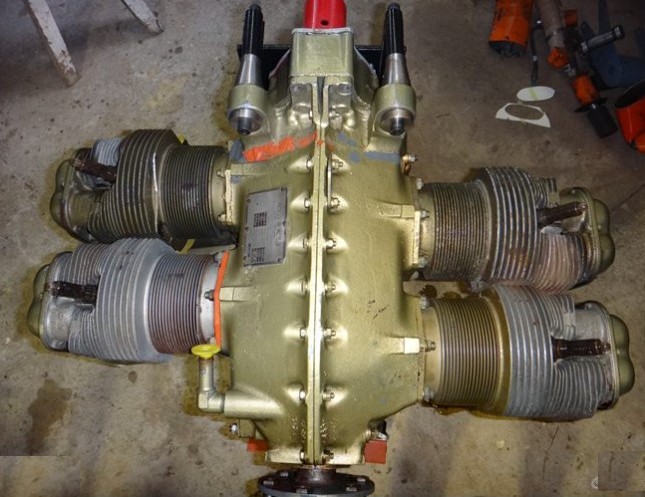
An engine designated the IOL-200, an O-200 variant modified with fuel injection and liquid cooling, powered the 1986 non-stop, non-refueled global circumnavigation flight of the Rutan Voyager. The 110-horsepower (82 kW) IOL-200, also referred to as the Voyager 200, was the rear engine and—unlike the forward engine, another modified engine, a Continental O-240 —ran throughout the entire 9-day flight save for a four-minute shutdown due to a fuel problem.
Continental IOL-200
Formula One racer Sharp Nemesis, designed and flown by Jon Sharp, was powered by a ‘stock’ O-200. Between 1991 and 1999, the plane won 45 of the 48 events in which it was entered, as well as winning three Louis Blèriot medals, four Pulitzer Trophies, and setting 16 speed records in its class. In one of those records, Nemesis was clocked at over 290 mph (467 km/h). By contrast, the O-200 powered Legend Cub cruises at 95 mph (152.9 km/h).