Continental IO-550 / OL-550

Continental TSIO-550-C engine installation in a Cessna 400

First run in 1983, the Continental IO-550 engine is a large family of fuel injected six-cylinder, horizontally opposed, air-cooled aircraft engines that were developed for use in light aircraft by Teledyne Continental Motors. The first IO-550 was delivered in 1983 and the type remains in production through 2010. There is no carburetor-equipped variant, hence the base model is the IO-550.

The IO-550 family of engines was developed from the IO-520 series, with the stroke increased from 4.00 to 4.25 inches, increasing the displacement to 552 cu.in (9.05 l). The engine family covers a power range from 280 hp (209 kW) to 360 hp (268 kW).

The engines were first certified on a regulatory basis of FAR 33, 1 February 1965 amendment, 33-8, 2 May 1977. The first IO-550 model was certified on 13 October 1983.

The IOF-550 is an Aerosance FADEC equipped version of the same basic engine, the TSIO-550 is a dual turbocharged version and the TSIOL-550 is a liquid-cooled variant.

Variants:

IO-550-A
300 hp (224 kW) at 2700 rpm, dry weight 430.72 lb (195.37 kg). Certified 13 October 1983.

IO-550-B
300 hp (224 kW) at 2700 rpm, dry weight 421.61 lb (191.24 kg). Certified 13 October 1983.

IO-550-C
300 hp (224 kW) at 2700 rpm, dry weight 433.20 lb (196.50 kg). Certified 13 October 1983.

IO-550-D
300 hp (224 kW) at 2700 rpm, dry weight 437.1 lb (198.3 kg). Certified 23 June 1988.

IO-550-E
300 hp (224 kW) at 2700 rpm, dry weight 450.50 lb (204.34 kg). Certified 20 December 1989.

IO-550-F
300 hp (224 kW) at 2700 rpm, dry weight 437.1 lb (198.3 kg). Similar to the IO-550-A,B & C, with a top-mounted induction system and 8-quart oil sump. Certified 23 June 1988.

IO-550-G
280 hp (209 kW) at 2500 rpm, dry weight 428.97 lb (194.58 kg). Certified 17 March 1989.

IO-550-L
300 hp (224 kW) at 2700 rpm, dry weight 438.5 lb (198.9 kg). Certified 23 June 1988.

IO-550-N
310 hp (231 kW) at 2700 rpm, dry weight 429.97 lb (195.03 kg). Similar to the IO-550-G with increased power rating. Certified 16 August 1996.

IO-550-P
310 hp (231 kW) at 2700 rpm, dry weight 429 lb (195 kg). Similar to the IO-550-N with oil sump from the IO-550-L. Certified 1 March 2000.

IO-550-R
310 hp (231 kW) at 2700 rpm, dry weight 439.5 lb (199.4 kg). Similar to the IO-550-N but with the oil sump, oil suction tube and mount legs from the IO-550-B. Certified 1 March 2000.

IOF-550-B
300 hp (224 kW) at 2700 rpm, dry weight 447.1 lb (202.8 kg). Similar to the IO-550-B with an Aerosance FADEC fuel and ignition control system. Certified 4 February 2002.

IOF-550-C
300 hp (224 kW) at 2700 rpm, dry weight 453.2 lb (205.6 kg). Similar to the IO-550-C with an Aerosance FADEC fuel and ignition control system. Certified 4 February 2002.

IOF-550-D
300 hp (224 kW) at 2700 rpm, dry weight 455.0 lb (206.4 kg). Similar to the IO-550-D with an Aerosance FADEC fuel and ignition control system. Certified 4 February 2002.

IOF-550-E
300 hp (224 kW) at 2700 rpm, dry weight 462.8 lb (209.9 kg). Similar to the IO-550-E with an Aerosance FADEC fuel and ignition control system. Certified 4 February 2002.

IOF-550-F
300 hp (224 kW) at 2700 rpm, dry weight 460.1 lb (208.7 kg). Similar to the IO-550-F with an Aerosance FADEC fuel and ignition control system. Certified 4 February 2002.

IOF-550-L
300 hp (224 kW) at 2700 rpm, dry weight 455.0 lb (206.4 kg). Similar to the IO-550-L with an Aerosance FADEC fuel and ignition control system. Certified 4 February 2002.

IOF-550-N
310 hp (231 kW) at 2700 rpm, dry weight 460.0 lb (208.7 kg). Similar to the IO-550-N with an Aerosance FADEC fuel and ignition control system. Certified 4 February 2002.

IOF-550-P
310 hp (231 kW) at 2700 rpm, dry weight 460.0 lb (208.7 kg). Similar to the IO-550-P with an Aerosance FADEC fuel and ignition control system. Certified 4 February 2002.

IOF-550-R
310 hp (231 kW) at 2700 rpm, dry weight 470.5 lb (213.4 kg). Similar to the IO-550-R with an Aerosance FADEC fuel and ignition control system. Certified 4 February 2002.

TSIO-550-A
360 hp (268 kW) at 2600 rpm, dry weight 442 lb (200 kg) plus two turbochargers of 28.2 lb (12.8 kg) each.

TSIO-550-B
350 hp (261 kW) at 2700 rpm, dry weight 442 lb (200 kg) plus two turbochargers of 28.2 lb (12.8 kg) each. Similar to the TSIO-550-A except with a 12 quart sump, sonic venturii removed and the two stage fuel pump replaced by a single stage fuel pump.

TSIO-550-C
310 hp (231 kW) at 2600 rpm, dry weight 442 lb (200 kg) plus two turbochargers of 28.2 lb (12.8 kg) each.

TSIO-550-E
350 hp (261 kW) at 2700 rpm, dry weight 442 lb (200 kg) plus two turbochargers of 28.2 lb (12.8 kg) each. Similar to TSIO-550-C with the oil sump and maximum continuous power rating of the TSIO-550-B.

TSIO-550-G
310 hp (231 kW) at 2700 rpm, dry weight 554 lb (251 kg) plus two turbochargers of 28.2 lb (12.8 kg) each. Similar to the TSIO-550-E with smaller surface area intercoolers, different oil sump capacity and power rating.

TSIO-550-K
315 hp (235 kW) at 2500 rpm, dry weight 522 lb (237 kg) plus two turbochargers of 28.2 lb (12.8 kg) each. Similar to the TSIO-550-E with new oil sump and capacity, decreased maximum continuous power, increased turbo boost pressure, decreased engine speed rating and tapered cylinder barrel fins.

TSIOF-550-D
350 hp (261 kW) at 2600 rpm, dry weight 558 lb (253 kg) plus two turbochargers of 35.2 lb (16.0 kg) each. Similar to the TSIOF-550-J except the exhaust system and low voltage harness.

TSIOF-550-J
350 hp (261 kW) at 2600 rpm, dry weight 558 lb (253 kg) plus two turbochargers of 35.2 lb (16.0 kg) each. Similar to the TSIO-550-E except for FADEC fuel injection and ignition control, turbochargers, tapered cylinder barrel fins, oil sump and capacity, maximum continuous speed and manifold pressure rating.

TSIOF-550-K
315 hp (235 kW) at 2500 rpm, dry weight 537.3 lb (243.7 kg) plus two turbochargers of 28.2 lb (12.8 kg) each. Similar to the TSIO-550-K but with FADEC fuel injection and ignition control.

TSIOL-550-A
350 hp (261 kW) at 2700 rpm, dry weight 402 lb (182 kg). Similar to the TSIO-520-NB but with a new cylinder design that uses liquid cooling. The coolant manifold is on top of the cylinder head, with a coolant pump fitted to the starter adapter, driven by the starter adapter shaft and the oil cooler is mounted on the airframe, not the engine. The engine has an AiResearch TA81 turbocharger.

TSIOL-550-B
325 hp (242 kW) at 2700 rpm, dry weight 557 lb (253 kg). Similar to the TSIO-520-UB but with a new cylinder design that uses liquid cooling. The coolant manifold is on top of the cylinder head, with a coolant pump fitted to the starter adapter, driven by the propeller shaft using sheaves, the oil cooler is mounted on the airframe, not the engine. A coolant tank and coolant lines are added to the installation. The engine has an AiResearch TS06 turbocharger.

TSIOL-550-C
350 hp (261 kW) at 2600 rpm, dry weight 546 lb (248 kg). Similar to the TSIOL-550-A but with the exhaust system and turbocharger bracket from the TSIOL-550-B. The engine is modified to accept the AiResearch TA81 turbocharger. Neither oil nor coolant radiators are provided with the engine.

GIO-550-A
A special non-certified geared engine developed for the RU-38 Twin Condor covert reconnaissance aircraft, incorporating 3:2 gear reduction to 2267 rpm.

Applications:

IO-550
Beechcraft Baron
Beechcraft Bonanza
Bellanca 17-30
Cessna 182 (STC SA09133SC, modification)
Cessna 206 (modification)
Cessna 350
Cirrus SR22
Cirrus VK-30
Freedom Aviation Phoenix
Lancair ES
Lancair Legacy
Mooney M20
Seawind 300C
Velocity XL-RG
Yakovlev Yak-112

TSIO-550
Adam A500
Cessna 400
Lancair IV
Mooney M20TN
Velocity TXL-RG
Cirrus SR22T

TSIOF-550
Diamond DA50

TSIOL-550
Extra EA-400

GIO-550
RU-38 Twin Condor

Specifications:

IO-550-A
Type: 6-cylinder air-cooled horizontally opposed aircraft piston engine
Bore: 5.25 in (133.4 mm)
Stroke: 4.25 in (108.0 mm)
Displacement: 552 in³ (9.05 L)
Dry weight: 430.72 lb dry (195.37 kg)
Fuel system: TCM fuel injection
Fuel type: 100LL avgas
Cooling system: Air-cooled
Power output: 300 hp (224 kW) at 2,700 rpm
Specific power: 0.54 hp/in³ (24.6 kW/L)
Compression ratio: 8.5:1
Power-to-weight ratio: 0.70 hp/lb (1.15 kW/kg)
Continental Motors

Founded in 1929, Continental Motors, Inc. is an aircraft engine manufacturer located at the Brookley Aeroplex in Mobile, Alabama. Although Continental is most well known for its engines for light aircraft, it was also contracted to produce the air-cooled V-12 AV-1790-5B gasoline engine for the U.S. Army’s M47 Patton tank and the diesel AVDS-1790-2A and its derivatives for the M48, M60 Patton and Merkava main battle tanks. The company also produced engines for various independent manufacturers of automobiles, tractors, and stationary equipment (pumps, generators and machinery drives) from the 1920s to the 1960s.

In 1929, Continental introduced its first aircraft engine, a seven-cylinder radial designated as the A-70, with a displacement of 543.91 cu in (8.91L) that produced 170 hp (127 kW). In August 1929, the Continental Motors Company formed the Continental Aircraft Engine Company as a subsidiary to develop and produce its aircraft engines.

During the late 1930s, early 1940s the Gray Marine Motor Company adapted Continental engines for maritime use. On 14 June 1944 the company was purchased by Continental for US$2.6 million. John W. Mulford, the son of one of Gray’s founders was appointed general manager of Gray by Continental. Gray’s continued to make marine engines in the post-war period until its closure by Continental in about 1967.

As the Great Depression unwound, 1930 saw the company introduce the 37 hp (28 kW) A-40 four-cylinder engine. A follow-on design, the 50 hp (37 kW) A-50 was introduced in 1938 and was used to power the Taylor Cub and derivative Piper Cub. As the Second World War started in 1939 Continental commenced building aircraft engines for use in British and American tanks. Continental formed Continental Aviation and Engineering (CAE) in 1940 to develop and produce aircraft engines of over 500 hp (373 kW) Continental ranked 38th among United States corporations in the value of wartime production contracts.

During the late 1930s, early 1940s the Gray Marine Motor Company adapted Continental engines for maritime use. On 14 June 1944 the company was purchased by Continental for US$2.6 million. John W. Mulford, the son of one of Gray’s founders was appointed general manager of Gray by Continental. Gray’s continued to make marine engines in the post-war period until its closure by Continental in about 1967.

During the 1950s, the A-65 was developed into the more powerful 90 hp (67 kW) C-90 and eventually into the 100 hp (75 kW) O-200. The O-200 powered a very important airplane design milestone: the Cessna 150. By the 1960s turbocharging and fuel injection arrived in general aviation and the company’s IO-520 series came to dominate the market.

In 1969, Teledyne Incorporated acquired Continental Motors, which became Teledyne Continental Motors (TCM). That same year, the Continental Tiara series of high output engines were introduced, although they were dropped from the line after 1978. The company brought the TSIO-520-BE for the Piper PA-46 to market in 1984 and it set new efficiency standards for light aircraft piston engines. Powered by a liquid-cooled version of the IO-240, the Rutan Voyager was the first piston-powered aircraft to circumnavigate the world without refueling in 1986.

NASA selected Continental to develop and produce GAP in 1997, a new 200 hp (150 kW) piston engine to operate on Jet-A fuel. This was in response to 100-octane aviation gasoline becoming less available as a result of decreased demand, due to smaller turboprop engines becoming more prevalent.

In 2008, Teledyne Continental’s new president, Rhett Ross announced that the company was very concerned about future availability of 100LL avgas and as a result would develop a diesel engine in the 300 hp (220 kW) range for certification in 2009 or 2010. By the fall of 2009 the company was feeling the effects of the economic situation and the resulting reduced demand for aircraft engines. The company announced that it would close its plant for two one-week periods in October 2009 and January 2010. Salaried employees would move to a four-day work week with one week vacations for Thanksgiving and Christmas, with the aim “to protect as much of our valuable employee base as possible”.

On December 14, 2010, Continental’s parent Teledyne announced that Teledyne Continental Motors, Teledyne Mattituck Services and its general aviation piston engine business would be sold to Technify Motor (USA) Ltd, a subsidiary of AVIC International, for US$186 million in cash. AVIC is owned by the Chinese government. In May 2011, the transaction was reported as complete and the company renamed Continental Motors, Inc.

Diesel engines are manufactured in Germany by Continental Motors Group, Ltd., an AVIC International Holding Corporation company. Previously the company was known as Centurion Aircraft Engines before its 2013 acquisition by Continental. Several diesel engines were available from Continental in 2016: the CD-135 and CD-155 four cylinders and V6 CD-300, producing 310 hp.

Diesel engines are manufactured in Germany by Continental Motors Group, Ltd., an AVIC International Holding Corporation company. Previously the company was known as Centurion Aircraft Engines before its 2013 acquisition by Continental. Several diesel engines were available from Continental in 2016: the CD-135 and CD-155 four cylinders and V6 CD-300, producing 310 hp.

A90
A100
C90
C145
C175
E250
GR-9A
Voyager 200
Voyager 370
Voyager 550
O-110
O-200
O-240
O-255
O-315
O-368
O-520
O-526
OL-200
OL-370
Continental-Honda OL-370
OL-1430
V-1650 (Merlin)
XH-2860
R-545
227
300
320
324
325
352
354
356
500
TD-300
TS325
TP-500
R-20
RJ35 Ramjet
RJ45 Ramjet
RJ49 Ramjet
T69

Condor Aircraft Condor

Condor II

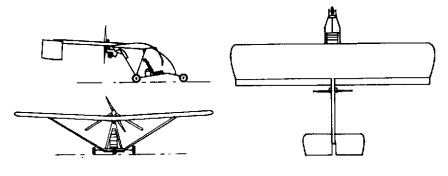
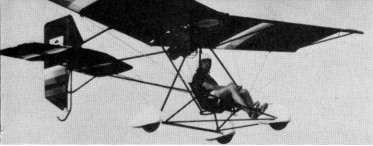
The Condor II is a single seat single engined high wing mono¬plane with conventional three axis control. Wing has unswept leading and trailing edges, and constant chord; cruciform tall. Pitch control by elevator on tail; yaw control by fully flying rudder; roll control by one third span spoilerons; control inputs through stick for pitch/roll and pedals for yaw. Wing braced from above by kingpost and cables, from below by cables; wing profile; single¬ surface. Undercarriage has three wheels in tricycle formation; torsion bar suspension on nosewheel. No ground steering. No brakes. Aluminium¬ tube framework, with optional pod. Engine mounted below wing driving pusher propeller.
All rigging wires are stainless steel with a vinyl coating and double swaging, and the aluminium tubing is ano¬dized clear and ‘covered with stabilised Dacron’.
Lift off and landing speeds are quoted as 20 24 mph (32 39 kph) and 20 25 mph (32¬40kph) respectively.
Options include floats, ballistically de¬ployed parachute, strobe, pod and electric start; normally, starting is by recoil, with an in flight restart facility. Price in 1982 of $5245.
Condor Aircraft describe the Condor III as a beefed up version of the Condor II, designed for heavier payloads, and accordingly the company quotes a much higher maximum take off weight for this side by side two seater with single centre stick.
The Condor III+2 is a two-seat version. Dual stick and rudder three-axis controls, dual throttle.

Condor II
Engine: Kawasaki TA440, 40 hp at 6000 rpm.
Prop¬eller diameter and pitch 56×36 inch, 1.42×0.91m.
Toothed belt reduction, ratio 2.0/1.
Max static thrust 238 lb, 108 kg.
Power per unit area 0.24hp/sq.ft, 2.6 hp/sq.m .
Fuel capacity 5.0 US gal, 4.2 Imp gal, 18.9 litre.
Length overall 10.0 ft, 3.05 m.
Height overall 9.7ft, 2.96m.
Wing span 32.0ft, 9.75m.
Constant chord 5.3 ft, 1.60 m.
Sweepback 0 deg.
Total wing area 168 sq.ft, 15.6sq.m.
Wing aspect ratio 6.3/1.
Empty weight 240 lb, 109kg.
Max take off weight 545 lb, 247kg.
Payload 305 lb, 138kg.
Max wing loading 3.24 lb/sq.ft, 15.7 kg/sq.m.
Max power loading 13.6 lb/hp, 6.2 kg/hp.
Load factors +5.0, 3.0 design.
Max level speed 55 mph, 88 kph.
Never exceed speed 60 mph, 97kph.
Max cruising speed 55mph, 88kph.
Economic cruising speed 42mph, 68kph.
Stalling speed 19 mph, 31 kph.
Max climb rate at sea level 775 ft/min, 3.9 m/s.
Best glide ratio with power off 7/1.
Take off distance 40 ft, 12 m. Landing distance 75 ft, 23 m.

Condor III
Engine: Kawasaki 440 A or B, 40 or 50 hp.
2:1 reduction drive to 56×36 prop.
Wing span 33.0ft, 10.06m.
Constant chord 5.1 ft, 1.55 m.
Total wing area 168 sq.ft, 15.6sq.m.
Wing aspect ratio 6.5/1.
Empty weight 252 lb, 114kg.
Max take off weight 657 lb, 298kg.
Payload 405 lb, 184kg.
Max wing loading 3.91 lb/sq.ft, 19.1kg/sq.m.
Max power loading 16.4 lb/hp, 7.5kg/hp.
Never exceed speed 65 mph, 105 kph.
Max cruising speed 51 mph, 82 kph.
Economic cruising speed 38 mph, 61 kph.
Stalling speed 24 mph, 39 kph.
Max climb rate at sea level 600ft/min, 3.0m/s.
Take off distance 60ft, 18m.
Landing dis¬tance 90 ft, 27 m.

Condor III+2
Wingspan 32’.
Wing area 168 sq.ft.
Length 10’.
Empty weight 286 lbs.
Gross weight 684 lbs.
Cruise speed 45 mph.
Stall speed 25 mph.
Vmax 55 mph.
Vne 75 mph.
Takeoff roll 90’.
Landing roll 90-120’.
Fuel capacity 5 USG.
Engine: Kawasaki 440
2:1 reduction drive to 56×36 wood prop.
50- or 75-hp version was available.

Condor Shoestring K-10

The original Shoestring was designed by Rod Kriemendahl and was built in Van Nuys, California, by Carl and Vince Ast, with help. Shoestring is a Formula One airplane. Its 19-foot wing has an aspect ratio of over five. All Formula One racers are required to have a minimum of 66 square feet of wing area, but Rivets and Shoestring stand alone with their tapered, longish wings. Apparently, the better overall efficiency of the higher aspect ratio wings is well worth the slight increase in drag because these two airplanes consistently bring home all the trophies.

The original drawings and engineering studies done by Kriemendahl in 1949 were lost or destroyed, a fact that worried John Anderson, one of the several past owners of the original Shoestring. Before Anderson sold the airplane to Ray Cote, he commissioned Ketner, a Piper engineering draftsman at Vero Beach, to go through the airplane with a tape measure and dividers and come up with a set of drawings he could use for repair work in case he ever dinged it. Ketner measured until he had enough dimensions to make up a complete set of working drawings. He had an engineering study run on the main spar and it was increased in thickness to bring it up to a 10-G strength. He has proof loaded the fuselage structure to 9 Gs with no deformation.

Constructed from the conventional combination of steel tubing, wood, and fabric, the racer is powered by a 100-hp O-200 Continental engine. By 1974, the Shoestring racer had accumulated 14 first places in major air race competitions. Other recommended engines are the Continental 85-and 90-hp versions.

The aircraft first flew in 1949 and entered its first competition race in 1950.

Yellow Jacket, the first reproduction of Shoestring, was built by Jim Strode of Melbourne, Florida. The plans for the airplane are produced by Landis Ketner and Jim was building parts as fast as Landis could make the drawings. Building Shoestring Yellow Jacket took just over a year.

Strode made four different cowlings before he got the shape and weight he wanted. This one weighs only 11 pounds. The cowling, wing fairings, landing gear fairings, and the canopy fit into their own little recesses, making everything flush. The wing is completely wooden construction, with plywood skins.

Gallery

Engine: 85-100 hp.
Span: 19’.
Wing area: 66 sq.ft.
Length: 17’8”.
Max wt: 800 lbs.
Empty wt: 565 lbs.
ROC: 3000 fpm.
Max speed: 225 mph.
Stall: 65 mph.
Cruise: 173 kts.
Fuel cap: 10 USG.
Takeoff run 500 ft.
Range 360 miles.
Seats: 1.

Competition Aircraft Firebird Flyer

Single seat single engined high wing monoplane with hybrid control. Wing has unswept leading and trailing edges, and constant chord; inverted V tail. Pitch/yaw control by elevon; roll control by full span ailerons; control inputs through stick for pitch/yaw/ roll. Wing braced from below by struts; wing profile; double surface. Undercarriage has three wheels in tricycle formation; suspension on all wheels. Nosewheel steering independent from yaw control. No brakes. Aluminium tube framework, without pod. Engine mounted below wing driving pusher propeller.
In 1983 this machine was still in its prototype stage and therefore its characteristics and performances are not fully known. However, R J Davies has two original ideas in this new design. Firstly, the full span ailerons can be operated together to serve as flaps. Secondly, the motor on the Firebird Flyer (a Spitfire 250FA of 28hp or possibly later a water-cooled 220LC of 35 hp) drives a two bladed pusher propeller, which rotates about the axis of the tubular metal boom which carries the tail.

Commonwealth Aircraft Corp / CAC / Aerospace Technologies of Australia

In 1935 the Chief General Manager of Broken Hill Proprietary (BHP), Essington Lewis, visited Europe and formed the view that war was probable. On his return to Australia, concerned at the lack of manufacturing capabilities there and at the possibility of aircraft not being available from ‘traditional’ (i.e. British) sources during wartime, he commenced a lobbying campaign to convince the Australian Government to establish a modern aircraft industry. The government required little persuasion and encouraged negotiations between a number of Australian companies. The outcome of these negotiations, begun in August 1935, was the formation of CAC the following year. Initially the companies involved were BHP, General Motors-Holden Ltd., and Broken Hill Associated Smelter Pty. Ltd. These were joined by Imperial Chemical Industries of Australia and New Zealand Ltd., the Orient Steam Navigation Company Ltd. and the Electrolytic Zinc Company of Australasia Ltd. at the time of CAC’s formation (the company was incorporated in Melbourne on 17 October 1936). By September 1937 a factory had been completed at Port Melbourne.
Shortly after the establishment of CAC, Mascot-based Tugan Aircraft was purchased. This led to Lawrence Wackett joining the company; he immediately became the General Manager. In 1935 Wackett had led a technical mission to Europe and the USA to evaluate modern aircraft types and select a type suitable to Australia’s needs and within Australia’s capabitities to build. The mission’s selection was the North American NA-16; with CAC’s modifications this became the Wirraway. CAC also undertook production of the Pratt & Whitney R-1340 engine used in the Wirraway and also built some propellers when supplies from alternative sources became problematic. The North American NA-33, built under license as CA-1 to CA-16 Wirraway for RAAF, starting in July 1939.

Followed by Wackett-designed prototype CA-2 Wackett two-seat trainer, production version designated CA-6.

Company also produced the only Australian-designed fighter to serve in Second World War, the CA-12,13, 14, 19 Boomerang.

CAC Melbourne Sept 1940 – Dec 1945 Gallery

Later designs during World War II were the sophisticated Woomera and CA-15, however these types were destined to fly only in prototype form. Postwar products included the prototype CA-22 and production CA-25 Winjeel trainer for the RAAF, the CA-28 Ceres agricultural aircraft, and over 200 North American Mustangs built as CA-17 and 18.

Other, jet-powered aircraft designs in the 1950s and 1960s did not even leave the drawing board, however in 1951 CAC was given the go-ahead to design and manufacture a version of the F-86 Sabre with a Rolls-Royce Avon turbojet and armament. The Sabre was developed and produced concurrently with the indigenous Winjeel trainer, with Sabre manufacture coming to an end in 1961.

In 1964 after a large amount of political lobbying CAC began producing components for the Sabre’s replacement, a version of the Dassault Mirage III, as a subcontractor to the Government Aircraft Factory (GAF). In 1967 CAC commenced licence production of a version of the Aermacchi MB-326 optimised for Australian conditions as Aermacchi M.B. 326H, this programme ended in 1972.

In 1971 CAC joined the small number of aircraft manufacturers which have built both fixed- and rotary-winged aircraft, when it began production of a variant of the Bell Kiowa for the Australian Army and Royal Australian Navy, the last of these was delivered in 1977. The same year CAC embarked on a Life Of Type Extension (LOTEX) programme for the Macchi, which was suffering fatigue problems. The LOTEX programme lasted until 1984. Other contracts included workfor Boeing, Sikorsky, Pratt & Whitney and Hawker Siddeley. Finally specialized in the manufacture and repair of gas turbine engines.

Became a public company in 1975 and CAC became a fully owned subsidiary of Hawker de Havilland in 1985 and was renamed Hawker de Havilland Victoria Limited in 1986. The Commonwealth Aircraft Corporation was renamed AsTA (Aerospace Technologies of Australia) in 1986. This company was purchased by Boeing Australia in 2000.

The Kiowa was the last type built by CAC. The company was part of the Australian Aircraft Consortium which designed the A10 Wamira, but this programme was cancelled in 1985 shortly after the prototype was completed. At the time of purchase by Hawker de Havilland, CAC had begun delivering components for the GAF-built version of the F/A-18 Hornet.

During its existence the Commonwealth Aircraft Corporation produced over 1700 aircraft of all types, including prototypes and aircraft assembled locally from imported components. Of these, almost 550 were examples of aircraft types wholly designed by the company. The designations used by CAC reflected production or design work in fulfillment of different in-house projects or government contracts rather than different types produced (for instance the different designations for the Wackett and Winjeel prototypes compared to their production versions). Early types were given consecutive manufacturer’s construction numbers (c/nos.), while later types (beginning with the production version of the Winjeel) were given c/nos. with the model number as a prefix. Construction numbers 1210 to 1224 appear not to have been assigned. The list of company designations and construction numbers is:

CA-1 First Wirraway production contract; 40 built (c/nos. 1-40).
CA-2 Wackett prototypes; two built (c/nos. 101, 102).
CA-3 Second Wirraway production contract; 60 built (c/nos. 41-100).
CA-4 Woomera prototype; one built (c/no. 435).
CA-5 Third Wirraway production contract; 32 built (c/nos. 103-134).
CA-6 Wackett production contract; 200 built (c/nos. 235-434).
CA-7 Fourth Wirraway production contract; 100 built (c/nos. 135-234).
CA-8 Fifth Wirraway production contract; 200 built (c/nos. 436-635).
CA-9 Sixth Wirraway production contract; 188 built (c/nos. 636-823).
CA-10 Proposed Wirraway variant not built
CA-11 Woomera production contract for 105 aircraft. Contract cancelled, only one aircraft flew (101 c/nos. assigned, 1225-1325).
CA-12 First Boomerang production contract; 105 built (c/nos. 824-928).
CA-13 Second Boomerang production contract; 95 built (c/nos. 929-1023).
CA-14 Experimental Boomerang fitted with turbocharger; one built (c/no. 1074).
CA-15 Single-seat fighter; one built (c/n 1073).
CA-16 Seventh (and final) Wirraway production contract; 135 built (c/nos. 1075-1209).
CA-17 First Mustang production contract; 80 assembled from imported components (c/nos. 1326-1405, 1326-1345 also assigned North American c/nos. NA110-34366 to -34385).
CA-18 Second Mustang production contract; 120 built, production of a further 50 cancelled (c/nos. 1406-1525).
CA-19 Third (and final) Boomerang production contract; 49 built (c/nos. 1024-1072).
CA-20 Contract to modify Wirraways for use by the RAN (see CAC Wirraway); 17 modified.
CA-21 Third (and final) Mustang production contract for 100 aircraft; contract cancelled, none built.
CA-22 Winjeel prototypes; two built (c/nos. 1526, 1527).
CA-23 Designation of a two-seat twin-engined supersonic jet fighter design. None built.
CA-24 Contract for production of 72 of variant of the Hawker P.1081; none built.
CA-25 Winjeel production contract; 62 built (c/nos. CA25-1 to -62).
CA-26 Sabre prototype; one built (c/no. 1528).
CA-27 Sabre production contract; 111 built (c/nos. CA27-1 to -111).
CA-28 Ceres production, built as private venture; 21 built (c/nos. CA28-1 to -21).
CA-29 Production sub-contract for wings, fins, rudders, tailcones and engines of GAF-built variant of Mirage IIIE; 101 airframe shipsets and 140 engines built.
CA-30 Macchi production contract; 20 assembled from imported components plus 77 built (c/nos. CA30-1 to -97, CA30-1 to -13 and -15 to -21 also assigned non-consecutive Aermacchi c/nos. between 6351 and 6395)
CA-31 Jet trainer design; none built (Macchi built instead).
CA-32 Kiowa production contract; 12 assembled from imported components plus 44 built (c/nos. CA32-13 to -56, all 56 aircraft also assigned Bell c/nos. 44501-44556).
CA-33 Contract for modifications to the RAAF fleet of Lockheed P-3C Orions; installing the Barra Sonobuoy system (developed for the RAAF and Royal Air Force by the Defence Science and Technology Organisation (DSTO)) and associated systems after delivery of each aircraft from the USA; 20 aircraft modified (contract completed as HdHV).
CA-34 Designation used for CAC’s participation in the A10 Wamira project.
CA-35 Contract for modifications to a Fokker F27 Friendship (registration VH-EWP) to install the LADS system developed by the DSTO (contract completed as HdHV).
CA-36 Production sub-contract for the wing pylons, engine access panels, aft nozzle fairings, aircraft-mounted accessory drive gearboxes and engines for the GAF-built version of the F/A-18 Hornet; 73 airframe shipsets and 158 complete engines built, plus parts of another 17 engines (contract completed as HdHV).

Engine types produced by CAC include the:

Pratt & Whitney R-1340 built for the Wirraway.
Pratt & Whitney R-1830 built for the Boomerang, Woomera and DAP Beaufort.
Rolls-Royce Merlin built for the GAF Lincoln.
Rolls-Royce Nene built for versions of the de Havilland Vampire manufactured by de Havilland Australia.
Rolls-Royce Avon built for the Sabre and GAF Canberra.
SNECMA Atar built for the Mirage.
Bristol Siddeley Viper built for the Macchi.
General Electric F404 built for versions of the F/A-18 Hornet manufactured by the Government Aircraft Factory/Aerospace Technologies of Australia.