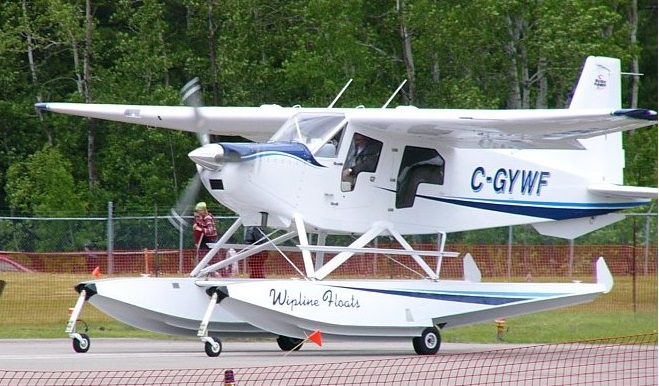
Found FBA / Pacific Aerospace Expedition E350 / Pacific Aerospace FBA

Found Aircraft FBA-2C1 BushHawk

Found Brothers Aviation was formed in 1946 to produce a new design by Captain S.R. Found, the Found FBA-1A. The FBA was a four-seat cabin monoplane designed by Captain S. R. Found. The FBA-1 was a high-wing monoplane powered by a 140 hp (104 kW) de Havilland Gipsy Major engine, designed from its inception to be operated on wheels, tundra tires, skis and on floats. The prototype first flown 13 July 1949. Only one was built and it was developed into an all-metal four/five seater, the Found FBA-2.

Developed version designated FBA-2A flown August 11, 1960. It is a high-wing monoplane with a fixed tricycle undercarriage. The production version was to be the Found FBA-2B but the aircraft was produced with a conventional tail-wheel landing gear as the Found FBA-2C.

The first production FBA-2C was a five-seater flown on 9 May 1962. It is powered by an Avco Lycoming O-540-A1D engine and had a slightly longer cabin and enlarged cabin doors than the prototype. Originally, float or ski landing gear was available through third parties, and later became a factory option. Production ended in 1965 to concentrate on building the newer and larger Centennial 100. Thirty-four had been built.

In 1996 the design was acquired by Found Aircraft Development who developed an improved model the FBA-2C2 Bush Hawk-XP. This model was certified by Transport Canada in March, 1999 and by the Federal Aviation Administration in March, 2000. This version was manufactured between 2000-2007, after which it was replaced by a new version of the same basic airframe, designated the Expedition E350 and the Expedition E350XC.
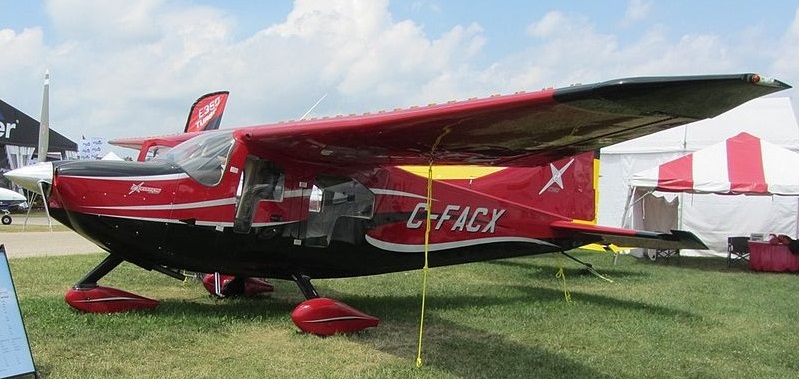
Expedition E350

The E350 was a development of the basic FBA-2 aimed at the personal use market. The Expedition E350 was FAA type certified in December 2008. The aircraft can be equipped with four or five seats and has a full fuel payload in excess of 900 pounds. It is powered by a Lycoming IO-580 powerplant producing 315 hp (235 kW). The E350 was designed with rugged landing gear for operating from unprepared surfaces and has STOL performance.

Found Aircraft went into receivership in 2013 and production ended after 68 were built.

New Zealand aircraft manufacturer Pacific Aerospace Limited (PAL) acquired the ownership and manufacturing rights of the E-350 Expedition from Found Aircraft after it went into receivership.

Already FAA-certified, the E-350 was to be manufactured at Pacific Aerospace’s headquarters in Hamilton, New Zealand, from the second quarter of 2017.

PAL launched a joint venture company, Beijing Pan-Pacific Aerospace Technology (BPAT), in Changzhou, China, which will manufacture the P-750 SETP and, in the future, the E-350. Once the E-350 is established in China, there is the option of assembling the aircraft in a brand new facility at Changzhou

The E-350 is powered by a 325-hp Lycoming IO-580 with a turbo-charged engine option. It can carry a full load of passengers, baggage, and fuel for 750 nautical miles.
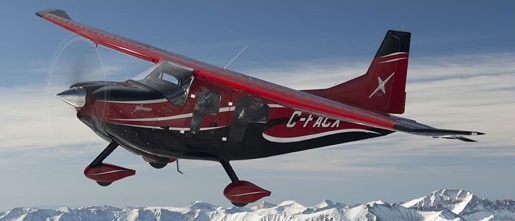
E-350 Expedition

The E-350 Expedition is a five seat design coupled with a four door design, including two large rear cabin doors, allows for easy loading/unloading of people and cargo.

The Expedition cabin is 53 inches and each individual rear seat can be removed quickly and stored easily.
Every Expedition comes standard with float attachment kits, so the E-350 can easily be turned into a big payload, high-performance floatplane.

In September 2016, the E-350 Expedition tooling was shipped to its Hamilton, New Zealand plant. Pacific Aerospace planned to relaunch production of the five-seat type in the first half of 2017, but this date was not achieved. It is also planned to produce the E-350 in its joint venture plant in China with Beijing General Aviation Company. The joint venture will be known as Beijing Pan-Pacific Aerospace Technology.

On 3 February 2021, E-350 Expedition #315 made its first production flight, at Hamilton, New Zealand. Piloted by PAL company pilot Ray Long the aircraft was to receive a CoA then be on its way to PAL’s North American dealer Northwest Back Country Aircraft in Boise, Idaho.
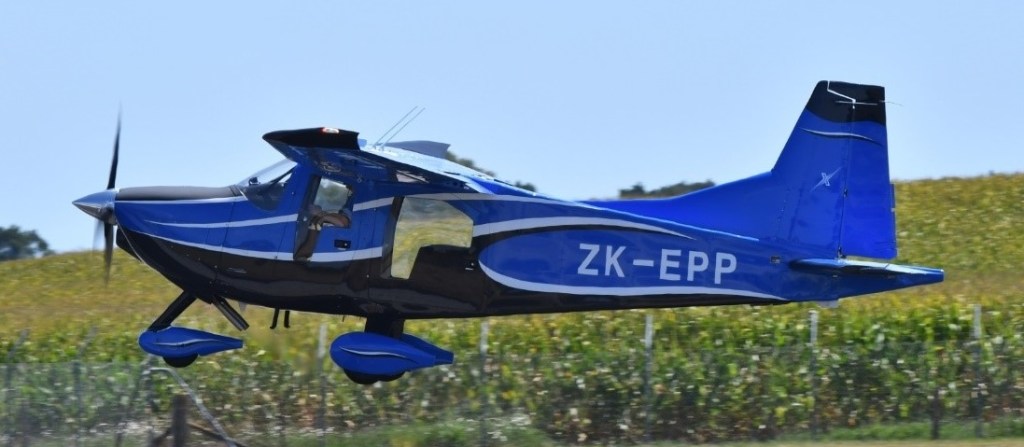
E-350 Expedition #315 ZK-EPP

Variants

FBA-1A
Engine: 1 × de Havilland Gipsy Major, 140 hp (100 kW)
Wingspan: 30 ft (9.1 m)
Wing area: 165 sq ft (15.3 m2)
Length: 25 ft 4 in (7.72 m)
Height: 9 ft (2.7 m)
Crew: 1
Capacity: 3 passengers

FBA-2
Prototype, one built.

FBA-2C
Initial production variant, 26 built.
Engine: 1 × Avco Lycoming O-540-A1D, 250 hp (190 kW)
Propeller: 2-bladed Hartzell constant-speed, 7 ft 4 in (2.24 m) diameter
Wingspan: 36 ft 0 in (10.97 m)
Length: 26 ft 5 in (8.05 m)
Height: 8 ft 4 in (2.54 m)
Empty weight: 1,550 lb (703 kg)
Max takeoff weight: 2,950 lb (1,338 kg)
Fuel capacity: 56 imp gal (67 US gal; 250 L)
Wing area: 180 sq ft (17 m2)
Maximum speed: 147 mph (237 km/h, 128 kn) at sea level
Cruise speed: 129 mph (208 km/h, 112 kn) at 5,000 ft (1,500 m) (econ cruise, 60% power)
Stall speed: 48 mph (77 km/h, 42 kn) (power off, 35 degree flaps)
Range: 610 mi (980 km, 530 nmi)
Service ceiling: 16,000 ft (4,900 m)
Rate of climb: 1,100 ft/min (5.6 m/s)
Crew: 1
Capacity: 4 passengers

FBA-2C1 Bush Hawk 300
Improved variant with a 300hp Lycoming IO-540L, one built.

FBA-2C1 Bush Hawk XP
Production variant of the Bush Hawk 300, 31 built.

FBA-2C2 Bush Hawk 300XP
Minor changes, 6 built.

FBA-2C3 Expedition E350
Tricycle landing gear first flown in 2006, 3 built.

FBA-2C4 Expedition E350XC
Tail-wheel, one built.

FBA-2D
Proposed variant powered by a 290hp Lycoming engine, not built.
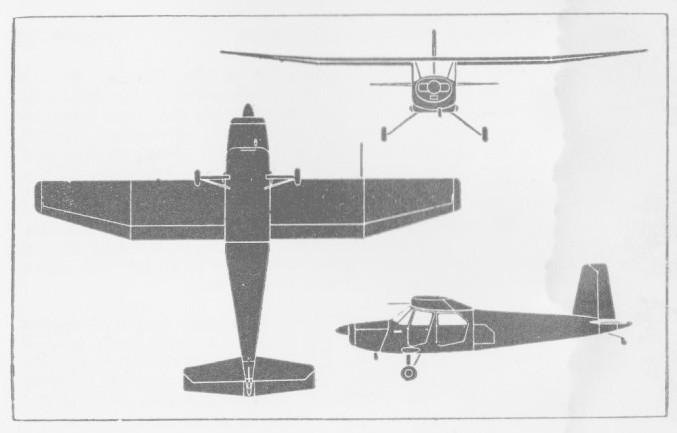
FBA-2C

Fokker F-100

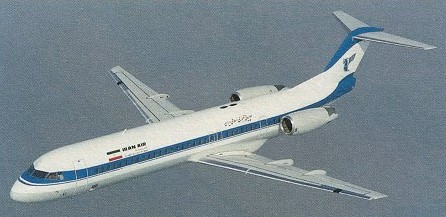
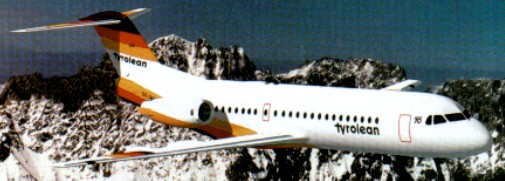
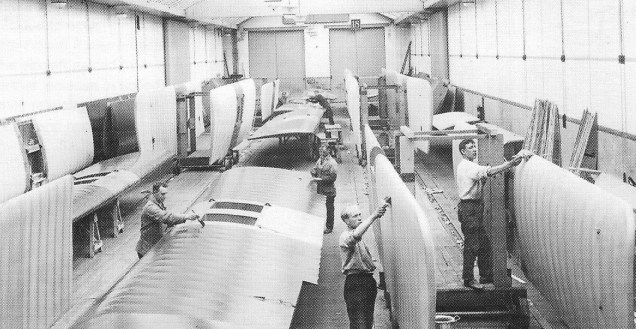
When Fokker announced a successor to the F27 in November 1983, they also launched a similar follow-on to the Fellowship jet airliner. Derived from the proven F28 Mk 4000 airframe, the new aircraft was designated the Fokker 100 roughly reflecting the number of passenger seats offered. Re-engined with new-technology fuel-efficient Rolls-Royce Tay turbofans and with a longer fuselage and redesigned and extended wings, other features include modernised systems incorporating a ‘glass cockpit’ and a revised cabin interior. Production is shared with Deutsche Airbus, Shorts, Grumman, Rolls-Royce and Dowty Rotol, with assembly and flight testing carried out by Fokker at Schiphol. IPTN of Indonesia also supply components.

Fokker F-100 Article

The F100 flight test programme involved two prototypes, the first making its maiden flight on 30 November 1986 followed by the second on 25 February 1987. Certification of the Tay 620-15 powered version was achieved in November 1987 and first customer delivery was made to Swissair in February 1988. The uprated Tay 650 version, ordered by US Air was certificated in July 1989 and delivered to the airline the same month. By mid-1991 Fokker had received orders for 232 F100s and had delivered 70. Options available on Tay 650 aircraft from 1993 include a higher gross weight of 45810kg and an integral wing centre-section fuel tank giving improvements in range between 160 and 450km. Another option available from 1994 will be a quick-change version equipped with a cargo door 3.4 by 1.9m installed on the port side of the fuselage ahead of the wing, together with a specially designed cabin interior. Conversion time (by three men) is claimed to be 20 minutes, enabling 88 passengers to be carried by day and an 11,500kg payload by night over 2800 km.

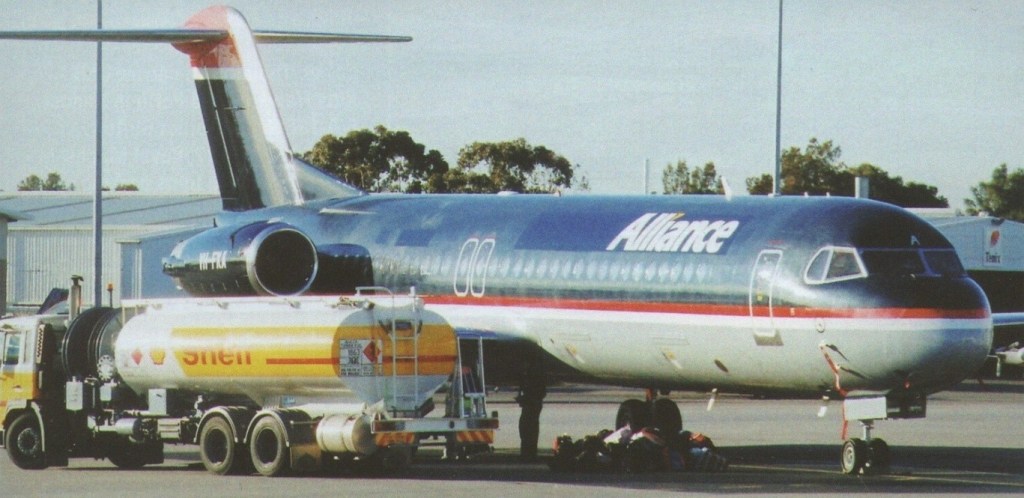
Alliance Airlines Fokker 100 VH-FKA – ex-US Airways – 1988

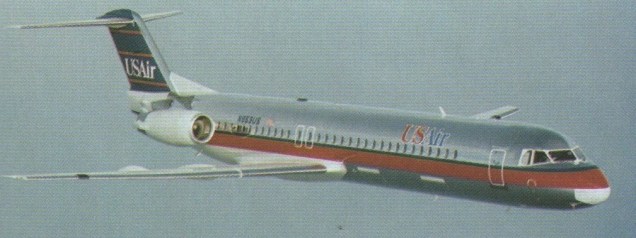
On 24 July 1989 USAir was the launch customer for the Fokker 100.

Rekkof Restart was formed with intention of restarting production of the Fokker 50 and 100, having bought tooling and rented the production factory in 1998.

Engine: 2 x Rolls-Royce Tay 650-15 turbofans, 6849kg
Max take-off weight: 43090 kg / 94998 lb
Empty weight: 24375 kg / 53738 lb
Wingspan: 28.0 m / 91 ft 10 in
Length: 35.5 m / 116 ft 6 in
Height: 8.5 m / 27 ft 11 in
Wing area: 93.5 sq.m / 1006.42 sq ft
Cruise speed: 837 km/h / 520 mph
Ceiling; 10670 m / 35000 ft
Range: 2956 km / 1837 miles
Passengers: 107

Fokker F-50

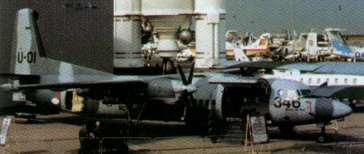
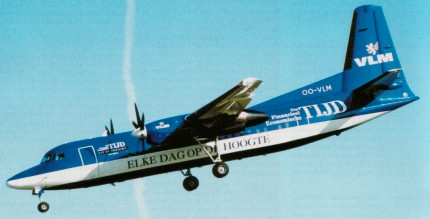
During celebrations held in November 1983 to mark the 25th anniversary of the F27 entering airline service, Fokker announced the launch of a 50-seat follow-on to be known as the Fokker 50. Based on the F27 airframe, but fitted with more fuel-efficient Canadian-built P&W 125B turboprops engines, 12 foot diameter, six-bladed DowtyRotol ‘quiet’ propellers, improved aerodynamics, a redesigned cockpit incorporating digital avionics CRT “glass” cockpit and a new cabin interior, the external differences include extra windows, twin-nosewheel landing gear and upturned wingtips. Much use is made of lighter composite materials, and F50 commonality with the F27 is only 20%.

Fokker F-50 Article

Production is shared with Dassault, Fuji Heavy Industries, Deutsche Airbus, SABCA, Dowty Rotol and Pratt & Whitney Canada with final assembly, systems integration and flight test carried out by Fokker at Schiphol. The first two prototypes were conversions of F27 airframes, with the first (PH-OSO), flying on 28 December 1985 followed by (PH-OSI) on 30 April 1986. The first production aircraft (PH-DMO) flew on 13 February 1987 and first delivery made (to DLT), on 7 August 1987.
By mid-1991 Fokker held firm orders from 18 customers for 132 Fokker 50s, and had delivered 116. The standard production variant was the 46/50-seat Fokker 50-100 and the 1998 build rate was 30 aircraft per year.
Four maritime/surveillance versions of the PW124-powered Fokker 50 supersed the F.27 Maritime models. The Maritime Mk.2 is the standard unarmed maritime patrol version for coastal surveillance and SAR, while the Maritime Enforcer Mk.2 is similar but has provision for external stores to allow ASW/ASV missions to be flown. Both variants are fitted with a Litton APS-140(V) or APS-504(V)5 360o scan search radar. The Enforcer also has a sonobuoy processing system. Intended for border surveillance and stand-off reconnaissance, the Sentinel Mk.2 has a Motorola APS-135(V) slide-looking airborne radar (Slar) under the fuselage. Other systems include a Doppler moving target indicator, a Litton/Itek long-range oblique photography (Lorop) system, and an optional computerised intelligence gathering system. The Kingbird Mk.2 is an AEW version.

Rekkof Restart was formed with intention of restarting production of the Fokker 50 and 100, having bought tooling and rented the production factory in 1998.

Engines: 2 x Pratt & Whitney Canada PW125B turboprops, 1864kW
Max take-off weight: 18990 kg / 41866 lb
Empty weight: 12570 kg / 27712 lb
Wingspan: 29.0 m / 95 ft 2 in
Length: 25.2 m / 82 ft 8 in
Height: 8.3 m / 27 ft 3 in
Wing area: 70.0 sq.m / 753.47 sq ft
Cruise speed: 522 km/h / 324 mph
Ceiling: 7620 m / 25000 ft
Range: 2630 km / 1634 miles
Passengers: 46-58

Maritime Enforcer Mk.2
Engine: 2 x PW124 turboprop.
Installed thrust: 3200 kW.
Span: 29 m.
Length: 23.56 m.
Wing area: 70 sq.m.
Empty wt: 14,100 kg.
MTOW: 21,545 kg.
Warload: 3930 kg.
Max speed: 480 kph.
Initial ROC: 390 m / min.
Ceiling: 7620 m.
T/O run: 1525 m.
Ldg run: 560 m.
Fuel internal: 9322 lt.
Range: 6820 km.
Endurance: 14.4 hr.
Air refuel: No.

Fokker

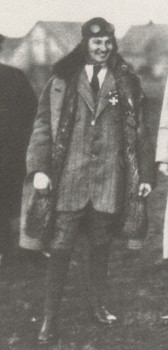
Anthony Fokker during WW1

Antony Fokker was born on 6 April 1890 on the island of Java in the Dutch East Indies, but came with his family to the Netherlands four years later. In his youth, Fokker showed a greater disposition toward design and invention than toward formal schooling. During his adolescence he acquired a passion for cars, inventing a tire that could not be punctured, and then discovered aviation. His real desire was to learn to fly, but as his parents opposed this course most vehemently, the young Fokker contented himself initially with model planes built of wood and paper.

Anthony Fokker Article

Enrolling in an engineering school, after his military service had been cut short by an accident, the young Fokker finally obtained the structured educational basis which finally allowed him to construct his first plane, the Spin, in 1910.

After gaining his pilot’s license in 1911, Fokker moved to Germany, which he saw as a nation more likely than the Netherlands to take aviation to its bosom. Registered originally Fokker Aviatik GmbH, on 22 February 1912, Antony Fokker’s first company operated under Fokker Aeroplanbau GMBH at Berlin-Johannisthal then, moved to Schwerin, Mecklenberg, in 1913. Name changed later to Fokker Flugzeugwerke.

In 1912 Fokker sold his first plane to the German army, but the two years before the outbreak of the First World War were a distinct uphill struggle for the young Dutchman in financial terms. All this changed with the beginning of the war. Fokker accepted all commissions placed with him by the Imperial German air service, despite the fact that he might not be able to honour all of them. During the course of the war the Fokker company grew very considerably, producing for Germany many aircraft types both indifferent and good.
Indifferent types included the Eindecker series of armed monoplanes that nevertheless ushered in the concept of the true fighter, while good types included the classic Dr 1, DVII and D VIII fighters. The Fokker company was also notable for the development of the world’s first effective synchronizer gear to allow a fixed fuselage-mounted machine gun to fire directly forward without shooting off the propeller blades.

Some civil aeroplanes were built at Schwerin in 1918 under the supervision of Platz, but production soon ended, and the Fok¬ker Aeroplane Works, where some 3,350 aeroplanes had been built during the War, was liquidated. It became Schwerin Indus¬trial Works Ltd, producing yachts, motor¬boats, canoes and, later, bedsteads and scales.
The defeat of Germany and the revolutionary fever that swept the country toward the end of 1918 persuaded Fokker to beat a precipitate retreat to the Netherlands during November. The company was liquidated following Fokker’s return to Holland after the First World War. Here Fokker rebuilt his aviation empire, on 21 July 1919, founding the NV Koninklijke Nederlandse Vliegtuigenfabriek Fokker with factory at Veere, Zeeland, assembly at Amsterdam, with a series of important warplanes and a family of monoplane transports, including the classic F VII.

Fokker rented the Witteman-Lewis aircraft factory at Teterboro, together with the adjoining airfield at Hasbrouck Heights, New Jersey, USA, as the Netherlands Aircraft Manufacturing Company. In May 1924 a new company was formed, the Atlantic Corporation, with Lorillard Spencer as President and Robert B. C. Noorduyn as General Manager. Later named the Fokker Aircraft Corporation of America and, under the overall ownership of the General Motors Corporation in 1930, the General Aviation Corporation.
Often known as “The Flying Dutchman”, Fokker died on 23 December 1939 but his name survives as the manufacturer of some of the world’s most important short-haul airliners.
Production during Occupation included Arado Ar 196 floatplanes, Bucker Bu 181 Bestmann trainers and Dornier Do 24 flying-boats.
Postwar activity included conversion of military Dakotas and Skymasters for civil use, license-production of various types including 24 Hawker Sea Furies, 460 Hunter F.4, and F.6 fighters; final assembly and parts manufacture of 350 Lockheed F.104Gs; share in European manufacturing program for F-16 fighter; associate member of Airbus Industrie
On February 1st, 1947 an agreement was signed between Fokker, Aviolanda and De Schelde’s aviation department by which the long awaited merger was achieved. The name of the new conglomerate was “United Netherlands Aircraft Factories ¬Fokker”.
To commemorate Fokker’s thirty years of aircraft manufacture in the Netherlands, they were granted the title “Royal Dutch Aircraft Manufacturer Fokker” on 21 July 1949.
On April 1st, 1949 it became apparent that the merger between Fokker, Aviolanda and De Schelde had failed, and the con¬trolling body appointed Messrs. Vos, Beel¬ing, and During directors of the Fokker factory.
A new factory at Schiphol was opened in 1951.
On February 16th, 1954 Avio Diepen ¬became a subsidiary of Fokker.
The aircraft construction department of the Royal Company De Schelde, joined Fokker on May lst, 1954.

Around 1960 Fokker was looking for and American partner. Lockheed turned down the proposal because they thought it could not be profitable, but Northrop agreed to by a twenty-one percent share.

Formed a joint company with Vereinigte Flugzeugtechnische Werke in 1969.
VFW and Fokker joined in 1970 to form VFW-Fokker.
In the 1970s German interest in general aviation was maintained by one or two smaller companies, but there has also been quite a large R&D investment by Rhein Flugzeugbau, a subsidi¬ary of VFW Fokker, in ducted fan propulsion for a new generation of lightplanes represent¬ed by its revolutionary Fanliner.
By 1995 Fokker was a member of the Daimler-Benz Aerospace group.
In March 1996 company filed for bankruptcy, but Stork Group bought Fokker Aviation to continue as Fokker Aircraft BV for product support, electronic systems and components, aerostructures, and special products. Several attempts to purchase the aircraft manufacturing business by foreign companies came to little, leading to the end of all aircraft production in May 1997 (latterly under trustees).
Until production ended after Fokker collapsed due to financial problems on 15 March 1996, Fokker have developed and constructed over 100 different types of aircraft, both for military and civil aviation.

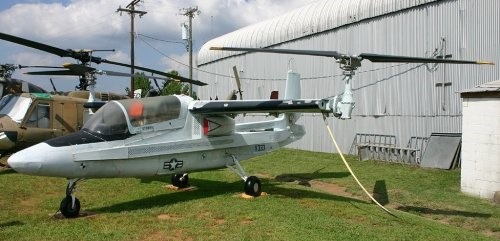
Fogle V333 Sky Cat

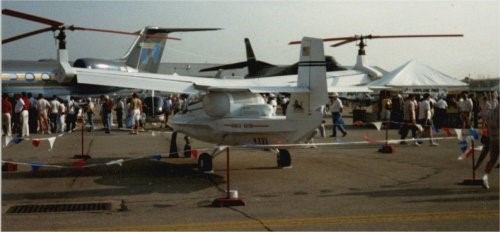
The Fogle V333 Sky Cat tilt-rotor was built in 1982 but never been flown. It was designed and built by Hal Fogle, who also worked on the SR-71 Blackbird program.

The prototype (above) is now on display at the Carolinas Aviation Museum.

A full-scale mockup was displayed at some airshow.

FMA IA.63 Pampa

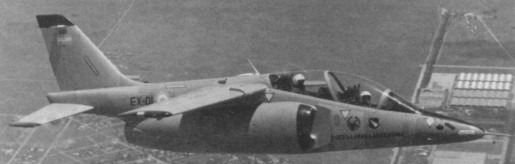
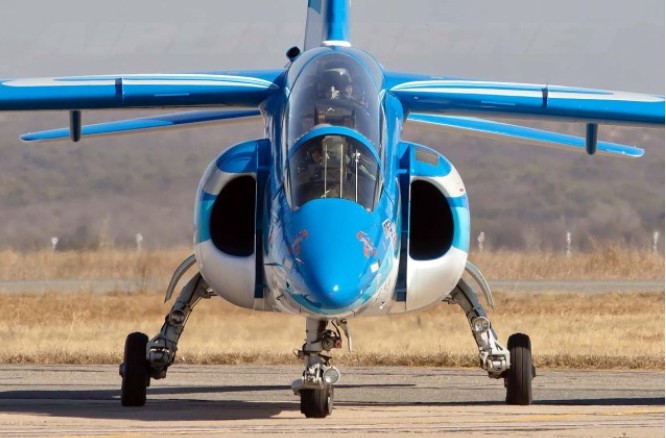
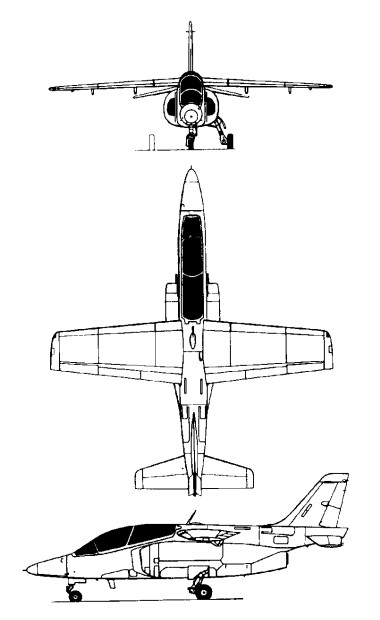
Work on the IA.63 began in 1979 by the Fabrica Militar de Aviones and by early 1980 a straight-wing configuration powered by a single TFE 731 had been decided upon. Dornier provided technical assistance in the design and development stages, and also in the construc¬tion of the wing and tail surfaces of the proto¬types. The first flight took place on October 6, 1984, and by March 1986 three prototypes were flying. Construction of three flying prototypes was initiated in March 1981 and the first IA-63 flew on 6 October 1984.

FMA IA.63 Pampa Article

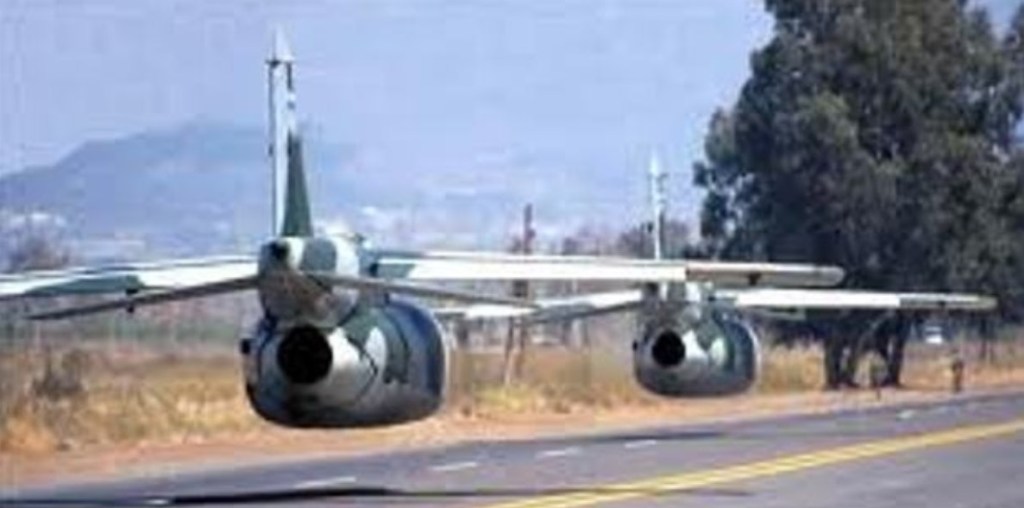
A cantilever shoulder-wing monoplane, the fuselage incorporates a tricycle landing gear, a single turbofan engine and a pressurised cockpit with tandem seats for the pupil and instructor on zero/zero ejection seats.

Argentine

Delive¬ries of 64 IA-63As to the Argentine air force began in May 1988. The FAA requirement was for 64 aircraft, The IA-63A can also be used for weapon training with a 30mm Defa cannon pod on the fuselage centreline, and other ordnance on four under¬wing pylons, though better capability in this and the light attack roles is offered by the IA-63B under development in the early 1990s with the 4,300-lb (1,950-kg) thrust TFE731-5 turbofan and a head-up display tied into a more capable nay/attack system.

Powered by a Garrett TFE 731 turbo-fan engine providing 3500 lbs thrust, the Pampa “is capable of carrying a large and varied weapons load and a HUD and Weapons Aiming Computer System are being incorporated in future deliveries to meet Argentine Air Forces requirements”. Pampa promotional material emphasises the type’s fuel endurance of around 2.8 hours at 300 knots and a STOL/grass strip capability. Maximum speed is listed at 400 knots.
In 1990, FMA teamed with LTV to offer a version of the IA 63, designated Pampa 2000, to compete for the Joint Services Primary Aircraft Training System (JPATS) search for a common US trainer.

AT-63 Pampa Phase III

IA.63 Pampa
Engine: 1 x Garrett TFE731-2-2N turbofan, 3,500lb st (15,75 kN).
Installed thrust: 15.6 kN.
Span: 9.69 m / 31 ft 9 in.
Length: 10.93 m / 35 ft 10 in.
Height: 4.29 m / 14 ft 1 in
Wing area: 15.63 sq.m / 168.24 sq ft.
Empty wt: 2627 kg / 6219 lb.
MTOW: 5000 kg / 11023 lb
Warload: 1160 kg.
Max speed: 755 kph / 469 mph.
Initial ROC: 1813 m / min.
Ceiling: 12,900 m / 42300 ft.
T/O run: 400 m.
Ldg run: 515 m.
Fuel internal: 980 lt (+400 lt).
Range w/max.fuel: 1500 km / 932 miles.
Hardpoints: 5.
Crew: 2

IA-63A Pampa
Engine: one 4300-lb thrust Garrett TFE731-2-2N turbofan.
Maximum speed 509 mph (819 km/h) at 22,965 ft (7,000 m)
Initial climb rate 5,950 ft (1,813 m) per minute
Service ceiling 42,325 ft (12,900m)
Radius 223 miles (360 km) on a hi-lo-hi mission with a 2,205-lb (1,000-kg) warload
Empty weight 6,219 lb (2,821 kg)
Maximum take-off 11.023 lb (5,000 kg).
Wing span 31 ft 9.25 in (9.686 m)
Length 35 ft 9.25 in (10.90 m)
Height 14 ft 1 in (4.29 m)
Wing area 168.2 sq ft (15.63 sq.m)
Armament: provision for a 30-mm cannon pod and up to 2,866 lb (1,300 kg) of disposable stores.

FMA / Fabrica Militar de Aviones / Aerotecnico / DINFIA / LMMASA

Originally founded in 1927 as the Fabrica Militar de Aviones SA (FMA), for aeronautical research and production at Cordoba.

The biggest aeronautical development and production center in Argentina was the Fábrica Militar de Aviones in Córdoba, an inland city 700 kilometers from Buenos Aires. The company first built airplaces (1929) and engines (1930) under license and later began building its own planes the Ae.C.1, a three-seated passenger plane with a covered cockpit.

Redesignated Institute Aerotecnico 20 October 1943.
As Industrias Aeronauticas y Mecanicas del Estado (IAME) formed March 28,1952 to take over State activities concerning military and civil aircraft, and incorporating the Institute Aerotecnico (formerly Fabrica Militar de Aviones). I.A.35 was twin-engined multipurpose monoplane; I.A.33 Pulqui II (first flown February 1951) a swept-wing jet fighter designed by Kurt Tank. Six Pulqui built 1955/56.
Nationalized 1957, with aircraft works at the Fabrica Militar de Aviones at Cordoba, under DINFIA (Direccion Nacional de Fabricaciones e Investigaciones Aeronauticas) name. Began with design and construction of IA 46 light aircraft, twin-engined transports IA 35, IA 45, the IA 38 four-engined tailless transport designed by Dr. Reimar Horten, and the IA 37, a small delta-wing aircraft. In 1966 began license construction of Cessna 182 and indigenous light turboprop and piston-engined transports.
Reverted to name FMA in 1968, becoming part of Area de Materiel Cordoba division of the Argentine Air Force.
December 1994 agreement between the Government of Argentina and Lockheed Aircraft Service Company to privatize FMA aircraft factory and maintenance depot at Cordoba, with Lockheed operating as the management organization from July 1995.
License-production 1927-1943 included Avro 504R, Dewoitine D.21 C, Bristol F.2B, Focke-Wulf Fw 44J, Curtiss Hawk 75. Indigenous designs included Ae.C-1 three-seat monoplane, Ae.C-2 trainer of 1932, Ae.T-1 fiveseater of 1933, Ae.C-3 light aircraft of 1934, and Ae.M- 01 built for Argentine Army. El Boyero two-seater built 1939-1940. Production of the IA.58 Pucara twin-turboprop COIN aircraft for Argentine Air Force ended in 1986. First flight of IA.63 Pampa advanced and weapon training jet trainer, and also for light attack, took place in October 1984.

In 1995 FMA was closed and privatized in 1995 to Lockheed Martin Corporation.