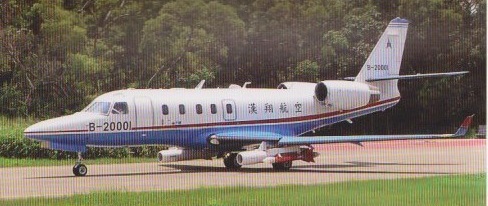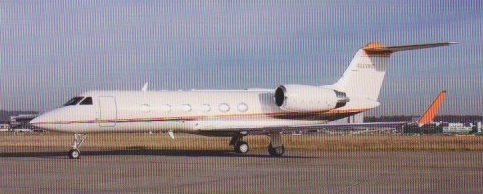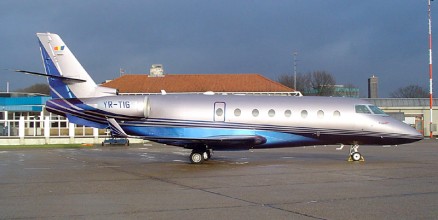
Gulfstream G200 / IAI 1126 Galaxy

Design work on the IAI-1126 Galaxy, initially called the Astra Galaxy, began in the early 1990s, based on the wing design on the swept high speed unit of the IAI-1125 Astra SP, but otherwise a completely new design. By the formal announcement of the programme launch in September 1993, the name Galaxy was adopted. The prototype IAI-1126 Galaxy was flown first on 25 December 1997. A second prototype flew on 21 May 1998, while the third aircraft first flew on 24 September that year. US FAA and Israeli certification was issued in December 1998. The first customer aircraft was handed over on 17 January 2000. The aircraft is powered by Pratt & Whitney Canada PW-306A turbofans.

Gulfstream G200 Article

The IAI-1126 Galaxy was originally marketed and supported by Galaxy Aerospace Inc. After Galaxy Aerospace Inc. was acquired by Gulfstream Aerospace Corporation in 2001, the IAI-1126 Galaxy was rebranded Gulfstream G200.

The cabin length is 24 feet 5 inches and 6 feet 3 inches high, with interior seating for 8 to 10 passengers. Its glass cockpit, featuring the Rockwell Collins ProLine 4 avionics suite, presents system status flight information on 7.25 inch-square displays, and colour weather radar with turbulence detection, the TCAS II (traffic alert and collision-avoidance system), and an EGPWS (Enhanced Ground Proximity Warning System) with wind shear detection. Gulfstream also offers an optional auto-throttle system to reduce pilot workload for improved safety.
Powered by two Pratt & Whitney Canada 306A engines controlled by a dual-channel FADEC (full authority digital engine control), the G200 is able to fly at speeds up to Mach 0.85 and at cruising altitudes up to 45,000 feet. Since joining the Gulfstream fleet in 2001, the G200 has benefited from several improvements, including a redesigned interior, a sound-proofing package and an aggressive weight-reduction program. The G200 offers several layout options and a competitive warranty. This large-cabin, mid-range aircraft can be tailored to meet individualized mission requirements.
The G200 received a Type Certificate from the European Aviation Safety Agency (EASA) on Sept. 7, 2004, an on June 4, 2008, the 200th G200 rolled out.
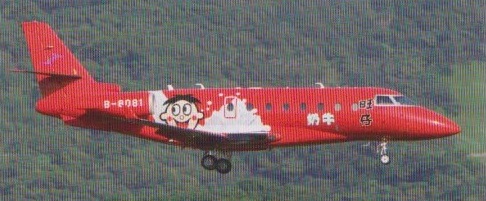
Gulfstream G200 B-8081

Israel Aircraft Industries is a shareholder in Galaxy Aerospace in U.S.A., which promotes the Astra SPX and promotes and fits out the new Galaxy wide-body bizjet developed by IAI.

IAI Galaxy
Engines: 2 x Pratt & Whitney Canada PW 306 A, 27959 N / 2850 kp
Length: 62.238 ft / 18.97 m
Height: 21.424 ft / 6.53 m
Wingspan: 58.104 ft / 17.71 m
Wing area: 368.99 sq.ft / 34.28 sq.m
Max take off weight: 34839.0 lb / 15800.0 kg
Weight empty: 18698.4 lb / 8480.0 kg
Max. speed: 470 kts / 870 km/h
Cruising speed: 432 kts / 800 km/h
Service ceiling: 45000 ft / 13716 m
Wing loading: 94.51 lb/sq.ft / 461.0 kg/sq.m
Maximum range: 3618 nm / 6700 km
Crew: 2
Payload: 8-19 (max. 2180kg)

G200
Engines: 2 x Pratt & Whitney PW306A, 6,040 lbs / 26.87 kN
Height: 21 ft, 5 in / 6.53 m
Length: 62 ft, 3 in / 18.97 m
Wingspan: 58 ft, 1 in / 17.70 m
Basic Operating weight: 19,950 lbs / 9,049 kg
Maximum Fuel: 15,000 lbs / 6,804 kg
Maximum Landing weight: 30,000 lbs / 13,608 kg
Maximum Payload weight: 4,050 lbs / 1,837 kg
Maximum Payload/Full fuel: 650 lbs / 295 kg
Maximum Ramp weight: 35,600 lbs / 16,148 kg
Maximum Takeoff weight: 35,450 lbs / 16,080 kg
Maximum Zero Fuel: 24,000 lbs / 10,886 kg
Long Range Cruise Mach 0.75
Mmo Mach 0.85
Normal Cruise Mach 0.80
Range at LRC 3,400 nm / 6,297 km
Range at Normal Cruise 3,050 nm / 5,649 km
Takeoff distance MAUW: 6,080 ft. / 1,853 m
Baggage Volume (Gross): 150 cu ft / 4.25 cu m
Cabin Length: 24 ft 5 in / 7.44 m
Cabin Volume: 868 cu ft / 24.56 cu m
Height: 6 ft 3 in / 1.91 m
Width: 7 ft 2 in / 2.18 m
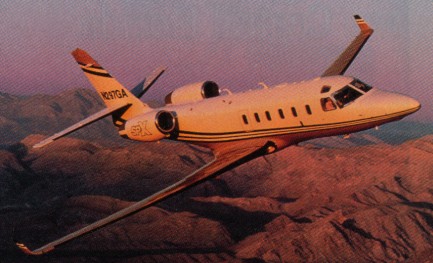
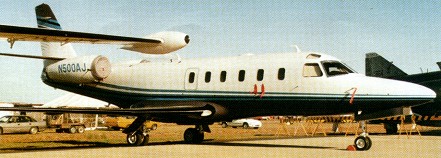
Gulfstream 100 / C-38 / IAI 1125 Astra

Gulfstream 100 SPX

A swept-wing development of the earlier Westwind (itself derived from the jet Commander, a US-design), the Astra business aircraft first flew on 19 March 1984, with deliveries beginning in June 1986. Astra Jet Corporation in the USA undertook marketing and support of the aircraft which has been produced at the rate of one per month since January 1988. The aircraft incorporates composite structure and a Sigma 2 aerofoil wing section. The rear-mounted turbofans are 3,650 lb st (16,23 kW) Garrett TFE731-3A-200Gs.

Gulfstream 100 / C-38 / IAI 1125 Astra Article

IAI 1125 Astra SP

In 2001, Gulfstream acquired Galaxy Aerospace and with it, the mid-size Astra SPX and super mid-size Galaxy, which were later rebranded the G100 and G200, respectively.
In 2006, the 22-year production run of the G100 ended and the G150 entered service to take its place.

IAI Astra SPX B-20001

IAI 1125 Astra
Length: 55.446 ft / 16.9 m
Height: 18.045 ft / 5.5 m
Wingspan: 52.493 ft / 16.0 m
Wing area : 316.462 sqft / 29.4 sqm
Max take off weight : 23505.3 lb / 10660.0 kg
Weight empty : 12789.0 lb / 5800.0 kg
Max. weight carried : 10716.3 lb / 4860.0 kg
Max. speed : 465 kts / 862 km/h
Landing speed : 92 kts / 171 km/h
Cruising speed : 432 kts / 800 km/h
Initial climb rate : 3543.31 ft/min / 18.00 m/s
Service ceiling : 44997 ft / 13715 m
Wing load : 74.42 lb/sq.ft / 363.00 kg/sq.m
Range : 3110 nm / 5760 km
Engine : 2 x TFE 731 3A , 1627 shp
Crew : 2
Payload : 6-9pax

Gulfstream 100
Mmo: 0.875 Mach.
Cruise: M0.82-0.84 (470 to 480 kt).
Seats: 10.
Range IFR: 2,950 nm

Gulfstream Peregrine

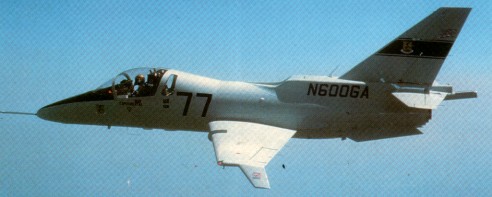
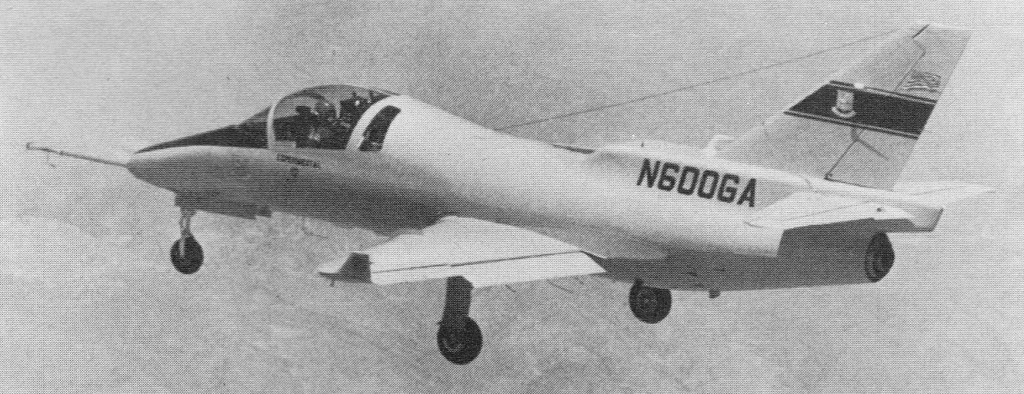
In July 1979 Gulfstream American (later Gulfstream Aerospace) revealed its plans to develop the Peregrine as a military trainer on the basis of its Hustler 500, an unusual executive jet powered by a nose-mounted turboprop and a tail-mounted turbofan. The trainer was based closely on the Hustler 500 without accommodation for passengers in the fuselage, without tip tanks, and with the forward fuselage revised to eliminate the turboprop and provide side-by-side seating for the pupil and instructor. The structure was of the conventional all-metal type with a semi-monocoque fuselage and cantilever low-set wings.

Gulfstream Peregrine Article

As first flown on 22 May 1981, the Peregrine had drag-reducing Whitcomb winglets on the upper surfaces of the wing tips, though these were later moved to the under surfaces. The engine was located in the rear of the fuselage, and was aspirated via a dorsal inlet whose aft contours formed the structural basis for the swept tail surfaces.

The sole prototype crashed in November 1983, and further development was abandoned. A possible derivative had tandem seating and two 1,500-lb (680-kg) thrust Williams WR44 turbofans, and the details below apply to the planned basic production version.

Type: two-seat primary and basic trainer.
Engine: one 3,000-lb (1,361-kg) thrust Pratt & Whitney Canada JT15D-5 turbofan.
Maximum speed 454 mph (730 km/h) at 20,000 ft (6,095 m)
Initial climb rate 5,200 ft (1,585 m) per minute
Service ceiling 48,000 ft (14,630 m)
Range 1,243 miles (2,001 km).
MTOW: 6,200 lb (2,812 kg).
Wing span 34 ft 5.5 in (10.50 m)
Length 38 ft 4 in (11.68 m)
Height 13 ft 5 in (4.09 m).

Gulfstream G-5 / C-37

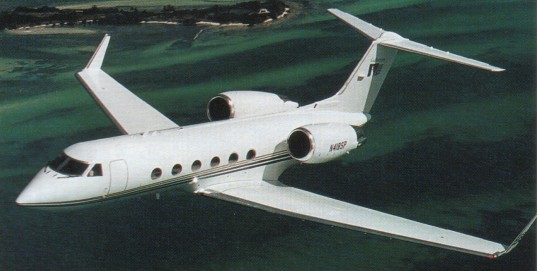
Gulfstream completed the Gulfstream V Integration Test Facility and rolled out the GV – the first ultra-long range business jet – in 1995, which first flew in November 1995.

Gulfstream G-5 Article

The GV demonstrator flew a distance of 7999 mi / 12,973 km non-stop on 10 January 1997, carrying four crew and three passengers. In 1997, Gulfstream began the simultaneous manufacture of two different aircraft models – the GIV-SP and the GV. Within a few months of the GV’s first delivery in June 1997, it set nearly 40 city-pair and/or speed and distance records, and its industry team was awarded the 1997 Robert J. Collier Trophy, the highest honor in aeronautics or astronautics in North America.

The GV features a six-screen Honeywell SPZ-8500 electronic flight instrumentation system (EFIS).

New Gulfstream V global business jet; also forms the platform for an ASTOR contender under Lockheed Martin leadership.

In 2001 the USAF leased five Gulfstream Vs as C-37As.

Mid-2001 the GV-SP advanced long-range business jet made its first flight. The prototype went to 41,000 ft and flew near to M0.8.

Gulfstream GV B-8092

Engines 2 x 12,420-lb. s.t. Rolls-Royce Tay turbofans.
Gross wt. 70,200 lb
Empty wt. 33,400 lb
Seats 14-24.
Fuel capacity 4,340 USG.
Top speed 564 mph.
Economy cruise 528 mph.
Stall 121 mph.
Ceiling 45,000 ft
Range 4,952 miles
Takeoff run 5,100 ft.
Landing roll 3,200 ft.

Engines: 2 x BMW R-R BR 700 Srs.
Cruise: 0.885M.
Max cruise alt: 51,000ft.
Range: 6500 nm.
Endurance: 14.5 hr.
Crew: 4.
Pax capacity: 8.

Gulfstream G 1159 Gulfstream IV / G-IV / SRA-4

In 1982 the company’s name changed to Gulfstream Aerospace Corp. to reflect its worldwide scope, and a new plane, the Gulfstream IV, was conceived.

Gulfstream G 1159 G-IV Article

Launched on 19 April 1983, and first flown in September 1985, the Gulfstream IV received its certification by the FAA on 22 April 1987, and went into full production at the Savannah facility of Chrysler Corp subsidiary Gulfstream Aerospace Corp. A twin turbofan executive transport, although generally similar to the Gulfstream III, the IV includes a redesigned wing, a lengthened fuselage with a sixth window on each side and two 13,850 lb st (61,6 kN) R-R Tay Mk.611-8 turbofans. The cockpit incorporates advanced CRT displays and digital avionics.
At the time of certification, the company held orders for more than 100 Gulfstream IVs and by the end of May 1987 had delivered 16 aircraft. The complete flight management system, including EFIS, is included in the GIV during production, but, as is customary for corporate aircraft, they are delivered to their customers unfinished and go to approved finishing centres for customer-specified interiors to be installed.

As well as for the corporate role, the GIV is now being vigorously marketed in a number of military and quasi-military roles as the SRA-4 (Special Requirements Aircraft), first flown in 1988. The SRA-4 for mainly military roles including electronic warfare, search and rescue, anti-submarine/ ship, and communications.

The performance of the Gulfstream IV, particularly in payload/range terms, has already been demonstrated in several notable flights, including a round-the-world westbound flight (ie, against the prevailing wind patterns) made in the third production aircraft (s/n 1002). Starting and finishing at Le Bourget during the Paris Air Show, this Gulfstream, with a six-man crew headed by Gulfstream Aerospace chairman Allen E Paulson, completed the l9,847-naut ml (36832.44-km) circuit in 45 hrs 25 mm 10 sec. With five ground stops (at Rome, Mid¬way, Kinabalu, Dubai and Cairo) the aircraft averaged 4377 kts (810,79 km/h) and en¬countered head winds of up to 139 kts (257 km/ h). In addition to 22 city-to-city records, the flight set round-the-world westbound records for jet aircraft of unlimited weight and business jets of up to 35,000 kg (77 140 lb) gross weight.

Gulfstream used company demonstrators N404GA and N400GA to set westbound and eastbound around the world records in June 1987 and February 1988 respectively.

Gulfstream G4SP N600VC

The Gulfstream IV-SP has more efficient engines and modifications revising operating weights and a better payload range combination.

In 1987, the 200th and last Gulfstream III produced was delivered, and the first delivery of a Gulfstream IV took place. The GIV was the first jet in business aviation to have an all-glass cockpit.

Gallery

Gulfstream G 1159 Gulfstream IV
Engine: 2 x Rolls Royce Tay 611-8, 60430 N / 6160 kp
Length: 88.255 ft / 26.9 m
Height: 24.934 ft / 7.6 m
Wingspan: 77.756 ft / 23.7 m
Wing area: 950.461 sq.ft / 88.3 sq.m
Max take off weight: 73206.0 lb / 33200.0 kg
Weight empty: 42512.4 lb / 19280.0 kg
Max. weight carried: 30693.6 lb / 13920.0 kg
Max. speed: 509 kts / 943 km/h
Landing speed: 108 kts / 200 km/h
Cruising speed: 459 kts / 850 km/h
Initial climb rate: 3937.01 ft/min / 20.0 m/s
Service ceiling: 44948 ft / 13700 m
Wing loading: 77.08 lb/sq.ft / 376.0 kg/sq.m
Range: 3696 nm / 6845 km
Crew: 2
Payload: 14-19pax

Gulfstram IV (Long range)
Engines: Two Rolls-Royce Tay 610-8 turbofans, 12,420 lb.st (5634 kgp)
Fuel capacity, 4,370 US gal (16,540 lt).
Max operating speed (VM0) 340 kts (630 km/h)
CAS, (MM0) M = 088.
Tur¬bulent air penetration speed (above 32,000 ft/ 9754 in), M=075.
Max cruising speed, 519 kts (962 km/h) or Mach = 088
Long-range cruise, 459 kts (851 km/h) or M = 080
Take-off balanced field length, 5,100 ft (1 554 m)
Initial rate of climb, 3,816 ft/min (19,4 m/sec)
Single-engine climb rate, 1,278 ft/min (6,5 m/sec)
Max operational altitude, 51,000 ft (15 544 m)
Single-engine cruise ceiling, 27,000 ft (8 230 m)
Landing distance, 3,200 ft (975 m)
Max range (NBAA IFR reserves, long-range cruise), 4,300 naut mls (7965 km) with 8 pax.
Typical operating weight empty, 41,100 lb (18 643 kg)
Max fuel load, 29,500 lb (13 381 kg)
Payload with max fuel, 1,600 lb (726 kg)
Max payload, 3,900 lb (1 769 kg)
Max take-off weight, 71,700 lb (32 523 kg)
Max zero fuel weight, 45,000 lb (20 412 kg)
Max landing weight, 58,500 lb (26 536 kg).
Wing span, 77 ft 10 in (23,7 m)
Overall length, 88 ft 4 in (26,9 m)
Overall height, 24 ft 10 in (7,6 m)
Wing area, 9504 sq ft (88,29 sq.m)
Wing sweepback, at quarter chord line, 2766 deg inboard, 2682 deg outboard.
Accommodation: Flight crew of two.
Typical executive layouts for 14 passengers; max cer¬tificated, 19 passengers.
Cabin length, 45 ft 1 in (13,7 m)
Max height, 6 ft 1 in (1,9 m)
Max width, 7 ft 4 in (2,2 m)
Total cabin volume, 1,513 cu ft (42,8 cu.m)
Baggage compartment volume, 169 cu ft (4,8 cu.m).

IV-SP
Engine: Roll-Royce Tay 611-8.

SRA-4
Engines: 2 x Rolls-Royce Tay 610-8 turbofan, 12420 lb thrust.

Gulfstream G-1159A Gulfstream III / C-20 / SRA-1

The Gulfstream line and the Savannah plant were sold to American Jet Industries, which was headed by little-known aviation entrepreneur Allen Paulson.

Paulson became the president and CEO of the company, renaming it Gulfstream America. He made a priority of developing the Gulfstream III, a new aircraft designed to achieve greater range and speed than the GII.

The G.III stretched development of the G.II featured an all new super critical wing.

A declining market caused Grumman to announce the cancellation of the G.III at the 1977 Paris air show.
The business was sold to American Jet Industries (later to be Gulfstream Aerospace).

The GIII made its first flight in December 1979, with the first delivery of the aircraft occurring in 1980. It was the first business jet to fly over both poles.

The G-1159A Gulfstream III was first built in 1980

In 1987, the 200th and last Gulfstream III produced was delivered, and the first delivery of a Gulfstream IV took place.

Based on the twin-turbofan Gulfstream III corporate jet, the C-20 Gulfstream III/TV has been purchased for US Air Force, Army, and Navy use as a VIP transport and oper¬ational support aircraft. Three aircraft were bought following an initial period of lease, and have been followed by 12 more. Three maritime patrol aircraft acquired by the Royal Danish Air Force are equipped with APS-127 search radars, INS, and a large cargo door. They can be reconfigured in less than two hours for VIP transport, troop carrying, or medevac. Another export customer, reported to be India, has bought three reconnaissance versions. Prod-uction of the Spey powered Gulfstream III ended in early 1987 with the transition to the Gulfstream IV, which uses Tay engines.

A Gulfstream III completed as the SRA-l de¬monstrator first flew on 14 August 1984 from Travis Field, Savannah, Georgia. It had been extensive¬ly tested with a number of the sensor systems proposed for some of the SRA-4 roles, including an under fuselage Side-Looking Airborne Modular Multimission Radar.

In 1987, the 200th and last Gulfstream III produced was delivered, and the first delivery of a Gulfstream IV took place.

G-1159A Gulfstream III
Engines: 2 x Rolls/Royce Spey 511-8, 11,400 lbs thrust.
Seats: 22.
Length: 83.1 ft.
Height: 24.2 ft.
Wingspan: 77.8 ft.
Wing area: 935 sq.ft.
Wing aspect ratio: 6.
Maximum ramp weight: 68,700 lbs.
Maximum takeoff weight: 68,700 lbs.
Standard empty weight: 32,200 lbs.
Maximum useful load: 36,500 lbs.
Zero-fuel weight: 42,000 lbs.
Maximum landing weight: 58,500 lbs.
Wing loading: 73 lbs/sq.ft.
Power loading: 3 lbs/lb.
Maximum usable fuel: 28,300 lbs.
Best rate of climb: 3800.
Certificated ceiling: 45,000 ft.
Max pressurisation differential: 9.5 psi.
8000 ft cabin alt @: 45,000 ft.
Maximum single-engine rate of climb: 1200 fpm @ 225 kts.
Single-engine climb gradient: 327 ft/nm.
Single-engine ceiling: 27,000 ft.
Maximum speed: 501 kts.
Normal cruise @ 45,000ft: 442 kts.
Fuel flow @ normal cruise: 2475 pph.
Stalling speed clean: 121 kts.
Stalling speed gear/flaps down: 105 kts.
Turbulent-air penetration speed: 270 kts.

SRA-1
Engines: 2 x Rolls/Royce Spey 511-8, 11,400 lbs thrust.

Gulfstream Commander 900

Gulfstream American Commander Divi¬sion announced it will build a lower-¬powered version of its large cabin 1000 model. The new airplane will be called the Commander 900. By moving the floor and the pressure bulkhead and by chang¬ing the windows, Gulfstream has been able to come up with a great deal more cabin space inside the old Commander fu¬selage.
First built in 1982.

AE-900
Engines: 2 x Garrett TPE-331-5-254K, 748 shp.
Props: Dowty Rotol 3-blade, 106-in.
Seats: 7/9.
Length: 42.9 ft.
Height: 14.9 ft.
Wingspan: 52.1 ft.
Wing area: 279 sq.ft.
Wing aspect ratio: 9.8.
Maximum ramp weight: 10,775 lbs.
Maximum takeoff weight: 10,700 lbs.
Standard empty weight: 7000 lbs.
Maximum useful load: 3775 lbs.
Zero-fuel weight: 9000 lbs.
Maximum landing weight: 10,550 lbs.
Wing loading: 38.3 lbs/sq.ft.
Power loading: 7.2 lbs/hp.
Maximum usable fuel: 2848 lbs.
Best rate of climb: 2779 fpm.
Service ceiling: 32,325 ft.
Max pressurisation differential: 6.7 psi.
8000 ft cabin alt @: 31,000 ft.
Maximum single-engine rate of climb: 924 fpm @ 112 kts.
Single-engine climb gradient: 480 ft/nm.
Single-engine ceiling: 18,140 ft.
Maximum speed: 289 kts.
Normal cruise @ 18,000ft: 286 kts.
Fuel flow @ normal cruise: 648 pph.
Endurance at normal cruise: 3.9 hrs:
Stalling speed clean: 79 kts.
Stalling speed gear/flaps down: 77 kts.
Turbulent-air penetration speed: 188 kts.

Gulfstream Aerospace

The company that evolved into Gulfstream Aerospace Corp. started in the late 1950s when Grumman Aircraft Engineering Co., a company known for military aircraft production, developed a marketable business aircraft at its manufacturing facilities in Bethpage, N.Y.
At the start of the GII program in the 1960’s, Grumman officials separated the company’s civil and military aircraft production to improve efficiency. In 1966, they relocated the civilian component to Savannah, Ga. There they found the needed supply of skilled labour, an established airfield adjacent to the plant site and sufficient acreage for expansion. Transportation facilities suitable for heavy equipment and machinery and weather favorable to year-round flight-testing and flight-training operations further enhanced Savannah’s appeal. The new building in Chatham County opened in June 1967 and was officially dedicated on Sept. 29, 1967. It housed production and flight testing for the GII. The 100-person work force that built the GII was 90 percent local and grew to more than 1,700 within a few years.
In 1972, Grumman merged with light-aircraft manufacturer American Aviation Corp.
The 256th and final GII delivery took place in 1977. One year later, the Gulfstream line and the Savannah plant were sold to American Jet Industries, which was headed by little-known aviation entrepreneur Allen Paulson.
Paulson became the president and CEO of the company, renaming it Gulfstream America.
Under Paulson’s leadership, the Savannah work force grew to 2,500 employees by the spring of 1982. Also in this year, the company’s name changed to Gulfstream Aerospace Corp. to reflect its worldwide scope, and a new plane, the Gulfstream IV, was conceived. The following year, Gulfstream offered a total of 8.8 million shares of its stock to the public. In 1985, Chrysler Corp. acquired Gulfstream as a part of the automaker’s plan to diversify and move into high-tech industries. This was also the year that Gulfstream first appeared on the Fortune 500 list, at No. 417. Two years later, the 200th and last Gulfstream III produced was delivered, and the first delivery of a Gulfstream IV took place. The GIV was the first jet in business aviation to have an all-glass cockpit. In 1989, when Chrysler decided to sell Gulfstream, Paulson teamed up with Forstmann Little & Co. – a private equity firm specializing in leveraged buyouts – and bought Gulfstream back.
The opening of a $16 million Savannah service center with 136,000 square feet of hangar space was in 1996.

At the end of the 1990s, General Dynamics, a giant in the defense industry, purchased Gulfstream. The company focused on enhancing product performance and lowering costs. It opened a $5.5 million aircraft refurbishment and completions support facility in Savannah in 2000. In 2001, it acquired Galaxy Aerospace and with it, the mid-size Astra SPX and super mid-size Galaxy, which were later rebranded the G100 and G200, respectively. Also in 2001, Gulfstream purchased four U.S. maintenance facilities in Dallas; Las Vegas; Minneapolis; and West Palm Beach, Fla. Those service centers, along with a Gulfstream facility in Westfield, Mass., formed General Dynamics Aviation Services, which maintains and repairs Gulfstream and other business-jet aircraft.
In 2002, Gulfstream renamed its products, using Arabic numerals instead of Roman numerals to differentiate its aircraft. At the time, the company’s lineup included the ultra long-range G550 and G500, the long-range G400, the mid-range G300 and G200, and the high-speed G100. 2002 was also the year that Gulfstream introduced its Airborne Product Support aircraft, a specially equipped G100. It is used to deliver parts and provide any-time service to Gulfstream customers in North America and the Caribbean who are operating aircraft under warranty. In 2003, Gulfstream acquired a service center at the London-Luton Airport, the first Gulfstream-owned service center to be operated outside the United States.
In 2006, Gulfstream announced plans to expand its manufacturing and service facilities in Savannah. The seven-year, $400 million Long-Range Facilities Master Plan included the creation of a new 624,588-square-foot service center, an independent fuel farm, a 42,600-square-foot, state-of-the-art paint hangar and the addition of a new Sales and Design Center. As a result of the expansion, employment at the facility was expected to grow by some 1,100 jobs. To meet the immediate need for engineering office space, Gulfstream opened a Research and Development Center (RDC). The RDC accommodates approximately 750 technical and engineering employees.
The year 2007 also saw its share of major breakthroughs. In April, Gulfstream broke ground for a new business-jet manufacturing building at its headquarters in Savannah. The following month, the company signed a nine-year lease with North Point Real Estate for a second Research and Development Center. The RDC II consists of an office building, which can accommodate some 550 employees, and a Laboratory Building, which is designed for 150 employees and test equipment used in Gulfstream’s research and development efforts. Gulfstream completed the new Sales and Design Center addition in June and officially opened the first phase of the new Savannah Service Center in August.