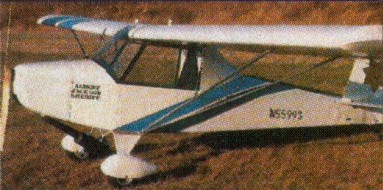
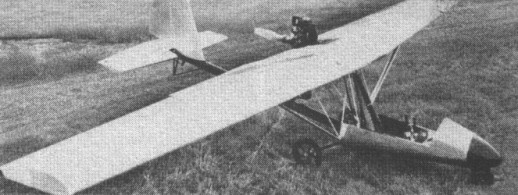
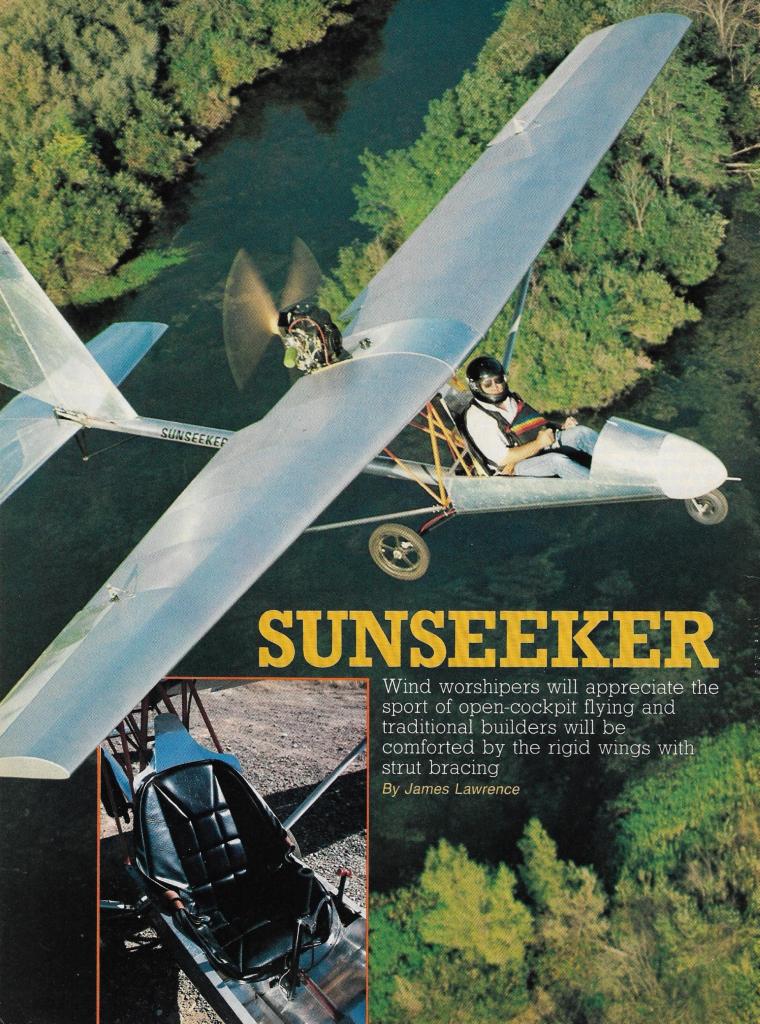
A single-seat, LSA legal high-wing microlight. With detachable wings, the J-3 Kitten first flew in 1986. The kit price in 1997 was US$6684 and plans US$100. By 2007 the kit price was US$10,893.
Speed max: 63 mph. Cruise: 59 mph. Range: 120-140 sm. Stall: 24 mph. ROC: 800 fpm. Take-off dist: 50 ft. Landing dist: 200 ft. Service ceiling: 12,000 ft. Engine: Rotax 277, 28 hp. HP range: 28-40. Fuel cap: 5 USG. Weight empty: 254 lbs. Gross: 500 lbs. Height: 5.25 ft. Length: 16.3 ft. Wing span: 30 ft. Wing area: 120 sq.ft. Seats: 1. Landing gear: tail wheel. Cockpit width: 23.6 in
Established in 1984. Offers plans and kits to construct J-3 Kitten single-seat high-wing microlight and higher-powered J-5 Super Kitten, plans and kits for J-4 Sportster single-seat parasol-wing microlight and more-powerful Super Sportster, and kits for Reliant single-seat high-wing microlight and morepowerful Reliant SX. 1995-7: PO Box 266, Saluda, NC 28773, USA.
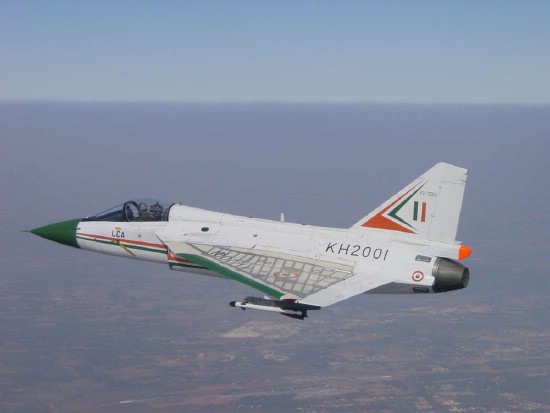
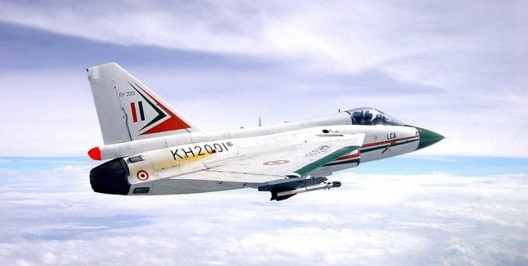
In 1983 the LCA, or Tejas as it was named, was conceived by the Indian Air Force to carry out frontline tactical missions and replace Indian Air Force MiG-21 jets. The first LCA prototype (Technology Demonstrator TD-1) rolled out on 17 November 1995. With the first flight of its Light Combat Aircraft (LCA) put back nearly four years after its roll-out, the program appears to be plagued with difficulties and delays. The prototype eventually first flew on 4 January 2001. The first flight of the LCA had to be postponed until Aeronautical Development Establishment (ADE) finished development of a new flight control system and system integration test were completed. After again much delay the second prototype (TD-2) made its maiden flight on 6 June 2002, also powered by the GE 404 engine.
The Hindustan Light Combat Aircraft (LCA) had two aircraft flying by the 2003 Paris Air Show and had complet¬ed some 80 flights with no major changes required to the airframe. Five prototypes were planned and eight limited series pro¬duction aircraft were to be delivered in 2006 for evaluation by the Indian Air Force. Despite major delays, the technology demonstration phase of the project has been completed and construction of further prototypes is underway. The first, Prototype Vehicle PV-1, joined the program in 2003. The fourth LCA, PV-2, was completed in 2005 and was first flown on 1 December 2005.
Built by partners Aeronautical Development Agency (ADA) and Hindustan Aeronautics Limited (HAL), the LCA design features digital fly-by-wire control system, multi-mode model, digital ‘glass’ cockpit, hands on throttle and stick (HOTAS), FLIR, and static instability. The aircraft has a delta wing design without any tailplanes or foreplanes and a total of seven external weapon stations. The two LCA technology demonstrators were powered by the US supplied General Electric GE F404-F2J3 turbofan. But because of the embargo placed in 1998 by the USA on the engine as a result of the nuclear tests conducted by India in 1998, the production aircraft were planned to be fitted with the Indian Kaveri GTX-35VS turbofan. The embargo included the Lockheed-Martin fly-by-wire flight control system. In May 2005, the Tejas flight, now consisting of TD-1, TD-2 and the first Prototype Vehicle PV-1, completed 400 sorties. A fourth prototype, PV-2, was scheduled to make its first flight in June 2005. It has reduced structural weight and new avionics and cockpit displays.
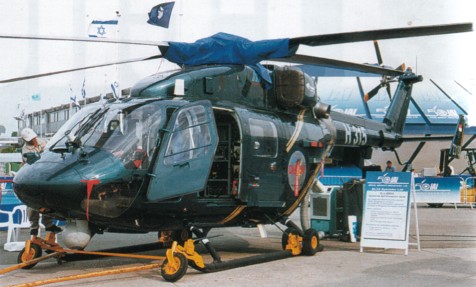
An agreement was signed with MBB (Germany) in July 1984 to support design, development and production of an Advanced Light Helicopter (ALH), design starting in November 1984. Ground test vehicle runs began in April 1991.
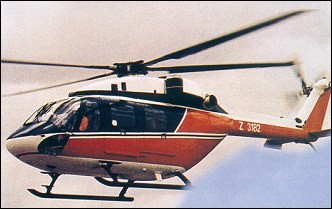
Five flying prototypes (two basic, one air force/army, one naval and one civil) were built. PT1 first civil prototype (Z3182) rolled out 29 June 1992; first flight 20 August and ‘official’ first flight 30 August 1992 PT2 second civil prototype (Z3183) made its first flight 18 April 1993 PT-A (army/air force prototype Z3268) on 28 May 1994 PT-N (naval prototype), with CTS 800 engines and a retractable tricycle undercarriage, flew for first time (IN901) on 23 December 1995
Total hours flown, including ‘hot-and-high’ trials in environments of 45°C and more than 6,000m, were about 1,500. Military certification of air force/army, naval and coast guard versions was completed in March 2002.
Versions:
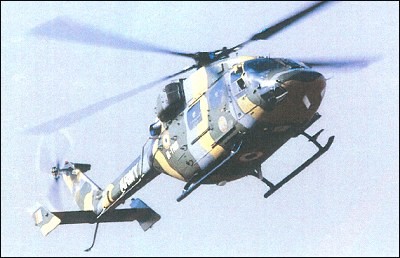
Air force/army: Skid gear, crashworthy fuel tanks, bulletproof supply tanks, IR and flame suppression; night attack capability; roles to include attack and SAR.
Naval: Retractable tricycle gear, harpoon decklock, pressure refuelling; fairings on fuselage sides to house mainwheels, flotation gear and batteries.
Civil: Roles to include passenger and utility transport, commuter/offshore executive, rescue/emergency medical service and law enforcement. Wheel landing gear. Prototype targeted to fly in 2001, but this not achieved until 6 March 2002; DGCA certification to be followed by FAA/JAA type approval. Civil version entered production in 2003. Launch customer Azal India Helicopter (one ordered 5 February 2003, for delivery later that year).
Coast Guard: High commonality with naval version; nose-mounted surveillance radar; roof-mounted FLIR; starboard side, cabin-mounted 7.62mm machine gun; radar console and operator’s seat; liferaft, loudhailer.
The first modern helicopter of local design and construction. Conventional layout, including high-mounted tailboom to accommodate rear-loading doors-hour-blade hingeless main rotor with advanced aerofoils and sweplback tips; Eurocopter FEL (fibre elastomer) rotor head, with blades held between pair of cruciform CFRP starplates; manual blade folding and rotor brake standard; integrated drive system transmission; four-blade bearingless crossbeam tail rotor on starboard side of fin; fixed tailplane; sweptback endplate tins offset to port; vibration damping by Lord ARIS (anti-resonance isolation system), comprising four isolator elements between main gearbox and fuselage.
Main rotor blade section DMH 4 (DMH 3 outboard); tail rotor blade section S 102C (S 102E at tip). Rotor speeds 314 rpm (main), 1,564 rpm (tail).
Flying controls are integrated dynamic management by four-axis AFCS (actuators have manual as well as AFCS input); constant-speed rpm control, assisted by collective anticipator (part of FADEC and stability augmentation system acting through ATCS).
The main and tail rotor blades and rotor hub glass fibre/carbon fibre; Kevlar nosecone, crew/passenger doors, cowling, upper rear tailboom and most of tail unit; carbon fibre lower rear tailboom and fin centre panels; Kevlar/ carbon fibre cockpit section; aluminium alloy sandwich centre cabin and remainder of tailboom.
Landing gear is non-retractable metal skid gear standard for air force/army version. Hydraulically retractable tricycle gear on naval and civil versions, with twin nosewheels and single mainwheels, latter retracting into fairings on fuselage sides which also (on naval version) house flotation gear and batteries; rearward-retracting nose unit; naval version has harpoon decklock system. Spring skid under rear of tailboom on all versions, to protect tail rotor. FPT Industries (UK) Kevlar inflatable flotation bags for prototypes, usable with both skid and wheel gear.
The first three, and fifth, prototypes each powered by two Turbomeca TM 333-2B2 or -2C turboshafts, with FADEC, rated at 740kW for T-O, 783kW maximum contingency and 666kW maximum continuous. LHTEC CTS 800-4H (998 kW) selected late 1994 and test-flown in the fourth prototype, but subsequently embargoed; all then went to TM 333-2B2 until availability of 895kW class Ardiden 1H (Shakti) in about 2006. The twin turboshafts are mounted above the cabin.
Transmission ratings (two engines) 1,280kW for 30 minutes for T-O and 1,156kW maximum continuous; OEI ratings 800kW for 30 seconds (super contingency), 700kW for 2.5 minutes. Transmission input from both engines combined through spiral bevel gears to collector gear on stub-shaft. ARIS system gives 6° of freedom damping. Power take-off from main and auxiliary gearboxes for transmission-driven accessories.
Total usable fuel, in self-sealing crashworthy underfloor tanks (three main and two supply), 1,400 litres. Pressure refuelling in naval version. Crossfeed and fuel dump systems in all military versions.
Flight crew of two, on crashworthy seats in military/naval versions. Main cabin seats 12 persons as standard, 14 in high-density configuration. EMS interior (first flown by PT2/Z3183 in January 2001) can accommodate two stretchers and four medical attendants, or four stretchers and two medical personnel. Crew door and rearward-sliding door (military) or hinged door (civil) on each side; clamshell cargo doors at rear of passenger cabin.
DC electrical power is from two independent subsystems, each with a 6kW starter/generator, with battery back-up for 15 minutes of emergency operation; AC power, also from two independent subsystems, each with a 5/10 kVA alternator. Three hydraulic systems (pressure 207 bar, maximum flow rate 25 litres/min; systems 1 and 2 for main and tail rotor flight control actuators, system 3 for landing gear, wheel brakes, decklock harpoon, rescue hoist (naval variant) and optional equipment. Oxygen system.
Avionics: Comms: V/UHF, HF/SSB and standby UHF com radio, LFF and intercom. Radar: Weather radar optional. Surveillance radar in Coast Guard version. Flight: SFIM four-axis AFCS, Doppler navigation system, TAS system, ADF, radio altimeter, heading reference standard. GPS nav system in civil version, with additional VOR/ILS, DME and marker beacon. Mission: Roof-mounted FLIR in Coast Guard version. EMS version equipped with navaids, patient monitoring, data recording systems, and datalink to transmit medical information to ground-based hospitals.
A 1,500kg capacity cargo sling can be fitted.
Armament is cabin-side pylons for two torpedoes/depth charges or four anti-ship missiles on naval variant; on army/air force variant, stub-wings which can be fitted with eight anti-tank guided missiles, four pods of 68mm or 70mm rockets or two pairs of air-to-air missiles. Army/air force variant can also be equipped with ventral 20mm gun turret or sling for carnage of land mines. Cabin-mounted 7.62mm machine gun in Coast Guard version, firing from starboard side doorway.
Naval trials by PT-N conducted in March 1998 aboard aircraft carrier INS Viraat and smaller decks of other Indian Navy vessels. May 1998 US trade embargo, imposed following India’s refusal to sign nuclear test ban treaty, blocked import of CTS 800 engines (30 ordered) and delayed planned first flight of PTC-2 civil fifth prototype (VT-XLH) with this engine until 6 March 2002. Instead, all variants were to be powered by TM 333, including retrofit of PT-N prototype; contract announced 7 February 2003 for HAL to co-develop and co-produce Turbomeca Ardiden 1H (Indian name Shakti) for future, higher-powered versions of Dhruv. Weight reduction programme initiated in mid-1998; RFPs issued later same year for cockpit display system. By the end of 1998, manufacture was well advanced of three preproduction aircraft (PPN-1, PPA-2 and PPA-3: one for each of the three armed services).
Indian government requirement for armed forces and Coast Guard, to replace Chetaks/Cheetahs; letter of intent for 300 (Army 110, Air Force 150, Navy/Coast Guard 40) followed by contract for 100 in late 1996, but allocation revised by 2001 as Army 120, Navy 120, Air Force 60 and Coast Guard seven; all to be delivered by 2015. Second production lot contains 20.
Deliveries (four each to Indian Air Force and Army, two each to Navy and Coast Guard) were due to begin in late end of 2001, to be followed by two each to Coast Guard, Navy and Air Force by the end of March 2002. Seven deliveries actually achieved by this date: Army two (IA-1101 and -1103) starting 20 March 2002, Air Force two (J-4041/4042 on 20 March), Navy two (IN-701 /702 on 28 March) and Coast Guard (CG-851 on 18 March) one. However, Army’s IA-1102 had been delivered for trials use earlier, on 4 January 2003. Eight more scheduled for delivery by 31 March 2003, of which Indian Navy received two on 24 March. Initial batch of 30 TM 333-2B2 engines ordered in mid-1999 to power first 12 (including two civil) production Dhruvs; all then intended for delivery by 2002. Further 52 engines ordered mid-2000 to power next 20; deliveries of these almost completed by February 2003; further contract at that time for over 300 more, for delivery from early 2004. Hindustan Aeronautics showed the ALH / Dhruv (Polaris) at the 2003 Paris Air Show. Unit price of basic aircraft approximately Rs250 million (US$5.1 million) (2002). Total programme costs US$170 million by 1997.
Initial Indian Army aircraft were delivered to 201 Squadron.
Development and marketing agreement between HAL and Israel Aircraft Industries announced in late 2002; involves both Dhruv and LAH derivative; IAI to concentrate on avionics and other internal systems.
ALH Engines: 2 x Turboméca TM 333 2B, 986 shp Length: 42.29 ft / 12.89 m Length rotors turning: 15.87m Fuselage length: 12.89m Height: 12.336 ft / 3.76 m Rotor diameter: 43.307 ft / 13.2 m Max take off weight: 12127.5 lbs / 5500.0 kg Weight empty: 4886.3 lbs / 2216.0 kg Max. speed: 151 kts / 280 km/h Cruising speed: 132 kts / 245 km/h Initial climb rate: 1771.65 ft/min / 9.00 m/s Service ceiling: 19685 ft / 6000 m Hovering ceiling: 3000m Maximum range: 432 nm / 800 km Range: 216 nm / 400 km Crew: 2 Payload: 14pax (max 1500kg)
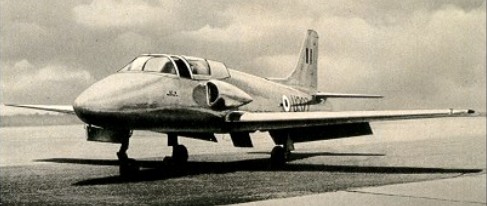
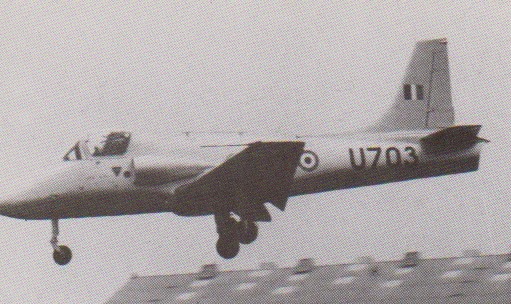
Hindustan Aeronautics Ltd. (HAL) constructed the Viper powered HJT 16 Kiran two seat jet trainer for the Indian Navy. The prototype HJT-16 flew on 4 September 1964. Deliveries began in 1968, and the Kiran I was superceeded by the IA with two weapons pylons for armament training.
The prototype (U738) of the Hindus¬tan Aeronautics HAL Kiran Mk II armament training and counter–insurgency aircraft was flown for the first time on 30 July 1976. The Kiran II side-by-side basic trainer/light attack aircraft differs from the Viper powered Kiran land IA in being fitted with a derated Orpheus 701-01 turbojet. The Kiran II has four underwing hardpoints and upgraded avionics. Deliveries began in 1984. By mid-1985 16 had been delivered, and the production rate was 18 per year.
By 1989 a total of 251 aircraft were built including 51 improved “Kiran II”s.
HJT-16 Kiran I/IA Engine: 1 x Rolls-Royce Viper Mk 11, 11.11kN Max take-off weight: 4235 kg / 9337 lb Empty weight: 2560 kg / 5644 lb Wingspan: 10.7 m / 35 ft 1 in Length: 10.6 m / 34 ft 9 in Height: 3.63 m / 11 ft 11 in Wing area: 19.0 sq.m / 204.51 sq ft Max. speed: 695 km/h / 432 mph Cruise speed: 9145 km/h / 5683 mph Armament: 2 x 227kg bombs or 14 x 68mm unguided missiles Crew: 2
HJT-16 Kiran II Engine: 1 x R-R Orpheus 701. Installed thrust: 18.68 kN. Span: 10.7 m. Length: 10.6 m. Wing area: 19 sq.m. Empty wt: 2995 kg. MTOW: 5000 kg. Warload: 1000 kg. Max speed: 672 kph. Initial ROC: 1600 m / min. Ceiling: 12,000 m. T/O run (to 15m): 730 m. Ldg run (from 15m): 1440 m. Fuel internal: 1345 lt. Range: 735 km. Armament: 2 x 7.62 mm. Hardpoints: 4
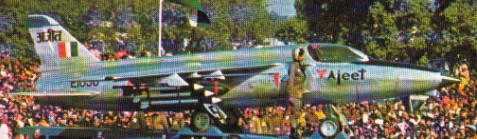
The Indian Air Force issued a requirement for an improved Gnat in 1972 as an interceptor and also have a secondary ground-attack role. The aircraft was given the name “Ajeet”, Sanskrit for “Invincible” or “Unconquered” and was to be manufactured by HAL. It was to have more hardpoints, wet wings and a Martin-Baker ejection seat. Hindustan Aeronau¬tics developed the Ajeet lightweight jet fighter from the Folland/ Hawker Siddeley Gnat which HAL license-produced.
The prototype Ajeet first flew in March 1975 and the first production aircraft (E1956) followed in September 1976.
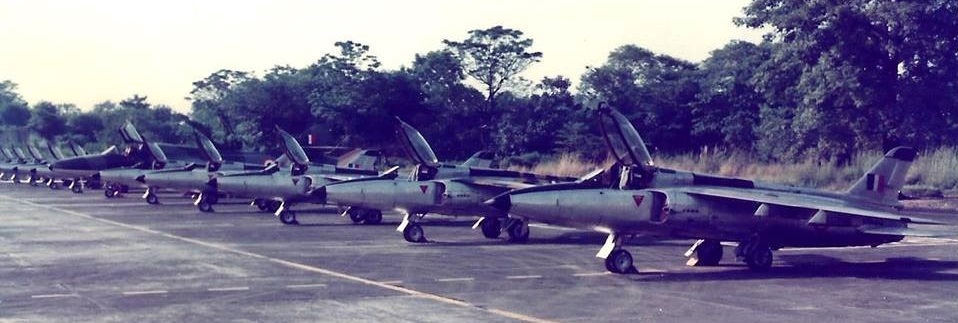
Ajeets of No.22 Squadron with a Hunter T.66 two-seater
The Ajeet aircraft was comparable to the Gnat in handling, albeit on the heavier side. A clean Gnat (without drop tanks) was significantly more agile and manoeuvrable than a clean Ajeet. The trainer on the other hand was even heavier. In the few 1vs1 sorties against the fighter, it was noticed that the trainer lost out while manoeuvring in the vertical plane. Another issue that one had to be careful of was while opening throttle and seeking full power as the engine took a long time to achieve 100%.
The main changes from the Gnat are improved navigation and communications systems and the use of new wing fuel tanks which replace the previous underwing tanks. The last feature allows an increased warload to be carried, although drop tanks can still be carried underwing on two of the four stations for longer range.
Armament comprises two 30 mm Aden cannon and rockets or bombs. Maximum speed with the 4,500 lb thrust Rolls Royce Orpheus 701 01 turbojet remains subsonic at Mach 0.96.
Deliveries began to the Indian Air Force in 1976. Of the total of 79 aircraft ordered for the Indian Air Force about one third had been delivered by early 1980 and operated between 1977 and 1991.
For nearly 30 years of its operational service in India the Gnat/ Ajeet did not have a type trainer. Pilots in India, after dual checks in the Hawker Hunter, were required to do the first solo on the Gnat directly. The dual checks were given on a Hunter trainer by simulating a Gnat approach (much shallower) by lowering flaps to only 15 degrees and not full flaps down. Once cleared after the mandatory dual checks, the pilots were shown the various attitudes of nose up and take off, strapped in the cockpit and two airmen sitting on the tail plane under the flight commander’s supervision. The cockpit was very cosy and seated at 20 degrees incline of the ejection seat. A taxi run with a full throttle roll on the runway got the pilot ready for his first solo in the Gnat.
The development of the HAL Ajeet trainer started in the late 70s. A proposal within a time frame of 54 months at an estimated cost of Rs.4.16 crores, put up by Hindustan Aeronautics Limited (HAL) in June 1975, was approved by the Government in February 1976. Government sanctioned in April 1980, procurement of 12 trainer aircraft from the HAL at a cost of Rs. 1 crore each. The aircraft were to be delivered at the rate of six each during 1982-83 and 1983-84.
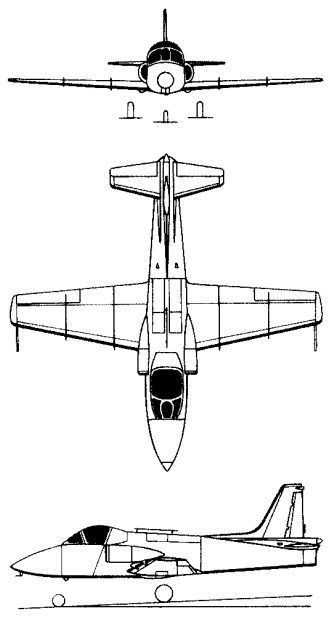
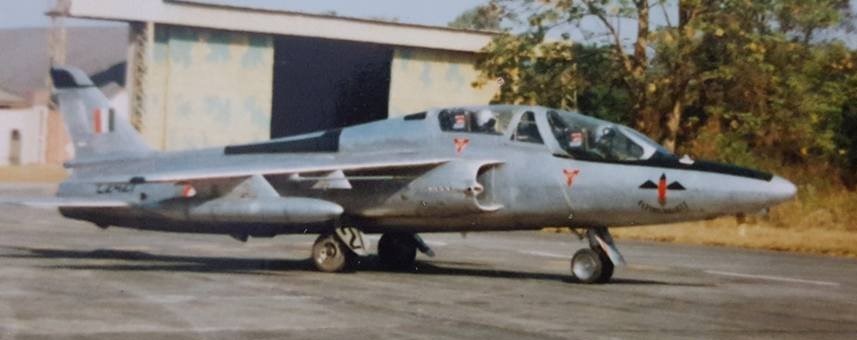
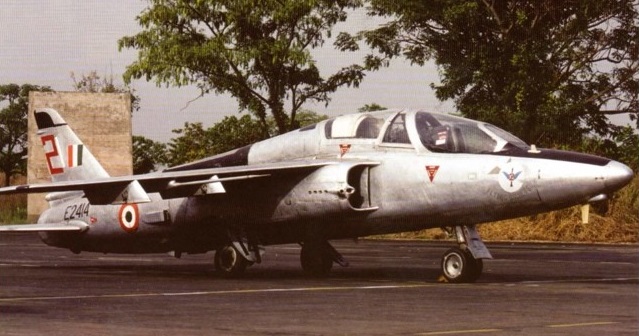
Developed from the single-seat Ajeet lightweight fighter, the prototype trainer version flew on September 20, 1982. The Ajeet trainer, had a lengthened fuselage (1.4 meters longer than the Ajeet fighter) with two seats mounted in tandem and two internal fuel tanks on the spine removed to accommodate the extra seat. The 30 mm cannon and four stores pylons were retained, although the cannon could be removed and replaced with additional fuel tanks (increase capacity by 273 Litres). The engine remained the same Orpheus 701. However, the trainer had an inferior Power/ weight ratio as compared to the fighter version and handled sluggishly.
first prototype Ajeet Trainer E2426
In December 1982 Sqn Ldr DK Powar was flying the first prototype of the Ajeet Trainer (E2426), the 14th sortie the aircraft had undertaken. The unfortunate accident was probably due to differences in pre-flight inspection procedures of HAL and IAF ground crew, leading to the oxygen not being switched on. At higher altitudes, hypoxia set in, leading to disorientation and complete loss of consciousness and fatal crash. A second prototype flew in September 1983.
The program was put in abeyance, but over the next two years, the IAF had a re-think and it was revived in late 1984. However, in 1986, when IAF agreed on the withdrawal of the Ajeet Aircraft, the order for the trainer was in limbo again.
The first Ajeet Trainer induction at Sulur BRD. The aircraft was handed over to Wg Cdr Ranjith Tathgur of No.18 Squadron “Flying Bullets”
The order for full production of Ajeet Trainers having been withdrawn, two prototypes with HAL were inducted into the IAF finally in late 1987 (and early 1988) and were handed over to 18 sqn then based at Bagdogra. Two aircraft bearing serial numbers E2427 and E2414 were handed over to the squadron. The first aircraft delivered was a production aircraft while the other a prototype modified to production standard. These two were the only aircraft built (other than the one that crashed).
Their usage fell far short of the initial projected hours. The utilisation rate achieved by these trainer aircraft was poor as it ranged from 0.15 to 5.30 hours per month during January 1988 to May 1990. One cause of the low utilization could have been the limited utility of the aircraft as laid out in the syllabus. The aircraft was supposed to provide three dual check sorties with each having a laid down profile. It did not have the required instrumentation and lights for night flying as the Ajeet itself was day operational only. Further, with the Ajeet in winding down mode, the squadron pilot and aircraft strength was depleted.
When the Ajeets were finally phased out in March 1991, apparently the Ajeet Trainers were still serviceable and were flown to the BRD in Sulur. In all, the two Ajeet Trainers served the IAF for only three and a half years across two squadrons.
In December 1988, right after 18 sqn had wound up, the two trainers were ferried from Bagdogra to Kalaikunda.
Two Ajeet Trainers were the last aircraft in the 33-year successful legacy of the Gnat fighter and its variants that served the IAF until the early 90s. The Ajeet Trainers served the IAF for only three and a half years across two squadrons and flew little, remaining a footnote in the annals of Indian aviation history.
Engine: 4,500 lb thrust Rolls Royce Orpheus 701 01 turbojet Maximum speed: Mach 0.96 / 716 mph / 1,152 km/h Wing span: 22 ft 1 in (6.73 m)
1962: 31 Chittaranjan Ave, Calcutta 12, India Aeronautical Services manufactured 56 Ashvini-II and 35 Rohini-I training sailplanes for the Indian Civil Aviation Department 56. Aeronautical Services also built many IT-G3 single seat intermediate traing gliders based on the Grunau Baby.
Hindustan Aircraft Ltd. (formed in 1940) was amalgamated with Aeronautics India Ltd. (formed 1963) to establish Hindustan Aeronautics Ltd. in October 1964. Hindustan Aircraft designed and built the first indigenous Indian aircraft, the Hindustan HT-2 two-seat trainer, which first flew in 1951 and was produced for the Indian Air Force and civilian flying clubs. The HUL-26 Pushpak high-wing lightplane, based on the American Aeronca Chief, entered production in 1959, the HAOP-27 Krishak derivation being manufactured as a liaison aircraft for the Indian Air Force and Army. Deliveries of the HAL HJT-16 Kiran two-seat jet trainer began in 1966. The HF-24 Marut single-seat fighter was designed by a team led by Kurt Tank, and deliveries of the Ajeet lightweight jet fighter, developed from the Folland/ Hawker Siddeley Gnat which HAL license-produced, began to the Indian Air Force in 1976. HAL also built the HA-31 Basant agricultural aircraft. Assembly of Soviet MiG-21 fighters began 1966, with full manufacture from 1970 (production ended). Assembly/ production of Soviet MiG-27M began 1984 (production ended 1994). Assembly/production of the SEPECAT Jaguar International as the Shamsher (first flown March 1982) ended 1998. HPT-32 Deepak two-seat ab initio and basic piston-engined trainer first flown 1977; 134 built for Indian Air Force and eight for Navy to replace HT-2s. Licence-manufactured SA-315B Lama and SA-316B Alouette III helicopters as Cheetah and Chetak respectively up to 1998, when production gave way to the indigenously developed Advanced Light Helicopter (first flown August 1992). HAL responsible for manufacture of the ADA Light Combat Aircraft. New HJT-36 turbofan trainer and HTT- 38 turboprop trainer announced for development in 1998. Continuing work on AWACS aircraft. Other work includes overhaul of all Indian Air Force aircraft, together with component manufacture in connection with international aircraft programs and India’s space research program.
The original version of the H-1 Racer single-seat autogyro was first flown in 1987. Plans and kits available for the Racer in latest form. Winner’s Circle Engineering kit for the H-1 Racer (including frame, tail, steering, landing gear, seat tank, brakes, front suspension and rotor head) in 2001: US$6000
Engine: Rotax 503DC HP range: 40-64 Weight empty: 310 lb Gross: 550 lb Height: 7.9 ft Fuel cap: 5 USG Length: 10.75 ft Disk span: 25 ft Disk area: 490 sq.ft Speed max: 85 mph Cruise: 65 mph Range: 65 sm ROC: 1200 fpm Take-off dist: 500 ft Landing dist: 10 ft Service ceiling: 10,000 ft Seats: 1 Landing gear: nose wheel
Engine: Rotax 503, 52 hp Rotor span: 7.60 m Blade area: 0.21 sq.m MAUW: 285 kg Empty weight: 172 kg Fuel capacity: 37 lt Max speed: 160 kph Cruise speed: 105 kph Minimum speed: 48 kph Climb rate: 4 m/s Seats: 1 Fuel consumption: 19 lt/hr
High monowing, strut-braced, Kevlar/foam construction. Full three-axis control system. Powered by a WAE two-cylinder horizontally opposed British microlight engine. The landing gear was Chrome-moly steel, trike type.
After spending something like $200k developing the aircraft and all the tooling, the original designers found they couldn’t obtain product liability insurance and they decided to sell the project to someone who was going to manufacture it in Mexico. That never came to.
Only 10 came out of the factory.
Engine: WAE 2 cyl, 30 hp Wingspan 31 ft Wing area 112 sq.ft Length 18 ft Empty weight 245 lb Payload 245 lb Gross 600 lb Wing loading 4 lbs/sq.ft L/D 22:1 Cruise speed 60 mph Stall speed 19 mph Vmax 63 mph Climb rate 1000 fpm Takeoff run 150-200 ft Landing roll 150-200 ft Fuel capacity 5 USG