1998:
Am Mühlenberg 29
D-49770 Herzlohe
Germany
UL builder
1998:
Am Mühlenberg 29
D-49770 Herzlohe
Germany
UL builder
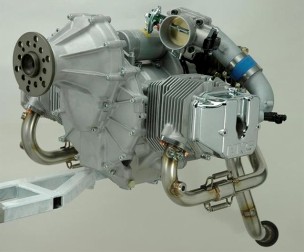
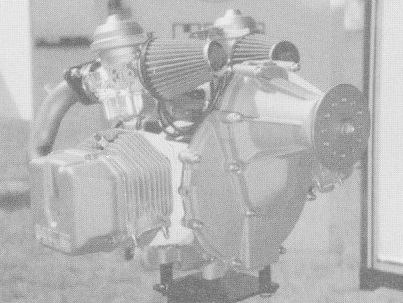
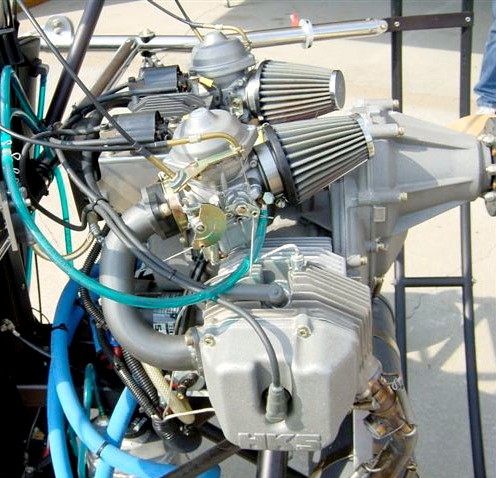
The HKS 700E is a twin-cylinder, horizontally opposed, four stroke, carburetted aircraft engine, designed for use on ultralight aircraft, powered parachutes and ultralight trikes. The engine is manufactured by HKS, a Japanese company noted for its automotive racing engines.
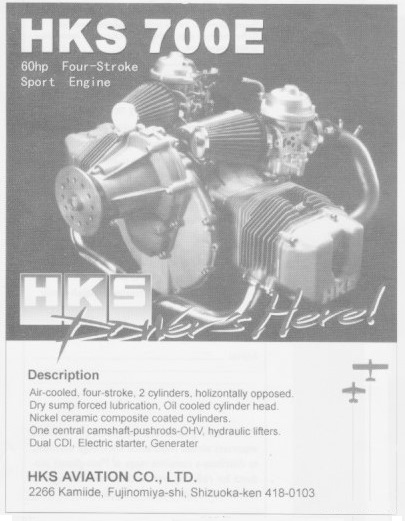
The HKS 700E has dual capacitor discharge ignition, dual carburetors and electric start. The engine is mainly air-cooled, but with oil-cooled cylinder heads. The OHV pushrod engine has four valves per cylinder, and nickel-ceramic coated cylinder bores. Lubrication is dry sump, with a trochoid pump.
The reduction drive is a choice of two integral gearboxes: the A-type gearbox has a 2.58:1 ratio and can accommodate propellers of up to 4,000 kg/sq.cm inertial load; the B-type gearbox has a 3.47:1 ratio and can accommodate propellers of up to 6,000 kg/sq.cm.
The 700E burns 9 L (2.4 US gal) per hour in cruise flight at 4,750 rpm. The recommended time between overhauls is 800 hours, although this is expected to be increased as experience is gained.
Producing 60 hp (45 kW) at 6,200 rpm for three minutes for take-off and 56 hp (42 kW) at 5,800 rpm continuously, the 700E was designed as a fuel efficient four stroke alternative to the high fuel consumption two stroke engines, such as the Rotax 582.
The company’s owner’s manual disclaimer states:
WARNING! This is a non-certified aircraft engine, the possibility of engine failure exists at all times. Do not operate this engine over densely populated areas. Do not operate this engine over terrain where a safe, power off landing cannot be performed. The operating and maintenance instructions supplied with this engine must be followed at all times. Flying any aircraft involves the risk of injury or death, building and maintaining your own aircraft requires great personal responsibility.
Variants:
700E
Initial version, normally aspirated and producing 60 hp (45 kW) at 6200 rpm for three minutes for take-off and 56 hp (42 kW) at 5800 rpm continuously.
700T
Turbocharged version with a 62.5 mm (2.5 in) stroke and a compression ratio of 8.8:1, that produces 80 hp (60 kW) at 5300 rpm for three minutes for take-off and 77 hp (57 kW) at 4900 rpm continuously. The engine’s dry weight is 57.5 kg (127 lb) equipped with electrical system, electric starter, fuel injectors, gearbox, exhaust system and turbocharger. The initial time between overhauls is recommended as 500 hours, but this is expected to rise with operational experience.
Applications:
Aeroalcool Quasar
Aeros del Sur Manta
Aéro Services Guépard Guépe
Air Creation Skypper
Air Creation Trek
Airsport Sonet
Antares MA-33
Aviation Products Star Trike
BAaer Guri
BB Microlight BB-two seater
Bede BD-6
Bede BD-17 Nugget
ASAP Chinook Plus 2
Capella T-Raptor
CGS Hawk
Club ULM Rotor Ptenets-2
Cyclone AX2000
DTA Combo
Earthstar Thunder Gull
Excalibur Aircraft Excalibur
Fletcher Hercules
Flightstar II
Flying K Sky Raider
Flying Machines FM301
Harmening High Flyer
Green Sky Adventures Micro Mong
Hy-Tek Hurricane Hauler
Murphy JDM-8
Murphy Maverick
North Wing Sport X2
Phoenix Air Phoenix
Quad City Challenger
RagWing RW22 Tiger Moth
Rainbow Aerotrike
SlipStream Ultra Sport
Solo Wings Aquilla
Sport Flight Talon
Stellar Astra
Summit Steel Breeze
TechProAviation Merlin 100
Titan Tornado
Specifications:
700E
Type: Two cylinder, four-stroke aircraft engine
Bore: 85 mm (3.3 in)
Stroke: 60 mm (2.4 in)
Displacement: 680 cc (41.49 cu in)
Dry weight: 55 kg (121 lb) equipped with electrical system, electric starter, carburetors, gearbox, exhaust system, oil tank and cooler
Valvetrain: two intake and two exhaust valves per cylinder
Fuel type: unleaded auto fuel
Oil system: dry sump with a trochoid pump
Cooling system: free air cylinders, with oil-cooled cylinder heads
Reduction gear: A-type gearbox with 2.58:1 ratio, limit of 4,000kg/sq.cm inertial load. The B-type gearbox with 3.47:1 ratio, limit of 6,000kg/sq.cm inertial load
Power output: 60 hp (45 kW) at 6200 rpm for three minutes for take-off and 56 hp (42 kW) at 5800 rpm continuous
Compression ratio: 11.3:1
Max torque: 7 kgm at 5800 rpm
Price 1998: $6200
700T
80 HP
Turbo Charged
Intercooled
Elec Fuel Injection
Sea Level Performance at 15,000 ft
Turbo Charged, Electronic Fuel Injection
2 Cylinders 4-Stroke Engine With Horizontally Opposed Cylinders 4 Valves per Cylinder Turbocharger with Intercooler
Bore X Stroke: 85mm x 62.5 mm
Compression Ratio: 8.8 : 1
Power Output: 77hp (57.4kw) at 4900rpm (continuous)
80hp (59.7kw) at 5300rpm (3min./Take off)
Maximum Torque: 79.6 ft lb at 4600 – 5200 rpm
Maximum RPM: 5300
TBO: 500 hours
Reduction Gear: Designation C-type 2.62:1
Engine Weight (Dry, with Electric Starter, Fuel line with Injector, Exhaust Manifold, Intake Manifold, turbocharger, and Gearbox): 126.8 lbs 57.5 kg (57.5 kg)
HKS Co., Ltd. (株式会社エッチ・ケー・エス Kabushiki-gaisha Ecchi Kē Esu) was formed in 1973 by Hiroyuki Hasegawa, a former engineer for Yamaha Motor Company, and his partner Goichi Kitagawa, while the start up capital was supplied by Sigma Automotive (hence the name HKS). The company began operations by tuning gasoline-powered engines in a dairy-farming shed at the foot of Mount Fuji in Japan. Their goal was to design and build high performance engines and components that major OE (original equipment) manufacturers could not or would not produce. In July 1974, Hasegawa engineered and built the first commercialized turbocharger kit for passenger automobiles; since then developing turbocharger upgrades and bolt-on turbocharger kits that subsequently became the core business of HKS. Hasegawa also created the first commercially available electronic turbo timer and boost controller.
HKS is a publicly traded company with an international sales and distribution network spanning Asia, Europe, Australia and the Americas to support its customer base. The main manufacturing and R&D facility is at the foot of Mount Fuji. Subsidiary companies have been established in California (HKS USA), Cambridgeshire, England (HKS Europe), and Bangkok, Thailand (HKS Thailand). HKS USA, established in 1982, shut down operations in 2011 electing instead to use wholesale distributors to handle their supply chain in the USA. Motovicity Distribution was selected as the North American warehouse for HKS where a full inventory of products is maintained for HKS’ North American customers.
The company also produces the HKS 700E aircraft engine, under its subsidiary, HKS Aviation. And also produced a 600cc Speedway cycle engine.
1998:
226 Kamijde Fujinomiya-shi
418-0103 Shizuoka-ken
Japan
Hellmuth Hirth (1886 – 1938) worked for a short time as a foreman at aviation pioneer August Euler in Darmstadt. However, since Euler had difficulties with his Voisin-type flying machine, Hirth returned to Stuttgart to build himself a Blériot machine. Because of the too weak engine, this did not go beyond small aerial jumps, causing Hirth to go to Vienna to fly the Etrich Taube together with Illner. He then became designer at Rumpler and Gotha, before turning to engine development.
1998:
Göbler-Hirthmotoren
Postfach 62
D 71726 Benningen / Neckar
Germany
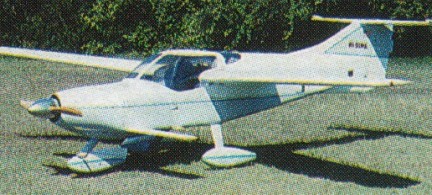
Speed max: 160 mph.
Cruise: 150 mph.
Range: 800 sm.
Stall: 55 mph.
ROC: 850 fpm.
Take-off dist: 950 ft.
Landing dist: 750 ft.
Service ceiling: 21,000 ft.
Engine: Lycoming O-235, 115 hp.
HP range: 115-160.
Fuel cap: 40 USG.
Weight empty: 1050 lbs.
Gross: 1650 lbs.
Height: 6.75 ft.
Length: 21.5 ft.
Wing span: 30 ft.
Wing area: 104.5 sq.ft.
Seats: 2.
Landing gear: nose wheel.
1996: PO Box 2134, Hemet, CA 92546-2134, USA.
LSA builder
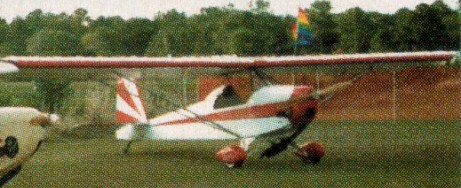
First flown in 1986, the Super Sportster features detachable wings. In 1997 the kit, including engine, prop and instruments, sold for US$9587, and plans for US$150.
Speed max: 90 mph.
Cruise: 70 mph.
Range: 120 sm.
Stall: 31 mph.
ROC: 800 fpm.
Take-off dist: 50 ft.
Landing dist: 200 ft.
Service ceiling: 12,000 ft.
Engine: Rotax 447, 40 hp.
HP range: 40-50.
Fuel cap: 5 USG.
Weight empty: 260 lbs.
Gross: 550 lbs.
Height: 5.25 ft.
Length: 16.33 ft.
Wing span: 28 ft.
Wing area: 112 sq.ft.
Seats: 1.
Landing gear: tail wheel.
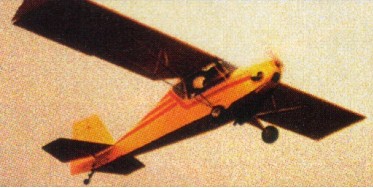
The Reliant single-seat high-wing LSA microlight was first flown in 1984 and was available for US$6884 in 1997. In 2007 the kit sold for US$9993.
In 1997 the Reliant SX kit sold for US$9587. The price includes engine, prop. And instruments. First flown in 1987, the wings of the SX were also detachable. The Reliant SX is a more powerful version.
Reliant
Speed max: 63 mph.
Cruise: 60 mph.
Range: 120 sm.
Stall: 24 mph.
ROC: 800 fpm.
Take-off dist: 50 ft.
Landing dist: 200 ft.
Service ceiling: 12,000 ft.
Engine: Rotax 277, 28 hp.
HP range: 28-40.
Fuel cap: 5 USG.
Weight empty: 254 lbs.
Gross: 500 lbs.
Height: 5.25 ft.
Length: 16.33 ft.
Wing span: 30 ft.
Wing area: 120 sq.ft.
Cockpit width: 23.6 in
Seats: 1.
Landing gear: tail wheel.
Reliant SX
Speed max: 100 mph.
Cruise: 75 mph.
Range: 120 sm.
Stall: 31 mph.
ROC: 1100 fpm.
Take-off dist: 50 ft.
Landing dist: 150 ft.
Engine: Rotax 447, 40 hp.
HP range: 40-50.
Fuel cap: 5 USG.
Weight empty: 285 lbs.
Gross: 600 lbs.
Height: 5.25 ft.
Length: 16.33 ft.
Wing span: 30 ft.
Wing area: 120 sq.ft.
Seats: 1.
Cockpit width: 23.6 in
Landing gear: tail wheel.
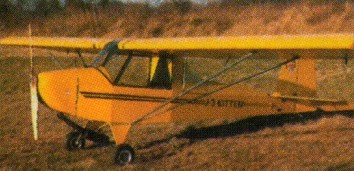
An LSA with detachable wings, the kit price was US$9387 and plans US$150 in 1997.
Speed max: 90 mph.
Cruise: 70 mph.
Range: 120 sm.
Stall: 31 mph.
ROC: 800 fpm.
Take-off dist: 50 ft.
Landing dist: 200 ft.
Service ceiling: 12,000 ft.
Engine: Rotax 447, 40 hp.
HP range: 40-50.
Fuel cap: 5 USG.
Weight empty: 280 lbs.
Gross: 550 lbs.
Height: 5.25 ft.
Length: 16.33 ft.
Wing span: 30 ft.
Wing area: 120 sq.ft.
Seats: 1.
Landing gear: tail wheel.
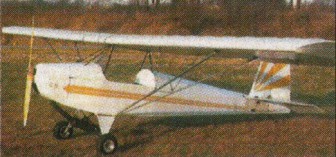
A single-seat parasol-wing LSA microlight first flown in 1986. Fitted with detachable wings.
The kit price in 1997 was US$6884 and plans US$150. In 2007 the kit price was US$9993 and plans US$250.
Speed max: 63 mph.
Cruise: 59 mph.
Range: 120 sm.
Stall: 24 mph.
ROC: 800 fpm.
Take-off dist: 50 ft.
Landing dist: 200 ft.
Service ceiling: 12,000 ft.
Engine: Rotax 277, 28 hp.
HP range: 28-40.
Fuel cap: 5 USG.
Weight empty: 240 lbs.
Gross: 500 lbs.
Height: 5.25 ft.
Length: 16.33 ft.
Wing span: 28 ft.
Wing area: 112 sq.ft.
Seats: 1.
Landing gear: tail wheel.
Cockpit width: 23.6 in

