1983: 2600 Gold St., Redding, CA 96001, USA.
UL builder
1983: 2600 Gold St., Redding, CA 96001, USA.
UL builder
Hillman Helicopter designed Model 360 as three-seat utility helicopter of very modern design which first flew 1981.
After Douglas Hillman developed WankelBee helicopter with rotary combustion engine (first flown 1975) and two-seat Hornet (first flown 1978).
1980: Hillman Helicopters Inc., Box 1411, Scottsdale, AZ 85252, USA.
Hillman Helicopter designed Model 360 as three-seat utility helicopter of very modern design which first flew 1981.

The FH1100 originated from Hiller Aircraft Company’s entry for the US Army requirement of a Light Observation Helicopter (LOH). Designated OH-5A for the technical “fly-off’ it competed against Bell’s OH-4A (B206) and Hughes OH-6A (H369).

Fairchild Stratos Corporation acquired Hiller in 1964 believing they were about to secure a large military contract as the OH-5A stood out the preferred winner. Leaked production data of the OH-5A resulted in Howard Hughes successfully under bidding with the OH-6A. The first FH1100, N81005, flew on 21 January 1963, powered by the Allison T63 turbine engine. Fairchild meanwhile announced they would begin civilian helicopter production of a refined OH-5A, designated the FH1100, offered for sale in June 1966 with either 4 or 5 seats. It became the first US civil turbine helicopter to go into production with a modest 246 units completed by 1971. A small number were produced between 1983 and 1985.
This utility helicopter has a semi-monocoque fuselage and conventional tail boom. The semi-rigid two-blade main rotor, able to be stored folded, is controlled by dual hydraulics, with the primary assisting cyclic and collective, the secondary pump actuating the cyclic only.
A prototype was constructed by Helicopter Technology Inc. in Century, Florida, in 2002 for the new FH1100 to go back into production as the FHoenix.

Under development in 1991 by Rogerson Hiller, the RH1100S features a lengthened and widened cabin and a LCD instrument display.
FH1100
Engine: Allison 250-C18, 317 shp / 205 kW.
Vne: 110 kts.
Cruise: 95-100 kts.
MTOW: 1290 kg.
Useful load: 1335 lb / 605 kg
Range: 330 nm.
Seats: 5.
Length: 29 ft 9.5 in.
Rotor dia: 35 feet 4.75 in / 10.8 m
Ceiling: 14,000 ft.
Range: 348 miles.
Hook cap: 1500 lb.
FHoenix
Engine: Allison 250-C20.
RH1100S
Seats: 7.
Hiller Industries
Hiller Helicopters
Hiller Aviation
Rogerson Hiller Corporation
Hiller Aircraft Corporation
Hiller Helicopters Inc. was formed in 1942 for the development and production of rotary-wing aircraft. Early work on the Hiller Model XH-44, UH-4 Commuter and the UH-5, which introduced a newly-developed ‘Rotor-Matic’ rotor control system, led to the Hiller Model 360 prototype.
Stanley Hiller flew the first successful American co-axial helicopter, the XH-44, in July 1944, when he was only 19 years old. It also featured the world’s first successful all-metal rigid-rotor blades. Hiller had learned to fly from his father at an early age, and at 16, Hiller had started a business building small gasoline engine model cars; revenue eventually grew to $100,000. Hiller became interested in helicopters in 1937 when he saw pictures of the Focke Wulf Fw 61 and Sikorsky’s VS-300 in 1939. Hiller felt the tail rotors used on the VS-300 and the outriggers on the Fw 61 were wasteful and possibly unnecessary.
Formed 1942 as a division of Hiller Industries. Name changed to Hiller Helicopters in 1948.
In 1948 Hiller Helicopters produced the Hiller UH-12, subsequently supplying it to civilian operators and, as the H- 23B and OH-23C/D Raven, to the U.S. Army and to foreign air arms under the MDAP program . Three-seat UH-12E (first flown 1958) and four-seat UH-12E4 variants also developed. The Hiller HOE-1 Hornet ramjet ultralight helicopter and “Flying Platform” were two military experimental types devised by the company.
In 1964 Fairchild-Stratos Corp purchased Hiller Aircraft with cash, not stock transactions. Hiller capabilities fitted into one of Fairchild’s primary goals – vertical takeoff and landing aircraft. The Hiller plant was to remain in Palo Alto.
Fairchild Stratos Corporation acquired Hiller in 1964, hence the FH designations, believing they were about to secure a large military contract as the OH-5A stood out the preferred winner. Leaked production data of the OH-5A resulted in Howard Hughes successfully under bidding with the OH-6A. Fairchild meanwhile announced they would begin civilian helicopter production of a refined OH-5A, designated the FH1100.
Hiller Aviation Inc was formed in 1973 after acquiring the design rights, tooling and spares for Hiller 12E light helicopters from Fairchild Industries. The company provided support for operators of Hiller helicopters and produced three-seat UH- 12E and four-seat UH-12E-4 turbine conversions of the UH-12E, developed in conjunction with Soloy Conversions. Also introduced former Fairchild Hiller FH-1100 in 1984 (later as RH-1100). Became subsidiary of Rogerson Aircraft in 1984, reviving first the name Hiller Helicopters and later becoming Rogerson Hiller Corporation.
Hiller Aircraft Corporation was founded 1994 by Jeffrey Hiller (son of the founder of the original Hiller Aircraft company) and a consortium, to repurchase assets from Rogerson Hiller Corporation. First flight January 1995 of the UH-12E5 five-seat helicopter, and June 1995 for first newly built UH-12E3.
1995: 2140 West 18th St, Port Angeles, Washington 98362, USA.
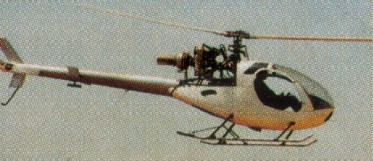
The Turbine Exec is a turbine kit to repower the Rotorway Executive kit helicopter. First flown in April 1997, the US$20,000 kit included the engine, gearbox reduction drive and tail rotor gearbox.
Max speed: 125 mph
Cruise: 100 mph
Range: 225 sm
Rate of climb: 1500 fpm
Service ceiling: 13,500 ft
Engine: Solar T6Z-T32
hp range: 150-170
Fuel capacity: 35 USG
Empty weight: 750 lb
Gross weight: 1425 lb
Height: 8 ft
Length: 22 ft
Disk span: 25 ft
Seats: 2
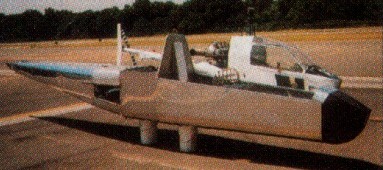
The first flight was scheduled for the Spring of 1998.
Kits were to include everthing except radios, with plans selling for US$350, and kit for US$68,000.
Max speed: 170 mph
Cruise: 130 mph
Range: 390 sm
Rate of climb: 1500 fpm
Service ceiling: 13,500 ft
Engine: Solar T6Z-T32
hp range: 150-400
Fuel capacity: 45 USG
Empty weight: 900 lb
Gross weight: 1800 lb
Height: 8 ft
Length: 28 ft
Disk span: 25 ft
Seats: 2
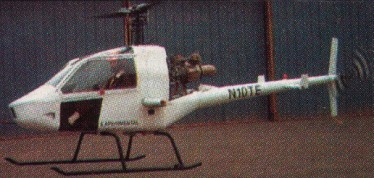
A turboshaft powered helicopter first flown in 1994. The first kit was shipped in January 1998. Plans were selling at US$350 and the kit price was US$68,000. Of aluminium construction, the Solar T62T32 or other engines with 150-225 hp are suitable.
Max speed: 160 mph
Cruise: 130 mph
Range: 300+ sm
Rate of climb: 4700 fpm
Engine: AiResearch, 145 hp
hp range: 145-250
Fuel capacity: 32.9 USG
Empty weight: 635 lb
Gross weight: 1300 lb
Height: 7.4 ft
Length: 20.1 ft
Disk span: 20 ft
Disk area: 314.2 sq.ft
Seats: 1
1997: PO Box 8974, Fountain Valley, CA 92728-8974, USA.
In addition to helicopter maintenance and modification, offered the RotorMouse EH 1 -01 as a single-seat turbine experimental-category helicopter for construction from a kit (first flown August 1993), RotorMouse EH 1 -02 tandem two-seat version, and RotorMouse (Baby Huey) four-seater. Also built the T-4 Turbine as a four-seat turbine helicopter, and produced a retrofit kit for the RotorWay Exec to provide a turbine engine (first flown 1997).
1995-7: 2255 Orkla Dr., Golden Valley, MN 55427, USA.
Highlander Aircraft Corp offerd the Highlander two-seat monoplane in kit form, but originally designed in the U.K. by Richard Noble as the ARV Super2, then becoming Island Aircraft ARV-1 Super 2 and Aviation Scotland ARV-1 Super 2. Also certificated in Sweden as the ASL Hagfors Opus 280.

