Moyes Sonic

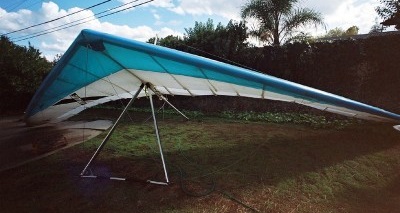
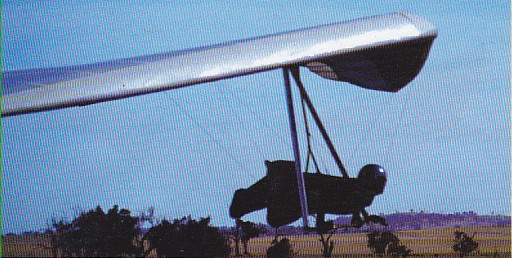
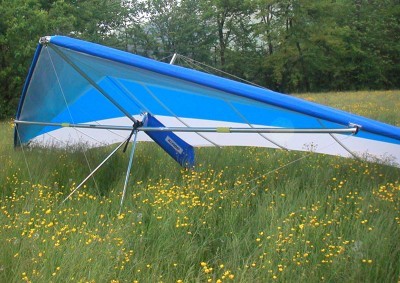
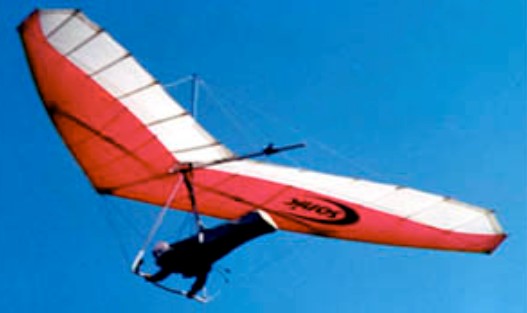
First appearing in 2000, the Sonic is for intermediate pilots.

The Sonic is a 60% double surface flex wing with round down tubes and a padded speed bar. The frame is made with Moyes custom seamless 6061T6 aluminium tubing which possesses excellent flex characteristics for maximum strength. The SONIC also boasts Moyes renown neutral static balance, granting the pilot greater ground handling control. In addition, the SONIC’s slow speed handling properties allow the pilot to soar with minimum effort and maximum safety while aiding in trouble-free landings.
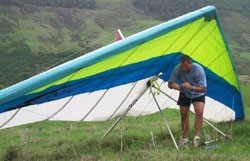
Known for being an excellent dune/ridge soaring wing and “first double surface” glider, some models add a VG system. Described as easy to take off and land, and a fantastic glider for the new student who wants a glider that they can grow into.
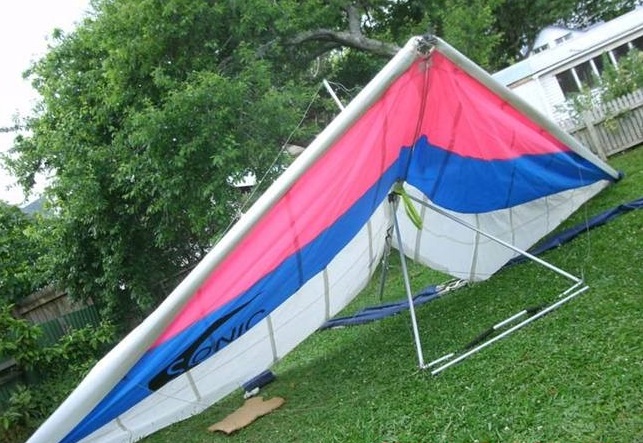
2002 Moyes Sonic 190

Sonic 165
Area: 15.3 sq.m (165 sq.ft.)
Span: 9.3 m (30.5 ft)
Nose Angle: 120 degrees
Aspect Ratio: 5.6
Glider Weight: 26 kgs (57 lbs)
Optimal Pilot Weight: 75 kgs (165 lbs)
Hook-In-Weight: 54-100 kgs (120-220 lbs)
Packed Length: 5540 mm (18.2 ft)
Packed Length – Short: 3920 mm (12.9 ft)
Centre of Gravity (Front of Keel): 1640 mm (5.38 ft)
Number of Battens Top: 15
Number of Battens Bottom: 4
VNE: 74 kph (46 mph)
VA: 69 kph (43 mph)
Trim Speed: 32 kph (20 mph)
Stall Speed: 24 kph (15 mph)
Maximum Speed: 72 kph (45 mph)
Best Glide Speed: 43 kph (27 mph)
Best Glide Angle: 9:1

Sonic 190
Area: 17.7 sq.m (190 sq.ft.)
Span: 10 m (32.8 ft)
Nose Angle: 120 degrees
Aspect Ratio: 5.6
Glider Weight: 29 kgs (64 lbs)
Optimal Pilot Weight: 90 kgs (198 lbs)
Hook-In-Weight: 73-109 kgs (160-240 lbs)
Packed Length: 6400 mm (21 ft)
Packed Length – Short: 4260 mm (14 ft)
Centre of Gravity (Front of Keel): 1680 mm (5.51 ft)
Number of Battens Top: 17
Number of Battens Bottom: 6
VNE: 74 kph (46 mph)
VA: 69 kph (43 mph)
Trim Speed: 32 kph (20 mph)
Stall Speed: 23 kph (14 mph)
Maximum Speed: 72 kph (45 mph)
Best Glide Speed: 43 kph (27 mph)
Best Glide Angle: 9:1
Moyes Max

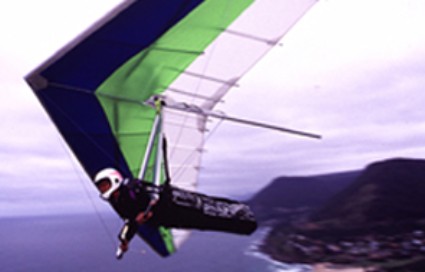
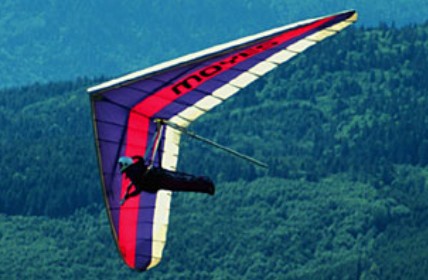
When Enterprise Wings was wound up it appears the Enterprise Wings “Rage” plans were sold/given to Moyes and became the Moyes Max. The Moyes Max single-place hang glider was designed and produced by Moyes Delta Gliders of Botany, New South Wales, Australia, in the mid-2000s. When it was available the aircraft was supplied complete and ready-to-fly.

The Max was developed as an intermediate-level hang glider, incorporating a variable geometry system. The Max is made from aluminum tubing, with the 70% double-surface wing covered in Dacron sailcloth. Available in only one size, the Max 157, its 9.82 m (32.2 ft) span wing is cable braced from a single kingpost.

The circa 1998 MAX has been designed for the recreational pilot who wants to enjoy the relaxing qualities of flight but still demands a high performance wing. By incorporating a variable geometry system the MAX has been designed to provide a combination of easy handling and high performance glide.

Intermediate pilots flying the Moyes MAX will enjoy the versatility of a tunable wing that is easy to control during take off and landings.

The MAX also exhibits excellent low speed performance which enables it to climb easier while thermalling. Whether in soaring or in cross country flight, the MAX is the all purpose glider.

The Max is not a hands-off glider. It is roll unstable and care is needed when landing transitioning from the basebar to the uprights, or it will climb unexpectedly. Also needs an aggressive flair with hands about shoulder height, as the manual states as it comes in almpost as quick as an advanced glider. Once you consider these techniques its all round a very safe and fun glider to fly.

MAX 157
Wingspan: 9.82 m (32 ft 3 in)
Wing area: 14.5 sq.m (156 sq ft)
Aspect ratio: 6.6:1
Empty weight: 26 kg
Gross weight: 140 kg (309 lb)
Pilot hook-in weight: 50-95 kg
Nose angle: 125°
Number of battens: 18
Certification: DHV 2/USHGA

Moyes SX / Super Xtralite

SX Super Xtralite

As well as user-friendly features such as smaller diameter uprights for more comfort and grip control on take-offs and landing, and redesigned aerodynamic tip leavers which make tensioning easier, the 1993 SX is the high performance glider for the recreational pilot.

SX

Towing the SX pitch pressures are light and roll is standard giving great feedback. The SX is underated on the whole and is a stable and predictable glider. The VG is very stiff so apply some sailkote to the pulleys and it will free it up. The best way to fix the VG line is to use metal ball-bearing pulley from patio sliding glass doors. It makes it much smoother to pull.

The 1996 advanced Moyes Super Xtralite builds upon the successful plan frorm of the Xtralite while incorporating the sail design advances made by the CSX.

Experience
Last 100 hours been flying a Super Xtralite, which is great. The only complaint I have, I can’t keep up with the others when gliding at speed.
Mr. Green

Not exactly known for its “light weight”, the Extralite is however known as a fine wing. Aside from it’s weight, it is a no-surprises glider. It does what you expect, when you expect it. Also known as “a pleasure to fly”.

It yaws a little, bit slow in roll unless you pitch coordinate, then it is sweet. Great speed and energy retension. Tricky cross wind landing no trouble. Flares nice.

The XLT164 aerotows at 40mph well but requires a small amount of VB for Aerotow or will yaw above 45mph.

Xtralite 137
Wing area: 12.8 m²
Wing span: 9.85 m
Aspect ratio: 7.6
Hang glider weight: 31 kg
Minimum pilot weight: 59 kg
Maximum pilot weight: 110 kg
Minimum speed: 26 km/h
Maximum speed: 85 km/h
Max glide ratio speed: 42 km/h
Best glide angle: 13,02/1
Best sink rate: 180 fpm at 25mph
Packed length: 4.94 m
Packed length short: 3.75 m
Number of battens: 26
Nose angle: 127°

Xtralite 147
Wing area: 13.7 m²
Wing span: 10.3 m
Aspect ratio: 7.7
Hang glider weight: 33 kg
Minimum pilot weight: 72 kg
Maximum pilot weight: 113 kg
Minimum speed: 24 km/h
Maximum speed: 86.4 km/h
Max glide ratio speed: 42 km/h
Best glide angle: 13,02/1Packed length: 5.15 m
Packed length short: 3.75 m
Number of battens: 28
Nose angle: 127°

Xtralite 164
Wing area: 15.3 m²
Wing span: 10.8 m
Hang glider weight: 34 kg
Minimum pilot weight: 82 kg
Maximum pilot weight: 172 kg
Packed length: 5.5 m
Packed length short: 4.6 m
Number of battens: 28
Nose angle: 127°

Super Xtralite SX 2
Hang glider circa 1998.
Wing area: 11.8 sq.m
Pilot weight: 52-90 kg
Wing span: 9.15 m
Nose Angle: 127°
Aspect ratio: 7.1
Price (1998) £ 2999

Super Xtralite SX 3
Hang glider circa 1998.
Wing area: 12.8 sq.m
Wing span: 9.85 m
Certification: DHV
Pilot weight: 59-110 kg
Hang glider weight: 32 kg
Nose Angle: 127°
Aspect ratio: 7.6
Price (1998) £ 2999

Super Xtralite SX 4
Hang glider circa 1998.
Wing area: 13.5 sq.m
Certification: DHV 3
Pilot weight: 68-114 kg
Wing span: 10.1 m
Nose Angle: 127°
Aspect ratio: 7.6
Hang glider weight: 35 kg
Price (1998) £ 2999

Super Xtralite SX 5
Hang glider circa 1998.
Wing area: 14.2 sq.m
Certification: DHV 3
Pilot weight: 73-118 kg
Wing span: 10.26 m
Nose Angle: 127°
Aspect ratio: 7.7
Hang glider weight: 36 kg
Price (1998) £ 2999

Super Xtralite SX6
Wing area: 15.15 m²
Wing span: 10.61 m
Aspect ratio: 7.7
Hang glider weight: 37 kg
Minimum pilot weight: 85 kg
Maximum pilot weight: 127 kg
Nose angle: 127°

Moyes CSX

The Moyes CSX hang glider for advanced pilots first appeared in 1997.

On 12/02/1998 Rohan Holtkamp of Australia set a World Out-and-return distance record of 330.6 km at Eucla, Australia, in a Moyes Delta Gliders CSX-5.

CSX 3 137
A topless hang glider circa 1998.
Wing area: 12.8 sq.m
Certification: USHGA
Pilot weight: 52-90 kg
Wing span: 9.9 m
Nose Angle: 130 deg
Aspect ratio: 7.6

CSX 4 149
A topless hang glider circa 1998.
Wing area: 13.9 sq.m
Certification: DHV/USHGA
Pilot weight: 60-95 kg
Wing span: 10.1 m
Nose Angle: 130 deg
Aspect ratio: 7.6
Price (1998) £ 3750

CSX 5 153
A topless hang glider circa 1998.
Wing area: 14.2 sq.m
Certification: DHV/USHGA
Pilot weight: 65-105 kg
Wing span: 10.3 m
Nose Angle: 130 deg
Aspect ratio: 7.7
Price (1998) £ 3750

Moyes Mars / Icaro Mars

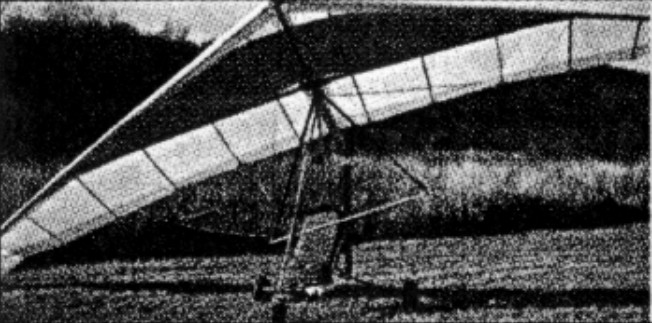
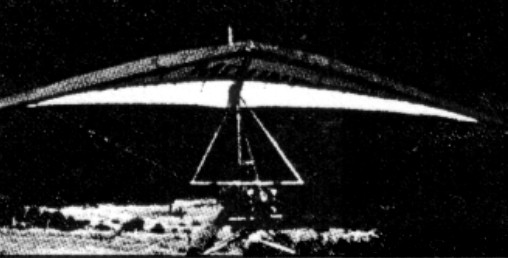
The 1984 Moyes Mars are very lightweight gliders with docile handling (even for a single surface glider). They have locked crossbars, predating the floating crossbar, and need to be flat rigged because of this. The hang straps slide to the front of the keel when de-rigged and are held to the crossbar junction by a strap when rigged. Failure to connect this strap can prove fatal.

Until 1991 ICARO sold, in Europe, more then 3,000 gliders (Moyes models like Mega II, Missile, Mars, GT, GTR and XS).

Icaro Mars

The Icaro Mars hang glider was from 1986 for novice pilots. Lovely simple glider, very easy take off and landing, great sink rate at trim. A little too heavy in roll for comfortable flying in rowdy conditions, otherwise a good first or fun glider.

Moyes Mars 150
Wing area: 14.6 m²
Wing span: 6.6 m
Hang glider weight: 22 kg
Nose angle: 120°

Moyes Mars 170
Wing area: 15.75 m²
Wing span: 8.84 m
Hang glider weight: 24 kg
Maximum flying weight: 122 kg
Nose angle: 125°

Icaro Mars 150
Wing area: 14.6 sq.m
Certification: DHV 1-2/SHV
Pilot weight: 50-80 kg
Wing span: 8.84 m
Nose Angle: 120 deg
Price (1998) £ 1190
Aspect ratio: 5.3
Hang glider weight: 19 kg
Packed length: 5.2 m
Packed length short: 3.3 m
Number of battens: 16

Icaro Mars 170
Wing area: 15.75 sq.m
Certification: DHV 1-2/SHV
Pilot weight: 60-110 kg
Wing span: 9.57 m
Nose Angle: 125 deg
Price (1998) £ 1190
Aspect ratio: 5.8
Hang glider weight: 23 kg
Packed length: 5.5 m
Packed length short: 3.75 m
Number of battens: 14

Moyes Delta Gliders / Moyes Microlights

Moyes Delta Gliders
Moyes Microlights
LiteFlite

Started in 1967, Moyes Delta Gliders was a Company solely dedicated to hang gliding.
1995: 2-4 Taylor St, Waverly, 2024 NSW, Australia.

1998: 1144 Bottany Road, NSW 2019 Botany, AUSTRALIA

2001: 200 Hillcrest Dr, Auburn, CA 95603, USA.
LiteFlite is owned and operated by Bill Moyes. Bill is based in Sydney at the Liteflite factory and frequently travels the world to sell and support his products. Bill has been flying and manufacturing aircraft since 1966 and has a long list of accolades to show for his efforts.

Bill Bennett and his partner Bill Moyes worked improvents into the Rogallo tow kites and Moyes towed to 1000 feet in 1967. After the towboat ran into a sand bar one day and the kite gently glided down, they began to deliberatelycut loose and experiment with untethered flight. This led the skiers up mountain sides where they made ski launches, sometimes gliding as far as five miles.

Bennett went to the USA in 1969 and began a tou of exhabitions which included flying over the Golden Gate Bridge to land on Alkatraz, and, on July 4th, circling the Statue of Liberty. American fliers were still using the Lilienthal-type parallel bars and hanging by their armpits but Bennett brought with him a trapeze style control bar and swinging seat.

After the success of his tour he settled down in LA and began to manufacture and promote hang gliders to the growing market in Southern California.

LiteFlite is a manufacturer of ultra light aircraft and hang gliding accessories. The main product from the LiteFlite stable is the Dragonfly, an ultra light aircraft most commonly used for towing hang gliders into the air. The Dragonfly has been in production since 1990 with approximately 100 aircraft being made, and is internationally recognised for its slow flying speed and great manoeuvrability.

Bill Moyes
Bob Bailey

2009: Moyes Microlghts Pty. Ltd, 173 Bronte Road, Waverly 2024, NSW, Australia.