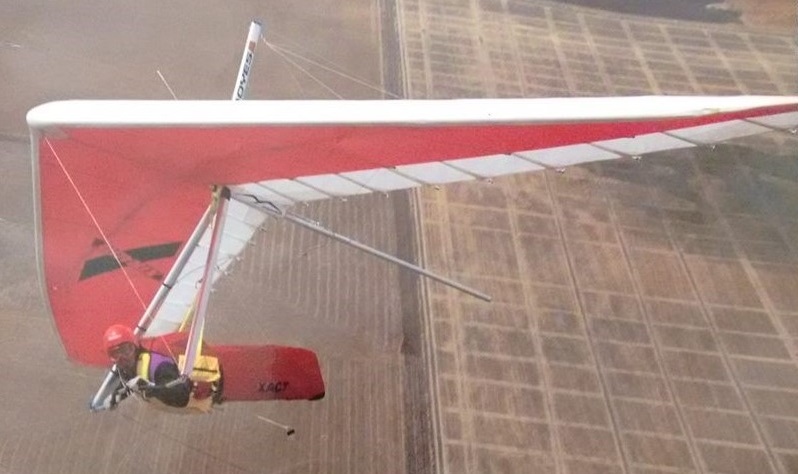
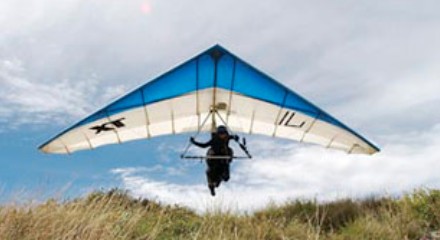
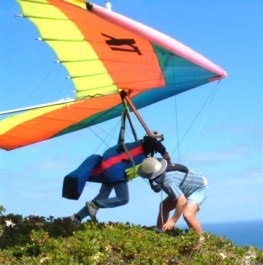
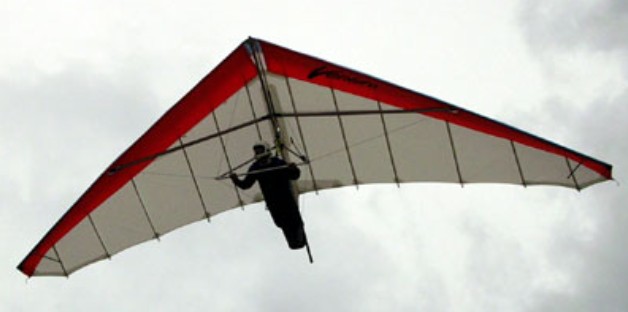
XL 150 Wing area: 14.6 m² Wing span: 8.8 m Hang glider weight: 22 kg Minimum pilot weight: 48 kg Maximum pilot weight: 70 kg Packed length: 5.2 m Packed length short: 3.3 m Number of battens: 14 Nose angle: 120°
XL 170 Wing area: 15.7 m² Wing span: 9.6 m Hang glider weight: 26 kg Minimum pilot weight: 60 kg Maximum pilot weight: 100 kg Packed length: 5.5 m Packed length short: 3.7 m Number of battens: 14 Nose angle: 125°
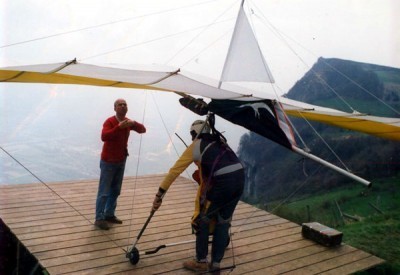
The 1984 Moyes GT were produced in two sizes, 170 sq.ft, and 190 sq.ft from about 1984 to 1986 when the GTR became Moyes’ production competition glider.
The GT launched easily and could self-launch in sometimes quite stong conditions without any incidents. The bar pressures were quite high in both roll and pitch and the high speed glide was not good. However it was a great gilder once locked into thermals and you could “make circles and push out” and rapidly find yourself at cloudbase. All done in great confidence knowing that the GT was a very stable strong glider. Like most Moyes gliders, quite bombproof, though rather heavy. Landings were fairly easy, the GT having a quite large flare window, though you did have to set up your approach well back as the roll response wasn’t quick.The GT was very forgiving in its stall behaviour.
There was also a slightly higher performance version, the 1985 GTS that had a factory VG and Mylar woven into the sailcloth.
GTR
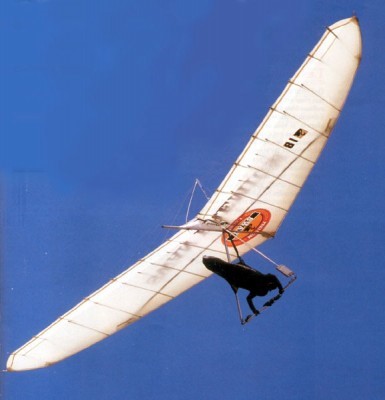
The GTR is regarded as a very good glider for newly qualified and recreational pilots with easy handling, safe and good glide angle. The wing tips at the end of the leading edges are tricky to set up. They were available as 148, 162, and 210.
There was in 1987 the Moyes GTR Race.
GT Race
The 1987 Moyes GTR TR was for advanced pilots.
Until 1991 ICARO sold, in Europe, more then 3,000 gliders (Moyes models like Mega II, Missile, Mars, GT, GTR and XS).
GTR Wing area: 13.8 m² Wing span: 9.75 m Aspect ratio: 6.9 Hang glider weight: 26 kg Nose angle: 130°
GTR Wing area: 15.1 m² Wing span: 10.4 m Aspect ratio: 7.1 Hang glider weight: 28 kg Nose angle: 130°
GTR Wing area: 16.3 m² Wing span: 10.9 m Aspect ratio: 7.2 Hang glider weight: 32 kg Nose angle: 130°
GTR Wing area: 19.6 m² Wing span: 10.9 m Aspect ratio: 6.17 Hang glider weight: 36 kg Nose angle: 130°
GTR Race 148 Wing area: 13.8 m² Aspect ratio: 6.9 Hang glider weight: 24 kg Nose angle: 130°
GTR Race 162 Wing area: 15.1 m² Wing span: 10.4 m Aspect ratio: 7.1 Hang glider weight: 33 kg Nose angle: 130°
GTR Race 175 Wing area: 16.3 m² Aspect ratio: 7.2 Hang glider weight: 29 kg Nose angle: 130°
GTR Race 210 Wing area: 19.6 m² Aspect ratio: 6.17 Hang glider weight: 34 kg
GTR TR Wing area: 15.1 m² Wing span: 10.4 m Aspect ratio: 7.1 Hang glider weight: 38 kg Nose angle: 130°
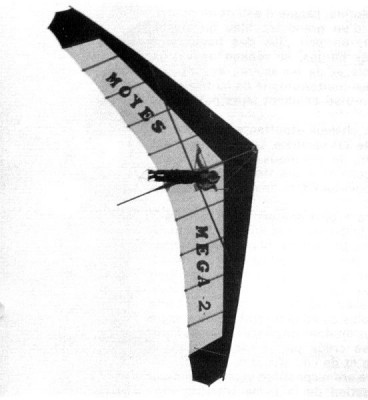
The frame for the Mega 2 sail was made by Ultra Sports near Brighton.
The Moyes Mega hang glider could by set up by standing it on the nose and letting the wings drop.
Until 1991 ICARO sold, in Europe, more then 3,000 gliders (Moyes models like Mega II, Missile, Mars, GT, GTR and XS).
Mega 2 Wing area: 16 m² Wing span: 9.8 m Aspect ratio: 6.2 Hang glider weight: 28 kg Minimum speed: 36 km/h Maximum speed: 73 km/h Max glide ratio (L/H): 8.5 Max glide ratio speed: 45 km/h Minimum sink rate: 1 m/s Number of battens: 15 Nose angle: 120°
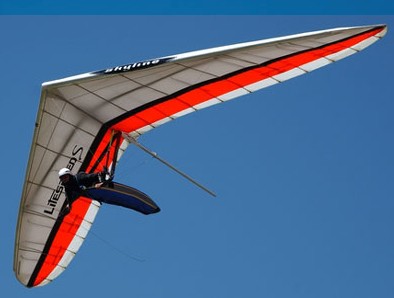
The king posted 1999 Litesport advanced hang glider performs similarly to a non-kingposted glider, but handles like an intermediate glider, making it suitable for many pilots whether competitive or recreational. Gerolf Heinrichs, the design engineer, has utilised many of the technical advantages of the Litespeed to design the thick leading edge tube, fipeglass wing tips, and the CAD/CAM design and manufactured sail, providing a clean and tight leading edge surface for high speed glides.
Litespeed
The Litesport uses a 7075 alloy frame with the 62mm (2 7/16in) leading edge with curved glass tips from the Litespeed. The Litesport larger diameter and stiffer tubing assists with leading edge wind deflection experienced at high speed as well as providing a sturdy mounting point for the dive strut. Carbon LEs are 1mm.
The cross bars are manufactured from a high-grade carbon fibre, which have been further enhanced for the new Litespeed. The carbon fibre spars are manufactured utilising yachting American Cup technology. Each carbon fibre spar is constructed of pre-impregnated fibre cloth and cured in a pre-heated oven at 120 degrees Celsius for 1.5 hours. The lay-up schedule incorporates unidirectional fibre, biaxial fibre, and woven cloth, which are laid in a sequence that optimises strength, flexibility and weight.
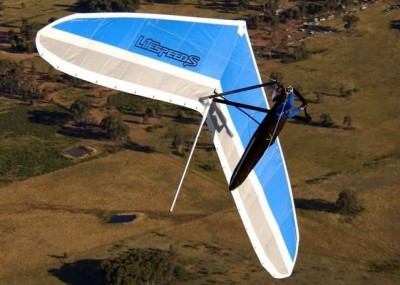
Bridging the gap between flex wings and rigid wings in terms of performance, the Moyes Litespeed provides high speed capabilities, sink rate and climb rate by being lighter than earlier models. The Moyes Litespeed still provides strength, durability and structural integrity, designed by Gerolf Heinrich, an Austrian team pilot and a certified aerodynamicist.
The sail is designed and manufactured with the same CAD/CAM system used for the Litespeed. The sail is precision cut and assembled, providing an extremely smooth and clean wing surface. The Litesport’s standard sail is constructed from Powerib (Dacron). Alternatively, a high performance PX10 Mylar sail is available. The Powerrib (Dacron) material provides a slightly more forgiving flight, whereas the Mylar sail, which is considerably stiffer and therefore provides higher performance. The Mylar sail is constructed with a PX20 leading edge and PX10 used on the remaining top surface. PX20 is a thicker Mylar material to the lighter PX10. While the Powerrib has traditionally been considered more durable, the new PX Mylar materials have advanced considerably and would now match the Powerrib in this area.
The battens of the Litespeed are also constructed from the 7075 alloy. The upper surface battens are contained within the sail using a spring-loaded retention device. This method provides easy installation of the battens while ensuring a clean trailing edge, further minimising drag. The under surface battens are installed through a small hole in the sail and are held in place by a recess in the batten sleeve.
The Litesport’s kingpost adopts a G-String compensation system, which requires only one luff line and a single dive stick to minimise drag and weight. As the VG is pulled on, the kingpost mounting point for the top side wires is lowered. The single luff line is secured to the top side wire instead of the kingpost as with conventional gliders.
The Litespeed with a kingpost is a slightly tuned down Litespeed with an emphasis on recreational flying. Flies very similarly to a Litespeed, but a bit more friendly especially in its landing characteristics (lands easily).
Kingposted Litesport
Another significant contributor to the diverse useable speed range on the Moyes Litespeed is the dive stick design. The dive sticks are attached and pivot from the leading edge, however the cable support for the dive stick is attached to the carbon fibre spar. With this design, when VG is off, the dive sticks are optimally positioned to provide low speed stability and handling. However, as VG is applied, the dive sticks will lower, flattening the trailing edge and providing a more aerodynamic profile to improve the gliders high speed capabilities. Despite the extra functionality, the VG system is extremely easy to operate.
The mounting point of the luff line is set 250mm forward of the trailing edge, providing a more reliable reflex action from the luff line. On most kingpost gliders when the luff lines apply pressure, the trailing edge curls up. With the Litesport’s system, the trailing edge is raised evenly, which has proved favourable during certification testing.
The diverse range provided by the VG and G-string systems are a key feature of the Moyes Litesport. When the VG is off, they provide a loose, flexible wing with a raised trailing edge for launches, landings and thermalling. When the VG is applied, they provide a tight, flat sail for high speed glides. The superior handling of the Litesport is also complemented by the low wing tip inertia due to the gliders low weight design. As less hardware is used in the wings (ie. One dive strut and one luff line only) the glider feels more responsive, easier to turn and even easier to straighten.
Glider stability is enhanced with a slightly increased sweep angle, inbuilt sail twist and advanced dive strut design. The positioning of the luff line in from the trailing edge also offers more reliable reflex when required.
The glider comes standard with aerodynamic uprights and a standard speed bar with rubber grips. The A-frame is made of an aerodynamic 7075 alloy tubing. The Litesport can be optionally fitted with a Fast base bar made of aerodynamic alloy tubing or the Zoom A-frame.
Gerolf Heinrichs won the last day at the Australian Open 2002 and Jon Durand Jnr won the entire Australian NSW State Championships 2002 flying the Litesport.
The third generation of the innovative Moyes Litespeed range is the Moyes Litespeed RS released in 2006. This glider has been specifically designed for racing and offers a larger wing span and higher aspect ratio providing enhanced glide and climb characteristics.
Litespeed RS
The Litespeed RS top sail surface is fully constructed from PX Mylar cloth and is standard as a full white surface with Titanium Oxide finish to reduce UV effects on the sail. An optional smoke inlaid sail is also available. The smoke inlaid sail uses a lighter semi-transparent dark Mylar cloth in the centre of the wing surrounded by white PX Mylar. In addition to being aesthetically pleasing, the smoke inlaid sail reduces the weight of the sail by approximately 1.5kgs. The under surface is made from Dacron, and is divided into three areas which can be customised to suit the colour requirements of the pilot.
The Moyes Litespeed RS is supplied standard with full aluminium leading edges, carbon fibre cross bars, standard aerofoil uprights and a round base bar. The glider flies extremely well in this configuration, however glider weight can be reduced and handling improved through the inclusion of an extensive range of performance options.
If using the standard uprights, an aluminium aerodynamic FAST base bar can be added. The preferred option is to upgrade the A-frame to the Moyes Zoom uprights and carbon fibre speed bar. The Moyes Zoom uprights feature an extremely aerodynamic profile constructed from extruded aluminium and presented with an electrically etched black finish. The Moyes Zoom carbon fibre speed bar uses the same aerodynamic profile as the Zoom uprights. The base bar is hand laid using pre-impregnated carbon fibre cloth and is pressure cured at a high temperature to ensure an attractive and durable finish.
A range of carbon fibre performance options are available when ordering the Moyes Litespeed RS. These include carbon fibre outer leading edges, carbon fibre inner leading edges, carbon fibre dive sticks, carbon batten set and carbon fibre leading edge inserts. Except for the carbon batten set, all these options are hand laid using pre-impregnated carbon fibre and pressure temperature cured to provide light yet strong components. The carbon fibre options provide a stiffer and lighter alternative to the standard aluminium components, contributing to the handling and performance of the glider.
Moyes Litespeed 4S
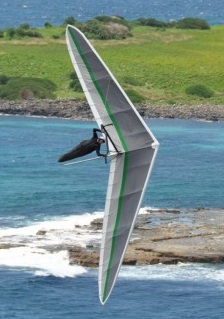
Moyes Litespeed “S”. The “S” refers to the sail cut design being applied to the Litespeed. Sail area has been removed from the chord or root of the sail and redistributed to the mid and outer wing. This results in an “S” shape along the trailing edge – or in more technical terms – a “super-elliptic” wing planform.
The sail cut is intended to counteract the typical mid-wing lift deficit of flexible hang gliders. The creation of a super elliptic wing planform in other words just compensates chord wise for the inevitable washout of flex wings – resulting in a better, more elliptic lift distribution. A wider mid wing and tip cord allows more of the outer wing to create lift along the wing span – the glider’s effective aspect ratio thus increases without additional span. The nominal gain in glide and climb is expected to be only about 1.5%, however a major improvement of the new Litespeed S comes much more from a significant improvement in slow speed manoeuvrability.
The 2003 Litespeed S can be flown 2-3km/h slower with this enhanced manoeuvrability becoming more apparent as more VG is engaged. Thermalling in light lift with up to 50-70% of VG, and very efficient dolphin style flying are the key advantages that top pilots will achieve with this new model.
In addition to the new cut sail, Moyes have also introduced a range of new high performance options including a carbon fibre outer leading edge, carbon fibre dive struts and a lighter redesigned carbon cross bar. All these options reduce the overall weight of the glider by about 2kg. With the weight reductions mostly towards the mid wing and tip, the wing’s roll inertia is reduced significantly. This leads to an amazing gain in handling, especially at slower glide and thermalling speeds, especially at tighter VG settings. Since overall measures of the wing frame have been kept unchanged, all these performance options are fully modular and interchangeable with the standard aluminium components so pilots can select the options that best suit their individual needs. A new size was also added to the Litespeed range. The new Moyes Litespeed 3.5 offers a smaller sail on a Litespeed 4 frame, offering the perfect glider to pilots in the 70kg weight range.
The Litespeed RX is a 2011 model, still for advanced pilots.
Litesport 3 Area: 13 sq.m / 140 sq.ft. Span: 9.4 m / 30.8 ft Nose Angle: 127 – 129 degrees Aspect Ratio: 6.8 Glider Weight: 30 kgs / 66 lbs Optimal Pilot Weight: 60 kgs / 132 lbs Hook-In-Weight: 65-85 kgs / 142-187 lbs Packed Length: 4900 mm / 16.1 ft Packed Length – Short: 3980 mm / 13.1 ft Centre of Gravity (Front of Keel): 1370 mm / 53.9 inches Number of Battens Top: 21 Number of Battens Bottom: 6 VNE: 85 kph / 53 mph VA: 74 kph / 46 mph Trim Speed: 34 kph / 21 mph Stall Speed: 26 kph / 16 mph Maximum Speed: 97 kph / 60 mph Best Glide Speed: 40 kph / 25 mph Best Glide Angle: 14:1 Glide Angle 10:1 Speed: 58 kph / 36 mph
Kingpost Litesport 3 Minimum pilot weight: 50 kg Maximum pilot weight: 70 kg
Litespeed 3 Area: 12.6 sq.m / 136 sq.ft. Span: 9.6 m / 31.5 ft Nose Angle: 130-132 degrees Aspect Ratio: 7.2 Glider Weight: 31.9 kgs / 70.4 lbs Optimal Pilot Weight: 65 kgs / 143 lbs Hook-In-Weight: 55-95kg kgs / 120-210 lbs Packed Length: 4845 mm / 15′ 11″ Packed Length – Short: 4200 mm / 13’9″ Centre of Gravity (Front of Keel): 1310 mm / 51.57″ Number of Battens Top: 21 Number of Battens Bottom: 6 VNE: 85 kph / 53 mph VA: 74 kph / 46 mph Trim Speed: 34 kph / 21 mph Stall Speed: 26 kph / 16 mph Maximum Speed: 124 kph / 77 mph Best Glide Speed: 45 kph / 28 mph Best Glide Angle: 15:1 Glide Angle 10:1: 69 kph / 43 mph
Litespeed 4 Area: 13.6 sq.m / 146 sq.ft. Span: 10 m / 32.8 ft Nose Angle: 130-132 degrees Aspect Ratio: 7.4 Glider Weight: 33.6 kgs / 74 lbs Optimal Pilot Weight: 75 kgs / 165 lbs Hook-In-Weight: 68-110 kgs / 150-240 lbs Packed Length: 4950 mm / 16’3″ Packed Length – Short: 4330 mm / 14’2″ Centre of Gravity (Front of Keel): 1363 mm / 53.66″ Number of Battens Top: 23 Number of Battens Bottom: 6 VNE: 85 kph / 53 mph VA: 74 kph / 46 mph VA: 74 kph / 46 mph Trim Speed: 34 kph / 21 mph Stall Speed: 26 kph / 16 mph Maximum Speed: 124 kph / 77 mph Best Glide Speed: 45 kph / 28 mph Best Glide Angle: 15:1 Glide Angle 10:1: 75 kph / 46 mph
Kingpost Litesport 4 Wing area: 13.7 m² Wing span: 9.7 m Aspect ratio: 6.84 Hang glider weight: 32 kg Minimum pilot weight: 68 kg Maximum pilot weight: 110 kg Minimum speed: 26 km/h Maximum speed: 97 km/h Max glide ratio (L/H): 14 Max glide ratio speed: 40 km/h Packed length: 4.95 m Packed length short: 4.33 Number of battens: 27 Nose angle: 127°
Litesport 4 Area: 13.8 sq.m / 149 sq.ft. Span: 9.6 m / 31.5 ft Nose Angle: 127 – 129 degrees Aspect Ratio: 6.7 Glider Weight: 31.8 kgs / 70 lbs Optimal Pilot Weight: 75 kgs / 165 lbs Hook-In-Weight: 68-109 kgs / 150-240 lbs Packed Length: 4950 mm / 16.2 ft Packed Length – Short: 4330 mm / 14.2 ft Centre of Gravity (Front of Keel): 1390 mm / 54.7 inches Number of Battens Top: 21 Number of Battens Bottom: 6 VNE: 85 kph / 53 mph VA: 74 kph / 46 mph Trim Speed: 34 kph / 21 mph Stall Speed: 26 kph / 16 mph Maximum Speed: 97 kph / 60 mph Best Glide Speed: 40 kph / 25 mph Best Glide Angle: 14:1 Glide Angle 10:1 Speed: 58 kph / 36 mph
Litespeed 5 Area: 14.5 sq.m / 156 sq.ft. Span: 10.4 m / 34 ft Nose Angle: 130-132 degrees Aspect Ratio: 7.5 Glider Weight: 34.5 kgs / 76 lbs Optimal Pilot Weight: 85 kgs / 187 lbs Hook-In-Weight: 75-120 kgs / 165-265 lbs Packed Length: 5150 mm / 16’11” Packed Length – Short: 4500 mm / 14’9″ Centre of Gravity (Front of Keel): 1370 mm / 51.94″ Number of Battens Top: 23 Number of Battens Bottom: 6 VNE: 85 kph / 53 mph Trim Speed: 34 kph / 21 mph Stall Speed: 26 kph / 16 mph Maximum Speed: 124 kph / 77 mph Best Glide Speed: 45 kph / 28 mph Best Glide Angle: 15:1 Glide Angle 10:1: 73 kph / 45 mph
Kingpost Litesport 5 Wing area: 14.9 m² Wing span: 10 m Aspect ratio: 6.7 Hang glider weight: 32 kg Minimum pilot weight: 79 kg Maximum pilot weight: 129 kg Minimum speed: 24 km/h Maximum speed: 97 km/h Max glide ratio (L/H): 14 Max glide ratio speed: 47 km/h Packed length: 5.15 m Packed length short: 4.5 Number of battens: 27 Nose angle: 127°
Litespeed RS 3.5 Area: 13.7 sq.m (147 sq.ft.) Span: 10.3 m (33.7 ft) Nose Angle: 130-132 degrees Aspect Ratio: 7.7 Glider Weight: 33 kgs (73 lbs) Optimal Pilot Weight: 72 kgs (159 lbs) Hook-In-Weight: 68-109 kgs (150-240 lbs) Packed Length: 5090 mm (16.7 ft) Packed Length – Short: 4500 mm (14.8 ft) Centre of Gravity (Front of Keel): 1343 mm (52.9 inches) Number of Battens Top: 23 Number of Battens Bottom: 6 VNE: 85 kph (53 mph) VA: 74 kph (46 mph) Trim Speed: 34 kph (21 mph) Stall Speed: 26 kph (16 mph) Maximum Speed: 124 kph (77 mph) Best Glide Speed: 45 kph (28 mph) Best Glide Angle: 15:1 Glide Angle 10:1: 74 kph (46 mph)
Litespeed RS 4 Area: 14.1 sq.m (152 sq.ft.) Span: 10.4 m (34.1 ft) Nose Angle: 130-132 degrees Aspect Ratio: 7.7 Glider Weight: 33.5 kgs (74 lbs) Optimal Pilot Weight: 78 kgs (172 lbs) Hook-In-Weight: 68-109 kgs (150-240 lbs) Packed Length: 5150 mm (16.9 ft) Packed Length – Short: 4500 mm (14.8 ft) Centre of Gravity (Front of Keel): 1353 mm (53.3 inches) Number of Battens Top: 23 Number of Battens Bottom: 6 VNE: 85 kph (53 mph) VA: 74 kph (46 mph) Trim Speed: 34 kph (21 mph) Stall Speed: 26 kph (16 mph) Maximum Speed: 124 kph (77 mph) Best Glide Speed: 45 kph (28 mph) Best Glide Angle: 15:1 Glide Angle 10:1: 74 kph (46 mph)
Litespeed S 3 Area: 12.9 sq.m / 139 sq.ft. Span: 9.7 m / 31.8 ft Nose Angle: 130-132 degrees Aspect Ratio: 7.3 Glider Weight: 32 kgs / 71 lbs Optimal Pilot Weight: 55 kgs / 121 lbs Hook-In-Weight: 60-80 kgs / 132-176 lbs Packed Length: 4900 mm / 16.1 ft Packed Length – Short: 3800 mm / 12.5 ft Centre of Gravity (Front of Keel): 1310 mm / 51.6 inches Number of Battens Top: 21 Number of Battens Bottom: 6 VNE: 85 kph / 53 mph VA: 74 kph / 46 mph Trim Speed: 34 kph / 21 mph Stall Speed: 26 kph / 16 mph Maximum Speed: 124 kph / 77 mph Best Glide Speed: 45 kph / 28 mph Best Glide Angle: 15:1 Glide Angle 10:1: 74 kph / 46 mph
Litespeed S 3.5 Area: 13.6 sq.m / 146 sq.ft. Span: 10 m / 32.8 ft Nose Angle: 130-132 degrees Aspect Ratio: 7.5 Glider Weight: 33.6 kgs / 74 lbs Optimal Pilot Weight: 68 kgs / 150 lbs Hook-In-Weight: 68-109 kgs / 150-240 lbs Packed Length: 4950 mm / 16.2 ft Packed Length – Short: 4330 mm / 14.2 ft Centre of Gravity (Front of Keel): 1343 mm / 52.9 inches Number of Battens Top: 23 Number of Battens Bottom: 6 VNE: 85 kph / 53 mph VA: 74 kph / 46 mph Trim Speed: 34 kph / 21 mph Stall Speed: 26 kph / 16 mph Maximum Speed: 124 kph / 77 mph Best Glide Speed: 45 kph / 28 mph Best Glide Angle: 15:1 Glide Angle 10:1: 74 kph / 46 mph
Litespeed S 4 Area: 14 sq.m / 151 sq.ft. Span: 10 m / 32.8 ft Nose Angle: 130-132 degrees Aspect Ratio: 7.3 Glider Weight: 33.6 kgs / 74 lbs Optimal Pilot Weight: 75 kgs / 165 lbs Hook-In-Weight: 68-109 kgs / 150-240 lbs Packed Length: 4950 mm / 16.2 ft Packed Length – Short: 4330 mm / 14.2 ft Centre of Gravity (Front of Keel): 1353 mm / 53.3 inches Number of Battens Top: 23 Number of Battens Bottom: 6 VNE: 85 kph / 53 mph VA: 74 kph / 46 mph Trim Speed: 34 kph / 21 mph Stall Speed: 26 kph / 16 mph Maximum Speed: 124 kph / 77 mph Best Glide Speed: 45 kph / 28 mph Best Glide Angle: 15:1 Glide Angle 10:1: 74 kph / 46 mph
Litespeed S 4.5 Area: 14.4 sq.m / 155 sq.ft. Span: 10.4 m / 34 ft Nose Angle: 130-132 degrees Aspect Ratio: 7.6 Glider Weight: 34.5 kgs / 76 lbs Optimal Pilot Weight: 85 kgs / 187 lbs Hook-In-Weight: 75-120 kgs / 165-265 lbs Packed Length: 5150 mm / 16.9 ft Packed Length – Short: 4500 mm / 14.8 ft Centre of Gravity (Front of Keel): 1360 mm / 53.5 inches Number of Battens Top: 23 Number of Battens Bottom: 6 VNE: 85 kph / 53 mph VA: 74 kph / 46 mph Trim Speed: 34 kph / 21 mph Stall Speed: 26 kph / 16 mph Maximum Speed: 124 kph / 77 mph Best Glide Speed: 45 kph / 28 mph Best Glide Angle: 15:1 Glide Angle 10:1: 72 kph / 45 mph
Litespeed S 5 Area: 14.8 sq.m / 159 sq.ft. Span: 10.4 m / 34 ft Nose Angle: 130-132 degrees Aspect Ratio: 7.4 Glider Weight: 34.5 kgs / 76 lbs Optimal Pilot Weight: 90 kgs / 198 lbs Hook-In-Weight: 75-120 kgs / 165-265 lbs Packed Length: 5150 mm / 16.9 ft Packed Length – Short: 4500 mm / 14.8 ft Centre of Gravity (Front of Keel): 1370 mm / 53.9 inches Number of Battens Top: 23 Number of Battens Bottom: 6 VNE: 85 kph / 53 mph VA: 74 kph / 46 mph Trim Speed: 34 kph / 21 mph Stall Speed: 26 kph / 16 mph Maximum Speed: 124 kph / 77 mph Best Glide Speed: 45 kph / 28 mph Best Glide Angle: 15:1 Glide Angle 10:1: 72 kph / 45 mph
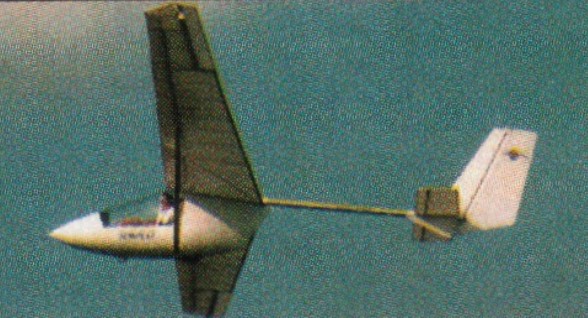
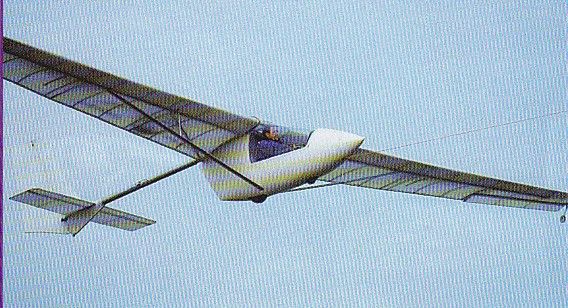
Designed by Bobby Bailey, the Tempest is an FAI Class 4 light sailplane circa 1998, using tube and fabric construction, and composite cockpit. It can be dismantled into three parts for transport. The semi-enclosed fiberglass cockpit has a canopy that hinges to one side.
Launchable by towing from an UL, it was availablein the US as a kit for $10,000 or as a completed sailplane for $12,500, through Quest Air Soaring Canter, 6548 Groveland Airport Road, Groveland, Florida 34736.
Tempest Wing span: 13 m / 42 feet Wing area: 14 sq.m / 150 square feet Height: 5 ft Length: 21 ft Aspect ratio: 12:1 MTOW: 400 lb Empty weight: 100 kg / 220 lb Vzmin: 0.8 ẚ 40 m/sec Stalls: 29 km/h Speed max: 80 mph Glide Ratio: 25 @ 60 kph L/D: 24 @ 68 km/h L/D ratio: 5:1 Min sink: 170 fpm Seats: 1 Landing gear: single wheel Price (1998) $ 10500 (kit)
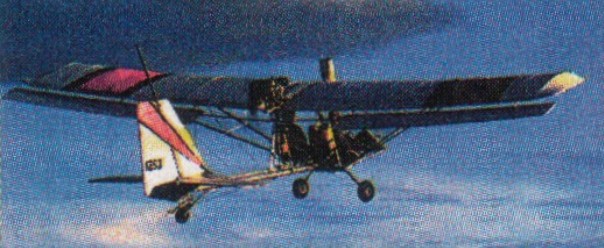
The main product from the LiteFlite stable is the Dragonfly. The Dragonfly is a three axis ultra light aircraft which takes off in a reasonably small area and lands in a reasonably small area. It has dual seating and dual controls.
Due to the slow flying speed, the Dragonfly is a favoured hang gliding towing aircraft and has been sold to 12 different countries. The Dragonfly provides a low cost form of aviation which can be flown almost anywhere and is really easy to learn.
The Dragonfly has been in production since 1990 and during this period, in excess of 100 aircraft have been manufactured.
The Dragonfly is constructed from 6061 grade aluminium tubing, is structurally supported by stainless steel wire and has fabric covered wings. It is powered by either a two stroke or four stroke engine. It has a range of options available depending upon your requirements and financial constraints.
Engine: Rotax 582, 65 hp Overall Length: 5.974 m / 19 ft 6 in Maximum Height: 2.316 m / 7 ft 6 in Wing Span: 10.363 m / 34 ft Wing Area: 15.8 sq.m / 170 sq.ft MTOW: 385 kg Gross Weight: 800 lb Empty Weight: 150 kg / 330 lb Fuel cap: 6 USG / 20 lt VNE: 57 knots / 100 kph VC at 5200rpm: 40 knots / 60 kph Stall: 14-17 kt Normal Landing Approach Speed: 26 kt ROC: 1400 fpm /16 m/s Take-off dist: 50 ft Take-Off Distance (To 50ft): 195 feet Landing dist: 100 ft Landing Distance (From 50ft): 363 feet Range: 100 sm Fuel consumption: 16 lt/hr Service ceiling: 16,000 ft Seats: 2 Kit price (1998): US$15,700 Landing gear: tail wheel
The 1990 Intermediate Moyes XT 165 is reputed to be a good first glider, very safe, stable, with better performance then a floater. The 70 % double surface wing has Mylar in the leading edge.
The XT145 has a very low stall speed and excellent flare authority across the full recommended wing loading area. Easy to launch because the glider with its positive handling at lower air speeds gives maximum control and safety. The quick roll response and incredible sink rate make for easy thermalling, and the Moyes XT145 perfectly compliments the Moyes Sonic, and extends the range of available gliders for lighter pilots.
It is recommended to check batten profiles periodically and “flip” leading edge mylar every 20 hours or so.
XT145 Hang glider circa 1998. Area: 13.5 sq.m / 145 sq.ft. Span: 8.4 m / 27.5 ft Nose Angle: 115 degrees Aspect Ratio: 5.21 Glider Weight: 24 kgs / 53 lbs Optimal Pilot Weight: 60 kgs / 132 lbs Hook-In-Weight: 45-91 kgs / 100-200 lbs Packed Length: 5200 mm / 17.1 ft Packed Length – Short: 3700 mm / 12.1 ft Centre of Gravity (Front of Keel): 1520 mm / 4.99 ft Number of Battens Top: 15 Number of Battens Bottom: 6 VNE: 74 kph / 46 mph VA: 69 kph / 43 mph Trim Speed: 32 kph / 20 mph Stall Speed: 26 kph / 16 mph Maximum Speed: 64 kph / 40 mph Best Glide Speed: 40 kph / 25 mph Best Glide Angle: 8:1 Certification: DHV 2/USHGA Price (1998) £ 2195
XT-165 Hang glider circa 1998. Wing area: 15.3 sq.m Certification: DHV 1-2/USHGA Pilot weight: 63-118 kg Wing span: 9.15 m Nose Angle: 115 deg Number of battens: 22 Glider Weight: 30 kgs Packed length: 5.4 m Aspect ratio: 5.45 Price (1998) £ 2195
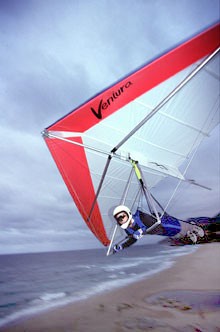
The Moyes Ventura is aimed at those pilots entering the sport of hang gliding as well as the old stalwarts who want a glider to enjoy the aesthetic aspects of flight.
The Ventura is an easy glider to fly, impossible to spin, and possesses all the qualities of relaxng, responsive and enjoyable glider with a window of performance when needed. The Ventura is available with mylar inserts and a speedbar.
Ventura 170 Hang glider circa 1998. Wing area: 15.8 sq.m Hang glider weight: 22 kg Certification: USHGA Pilot weight: 44-84 kg Wing span: 9.3 m Nose Angle: 118 deg Number of battens: 11 Aspect ratio: 5.45 Price (1998) £ 1995
Ventura 190 Hang glider circa 1998. Wing area: 17.6 sq.m Hang glider weight: 24 kg Certification: USHGA Pilot weight: 22-110 kg Wing span: 10.1 m Nose Angle: 118 deg Number of battens: 13 Aspect ratio: 5.7 Price (1998) £ 1995