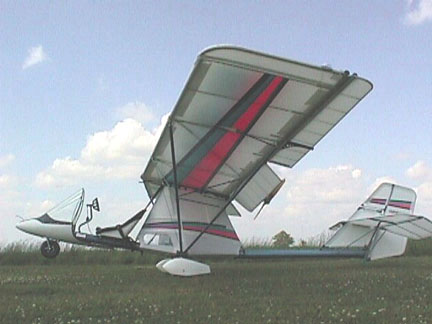
Quicksilver GT 400 / X-2 / Esprit

The GT400S was originally known as the X-2 and later Esprit.

The GT 400 was the first certified ultralight type one seat aircraft in the USA. The kit is true assembly style.

Features include;
Spring loaded steerable nose wheel
Four position flaps
58 mph cruise
Airspeed indicator
Quick set-up and breakdown
Adjustable pilot seat
Delivered in easy-to-assemble-kit
Optional 50 hp 503 Rotax engine.

The GT 400 Special Edition has a GT 400 R447B kit, small nose fairing and windshield, and removable 5 USgallon fuel tank

Standard configuration-strut braced wing
Engine: Rotax 447 w/Gear drive, 40 hp
TBO: 250 hrs
Propeller: 60″ x 32″
Fuel Capacity: 5 gal
Length: 237 in
Height: 78 in
Wingspan: 30 ft
Wing area: 146 sq ft
Wing loading: 3.9 lb/sq ft
Power loading: 14.25 lb/hp
Seats: 1
Max takeoff weight: 570 lbs
Empty weight: 276 lb
Useful load: 294 lb
Payload w/full fuel: 264 lb
Takeoff distance, ground roll: 75 ft
Takeoff distance, 50 ft obstacle: 215 ft
Rate of climb: 1000 fpm
Max level speed, sea level: 61 mph
Landing distance, 50 ft obstacle: 350 ft
Landing distance, ground roll: 100 ft
Glide Ratio: 7:1
Minimum sink rate: 450 fpm
Cruise 55% power (rpm/mph): 5300/51
Cruise 65% power (rpm/mph): 5600/55
Cruise 75% power (rpm/mph): 5900/58
Cruise 100% power (rpm/mph): 6500/61
Fuel flow 55% power (gpm/mi): 3.0/85
Fuel flow 65% power (gpm/mi): 3.5/78
Fuel flow 75% power (gpm/mi): 4.0/72
Fuel flow 100% power (gpm/mi): 4.5/67
Vx (Best angle of climb): 32 mph
Vy (Best rate of climb): 41 mph
Va (Design maneuvering): 61 mph
Vne (Never exceed): 74 mph
Vs1 (Stall, power off): 29 mph
Vs0 (Stall, flaps down, power off): 27 mph
Landing approach speed: 40 mph
Cockpit width: 29 in

Optional configuration-strut braced wing
Engine: Rotax 503 w/Gear drive, 50 hp
TBO: 250 hrs
Propeller: 68″ x 32″
Fuel Capacity: 5 gal
Length: 238 in
Height: 78 in
Wingspan: 30 ft
Wing area: 146 sq ft
Wing loading: 3.9 lb/sq ft
Power loading: 11.4 lb/hp
Seats: 1
Max takeoff weight: 570 lb
Empty weight: 306 lb
Useful load: 264 lb
Payload w/full fuel: 234 lb
Takeoff distance, ground roll: 65 ft
Takeoff distance, 50 ft obstacle: 169 ft
Rate of climb: 1450 fpm
Max level speed, sea level: 78 mph
Landing distance, 50 ft obstacle: 350 ft
Landing distance, ground roll: 100 ft
Glide Ratio: 7.5:1
Minimum sink rate: 450 fpm
Cruise 55% power (rpm/mph): 5300/64
Cruise 65% power (rpm/mph): 5600/68
Cruise 75% power (rpm/mph): 5900/72
Cruise 100% power (rpm/mph): 6500/78
Fuel flow 55% power (gph/mi): 3.67/87
Fuel flow 65% power (gph/mi): 4.33/79
Fuel flow 75% power (gph/mi): 5.00/72
Fuel flow 100% power (gph/mi): 6.67/58
Vx (Best angle of climb): 32 mph
Vy (Best rate of climb): 41 mph
Va (Design maneuvering): 61 mph
Vne (Never exceed): 74 mph
Vs1 (Stall, power off): 29 mph
Vs0 (Stall, flaps down, power off): 27 mph
Landing approach speed: 40 mph
Cockpit width: 29 in

Quicksilver Mfg GT-400
Engine: Rotax 447, 40 hp
HP range: 40-50
Height: 6.75 ft
Length: 19.75 ft
Wing span: 30 ft
Wing area: 146 sq.ft
Weight empty: 276 lb
Gross: 570 lb
Fuel cap: 5 USG
Speed max: 61 mph
Cruise: 58 mph
Range: 78 sm
Stall: 27 mph
ROC: 1000 fpm
Take-off dist: 80 ft
Landing dist: 100 ft
Service ceiling: 12,000 ft
Seats: 1
Landing gear: nose wheel
Cockpit width: 29 in

GT400S
Engine: Rotax 503, 46 hp
Wing span: 9.14m
Length: 6.2m
Empty wt: 126 kg
MAUW: 236 kg
Range: 80 km
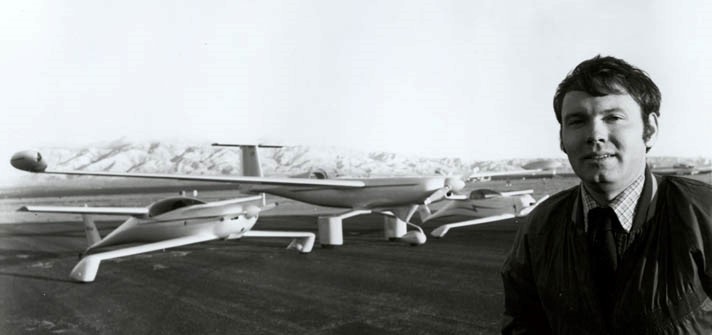
Quicksilver Enterprises / Quicksilver Aircraft / Quicksilver Manufacturing

Successor to Eipper, and has offered kits to construct a range of trike microlights in the MX Sprint and Sport series, plus the single-seat GT 400 pod-and-boom microlight and two-seat GT 500, the latter having become the first homebuilt to be certificated under new FAA regulations in the U.S.A.

1997: Quicksilver Aircraft, 27495 Diaz Rd, Temecula, CA 92590, USA.
2010: Quicksilver Mfg, 42214 Sarah Way, Temecula, CA 92590, USA.

Around 2011, Escutia, a Mexican national who shares his time between his home in Guadalahara, Mexico, and Temecula, took over the operation. Escutia felt that the amateur-built category was a barrier to sales, so he embarked on a journey to bring the 2S to LSA certification. About 18 months later, he had the first light-sport airworthiness certificate for the S2SE in hand.

Quickie Aircraft Free Ranger

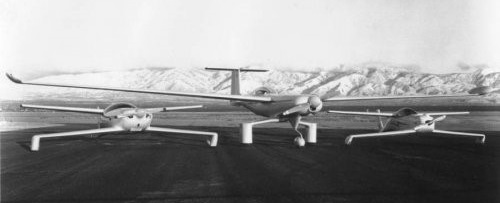
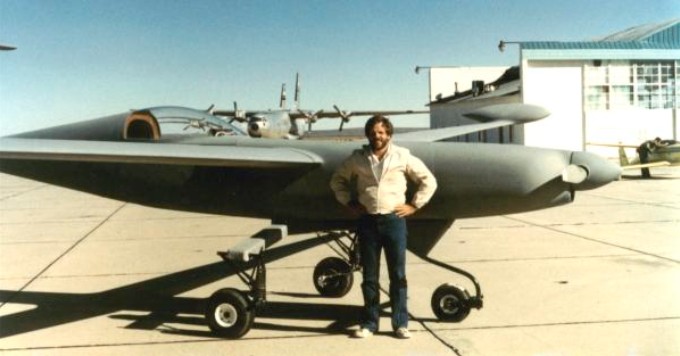
Himself an aeronautical engineer, Jewett designed, and the Quickie Aircraft shop staff started building, an airplane called Big Bird in which Jewett intended to break the absolute distance record for un-refueled airplanes, set in 1962 at 12,519 miles by a B-52. Burt Rutan thought ill of the design, and after he fell out with Jewett and Sheehan, the principals of Quickie Aircraft and RAF repeatedly sniped at each other in unseemly ways on the ramp at Mojave and in the aviation press.

After a hostile encounter on the airport camp with Jewett and Sheehan, Dick Rutan proposed to Burt that they do Jewett one better and build an airplane that could fly un-refuelled all the way around the world. The Rutan brothers soon made a public announcement of their goal, reducing Big Bird to insignificance even before it had flown. Stung, Jewett quickly announced the same goal for Big Bird — which he rechristened Free Enterprise [N82X] — though his airplane was not really equal to the task. Mike Huffman was brought to Mojave by Quickie to help finish the design and construction. His contributions included the unique landing gear dolly, which was designed to be jettisoned after the airplane took off on its record-attempting flight. At the completion of the flight, the airplane was to be landed on a wooden skid on the bottom of the aircraft.

Big Bird was an updated version of the concept used by Jim Bede’s BD-2 Love One, also designed for a global flight: both aircraft use modified sailplane wings, but Big Bird is rather smaller and less powerful than the BD-2.

Quickie’s aircraft was based on the bonded-aluminium wings of a Laister Nugget sailplane, modified with tip and integral fuel tanks and mated to a new glassfibre/foam fuselage and T-tail.

Powered by a Polish-built Pezetel-Franklin 135 horsepower PZL-F 4A-235 four-cylinder engine, but designed to carry only one person – the pilot – the plane featured a full autopilot system, a specially developed S-Tec AFCS with a three-axis alarm system to warn of excursions from track, with alarms that enabled the pilot to sleep for short periods, while being supplied oxygen from a cryogenic liquid oxygen, rather than the typical gaseous oxygen. Jewett planned to carry 10 gallons of drinking water and follow a low-residue diet similar to that used by astronauts.

The “Big Bird” carried 350 gallons of fuel, and the planned world flight was slated to both begin & end in Houston, Texas. A lightweight Litton Omega/VLF navigation system and lightweight weather warning equipment were also installed, helping the plane cruise at 24,000 feet at 175 knots.

On July 2nd, 1982, Tom Jewett took “Big Bird” on a test flight. But immediately after takeoff, Jewett radioed the chase plane that he had some minor problem & was going to land. After turning final, about 200 feet above the ground, he reported “Something broke, I’m going in…” and the aircraft crashed at a slight nose down attitude a half mile short of the end of the runway.

The NTSB investigation found that the continuity of flight control was established & no evidence of preimpact flight control was evident. Unfortunately, there were no drawings or design data available for the aircraft, and its fuselage & empennage had not been static tested.

The investigators also concluded that a break at the rear of the cockpit appeared to be in an area of poor design and the composite structure behind the cockpit rails looked questionable in its cross-sectional area to handle the bending loads in this area. The NTSB determined that an in-flight separation of the fuselage at the rear of the cockpit by as much as a single inch could have placed the stabilizer in a three-degree nose up pitch angle rendering the elevator insufficient to hold the nose up.

Quickie Aircraft Q2

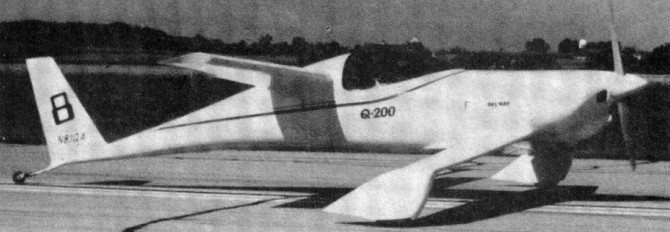
The Q2 is a two-place, side-by-side version of the composite-construction Quickie-canard-platform aircraft. It is designed for high performance on low horsepower with high efficiency. The proven Revmaster 2100-D is used. Cruise for the Q2 is 170 mph at 8000 feet burning 3.8 gph for 44 mpg. According to its designers, the Q2’s equivalent flat plate area is now 1.18, cleaner than the Glasair or the original VW-powered VariEze prototype. Like the Quickie, the Q2 is built from basic foam and epoxy/fiberglass composite construction and is similar in configuration. The fuselage is pre-molded in four pieces to facilitate construction.

Designed in 1980. Price 1982: $9,595 (Excludes paint and battery). Won 1982 Cafe 250 race.

Units delivered to June 1981: 225.

Gallery

Engine: Revmaster 2100, 64 hp
MTOW: 1,000 lb
Empty wt: 475 lb
Wingspan 16’8”
Wing area: 67 sq.ft
Top speed: 180 mph
Cruise speed: 160 mph
ROC: 800 fpm
Takeoff run 500 ft
Seats: 2
Range with res: 650 miles

Quickie Aircraft Quickie

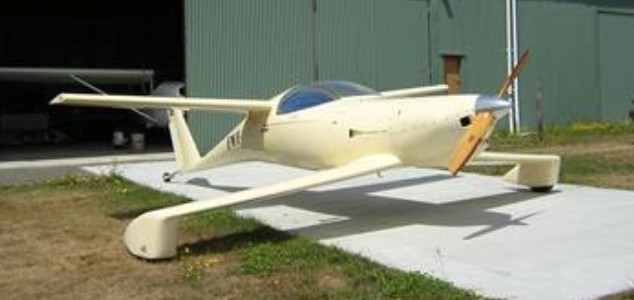
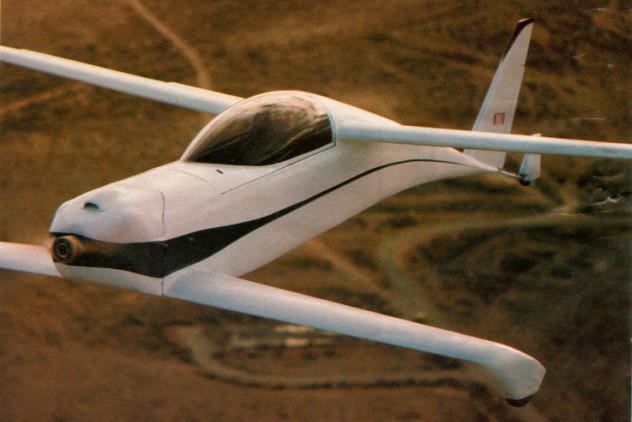
In 1974, Tom Jewett and Gene Sheehan began designing an airplane that would provide “more flying enjoyment for less money” than other homebuilt aircraft designs. Burt Rutan assisted Jewett and Sheehan in the design work and the first Quickie was finished, tested in flight, and ready for a public introduction by April 1978.

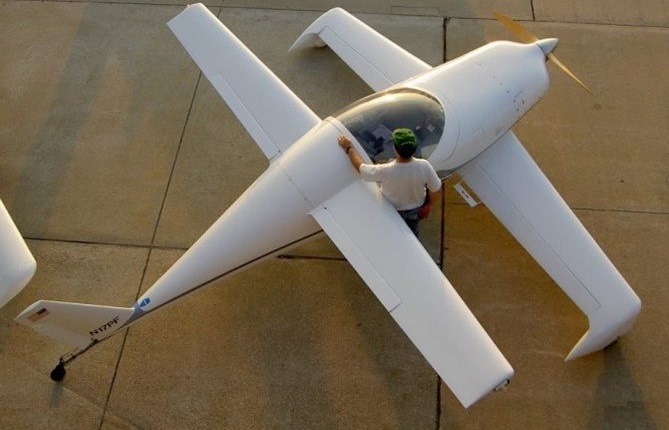
Developed around a heavy but durable modified industrial en¬gine, the prototype was designed and built in less than three months and returns incredible performance figures for its minimal power: 201 kph (125 mph) cruise speed and 145 km (90 miles) on a single gallon of fuel. It has no tail surface, just a pair of sharply staggered wings with wheels set into the tips of the lower wing.

The original aircraft was awarded “Outstanding New Design” by the Experimental Aircraft Association in 1978. The aircraft is technically a canard design, however the nearly equal size of each wing makes it appear to be a biplane.

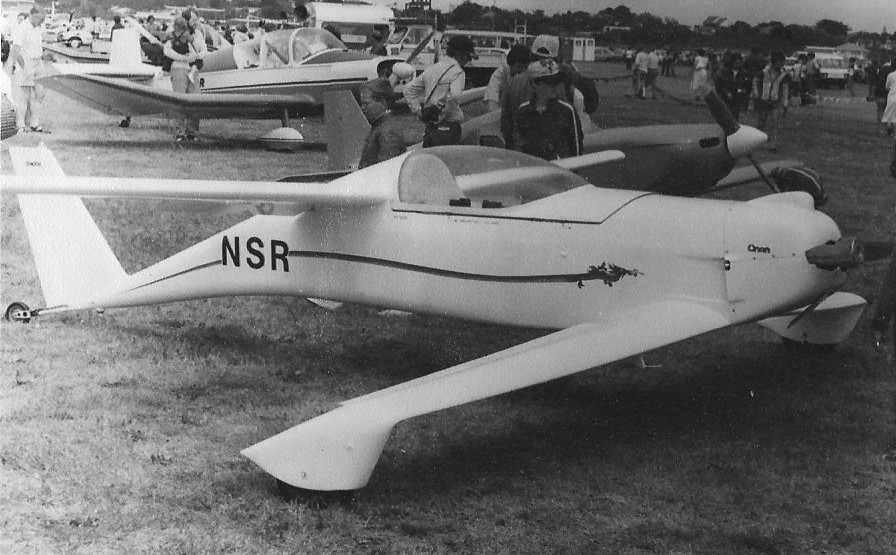
Rutan Quickie ZK-NSR

This revolutionary design incorporated state of the art materials, and proved to be highly efficient and forgiving. Sold in kit form for production by amateurs in 400 hours, the full kit (in 1977) cost only $6,395 (Cdn), about one-third the cost of a basic 2-seat factory production aircraft at the time. The Onan engine is a modified two cylinder, air-cooled industrial engine.

Basic to the Quickie’s economy is the 16-hp Onan flat, horizontally opposed, four-stroke engine commonly used to power lawn mowers and RV generators, modified to produce 22 hp. The wide canard of the Quickie carries the main landing wheels at each end, and a tiny tailwheel at the rear end is covered with a small rudder. Complete kits include engine, prefabricated cowling, canopy, all machined parts, all welded parts and some of the tools in an effort to limit building time for the inexperienced builder. Construction is from composite materials, and the cockpit is suitable for one pilot up to 210 pounds.

Price 1982: $4,995 (excludes paint and battery). Units delivered to June 1981: 550.

Engine Onan two-cylinder, 22-hp
MTOW: 820 lb
Empty Wt: 240 lb (109 kg)
Fuel cap: 8 USG
Wingspan 16’8”
Length 17 ft 4 in (5.3 m)
Wing area: 55 sq.ft
Height 4 ft 6 in (1.4 m)
Top speed: 140mph
Cruise: 130 mph (210 km/h)
Stall: 52mph
Climb rate 550 fpm
Ceiling: 14,800 ft
Takeoff run: 660 ft
Landing roll: 838 ft
Range 525 miles
Seats: 1

Questair Venture / Sprint

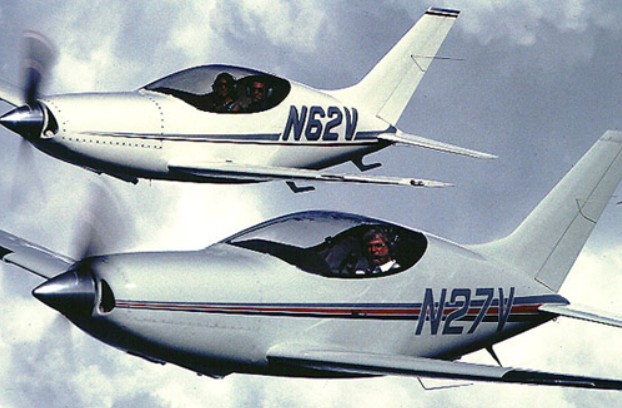
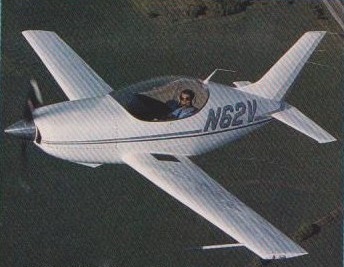
Designed by Jim Griswold, the prototype had only 50 hours on it when it arrived at Oshkosh 1988. Griswold’s company, Questair, was tooled up and nearly through the flight test program. The structural and flight test programs were the same as the FAA specified for factory certified planes.

The Venture uses stretched form fuselage skins that come as part of the kit ($49,950 1988). The cockpit was designed to be wider than a twin engined Beechcraft Baron.

The all-metal, roomy, fast, kit-built NuVenture (formally Questair Venture) was the winner and fastest plane at the Aircraft Spruce-sponsored 1998 Sun ’n Fun Sun100 race with an average speed of 303 mph.

The NuVenture flies on a Cont. I0-550-G with empty weight of 1240 lbs. The fuel tank holds 56 gallons. Vso is 61 KIAS. Range 12,000’ is 1,000Nm, VFR w/reserves or a cruise of 240 KTAS of 138 lb/h of fuel.

The Spirit derivative has fixed undercarriage.

Engine: Continental IO-550N6B, 310HP @ 2700 RPM
Propeller: McCauley BlackMac, 68″
Wing span: 27.5 ft
Wing area: 72.5 sq ft
Wing loading: 27.6 lb / sq ft
Structural limits: +5 G, -2.5G @ 2000 lb
Fuel capacity: 56 USG std, 88 optional
Gross weight: 2000 lb
Empty weight, equipped: 1300 lb
Payload: 700 lb
Cruise speed: 240 kt, 276 mph
Cabin width: 46 inches
Sea level top speed: 250 knots
Max rate of climb: 2500 ft / min
Takeoff to 50 ft: 1000 ft
Landing over 50 ft: 1600 ft
Range: 1000 nm, VFR reserves
Vx (best angle of climb): 90 knots
Vy (best rate of climb): 130 knots
Vne (never exceed): 300 knots
Va (maneuvering speed): 156 knots
Vso (stall in landing configuration): 61 knots
Vs1 (stall, clean): 68 knots
Gear speed (all): 170 knots
Seats: 2

Questair

Has marketed kits to build the metal Venture side-by-side two-seat low-wing monoplane with retractable undercarriage, first flown in 1987, and the Spirit derivative with fixed undercarriage.

1987-91: Questair Inc, Box 18946, Greensboro, NC27419, USA.

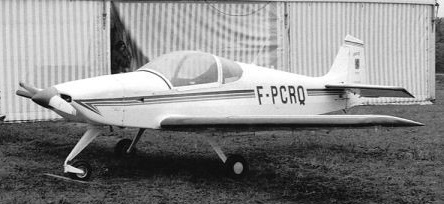
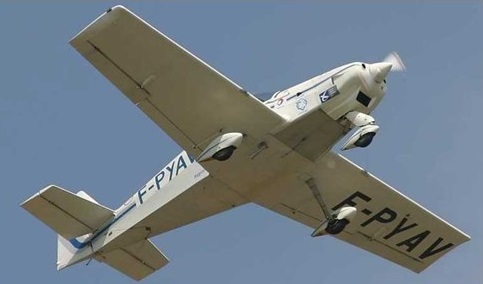
Quercy-Rouergue CQR 01

The CQR-1 two-seat homebuilt aircraft was more or less a scaled-up development of the Roussoulières Occitan and was a design of Louis Cariou, former RSA President.

The prototype CQR-1 was constructed by the RSA at Centre Régional de Construction Aéronautique Amateur Quercy-Rouergue (CQR) under the leadership of Charles Roussoulières and it flew for the first time on March 2, 1997. This aircraft was powered by a 90 hp Limbach L2400EO3 engine.

A second very similar aircraft was also completed in France in 1998 or 1999 and by late 2010 at least 6 were constructed.

Gallery

Engine: JPX / Limbach , 90 hp
Wing span: 7.4 m
Wing area: 8.9 sq.m
MAUW: 588 kg
Empty weight: 358 kg
Fuel capacity: 73 lt
Max speed: 250 kph
Cruise speed: 210 kph
Climb rate: 5 m/s
Seats: 2
Fuel consumption: 14 lt/hr
Plan price (1998): 1600 Fttc
Kit price (1998): 70 000 Fttc