Furias

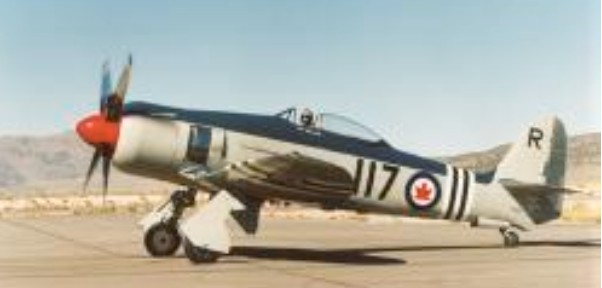
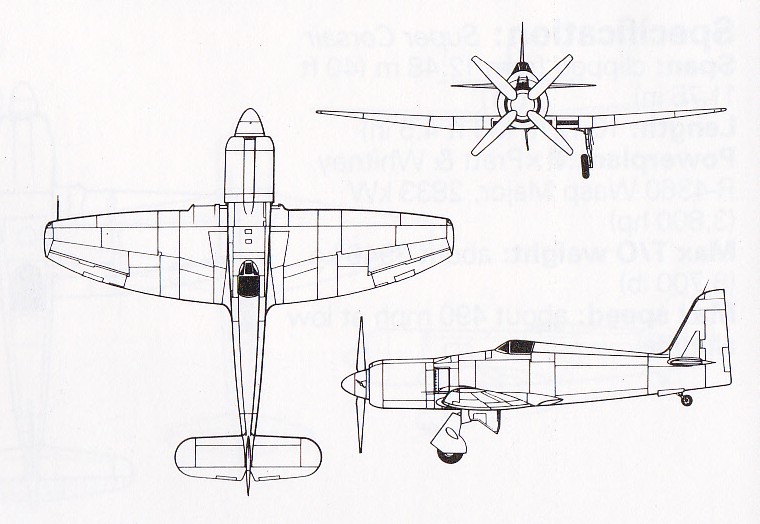
California-based Lloyd Hamilton has long been associated both with the sport of air racing and with the Hawker Sea Fury. Furias was built up from the components of a number of Sea Fury airframes and a 2833-kW (3,800-hp) R-4360 radial and the propeller of a Douglas A-1 Skyraider installed in place of the stock Centaurus engine and propeller. Qualifying at over 400 mph at Reno in 1985, over the years various modifications have been incorporated, including a turtledeck, but victory continues to elude this unique razor-back Fury. Furias is flown in a colour scheme of red with the upper fuselage and the rear portions of the inner flying surfaces in gold.

Furias
Span: slightly less than 11.7 m (38 ft 4.75 in)
Length: about 10.57 m (34 ft 8 in)
Powerplant: 1 x Pratt & Whitney R-4360 Wasp Major, 2833 kW (3,800 hp)
Max TO weight: about 4536 kg (10,000 lb)
Max speed: about 470 mph at low altitude

Dago Red

Based on a North American P-51D-30 Mustang airframe, Dago Red was built up by Bill ‘Tiger’ Destefani and Mike Nixon of Vintage V-12s in 1981. On its very first outing at Reno in 1982 the aeroplane took the Unlimited Gold Championship title. Dago Red has a built-up turtlecleck, extensively clipped and faired-in wings and a specially tuned Merlin engine built by Mike Nixon. This runs on 140-octane fuel injected with liquid manganese, with an alcohol/water mix and nitrous oxide introduced further down the induction system.

Dago Red has seen many owners, including Bill Destefani, Alan Preston and David Price. The aeroplane held the world straight-line speed record for piston-engined aircraft at 517.06 mph.

Dago Red
Span: clipped considerably from 11.89 m (37 ft 0.25 in)
Length: 9.83 m (32 ft 3 in)
Powerplant: 1 x Packard VA 650-9 Merlin, about 2610 kW (3,500 hp)
Max TO weight: about 3402 kg (7,500 lb)
Max speed: 517.06 mph at low altitude

Raceair Skylite

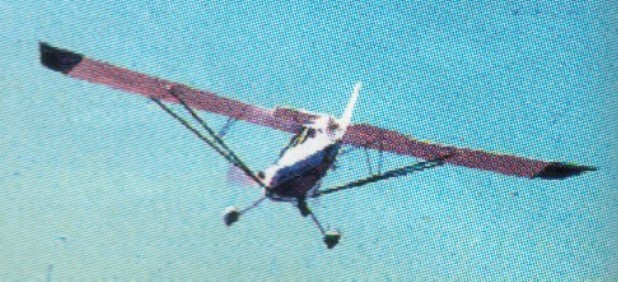
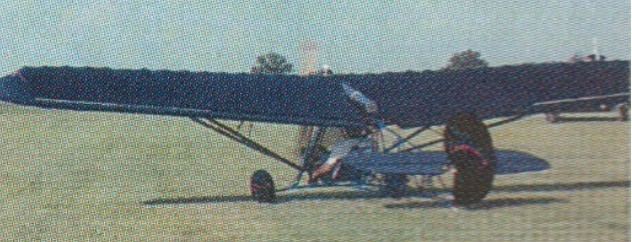
Ed Fishers “Skylite” Ultralight gained a lot of attention, winning Grand Champion Ultralight at Oshkosh in 1991. Under the name of Raceair, plans and components were developed and marketed for the Skylite. Green Sky Adventures, Inc added some Raceair items to its product line shortly thereafter.

Speed max: 60 mph. Cruise: 47 mph. Range: 90 sm. Stall: 27 mph. ROC: 400 fpm. Take-off dist: 400 ft. Landing dist: 600 ft. Service ceiling: 9,000 ft. Engine: Rotax 277, 28 hp. HP range: 28-50. Fuel cap: 5 USG. Weight empty: 240 lbs. Gross: 520 lbs. Height: 6.83 ft. Length: 17.5 ft. Wing span: 29.16 ft. Wing area: 117 sq.ft. Seats: 1. Landing gear: nose wheel.

Raceair Micro Mong

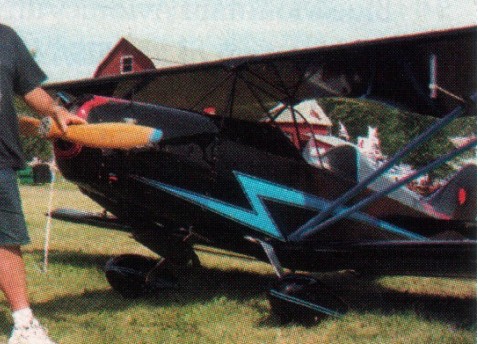
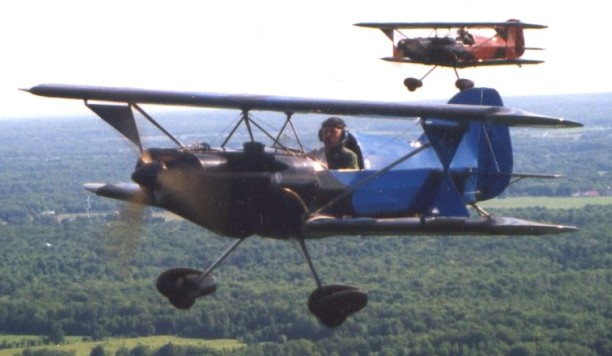
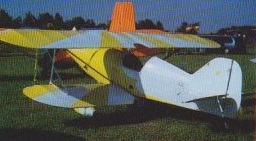
For Oshkosh 93, Ed Fisher was back with another new design, the Micro Mong. Inspired by the legendary Mong Sport, and its designer Ralph Mong, Ed had set out to replicate the timeless elegance of that Midget Biplane but to do it in such a way as to conform to FAA part 103 regulation. That was no small task! Usually, replica airplanes are smaller than what they are replicating. With the Micro Mong “Ultralight”, the opposite was true. Primarily, there was no way to get within the calculations for part 103 with less wing area than the Mong Sport. Some other “calculated” factors that allowed the racy little plane to conform were partially exposed engine, engine HP/propeller combination, and permanently deployed full span flaps (the ailerons were drooped about 3 degrees).

Ed worked diligently, after Oshkosh, and within a few months, his Raceair Company began selling plans and components for the Micro Mong. Just as with the Skylite, Green Sky added the new Raceair items to its product line. Plans were made to have the Micro Mong at Green Sky’s Sun n Fun booth in April 1994.

Green Sky Adventures, Inc. president, Gerald Olenik, was so impressed with the Micro Mong, that within three months, he and his brother formed Pyma Lake Aircraft Corp, purchased the Micro Mong design, and arranged exclusive marketing through Green Sky Adventures, Inc. Pla Corp. built the proof of plans aircraft, then built steel jigs and fixtures and organized many details for kit production. A plan to move the operation to Florida prior to establishing a dedicated production team commenced late in 1996. The following year, Green Sky Adventures, Inc., acquired the assets of Pla Corp. and the exodus to Florida began.

Green Sky management believes “biplane nostalgia” helps make the Micro Mongs popularity timeless. Though single place / open cockpit, undoubtedly limits that popularity, pilots drawn to such configurations share a passion barely comprehensible to others.

The slow process of relocation from Ohio to Florida has kept the LSA Micro Mong kit production in limbo. Plans sales have continued, and quite a few builders have completed their aircraft. Much of the promotional material and information describing details of the kit has been updated. However the Micro Mong design remains pretty much frozen. Differences between Kit and Plans versions are so few, that an original plans set is still supplied with the Micro Mong kit as the primary “Bible” for assembly.

HKS-700e 4 stroke power is perhaps the most exciting improvement to this great little plane. It’s as if the engine was designed specifically for Micro Mong application. Green Sky Adventures, Inc. has been flying, testing, and marketing this outstanding powerplant for a few years. The power, reliability, economy, and longevity of this lightweight 4 stroke add a dimension to light sport flying that does not otherwise exist. Such an improvement plus the infancy of Sport Pilot, and renewed interests in the Micro Mong should certainly be worthy of a suffix. Extra power, extra range, extra reliability and 2 times the strokes is easily 2 times the fun. Micro Mong 2XF.

Raceair Micro Mong
Engine: Rotax 377, 28 hp
Wing span: 6 m
Wing area: 10.2 sq.m
MAUW: 240 kg
Empty weight: 112 kg
Fuel capacity: 19 lt
Max speed: 105 kph
Cruise speed: 80 kph
Minimum speed: 45 kph
Climb rate: 1.5 m/s
Fuel consumption: 7 lt/hr
Seats: 1
Plan price (1998): US$125

Green Sky Micro Mong
Engine: Rotax 503, 52 hp
HP range: 30-60
Height: 6 ft
Length: 14 ft
Wing span: 19.5 ft
Wing area: 110 sq.ft
Fuel cap: 10 USG
Weight empty: 320 lb
Gross: 650 lb
Speed max: 110 mph
Cruise: 85 mph
Range: 200 sm
Stall: 35 mph
ROC: 1000 fpm
Take-off dist: 200 ft
Landing dist: 400 ft
Service ceiling: 15,000 ft
Seats: 1
Landing gear: tail wheel
Cockpit width: 21.75 in

Raceair Flitplane

Designed by Ed Fisher.

Engine: Rotax 277, 28 hp
HP range: 25-40
Height: 5 ft
Length: 15.75 ft
Wing span: 27 ft
Wing area: 145 sq.ft
Weight empty: 235 lb
Gross: 500 lb
Fuel cap: 5 USG
Speed max: 50 mph
Cruise: 40 mph
Range: 120 sm
Stall: 27 mph
ROC: 500 fpm
Take-off dist: 300 ft
Landing dist: 300 ft
Service ceiling: 8,000 ft
Seats: 1
Landing gear: tail wheel

Quicksilver GT 500

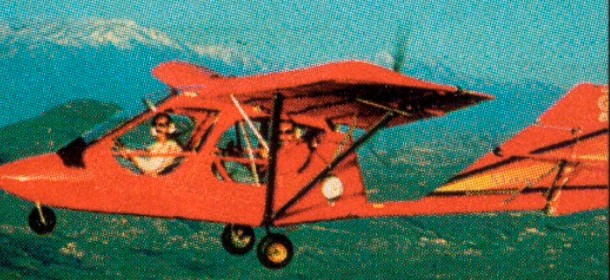
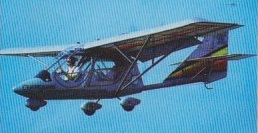
The GT-500 development program was started with the goal of producing the best performing Quicksilver ever, and an aircraft that would transcend the category of ultralight & provide general aviation with the entry level aircraft it desperately needed. The focus was on more speed, better aerodynamics, and a greater range using CAD/CAM design & engineering techniques.

During the certification process of the GT 500 the original Quicksilver company went bankrupt.

The first Sport Airplane in the world to receive FAA certification in the Sportplane class of the Primary category, the GT-500 has dual three-axis controls. The GT-500 cruises from 55-80 mph, with a top speed of around 90 mph. The inflight adjustable trim & 3 position flaps allow for positive slow flight and gentle stall at about 39 mph. Only approximately 140 feet is needed for the take-off roll.

Standard features include:
Steerable Nose Wheel
3 Blade Carbon Fiber Propeller with Ground Adjustable Pitch
Full Size Shock Mounted Instrument Panel w/ Keyed Ignition Switch, Remote Choke, & 8 Instruments: Tachometer, Temperature Gauge, Hobbs Meter, Compass, Altimeter, Vertical Speed Indicator (VSI), Front & Rear Seat Airspeed Indicators (R912UL Version Also Includes Oil Temperature &Oil Pressure Gauges)
Parking Brake
Hydraulic Main Wheel Disk Brakes
Double Surface Wings
Extra Ribs for Firm Airfoil
Tapered Wing
Adjustable Pilot Seats
Front & Rear Seat Shoulder Harnesses
Removable Doors: Can be Flown with the Doors On or Off

The GT500 Agricultural Spray System is for aerial crop spraying. Tests and real world results show the Quicksilver Spray System provides excellent coverage.

The Quicksilver GT500 performs with a spraying speed of 65 m.p.h. covering an average of 6 acres (2.5 hectares) per minute and extremely short take-off and landing distances.

Engine: Rotax 582/40 Dual CDI, 65 hp
Recommended TBO: 250 hrs
Propeller: 3 Blade, Carbon Fiber 72 in dia
Pitch: 17 to 19 degrees-LH
Length: 20′ 5″
Height: 6′ 6″
Wingspan: 30′ 0″
Wing Area: 155 sg. ft.
Wing Loading: 6.45 lb./sq.ft.
Power Loading: 15.38 lb./hp.
Seats: 2
Empty Weight: 575 lbs.
Max. Take-off Weight: 1000 lbs.
Useful Load: 425 lbs.
Payload w/Full Fuel: 329 lbs.
Fuel Capacity: 16 U.S. gal.
Ultimate Load Factors: +6.0 g., -3.0g.
Take-off Distance, Ground Roll: 220 ft.
Take-off Distance, 50 ft. Obstacle: 689 ft.
Rate of Climb, Sea Level 1000 lbs. Take-off Weight: 650 fpm.
Max. Level Flight Speed w/out Doors: 81 mph.
Max. Level Flight Speed with Doors: 88 mph.
Landing Distance, 50 ft. Obstacle: 580 ft.
Landing Distance, Ground Roll: 260 ft.
Glide Ratio (w/out doors): 7.0:1
Glide Ratio (w doors): 7.5:1
Minimum Sink Rate (w/out doors): 570 ft/min
Minimum Sink Rate (w doors): 540 ft/min
Service Ceiling: 12,500 ft.
Cruise 55% Power (5300 rpm): 71 mph.
Cruise 65% Power (5600 rpm): 75 mph.
Cruise 75% Power (5900 rpm): 79 mph.
Cruise 100% Power (6500 rpm): 87 mph.
Fuel flow/range 55% Power (gph/mi): 4.5/240
Fuel flow/range 65% Power (gph/mi): 5.0/225
Fuel flow/range 75% Power (gph/mi): 5.6/215
Fuel flow/range 100% Power (gph/mi): 7.5/175
Vx (Best angle of climb): 47 mph.
Vy (Best rate of climb): 55 mph.
Va (Design maneuvering): 90 mph.
Vne (Never exceed): 103 mph.
Vs1 (Stall, fLaps up, power off): 45 mph.
Vs0 (Stall, flaps down, power off): 39 mph.
Landing Approach Speed: 51 mph.
Cockpit width: 29 in

Engine: Rotax R912UL 80 hp
Recommended TBO: 1000 hrs
Propeller: 3 Blade, Carbon Fiber 72 in dia
Pitch: 17 to 19 degrees-LH
Length: 20′ 5″
Height: 6′ 6″
Wingspan: 30′ 0″
Wing Area: 155 sg. ft.
Wing Loading: 7.09 lb./sq.ft.
Power Loading: 13.75 lb./hp.
Seats: 2
Empty Weight: 638 lbs.
Max. Take-off Weight: 1100 lbs.
Useful Load: 462 lbs.
Payload w/Full Fuel: 366 lbs.
Fuel Capacity: 16 U.S. gal.
Ultimate Load Factors: +6.0 g., -3.0g.
Take-off Distance, Ground Roll: 244 ft.
Take-off Distance, 50 ft. Obstacle: 621 ft.
Rate of Climb, Sea Level 1000 lbs. Take-off Weight: 655 fpm.
Max. Level Flight Speed w/out Doors: 88 mph.
Max. Level Flight Speed with Doors: 91 mph.
Landing Distance, 50 ft. Obstacle: 905 ft.
Landing Distance, Ground Roll: 390 ft.
Glide Ratio (w/out doors): 6.5:1
Glide Ratio (w doors): 7.0:1
Minimum Sink Rate (w/out doors): 584 ft/min
Minimum Sink Rate (w doors): 555 ft/min
Service Ceiling: 12,500 ft.

Cruise with/without doors 55% Power (4500 rpm): 70 mph / 75 mph.
Cruise with/without doors 65% Power (4800 rpm): 75 mph / 79 mph.
Cruise with/without doors 75% Power (5000 rpm): 78 mph / 83 mph.
Cruise with/without doors 100% Power (5500 rpm): 86 mph / 91 mph.
Fuel flow/range 55% Power (gph/mi): 3.7/300
Fuel flow/range 65% Power (gph/mi): 4.3/280
Fuel flow/range 75% Power (gph/mi): 4.9/270
Fuel flow/range 100% Power (gph/mi): 6.3/215
Vx (Best angle of climb): 50 mph.
Vy (Best rate of climb): 58 mph.
Va (Design maneuvering): 94 mph.
Vne (Never exceed): 103 mph.
Vs1 (Stall, fLaps up, power off): 47 mph.
Vs0 (Stall, flaps down, power off): 42 mph.
Landing Approach Speed: 55 mph.
Cockpit width: 29 in