1998
Aerodrome
F-82000 Montauban
France
Built the CQR 01
1998
Aerodrome
F-82000 Montauban
France
Built the CQR 01
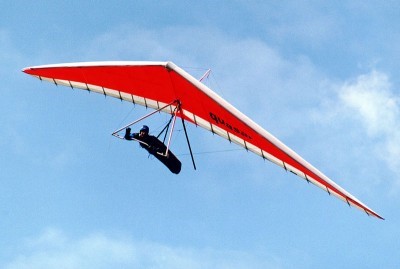
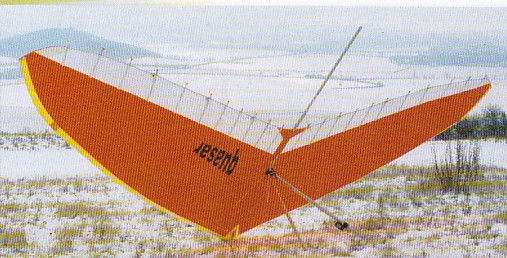
The Quasar 13 was introduced to the Quasar range in 1998.
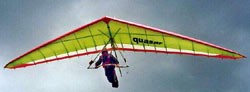
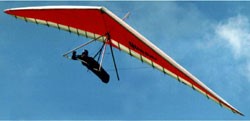
Quasar 13
Wing area: 13 sq.m
Certification: LAA
Pilot weight: 55-75 kg
Wing span: 10 m
Nose Angle: 127 deg
Aspect ratio: 7.7
Quasar 14
Wing area: 14 sq.m
Certification: LAA
Pilot weight: 65-85 kg
Wing span: 10.2 m
Nose Angle: 127 deg
Aspect ratio: 7.4
Quasar 15
Wing area: 15 sq.m
Certification: LAA
Pilot weight: 75-100 kg
Wing span: 10.4 m
Nose Angle: 127 deg
Aspect ratio: 7.2
Quasar 16
Wing area: 16.4 m²
Wing span: 10.6 m
Aspect ratio: 6.9
Minimum pilot weight: 85 kg
Maximum pilot weight: 120 kg
Nose angle: 127°
Quasar 2000
Wing area: 13 m²
Wing span: 10.2 m
Aspect ratio: 8
Minimum pilot weight: 55 kg
Maximum pilot weight: 80 kg
Nose angle: 127°
Quasar 2000
Wing area: 13.6 m²
Wing span: 10.3 m
Aspect ratio: 7.8
Minimum pilot weight: 65 kg
Maximum pilot weight: 90 kg
Nose angle: 127°
Quasar 2000
Wing area: 14.8 m²
Wing span: 10.5 m
Aspect ratio: 7.4
Minimum pilot weight: 75 kg
Maximum pilot weight: 100 kg
Nose angle: 127°
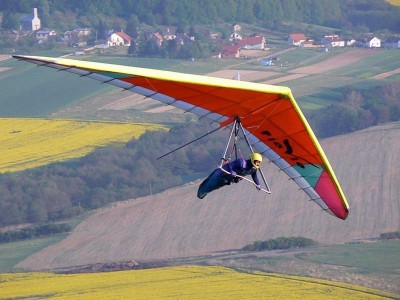
Hang glider circa 1998.
Wing area: 13.8 sq.m
Certification: LAA
Pilot weight: 60-100 kg
Wing span: 10.3 m
Nose Angle: 127 deg
Aspect ratio: 7.7
1998: Dolni Becva 266, CZ-75655 Dolni Becva, Czech Republic
Hang glider builder

A two place version of the Challenger. This is a 2 seat high wing pusher microlight with a semi-enclosed cabin with a factory built airframe. All U.S. tubing. 10-15 minute set up time.
Quad City Challenger II Article
The Challenger II features two-seats and a 31.5 ft wingspan long wing. The Challenger II qualifies as a 51% kit for Experimental – Amateur-Built, can be flown with Sport Pilot Permit, and qualifies as Light Sport Aircraft.
In 2010 quick-build kits were from US$11,940 to US$16,035 ex engine with engine options being the Rotax 447, 503, 582 and HKS 700E.
The Challenger II Special is a 2 place with a 26 ft wingspan for quick roll rate and up 95 mph cruise speed.
With a 30 mph cross-wind capability and 300 ft take-off roll (average dual), the Challenger II Special qualifies as a 51% kit for Experimental – Amateur-Built, can be flown with Sport Pilot Permit, and qualifies as Light Sport Aircraft.

In 2010 quick-build kits were from US$13,165 to US$16,035 ex engine and engine options were the Rotax 447, 503, 582 and HKS 700E.
A version released in the UK circa 1998 was revised by Mike Whittaker.
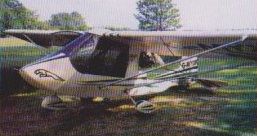
Challenger II
Engine: Rotax 447, 42 hp
HP range: 40-52
Height: 6 ft
Length: 19 ft
Wing span: 31 ft
Wing area: 175 sq.ft
Weight empty: 310 lb
Gross: 800 lb
Fuel cap: 5 USG
Speed max: 85 mph
Cruise: 57 mph
Range: 150 sm
Stall: 25 mph
ROC: 600 fpm
Take-off dist: 200 ft
Landing dist: 200 ft
Service ceiling: 12,500 ft
Seats: 2
Landing gear: nose wheel
Cross-wind capability: 20 mph
Quad City Ultralights Aircraft Challenger II
Cruise: 70 mph
Stall: 30 mph
Range: 210 sm
Rate of climb: 700 fpm
Takeoff dist: 250 ft
Landing dist: 250 ft
Engine: Rotax 503, 50 hp
HP range: 40-65
Fuel capacity: 5USG
Empty weight: 330 lb
Gross weight: 850 lb
Length: 20 ft
Wing span: 31.5 ft
Wing area: 175 sq.ft
Cockpit width: 30 in
Landing gear: nosewheel
Cross-wind capability: 20 mph
Challenger II
Engine: Rotax 503, 52 hp
Wing span: 8.7 m
Wing area: 15.44 sq.m
MAUW: 386 kg
Empty weight: 175 kg
Fuel capacity: 38 lt
Max speed: 160 kph
Cruise speed: 130 kph
Minimum speed: 60 kph
Climb rate: 2.5 m/s
Certification: PFA
Seats: 2
Fuel consumption: 13 lt/hr
Kit price (1998): £9500
Quad City Ultralights Aircraft Challenger II CW LSS
Engine: Rotax 503, 52 hp
HP range: 50-75
Length: 20 ft
Wing span: 25 ft
Wing area: 145 sq.ft
Empty weight: 450 lb
Gross weight: 960 lb
Fuel capacity: 10 USG
Cruise: 95 mph
Stall: 40 mph
Range: 200 sm
Rate of climb: 700 fpm
Takeoff dist: 400 ft
Landing dist: 400 ft
Cockpit width: 28 in
Seats: 2
Landing gear: nosewheel
Cross-wind capability: 20 mph
Quad City Challenger II CW
Engine: Rotax 503, 52 hp
Height: 6 ft
Length: 20.5 ft
Wing span: 26 ft
Wing area: 143 sq.ft
Weight empty: 350 lb
Gross: 850 lb
Fuel cap: 5 USG
Speed max: 100 mph
Cruise: 85 mph
Range: 220 sm
Stall: 30 mph
ROC: 1000 fpm
Take-off dist: 300 ft
Landing dist: 200 ft
Service ceiling: 12,000 ft
Seats: 2
Landing gear: nose wheel
Cross-wind capability: 20 mph
Quad City Challenger II
Engine: Rotax 503, 52 hp
HP range: 52
Height: 6 ft
Length: 20.5 ft
Wing span: 26 ft
Wing area: 143 sq.ft
Empty weight: 350 lb
Gross weight: 850 lb
Fuel capacity: 5 USG
Top speed: 100 mph
Cruise: 85 mph
Stall: 30 mph
Range: 220 sm
Rate of climb: 1000 fpm
Takeoff dist: 300 ft
Landing dist: 200 ft
Service ceiling: 12,000 ft
Seats: 2
Landing gear: nosewheel
Cross-wind capability: 20 mph
Quad City Ultralights Aircraft Challenger II Special
Engine: Rotax 503, 50 hp
HP range: 50-65
Length: 20 ft
Wing span: 26 ft
Wing area: 143 sq.ft
Empty weight: 360 lb
Gross weight: 880 lb
Fuel capacity: 10 USG
Cruise: 85 mph
Stall: 36 mph
Range: 230 sm
Rate of climb: 700 fpm
Takeoff dist: 300 ft
Landing dist: 250 ft
Cockpit width: 30 in
Landing gear: nose wheel
Cross-wind capability: 20 mph
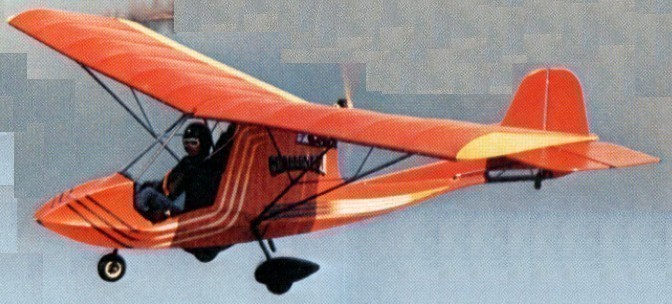
Single seat single engined high wing mono¬plane with conventional three axis control. Wing has unswept leading and trailing edges, and constant chord; cruciform tail. Pitch control by elevator on tall; yaw control by fin mounted rudder; roll control by spoilers; control inputs through stick for pitch/roll and pedals for yaw. Wing braced from below by struts; wing profile; double surface. Undercarriage has three wheels in tricycle formation, with additional tailwheel. Suspen¬sion on all wheels. Push right go right nosewheel steering connected to yaw control. Aluminium tube framework, partially enclosed. Engine mounted at wing height driving pusher prop¬eller.
Designed by Dave Goulet and first flown in 1983, this ultralight made its debut at Sun ‘n’ Fun in March 1983 at Lakeland, Florida. Thanks to the fabric covering the whole of the framework and a windscreen over the cockpit area, it has an excellent glide ratio, 11/1 being claimed by the manufacturer. At that time little detailed information was available from Quad City Ultralights on what was really no more than a prototype, but since then the Challenger has gone on sale as a kit requiring 50 h for completion and costing $5495. Rigging time is expected to be in the order of 30 min by one person from a trailer, according to the manufacturer. The aircraft can also be towed on its own undercarriage.
Power comes from the KFM 107 with electric start and reduction drive.

In 2010 LSA Quick-build kits were from US$9,215 to US$12,965 ex engine and engine options were Hirth F-33, Rotax 447/503/582, and HKS 700E.
The Challenger qualifies for Part 103 ultralight or 51% kit for Experimental – Amateur-Built, can be flown with Sport Pilot Permit, and qualifies as a Light Sport Aircraft.
Engine: KFM 107ERV, 25 hp at 6000 rpm
Propeller diameter and pitch 52 x 24 inch, 1.32 x 0.61 m
V belt reduction, ratio 2.0/1
Power per unit area 0.20 hp/sq.ft, 2.1 hp/sq.m
Fuel capacity 5.0 US gal, 4.2 Imp gal, 18.9 litre
Length overall 18.8 ft, 5.72 m
Height overall 6.0ft, 1.83m
Wing span 32.0ft, 9.75m
Constant chord 4.0 ft, 1.22 m
Sweepback 0 degs
Total wing area 128 sq.ft, 11.9sq.m
Wing aspect ratio 8.0/1
Empty weight 242 lb, 110kg
Max take off weight 530 lb, 240kg
Payload 288 lb, 131kg
Max wing loading 4.14 lb/sq.ft, 20.2 kg/sq.m
Max power loading 21.2 lb/hp, 9.6kg/hp
Max level speed 63 mph, 101 kph
Never exceed speed 70 mph, 113 kph
Max cruising speed 60 mph, 97 kph
Stalling speed 28 mph, 45 kph
Max climb rate at sea level 700 fpm, 3.6 m/s
Best glide ratio with power off 11/1
Service ceiling 10,000 ft, 3050 m
Engine: Rotax 277 (268 cc). 28 hp
Static thrust: 235 lbs
HP range: 28-40
Empty weight: 242 lb
Max weight: 500 lb
Wing span: 31ft 6in
Wing area: 142 sq.ft
Height: 6 ft
Length: 18 ft 6 in
Wing loading: 3.52 lbs/sq.ft
Power loading: 17.86 lbs/hp
Fuel cap: 5 USG
Construction: Aluminium, Dacron
Max speed: 63 mph
Cruise: 55 mph
Stall: 25 mph
Vne: 80 mph
Cross-wind capability: 25 mph
Climb rate: 500-700 fpm @ 40 mph
Design load: +4, -2.5g
Glide: 10-1
Seats: 1
Range: 150 sm
Take off dist: 150 ft
Ldg dist: 150 ft
Service ceiling: 12,500 ft
Quad City Ultralights Aircraft Challenger UL
Engine: Rotax 447, 40 hp
HP range: 28-50
Length: 18.5 ft
Wing span: 31.5 ft
Wing area: 142 sq.ft
Empty weight: 254 lb
Gross weight: 500 lb
Fuel capacity: 5 USG
Cruise: 55 mph
Stall: 27 mph
Range: 140 sm
Rate of climb: 700 fpm
Takeoff dist: 250 ft
Landing dist: 250 ft
Cockpit width: 24 in
Landing gear: nosewheel
1983: Quad City Ultralights, 425 E 59th St, PO Box 2674, Davenport, Iowa 52807, USA.
1997: 3810 34th St, PO Box 370, Moline, IL 61266, USA.
UL builder
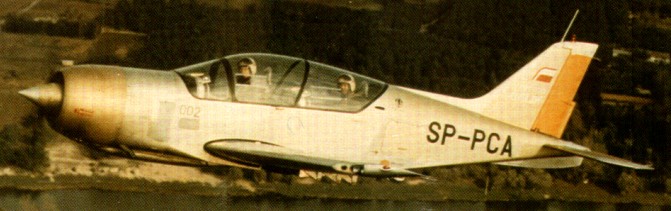
Design of the P.Z.L. 130 Orlik (Spotted Eaglet) piston-engined two-seat primary and basic trainer began in 1981 as a successor to the TS-8 Bies. Construction of four airframes, one for static test plus three flying prototypes, began in 1982
The first aircraft flew on 12 October 1983, followed quickly by the second. However, the third aircraft did not fly until January 1985, and the two pre-production machines which followed did not take to the air until February 1988, owing to serious delays in deliveries of the 246kW Vedeneyev M14Pm nine-cylinder Russian powerplant.
By that time P.Z.L. was seriously looking for another engine, and one contender was the company-produced but less powerful Kalisz K8-AA, which took the underpowered second pre-production aircraft into the air in March 1988. Although testing continued over the next two years, and included an evaluation by the Polish air force, the piston-engined Orlik was abandoned in 1990.
The original piston-engined PZL-130 Orlik was powered by a 268kW Vedeneyev radial engine driving a three-blade fixed-pitch propeller. The Orlik is of all-metal construction with a low-set cantilever wing and pneumatically operated retractable tricycle landing gear, and is of typical trainer configuration with the pupil and instructor seated in vertically staggered tandem seats under a side-hinged single-piece canopy. For the primary and basic stages of the flight training program, the Poles considered a piston engine adequate, and with this unit driving a constant-speed propeller the Orlik is suitable for all stages of the program between preselection and acrobatics. The provision of two underwing hardpoints also allows the type to be used in the weapon training, counter-insurgency, and reconnaissance roles.
Modular cockpit instrumentation allows rapid conversion between roles. Two underwing stores pylons are provided on the piston-powered version. Other uses envisaged include reconnaissance, light ground-attack, and target towing. Its maximum level speed is 197kt, with a cruise speed of 174kt. Range with maximum fuel is 765 n.m. and ceiling is over 17,000ft.
The three pre-production aircraft built all had different powerplants and ratings. These were the 560kW Motorlet M601D (P.Z.L. 130TM), the 410kW PT6A-25A (P.Z.L. 130T), and the 708kW PT6A-62 (P.Z.L. 130TP), and all flew in 1989/90.
In 1985, while waiting for supplies of M14Pm powerplants, PZL re-engined the third prototype with a Pratt & Whitney Canada PT6A-25A turboprop. The prototype PZL-130T Turbo-Orlik, developed in collaboration with AirTech of Canada, flew for the first time on 13 July 1986. Aimed primarily at export customers, the Turbo-Orlik has four underwing hardpoints, and was to be marketed by AirTech.
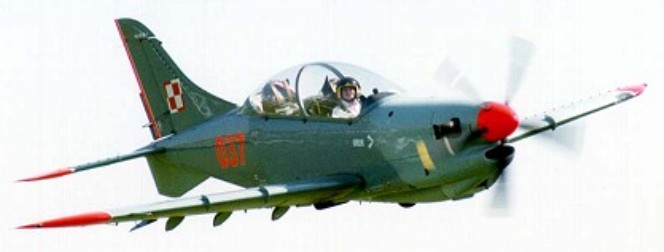
The -130T was provisionally certificated in January 1987, but the prototype PZL-130T crashed that month in Colombia during a demonstration to the Air Force, killing AirTech’s president.
In 1991, following the powerplant tests, the Polish air force placed an order for 48 P.Z.L. 130TBs powered by the Czech M601E engine and the first production Turbo-Orlik was delivered at the end of 1992.
Export sales were being sought for the PT6A-62-engined P.Z.L. 130TC, the PT6A-25C-equipped P.Z.L. 130TD, and the PT6A-25A-engined P.Z.L. 130TE ‘economy’ version, with a limited equipmentfit and minus ejection seats.
PZL-130 Orlik
Engine: one 330-hp (245-kW) Vcdencycv M-l4Pm radial
Maximum speed 211 mph (340 km/h) at optimum altitude
Initial climb rate 1,378 ft (420 m) per minute
Service ceiling 13,945 ft (4,250 m)
Range 880 miles (1,416 km)
Empty weight, 2,529 lb (1,147 kg)
Maximum take-off 3,527 lb (1,600 kg)
Wing span 26 ft 3 in (8.00 m)
Lngth 27 ft 8.75 in (8.45 m)
Heght 11 ft 7 in (3.53 m)
Wing area 132.19 sq ft (12.28 sq.m)
PZL-130TB Turbo-Orlik
Engine: 1 x Motorlet M601E turbo-prop, 560kW
Max take-off weight: 2000 kg / 4409 lb
Loaded weight: 1600 kg / 3527 lb
Wingspan: 9.0 m / 30 ft 6 in
Length: 9.0 m / 30 ft 6 in
Height: 3.5 m / 12 ft 6 in
Wing area: 13.0 sq.m / 139.93 sq ft
Max. speed: 501 km/h / 311 mph
Range w/max.fuel: 970 km / 603 miles
Crew: 2
PZL 130 TM Turbo Orlik
Engine: M 601 E, 483 shp
Length: 28.543 ft / 8.7 m
Height: 11.483 ft / 3.5 m
Wingspan: 26.247 ft / 8.0 m
Wing area: 132.397 sq.ft / 12.3 sq.m
Max take off weight: 4359.3 lb / 1977.0 kg
Weight empty: 2976.8 lb / 1350.0 kg
Max. weight carried: 1382.5 lb / 627.0 kg
Max. speed: 274 kt / 507 km/h
Landing speed: 80 kt / 149 km/h
Cruising speed: 237 kt / 438 km/h
Initial climb rate: 3188.98 ft/min / 16.20 m/s
Service ceiling: 32808 ft / 10000 m
Wing loading: 33.01 lb/sq.ft / 161.0 kg/sq.m
Range: 540 nm / 1000 km
Crew: 2
Hard points: 6
External load: 720kg
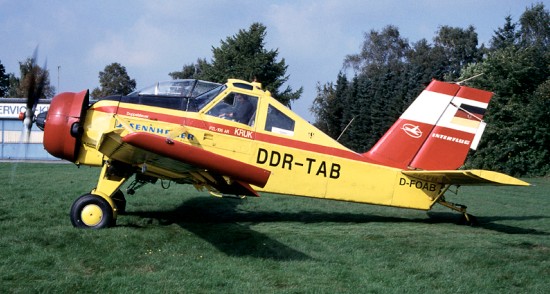
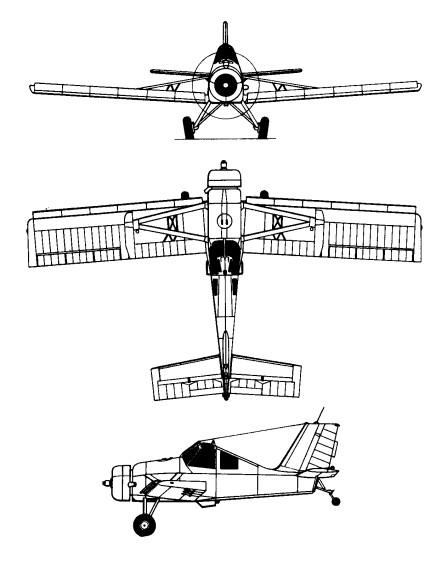
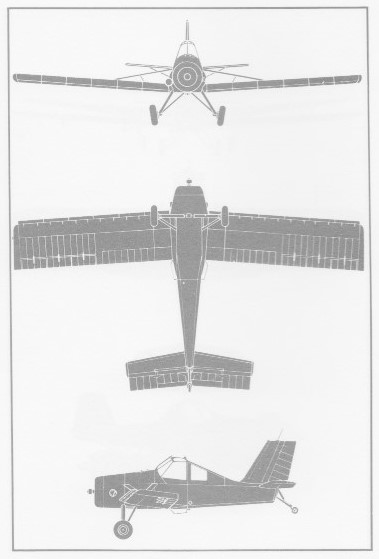
In early 1972 design was initiated for a new agricultural aircraft to replaceme the Z-37 Cmelak. Of braced low-wing monoplane configuration with fixed tailwheel landing gear, a T-tail, and enclosed accommodation for the pilot. First flown in P.Z.L. 106 prototype form on 17 April 1973, then powered by a 298kW Avco Lycoming IO-720 engine, it was followed by five more prototypes, one of which was similarly powered, but four each had a P.Z.L. 3S radial that was the chosen powerplant for production aircraft, the first version being the P.Z.L. 106A Kruk (raven) of which series construction began in 1976. Generally similar to the prototypes, it differed primarily by adopting a conventional tail unit and a larger-capacity chemical hopper, features adopted as standard on all production aircraft.
Subsequent P.Z.L. 106A variants have included the P.Z.L. 106AR which introduced a geared P.Z.L. 3SR engine and a larger-diameter propeller; the P.Z.L. 106AS prototype with a 746kW P.Z.L-built Shvetsov ASz-62IR radial engine and, following satisfactory tests, 60 P.Z.L. 106A aircraft operated overseas by Pezetel were converted to this powerplant; and the initial version of the Turbo-Kruk, the P.Z.L. 106AT, which, powered by a 567kW Pratt & Whitney of Canada PT6A-34AG turboprop engine, flew for the first time on 22 June 1981.
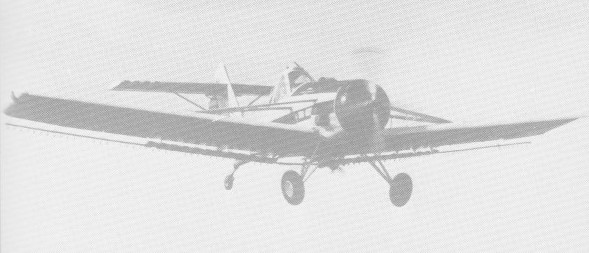
The prototype of an improved version of the P.Z.L. 106A was flown on 15 May 1981. Designated P.Z.L. 106B, this introduced a redesigned wing of increased span and area, and the 106B, 106BR and 106BS production variants superseded the corresponding A-series aircraft during 1982. These were followed by the P.Z.L. 106BT Turbo-Kruk which first flew on 18 September 1985. Powered by a 538kW Czech-built Motorlet M601D turboprop engine, improvements included increased sweep back on the wing, a taller fin and improved chemical payload. Production of all versions of the Kruk had totalled some 250 aircraft by 1990, including 54 exported to East Germany, and 60 plus Kruks used by the Pezetel agricultural air service organisation operating in Egypt. By 1992, however, production was reported to be at a standstill.
Interflug ordered 53 PZL-106A of which c/n 48040 was converted to a dual-control trainer. After the end of the DDR and elimination of Interflug all Kruks were put out of service.
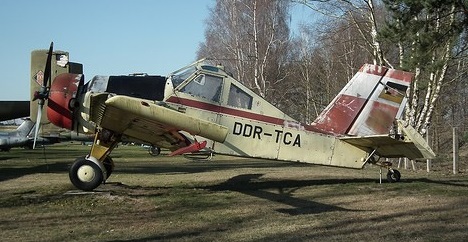
PZL 106 Kruk
Engine: 584 hp
Length: 29.856 ft / 9.1 m
Height: 10.892 ft / 3.32 m
Wingspan: 48.556 ft / 14.8 m
Max. speed: 76 kts / 140 kph
Service ceiling: 15092 ft / 4600 m
Crew: 1
PZL 106B
Engine: 1 x PZL 3S radial, 441kW / 600 hp
Max take-off weight: 3000 kg / 6614 lb
Loaded weight: 1670 kg / 3682 lb
Max. speed: 137 km/h / 85 mph
Ceiling: 4600 m / 15100 ft
Range: 1100 km / 684 miles
PZL 106 BT Turbo Kruk
Engine: M 601 D, 537 shp
Length: 33.465 ft / 10.2 m
Height: 12.467 ft / 3.8 m
Wingspan: 49.213 ft / 15.0 m
Wing area: 341.219 sq.ft / 31.7 sq.m
Max take off weight: 7717.5 lb / 3500.0 kg
Weight empty: 3704.4 lb / 1680.0 kg
Max. weight carried: 4013.1 lb / 1820.0 kg
Max. speed: 135 kt / 250 km/h
Landing speed: 49 kt / 90 km/h
Cruising speed: 92 kt / 170 km/h
Initial climb rate: 1181.1 ft/min / 6.0 m/s
Wing loading: 22.55 lb/sq.ft / 110.0 kg/sq.m
Range: 486 nm / 900 km
Crew: 1