The 1930 Western Aircraft Corp Sport single place open cockpit monoplane was registered N216Y c/n 1 in mid-1930, powered with a Szekely.
The company vanished shortly after licensing this plane, apparently swallowed up by the Depression, and fate of the plane is unknown as its reg was cancelled in 1932.
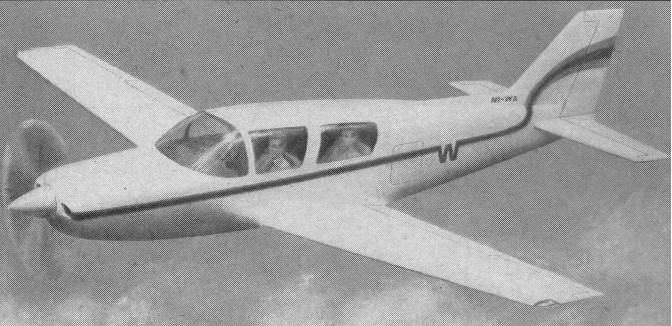
In 1984 Western Aircraft Company was manufacturing the newly designed West Air 214. The craft follows the successful flight testing and evaluation of the proof of concept aircraft, the West Air 204 N258, first flown in November 1982. The West Air 214’s changes include a bubble windshield, swept vertical stabilizer, additional wing area and a redesigned fuselage. The 214 will have a tri-cycle retractable gear. The West Air will still retain its all composite construction of epoxy, graphite and tri-directional glass and four place seating.
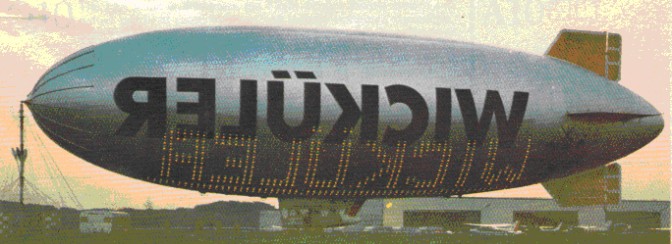
In 1978, a German company, Westdeutsch Luftwerbung, moved its 180 foot long flying machine to the United States, where it was leased by a consortium tentatively known as Skysign. The sides of the blimp are lined with 10,000 colored lightbulbs controlled by onboard computers, creating two 104 foot long flying billboards. The blimp’s powered by two 180hp Rolls Royces, cruises at 30 mph and never stalls. Its 211,888 cubic foot, helium filled envelope could carry it to 8,500 feet, but it’s happiest within a few thousand feet of the ground where its sign is visible to all.
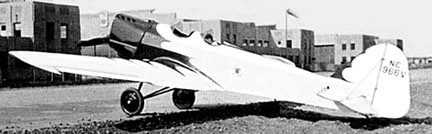
Designed by Neil Perdew, the 1931 Westbrook W-5 (ATC 2-444) was powered by a 90hp ACE Cirrus Mk III engine. The ATC were issued in 1933.
Westbrook Sportster
The W-5-B Sportster had an 85hp British Cirrus (2-455). Folding all-wood wings and selling for $2,650.
Westbrook Sportster
About five were built, and several partly constructed before the business failed in 1931. NC9N c/n 501 destroyed in a 1931 crash N853W c/n 502 NC966V c/n 503 lost in a 1938 accident NC92V c/n 504 possibly c/n 505 unlicensed one
The design was planned for revival in 1939 as the Allied H-28 Sport Trainer, but apparently no planes were built.
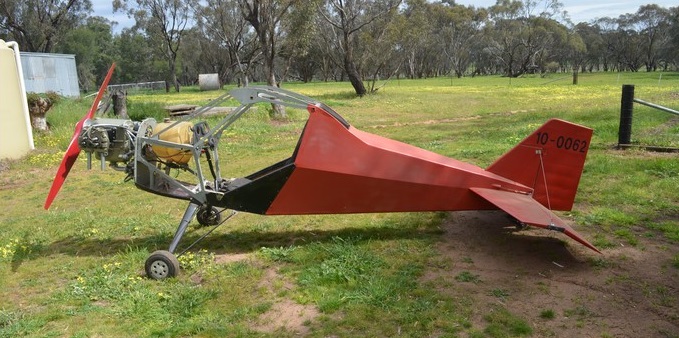
Reverse Stagger winged biplane, single seater, VW powered, 145 kg empty, stressed to +9, — 6 G’s. For possible restricted aerobatics. Three axis controls via full span ailerons, large rudder and elevator. Taildrag¬ger configuration. Fully enclosed cockpit can be made semi-open by removing both doors. Fuselage is constructed with square hollow aluminium tubing, riveted, epoxied, and co¬vered with ceconite. A 2 stroke engine option is available.
Courtesy Brian Creek
Max Kremke displayed the Staggerbipe, unfinished at Mangalore in 1984. Max originally had it on a composite landing gear spring that proved too soft and it was after that he substituted the CRMO gear legs.
It was finished and painted, blue with red and white accents, but possibly never flown but it appeared capable of flight. It had instruments fitted.
Courtesy Brian Creek
Circa 2018 LAME Brian Creek picked it up because of an interest in early aero engines. Installed was a Continental A40 engine, and the cowls suited the A40 – no sign of a VW installed ever. He did discover that the aircraft was first registered in 3/04/1988 and de-registered 22/04/2009. It appears to have never flown.
Engine: VW 1300, 42 hp Prop: 135cm x 84cm pitch Wingspan: 6.1m top, 5.5 m lower Length: 4.4m Fuel capacity: 31 lt Weight: 150 kg Cruise speed: 65-70 kt Stall: 28 kt
In 1931 Russell West, USA, registered a three place open cockpit biplane N11526 c/n 1-WS. Reported to the CAA as a conversion of a Southern Air Boss, power was a 180hp Hisso. The registration was cancelled on 30 July 1934.
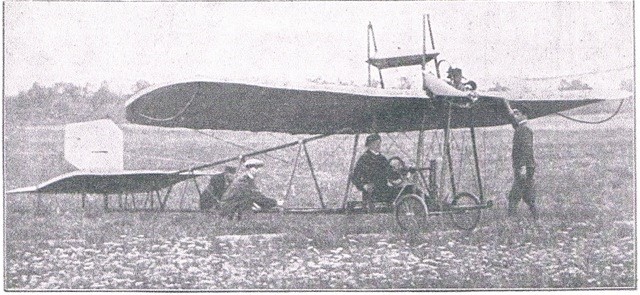
The Deutsches Flugtechnische Institut in Köppern i.T. Eindecker, also known as the Bruno Werntgen Eindecker. Built by him in 1910, with his mother’s help. They often flew together.
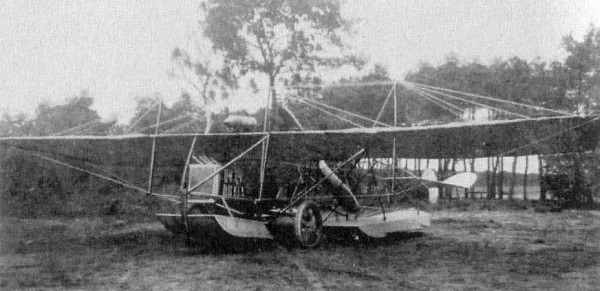
Bruno Werntgen modified one of his Dorner T.III monoplanes with three wide floats to convert the aircraft into an amphibian. He wanted to compete at the first German amphibian contest at Heiligendam in summer 1912. During a trial flight on 26 August, two days before the meeting, Werntgen crashed it.