Westland Welkin

On 9 January 1941, Westland was authorised by the Ministry of Aircraft Production to proceed with two prototypes of its P.14 design for a twin-engined high-altitude fighter, in compliance with Specification F.4/40. Conceived as a two-seater with six 20-mm cannon armament, the P.14 went ahead as a four-cannon single-seater with a pressurized cockpit. Revised to conform to F.7/41, and thus competing with the Vickers Type 432, the P.14, to be named the Welkin, first flew on 1 November 1942. The wing was located in the mid position, and power was provided by two Rolls-Royce Merlin Mk 61s of 1,565 hp, these being succeeded by 1,650 hp Merlin 72/73 or Merlin 76/77 in the production Welkin I. Pressurization of the cockpit was achieved by means of a Rotol blower on the starboard engine. Production of the Welkin I was initiated in 1941, contracts for 100 and then 200 being placed, and the first series aircraft was under test at Boscombe Down by mid-September 1943. However, handling problems combined with reduced operational interest in high-altitude fighters led to cancellation of production after the completion of 75, plus 26 airframes without engines. The Welkin I saw no service use. Welkin NF Mk II During 1943, Westland studied a number of possible derivatives of the Welkin I in order to take advantage of the design work already completed. Of these possibilities, one for a two-seat night fighter variant received a go-ahead on 4 February 1943, subsequent development of this as the Welkin NF Mk II being in accordance with Specification F.9/43. Two prototypes were ordered, as conversions of Mk I airframes during production, and orders were given for 60 of the final production batch of Mk Is to be to this standard. As flown on 23 October 1944, the prototype Welkin NF Mk II introduced AI Mk VIII radar in a lengthened bulbous nose and a new one-piece canopy over a two-seat cockpit in which the observer faced aft behind the pilot. Production plans for the Welkin NF Mk II were cancelled during 1945, along with those for the F Mk I, and the second prototype was not completed.

Westland Welkin
Engine : 2 x Rolls Royce Merlin 76, 1233 hp
Length : 41.568 ft / 12.67 m
Height : 15.748 ft / 4.8 m
Wingspan : 70.013 ft / 21.34 m
Wing area : 459.946 sq.ft / 42.73 sq.m
Max take off weight : 17503.3 lb / 7938.0 kg
Weight empty : 12612.6 lb / 5720.0 kg
Max. speed : 336 kts / 623 km/h
Service ceiling : 43996 ft / 13410 m
Wing load : 38.13 lb/sq.ft / 186.0 kg/sq.m
Range : 1043 nm / 1931 km
Crew : 1
Armament : 4x 20mm MG

Welkin Mk 1
Max take-off weight:8970 kg / 19776 lb
Empty weight: 6520 kg / 14374 lb
Wingspan: 21.34 m / 70 ft 0 in
Length: 12.65 m / 42 ft 6 in
Height: 4.65 m / 15 ft 3 in
Wing area: 42.73 sq.m / 459.94 sq ft
Max. speed: 623 km/h / 387 mph
Ceiling: 13410 m / 44000 ft
Range: 2400 km / 1491 miles

Westland Welkin I

Westland N.1B / N.16 / N.17

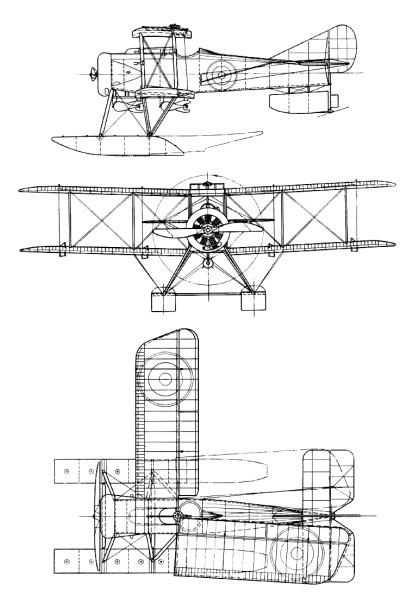
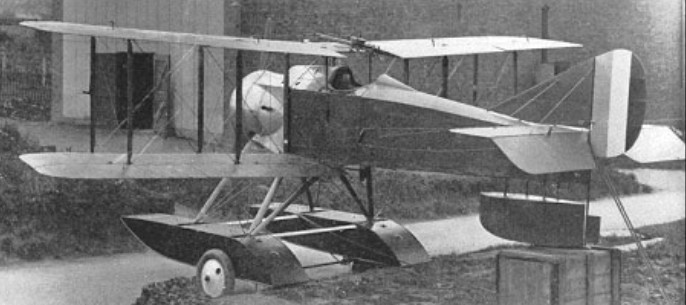
Westland Aircraft began design of its first aircraft in 1917, in response to an Admiralty requirement for a single-seat fighting scout seaplane. In the Admiralty’s N.1B category, the aircraft was designed by Robert Bruce and Arthur Davenport, and was a compact two-bay equi-span biplane of conventional wooden structure and fabric covering. First flown in August 1917, it was powered by a 150hp Bentley BR1 rotary engine. Inboard of the ailerons, on both upper and lower wings, the trailing-edge camber could be varied to obtain the effect of plain flaps. The wings could be folded backwards for shipboard stowage. Armament comprised one synchronised 7.7mm Vickers gun and a flexibly-mounted Lewis of the same calibre above the upper wing centre section. Two prototypes were built and sometimes referred to as the Westland N16 and N17 from their RNAS serial numbers. The first was flown with short Sopwith floats and a large strut-mounted tailfloat whereas the second was used to evaluate long Westland floats that eliminated the need for a tail float. This second aircraft, which lacked the camber-changing mechanism on the wings, also flew with the Sopwith floats and a tail float directly attached to the underside of the rear fuselage. By the time the N.1Bs were on test at the Isle of Grain, the RNAS was experimenting successfully with the shipboard operation of wheeled aircraft and the requirement for a floatplane fighting scout faded away.

Westland N17
Max take-off weight: 897 kg / 1978 lb
Empty weight: 682 kg / 1504 lb
Wingspan: 9.53 m / 31 ft 3 in
Length: 7.76 m / 25 ft 6 in
Height: 3.40 m / 11 ft 2 in
Wing area: 25.83 sq.m / 278.03 sq ft
Max. speed: 175 km/h / 109 mph

Westland N17

Westland F.7/30

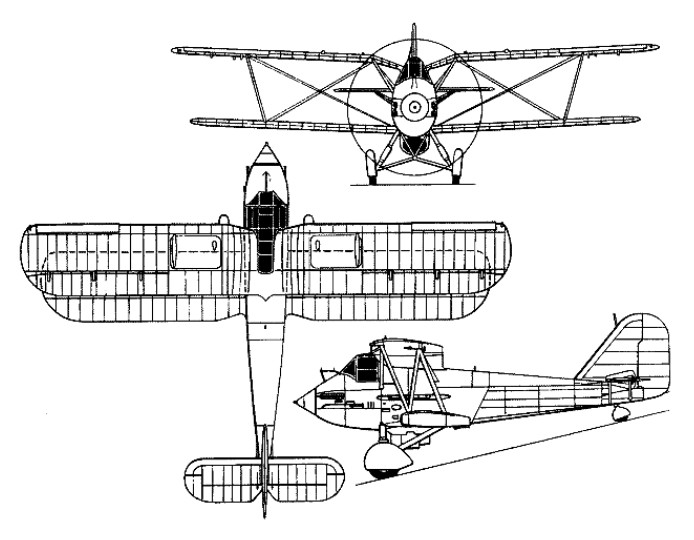
To meet the requirements of Specification F.7/30 for a four-gun day and night fighter powered by the Rolls-Royce Goshawk engine using evaporative cooling, Westland schemed a parasol monoplane in continuation of the Wizard concept, but found it impossible to combine the required slow landing speed with the 402km/h maximum. An alternative biplane, the P.4, was successfully tendered, however, one prototype being ordered in 1931. With a 600hp Goshawk VIII buried in the fuselage behind the pilot, driving the propeller via a long extension shaft, this single-bay biplane featured a gulled upper wing with short inboard struts in place of the usual cabane, and a staggered lower wing of slightly shorter span. When first flown on 23 March 1934, the F.7/30 had an open cockpit, but a full canopy was soon added. Armament of four 7.7mm Vickers guns was concentrated in the nose. Construction was of metal throughout, with metal skins for the forward fuselage and engine bay, and fabric elsewhere. Ailerons were fitted to the upper wing only, this also having Handley Page slots.
Although it handled well, the F.7/30 was found deficient in performance when tested at Martlesham Heath, and no further development occurred.

Max take-off weight: 2359 kg / 5201 lb
Empty weight: 1672 kg / 3686 lb
Wingspan: 11.73 m / 39 ft 6 in
Length: 8.99 m / 30 ft 6 in
Height: 3.28 m / 11 ft 9 in
Wing area: 34.37 sq.m / 369.96 sq ft
Max. speed: 298 km/h / 185 mph

Westland F.7/30

Westland PV.7

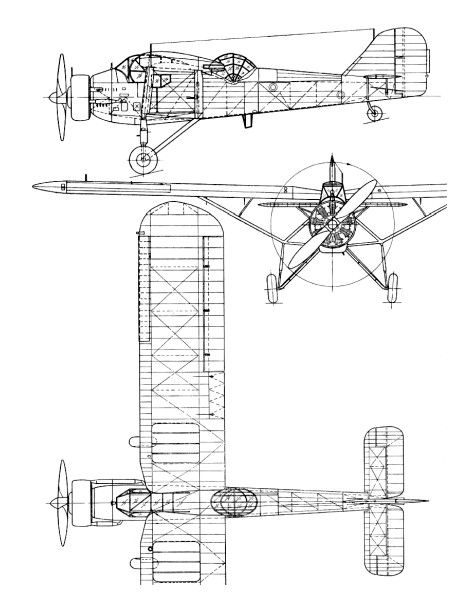
In 1931 Air Ministry Specification G.4/31 called for a General Purpose aircraft, capable of level bombing, army co-operation, dive bombing, reconnaissance, casualty evacuation and torpedo bombing. The Vickers Type 253 won against the Fairey G.4/31, Westland PV-7, Handley Page HP.47, Armstrong Whitworth AW.19, Blackburn B-7, Hawker PV-4 and the Parnell G.4/31.

The Westland team produced the two-seat high-wing monoplane design, the P.V.7. This machine was capable of fulfilling all the standard general-purpose requirements and could, alternatively, be used as a torpedo-bomber, carrying an externally slung 450kg torpedo or an equivalent bomb load.

The preliminary test-flights at Yeovil, in the hands of Mr. H. J. Penrose, produced extremely satisfactory results and there were high hopes that the machine would have a long production run. However, while undergoing extended official trials at Martlesham Heath, the P.V.7 was unfortunately wrecked.

Mr. Penrose, who was flying the machine solo at the time, was engaged in making a series of dives under overload conditions and, while travelling at high speed in rough air, the port rear outrigger strut failed under an unexpected down-load. The resulting fracture brought about the collapse of the complete wing structure and, as it broke away from the machine, it severed the empennage. The pilot made what must be one of the first parachute escapes from an enclosed-cockpit military aeroplane, emerging through one of the small side doors of the coupe and eventually landing unhurt some distance from the wreckage.

The inevitable delay caused by the necessary investigation into the cause of the accident rendered the risk of building a further Private Venture too great, and the type, despite its great promise, was dropped.

Engine: 1 x 722hp Bristol Pegasus III M.3 9-cyl air-cooled radial
Max take-off weight: 3395 kg / 7485 lb
Empty weight: 2048 kg / 4515 lb
Wingspan: 18.36 m / 60 ft 3 in
Length: 11.88 m / 39 ft 0 in
Height: 3.65 m / 12 ft 0 in
Wing area: 49.8 sq.m / 536.04 sq ft
Max. speed: 278 km/h / 173 mph
Ceiling: 6900 m / 22650 ft

Westland PV.7

Westland PV.6 Wallace

Westland PV.6 Wallace Article

In the year 1931 a British Empire Exhibition was held in Buenos Aires, Argentina, at which Westland was represented by a special A.S. Panther-engined Wapiti, G-AAWA, piloted by Mr. H. J. Penrose. This machine embodied the accumulated experience gained with the first 500 Wapitis constructed, and was fitted with a lengthened fuselage and braked undercarriage.
After a successful tour in South America the machine was returned to Yeovil, where further refinements were made, including the fitting of a divided axle chassis, improvements to the fuselage lines, and the installation of a Pegasus engine with Townend ring. By this time both the performance and the appearance of the aircraft differed considerably from that of the standard Wapiti and it was given the designation P.V.6, under which it successfully completed Air Ministry acceptance trials as a general-purpose machine.
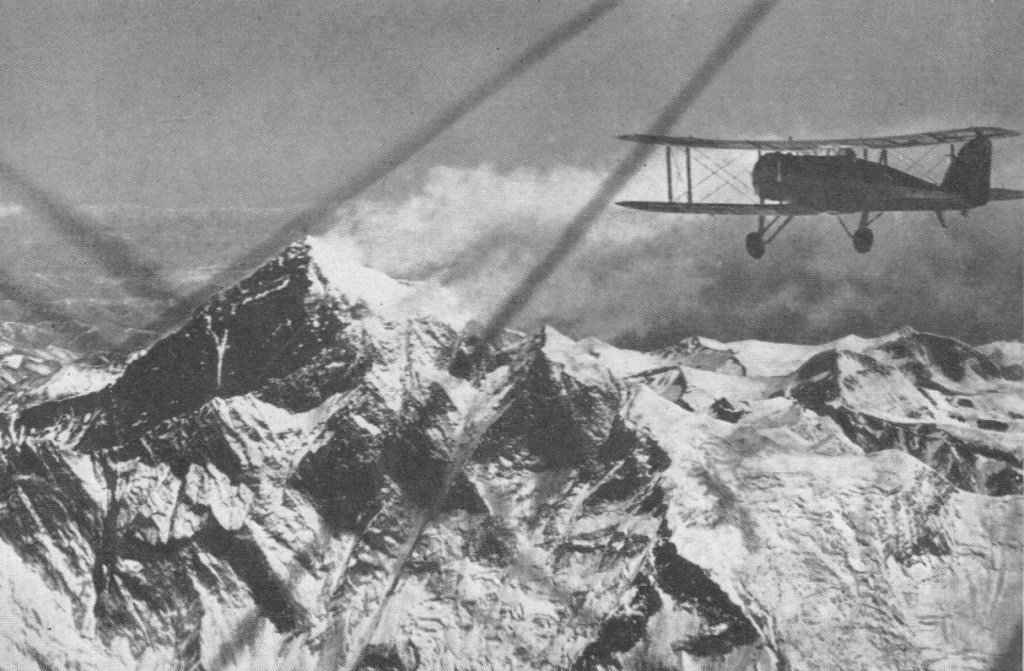
With the placing of a production order the type was given the name of Wallace, but the original machine, again returned to Yeovil, underwent yet another change and was converted for service with the Houston-Mount Everest Expedition.
The very successful realisation of the Expedition’s object brought this veteran aircraft once more into Westland hands, this time to be converted back into a standard Wallace and issued to a Squadron.
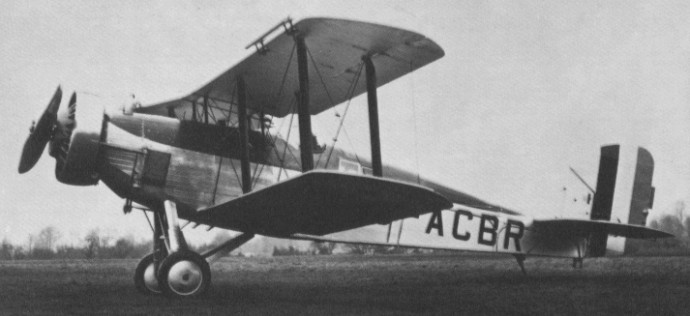
On the early Wallace machines the cockpits were of the open type, with a Scarff gun-ring over the rear cockpit, but the type is now best remembered by reason of a later development. This was the fitting of a transparent cabin over both cockpits, thus making it the first R.A.F. aeroplane to be so equipped. Apart from the greatly increased comfort, this enabled the Wallace to use its rear gun with increased accuracy when operating at maximum speed.
The Wallace had a long period of service with the Royal Air Force, and with the various Auxiliary Squadrons, and although succeeded by the Lysander and other general-purpose types.

The Wallace was the last of the inter-war general purpose biplanes, but its useful life was extended, with many being converted into target tugs and wireless trainers.

Engine: 1 x 655hp Bristol Pegasus IV 9-cylinder air-cooled radial
Max take-off weight: 2610 kg / 5754 lb
Empty weight: 1670 kg / 3682 lb
Wingspan: 14.1 m / 46 ft 3 in
Length: 10.4 m / 34 ft 1 in
Height: 3.5 m / 12 ft 6 in
Wing area: 45.4 sq.m / 488.68 sq ft
Max. speed: 289 km/h / 180 mph
Ceiling: 9150 m / 30000 ft
Armament: 1 x Vickers gun + 1 Lewis gun

Westland Wallace Mk. II
Length : 34.154 ft / 10.41 m
Height : 11.516 ft / 3.51 m
Wingspan : 46.424 ft / 14.15 m
Wing area : 488.04 sq.ft / 45.34 sq.m
Max take off weight : 5750.6 lb / 2608.0 kg
Weight empty : 3841.1 lb / 1742.0 kg
Max. speed : 137 kts / 254 km/h
Cruising speed : 117 kts / 217 km/h
Service ceiling : 24098 ft / 7345 m
Wing load : 11.89 lb/sq.ft / 58.0 kg/sq.m
Range : 408 nm / 756 km
Engine : Bristol Pegasus IV, 671 hp
Crew : 2
Armament : 2x cal.303 MG (7.7mm)
Bombload : 263kg

Westland Wallace

Westland PV.3 / Houston-Westland

In the final phase of the biplane era, marked by the successful Wapiti and Wallace machines, the Westland design team produced, as a Private Venture, an aeroplane capable of combining Army Co-operation and General Purpose duties with Fleet Air Arm requirements and, although the type did not go into production, the only example built had an interesting and exciting career.
Known as the P.V.3, the design was based on that of the previous General Purpose and Army Co-operation biplanes, but was arranged to incorporate a wide-track divided type undercarriage – to facilitate the slinging of a 450kg torpedo -and to have folding wings for shipboard stowage.
First flight-tested by Flt.-Lt. Louis G. Paget, A.F.C., in 1931, the P.V.3 was being used for experimental work at the time machines were being sought for the 1933 Houston-Mount Everest Expedition. Investigation showed that, when lightened and fitted with the fully supercharged Bristol Pegasus S.3 engine, its performance was more suited than any other type for this arduous and exacting adventure.
Modifications to the fuselage, involving the removal of military equipment and the conversion of the rear cockpit to a closed cabin, were made with the co-operation of members of the Expedition, and the final tests, made by Mr. H. J. Penrose, were completely successful. On January 25th, 1933, accompanied by Air Commodore P. F. M. Fellowes, D.S.O., leader of the Expedition, he set out from Westland aerodrome to perform a test climb which would prove that Everest could be cleared by a comfortable margin. They returned after an absence of an hour and forty minutes, having taken the P.V.3 to a height of over 10500m, where the temperature was less than -60°C.

For the Expedition the P.V.3 was renamed the Houston-Westland and, with the converted Wallace, made the first historic flights over Mount Everest. With the successful conclusion of the Expedition’s work the Houston-Westland was returned to Yeovil, and later had a long period of service as a flying test-bed for experimental engines of the Bristol Aeroplane Company.

Westland PV.3 Flight Over Everest Article

Engine: 1 x 575hp Bristol Jupiter XFA 9-cylinder supercharged air-cooled radial
Max take-off weight: 2540 kg / 5600 lb
Empty weight: 1569 kg / 3459 lb
Wingspan: 14.17 m / 47 ft 6 in
Length: 10.41 m / 34 ft 2 in
Height: 3.55 m / 12 ft 8 in
Wing area: 46.4 sq.m / 499.44 sq ft
Max. speed: 262 km/h / 163 mph
Ceiling: 7900 m / 25900 ft
Crew: 2
Armament: 1 x Vickers gun + 1 x Lewis gun, 500kg of bombs

Houston-Westland
Engine: Bristol Pegasus I.S.3

Westland PV.3

Westfall Sport

Westfall Sport N13954

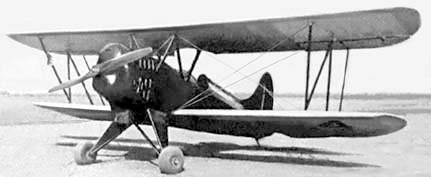
The first Westfall Sport (N13954) was rebuilt c.1957 with a Continental A-75 and was active into the ’70s.

Westfall Sport with 90hp Ken-Royce

The second Sport was built in 1937 with a 65hp LeBlond engine.

An unknown number were built by others from marketed plans.

Engine: 40hp Ford A
Wingspan (upper): 25’0″
Wingspan (lower): 23’0″
Length: 15’4″
Max speed: 98 mph
Stall: 30 mph
Ceiling: 14,000′
Seats: 1

Engine: 65hp LeBlond
Useful load: 274 lb
Max speed: 115 mph
Cruise speed: 100 mph
Stall: 25 mph
Range: 315 mi

Western Airplane Sport

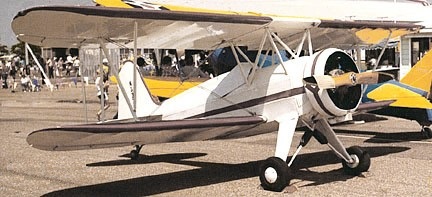
The 1928 Western Airplane & Supply Co Sport three seat open cockpit biplane was possibly designed or constructed by secretary-treasurer W W Wright, who was also credited with the Wright Light Sport of the same year.

Only the one was built, N4225, and the registration was cancelled in 1930.

Engine: 90hp Curtiss OX-5
Wingspan: 34’0″
Length: 33’6″
Seats: 3