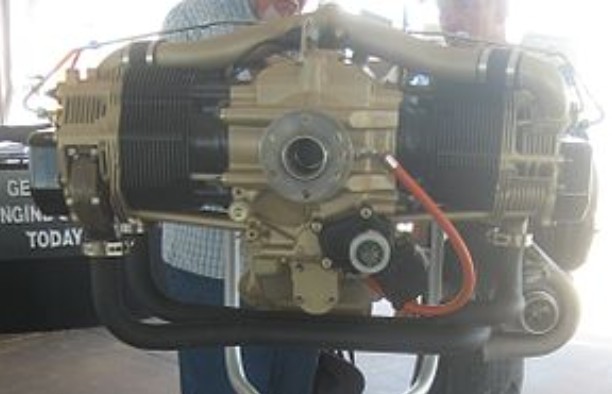
In 2008, Teledyne Continental’s new president, Rhett Ross, announced that the company is very concerned about future availability of 100LL avgas, and as a result will develop a Diesel engine in the 300 hp (220 kW) range for certification in 2009 or 2010.
Rather than develop a new Diesel engine from scratch, Continental decided to license an existing design to develop. The company did not release details on which engine they licensed, but the aviation media have identified it as the French SMA SR305-230 engine.
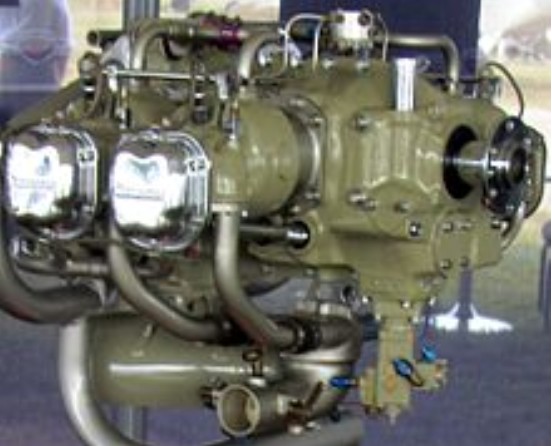
The Continental TD-300 is a four-cylinder, horizontally opposed aircraft Diesel engine produced by Continental Motors, Inc.
The engine was type certified by the US Federal Aviation Administration in April 2013.
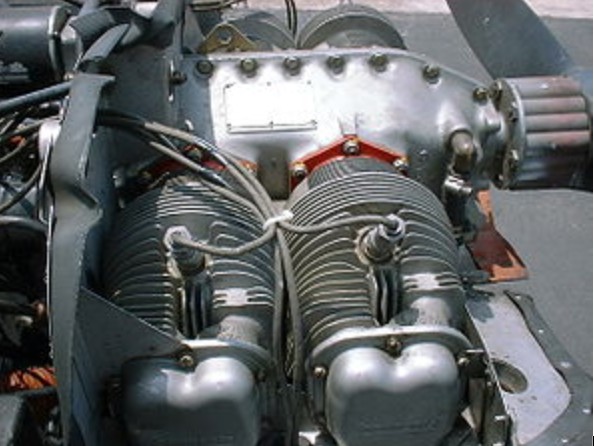
The Continental C115, C125 and C140 aircraft engines were made by Continental Motors in the 1940s, all sharing the US military designation O-280. Of flat-6 configuration, the engines produced 115 hp (86 kW) 125 hp (93 kW) or 140 hp (104 kW) respectively.
The C115 was in production from 1945 to 1951, the C125 was in production from 1945 to 1952, and the C140 from 1945 to 1946.
The C125 has the same crankcase as the Continental C145, although the engines differ in stoke, compression ratio and carburetor jetting. The C125 features a cast iron camshaft and hydraulic tappets.
Applications:
C125 Aero-Flight Streak Baumann Brigadier Call-Air A-3 Globe Swift Grumman Tadpole Hockaday Comet KZ VII Meyers MAC-125 Miles Gemini
Specification:
C-115 1945 115hp 281.9ci
C125 Type: 6-cylinder air-cooled horizontally opposed aircraft piston engine Bore: 4.0625 in (103 mm) Stroke: 3.625 in (92 mm) Displacement: 282 in³ (4.6 L) Length: 39.75 in (101.0 cm) Width: 31.5 in (80.0 cm) Height: 23.25 in (59.0 cm) Dry weight: 286 lb (130 kg) Cooling system: Air-cooled Power output: 125 hp (93 kW) at 2,550 rpm Specific power: 0.44 hp/in³ (20.2 kW/l) Compression ratio: 6.3:1 Power-to-weight ratio: 0.43 hp/lb (0.72 kW/kg)
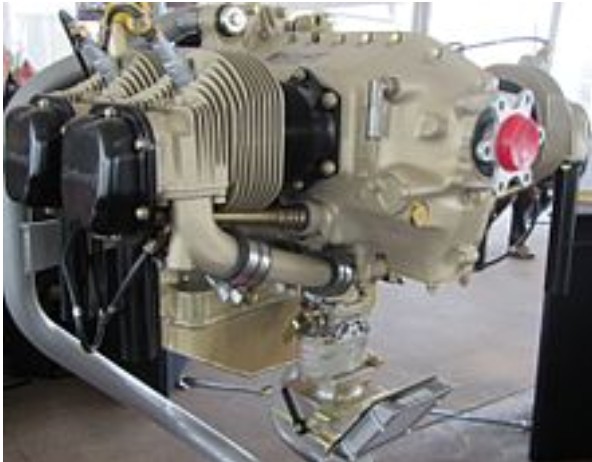
First run in 1947, the Continental C90 and O-200 are a family of air-cooled, horizontally opposed, four-cylinder, direct-drive aircraft engines of 201 in³ (3.29 L) displacement, producing between 90 and 100 horsepower (67 and 75 kW).
The C90 was introduced in 1947 as a follow-on to the A65, which had been in production since 1939. Many of the designs powered by the C90 are upgraded variants of earlier A65 powered designs, such as the Piper J-3 Cub and PA-11 Cub Special, Aeronca 7AC, and Luscombe 8A. The engine was developed from the earlier O-190 by increasing the stroke 1⁄4 inch.
This engine family is considered to be dependable, according to both industry publications and the FAA, certified under ATC 252.
While the C90 is approved for takeoff power of 95 horsepower (71 kW) for 5 minutes, the designation derives from its continuous power rating of 90 hp (67 kW). As noted above, certain models of the C90 replace the usual carburetor with a fuel injection system. In addition, there are models which provide for the installation of a controllable pitch propeller and one, the C90-12FP, designed for pusher installation. While slightly less horsepower than the O200, many floatplane operators prefer the performance of the C90 over the O200, due to its higher torque at lower rpm. This is primarily due to the C90’s camshaft design. The C90 is also known by its military designation of O-205.
Though the C90 was superseded by the O-200, and many of the designs utilizing the O-200 had gone out of production by 1980, with the 2004 publication of the United States Federal Aviation Administration light-sport aircraft regulations came a resurgence in demand for the O-200. The light-sport aircraft standard is for small, simple single- and two-seat aircraft for which the O-200 is well-suited.
The O-200 is an updated and upgraded version of the engine, achieving increased power of 100 hp (75 kW) as a result of higher maximum rpm. The standard and most common model of the engine is the O-200-A; the -B model is designed for pusher installation, the -C model provides for the installation of a controllable pitch propeller, and the -D model is a lightweight model designed for Light Sport aircraft.
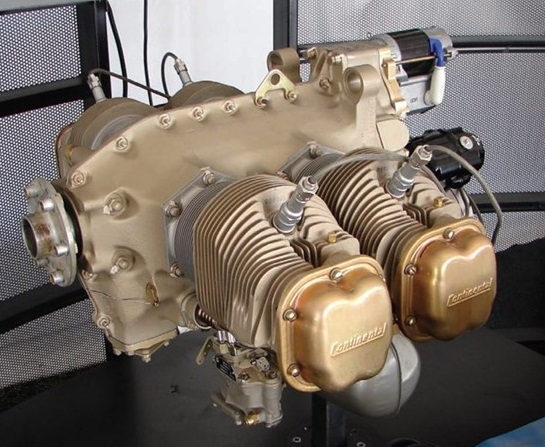
Continental O-200D
With 23,949 Cessna 150s built, this type is the most common application for the O-200.
In a cooperative venture, Rolls-Royce produced these same designs in England, under separate certification, with model designations beginning RR, e.g. the Rolls-Royce RR C90-12FH is the equivalent of the Continental C90-12FH; the Rolls-Royce versions are “directly interchangeable with the equivalent models manufactured by Continental.” The Rolls-Royce O-200-A powers the Beagle B.121 Pup 100, the Bölkow BO 208 C Junior, the Avions Robin DR 220, and the Morane-Saulnier MS-880.
Rolls Royce O-200-B
All versions of the C90 and O-200 are Four-stroke reciprocating engines and are all similar in size, displacement and weight. These engines are typically fitted with an updraft carburetor, though the C90-8FJ, -12FJ, and -14FJ are equipped with fuel injection systems. They utilize a redundant ignition system requiring no external power, driving two magnetos, each of which fires one spark plug per cylinder. Each cylinder has one intake valve and one exhaust valve, pushrod-activated.
Continental’s recommended time between overhaul (TBO) for these engines is 1,800 hours of operation or 12 years in service, whichever is reached first. The standard certification for the C90 and O-200 specifies Avgas 80/87 as the minimum fuel grade. Both are eligible for operation on automobile gasoline on the basis of Supplemental Type Certificates.
An engine designated the IOL-200, an O-200 variant modified with fuel injection and liquid cooling, powered the 1986 non-stop, non-refueled global circumnavigation flight of the Rutan Voyager. The 110-horsepower (82 kW) IOL-200, also referred to as the Voyager 200, was the rear engine and—unlike the forward engine, another modified engine, a Continental O-240 —ran throughout the entire 9-day flight save for a four-minute shutdown due to a fuel problem.
Continental IOL-200
Formula One racer Sharp Nemesis, designed and flown by Jon Sharp, was powered by a ‘stock’ O-200. Between 1991 and 1999, the plane won 45 of the 48 events in which it was entered, as well as winning three Louis Blèriot medals, four Pulitzer Trophies, and setting 16 speed records in its class. In one of those records, Nemesis was clocked at over 290 mph (467 km/h). By contrast, the O-200 powered Legend Cub cruises at 95 mph (152.9 km/h).
The Continental O-190 (Company designations C75 and C85) is a series of engines made by Continental Motors beginning in the 1940s. Of flat-4 configuration, the engines produced 75 hp (56 kW) or 85 hp (63 kW) respectively.
The two variants shared the same bore, stroke and compression ratio. The C85 produced ten extra horsepower by virtue of having a maximum permissible rpm of 2575 versus the 2275 of the C75. The C75 was in production from 1943 to 1952 and the C85 from 1944 to 1970.
Variants:
C75
C85 85 hp 177 ci 4 cylinder Weight: 170 lb
C-85-8 A-65 but 188ci tapered propshaft Weight: 188 lb
C-85-8F C-85-8 with flanged propshaft.
C-85-12 C-85-8 with starter.
C-85-12F C-85-12 with flanged propshaft.
O-190 Military designation for the C75, C85 family of engines. 85 hp 177 ci 4 cylinder Weight: 170 lb
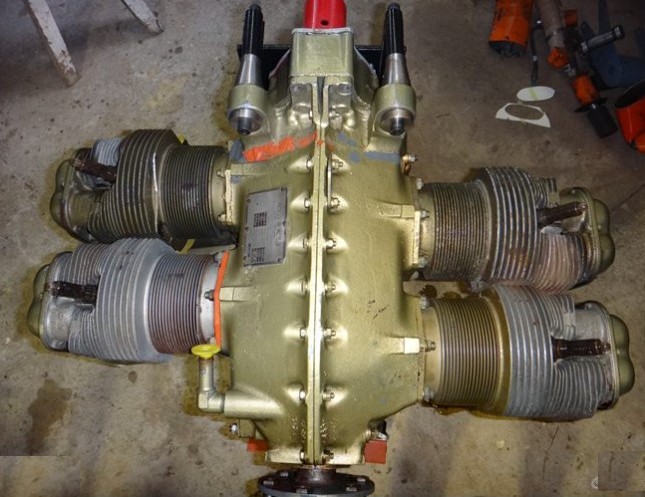
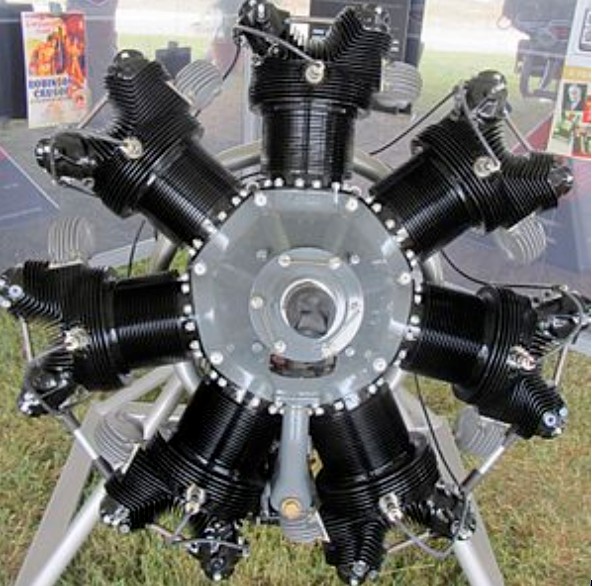
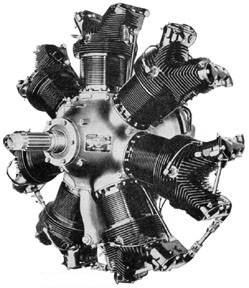
The Continental R-670 (factory designation W-670 (ATC 80 and 120)) was a seven cylinder four-cycle radial aircraft engine produced by Continental displacing 668 cubic inches (11 litres) and a dry weight of 465 lb (211 kg). First run in 1934, horsepower varied from 210 to 240 at 2,200 rpm. The engine was the successor to Continental’s first radial engine, the 170hp Continental A-70. This engine was used on many aircraft in the 1930s and 1940s. The R-670 was widely used in the PT-17 Stearman primary training aircraft of the U.S. military.
W-670
The 1934 W-670 received ATC 168.
In addition to being used in aircraft, the R-670 was used in a number of light armoured vehicles of World War II.
Variants:
W-670-K carburettor, 5.4:1 compression, 73 Octane, front exhausts and 225 hp (168 kW)
W-670-L carburettor, 5.4:1 compression, 73 Octane, rear exhausts and 225 hp (168 kW)
W-670-M carburettor, 6.1:1 compression, 80 Octane, front exhausts and 240 hp (179 kW)
W-670-N carburettor, 6.1:1 compression, 80 Octane, rear exhausts and 240 hp (179 kW)
W-670-K1 fuel injection, 5.4:1 compression, 73 Octane, front exhausts and 230 hp (172 kW)
W-670-L1 fuel injection, 5.4:1 compression, 73 Octane, rear exhausts and 230 hp (172 kW)
W-670-M1 fuel injection, 6.1:1 compression, 80 Octane, front exhausts and 250 hp (186 kW)
W-670-N1 fuel injection, 6.1:1 compression, 80 Octane, rear exhausts and 250 hp (186 kW)
W670-6A (military R-670-5)
W670-6N (military R670-4, -11A)
W670-17 (military R-680-8)
Applications: American Airmotive NA-75 Boeing Stearman CallAir Model A Cessna 190 Fairchild PT-23 G class blimp M1 Combat Car M2 Light Tank M3 Stuart LVT-4 Water Buffalo Timm N2T Tutor Waco 240-A Waco UEC and UIC Waco VKS-7 Waco QCF-2
Specifications:
R-670-K Type: Seven cylinder air-cooled radial Bore: 5+1⁄8 in (130.2 mm) Stroke: 4+5⁄8 in (117.5 mm) Displacement: 668 cu in (10.95 l) Length: 34+3⁄16 in (868.4 mm) Diameter: 42+1⁄2 in (1,079.5 mm) Dry weight: 450 kg (992.1 lb) Valvetrain: 1 inlet and 1 exhaust valve per cylinder Fuel system: 1 Stromberg NA-R6 Carburetor Fuel type: 65 octane Oil system: Dry sump, one pressure pump, one scavenge pump, encoesed valve-train Cooling system: Air-cooled Power output: 225 hp (168 kW) at 2,175 rpm Specific power: 0.337 hp/in³ Compression ratio: 5.4:1 Fuel consumption: 13 US Gal/hr (49 l/hr) at cruising rpm Specific fuel consumption: 0.54 lb/hp/hr (0.328 kg/kW/hr) – at rated rpm Oil consumption: 0.4 US Gal/hr (1.5 l/hr) at cruising rpm Power-to-weight ratio: 0.49 hp/lb at cruising rpm
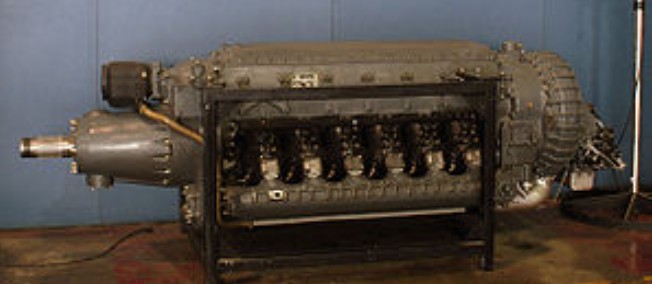
The Continental XI-1430 Hyper engine (often identified as the IV-1430) was a liquid-cooled aircraft engine developed in the United States by a partnership between the US Army Air Corps and Continental Motors. It was the “official” result of the USAAC’s hyper engine efforts that started in 1932, but never entered widespread production as it was not better than other available engines when it finally matured. In 1939, the I-1430-3 was designated as the engine to power the Curtiss XP-55, an extremely radical (for the time) pusher-engine fighter design that would not reach production.
In the late 1920s Harry Ricardo wrote a paper on the sleeve valve design that led to the USAAC’s hyper engine efforts. He claimed that the 1 hp/in³ goal was impossible to achieve with poppet valve type engines. The USAAC engineering team at Wright Field decided to test this claim by beating it. The I-1430 was the result of an experimental effort at Wright Field to build a high-power cylinder using conventional poppet valves. The engineers, led by Sam Heron, used a variety of techniques to raise the allowable RPM, which was the key to increased power without requiring a larger engine.
The USAAC was interested in very large bomber designs, and were most interested in engines that could be buried in the wings in order to improve streamlining. From this requirement they designed a 12-cylinder horizontally opposed engine using twelve separate “hyper” cylinders. Although this sort of arrangement, with entirely separate cylinders from each other and the crankcase, was common for liquid-cooled Central Powers World War I-era inline-6 aviation engines, as in the German Mercedes D.III of nearly two decades earlier – and had been used for the 1918-era Allied Liberty L-12 liquid-cooled aviation engine with significant success – it had fallen from use in favor of engines featuring a monobloc engine design philosophy, with a cylinder block that combined the cylinders and the crankcase, leading to much stiffer engines, that were better able to handle increased power.
The USAAC proposed an engine of about 1200 cubic inches (20 L), hoping the engine’s smaller size would lead to reduced drag and hence improved range. By 1932, the USAAC’s encouraging efforts led the Army to sign a development contract with Continental Motors Company for the continued development of the engine design. The contract limited Continental’s role to construction and testing, leaving the actual engineering development to the Army.
A second cylinder was added to Hyper No. 1 to make a horizontal-opposed engine for evaluation of an opposed-piston 12-cylinder engine. After running the modified engine with different combinations of cylinder bore and stroke, it was found that the high coolant temperatures required to maintain the required output was impractical. A third high-performance single-cylinder engine was then constructed with lower operating parameters. This one-cylinder engine was designated “Hyper No. 2”, and became the test bed for developing the cylinders that would become the Continental O-1430 (“O” for “opposed”) engine. It would require a ten year development period which changed the layout to first an upright V-12 engine and later, an inverted V-12 engine, before becoming reliable enough to consider for full production as the Continental I-1430 in 1943.
During development, interest in the “buried engine” concept faded. Improvements in conventional streamlining, notably the NACA cowling, eliminated the need for a buried engine for improved performance. Additionally, with bomber designs like the B-17, using radial engines for power, starting to enter production, the need for new bomber designs became less pressing and the Army turned its attention to new pursuit models. For this role the O-1430 was not terribly useful, so Continental modified the basic design into a V-12, and then into an inverted-V-12, the I-1430, in the same basic format that the German Luftwaffe of World War II would use.
The I-1430 featured cylinders with “hemispherical” combustion chambers and two sodium cooled exhaust valves. Although it retained the separate cylinders, the change to a V-layout allowed the individual cylinder heads to be cast as a single piece. Mounted at either end, a Y-shaped plate provided stiffness, while containing the camshaft drives. Continental built the first I-1430 engine in 1938 and successfully tested it in 1939.[1] At the time it was an extremely competitive design, offering at least 1,300 hp (970 kW) from a 23 liter displacement; the contemporary Rolls-Royce Merlin offered about 1,000 hp (700 kW) from 27 l displacement, while the Daimler-Benz DB 601 offered slightly more power at 1,100 hp (820 kW), but was much larger, at 33 l displacement.
While the engine was producing exceptional power for its displacement, the reason it was not put into production may have had to do with it’s weight. Both the Rolls Royce/Packard Merlin V-1650 and the Allison V-1710 were in production, with similar power and better Power/Weight Ratios. The V-1710 was 1395 lbs, 385 pounds lighter than I-1430 with a power-to-weight ratio of 1.05. The Merlin V-1650 weighed in at 1640, 25 pounds more than the smaller and unproven Continental with about the same power/weight ratio of about 1.00. It did not seem the XI-1430 would be the solution to any important problem. It was not until 1943 that the 1,600 hp (1,190 kW) IV-1430 was tested extensively in the Lockheed XP-49, a modified version of the P-38 Lightning. It was also to be used in the production version of the Bell XP-76, which was canceled before production began. In 1944 it was also tested in the McDonnell XP-67.
Interest in the design had largely disappeared by then; piston engines with the same power or greater ratings were widely available, the Merlin for example had improved tremendously and was offering at least 1,500 hp (1,120 kW), and the military and aircraft builders were already starting to focus on jet engines.
Only twenty-three I-1430 series engines were delivered, later redesignated the XI-1430 to indicate the purely experimental use.
A 24 cylinder H-style engine, the XH-2860, based on the XI-1430 was designed but probably not built.
Specifications:
I-1430-1 Type: 12-cylinder, liquid-cooled, inverted Vee Bore: 5.5 in (139.7 mm) Stroke: 5 in (127.0 mm) Displacement: 1,425 cu in (23.35 l) Length: 5.8 in (147.3 mm) Width: 5.8 in (147.3 mm) Height: 5.8 in (147.3 mm) Dry weight: 1,615 lb (732.6 kg) Valvetrain: Overhead cam with 4 valves per cylinder Supercharger: Gear driven centrifugal 5.97:1 gear ratio Turbocharger: 1 x General Electric turbo-charger with intercooler Fuel system: 1 x Bendix-Stromberg PD-12P2 updraught injection type carburettor with automatic mixture control Fuel type: 100/130 grade aviation gasoline Oil system: Pressure feed at 100 psi (689,475.73 Pa) with dry sump, 100-120 S.U. (20.5-25.1 cs) grade oil Cooling system: liquid, 50% Glycol, 50% water Reduction gear: 0.385:1 spur reduction gear Eclipse V-27 or Jack& Heinz JH-3L direct cranking electric starter Power output: (take-off) 1,600 hp (1,193.1 kW) at 3,300 rpm at 61 in (1,549.4 mm) Hg / +15.5 lb (7.0 kg) boost (emergency) 2,100 hp (1,566.0 kW) at 3,400 rpm at 25,000 ft (7,620 m) (military) 1,600 hp (1,193.1 kW) at 3,300 rpm at 25,000 ft (7,620 m) (normal) 1,150 hp (857.6 kW) at 3,000 rpm at 25,000 ft (7,620 m) (cruising) 920 hp (686.0 kW) at 2,780 rpm at 25,000 ft (7,620 m) Specific power: 1.47 hp/cu in {67.18 kW/l) Compression ratio: 6.5:1 Specific fuel consumption: 0.47 lb/hp/hr (0.286 kg/kW/hr) Oil consumption: 0.025 lb/hp/hr (0.015 kg/kW/hr) Power-to-weight ratio: 1.45 hp/lb (2.384 kW/kg) B.m.e.p. (max) 3.42 psi (23,580.07 Pa) (Brake mean effective pressure)
Continental TSIO-550-C engine installation in a Cessna 400
First run in 1983, the Continental IO-550 engine is a large family of fuel injected six-cylinder, horizontally opposed, air-cooled aircraft engines that were developed for use in light aircraft by Teledyne Continental Motors. The first IO-550 was delivered in 1983 and the type remains in production through 2010. There is no carburetor-equipped variant, hence the base model is the IO-550.
The IO-550 family of engines was developed from the IO-520 series, with the stroke increased from 4.00 to 4.25 inches, increasing the displacement to 552 cu.in (9.05 l). The engine family covers a power range from 280 hp (209 kW) to 360 hp (268 kW).
The engines were first certified on a regulatory basis of FAR 33, 1 February 1965 amendment, 33-8, 2 May 1977. The first IO-550 model was certified on 13 October 1983.
The IOF-550 is an Aerosance FADEC equipped version of the same basic engine, the TSIO-550 is a dual turbocharged version and the TSIOL-550 is a liquid-cooled variant.
Variants:
IO-550-A 300 hp (224 kW) at 2700 rpm, dry weight 430.72 lb (195.37 kg). Certified 13 October 1983.
IO-550-B 300 hp (224 kW) at 2700 rpm, dry weight 421.61 lb (191.24 kg). Certified 13 October 1983.
IO-550-C 300 hp (224 kW) at 2700 rpm, dry weight 433.20 lb (196.50 kg). Certified 13 October 1983.
IO-550-D 300 hp (224 kW) at 2700 rpm, dry weight 437.1 lb (198.3 kg). Certified 23 June 1988.
IO-550-E 300 hp (224 kW) at 2700 rpm, dry weight 450.50 lb (204.34 kg). Certified 20 December 1989.
IO-550-F 300 hp (224 kW) at 2700 rpm, dry weight 437.1 lb (198.3 kg). Similar to the IO-550-A,B & C, with a top-mounted induction system and 8-quart oil sump. Certified 23 June 1988.
IO-550-G 280 hp (209 kW) at 2500 rpm, dry weight 428.97 lb (194.58 kg). Certified 17 March 1989.
IO-550-L 300 hp (224 kW) at 2700 rpm, dry weight 438.5 lb (198.9 kg). Certified 23 June 1988.
IO-550-N 310 hp (231 kW) at 2700 rpm, dry weight 429.97 lb (195.03 kg). Similar to the IO-550-G with increased power rating. Certified 16 August 1996.
IO-550-P 310 hp (231 kW) at 2700 rpm, dry weight 429 lb (195 kg). Similar to the IO-550-N with oil sump from the IO-550-L. Certified 1 March 2000.
IO-550-R 310 hp (231 kW) at 2700 rpm, dry weight 439.5 lb (199.4 kg). Similar to the IO-550-N but with the oil sump, oil suction tube and mount legs from the IO-550-B. Certified 1 March 2000.
IOF-550-B 300 hp (224 kW) at 2700 rpm, dry weight 447.1 lb (202.8 kg). Similar to the IO-550-B with an Aerosance FADEC fuel and ignition control system. Certified 4 February 2002.
IOF-550-C 300 hp (224 kW) at 2700 rpm, dry weight 453.2 lb (205.6 kg). Similar to the IO-550-C with an Aerosance FADEC fuel and ignition control system. Certified 4 February 2002.
IOF-550-D 300 hp (224 kW) at 2700 rpm, dry weight 455.0 lb (206.4 kg). Similar to the IO-550-D with an Aerosance FADEC fuel and ignition control system. Certified 4 February 2002.
IOF-550-E 300 hp (224 kW) at 2700 rpm, dry weight 462.8 lb (209.9 kg). Similar to the IO-550-E with an Aerosance FADEC fuel and ignition control system. Certified 4 February 2002.
IOF-550-F 300 hp (224 kW) at 2700 rpm, dry weight 460.1 lb (208.7 kg). Similar to the IO-550-F with an Aerosance FADEC fuel and ignition control system. Certified 4 February 2002.
IOF-550-L 300 hp (224 kW) at 2700 rpm, dry weight 455.0 lb (206.4 kg). Similar to the IO-550-L with an Aerosance FADEC fuel and ignition control system. Certified 4 February 2002.
IOF-550-N 310 hp (231 kW) at 2700 rpm, dry weight 460.0 lb (208.7 kg). Similar to the IO-550-N with an Aerosance FADEC fuel and ignition control system. Certified 4 February 2002.
IOF-550-P 310 hp (231 kW) at 2700 rpm, dry weight 460.0 lb (208.7 kg). Similar to the IO-550-P with an Aerosance FADEC fuel and ignition control system. Certified 4 February 2002.
IOF-550-R 310 hp (231 kW) at 2700 rpm, dry weight 470.5 lb (213.4 kg). Similar to the IO-550-R with an Aerosance FADEC fuel and ignition control system. Certified 4 February 2002.
TSIO-550-A 360 hp (268 kW) at 2600 rpm, dry weight 442 lb (200 kg) plus two turbochargers of 28.2 lb (12.8 kg) each.
TSIO-550-B 350 hp (261 kW) at 2700 rpm, dry weight 442 lb (200 kg) plus two turbochargers of 28.2 lb (12.8 kg) each. Similar to the TSIO-550-A except with a 12 quart sump, sonic venturii removed and the two stage fuel pump replaced by a single stage fuel pump.
TSIO-550-C 310 hp (231 kW) at 2600 rpm, dry weight 442 lb (200 kg) plus two turbochargers of 28.2 lb (12.8 kg) each.
TSIO-550-E 350 hp (261 kW) at 2700 rpm, dry weight 442 lb (200 kg) plus two turbochargers of 28.2 lb (12.8 kg) each. Similar to TSIO-550-C with the oil sump and maximum continuous power rating of the TSIO-550-B.
TSIO-550-G 310 hp (231 kW) at 2700 rpm, dry weight 554 lb (251 kg) plus two turbochargers of 28.2 lb (12.8 kg) each. Similar to the TSIO-550-E with smaller surface area intercoolers, different oil sump capacity and power rating.
TSIO-550-K 315 hp (235 kW) at 2500 rpm, dry weight 522 lb (237 kg) plus two turbochargers of 28.2 lb (12.8 kg) each. Similar to the TSIO-550-E with new oil sump and capacity, decreased maximum continuous power, increased turbo boost pressure, decreased engine speed rating and tapered cylinder barrel fins.
TSIOF-550-D 350 hp (261 kW) at 2600 rpm, dry weight 558 lb (253 kg) plus two turbochargers of 35.2 lb (16.0 kg) each. Similar to the TSIOF-550-J except the exhaust system and low voltage harness.
TSIOF-550-J 350 hp (261 kW) at 2600 rpm, dry weight 558 lb (253 kg) plus two turbochargers of 35.2 lb (16.0 kg) each. Similar to the TSIO-550-E except for FADEC fuel injection and ignition control, turbochargers, tapered cylinder barrel fins, oil sump and capacity, maximum continuous speed and manifold pressure rating.
TSIOF-550-K 315 hp (235 kW) at 2500 rpm, dry weight 537.3 lb (243.7 kg) plus two turbochargers of 28.2 lb (12.8 kg) each. Similar to the TSIO-550-K but with FADEC fuel injection and ignition control.
TSIOL-550-A 350 hp (261 kW) at 2700 rpm, dry weight 402 lb (182 kg). Similar to the TSIO-520-NB but with a new cylinder design that uses liquid cooling. The coolant manifold is on top of the cylinder head, with a coolant pump fitted to the starter adapter, driven by the starter adapter shaft and the oil cooler is mounted on the airframe, not the engine. The engine has an AiResearch TA81 turbocharger.
TSIOL-550-B 325 hp (242 kW) at 2700 rpm, dry weight 557 lb (253 kg). Similar to the TSIO-520-UB but with a new cylinder design that uses liquid cooling. The coolant manifold is on top of the cylinder head, with a coolant pump fitted to the starter adapter, driven by the propeller shaft using sheaves, the oil cooler is mounted on the airframe, not the engine. A coolant tank and coolant lines are added to the installation. The engine has an AiResearch TS06 turbocharger.
TSIOL-550-C 350 hp (261 kW) at 2600 rpm, dry weight 546 lb (248 kg). Similar to the TSIOL-550-A but with the exhaust system and turbocharger bracket from the TSIOL-550-B. The engine is modified to accept the AiResearch TA81 turbocharger. Neither oil nor coolant radiators are provided with the engine.
GIO-550-A A special non-certified geared engine developed for the RU-38 Twin Condor covert reconnaissance aircraft, incorporating 3:2 gear reduction to 2267 rpm.
The Continental IO-360 is a family of fuel-injected air-cooled, six-cylinder aircraft engines manufactured by Continental Motors in the United States of America, and first run in 1962.
The engine was available in both normally aspirated, fuel injected IO-360 model and a turbocharged TSIO-360 versions. It was also available in both left and right hand rotation versions for use on twin-engined aircraft.
There was no carbureted version of this engine therefore the base model is the IO-360.
The IO-360 was first certified by the Federal Aviation Administration on 15 May 1962 to the CAR 13 certification standard, effective June 15, 1956, as amended by 13-1 thru 13-3. The engine is produced by Continental under Production Certificate No. 508.
The turbocharged TSIO-360 series was first certified on 11 October 1966 to the Federal Aviation Regulations Part 33 standard effective February 1, 1965, as amended by 33-1. This series was manufactured under Production Certificate No. 7, except the TSIO-360-D which is under Production Certificate No. 508.
Variants:
IO-360-A 210 hp (157 kW) at 2800 rpm, Minimum fuel grade 100 or 100LL avgas, compression ratio 8.5:1. Base IO-360 model: a six-cylinder air-cooled, horizontally opposed direct drive, fuel injected engine. Uses a TCM 639230A3 fuel injector. The crankshaft has two 6th order dampers.
IO-360-AB 210 hp (157 kW) at 2800 rpm, Minimum fuel grade 100 or 100LL avgas, compression ratio 8.5:1. Uses a TCM 639230A3 fuel injector. Same as the IO-360-A except for modified crankshaft. The crankshaft has one 6th and one 4½ order damper.
IO-360-AF 180 hp (134 kW), designed to run on lower octane fuels such as the proposed 94UL avgas. The designation of “AF” stands for alternative fuel. The version incorporates lower-compression pistons, giving a 7.5 to 1 compression ratio and a revised fuel injection system.
IO-360-B 180 hp (134 kW) at 2700 rpm, Minimum fuel grade 80/87 avgas, compression ratio 6.0:1. Uses a TCM 639230A3 or 6006 fuel injector. Same as IO-360-A except for reduced compression ratio and rated power. The crankshaft has two 6th order dampers.
IO-360-C 210 hp (157 kW) at 2800 rpm, Minimum fuel grade 100 or 100LL avgas, compression ratio 8.5:1. Uses a TCM 639231A3 fuel injector. Same as the IO-360-D except for accessory drive provisions. The crankshaft has two 6th order dampers.
IO-360-CB 210 hp (157 kW) at 2800 rpm, Minimum fuel grade 100 or 100LL avgas, compression ratio 8.5:1. Uses a TCM 639231A3 fuel injector. Same as the IO-360-C except for modified crankshaft. The crankshaft has one 6th and one 4½ order damper.
IO-360-D 210 hp (157 kW) at 2800 rpm, Minimum fuel grade 100 or 100LL avgas, compression ratio 8.5:1. Uses a TCM 639231A3 fuel injector. Same as the IO-360-A except for power rating and oil cooled pistons. The crankshaft has two 6th order dampers.
IO-360-DB 210 hp (157 kW) at 2800 rpm, Minimum fuel grade 100 or 100LL avgas, compression ratio 8.5:1. Uses a TCM 639231A3 fuel injector. Same as the IO-360-D except for modified crankshaft. The crankshaft has one 6th and one 4½ order damper.
IO-360-E 210 hp (157 kW) at 2800 rpm, Minimum fuel grade 100 or 100LL avgas, compression ratio 8.5:1. Uses a TCM 639231A3 fuel injector. Same as the IO-360-D except for oil sump and suction tube. The crankshaft has two 6th order dampers.
IO-360-ES 210 hp (157 kW) at 2800 rpm, Minimum fuel grade 100 or 100LL avgas, compression ratio 8.5:1. Same as the IO-360-HB except for the modified spider induction system and the use of a TCM 639289A95 fuel injector. The crankshaft has one 6th and one 4½ order damper.
IO-360-G 210 hp (157 kW) at 2800 rpm, Minimum fuel grade 100 or 100LL avgas, compression ratio 8.5:1. Uses a TCM 639231A3 fuel injector. Same as the IO-360-C except for crankshaft counterweight tuning. The crankshaft has one 6th and one 4½ order damper.
IO-360-GB 210 hp (157 kW) at 2800 rpm, Minimum fuel grade 100 or 100LL avgas, compression ratio 8.5:1. Uses a TCM 639231A3 fuel injector. Same as the IO-360-G except for modified crankshaft. The crankshaft has one 6th and one 4½ order damper.
IO-360-H 210 hp (157 kW) at 2800 rpm, Minimum fuel grade 100 or 100LL avgas, compression ratio 8.5:1. Uses a TCM 639231A3 fuel injector. Same as the IO-360-D except for crankshaft counterweight tuning. The crankshaft has one 6th and one 4½ order damper.
IO-360-HB 210 hp (157 kW) at 2800 rpm, Minimum fuel grade 100 or 100LL avgas, compression ratio 8.5:1. Uses a TCM 639231A3 fuel injector. Same as the IO-360-H except for modified crankshaft. The crankshaft has one 6th and one 4½ order damper.
IO-360-J 210 hp (157 kW) at 2800 rpm, Minimum fuel grade 100 or 100LL avgas, compression ratio 8.5:1. Uses a TCM 639231A3 fuel injector. Same as the IO-360-H except for power rating. The crankshaft has one 6th and one 4½ order damper.
IO-360-JB 210 hp (157 kW) at 2800 rpm, Minimum fuel grade 100 or 100LL avgas, compression ratio 8.5:1. Uses a TCM 639231A3 fuel injector. Same as the IO-360-J except for modified crankshaft. The crankshaft has one 6th and one 4½ order damper.
IO-360-K 195 hp (145 kW) at 2600 rpm, Minimum fuel grade 100 or 100LL avgas, compression ratio 8.5:1. Uses a TCM 639231A3 fuel injector. Same as the IO-360-H except for power rating. The crankshaft has one 6th and one 4½ order damper.
IO-360-KB 195 hp (145 kW) at 2600 rpm, Minimum fuel grade 100 or 100LL avgas, compression ratio 8.5:1. Uses a TCM 639231A3 fuel injector. Same as the IO-360-K except for modified crankshaft. The crankshaft has one 6th and one 4½ order damper.
TSIO-360-A 210 hp (157 kW) at 2800 rpm, Minimum fuel grade 100 or 100LL avgas, compression ratio 7.50:1. Base TSIO-360 model: a six-cylinder air-cooled, horizontally opposed direct drive, fuel injected, tuned induction, turbocharged engine with internal piston cooling oil jets.
TSIO-360-AB 210 hp (157 kW) at 2800 rpm, Minimum fuel grade 100 or 100LL avgas, compression ratio 7.50:1. Same as the TSIO-360-A except for a modified crankshaft.
TSIO-360-B 210 hp (157 kW) at 2800 rpm, Minimum fuel grade 100 or 100LL avgas, compression ratio 7.50:1. Same as the TSIO-360-A except for accessory drive provisions.
TSIO-360-BB 210 hp (157 kW) at 2800 rpm, Minimum fuel grade 100 or 100LL avgas, compression ratio 7.50:1. Same as the TSIO-360-B except for modified crankshaft and different dampers.
TSIO-360-C 225 hp (168 kW) at 2800 rpm, Minimum fuel grade 100 or 100LL avgas, compression ratio 7.50:1. Same as the TSIO-360-A except for rating, crankshaft dampers provision for cabin pressurization.
TSIO-360-CB 225 hp (168 kW) at 2800 rpm, Minimum fuel grade 100 or 100LL avgas, compression ratio 7.50:1. Same as the TSIO-360-C except for a modified crankshaft.
TSIO-360-D 225 hp (168 kW) at 2800 rpm, Minimum fuel grade 100 or 100LL avgas, compression ratio 7.50:1. Same as the TSIO-360-C except for cabin pressurization.
TSIO-360-DB 225 hp (168 kW) at 2800 rpm, Minimum fuel grade 100 or 100LL avgas, compression ratio 7.50:1. Same as the TSIO-360-D except for a modified crankshaft.
TSIO-360-E 215 hp (160 kW) at 2575 rpm, Minimum fuel grade 100 or 100LL avgas, compression ratio 7.50:1. Same as the TSIO-360-C except for rating, engine mounted turbocharger, freon compressor drive and cabin pressurization.
TSIO-360-EB 215 hp (160 kW) at 2575 rpm, Minimum fuel grade 100 or 100LL avgas, compression ratio 7.50:1. Same as the TSIO-360-E except for a modified crankshaft.
TSIO-360-F 200 hp (149 kW) at 2575 rpm, Minimum fuel grade 100 or 100LL avgas, compression ratio 7.50:1. Same as the TSIO-360-E except for the power output rating and the exhaust system configuration.
TSIO-360-FB 200 hp (149 kW) at 2575 rpm, Minimum fuel grade 100 or 100LL avgas, compression ratio 7.50:1. Same as the TSIO-360-F except for a modified crankshaft.
TSIO-360-G 210 hp (157 kW) at 2700 rpm, Minimum fuel grade 100 or 100LL avgas, compression ratio 7.50:1. Same as the TSIO-360-E except for the power output rating and the exhaust system configuration.
TSIO-360-GB 210 hp (157 kW) at 2700 rpm, Minimum fuel grade 100 or 100LL avgas, compression ratio 7.50:1. Same as the TSIO-360-G except for a modified crankshaft.
TSIO-360-H 210 hp (157 kW) at 2800 rpm, Minimum fuel grade 100 or 100LL avgas, compression ratio 7.50:1. Same as the TSIO-360-G except for rating and cabin pressurization.
TSIO-360-HB 210 hp (157 kW) at 2800 rpm, Minimum fuel grade 100 or 100LL avgas, compression ratio 7.50:1. Same as the TSIO-360-H except for a modified crankshaft.
TSIO-360-JB 225 hp (168 kW) at 2800 rpm, Minimum fuel grade 100 or 100LL avgas, compression ratio 7.50:1. Same as the TSIO-360-HB except for the increased power output rating.
TSIO-360-KB 220 hp (164 kW) at 2800 rpm, Minimum fuel grade 100 or 100LL avgas, compression ratio 7.50:1. Same as the TSIO-360-EB except for the increased power output rating.
TSIO-360-LB 210 hp (157 kW) at 2700 rpm, Minimum fuel grade 100 or 100LL avgas, compression ratio 7.50:1. Same as the TSIO-360-GB but with a larger throttle body, larger induction elbows, relocated overboost valve, magneto pressurization and an exhaust muffler.
TSIO-360-MB 210 hp (157 kW) at 36″ mp and 2700 rpm, Minimum fuel grade 100 or 100LL avgas, compression ratio 7.50:1. Same as the TSIO-360-LB except for intercooler, wastegate controller, maximum manifold pressure, and cluster manifold.
TSIO-360-NB 210 hp (157 kW) at 2700 rpm, Minimum fuel grade 100 or 100LL avgas, compression ratio 7.50:1. Same as the TSIO-360-LB except for an intercooler.
TSIO-360-PB 200 hp (149 kW) at 2600 rpm, Minimum fuel grade 100 or 100LL avgas, compression ratio 7.50:1. Same as the TSIO-360-MB but not equipped with an intercooler.
TSIO-360-RB 220 hp (164 kW) at 2600 rpm, Minimum fuel grade 100 or 100LL avgas, RH95/130 or B95/130 CIS, compression ratio 7.50:1. Same as the TSIO-360-KB except the manifold pressure is controlled with a wastegate controller, an intercooler is installed in the induction system, and uses a Precision Airmotive RSA-5AD2 fuel injection servo.
TSIO-360-SB 220 hp (164 kW) at 39″ mp and 2600 rpm, Minimum fuel grade 100 or 100LL avgas, compression ratio 7.50:1. Same as the TSIO-360-MB except for the manifold pressure, RPM, and power output rating.
LTSIO-360-E 215 hp (160 kW) at 2575 rpm, Minimum fuel grade 100 or 100LL avgas, compression ratio 7.50:1. Same as the TSIO-360-E except for direction of rotation.
LTSIO-360-EB 215 hp (160 kW) at 2575 rpm, Minimum fuel grade 100 or 100LL avgas, compression ratio 7.50:1. Same as the LTSIO-360-E except for a modified crankshaft.
LTSIO-360-KB 220 hp (164 kW) at 2800 rpm, Minimum fuel grade 100 or 100LL avgas, compression ratio 7.50:1. Same as the LTSIO-360-EB except for the increased power output rating.
LTSIO-360-RB 220 hp (164 kW) at 2600 rpm, Minimum fuel grade 100 or 100LL avgas, RH95/130 or B95/130 CIS, compression ratio 7.50:1. Same as the TSIO-360-RB except for direction of rotation.
The Continental IO-346 engine is a fuel-injected four-cylinder aircraft engine, first run in 1962, that was developed especially for the Beechcraft Musketeer Custom III by Continental Motors. It was produced for that aircraft between 1965 and 1969.
There is no carbureted version of the engine therefore the base model is the IO-346.
The IO-346 was designed to run on 91-98 avgas. The engine has a dry weight of 269¾ lb or 297 lb including the generator and starter. The ignition system consists of dual magnetos, one Scintilla S4RN-201 and one S4RN-205 or, alternatively, two Slick Electro 449 magnetos.
Variants:
IO-346-A Base model, certified 27 July 1962
IO-346-B Identical to IO-346-A except it incorporates provisions for a hydraulic propeller control. Certified 23 June 1964.
The Continental O-300 and the C145 are a family of air-cooled flat-6 aircraft piston engines built by Teledyne Continental Motors. First produced in 1947, versions were still in production as of 2004. It was produced under licence in the United Kingdom by Rolls-Royce in the 1960s.
The C-145 was developed from the 125 hp (93 kW) C125 engine. Both powerplants share the same crankcase, although the C145 produces an additional 20 hp (15 kW) through a longer piston stroke, higher compression ratio of 7.0:1 and different carburetor jetting.
The O-300 is a modernized C145 and retains the same weight, dimensions, bore, stroke, compression ratio, displacement and output power of the earlier engine.
Continental O-300-C
The GO-300 employs a reduction gearbox, so that the engine turns at 3200 rpm to produce a propeller rpm of 2400. The GO-300 produces 175 hp (130 kW) whereas the ungeared O-300 produces 145 hp (108 kW).
The GO-300 engine has a TBO (Time Between Overhaul) of only 1200 hours, while 1800 hours is the standard for ungeared O-300 engines. The GO-300 engine also suffered reliability problems as a result of pilots mishandling the engine and operating it at too low an engine rpm. This caused the Cessna Skylark to develop a poor reputation for engine reliability. Many Skylarks flying today have been converted to different larger displacement direct drive engines.
GO-300-C GO-300-A with short oil filler neck and breather tube.
GO-300-D GO-300-A with starter, electrical system, shielded ignition.
GO-300-E GO-300-D with governed hydraulic prop.
Voyager 300 Liquid-cooled, fuel-injected version developing 170 hp (127 kW) at 2,700 rpm.
Rolls-Royce O-300 Licence production in the United Kingdom.
Applications:
O-300 Aeronca Sedan Baumann Brigadier Cessna 160 – intended for production model Cessna 170 Cessna 172 and T-41 Mescalero Maule M-4 Meyers MAC-145 Taylorcraft 15 Temco TE-1A Globe Swift
GO-300 Cessna 175 Goodyear GZ-19 and GZ-19A
Voyager 300 Alexeev Strizh
Specifications:
O-300 Type: 6-cylinder air-cooled horizontally opposed aircraft piston engine Bore: 4.0625 in (103.2 mm) Stroke: 3.875 in (98.4 mm) Displacement: 301.4 in³ (4.94 L) Length: 39.75 in (101.0 cm) Width: 31.5 in (80.0 cm) Height: 23.25 in (59.0 cm) Dry weight: 268 lbs (121.5 kg) dry, without starter or generator Cooling system: Air-cooled Power output: 145 hp (108 kW) at 2,700 rpm Specific power: 0.58 hp/in³ (26.5 kW/l) Compression ratio: 7.0:1 Power-to-weight ratio: 0.54 hp/lb (0.89 kW/kg)