The 1952 Continental O-315 was a four-cylinder horizontally-opposed air cooled aero-engine of 314.2ci, and produced 150-175hp.
Piston
Continental FSO-526-A
The Continental FSO-526-A (ATC 292) was a helicopter engine with a 6:1 geared supercharger. An air-cooled, six-cylinder horizontally opposed of 526ci, it produced 270hp with a weight of 575 lb.
Continental CD-300
Diamond Aircraft determined that the CD-300 engine aligned with Diamond’s jet fuel philosophy and that it is a suitable solution for the DA50. Certified in December 2017, the CD-300 is the third platform in Continental’s Jet-A fuelled piston engine line up.
Continental CD-155 / Centurion 2.0
The four-cylinder in-line engine Centurion 2.0s, became the Continental CD-155
Aviation services company Africair retrofitted three Ethiopian Airlines Aviation Academy Cessna 172 Skyhawks with diesel engines and was installing Continental Diesel engines. Ethiopian Airlines use their new diesel 172s to conduct flight training, averaging 6-7 hours per aircraft per day during peak training. Over a thousand pilots enrol in the academy every year. The new engines can run on diesel or jet fuel.
The retrofit process involves the modified engine, fuel lines, relocating the main battery, installing backup batteries, modifying the instrument panel, replacing fuel caps and ports etc. Converting a Skyhawk costs around $90 000 in 2016, according to Africair. The 155 hp CD-155 engines are manufactured in Germany by Continental Motors Group, Ltd., an AVIC International Holding Corporation company. Previously the company was known as Centurion Aircraft Engines before its 2013 acquisition by Continental.
Africair has been retrofitting diesel engines for over a decade, with more than 60 retrofits, installations and upgrades on mostly Cessna 172s in Egypt, South Africa, Germany, and Guadeloupe, and the company has exported retrofitted aircraft from Miami to Iraq, Ethiopia, Angola, Libya, Colombia and other countries. In 2013 Africair supplied six new Skyhawks with diesel engines to the Angolan Air Force, which uses them for ab-initio flight training.
Continental O-520

The Continental O-520 is a six-cylinder, horizontally-opposed aircraft engine, first run in 1963 as a development of the O-346. It has been produced in versions incorporating fuel injection (IO-520), turbo-charging (TSIO-520), and gearing (GTSIO-520).
The IO-520 series of engines normally produced 285-310 HP and were used in numerous aircraft such as certain models of the Bellanca Viking 300 and Super Viking, the Beech Bonanza and Baron, and the Cessna 185, 206, 210, 310 and 400 series of aircraft. It has largely been superseded by Continental’s newer IO-550 engine. The IO-520 series of engine is considered to be a reliable engine, but some of the early versions of this engine had a weaker crankcase than subsequent versions. Versions featuring more substantial crankcases are often referred to as having “heavy crankcases.”
The GTSIO-520 was not as common and in its most common application (the Cessna 404 and Cessna 421 twin-engine aircraft) it produces 375 horsepower (280 kW). Gearing reduces the RPM of the propeller making the engine quieter running than many other engines.
Variants:
IO-520
(1963)
(TC E5CE)
250-325hp
519.5ci
TSIO-520
(1964)
285-325hp
GTSIO-520
(1964)
340-435hp
GTSIO-520-D
GIO-520
(1966)
Applications:
Beechcraft Bonanza
Bellanca Viking (17-30 and 17-30A)
Cessna 185
Cessna 206
Cessna 207
Cessna 210
Cessna 310
Cessna 402
Cessna 404
Cessna 414
Cessna 421
Meyers 200D
St-Just Super-Cyclone
Specifications:
GTSIO-520-D
Type: 6-cylinder horizontally opposed aircraft engine
Bore: 5.25 in (133.35 mm)
Stroke: 4.00 (101.6 mm)
Displacement: 520 in³ (8.51 litres)
Length: 63.63 in (161.6 cm)
Width: 34.04 in (86.5 cm)
Height: 26.63 in (67.6 cm)
Dry weight: 484 lb (219.5 kg) without accessories
Valvetrain: Overhead valve
Fuel system: TCM fuel injection
Fuel type: 100/130 Octane Avgas
Cooling system: Air-cooled
Power output: 375 hp (280 kW) (Maximum continuous operation at 3,400 rpm)
Compression ratio: 7.5:1

Continental O-240 / Rolls-Royce O-240

The Continental O-240 engine is a four-cylinder, horizontally opposed, air-cooled aircraft engine that was developed in the late 1960s for use in light aircraft. The 130 hp (97 kW) O-240 was a new engine design derived from the six-cylinder Continental O-360 and introduced in 1971. It is generally similar in overall dimensions to the Continental O-200, but with a higher 8.5:1 compression ratio, designed to run on 100/130 avgas. The O-240 delivers 30% more power than the O-200 while it weighs only 12% more. It may be mounted in tractor or pusher configuration. The first O-240 was certified on 7 July 1971.
The O-240 was produced under license in the United Kingdom by Rolls-Royce Limited and was used to power the Reims Aviation-built Cessna 150s constructed in France under license. Rolls-Royce acquired the rights to the O-240, but not the IO-240 in 1977.
The fuel-injected IO-240-A and -B were introduced in 1993. The A and B versions differ only in the type of fuel injector used.
The engine was not selected to power any production North American-manufactured aircraft until the Liberty XL-2 entered production in 2006 powered by the IOF-240-B. The IOF-240 is similar to the IO-240-B except that it employs an Aerosance FADEC system to control the ignition and fuel injection systems.
Variants:
O-240-A
Dual ignition, 130 hp (97 kW) at 2800 rpm, dry weight 246 lb (112 kg) including starter and generator. Uses a Marvel-Schebler MA-3SPA IO 5067 carburetor. Certified 7 July 1971
IO-240-A
Dual ignition, 125 hp (93 kW) at 2800 rpm, dry weight 246 lb (112 kg), uses a TCM 639231A27 fuel injector
IO-240-B
Dual ignition, 125 hp (93 kW) at 2800 rpm, dry weight 246 lb (112 kg), uses a TCM 639231A34 fuel injector
IOF-240-B
Aerosance FADEC system controls the ignition and fuel injection systems, 125 hp (93 kW) at 2800 rpm, dry weight 255 lb (116 kg)
Applications:
O-240
Reims Cessna FRA150 (“A” meaning Aerobat)
Rutan Voyager (front engine)
Practavia Sprite (microlight)
Rollason Condor(D62C)
IO-240
Diamond DA20-C1
Eagle Aircraft 150B
Rans S-16 Shekari
Roko Aero NG4
IOF-240-B
Issoire APM 40 Simba
Liberty XL2
Specifications:
IOF-240-B
Type: “4-cylinder, air-cooled, naturally aspirated, horizontally opposed, fuel-injected, spark ignition, four-stroke, direct drive. The engine incorporates a full authority digital electronic control (FADEC) system to control the ignition and fuel injection functions.”
Bore: 4.438 in (112.7 mm)
Stroke: 3.875 in (98.4 mm)
Displacement: 240 in³ (3.93 L)
Height: 24.0″ / 60.96 cm
Width: 31.4″ / 79.76 cm
Length: 29.1″ / 73.91 cm
Dry weight: 255 lb (116 kg)
Installed Runnable Dry Weight: 328 lbs / 148.8 Kg
Oil Sump Capacity: 6 US Quarts / 5.67 L
Valvetrain: One intake and one exhaust valve per cylinder
Fuel system: Aerosance FADEC system
Fuel type: 100LL avgas
Cooling system: Air-cooled
Power output: 125 hp (93 kW) at 2,800 rpm
Specific power: 0.52 hp/in³ (23.66 kW/L)
Compression ratio: 8.5:1
Power-to-weight ratio: 0.49 hp/lb (0.80 kW/kg)
Continental Tiara series
Tiara 4-180 (O-270)
Tiara 6-260 (O-405)
Tiara 6-285 (O-405)
Tiara 6-320 (O-405)
Tiara T6-260 (O-405)
Tiara T6-285 (O-405)
Tiara T6-320 (O-405)
Tiara 8-380 (O-540)
Tiara T8-450 (O-540)
Continental began development of the horizontally opposed Tiara series in 1965. At the time, CAE, Continental Motor’s turbine engine subsidiary, had developed the T65, a small turboshaft engine which was being considered by Bell for its new Model 206 helicopter. Faced with having to fund the production tooling for the T65 in order to keep the price reasonable, or funding the Tiara series, Continental’s corporate management chose to invest in the Tiaras.
While the Tiara series were basically traditional boxer engines, they did have some unique features. The engines had high rotational speeds, 0.5:1 gearing was used to reduce propeller speed, with the camshaft forming an extension of the propeller shaft. The propeller shaft featured the Hydra-Torque drive to reduce the shaft’s vibrations. The engines were available with four, six- and eight-cylinders. All were fuel-injected, with turbocharging being optional.
The engines’ fuel consumption was high, which became a disadvantage during the 1973 oil crisis era. In addition, the Tiaras’ performance was not significantly improved over existing engines, making it difficult for aircraft manufacturers to justify the costs of certificating their products for the engines. These problems led Continental to finally discontinue the engines in 1980.
Series
Four-cylinder:
Tiara 4-180 (O-270)
180 hp. Four-cylinder, 271 cu in capacity
Six-cylinder:
Tiara 6-260 (O-405)
260 hp. 406 cu in capacity
Tiara 6-285 (O-405)
285 hp. 406 cu in capacity
Tiara 6-320 (O-405)
300 hp. 406 cu in capacity
Tiara T6-260 (O-405)
260 hp 406 cu in capacity, turbocharged
Tiara T6-285 (O-405)
285 hp 406 cu in capacity, turbocharged
Tiara T6-320 (O-405)
300 hp 406 cu in capacity, turbocharged
Eight-cylinder:
Tiara 8-380 (O-540)
380 hp, 541 cu in
Tiara T8-450 (O-540)
450 hp, 541 cu in, turbocharged
Applications:
Tiara 6
Cerva CE.44 Couguar
Cierva CR.640 (not built)
Piper PA-36-285 Pawnee Brave
Robin HR100/285TR Tiara
Spencer S-12-EAir Car (prototype)
Transavia PL-12 T-320 Airtruk
Trident Trigull (prototypes)
Specifications:
Tiara 6-285-A
Type: 6-cylinder, horizontally opposed piston engine
Bore: 4.875 in (124 mm)
Stroke: 3.625 in (92 mm)
Displacement: 406 in³ (6.65 L)
Dry weight: 375 lb (170 kg) dry
Fuel system: Fuel Injected
Fuel type: 100/100LL avgas
Oil system: 5 US quart (4.7 L), wet sump
Cooling system: Air-cooled
Power output: 285 hp (212 kW) @ 4000 rpm
Compression ratio: 9.0:1
Continental O-470 / E165 / E185 / E225 / Rolls-Royce GIO-470-A

The Continental O-470 engine is a family of carbureted six-cylinder, horizontally opposed, air-cooled aircraft engines that was developed especially for use in light aircraft by Continental Motors. The family includes the E165, E185 and the E225 engines. It has been in production since 1950.
The IO-470 is a fuel injected version of the same basic engine.
The first engine in this series was the E165, a 471 cubic inch (7.8 L) engine producing 165 hp (123 kW) and the first of Continental’s “E” series engines. Later versions were given the company designation of E185 (185 hp (138 kW) continuous) and E225 (225 hp (168 kW)). When the US military gave them all the designation of O-470 the company adopted the designation and future models were known as Continental O-470s.
The O-470 family of engines covers a range from 213 hp (159 kW) to 260 hp (194 kW). The engines were first developed in the late 1940s and certification was applied for on 23 October 1950 on the regulatory basis of Part 13 of the US Civil Air Regulations effective 1 August 1949 as amended by 13-1. The first O-470 model was certified on 19 January 1951.
Variants:
Carbureted models
E165-2
165 hp (123 kW) at 2050 rpm, dry weight 351 lb (159 kg), Marvel-Schebler MA-4-5 carburetor.
E165-3
165 hp (123 kW) at 2050 rpm, dry weight 352 lb (160 kg), Bendix-Stromberg PS-5C or PS-5CD carburetor.
E165-4
165 hp (123 kW) at 2050 rpm, dry weight 344 lb (156 kg), Bendix-Stromberg PS-5C or PS-5CD carburetor.
E185-1
205 hp (153 kW) at 2600 rpm for five minutes, 185 hp (138 kW) at 2300 rpm continuous, dry weight 344 lb (156 kg), Bendix-Stromberg PS-5C or PS-5CD carburetor.
E185-2
185 hp (138 kW) at 2300 rpm, dry weight 351 lb (159 kg), Marvel-Schebler MA-4-5 carburetor.
E185-3
205 hp (153 kW) at 2600 rpm for five minutes, 185 hp (138 kW) at 2300 rpm continuous, dry weight 352 lb (160 kg), Bendix-Stromberg PS-5C or PS-5CD carburetor.
E185-5
185 hp (138 kW) at 2300 rpm, dry weight 343 lb (156 kg), Bendix-Stromberg PS-5C or PS-5CD carburetor.
E185-8
205 hp (153 kW) at 2600 rpm for five minutes, 185 hp (138 kW) at 2300 rpm continuous, dry weight 344 lb (156 kg), Bendix-Stromberg PS-5C or PS-5CD carburetor, identical to E185-1 but with revised starter drive with dog rather than gear type starter.
E185-9
205 hp (153 kW) at 2600 rpm for five minutes, 185 hp (138 kW) at 2300 rpm continuous, dry weight 352 lb (160 kg), Bendix-Stromberg PS-5C or PS-5CD carburetor, identical to E185-3 except for revised starter drive to accommodate dog rather than gear type starter.
E185-10
205 hp (153 kW) at 2600 rpm for five minutes, 185 hp (138 kW) at 2300 rpm continuous, dry weight 352 lb (160 kg), Bendix-Stromberg PS-5C or PS-5CD carburetor.
E185-11
205 hp (153 kW) at 2600 rpm for five minutes, 185 hp (138 kW) at 2300 rpm continuous, dry weight 344 lb (156 kg), Bendix-Stromberg PS-5C or PS-5CD carburetor, identical to E185-8 but with revised mounting brackets.
E225-2
225 hp (168 kW) at 2650 rpm, dry weight 359 lb (163 kg). Certified 19 July 1951.
E225-4
225 hp (168 kW) at 2650 rpm, dry weight 355 lb (161 kg). Certified 5 July 1952.
E225-8
225 hp (168 kW) at 2650 rpm, dry weight 347 lb (157 kg). Certified 12 July 1950.
Military 225hp GIO-470-A with direct-drive turbocharger; 80/87 fuel.
E225-9
225 hp (168 kW) at 2650 rpm, dry weight 363 lb (165 kg). Certified 30 October 1950.
E250
250 hp variant
O-470-2
250 hp (186 kW) at 2600 rpm, dry weight 484 lb (220 kg), supercharged model. Certified 2 February 1955.
O-470-4
225 hp (168 kW) at 2600 rpm, dry weight 415 lb (188 kg), previously designated 0-470-13B. It is identical to the Model 0-470-13A except for the Bendix-Stromberg Model PS-5CD carburetor in place of the PS-5C. Certified 19 January 1951.
O-470-7
Non-certified military engine, identical to E185-3, 205 hp (153 kW) at 2600 rpm, dry weight 352 lb (160 kg), Bendix-Stromberg PS-5C or PS-5CD carburetor. When equipped with 18 mm. spark plugs, it is designated 0-470-7A.
O-470-11
213 hp (159 kW) at 2600 rpm, dry weight 391 lb (177 kg), two sixth order dampers. Certified 19 January 1951.
O-470-11B
213 hp (159 kW) at 2600 rpm, dry weight 391 lb (177 kg), identical to the 0-470-11 but with 0-470-15 cylinders and pistons. Certified 19 January 1951.
O-470-13
225 hp (168 kW) at 2600 rpm, dry weight 415 lb (188 kg), one fifth and one sixth order dampers or two sixth order dampers. Certified 19 January 1951.
O-470-13A
225 hp (168 kW) at 2600 rpm, dry weight 415 lb (188 kg), identical to the 0-470-13 but with an additional tachometer drive through the camshaft gear and one fifth and one sixth order crankshaft damper. Certified 19 January 1951.
O-470-15
213 hp (159 kW) at 2600 rpm, dry weight 405 lb (184 kg), identical to the 0-470-11 except: four sixth order damper crankshaft, propeller control provisions, revised engine mounting brackets and long skirt pistons. Certified 19 January 1951.
O-470-A
225 hp (168 kW) at 2600 rpm, dry weight 378 lb (171 kg). Certified 4 December 1952.
O-470-B
240 hp (179 kW) at 2600 rpm, dry weight 410 lb (186 kg), similar to O-470-A except increased power, different damper configuration, incorporation of inclined valve cylinders, downdraft pressure carburetor and induction changes. Identical to E185-9. Certified 4 December 1952.
O-470-E
225 hp (168 kW) at 2600 rpm, dry weight 390 lb (177 kg), same as O-470-A except downdraft pressure carburetor. Certified 4 December 1952.
O-470-G
240 hp (179 kW) at 2600 rpm, dry weight 432 lb (196 kg), similar to O-470-M except crankshaft damper configuration, revised oil sump integral cast intake air passage and mounting brackets. Certified 4 December 1952 (ATC 273).
O-470-H
240 hp (179 kW) at 2600 rpm, dry weight 495 lb (225 kg), same as O-470-C with -470-D cylinders, pistons, bearings, extension propeller shaft, approved for pusher installations, 100/130 fuel. Certified 4 December 1952.
OO-470-H
O-470-M with extended propshaft; 455 lb dry.
O-470-J
225 hp (168 kW) at 2550 rpm, dry weight 378 lb (171 kg), same as O-470-C except reduced max rpm and induction system risers, manifold and balance tube. geared 7:1, Slick mags, 80/87 fuel. Certified 4 December 1952.
OO-470-J
225hp O-470-K 380 lb dry; revised cylinder heads; 80/87 fuel.
O-470-K
230 hp (172 kW) at 2600 rpm, dry weight 404 lb (183 kg), similar to O-470-J except max rpm, crankshaft damper configuration, incorporation of shell-molded cylinder heads and revised mounting brackets. Updraft carb, sheet metal oil sump, 80/87 fuel, geared 7:1, Slick mags. Certified 4 December 1952.
O-470-L
230 hp (172 kW) at 2600 rpm, dry weight 404 lb (183 kg), same as O-470-K except relocated carburetor, revised intake manifold oil sump. Certified 4 December 1952.
O-470-M
240 hp (179 kW) at 2600 rpm, dry weight 410 lb (186 kg), same as O-470-B except crankshaft damper configuration and incorporation of shell-molded cylinder heads, 91/96 fuel. Certified 4 December 1952.
O-470-N
240 hp (179 kW) at 2600 rpm, dry weight 410 lb (186 kg), IO-470-C with -470-D cylinders, pistons, bearings, 100/130 fuel. Same as O-470-M except crankshaft damper configuration. Certified 4 December 1952.
O-470-P
240 hp (179 kW) at 2600 rpm, dry weight 432 lb (196 kg), identical to O-470-G except crankshaft damper configuration with extended propshaft. Certified 4 December 1952.
O-470-R
230 hp (172 kW) at 2600 rpm, dry weight 401 lb (182 kg), same as O-470-L except crankshaft damper configuration. Certified 4 December 1952.
O-470-S
230 hp (172 kW) at 2600 rpm, dry weight 401 lb (182 kg), same as O-470-R except piston oil cooling and semi-keystone piston rings. Certified 4 December 1952.
O-470-T
230 hp (172 kW) at 2400 rpm, dry weight 410 lb (186 kg), similar to the O-470-S except crankcase design and max rpm. Certified 4 December 1952.
O-470-U
230 hp (172 kW) at 2400 rpm, dry weight 412 lb (187 kg), similar to the O-470-S except max rpm rating and crankshaft damper configuration. Certified 4 December 1952.
Fuel-injected models
IO-470-A
240 hp (179 kW) at 2600 rpm, dry weight 432 lb (196 kg), equipped with a TCM 5580 fuel injector. Certified 4 December 1952.
IO-470-C
250 hp (186 kW) at 2600 rpm, dry weight 410 lb (186 kg), equipped with a TCM 5620 or 5827 fuel injector, geared 8:1, fuel injection, 91/96 fuel. Certified 4 December 1952 (TC 3E1).
IO-470-D
260 hp (194 kW) at 2625 rpm, dry weight 426 lb (193 kg), equipped with a TCM 5648, 5808 or 5832 fuel injector, geared 8.6:1, 100/130 fuel. Certified 14 October 1958.
IO-470-E
260 hp (194 kW) at 2625 rpm, dry weight 429 lb (195 kg), equipped with a TCM 5648, 5808 or 5832 fuel injector, 100/130 fuel. Certified 26 November 1958.
IO-470-F
260 hp (194 kW) at 2625 rpm, dry weight 426 lb (193 kg), equipped with a TCM 5648, 5808 or 5832 fuel injector, 100/130 fuel. Certified 3 December 1958.
IO-470-G
250 hp (186 kW) at 2600 rpm, dry weight 431 lb (195 kg), equipped with a TCM 5648, 5808 or 5832 fuel injector. Certified 30 March 1959.
IO-470-H
260 hp (194 kW) at 2625 rpm, dry weight 432 lb (196 kg), equipped with a TCM 5620-2 fuel injector. Certified 7 August 1959.
IO-470-J
225 hp (168 kW) at 2600 rpm, dry weight 400 lb (181 kg), equipped with a TCM 5612-1 fuel injector. Certified 31 July 1959.
IO-470-K
225 hp (168 kW) at 2600 rpm, dry weight 400 lb (181 kg), equipped with a TCM 5807 fuel injector. Certified 9 June 1960.
IO-470-L
260 hp (194 kW) at 2625 rpm, dry weight 429 lb (195 kg), equipped with a TCM 5648, 5808 or 5832 fuel injector, 100/130 fuel. Certified 9 March 1960.
IO-470-LO
260 hp (194 kW) at 2625 rpm, dry weight 429 lb (195 kg), equipped with a TCM 5648, 5808 or 5832 fuel injector. Certified 26 September 1967.
IO-470-M
260 hp (194 kW) at 2625 rpm, dry weight 428 lb (194 kg), equipped with a TCM 5648, 5808 or 5832 fuel injector, 100/130 fuel. Certified 10 March 1960.
IO-470-N
260 hp (194 kW) at 2625 rpm, dry weight 432 lb (196 kg), equipped with a TCM 5830 fuel injector. Certified 9 June 1960.
IO-470-P
250 hp (186 kW) at 2600 rpm, dry weight 472 lb (214 kg), equipped with a TCM 5648 fuel injector. Certified 31 March 1961.
IO-470-R
250 hp (186 kW) at 2600 rpm, dry weight 431 lb (195 kg), equipped with a TCM 5648, 5808 or 5832 fuel injector. Certified 7 October 1960.
IO-470-S
260 hp (194 kW) at 2625 rpm, dry weight 429 lb (195 kg), equipped with a TCM 5648, 5808 or 5832 fuel injector, 100/130 fuel. Certified 10 May 1961.
IO-470-T
250 hp (186 kW) at 2600 rpm, dry weight 475 lb (215 kg), equipped with a TCM 5648 fuel injector. Certified 1 July 1963.
IO-470-U
260 hp (194 kW) at 2625 rpm, dry weight 426 lb (193 kg), equipped with a TCM 5648, 5808 or 5832 fuel injector. Certified 28 August 1963.
IO-470-V
260 hp (194 kW) at 2625 rpm, dry weight 426 lb (193 kg), equipped with a TCM 5648, 5808 or 5832 fuel injector. Certified 15 June 1965.
IO-470-VO
260 hp (194 kW) at 2625 rpm, dry weight 426 lb (193 kg), equipped with a TCM 5648, 5808 or 5832 fuel injector. Certified 26 September 1967.
GIO-470-A
TC E2CE, 310hp, fuel injection, 100/130 fuel.
TSIO-470-B
TC 3E3, 260hp 471ci, geared 7.5:1, turbocharger, fuel injection; wt: 467lb.
LIO-470-A
250 hp (186 kW) at 2600 rpm, dry weight 475 lb (215 kg), equipped with a TCM 6022 fuel injector. The same as an IO-470-T, except that the crankshaft turns in opposite direction for use on twin-engined aircraft. Certified 18 March 1964.
FSO-470-A
260 hp (194 kW) at 3000 rpm, dry weight 533 lb (242 kg), Supercharged model, specifically approved for helicopters. Certified 2 February 1955.
TSIO-470-C
TSIO-470-A for various applications.
TSIO-470-D
TSIO-470-A for various applications.
Applications:
E165
Boisavia Mercurey
Luscombe 11
E185
Beechcraft Bonanza
Macchi M.B.320
Muniz Casmuniz 52
Ryan Navion
E225
Beechcraft Bonanza
T-34 Mentor
Fletcher FD-25
Fletcher FL-23
Ryan Navion
O-470
Beechcraft Bonanza
Cessna 180
Cessna 182
Cessna 187
Cessna 188
Cessna 310
DINFIA IA 53
Falconar SAL Mustang
Fanaero-Chile Chincol
Fuji KM-2
HAL Krishak
Maestranza Central de Aviación HF XX-02
Meyers 200
O-1 Bird dog
PZL-104 Wilga
SIAI-Marchetti FN.333 Riviera
Stinson 108 (modified under STC)
Taylorcraft Ranch Wagon
Yeoman Cropmaster
IO-470
Auster AOP.9
Beechcraft Baron
Beechcraft Bonanza
Cessna 185
Cessna 210A
Cessna 310
Meyers 200
PAC Fletcher
Procaer Picchio
Ryan Navion
Specifications:
O-470-11
Type: 6-cylinder air-cooled horizontally opposed aircraft piston engine
Bore: 5.0 in (127.0 mm)
Stroke: 4.0 in (101.6 mm)
Displacement: 471 in³ (7.8 L)
Dry weight: 391 lb dry (177 kg)
Valvetrain: One intake and one exhaust valve per cylinder
Fuel system: Bendix-Stromberg Model PS-5C carburetor
Fuel type: 80/87 avgas
Oil system: dry sump
Cooling system: Air-cooled
Power output: 213 hp (159 kW) at 2,575 rpm
Specific power: 0.45 hp/in³ (20.4 kW/L)
Compression ratio: 7.0:1
Power-to-weight ratio: 0.54 hp/lb (0.90 kW/kg)
Continental O-170 / A50 / A65 / A75 / A80

The Continental O-170 engine is the collective military designation for a family of small aircraft engines, known under the company designation of A50, A65, A75 and A80. The line was designed and built by Continental Motors commencing in the 1940s. It was employed as the powerplant for civil and military light aircraft
The horizontally opposed, four-cylinder engines in this family are all identical in appearance, bore, stroke, dry weight and piston displacement. All feature a bottom-mounted updraft carburetor fuel delivery system. The higher power variants differ only in compression ratio and maximum allowable rpm, plus minor modifications. The lower power versions are fully convertible to the higher rated versions.

In all models of this family of engines the cylinder heads are of aluminum alloy, screwed and shrunk onto steel barrels. Spark plug inserts and intake valve seats are made from aluminum-bronze alloy, while the exhaust valve seats are steel. The engines all employ hydraulic tappets which operate in aluminum guides that are machined into the crankcase. The tappets are built from four parts, a cam follower body, cup, cylinder and piston and operate with clearances of 0.03 in (1 mm) to 0.11 in (3 mm). The pushrods are steel and feature pressed-in ball ends.
Lubricating oil is delivered under pressure from the 4 US qt (4 lt) oil sump to the drive bearings and the crankpins though the crankshaft. The cylinder walls and pistons are spray lubricated. Normal operating oil pressure is 35 psi, with minimum idle oil pressure 10 psi.
Variants:
A50
50 hp (37 kW), Compression ratio 5.4:1, max rpm 1,900, fuel consumption at cruise 3.8 US gph
A65
65 hp (48 kW), Compression ratio 6.3:1, max rpm 2,300, fuel consumption at cruise 4.4 US gph. The exhaust valves have stellite faces. The pistons have three rings, although some early production A65s had four piston rings.
A65-8F
1939 (ATC 205)
65hp 171ci
A75
75 hp (56 kW), Compression ratio 6.3:1, max rpm 2,600, fuel consumption at cruise 4.8 US gph. The exhaust valves have stellite faces and the connecting rods have a 0.125 in (3 mm) hole drilled in the rod cap to improve lubrication. The pistons have three rings and smaller piston pins.
A80
80 hp (60 kW), Compression ratio 7.55:1, max rpm 2,700, fuel consumption at cruise 5.2 US gph. The connecting rods have a 0.125 in (3 mm) hole drilled in the rod cap to improve lubrication. The pistons have five rings and smaller piston pins. (ATC 217)
O-170
Military designation for the A55, A65, A75, A80 family of engines.
Applications:
A50
Aeronca KCA, 50C, 50TC, S50C
Luscombe 8
Piper J-3
Piper J-4
Porterfield CP50
Porterfield CP55
Taylorcraft BC
Taylorcraft BCS
A65
Aeronca S65C, S65CA
Aeronca 65F, 65CA, New Chief
Aeronca Champion
Airdrome Fokker D-VIII
Bearhawk LSA
Circa Reproductions Nieuport
Coupé-Aviation JC-01
Ercoupe 415C
E & P Special
Falconar F11 Sporty
Fisher Celebrity
Fisher Dakota Hawk
Helmy Aerogypt
Interstate SIA Cadet
Jameson RJJ-1 Gipsy Hawk
Luscombe 8A
Piper J-3
Piper J-4A
Porterfield CP65
Rearwin Skyranger 165
Smith Miniplane
Taylorcraft BCS, BCS12, 65
Tayorcraft BC, BC1265, BCT
Taylorcraft L-2
Taylorcraft Tandem
Turner T-40
Wolf W-11 Boredom Fighter
A75
Bearhawk LSA
Culver LCA
Luscombe 8C, 8D
Piper J-4E
Piper J-5
Porterfield 75C
Rearwin Skyranger 175
Stinson HW75
Specifications:
O-170-3 / A-65-8
Type: 4-cylinder air-cooled horizontally opposed aircraft piston engine
Bore: 3.875 in (98 mm)
Stroke: 3.625 in (92 mm)
Displacement: 171 in³ (2.8 L)
Length: 31 in (787 mm)
Width: 31.5 in (800 mm)
Height: 29 5/16 in (745 mm)
Dry weight: 170 lb (77 kg)
Valvetrain: One intake and one exhaust valve per cylinder, pushrod-actuated.
Fuel system: Updraft carburetor
Fuel type: 80/87 octane avgas
Oil system: Wet sump
Cooling system: Air-cooled
Power output: 65 hp (48 kW) at 2,300 rpm
Specific power: 0.38 hp/in³ (17.1 kW/L)
Compression ratio: 6.3:1
Fuel consumption: 4.4 US gal/hr
Oil consumption: maximum desirable 0.37 US quarts/hr
Power-to-weight ratio: 0.38 hp/lb (0.62 kW/kg)
Continental A40 / O-110
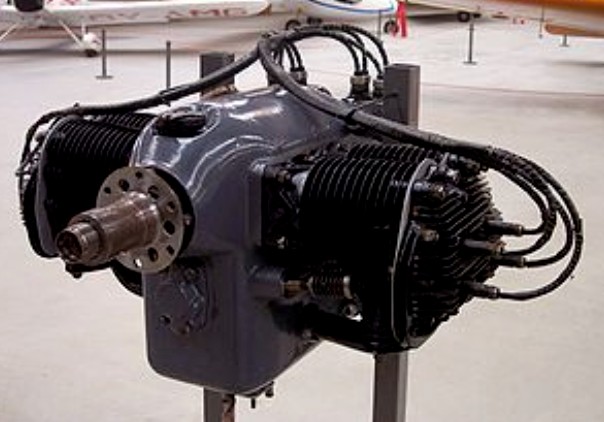
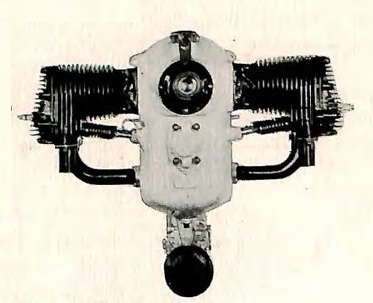
The 37 hp (28 kW) A40 / O-110 was introduced in the depths of the Great Depression. At the time there were a number of small engines available but all suffered from either high cost, complexity, or low reliability. A carbureted four-cylinder, horizontally opposed, air-cooled aircraft engine, it was developed especially for use in light aircraft. The A-40 (ATC 72, 174) addressed all those shortcomings and was instrumental in the production of light aircraft in the difficult economic constraints of the period. The A-40-4 introduced an increase in power to 40 hp (30 kW). The engine later inspired the A-50 and subsequent engines.
The A40 featured single ignition until the A-40-5 version, which introduced dual ignition. All engines in this family have a 5.2:1 compression ratio and were designed to run on fuel with a minimum octane rating of 73.
Produced between 1931 and 1941, the entire family of engines had its certification terminated on 1 November 1941. Engines produced before that date are still certified, but none can be produced after that date.
Variants:
A40
Single ignition, 37 hp (28 kW) at 2550 rpm, dry weight 144 lb (65 kg)
A40-2
Single ignition, 37 hp (28 kW) at 2550 rpm, dry weight 144 lb (65 kg)
A-40-3
Single ignition, 37 hp (28 kW) at 2550 rpm, dry weight 144 lb (65 kg) Featured cadmium-nickel connecting rod bearings.
A40-4
Single ignition, 40 hp (30 kW) at 2575 rpm, dry weight 144 lb (65 kg), Steel backed connecting rod inserts
A40-5
Dual ignition, 40 hp (30 kW) at 2575 rpm, dry weight 156 lb (71 kg)
Applications:
Aeronca KC
Piper J-2 Cub
Piper J-3 Cub
Porterfield Collegiate
Rose Parakeet
Taylor E-2 Cub
Taylorcraft A
Welch OW-5M
Specifications:
A40-5
Type: 4-cylinder air-cooled horizontally opposed aircraft piston engine
Bore: 3.125 in (79.3 mm)
Stroke: 3.75 in (95.3 mm)
Displacement: 115 in³ (1.9 L)
Length: 27.9375 in (710 mm)
Width: 26.4375 in (672 mm)
Height: 20.4375 in (519 mm)
Dry weight: 154 lb (69.9 kg) dry with carburrettor and magnetos
Valvetrain: One intake and one exhaust side-valve per cylinder with a flathead valve design.
Fuel system: CMC Stromberg NA-82 carburetor
Fuel type: minimum 73 octane
Cooling system: Air-cooled
Power output: 40 hp (30 kW) at 2,575 rpm
Specific power: 0.35 hp/in³ (15.3 kW/L)
Compression ratio: 5.2:1
Specific fuel consumption: 0.72 lb/hp/hr (0.439 kg/kW/hr)
Oil consumption: 0.025 lb/hp/hr (0.0153 kg/kW/hr)
Power-to-weight ratio: 0.28 hp/lb (0.45 kW/kg)

