The sole 1913 Curtiss A-3 was a two place, open cockpit biplane, becoming a USN patrol land/hydroplane. Powered by a pusher engine, it was later re-designated AH-3.
Piston
Curtiss 22 Cox Racer / Cactus Kitten / Texas Wildcat
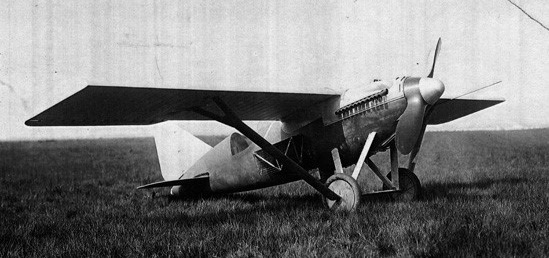
In 1920 the American oil millionaire S.Cox had two specialised racing monoplanes built for him by the Curtiss Aeroplane and Motor Company to take part in the Gordon Bennett Trophy race to be held in France in September 1920. The two aircraft, named Texas Wildcat and Cactus Kitten, were single-engined, braced, high-wing monoplanes powered by a 427 hp (318 kW) Curtiss C-12 inline piston engine. They had streamlined wooden fuselages with the pilot sitting in an enclosed cockpit towards the rear of the fuselage, under a forward sliding canopy. The wing, which had a special double camber airfoil section, was high-mounted, and was braced by struts to the mainwheels of the fixed conventional landing gear. The V-12 engine drove a two-bladed tractor propeller, and was cooled by radiators mounted on the side of the fuselage between the cockpit and the wings.
The Texas Wildcat was briefly tested in the United States before shipment, being fitted with a different wing with a more conventional airfoil for operation out of the confined Curtiss Field. First flying on July 25, it demonstrated a speed of 183 mph (295 km/h), with a speed of 215 mph (346 km/h) expected when fitted with the high speed racing wing. Both aircraft were then sent by ship to France, with no testing carried out on the high speed wing and Cactus Kitten unflown before sailing. Texas Wildcat was reassembled at the Morane-Saulnier factory with the high speed wing, but was found to be unstable at high speeds when flown by test pilot Roland Rohlfs. A set of biplane wings were therefore quickly designed and fitted to Texas Wildcat. Texas Wildcat was wrecked in a landing accident when being flown to Étampes prior to the race.
Although the Cactus Kitten was taken to France it remained unflown and was returned to the United States. It was then rebuilt with a set of short-span triplane wings modified from those of a Curtiss 18T, with the enclosed cockpit replaced by a more conventional open cockpit.
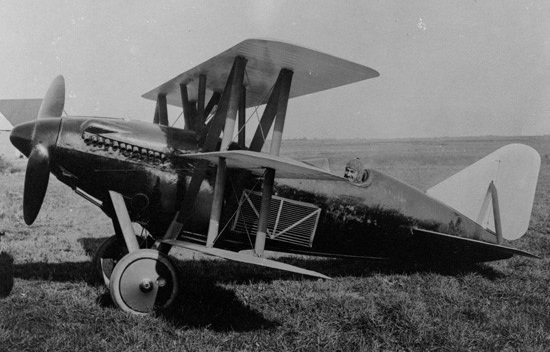
Thus modified, it was entered into the 1921 Pulitzer Trophy Race, where, flown by Clarence Coombs at an average speed of 170.3 mph (274.1 km/h), it gained second place behind a Curtiss CR piloted by Bert Acosta. It was later sold to the United States Navy as a trainer for high-speed racing aircraft.
Engine: 1 × Curtiss C-12, 435 hp (324 kW)
Wingspan: 20 ft (6.1 m)
Wing area: 175 sq ft (16.3 m2)
Length: 19 ft 3 in (5.87 m)
Gross weight: 2,406 lb (1,091 kg)
Maximum speed: 196 mph (315 km/h; 170 kn)
Crew: one
Curtiss M
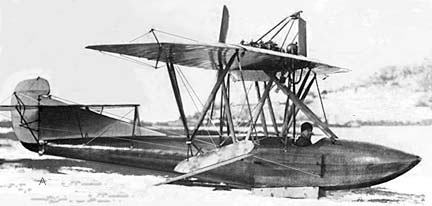
The Curtiss M flying boat was built to order for Raymond V. Morris, a Curtiss employee.
It featured swept-back, birdlike parasol wing and full-length, V-bottom wooden hull.
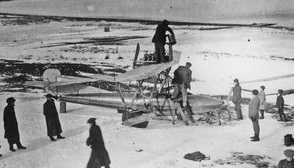
A single seater first flying in January 1914, it was the world’s first monoplane flying boat.
After unsatisfactory tests were performance was marginal, it was converted to a biplane layout at San Diego.
Engine: Curtiss O, 90hp
Wingspan: 34’0″
Length: 25’0″
Seats: 1
Curtiss C-2


Curtiss-Willard Banshee Express
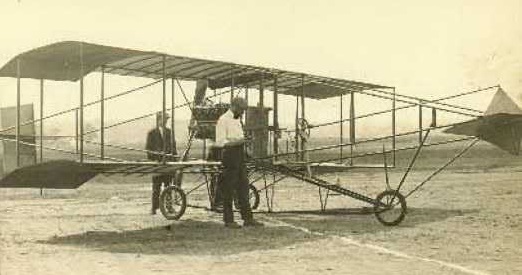
The Curtiss-Willard Banshee Express of 1910 was designed on the specifications of Charles F. Willard and built by Curtiss.
The first flight of the Banshee Express took place at Mineola, N.Y., and established an American record by carrying 3 passengers (1200 lb gross) on August 14, 1910.
Span: 32′
Curtiss-Beachey
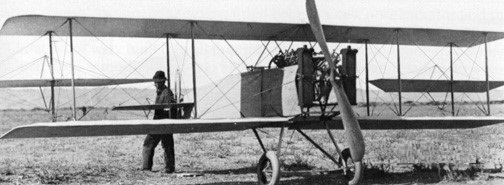
The second Curtiss tractor landplane, the Curtiss-Beachey biplane, was intended as an exhibition craft for Lincoln Beachey but, after a short flight, he rejected it as unsuitable.
Curtiss Milwaukee Tank
The Milwaukee Tank engine was a 115 hp (86 kW) air-cooled version of the Curtiss OX-5, and was intended as an aircraft engine. It was tested in a Waco 10.
Curtiss V-1570 Conqueror
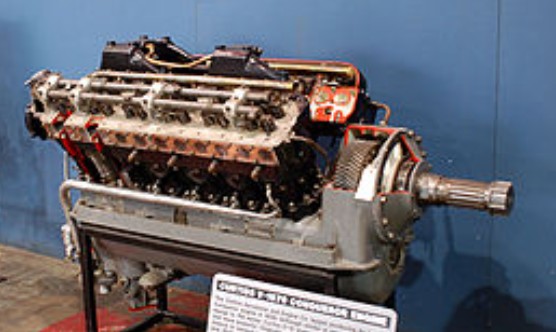
Designed in 1924 as a military successor to the Curtiss D-12, initially named the Conqueror it was later given the military designation of V-1570 (and GV-1570) based on its displacement of 1,569 cubic inches (26 L). Developed from V-1550 by Arthur Nutt in 1929 V-1570 and GV-1570 Conqueror received ATC 7, developing 575-650hp.
The engine featured open ended cylinder liners (advanced technology for the period) and pressurized liquid cooling. Developments including the use of a supercharger gradually increased power output until reliability problems due to overheating and coolant leaks became apparent.
The Curtiss V-1570 Conqueror was a 12-cylinder vee liquid-cooled aircraft engine. Representing a more powerful version of the Curtiss D-12. The Conqueror featured enbloc type jacket construction, in two banks of 6 each. The cylinders were wet sleeve type of heat treated hydraulically forged carbon steel screwed and shrunk into cylinder heads. Four interchangeable tulip valves seating directly in bronze inserts. Th crankshaft was an eight bearing type.
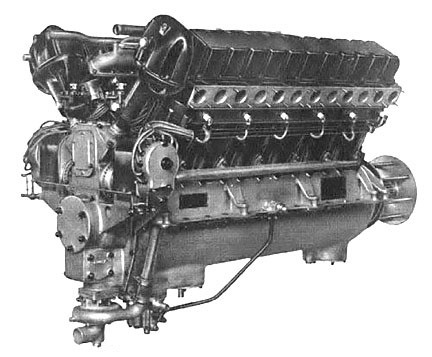
The gear case assembly was geovable as a unit. Pistons were ribbed head type aluminium alloy. Master and articulated connecting rods.
Avaliable at extra cost was and Eclipse hand inertia starter.
The engine entered production in 1926 and flew in numerous aircraft.
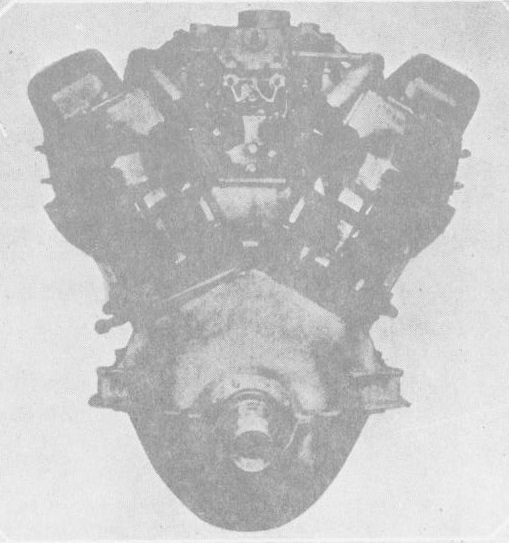
Military funding for further development of the Conqueror was cut in 1932, efforts by Curtiss to market the engine for civil airliners failed and the line was dropped from production.
Applications:
Consolidated A-11
Curtiss A-8
Huff-Daland XB-1
Curtiss B-2 Condor
Tupolev TB-3
Douglas Y1B-7
Atlantic (Fokker U.S.) XB-8
Thomas-Morse YO-23
Douglas O-31
Douglas O-43
Dornier Do X
Curtiss P-1 Hawk
Curtiss P-6 Hawk
Boeing B-9
Boeing XP-9 (Model 96)
Curtiss XP-10
Berliner-Joyce P-16
Curtiss YP-20
Lockheed YP-24
Consolidated Y1P-25
Consolidated P-30
Curtiss XO-30 (not built)
Mormon Meteor III (custom Bonneville salt flat race car)
Specifications:
V-1570-59
Type: 12-cylinder liquid-cooled Vee aircraft engine
Bore: 5 1⁄8 in (130.2mm)
Stroke: 6 11⁄32 in (161.1mm)
Displacement: 1,570.4 in³ (25.73 L)
Cooling system: Liquid-cooled
Power output: 675 hp (504 kW) at 2,450 rpm
Specific power: 0.43 hp/in³ (19.6 kW/l)
V-1570
Type: 12 cylinder 60 deg V, direct drive and geared, water cooled
Rating – direct drive: 600 hp at 2400 rpm
Rating – geared drive: 600 hp at 2450 rpm
Displacement: 1569 cu.in
Compression ratio: 5.8-1
Bore: 5 1/8 in
Stroke: 6 1/4 in
Height: 36 5/8 in
Length – direct drive: 63 1/16 in
Length – geared drive: 68 27/32 in
Width: 26 5/16 in
Weight – direct: 755 lb
Weight – geared: 845 lb
Fuel consumption: not more than .53 lb/hp/hr
Oil consumption: not more than .015 lb/hp/hr
Lubrication: Pressure and scavenging pumps
Ignition: dual Scintilla
Carburation: 2 Stromberg Dual type NA-Y6-O
Spark plugs: 2 per cylinder B.G.
V-1570-A Conqueror
1931
Displacement: 1569ci
Power: 700hp
V-1570 Super Conqueror
1933 Geared and supercharged
Displacement: 1569ci
Power: 800hp
Curtiss V-2 / R-1454
The Army submitted a specification for a new engine on 15 August 1923. The fixed-price contract was won by Curtiss following its bid of 13 November 1923, and was for the construction of three engines, known as the R-1454, with an option for three more. The Curtiss V-2 was a 12-cylinder Vee liquid-cooled aircraft engine. The first engine was delivered in September 1924, and it managed 405hp at 1650 rpm. A modified cylinder (Type M) developed by S.D Heron, an independent contractor, was fitted to the engine, and the Army picked up the option in the contract in February 1926.
The appearance of the lighter Pratt & Whitney Wasp engine effectively killed off the R-1454, and the Army and Curtiss agreed to terminate the contract almost at once, with only three built.
Specifications:
R-1454
Type: 12-cylinder liquid-cooled Vee aircraft engine
Displacement: 1,454 in³ (23.8 L)
Cooling system: Liquid-cooled
Power output: 405 hp (302 kW) at 1,650 rpm
Curtiss R-600 Challenger
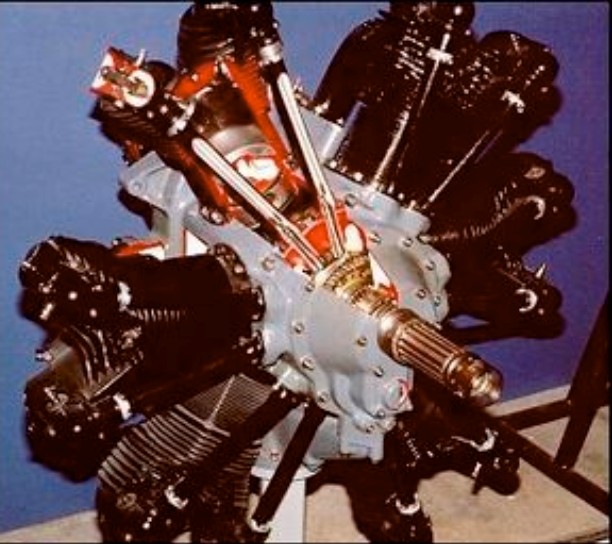
The Curtiss R-600 Challenger was a six-cylinder, double-row, air-cooled, radial engine for aircraft use built in the United States in the late 1920s. It developed 180 hp (134 kW) at 2,000 rpm.
The R-600 featured cast aluminium alloy heat treated cylinder heads screwed and shrunk onto forged steel barrels. The rocker boxes were cast integral with the cylinder heads. The crankcase was cast in two parts, splint on the centre line of the front row of cylinders. There were two Silchrome valves per cylinder, seating on bronze inserts.
The crankshaft was a two-throw counter balance tye, with two master rods each fitted with two short H section link rods. The pistons were ribbed aluminium alloy.
The carburettor is exhaust jacketed around the barrels, using a hot-spot elbow fitted with a valve to control the amount of exhaust heat admitted to the carburettor.
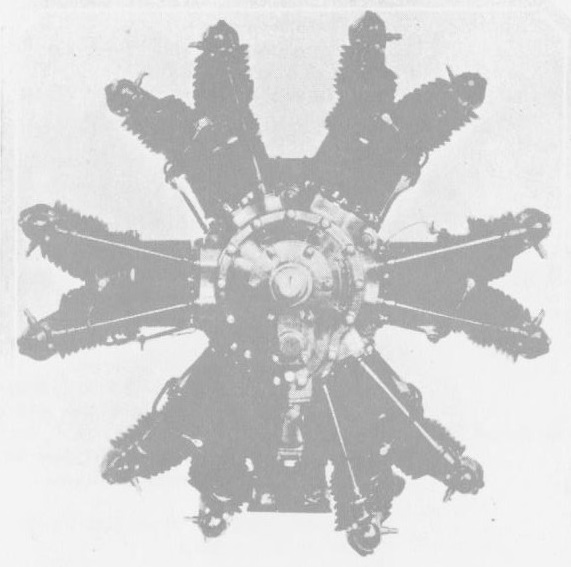
Accessories available at extra cost were a propeller hub, engine driven fuel pump, starter, generator, gun synchroniser, and tool kit.
Applications:
ANBO VI
Curtiss Robin
Rearwin 2000
Specifications:
R-600
Type: 6 cylinder, air cooled, staggered fixed radial
Rating: 170 hp at 1800 rpm / 180 hp (134 kW) at 2,000 rpm
Displacement: 603.4 cu in (9.89 L)
Compression ratio: 4.9-1 or 5.25 to 1
Bore: 5.125 in (130.2 mm)
Stroke: 4.875 in (123.8 mm)
Length: 42 5/32 in
Diameter: 42.625in (1082.7 mm)
Weight: 420lb (190.5 kg)
Fuel consumption: not more than .55 lb/hp/hr
Oil consumption: not more than .020 lb/hp/hr
Lubrication: Pressure and scavenging pumps
Ignition: 2 Scintilla
Carburation: Stromberg 2 barrel NA-U4-J
Spark plugs: 2 per cylinder B.G. 1XA

