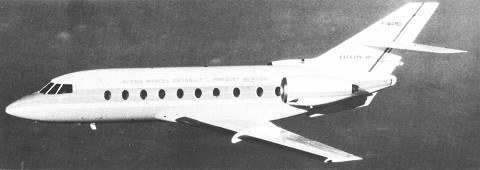
The Falcon 30 was a commuter line development of Falcon 20 (at first as Falcon 20T, with smaller fuselage). Thirty passengers. Lycoming ALF 502D turbofan engines. Prototype first flown 11 May 1973; no production.
In 1964 Dassalt signed an agreement with West German firm Siebelwerke for Siebelwerke to set up a production line to build Mystere 30.
The Falcon 40 was a projected forty passenger alternative to Falcon 30, using high density seating and non FAA certification procedures.
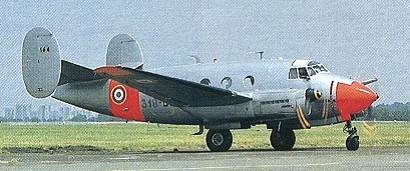
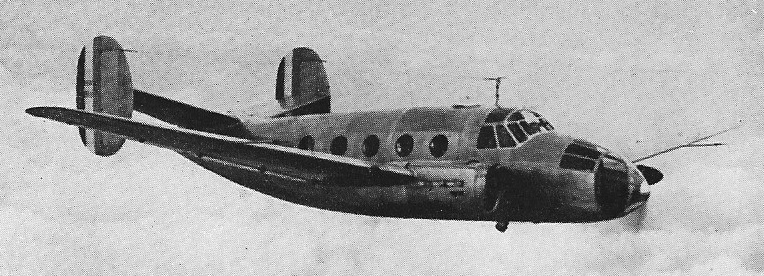
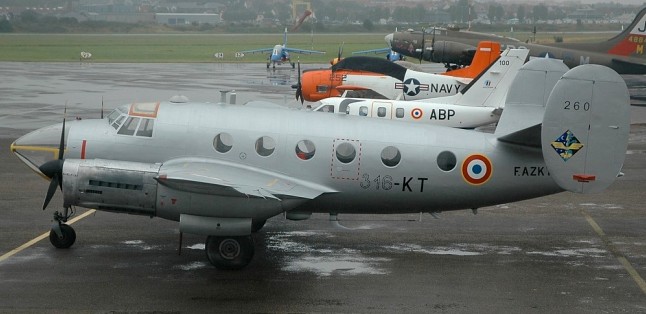
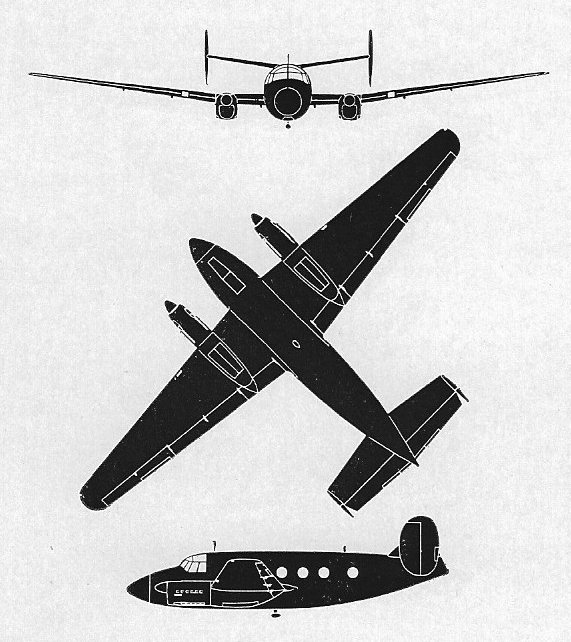
The Dassault M.D.315 Flamant (Flamingo) utility transport and aircrew trainer prototype made its maiden flight on 10 February 1947. Engines were two 580 hp SNECMA 12S 201 inverted V 12 air¬cooled, previously known as the Renault 12S and before that the German Argus As 410. This had the designation M.D.303, and was evaluated successfully at the Centre d’Essais en Vol at Bretigny later that year.
Production Flamants, the first of which was flown in January 1949, were intended for service with the Armee de I’Air in France’s overseas territories, and deliveries to AOF (Afrique Occidentale Francaise) squadrons began in October 1950.
The Flamant was produced in three main versions, the first, the M.D.311, was a bombing, navigation and photography trainer of which 39 were built.
MD.311
The six-seat M.D.312 military liaison/communications aircraft (142 built) and the 10-seat M.D.315 light utility transport (137 built), were used over a long period by the Armee de I’Air and, in the case of the M.D.312, by the Aeronavale. The production continued 1949 52.
The first production version was the MD.315 Flamant with a crew of two and up to ten passengers or a tonne of freight. The MD.312 was furnished for only six VIP passengers and the MD.311 was a crew trainer, with glazed nose for visual bombing. Most Flamants could be equipped as casevac stretcher (litter) ambulances.
Over 200 were still in service in the mid-1960s, a few were still in use in 1978, though retired by the French armed forces by the 1990s.
Convertible from passenger to cargo or aero-medical transport, several were passed on to other air forces such as those of Cambodia, Madagascar, Tunisia and Vietnam, as they were withdrawn from French service.
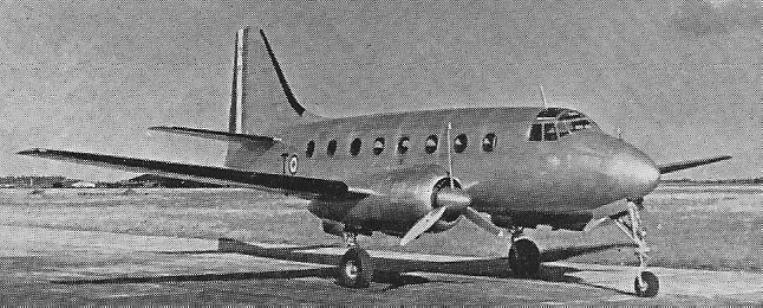
One M.D.315 was converted as the M.D.316, with 611kW SNECMA 14X Super Mars radial engines, first flying on 17 July 1952.
MD.316 number 2
A single-finned second prototype, the M.D.316T, had 597kW Wright R-1300-CB7A1 Cyclone radials. These were intended for crew training and commercial transport operation, but neither entered production.
Avions Marcel Dassault MD 315 Flamant Engines: 2 x SNECMA-Renault 12S 02-201 inline, 433kW / 572 hp Wingspan: 20.7 m / 67 ft 11 in Length: 12.6 m / 41 ft 4 in Height: 4.5 m / 14 ft 9 in Wing area: 47.2 sq.m / 508.06 sq ft Max take-off weight: 5800 kg / 12787 lb Empty weight: 4250 kg / 9370 lb Max. speed: 380 km/h / 236 mph Cruise speed: 300 km/h / 186 mph ROC: 984 fpm Service ceiling: 8000 m / 26250 ft Range: 656 nm / 1215 km / 755 miles Crew: 2+10 137 built
MD.316T Engines: 2 x Wight R-1300 Cyclone C7BA1, 800 hp Max speed: 255 mph at 7218 ft Cruise: 243 mph ROC: 1181 fpm Empty weight: 12,566 lb Loaded weight: 16,755 lb Wingspan: 66 ft 11 in Length: 51 ft 8 in Height: 21 ft 4 in
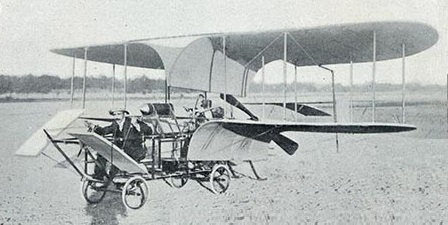
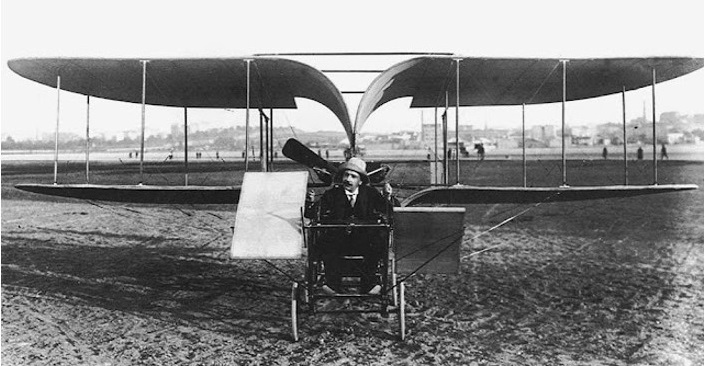
On his return to Portugal in 1910, Gomes da Silva presented an improved design of his invention to the newly-founded Aero Club de Portugal, and received funding not only from this organisation, but also from the young republican government. The military placed its base in Tancos at his disposal in order to build the Gomes da Silva II. However, the modifications that had been made weren’t enough to get the craft off the ground – be it due to possible shortcomings of the machine, or to the harsh runway conditions. Faced with these results, the sponsors quickly lost interest and the Gomes da Silva II was dismantled and boxed to Mozambique, its whereabouts currently unknown.
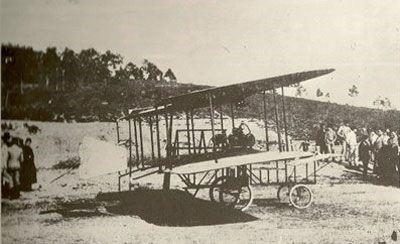
In 1909, Abeillard Gomes da Silva, was in Beira in the then Portuguese colony of Mozambique. Working there, at customs, was Abeillard Gomes da Silva, who that year had the opportunity to visit Europe during a holiday. At his own expense, he set off for France with an interest in heavier-than-air flight.
Upon arriving in France, he promptly spent 23,000 francs to build an airplane of his own invention: the Gomes da Silva I. A biplane configuration with its engine – a 25 to 28 hp Anzani – placed behind the pilot, it had a three-lever control system: a central lever for the rear directional rudders, and the other two for the altitude rudders, placed on either side of the pilot and which could either function together or separately. Enrolled in the Juvisy Aviation Fortnight (Grande Quinzaine d’Aviation), organised by the Société d’Encouragement à l’Aviation, it seems that Gomes da Silva was eventually disqualified due to a “21-day delay in the delivery of the engine”. The craft had been tested at the Issy-les-Moulineaux airfield and was not able to take off.
Gomes da Silva I Wingspan: 7 m Length: 6.5 m Weight: 250 kg
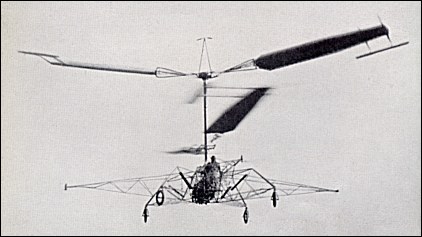
In 1928 in Italy, Corradino D’Ascanio built a helicopter with two 13m counter-rotating coaxial rotors, each with a trailing elevator which could be used to vary the rotor blade angle of attack. Two small propellers at the ends of extra arms were used for additional control. Powered by a 95hp Fiat engine, the craft set three Federation Aeronautique Internationale (FAI) world records on October 8, 1930: an altitude of 18m, a distance of 1078m, and endurance of 8 minutes and 45 seconds. D’Ascanio worked for the Piaggio company, and designed also the Vespa scooter.
Engine: 1 x Fiat A-505, 95-100hp Rotor diameter: 13-15m Take-off weight: 800kg Achieved height: 18m Achieved endurance: 8min 45s
Dart Manufacturing Co was formed 1937 at Columbus, Ohio, to manufacture Dart G two-seat light aircraft. This was a version of the aircraft known originally as the Monosport, designed and built by the Mono Aircraft Corporation. Taken over by Culver Aircraft Company of Columbus in 1939.
Mooney, while working for Monocoupe, designed the Monoprep G which was a low wing monoplane with an open cockpit, seating two side by side. Given a cabin enclosure it became the Monosport G and was to have gone into production in October 1935, but financial problems prevented this.
One was built in 1935, registered NX11791. Power was a 90 Lambert.
Al Mooney left Monocoupe and bought the design and production rights from Lambert Aircraft. He teamed up with K K Culver and they formed the Dart Aircraft Co at Port Columbus, Ohio, in 1939. Several uncompleted airframes were modified to produce an improved version to be known as the Dart. This was certificated in April 1938 as ATC 674.
About fifty Dart Aircraft Co Darts were produced before the war, using one of three engines, the 90hp Lambert R 266 in the model G, the 90hp Ken Royce in the model GK and the 90hp Warner Scarab Junior in the model GW.
Model G
Production of the Model G commenced in 1938 powered by a 90 hp Lambert R-266 radial, and the Model GC was produced in 1939 by a 100 hp Continental engine.
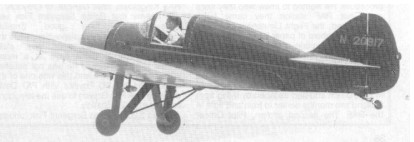
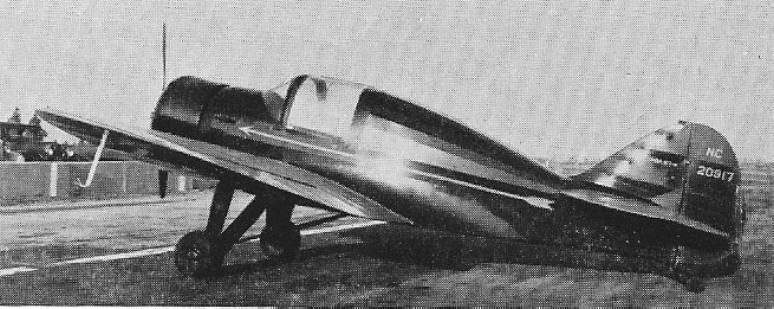
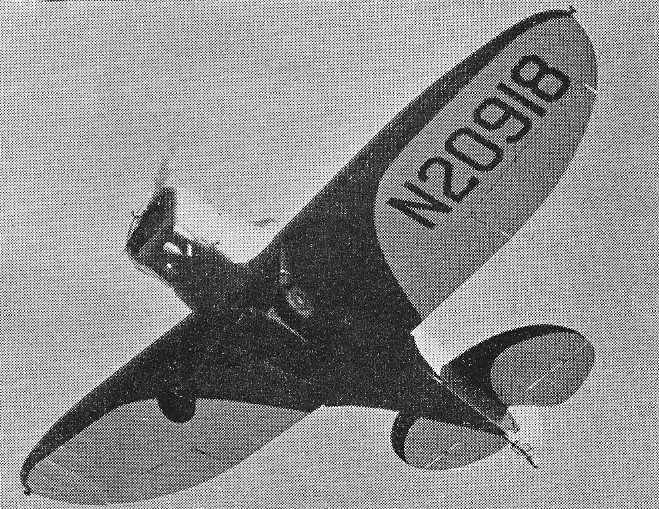
Dart GW N20918
In 1939 the company became the Culver Aircraft Co, and produced the new Culver Cadet. The Dart was not finished, however as rights were acquired by Applegate & Weyant in 1946 and the Dart DC with a 100hp Continental was built. Competition from newer models was too great and only about twelve were sold.
Model G Engine: 90 hp Lambert R-266 Wing span: 29 ft 6 in Length: 18 ft 6 in Height: 7 ft 9 in Empty weight: 922 lb Loaded weight: 1550 lb Max speed: 130 mph Cruise: 115 mph ROC: 900 fpm Range: 500 mi
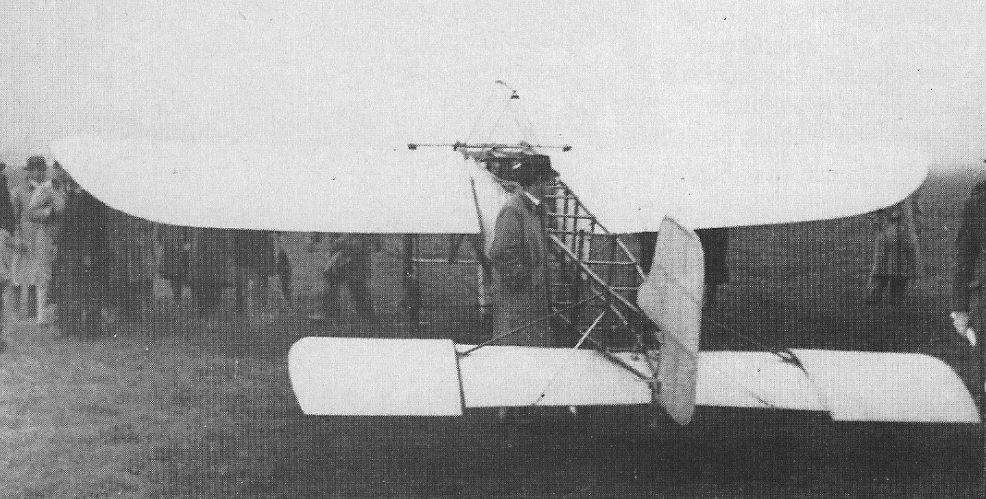
Dart Aircraft built a replica Bleriot XI for R.G.J. Nash of the International Horseless Carriage Company. It was flown in company with Richard Shuttleworth’s genuine 1909 Bleriot at the Royal Aeronautical Society’s Garden Party at Heathrow in May 1937.
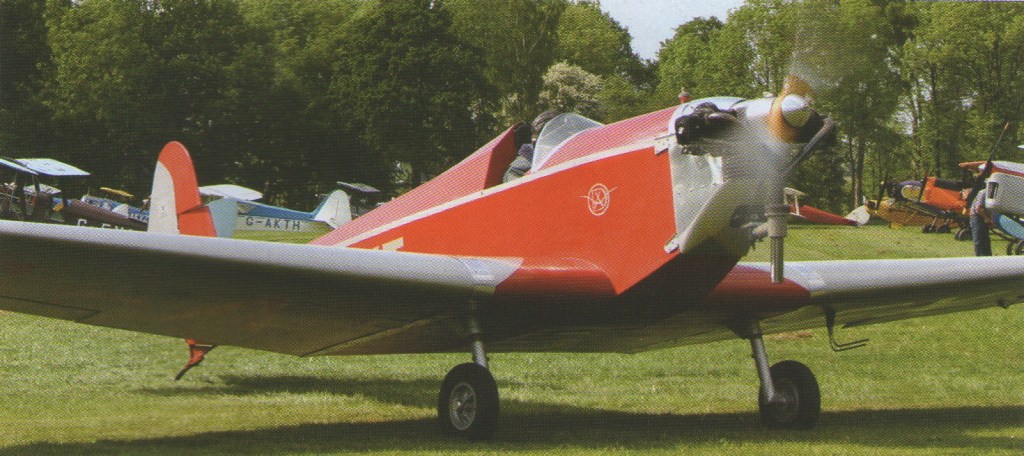
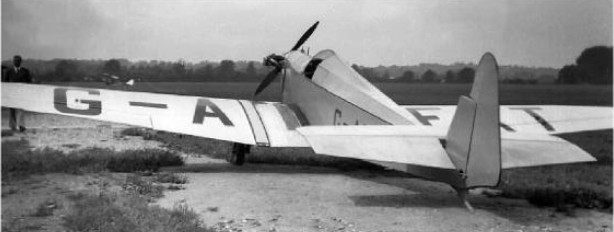
An improved Mk.II version, G-AEXT, was powered by a 36 hp Aeronca JAP J-99. Awarded an Authorisation to Fly in April 1937. The Kitten II passed through many owners and survived the war. G-AEXT crashed at Willindale in November 1964, killing the pilot. It was rebuilt and restored to the register in 1976.
Zander & Weyl built the Dart Flittermouse single-seat ultralight aeroplane in 1936. The one-off Flittermouse G-AELZ was powered by a pusher 25 hp Scott Squirrel and resembled a powered primary glider.