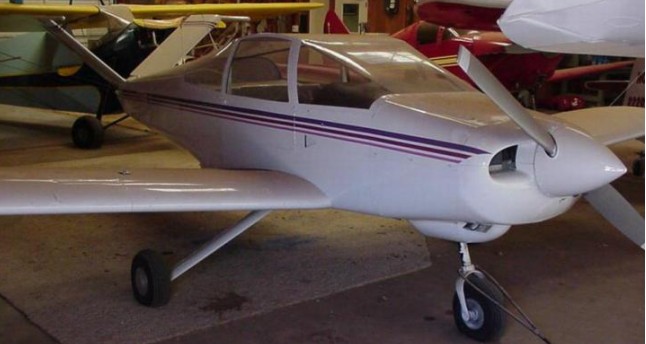
- A smaller & lighter DA-7. DA-6 and later use the USA 35B airfoil modified with a flat bottom. It was sold unfinished, and completed by James Dooley.
Registration: N80157
Engine: Lycoming O-235
Registration: N80157
Engine: Lycoming O-235
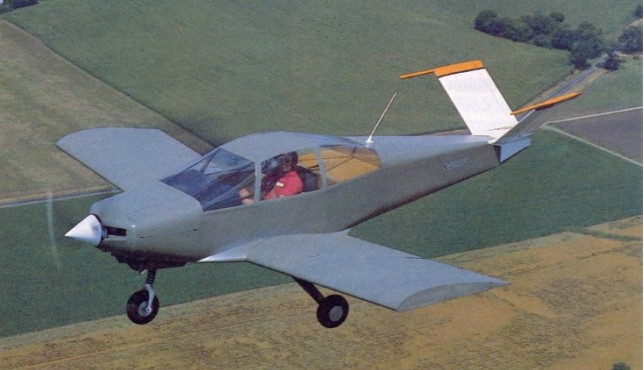
A smaller & lighter DA-6, designed for production. DA-6 and later use the USA 35B airfoil modified with a flat bottom.
Registration N4739V was built by Leeon D Davis in 1984.
Engine: Lycoming O-235
Wingspan: 20′ 6″
Length: 19′ 2″
Empty Weight: 700 lb
Gross Weight: 1260 lb
Seats: 2
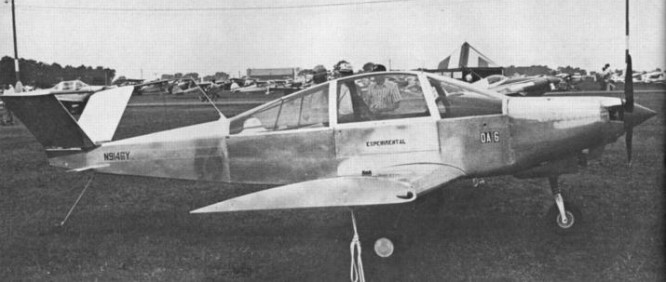
The first DA-6, registration N9146Y, was built by Leeon D Davis in 1981. DA-6 and later use the USA 35B airfoil modified with a flat bottom.
Engine: Lycoming O-235
Wingspan: 22 ft
Empty Weight: 850 lb
Gross Weight: 1580 lb
Seats: 3-4
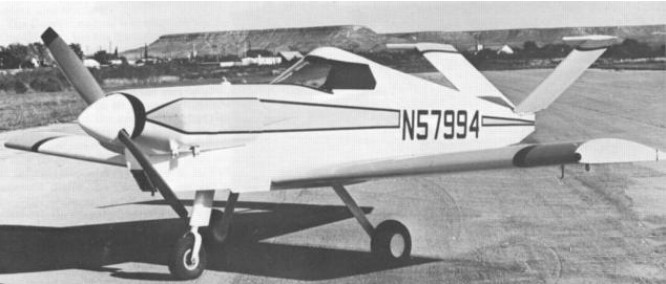
The DA-5A single-seat, low-wing monoplane makes use of the same V-type tail as the DA-2A. The pilot sits inside an enclosed canopy behind a 65-hp Continental turning a fixed-pitch prop. Both the wings and fuselage are alight alloy structure with stressed skins, and the landing gear is the non-retractable tricycle type.
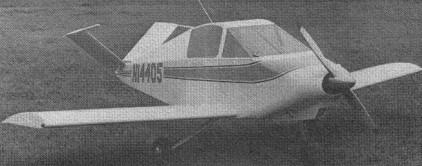
Many DA-5 and DA-5A aircraft have been built from plans. DA-1 through DA-5 used the Clark Y airfoil.
DA-5
1974
Engine: Cont A-65
Wingspan: 15′ 7″
Length: 15′ 9″
Empty Weight: 460 lb
Gross Weight: 770 lb
Seats: 1
DA-5A
Engine 65-hp Continen¬tal.
Gross Wt. 775 lbs.
Empty Wt. 460 lbs.
Fuel capaci¬ty 17 USG.
Wingspan 15’7”.
Length 15’9”.
Wing area: 82.5 sq.ft.
Top speed 160 mph.
Cruise 140 mph.
Stall 60 mph.
Climb rate 800 fpm.
Ceiling 14,500 ft.
Takeoff run 600 ft.
Landing. roll 600 ft.
Range 450 sm.
Seats: 2
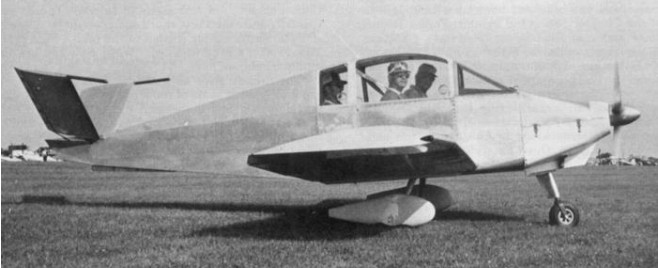
A stretched version of the DA-2A. DA-1 through DA-5 used the Clark Y airfoil.
Engine: Continental O-200
Wingspan: 22 ft 3 in
Length: 19 ft 8 in.
Empty weight: 820 lb
MTOW: 1600 lb
Seats: 3-4
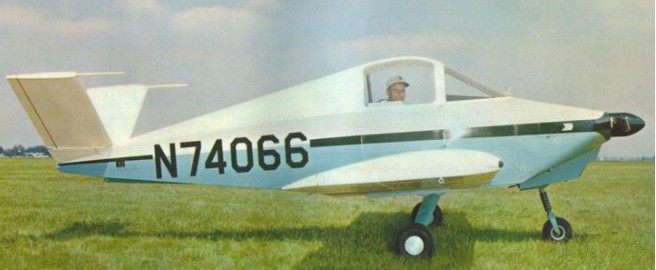
In 1966, the Davis all-metal design was voted the most popular at the Rockford EAA Fly-in. It requires little work on the part of the builder because of its simple construction, with no compound curves or ex-pensive fittings. The Davis design uses the 100-hp Continental and is one of the few do-it-yourself planes with a V-tail. Of low-wing, two seat side-by-side and nose undercarriage. The prototype DA-2 nosegear used a spring instead of rubber doughnuts. Engine range 65-100 hp.
Many DA-2A and DA-2B aircraft have been built from plans. DA-2A scratchbuilding plans describe both DA-2A and DA-2B versions. DA-1 through DA-5 used the Clark Y airfoil.
The DA-4 was completed as DA-2C. The DA-4 was intended as the production version of the DA-2, but was sold unfinished. Brent Hughes finished it as DA-2C N26146. This should not be confused with the D2C “Bandit” mods.
DA-2A
Engine: Cont A-65
Wingspan 19’3”.
Length 17’l0”.
Gross Wt. 1125 lbs.
Empty Wt. 610 lbs.
Fuel capacity 20 USG.
Top speed 120 mph.
Cruise 115 mph.
Stall 62 mph.
Climb rate 400 fpm.
Takeoff run 800 ft.
Landing roll 700 ft.
Range 450 sm.
Seats: 2
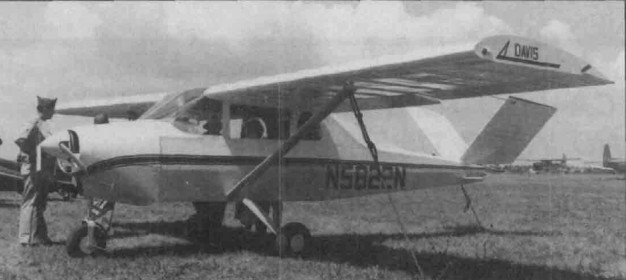
The Davis DA-1 was a light aircraft designed in the United States in the 1950s which never progressed beyond the prototype stage.
Leeon D. Davis constructed his DA-1 starting on 24 April 1957. It was a strut-braced high-wing single-engine all-aluminum airplane designed around the new Lycoming O-360 engine. The fixed-nosegear-equipped piston-engine DA-1 was of otherwise conventional configuration, but a V-tail.
Wings and tail surfaces of the DA-1 used external heat treated ribs; those surfaces were of constant chord. DA-1 through DA-5 used the Clark Y airfoil.
Power for the DA-1 was a horizontally-opposed Lycoming O-360 of 180 hp (134 kW), which gave a top speed of 125 mph (201 km/h).
Registered N5822N, it was first flown on 24 May 1958, initial test flights showed that there was not enough elevator authority with full flaps, and the plane was very loud. Soundprofing, and aerodynamic modifications were applied. Davis tried to bring the plane to market as a certified aircraft (his goal was a selling price of under $10,000), but was not successful.
DA-1
Powerplant: 1 × Lycoming O-360, 180 hp (134 kW)
Length: 22 ft 3 in ( m)
Wingspan: 32 ft 0 in (9.76 m)
Wing area: 167 ft2 ( m2)
Empty weight: 1,200 lb (545 kg)
Gross weight: 2,370 lb (1,080 kg)
Maximum speed: 125 mph (201 km/h)
Range: 475 miles
Crew: One pilot
Capacity: 4 passengers
Number built 1
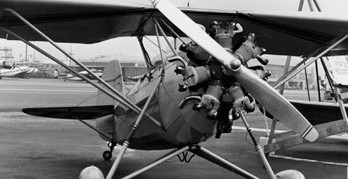
Walter C. Davis was a former WWI pilot who had been working in his family’s business, the Davis Automobile Company of Richmond, Indiana, when it was sold in 1928. Redirecting his talents back to flying, he purchased the production rights to the Vulcan V-3 and began work on the first Davis aircraft in March 1929. He hired Vulcan test pilot, Pat Love, and engineer Dwight Huntington and opened his factory in Richmond, Indiana.
Huntington’s slight re-design of the aircraft included adding the gently curved leading edge to the vertical stabilizer. Davis then set up dealers in California, Dayton, Boston, Seattle, Salt Lake City and Pittsburgh. Air racing success continued in 1929 and all seemed well. The advent of the Great Depression ultimately led to the demise of Davis Aircraft, but the company struggled on.
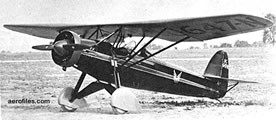
In December 1929, two new models were engineered with different engines, the D-1 with a 65 hp LeBlond and the D-1K with the 100 hp Kinner K-5. Both models were certificated, but sales lagged. Davis countered by aggressively pursuing direct sales to buyers and attended trade shows in St. Louis, Detroit and New York. He added the D-1-66 (later D-1-85) with an 85 hp LeBlond engine and cut prices, but then lost the entire finished inventory of planes to a fire.
The D-1 is a parasol-winged aircraft of mixed construction with a two-spar wing and a rectangular welded steel-tube fuselage, the whole being covered by fabric. There are tandem open cockpits and it is fitted with a fixed tailwheel undercarriage which is attached by struts to the fuselage top and bottom. The wing is braced by struts from the lower fuselage. Various engines of between 60 to 125 hp (45 to 93 kW) have been fitted.
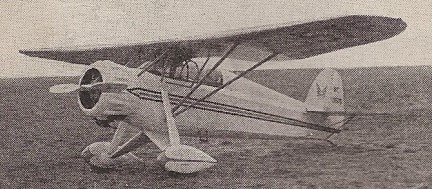
Produced 1929-1930, the D-1 was used by sporting pilots and by private pilot owners for leisure flying. Davis Aircraft Corp. produced three models of the D4 series. The first two models were the D-1-85 with an 85 hp Le Blond engine and the D-1-K with a 100 hp Kinner engine. The third model, the D1-W was equipped with a 125 hp Warner Scarab seven-cylinder radial air-cooled engine. The Dl-W features complete dual controls for its tandem seats.
In September 1930, Art Chester bought a Davis D-1-85 parasol, and flew it to victory in the 25 mile event at the September 1930 National Air Races. A late model D-1W “The Whistler II” was built in 1933 for Davis with a canopy. It was raced in the 1934 Miami air race by Art Davis winning the category at 133.478 mph. NC150Y which was destroyed in a crash at the 1932 Nationals. It was later owned by movie star Richard Arlen, and restored to become a Grand Champion antique.
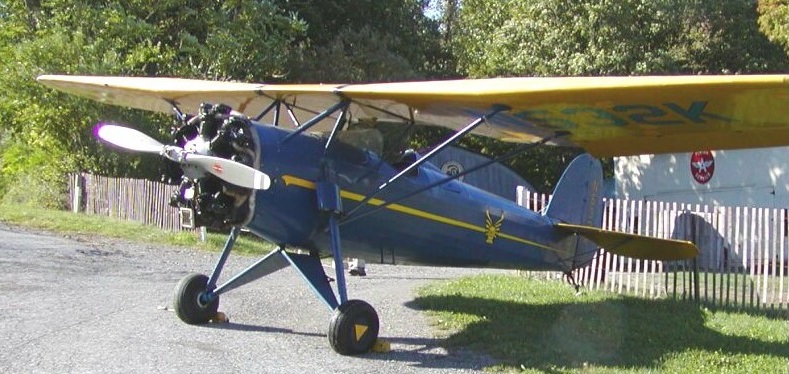
Unfortunately, the commercial market for airplanes just wasn’t there and in 1932 Davis turned to the production of lawn mowers. A few additional planes left the factory in 1933 but they were apparently made up from existing parts inventory or airframes returned to the factory for various reasons. They received new serial and registration numbers. Most Davis aircraft were sold ($2,965 with a 60hp LeBlond in 1929) in the United States but at least one went to Argentina. Fourteen examples remained in 2001 in various states of airworthiness and several were still airworthy in 2011.
Variants:
D-1
23 built
Engine: 60 hp (45 kW) LeBlond 5D
Span: 30 ft 2 in
Length (overall): 19 ft 10 in
Gross Weight: 1,334 lb
Useful Load: 495 lb
Baggage: 20 lb
Fuel: 20 gal
Oil: 2 gal
High Speed: 101 mph
Cruise Speed: 85 mph
Landing Speed: 38 mph
Range: 350 sm
Type Data: ATC 256
Year of Introduction: 1929
Price (1929): $3,285
Price (1930): $2,995
D-1
Engine: LeBlond 70 5DE, 70 hp
Span: 30 ft 2 in
Length (overall): 19 ft 10 in
Gross Weight: 1,334 lb
Useful Load: 495 lb
Baggage: 20 lb
Fuel: 20 gal
Oil: 2 gal
High Speed: 101 mph
Cruise Speed: 85 mph
Landing Speed: 38 mph
Range: 350 sm
Type Data: ATC 256
Year of Introduction: 1929
Price (1929): $3,285
Price (1930): $2,995
D-1
Engine: LeBlond 70 DE, 70 hp
Span: 30 ft 2 in
Length (overall): 19 ft 10 in
Gross Weight: 1,334 lb
Useful Load: 495 lb
Baggage: 20 lb
Fuel: 20 gal
Oil: 2 gal
High Speed: 101 mph
Cruise Speed: 85 mph
Landing Speed: 38 mph
Range: 350 sm
Type Data: ATC 256
Year of Introduction: 1929
Price (1929): $3,285
Price (1930): $2,995
D-1-66
4 built
Engine: 85 hp (63 kW) LeBlond 5DF
Span: 30 ft 3 in
Length (overall): 21 ft 6 in
Gross Weight: 1,380 lb
Useful Load: 526 lb
Baggage: 47 lb
Fuel: 20 USgal
Oil: 2-1/2 USgal
High Speed: 112 mph
Cruise Speed: 97 mph
Landing Speed: 40 mph
Range: 360 sm
Type Data: ATC 317
Year of Introduction: 1930
Total Production: 4
Price (1930): $3,395
Price (1931): $2,795
D-1-85
Engine: 1 × LeBlond, 85 hp
D-1-K
11 built
Engine: 100 hp (75 kW) Kinner K-5
Span: 30 ft 3 in
Length (overall): 19 ft 10 in
Gross Weight: 1,461 lb
Useful Load: 536 lb
Baggage: 27 lb
Fuel: 25 USgal
Oil: 2-1/2 USgal
High Speed: 130 mph
Cruise Speed: 100 mph
Landing Speed: 40 mph
Range: 400 sm
Type Data: ATC 272
Year of Introduction: 1930
Total Production: 11
Price (1930): $3,995 to $4,185
Price (1932): $2,295
D-1-L
prototype of the D-1-166 (1 built)
Engine: 90 hp (67 kW) Lambert R-266
D-1-W
(8 converted from D-1-K)
Engine: Warner Scarab, 125 hp (93 kW)
Length: 20 ft 4 in (6.20 m)
Wingspan: 30 ft 2 in (9.19 m)
Height: 7 ft 3 in (2.21 m)
Empty weight: 925 lb (420 kg)
Gross weight: 1,461 lb (663 kg)
Maximum speed: 142 mph (229 km/h; 123 kn)
Cruise speed: 122 mph (106 kn; 196 km/h)
Stall speed: 46 mph (40 kn; 74 km/h)
Initial climb rate 1,360 fpm.
Range: 480 mi (417 nmi; 772 km)
Service ceiling: 14,800 ft (4,511 m)
Crew: one
Capacity: one passenger
D-1-W
Engine: Warner Super Scarab SS-50A, 145 hp
Propeller: Sensenich Model 86CA-69
Wing span: 30 ft. 3 in
Wing area: 145 sq. ft
Airfoil: Goettigen 387 modified
Length: 21 ft. 6 in
Height: 7 ft. 3 in
Empty weight: 1134 lb
Weight loaded: 1471 lb
Baggage: None
Fuel: 30 USgal
Oil: 3 USgal
Maximum speed: 142 mph
Cruising speed: 123 mph
Landing speed: 46 mph
Initial rate of climb: 1,270 fpm
Service ceiling: 19,000 ft
Normal range: 480 mi
Starter: Eclipse Y-150
Type Data: Memo 2-394
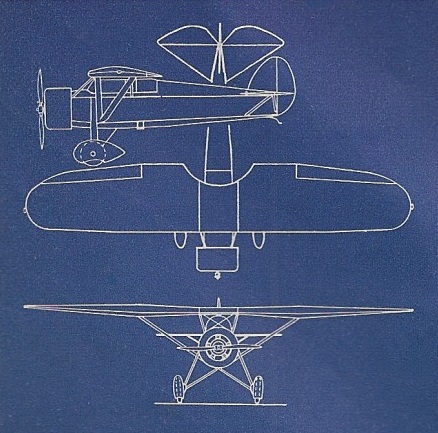
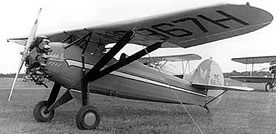
Vulcan Aircraft updated the engine of the American Moth from a 60 hp Detroit Air-Cat to a Warner radial and the aircraft became the Vulcan V-3. It finished second in the National Air Races “A” Division, New York to Los Angeles Derby. Later it took first in the Los Angeles to Cincinnati race at 90.3 mph. Shortly after these achievements, William Burke died leaving the company’s future in doubt.
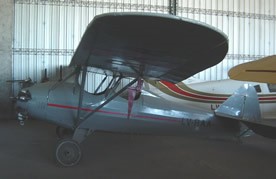
Walter C. Davis was a former WWI pilot who had been working in his family’s business, the Davis Automobile Company of Richmond, Indiana, when it was sold in 1928. Redirecting his talents back to flying, he purchased the production rights to the Vulcan V-3 and began work on the first Davis aircraft in March 1929.
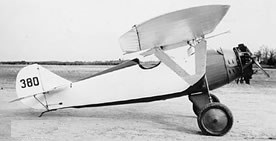
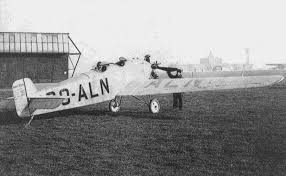
In 1929 Georges Dassy built a low wing monoplane designed by Glymes who also worked
at SABCA (Belgian Public Limited Company of Aeronautical Constructions). G. Dassy, like many
other Belgian manufacturers, made their prototype in the context of the so-called “subsidy” program to encourage a national aeronautical industry.
This prototype – the Dassy DA 1 – performed its first flight in August 1930 registered OO-ALN.
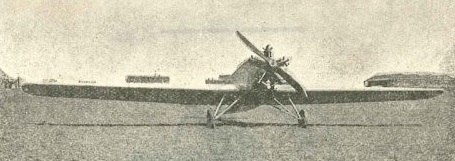
The Dassy DA1 was powered with a Renard engine and entirely made of spruce wood coated with plywood
OO-ALN was sold to the pilot builder and director of the national aviation school, Jef Guldentops, in September 1930, which used it either at Haren or at its Leefdaal aerodrome (Tervuren) until 1940.
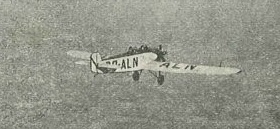
The registration was cancelled in April 1946, because presumed destroyed during the war.
The DA 1 allowed the development of the Dassy DA 2 two-seater tandem monoplane, adaptable
easily into a three-seater.

Dassy DA 1
Engine: Renard 5-cyl, 120 hp at 1580 rpm
Engine weight: 130 kg
Wingspan: 11.50 m
Wing area: 14 m²
Length: 6.40 m
Height: 2.30 m
Empty weight: 420 kg
Maximum weight: 725 k
Maximum speed: 194 km / h
Cruising speed (80% of power): 175 km / h
ROC: 250 m / min
Ceiling: 7,000 m
Range: 1,000 km

