Darmstadt University Aviation Soc D-22

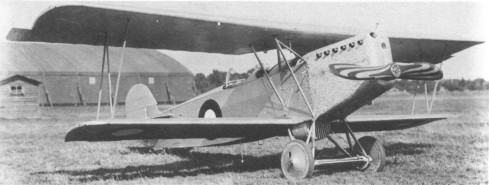
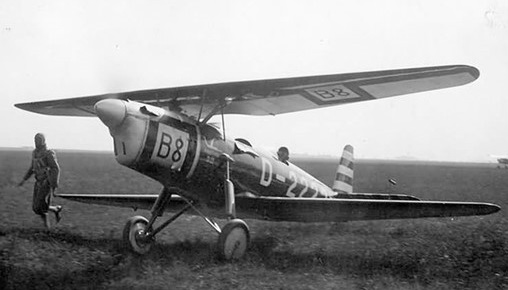
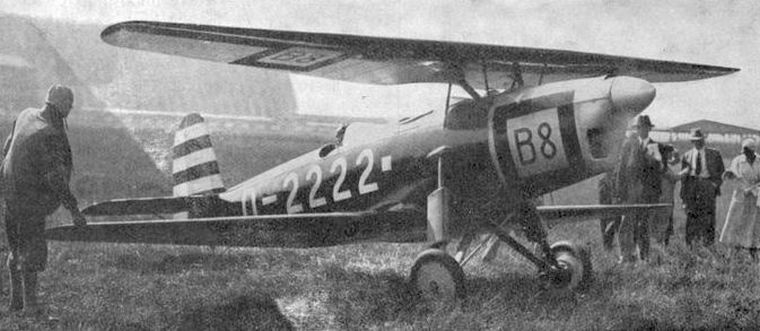
The Darmstadt D-22 was an all-wood sport biplane designed and built in Germany in 1931 by the Akademische Fliegergruppe of Darmstadt University of Technology, a group of aerodynamical engineering students. A development of the Darmstadt D-18 designed by F. Fecher, the D-22 was a slightly enlarged, more streamlined and more powerful German sports-plane built to compete in the 1932 Coupe Deutsch de la Meurthe.

The D-22 had an unorthodox configuration, being a cantilever biplane, with an upper wing placed low, just above the fuselage and ahead of its lower wing. The design emphasized aerodynamics and lightness and the aircraft was small with a streamlined silhouette.

The D-22 boasted an oval cross-section fuselage skinned with plywood and fabric on parts of the single-spar wings. This could, as was required by the rules of the competition, be dismounted and folded rearwards. The crew of two sat in tandem in open cockpits each with its own with windshield. The landing gear was fixed with a tail skid. The engine was mounted in the fuselage nose and drove a two-bladed fixed-pitch propeller.

Propulsion was from a 75.7 kW (101.5 hp) Argus As 8 4-cylinder inverted air-cooled, in-line piston engine driving a 2-bladed fixed-pitch propeller which powered the D-22 to a top speed of 230 km/h (140 mph, 120 kts).

Two were constructed. One was allocated G-ABPX and was known to have a Gipsy III engine.

One was allocated D-2222.
The trial was to be run in two 1,000 km stages separated by a 90-minute refuelling stop and was limited to aircraft with an engine capacity not exceeding eight litres. The starting point of the race was still at Étampes. Suzanne Deutsch de la Meurthe offered one million Francs in prize money while Ministère de l’Air (Air Ministry) offered another three million.

Only one, a D-22A flew in the cup. Not having flaps or slats, she was severely handicapped in the landing trials, eventually finishing 35th out of 43 contestants. However, after this she improved her score after a rally around Europe, where she took the 4th place with a cruise speed of 205 km/h (127 mph; 111 kts). In the maximum speed trial, the D-22A was beaten only by the five Heinkel He 64s, reaching 230.7 km/h (143.4 mph; 124.6 kts). As a result, she eventually finished 17th overall.

Sold in 1933, she competed for several more years in various events.

Wingspan: 24 ft
Length: 21 ft 6 in
DAR DAR-10F

The DAR 10F was the only Bulgarian designed military aircraft to have seen service. It was a trim but conservative light bomber with an 840/960 hp Fiat A74RC38 radial, and with spatted wheels and a crew of two under a glasshouse canopy.
The gun armament was heavy: two 20 mm (0.79 in) MG FF cannon in the wings and two 7.92 mm (0.312 in) MG 17 in the top decking, all firing ahead, and an MG 15 in the rear cockpit. In spite of this the 10F could still carry up to 500 kg (1102 lb) of bombs. Darjaviia Aeroplanna Rabotilnitza flew the prototype in 1941 and a small but unknown number entered Bulgarian service.

Span: 12.65 m (41 ft 6 in)
Length: 9.83 m (32 ft 3 in)
Gross weight: 3420 kg (7540 lb)
Maximum speed: 454 km/h (282 mph)

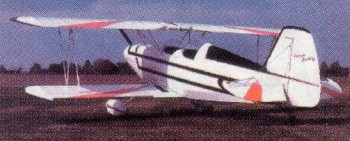
D’Apuzzo Junior Aero Sport

This single-seat sporting biplane is a smaller version of the Senior Aero Sport, and is built from the standard combination of a fabric-covered wooden wing and a fabric-covered steel-tube fuselage.
This single-seat sporting biplane is a smaller version of the Senior Aero Sport and is built from the standard combination of a fabric-covered wooden wing and a fabric-covered steel-tube fuselage. The powerplant drives a constant-speed metal propeller to produce a maximum speed of 160 mph. Plans are no longer available.

Engine 180-hp Lycoming.
Wingspan 21’8″
Length 18’3″
Gross wt. 1,275 lb.
Empty wt. 840 lb.
Fuel capacity 20 USG.
Top speed 160 mph.
Cruise speed 140 mph.
Stall 55 mph.
Climb rate 2500 fpm.
Ceiling 20,000 ft.
Takeoff run 400 ft.
Landing roll 550 ft
Range 300 sm.

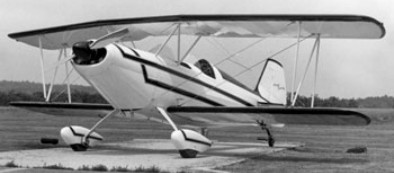
D’Apuzzo D-201 Sportwing

The D-201 Sportwing is a completely redesigned version of the Senior Aero Sport. Of special interest is the attention that was given to reducing the cost and complexity of building the airplane without sacrificing the safety aspects of the previous models. The fuselage is a conventional steel-tube structure with aluminum alloy panels used for covering forward of the cockpit and fabric used aft of the cockpit. The wings are the conventionally braced biplane type with long-span ailerons on the lower wings. Power is supplied by engines ranging from 125-hp to 200-hp by Lycoming, while the most common powerplant is the 160-hp Lycoming. Seating is in tandem fashion with a canopy as an option.

Engine 160-hp Lycoming IO-320.
hp range 125-200
Wingspan 27 ft.
Length 21 ft 7.5 in.
Height: 7.6 ft.
Wing area: 181 sq.ft.
Gross Weight. 1900 lb
Empty Wt. 1295 lb.
Fuel capacity 29 USG
Top speed 132 mph.
Cruise mph 122.
Stall 45 mph.
Climb rate 1050 fpm.
Takeoff roll 420 ft.
Land¬ing roll 520 ft
Takeoff distance (50’) 790 ft.
Land¬ing distance (50’) 850 ft.
Range 360 sm.
Service ceiling: 19,000 ft.
Seats: 2.

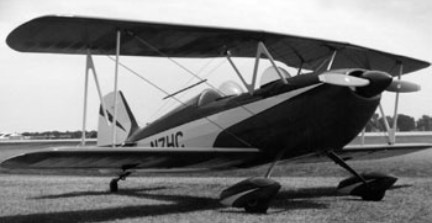
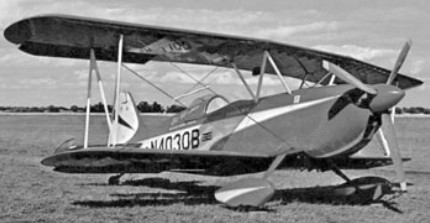
D’Apuzzo PJ-260 Senior Aero Sport

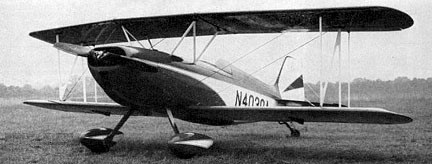
Designed by Nicholas D’Apuzzo, the aerobatic Senior Aero Sport was available as either a single or two-seater. One prototype, N40304, was designed and built at the request of Rodney Jocelyn as an exhibition aircraft for world champion aerobatic pilot Lindsey Parsons at competitions in Spain. It first flew on 28 July 1960.

PJ-260 N40304

Rod Jocelyn completed a PJ-260 Joc-Par Special for entry in the 1964 World Aerobatic Championships in Spain. Powered by a 260 hp Lycoming VO-435-A1F, 27 ft span and 21 ft length, gross weight was 1600 lb. Scothply plastic was used instead of steel spring for landing gear, saving 40 lb.

This sport biplane has a wood-faired steel tube fuselage, wire-braced steel tube tail section, all fabric covered. The fuel supply and the front seat passenger are very close to the center of gravity, so trim is little affected by expending fuel or by the presence or absence of a passenger. A variety of engines can be used from 190 to 260 hp.

Reportedly 7 amateur-built planes up to February 1974. Also seen recorded as Joc-Par. One example is the grand champion homebuilt at the 1968 EM fly-in at Rockford, Illinois.

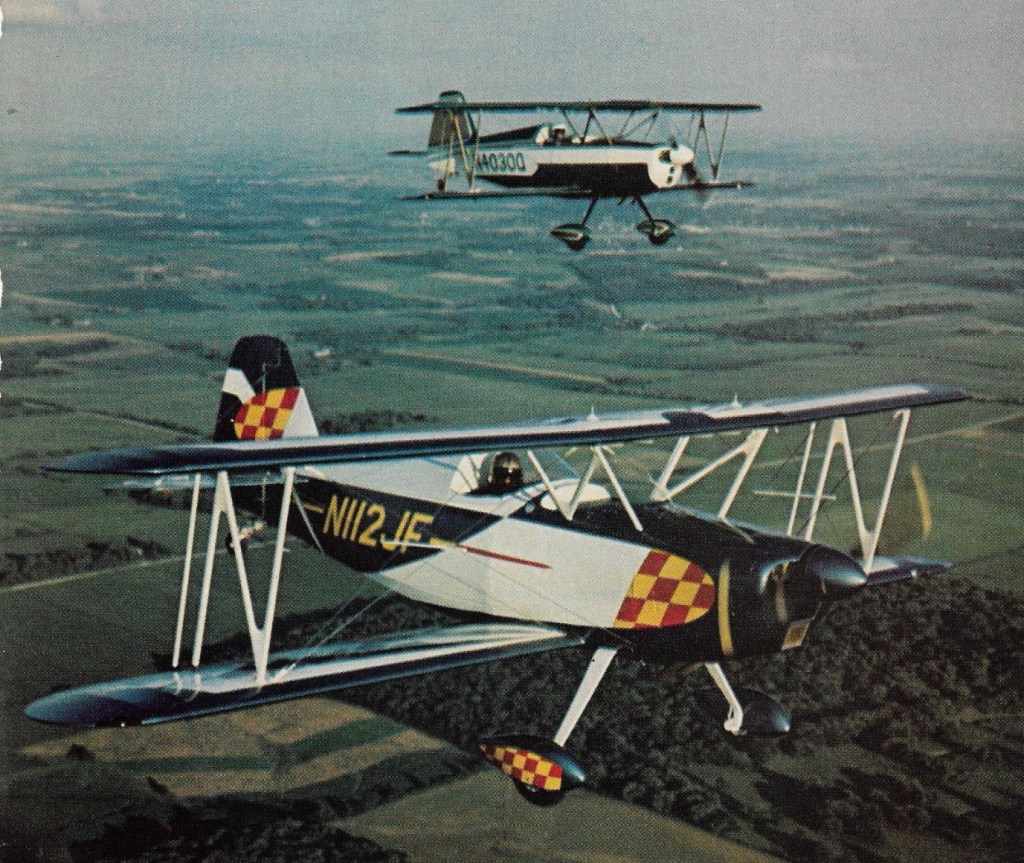
D’apuzzo D-260 N112JF

Engine: 260hp Lycoming GO-435-C2
Wingspan: 27’0″
Length: 21’0″
Useful load: 700 lb
Max speed: 170 mph
Cruise: 138 mph
Stall: 52 mph
Range: 500 mi
Ceiling: 24,000′
Seats: 1

Engine 280-hp Lycoming.
Wingspan 27 ft 0 in.
Length 21 ft 0 in.
Gross Weight. 2050 lb.
Empty Weight. 1450 lb.
Fuel capacity 36-42 USG.
Top speed 155 mph.
Cruise speed 140 mph.
Stall speed 52 mph.
Climb rate 2000 fpm.
Takeoff distance (50’) 700 ft.
Land¬ing distance (50’) 900 ft.
Range 400 miles.

Tiziano Danieli Piuma Twin

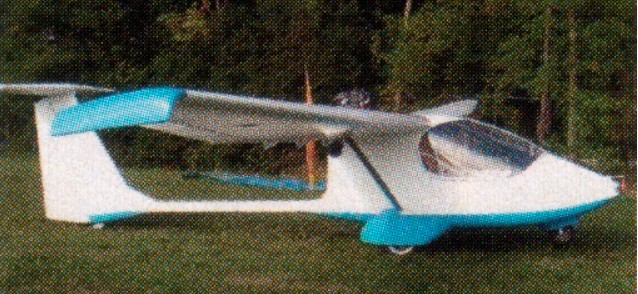
A 2 seat project is also available, the Piuma Twin, later substituted by the Piuma Twin Evolution, that includes all the improvements suggest during 9 years of Piuma Twin constructions, with a 20 cm longer front fuselage. This gives a better balance for 2 people without the ballast and a shape similar to the one seat Piuma Evolution. This shape allow lighter aft parts and more stiffness of the tail boom. Also the elevators are similar to the Evolution one seat.
The Piuma Twin Project was finished in 1998.
The wooden fuselage is lighter; the instrument panel is similar to a glider.
There is a single version of the Twin, with wings of 42,7 feet and 132 sq.ft.
The special drawings numbers 12sp, 13sp and 14sp are always available, to allow to build the wings from 42 to 45 feet with high efficiency winglets.
It’s recommended, considered the positioning behind the cockpit; a light engine not exceeding 55 kg for complete engine, engine mounting and propeller.
A Rotax 503, (45/50 hp), combined with a carbon fibre 3 blade prop can be suitable for the project. The HKS, 4 stroke of 60 Hp could be an alternative. The two seats cabin is 43in wide and the seats are padded.

The new project is made with 16 big drawings of 24 x 41 or more (the ribs are in 1-1 scale):
N. 1 to 6 Triptych, fuselage, frames, landing gears, levers, engine mounting, etc
N. 7 to 11 Wings, ribs, spars, levers in the wings, ailerons, flaps and air brakes
N. 15 to 19 Vertical, Elevators, ribs and spars, levers and aft little wheel
The special drawings n. 12sp, 13sp and 14sp are in option and they allow to build the wings from 42 to 45 feet with high efficiency winglets, to cover the wings with all birch ply, to put the fuel tanks in the wings and to build new special air brakes.
The Plans Basic are made from 16 drawings in English and the Construction Book in English (44 pages with 30 photos and a lot of drawings to explain the construction); a complete note of the materials to buy is also included.
It is possible to check the centre of gravity and flight is explained in detail. There is also a note of the parts weight.
In the Plans Advanced there are also the 3 option drawings, the Project book (this is in Italian language, but there are 32 photos and 80 drawings, graphics and lists and it is easy to understand the calculations) and a DVD with 3200 photos (1600 are of the Twin construction).

The tail boom in Aluminium 6005-T16 is also available: diameter 127mm – thickness 1,5mm – length 5,2 m.
The wing profiles are the same of the Tourer Piuma.
The material cost, without engine and instruments, is about 8000 euro, at the 2007 prices.
The time of construction is about 1200 hours.

Wing Span: 42.7 ft. / 13 m
Wing Area: 132 sq.ft. / 12.2 sq.m
Length: 21.3 ft / 6.5 m
Height: 5.6 ft / 1.7 m
Empty Weight: 600 lbs. / 270 kg
Gross Weight: 980 lbs. / 440 kg
Fuel Capacity: 11 gal / 40 lt
hp: 50
hp Range: 45/60
Vne: 106 mph. / 175 Km/h
Top speed: 103 mph. / 165 Km/h
Va: 92 mph. / 145 Km/h
Stall: 44 mph. / 70 Km/h
Stall full flaps: 35 mph. / 55 Km/h
L/D: 20/1
Min.Sink Rate: 220 ft/min. / 1.1 m/sec
Load factors max: + 4.6 -2.3
Take-off distance: 400 ft. / 120 m
Landing distance: 400 ft. / 120 m
Bldg Time: 1.200 hr

Engine: Rotax 503, 45 hp
HP range: 45-65
Length: 20.6 ft
Wing span: 41 ft
Wing area: 125 sq.ft
Aspect ratio: 13.5-1
Empty weight: 490 lb
Gross weight: 910 lb
Fuel capacity: 10 USG
Cruise: 92 mph
Stall: 43 mph
L/D: 18:1
Min sink: 240 fpm
Seats: 2
Cockpit width: 43 in
Landing gear: tri
LSA: yes