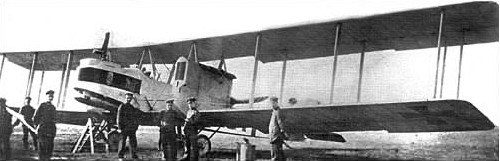
Gotha Go 244

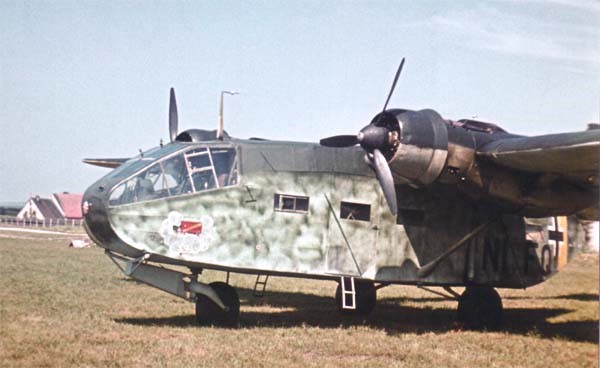
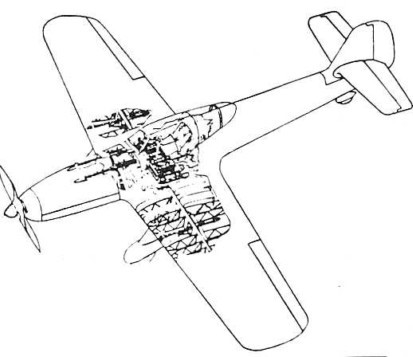
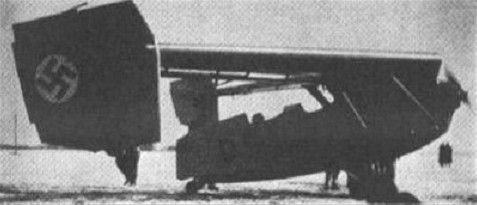
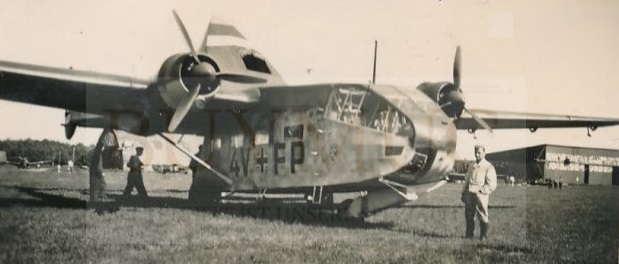
After the fall of France the French Gnome-Rhone 14M radial engine became available to the Germans in large numbers, and the Go 242 was modified to serve as the Go 244 twin-engined transport, each of the twin booms being extended forward of the leading edge of the wing to mount one of these engines. At the same time fixed tricycle landing gear was installed.

A total of 133 conversions was made from the five Go 242B variants and these were designated correspondingly Go 244B-1 to B-5. First deliveries were made in March 1942 to the Greek-based KGrzbV 104 and to KGrzbV 106 in Crete, but they proved to be relatively easy targets for Allied fighter aircraft and had been withdrawn by November 1942. Some Go 244s had 492kW BMW 132Z or captured Russian Shvetsov M-25As each of 559kW.

Go-244B-2
Engine: 2 x Gnome-Rhone 14M, 522kW
Max take-off weight: 7800 kg / 17196 lb
Empty weight: 5100 kg / 11244 lb
Wingspan: 24.5 m / 80 ft 5 in
Length: 15.80 m / 51 ft 10 in
Height: 4.70 m / 15 ft 5 in
Wing area: 64.4 sq.m / 693.20 sq ft
Max. speed: 290 km/h / 180 mph
Ceiling: 7500 m / 24600 ft
Range: 600 km / 373 miles
Armament: 4 x 7.9mm machine-guns

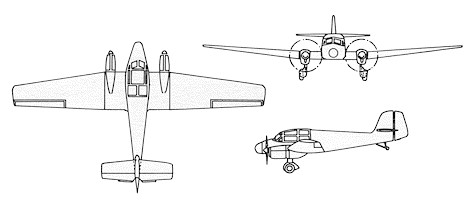
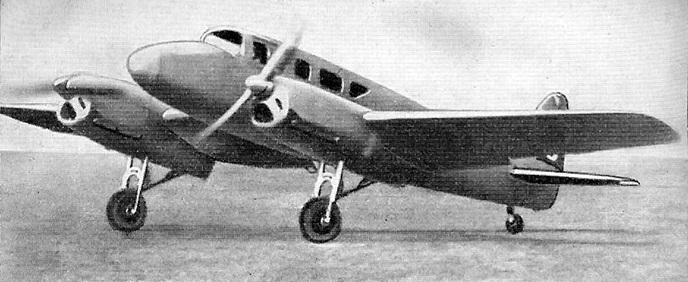
Gotha Go 150

In January 1937 Major Werner Junck, chief of the LC II, the technical wing of the Reichsluftfahrtministerium responsible for the development of new aircraft, informed various minor aircraft manufacturers such as Gothaer Waggonfabrik, Bücker, Fieseler, Flugzeugwerke Halle and Klemm that they would not get any contracts for the development of military aircraft. He therefore advised them to concentrate in the development of a Volksflugzeug or a small twin-engined plane. As a result, Gothaer Waggonfabrik developed the Go 150.

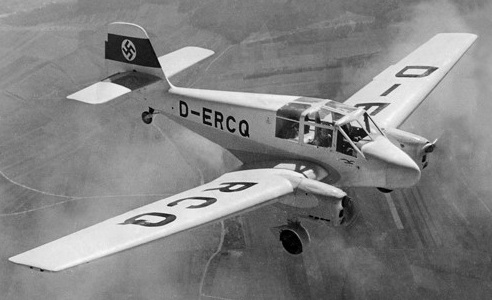
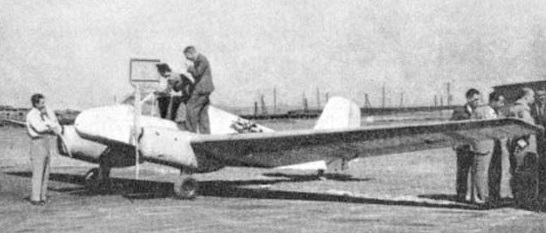
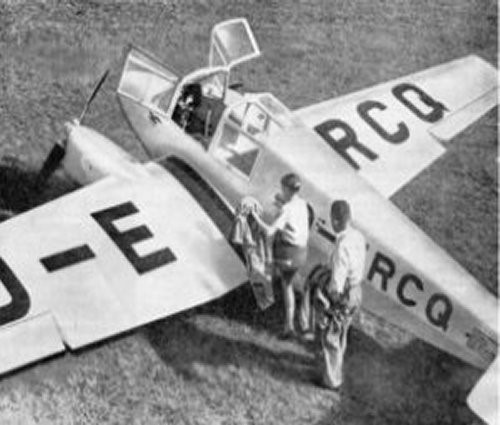
The aircraft was a twin-engined monoplane with an enclosed cockpit, designed by Albert Kalkert.

The first, D-ERCQ, first flew in 1937. The results of this flight were good, and production began. The aircraft was used to train both civilian and Luftwaffe pilots. The Go 150 was later also used in tests, where it was towed by a Heinkel He 46.

Two prototypes were built, followed by a series of 10. All of them received civil registration. Another series with 10 aircraft was planned but not fulfilled.

The Go.150 established flight altitude records in its class. Firstly, three test attempts in which the aircraft reached heights of 7100 m, 7500 and 7800 m were made. Only when there was full confidence in achieving the record, the Go.150 made the attempt.

On July 5, 1938, piloted by Fritz Platz, after 45 minutes he had reached 7,000 meters, but fell sharply in this rate of climb. At an altitude of 7100 meters, it was only 1m\sec, and in another 700 meters, it decreased to 0.5 m\sec. After 1.5 hours he reached an estimated height of 8,000 meters. After ascertaining the correct indication of the instrument pilot, and after 30 minutes, made a successful landing at its airport. This record was officially recorded FAI.

Gallery

Engines: 2 × Zündapp Z 9-092, 37 kW (50 hp) each
Wingspan: 11.80 m (38 ft 9 in)
Wing area: 17.50 m2 (188 sq ft)
Aspect ratio: 8.1
Length: 7.15 m (23 ft 5 in)
Height: 2.03 m (6 ft 8 in)
Empty weight: 535 kg (1,179 lb)
Gross weight: 850 kg (1,874 lb)
Max takeoff weight: 1,036 kg (2,284 lb)
Fuel capacity: 80 kg
Oil capacity: 6 kg
Load: 315 kg
Fuel consumption: 12.7 l/100 km
Flying weight 48.5 kg/sq.m
Maximum speed: 200 km/h (124 mph; 108 kn)
Cruising speed: 185 km/h (115 mph; 100 kn)
Landing speed: 85 km/h
Range: 900 km (559 mi; 486 nmi)
Service ceiling: 4,200 m (13,780 ft)
Rate of climb: 2.74 m/s (539 ft/min)
Time to 1000m: 6min. 5sec.
TO dist to 20m: 400 m
Landing dist from 20m: 500 m
Crew: 1
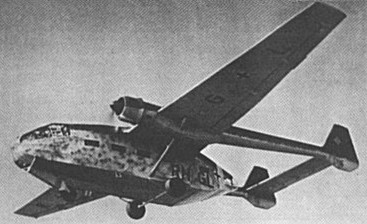
Gotha Go 149

The Gotha Go 149 was a military aircraft developed in Germany in the mid-1930s for training fighter pilots. It was a conventional low-wing cantilever monoplane with tailwheel undercarriage, the main units of which retracted inwards. The wing was wooden, while the monocoque fuselage was metal. Two prototypes were constructed, and an armed version was also proposed as a light home-defence fighter (Heimatschutzjäger) armed with two 7.92 mm (.312 in) MG 17 machine guns, but the Luftwaffe did not purchase either version of the design, and no further examples were built.

Gotha Go 147

The Gotha Go 147 was a German experimental prototype reconnaissance aircraft designed in 1936. Designed by Gothaer Waggonfabrik and Albert Kalkert, construction of the two-seater aircraft was abandoned before the end of World War II.
Featuring an unconventional design, it was built to test how an aircraft without a tail would fly, with the hope of using the experience to produce a future version for military use. Construction was suspended after the prototype proved to have poor flight characteristics.

Gotha Go 146

The Gotha Go 146 was a twin-engine utility aircraft developed in Germany in the mid-1930s. It was a conventional low-wing cantilever monoplane with tailwheel undercarriage, the main units of which retracted into the engine nacelles on the wings. It was offered to the Luftwaffe as a high-speed courier aircraft, but the Siebel Fh 104 was selected instead. With Gotha unable to attract other customers, no serious production was undertaken and a small number of prototypes were the only examples built.

Gotha Go 145 / CASA HA-1115-L

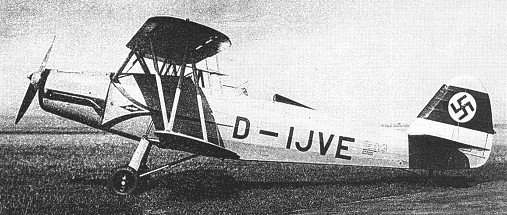
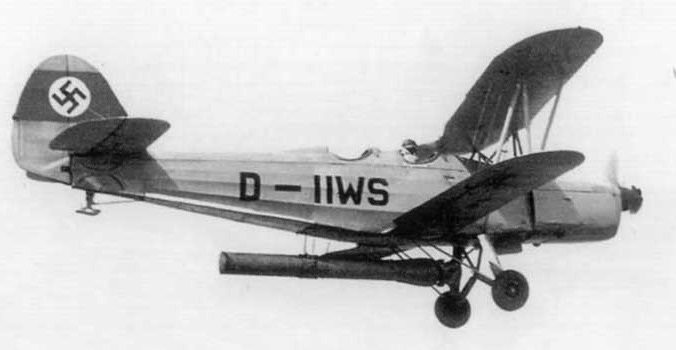
Gotha was closed by the terms of the Treaty of Versailles, but in 1933 the company resumed aircraft manufacture, and its first product was the Go 145 trainer. This first flew in February 1934 with a fabric-covered all-wood airframe, and was ordered into immediate production as a Luftwaffe basic trainer with the designation Go 145A. 9500-10,000 aircraft were built, including BFW and Focke-Wulf, and such was the utility of the type that in World War II large numbers were used by the Storkampfstaffefn (later Nachtschfachtgruppen) to harass the Soviet forces. The type was also built in Spain as the CASA 1115-L, and in Turkey. German variants were the Go 145B with an enclosed cockpit and landing gear spats, and the Go 145C gunnery trainer with a pivoted 7.92-mm (0.312-mm) machine-gun in the rear cockpit.

Gotha Go145 with Argus VSR9 pulsejet

Go 145A
Span: 9.m (29ft 6.25 in).
Length: 8.7m (28 ft 6.5 in).
Powerplant: l x Argus As 100, 179kW (240 hp).
Armament: none.
Max TO weight: 1380 kg (3,043 lb).
Max speed: 132 mph at sea level.
Operational range: 391 miles.

Go 145B

Go 145C

Gotha WD.2 / WD.5 / WD.9 / WD.12 / WD.13 / WD.15

Gotha WD.2

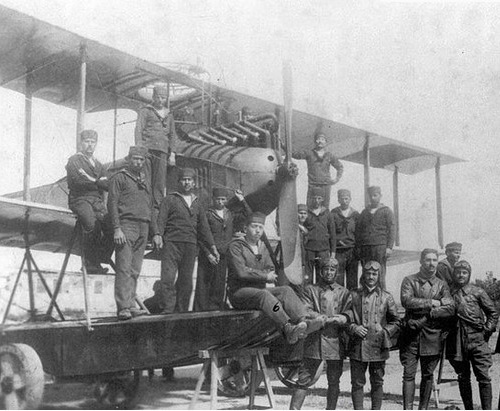
The Gotha WD.2 (for Wasser Doppeldecker – “Water Biplane”) and its derivatives were a family of military reconnaissance aircraft produced in Germany just before and during the early part of World War I. It was a development of the Avro 503 that had been built under licence by Gotha as the WD.1, and like it, was a conventional three-bay biplane with tandem, open cockpits. The landing gear comprised twin pontoons and dispensed with the small pontoon carried under the tail of the WD.1. Machines built for the German Navy were unarmed, but those supplied to the Ottoman aviation squadrons carried a 7.92 mm (.312 in) machine gun in a ring mount on the upper wing, accessible to the observer, whose seat was located directly below it.

In an attempt to increase performance, one WD.2 was built with a reduced wingspan and its Benz Bz.III engine replaced with the more powerful Mercedes D.III. Designated the WD.5, no further examples were built in this configuration, but it served as the pattern for the WD.9, built in a small series. This differed from the WD.5 prototype in having a trainable 7.92 mm (.312 in) machine gun located in the rear cockpit, to which the observer had been relocated. One such aircraft was supplied to the German Navy, with the rest of the batch going to Turkey, albeit with the less powerful engine of the WD.2.

The last member of the family to be built in any quantity was the D.III-powered WD.12, an unarmed version which featured greater attention to streamlining the aircraft, most especially around the engine area, which was now provided with a close-fitting cowl and a spinner for the propeller. Again, this type was supplied to both Germany and the Ottoman Empire. It was followed in production by a small number of WD.13s, essentially similar but for the use again of the less powerful Bz.III.

Finally, two WD.15s were built after a considerable redesign of the aircraft. These had plywood-covered fuselages, as opposed to the fabric covering used on all earlier members of the family, and were fitted with Mercedes D.IVa engines.

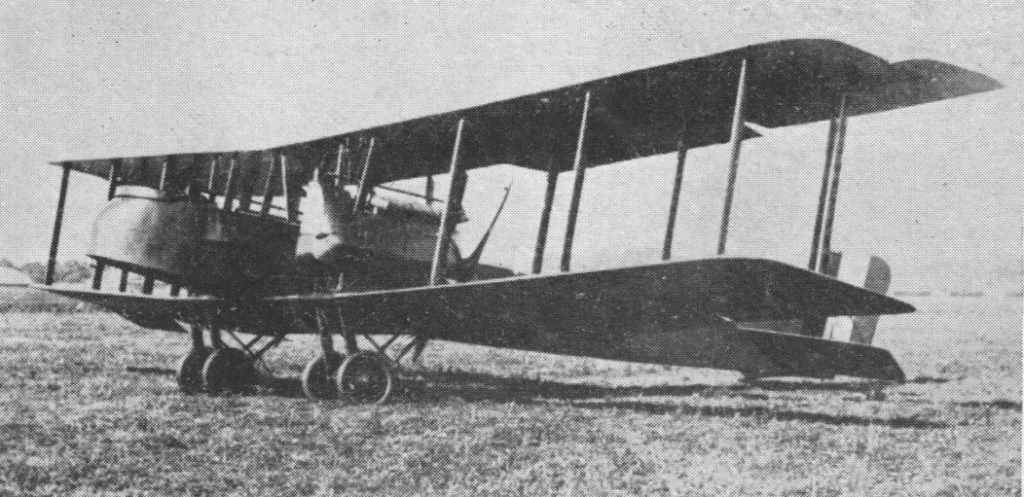
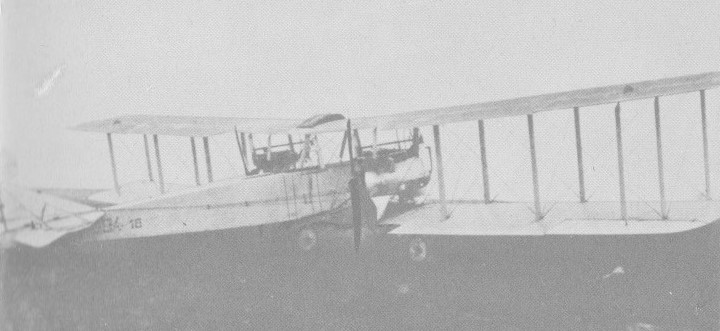
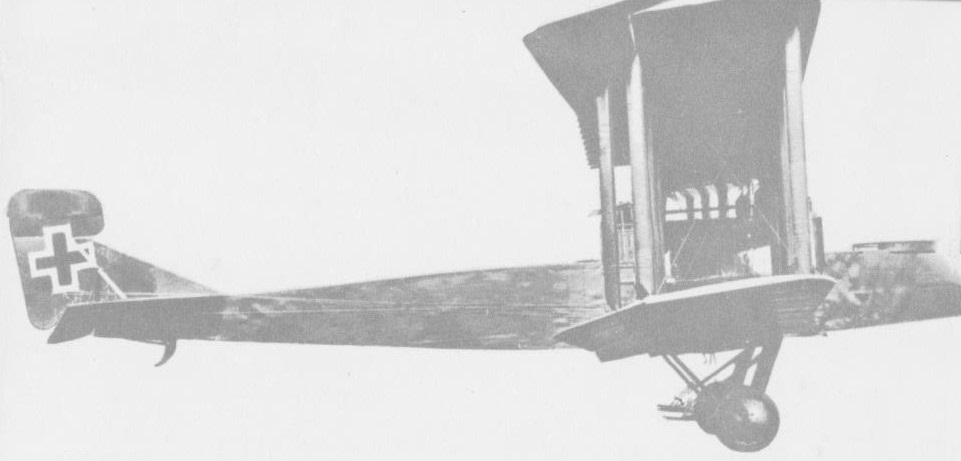
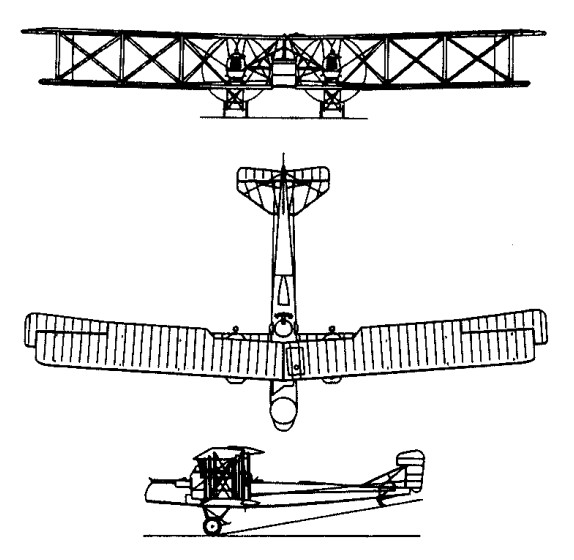
Gotha G.V

Operational use of the G.IV demonstrated that the incorporation of the fuel tanks into the engine nacelles was a mistake. In a crash landing the tanks could rupture and spill fuel onto the hot engines. This posed a serious problem because landing accidents caused 75% of operational losses. In response Gothaer produced the G.V, which housed its fuel tanks in the center of the fuselage. The smaller engine nacelles were mounted on struts above the lower wing.

The G.V was a three-bay biplane with wings of two-spar wooden construction, with plywood covering of the centre section of the lower wing and fabric covering over the remainder. The wooden fuselage has plywood covering. Conventional control surfaces are fabric covered steel tube construction. Ailerons are on all four wings and each undercarriage unit has twin wheels.

Gotha G.V Article

The Gotha G.V pilot seat was offset to port with the fuel tanks immediately behind. This blocked the connecting walkway that previously on earlier machines allowed crew members to move between the three gun stations. All bombs were carried externally in this model. The Gotha included an important innovation in the form of a “gun tunnel” whereby the underside of the rear fuselage was arched, allowing placement of a rearward-facing machine gun protecting from attack from below, removing the blind spot.

The base variant of G.V offered no performance improvement over the G.IV. The G.V was up to 450 kg (990 lb) heavier than the G.IV due to additional equipment and the use of insufficiently seasoned timber. The Mercedes D.IVa engines could not produce the rated 190 kW (260 hp) due to inferior quality of fuel.

The G.V entered service in August 1917. For the performance reasons aforementioned, it generally could not operate at altitudes as high as the G.IV. On 13 June 1917 London was raided in daylight by 14 Gothas against little opposition. As the RFC formed home defence squadrons, after one final raid by 22 Gothas on 7 July 1917, the raiders switched to night bombing.

G.Va
In February 1918, Gothaer tested a compound tail unit with biplane horizontal stabilizers and twin rudders. The new tail unit, known as the Kastensteuerung, improved the aircraft’s marginal directional control on one engine. The resulting G.Va subvariant incorporated the new tail as well as a slightly shorter forward fuselage with an auxiliary nose landing gear. All 25 G.Va aircraft were delivered to Bogohl 3, the new designation for the former Kagohl 3.

G.Vb
Carried an increased payload comparing to the earlier G.Va, and operated at a maximum takeoff weight of 4,550 kg (10,030 lb). To reduce the danger of flipping over during landing, Gothaer introduced the Stossfahrgestell (“shock landing gear”), a tandem two-bogie main landing gear. The Stossfahrgestell proved so good that it was fitted to all G.V’s in Bogohl 3. Some G.Vb aircraft also had Flettner servo tabs on the ailerons to reduce control forces.

Idflieg ordered 80 G.Vb aircraft, the first being delivered to Bogohl 3 in June 1918. By the Armistice, all 80 aircraft were built but the last batch did not reach the front and was delivered direct to the Allied special commission.

Engines: 2 x Mercedes D.IVa, 260 hp
Wingspan: 77 ft 9 in
Wing area: 963.4 sq.ft
Length: 38 ft 11 in
Height: 14 ft 1.25 in
Empty weight: 6040 lb
Take-off weight: 8763 lb
Max speed: 87 mph at SL
Range: 520 mi
Armament: 2 x mg
Bombload: 660-1100 lb

Gotha G.IV

The Gotha G.IV was a development of the G.III.
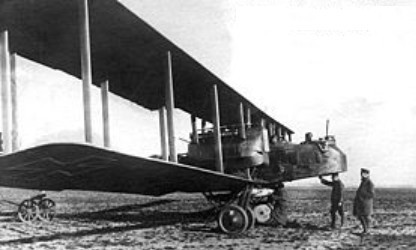
The blunt nose made it possible to place the engines closer together, and together with placing the tailfins in the slipstream this gave better one-engine performance making it possible to run the engine at full power. But none of the type G twin-engined biplanes could fly level on one engine. The Gotha G was a ‘tunnel’ in the bottom of the tail that made it possible for the tail gunner to cover the lower rear of the aircraft.

Gotha G.IV

Later versions had biplane tails with twin fins and eliminated the position for the nose gunner.

Gotha G-IV

The G.IV (also produced by LVG and Siemens-Schuckert) was used in the first mass attack on England, when 21 Gothas raided Folkestone, Shorncliffe and elsewhere on 25 May 1917, killing about 95 people and injuring many others. On 13 June 14 Gothas attacked London for the first time and caused the worst casualties (of an air raid) of the war, with 162 people being killed and 432 injured. The heavy casualties suffered among the civilian population of England by these raids forced the return of aircraft from France to defend the cities, and such was their success that the last big raid on England during daylight hours was carried out on 12 August.

Gallery

G.IV
Engine: 2 x 260hp Mercedes D.IVa
Take-off weight: 3975 kg / 8763 lb
Empty weight: 2740 kg / 6041 lb
Wingspan: 23.70 m / 77 ft 9 in
Length: 11.86 m / 38 ft 11 in
Height: 4.30 m / 14 ft 1 in
Wing area: 89.50 sq.m / 963.37 sq ft
Max. Speed: 140 km/h / 87 mph
Cruise speed: 124 km/h / 77 mph
Ceiling: 6500 m / 21350 ft
Range: 522 km / 324 miles
Crew: 3

Gotha G.III

The Gotha G.II and G.III bombers made their appearance in 1916. The two bombers were remarkably similar, differing only in their engines and internal details. The G.III entered service in August of 1916 and was powered by two Mercedes D IVa direct drive engines. Engine power went directly to the propeller shaft without using a reduction gear to reduce revolution speed. Both aircraft were armed with two 7.92mm Maxim IMG Parabellum machine guns – one in the nose and another in the aft fuselage – and carried approximately 540kg of bombs. A few G.IIs and G.IIIs were equipped with a trapdoor in the undersurface of the rear fuselage, which permitted the rear gunner to take up a prone position and fire aft or downwards from a ventral position to defend the bomber’s vulnerable ‘blind spot.’