Hiro Naval Air Arsenal Type 90 / Type 91 (engine)

The Hiro Type 91, (full designation Hiro Type 91 520 hp water-cooled W-12), was a 12-cylinder, water-cooled, W engine developed for aircraft use by the Imperial Japanese Navy in the mid-1930s. Power was in the 450 kW (600 hp) range. Its design was inspired by the Lorraine-Dietrich 12Eb Courlis. An enlarged more powerful engine, the Type 90 had also been developed using the Lorraine 12F Courlis as inspiration, developing 600 hp.

Applications:
Aichi E10A
Aichi E11A
Hiro H4H
Kawanishi E7K
Mitsubishi Ka-9

Specifications:
Type 91 500hp-1
Type: 12-cylinder water-cooled W-block (3 banks of 4 cylinders) aircraft piston engine
Bore: 135 mm
Stroke: 160 mm
Displacement: 27.5 L
Cooling system: Liquid-cooled
Power output:
620 PS for takeoff
520 hp for max continuous

Hiro Naval Air Arsenal Type 14

Japan’s military leaders discovered the value of aircraft while participating in World War I. It was necessary to import all of its military aircraft and engines as there was no aviation manufacturing industry in Japan at that time. The Imperial Japanese did not want to rely on foreign products, yet that was all that was available. To remedy this, Japan began importing state-of-the-art aircraft from around the world, and after close examination and study they incorporated the best features of each into their own design, thereby creating a uniquely superior Japanese designed and built product.

In late 1928 the IJN imported a Supermarine Southampton II from Britain. The Southampton was a twin-engine biplane flying boat, with the 500 hp (373 kW) Napier Lion VA W-block tractor engines mounted between the wings. It was one of the most successful flying boats of the between-war period.

In 1929, Lieut-Cdr (Ordnance) Jun Okamura was assigned as chief designer to assist in the design of a new Japanese aircraft using the Southampton as a starting point. After performance testing at Yokosuka, the Southampton was ferried to the Hiro Naval Arsenal for further study. Testing and evaluation revealed several construction innovations when compared to the German flying boats that were also undergoing evaluation. Those features included an all-metal hull and simplified construction, both of which the Japanese Navy hoped to incorporate into the replacement for the outdated Type 15 Flying-boat.

The Napier Lion engines were closely examined by the engineers at Hiro as well. They were charged with creating a new Japanese designed and built engine based on the Napier engine that powered the Supermarine Southampton II. The new engine was identified as the Type 14 engine, as it was accepted in the 14th year of Emperor Taishō’s reign, as that was the designation method used at the time.

The Hiro Type 14 engine, (full designation Hiro Type 14 500hp water-cooled W-12), was first run in 1929. A water-cooled twelve-cylinder W engine built by the Hiro Naval Arsenal (Hiro Kaigun Ko-sho) for the Imperial Japanese Navy. The Hiro Type 14 engine had three banks of four cylinders each, with the center bank upright, and the other two banks angled outward 60 degrees. The first aircraft to be powered by a Type 14 engine was the Hiro H2H flying boat.

The 550 hp Type 14 engine, although notionally more powerful than the Napier Lion, flight tests of the H2H1 indicated the Type 14 engine had poor performance due to insufficient power, and it was replaced by the 600 hp Hiro Type 91 engine (an enlarged development of the Type 14) when manufacturing was shifted to Aichi in 1931.
Hiro Naval Air Arsenal G2H1 / Navy Type 95

Designed by the Hiro navy air arsenal in 1932, this twin-engined land-based heavy bomber was not a particularly successful venture, and only eight were built. The prototype made its first flight in March 1933, and a number of faults were revealed during the flight test programme. Most serious were a weakness of the basic airframe structure, and a tendency to wing flutter. Difficulties were also encountered with the original powerplant, which consisted of a pair of 600 hp Hiro Type 94 water cooled engines.
The G2H1 went into production in 1935 as Navy Type 95. The production version carried a crew of seven, was armed with four 7.7 mm (0.303¬in) Type 92 machine guns, and carried an internal bombload of six 250 kg (551 1b) or four 400 kg (881 1b) bombs. Only six were built by Hiro, because of the generally unsatisfactory nature of the aircraft. Two others were completed by Mitsubishi, with 900 hp 18 cylinder engines. In 1934, Mitsubishi evolved the Ka 9 long range reconnaissance monoplane based on the G2H1 design. The chief claim to fame of the two types was their influence upon the development of the highly successful Mitsubishi G3M bomber. The few G2H1s built took part in raids against mainland China during the Sino Japanese war. Before long, however, most of them were destroyed in a fire at their base on Cheju Island in the Korea Strait.

Span: 31.68 m (103 ft 11.25 in)
Length: 20.15 m (66 ft 11 in)
Gross weight: 11000 kg (24 251 lb)
Maximum speed: 245 km/h (152 mph).

Hipssich 1910 Flieger / Drachenflieger II

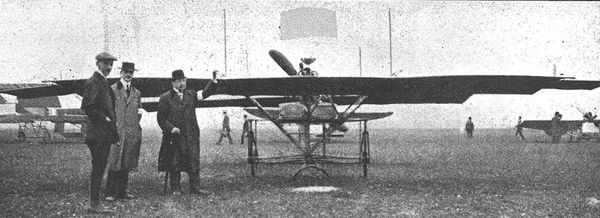
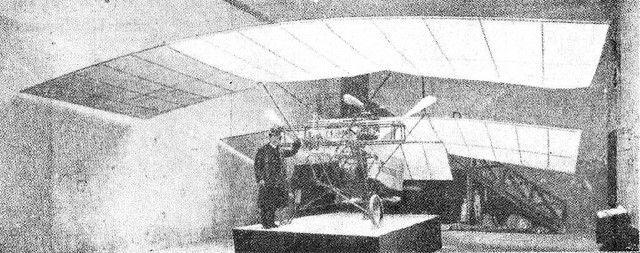
The “rekonstruierte Hipssichflieger” – sometimes identified as the Hipssich Drachenflieger II, a development of the I – photographed at the flying field at Wiener Neustadt around the beginning of October 1910. At right, wearing a bowler, is Karl Hipssich. Hippsich was a German inventor living in Vienna with an interest in aviation who invented and patented an automatically stable Flying machine, or “Drachenflieger” rather.

Construction started at the end of 1908 where the actual building was done by the Viennese firm of Karl Köhler. On the left is the pilot of the machine Erich Köhler who had no pilots’ license at the time. He acquired German No. 347 on January 10, 1913 at Breslau when flying a Rumpler Taube.

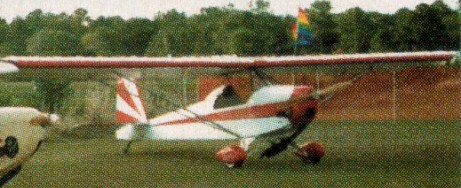
Hipp’s Superbirds Super Sportster

First flown in 1986, the Super Sportster features detachable wings. In 1997 the kit, including engine, prop and instruments, sold for US$9587, and plans for US$150.

Speed max: 90 mph.
Cruise: 70 mph.
Range: 120 sm.
Stall: 31 mph.
ROC: 800 fpm.
Take-off dist: 50 ft.
Landing dist: 200 ft.
Service ceiling: 12,000 ft.
Engine: Rotax 447, 40 hp.
HP range: 40-50.
Fuel cap: 5 USG.
Weight empty: 260 lbs.
Gross: 550 lbs.
Height: 5.25 ft.
Length: 16.33 ft.
Wing span: 28 ft.
Wing area: 112 sq.ft.
Seats: 1.
Landing gear: tail wheel.

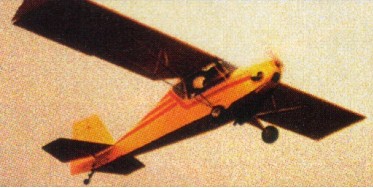
Hipp’s Superbirds Reliant

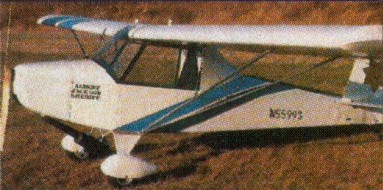
The Reliant single-seat high-wing LSA microlight was first flown in 1984 and was available for US$6884 in 1997. In 2007 the kit sold for US$9993.
In 1997 the Reliant SX kit sold for US$9587. The price includes engine, prop. And instruments. First flown in 1987, the wings of the SX were also detachable. The Reliant SX is a more powerful version.

Reliant
Speed max: 63 mph.
Cruise: 60 mph.
Range: 120 sm.
Stall: 24 mph.
ROC: 800 fpm.
Take-off dist: 50 ft.
Landing dist: 200 ft.
Service ceiling: 12,000 ft.
Engine: Rotax 277, 28 hp.
HP range: 28-40.
Fuel cap: 5 USG.
Weight empty: 254 lbs.
Gross: 500 lbs.
Height: 5.25 ft.
Length: 16.33 ft.
Wing span: 30 ft.
Wing area: 120 sq.ft.
Cockpit width: 23.6 in
Seats: 1.
Landing gear: tail wheel.

Reliant SX
Speed max: 100 mph.
Cruise: 75 mph.
Range: 120 sm.
Stall: 31 mph.
ROC: 1100 fpm.
Take-off dist: 50 ft.
Landing dist: 150 ft.
Engine: Rotax 447, 40 hp.
HP range: 40-50.
Fuel cap: 5 USG.
Weight empty: 285 lbs.
Gross: 600 lbs.
Height: 5.25 ft.
Length: 16.33 ft.
Wing span: 30 ft.
Wing area: 120 sq.ft.
Seats: 1.
Cockpit width: 23.6 in
Landing gear: tail wheel.

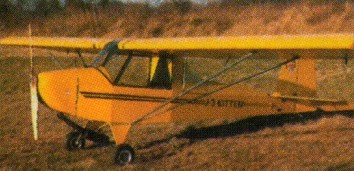
Hipp’s Superbirds J-5 Super Kitten

An LSA with detachable wings, the kit price was US$9387 and plans US$150 in 1997.

Speed max: 90 mph.
Cruise: 70 mph.
Range: 120 sm.
Stall: 31 mph.
ROC: 800 fpm.
Take-off dist: 50 ft.
Landing dist: 200 ft.
Service ceiling: 12,000 ft.
Engine: Rotax 447, 40 hp.
HP range: 40-50.
Fuel cap: 5 USG.
Weight empty: 280 lbs.
Gross: 550 lbs.
Height: 5.25 ft.
Length: 16.33 ft.
Wing span: 30 ft.
Wing area: 120 sq.ft.
Seats: 1.
Landing gear: tail wheel.

Hipp’s Superbirds J-4 Sportster

A single-seat parasol-wing LSA microlight first flown in 1986. Fitted with detachable wings.
The kit price in 1997 was US$6884 and plans US$150. In 2007 the kit price was US$9993 and plans US$250.

Speed max: 63 mph.
Cruise: 59 mph.
Range: 120 sm.
Stall: 24 mph.
ROC: 800 fpm.
Take-off dist: 50 ft.
Landing dist: 200 ft.
Service ceiling: 12,000 ft.
Engine: Rotax 277, 28 hp.
HP range: 28-40.
Fuel cap: 5 USG.
Weight empty: 240 lbs.
Gross: 500 lbs.
Height: 5.25 ft.
Length: 16.33 ft.
Wing span: 28 ft.
Wing area: 112 sq.ft.
Seats: 1.
Landing gear: tail wheel.
Cockpit width: 23.6 in

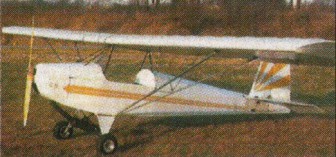
Hipp’s Superbirds J-3 Kitten

A single-seat, LSA legal high-wing microlight. With detachable wings, the J-3 Kitten first flew in 1986.
The kit price in 1997 was US$6684 and plans US$100.
By 2007 the kit price was US$10,893.

Speed max: 63 mph.
Cruise: 59 mph.
Range: 120-140 sm.
Stall: 24 mph.
ROC: 800 fpm.
Take-off dist: 50 ft.
Landing dist: 200 ft.
Service ceiling: 12,000 ft.
Engine: Rotax 277, 28 hp.
HP range: 28-40.
Fuel cap: 5 USG.
Weight empty: 254 lbs.
Gross: 500 lbs.
Height: 5.25 ft.
Length: 16.3 ft.
Wing span: 30 ft.
Wing area: 120 sq.ft.
Seats: 1.
Landing gear: tail wheel.
Cockpit width: 23.6 in