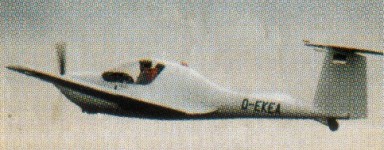
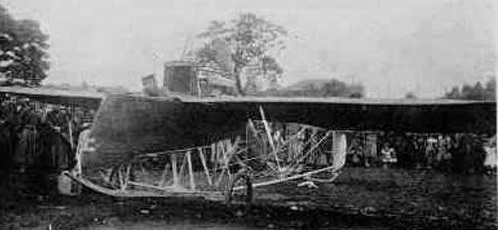
The Hino No.2 Monoplane of 1911 was designed by the Japanese captains Hino and Tokugawa. Its inline 4-cylinder pusher engine was by their own design and developed between 18 and 30 hp.
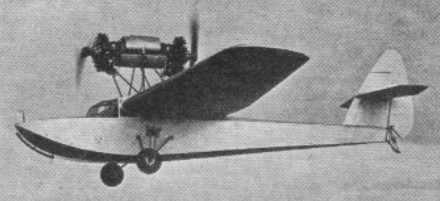
The Hinkler Ibis was a two-seat all wooden monoplane powered by two Salmson AD.9 radials mounted in an over-fuselage nacelle, one pusher, one tractor, Designed and built by H.J.Hinkler and R.H.Bound at Hamble in 1929. Construction of the wing was sub-contracted to Hendy Aircraft Ltd at Shoreham.
It was flown for the first time in May 1930 at Hamble. Registration was G-AAIS c/n 1.
It was put into store in Southampton until 1953 when it was displayed statically for a brief period until it was broken up at Lee-on-Solent in 1959.
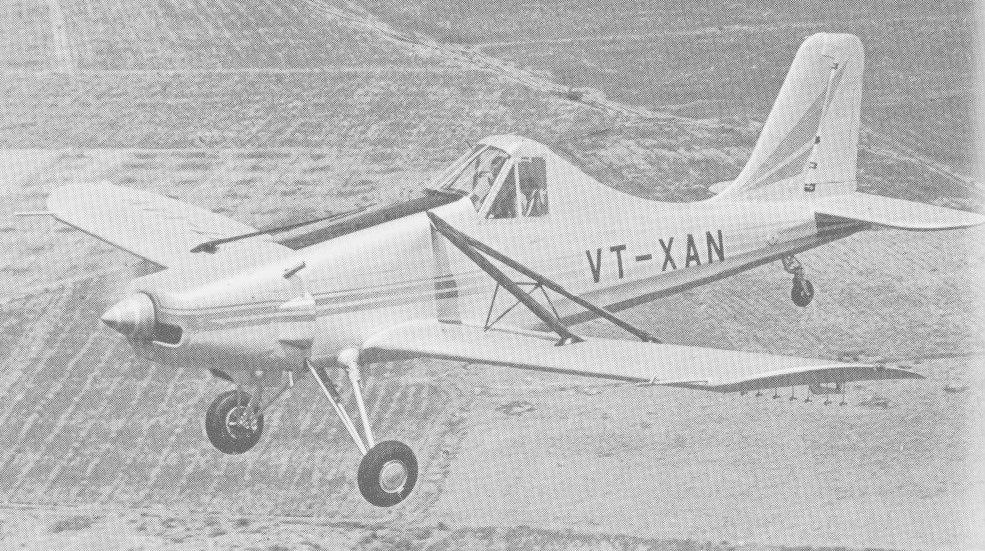
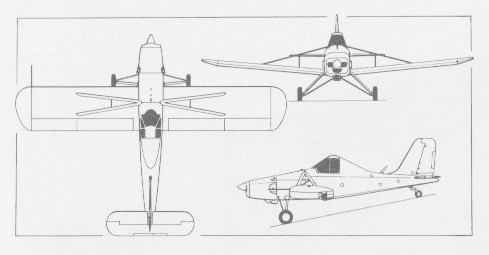
The HA-31 Mk.I Basant (Spring) first flew in 1972. The Mk.II production aircraft was much modified from the prototype.
The Indian Directorate of Agricultural Avia¬tion in New Delhi, having to 1981 purchased 24 HA 31 Basant agricultural aircraft, has con¬firmed the purchase of eight more. Of a total of 39 Basants built, five were purchased by the Haryana government.
HA-31 Mk.II Engine: Lycoming IO-720-C1B, 400 hp Wingspan: 39 ft 5.5 in / 12.00 m Length: 29 ft 6.25 in / 9.00 m Empty weight: 2645 lb / 1200 kg MTOW: 5000 lb / 2270 kg Max cruise75% 8000 ft / 2625m: 100 kt / 115 mph / 185 kph Max ROC SL: 750 fpm / 228 m/min Service ceiling: 12,500 ft / 3800 m Range max fuel: 348 nm / 400 mi /645 km Seats: 1 Payload Normal cat: 1333 lb / 605 kg Payload Restricted cat: 2000 lb / 907 kg
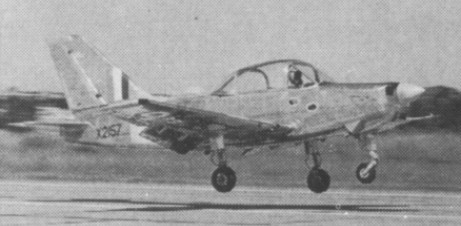
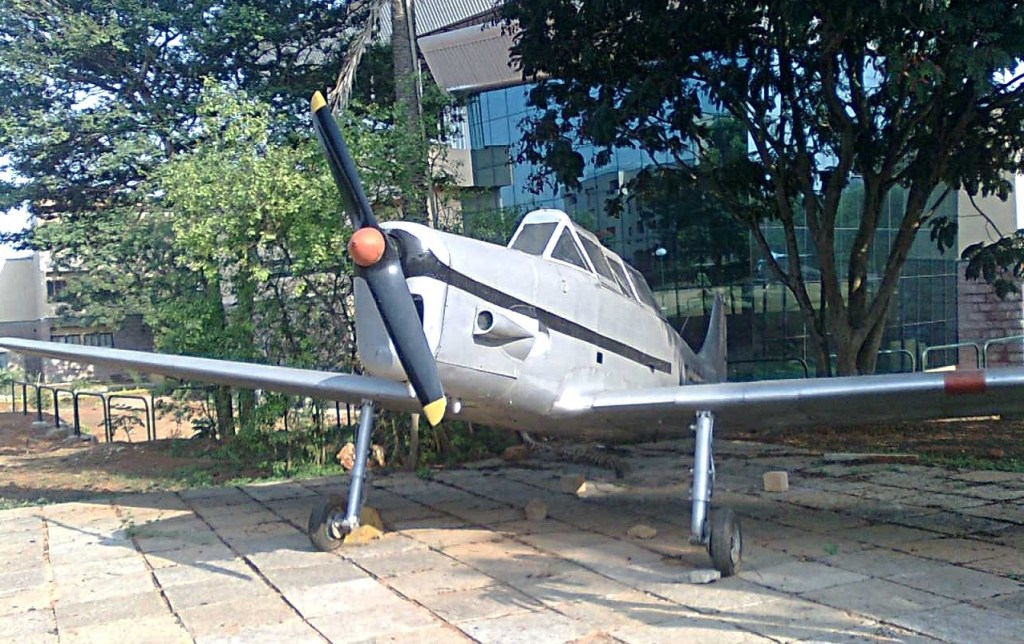
In India, on 6 January 1977, Hindustan Aeronautics flew the first of two prototype HPT 32 basic trainer (X2157). Of all metal construction, the two/three seat basic trainer was suitable for a range of ab initio training and was developed to meet an Indian air force requirement. The Indian Air Force had ordered 40, which were scheduled for delivery in 1985 6.
Known as the Deepak in Indian Air Force service, 134 were built for Indian Air Force and eight for Navy to replace HT-2s.
A private-venture development of the HPT-32, the turboprop HTT-34 side-by-side trainer first flew on June 17, 1984. The HTT-34 has an Allison 250-B17D engine in place of the original Lycoming AEIO-540 piston unit, but is virtually unchanged aft of the firewall.
HPT-32 Engine: 1 x Lycoming AEIO-540, 195 kW. Span: 9.5 m. Length: 7.7 m. Wing area: 15 sq.m. Empty wt: 890 kg. MTOW: 1250 kg. Warload: 255 kg. Max speed: 265 kph. Initial ROC: 335 m / min. Ceiling: 5500 m. T/O run (to 15m): 545 m. Ldg run (from 15m): 487 m. Fuel internal: 220 lt. Range/Endurance: 740 km / 4 hr.
Powered by a 190 hp Continental, the four seat Krishak is a multi-purpose development of the Pushpak. The HAOP-27 Krishak being manufactured as a liaison aircraft for the Indian Air Force and Army, the first flown in 1965.
Hindustan began a programme to provide powerplants for as many as possible of the aircraft they design. The PE-90H was developed in 41 months, using readily-available materials.
Max take-off r.p.m. were fixed at 2,600 to avoid the need for reduction gearing, and a compression ratio of 6.7 was chosen to permit the use of 73 octane fuel, which is the most easily-obtainable grade in India. About 95 percent of the PE-90H could be manufactured in India in 1961 and it is hoped eventually to produce locally the remaining components, such as magnetos and carburettors. The prototype has a bore of 4in, stroke of 3in and swept volume of 3.15 litres (192.23 cu.in), but these were to be increased on the Mk2 version, which was intended as the future power plant of the Hindustan Pushpak lightplane.
Length: 32in Height: 21 in Width: 31 in Dry weight: 180 lb Rating: 90 hp at 2,600 rpm
The Indian government had agreed to license-manufacture the Folland Gnat jet fighter in place of the Venom. There was some sort of delay in delivery of the tooling and jigging for this new plane and this provoked a production crisis as the very large work force ended up with nothing to do. When Venom production discontinued, management panicked to find alternative work, hence the “PUSHPAK” project.
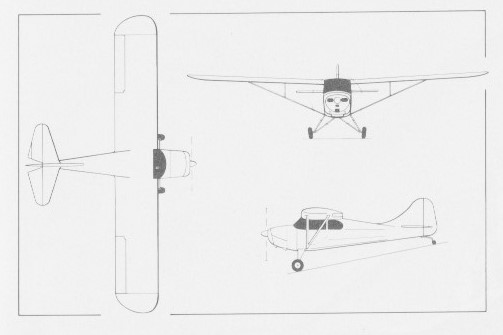
Aeronca sold the Super Chief Model 11 type certificate to E. J. Trytek of Syracuse, NY. Though Mr Trytek did not manufacture any airplanes, but he did license Hindustan Aircraft of India to build the Chief as the HUL-26 ‘Pushpak’.
About three years before, the small Bangalore Flying Club had an Aeronca Super Chief single engine high-wing monoplane aircraft that they were using for training purposes. A young Indian student pilot was flying the thing and he overshot the grass field on landing and headed for a gate girded by two gate posts. The gate was open and he headed for it to go out on to the road.
Unfortunately he was wider than the gate opening so he hit the starboard wing tip and sheared off about two feet, starting the plane spinning so that it then hit the port wing tip and sheared off approximately the same amount. The aircraft continued spinning and hit the rudder on the post and badly distorted it in turn. The aircraft spun to a stop in the road outside and the student pilot nipped out smartly and disappeared down the road in a cloud of dust, never to be seen again. He was acting on the assumption that he would have to pay for all the damage!
The aircraft was taken back to a small hangar and the wings were removed and it was stored there awaiting repair. After a long period of time they ordered a set of new wooden main spars for the mainplane. Eventually these did arrive but somewhere along the line, lifting hooks had been used which had damaged the wood and the spars couldn’t be used. So the thing sat there in its dormancy and another Aeronca was purchased to continue the flying training.
H.A.L. were aware that this plane was lying there and so, after a management meeting, they sent a truck out to bring it back to H.A.L. where it was quickly dismantled into its smallest constituent parts and spread out over the manufacturing area. On 7 August 1958 they were told to reproduce all the parts. The fuselage was made out of Renolds steel tubing but, since this was not available, they used household conduit which looked like Renolds tubing but was not seam-welded and didn’t have the strength of Renolds.
The plywood panels were fitted in place and they had a fuselage. The original Aeronca engine was used from the damaged Aeronca and was fitted with a new propeller. That was no problem. But there were problems obtaining other original equipment for example, the flying control surfaces were operated by Morse sprockets and roller chain which were also not available. They therefore used ordinary bicycle sprockets and chain plus the usual cables. The control surfaces again were made from household conduit tubing.
The metal ribs were re-manufactured from copies and it was reassembled and fabric covered. The mainplanes were manufactured in the same way and the original wood spars that had been damaged by the hooks had some splice-work carried out on them and reinforcements and the damaged main spars were used. The ribs were copied, fabric covered of course. The original Aeronca had a very deep molded front wind screen. The original windscreen was removed, a light film of oil applied on the inside and then plaster of Paris and straw were dropped onto it to make a very quick mold and this was then sent to the perspex division where they produced an exact copy of the windscreen. Another good example of this procedure was the manufacture of the aluminium brake pedals. The original pedals had ribs which over the course of time had become worn down somewhat. These were sent into the pattern shop and when they came out, they had the same worn markings that were on the old pedals!
The aircraft was completely assembled and then did one flight only on 28 September 1958, a very shallow take-off, a very limited turn around the airfield, one landing, and it never flew again. This event was notified up the ladder to Air Force Headquarters in New Delhi. The Farnborough Air Show was due to start in a few weeks after this. At the Farnborough Show the Indian Government made an announcement that Hindustan Aircraft Ltd. had designed, built and test-flown the Pushpak aircraft in six weeks! Nevertheless, the Pushpak trainer was born and was produced thereafter for use in India.
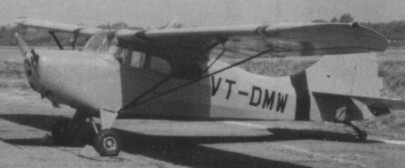
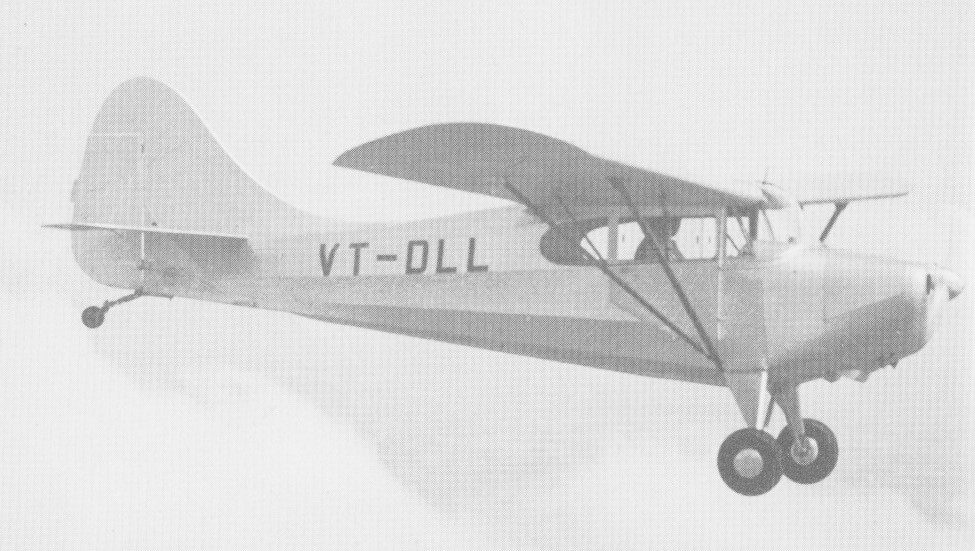
The prototype Pushpak was joined by a second and entered production in 1959, nine production models were completed in the 1960-61 financial year and more than 25 had been sold to flying clubs in India by the beginning of 1962. The prototype had wooden wings, but production Pushpaks are all metal. They were powered by a Continental C-90.
1961 Pushpak prior to delivery – VT-DLO to -DLT
154 ‘Pushpaks’ were built from 1958 to 1968.
Engine: Continental C90-8F, 90 hp Wingspan: 36 ft 0 in / 10.97 m Wing area: 175 sq.ft Length: 21 ft 0 in / 6.50 m Height: 9 ft 1 in Empty weight: 870 lb / 395 kg MTOW: 1350 lb / 613 kg Max speed: 90 mph Cruise speed: 61-74 kt / 70-85 mph / 112-136 kph Max ROC SL: 500 fpm/152 m/min Service ceiling: 14,000 ft / 4270 m Range: 217 nm / 250 mi / 400 km Seats: 2 side by side Baggage capacity: 65 lb / 29.5 kg No. built: 154
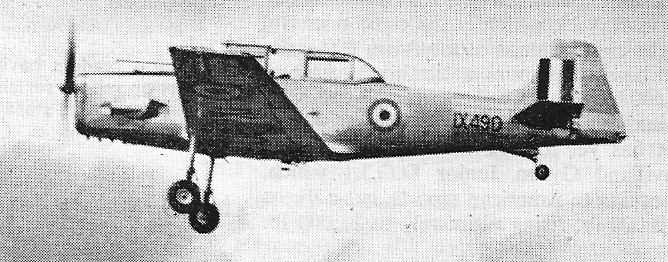
Hindustan Aircraft designed and built the first indigenous Indian aircraft, the Hindustan HT-2 two-seat trainer. The HT-2 is of stressed all-metal construction, with semi-monocoque fuselage and two-spar wing. All covering is metal. The fixed oleo-strut undercarriage is attached to the front wing spar, and features hydraulic brakes. Full equipment includes an electric starter and full dual controls and instruments.
First flying on 13 August 1951, the prototype was registered VT-DFW. The second aircraft, VT-DFY first flew on 19 February 1952 and had the shape of the fin and rudder altered considerably to increase the chord. This was retained on the production aircraft.
The HT-2 received the Government of India’s first Type Certificate, issued on 20 December 1952. By then, several military machines were flying, as well as the prototypes.
The first production aircraft were delivered to the Indian Air Force towards the end of January 1953.
The HT-2 was produced for the Indian Air Force and civilian flying clubs. The HT-2 was a two-seat primary trainer that went on to serve with both the Indian Air Force and Indian Navy, replacing the de Havilland Tiger Moth as the nation’s introductory training aircraft. Pilots affectionately nicknamed the HT-2 the Dalda Tin, referencing its resemblance to a tin of Dalda, a well-known brand of vegetable oil in India.
First prototype in flight
The type entered service in 1953, powered by a 155-horsepower Cirrus Major III four-cylinder inverted inline engine, the HT-2 could cruise at 115 mph and reach a top speed of 130 mph. Its stall speed was relatively high for a single-engine trainer at 52 mph. With a range of 300 nautical miles and an endurance of three hours and thirty minutes, the aircraft was well-suited for short training hops as well as cross-country flights.
Department of Aerospace Engineering at Indian Institute of Science, Bangalore.
Beyond India, twelve HT-2s served with the Ghana Air Force from 1959 to 1974. The aircraft was also a favorite among civilian flight schools throughout India. Over the course of its production run, HAL built a total of 172 HT-2 airframes. The last examples were retired from active service in 1990. Today, no airworthy HT-2s are known to exist, although several preserved examples can be found on display in aviation museums across India.
Engine: Blackburn Cirrus Major III, 155 hp Wingspan: 35 ft 2 in Length: 25 ft 2.5 in Height: 8 ft 11 in Empty weight: 1600 lb Loaded weight: 2240 lb Useful load: 640 lb Fuel capacity: 26 Imp.Gal Max speed SL: 130 mph Cruise: 115 mph ROC: 800 fpm Service ceiling: 14,500 ft Range: 350 mi Endurance: 3.5 hr Seats: 2
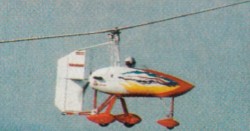
The original version of the H-1 Racer single-seat autogyro was first flown in 1987. Plans and kits available for the Racer in latest form. Winner’s Circle Engineering kit for the H-1 Racer (including frame, tail, steering, landing gear, seat tank, brakes, front suspension and rotor head) in 2001: US$6000
Engine: Rotax 503DC HP range: 40-64 Weight empty: 310 lb Gross: 550 lb Height: 7.9 ft Fuel cap: 5 USG Length: 10.75 ft Disk span: 25 ft Disk area: 490 sq.ft Speed max: 85 mph Cruise: 65 mph Range: 65 sm ROC: 1200 fpm Take-off dist: 500 ft Landing dist: 10 ft Service ceiling: 10,000 ft Seats: 1 Landing gear: nose wheel
Engine: Rotax 503, 52 hp Rotor span: 7.60 m Blade area: 0.21 sq.m MAUW: 285 kg Empty weight: 172 kg Fuel capacity: 37 lt Max speed: 160 kph Cruise speed: 105 kph Minimum speed: 48 kph Climb rate: 4 m/s Seats: 1 Fuel consumption: 19 lt/hr