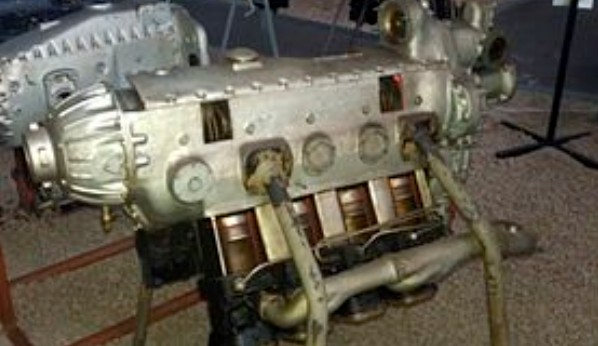
The Hirth HM 508 was an air-cooled, eight-cylinder, 60º cylinder bank angle inverted-V aircraft engine built in Germany in the 1930s. It had a bore and stroke of 105 mm × 115 mm (4.1 in × 4.5 in) and developed 210 kW (280 hp) at 3,000 rpm.
HM 508D Type: Eight-cylinder 60-degree inverted V inline engine Bore: 105 mm Stroke: 115 mm Displacement: 7.97 L Length: 1,289 mm Width: 683 mm Height: 815 mm Dry weight: 208 kg Power output: 280 hp at 3,000 rpm Compression ratio: 6:1
The Hirth HM 506 was a six-cylinder air-cooled inverted inline engine that was developed from the earlier four-cylinder HM 504. The HM 506 was a popular engine for light aircraft of the 1930-40’s and powered the Bücker Bü 133A model trainer. The engine featured a cast magnesium alloy crankcase.
Applications: Bücker Bü 133 A Fieseler Fi 98 (prototype) Fieseler Fi 99 Fieseler Fi 157 (UAV prototype) Fieseler Fi 158 (UAV prototype) Gotha Go 241 Klemm Kl 35 B (D-ERLQ)
Specifications HM 506 Type: 6-cylinder air-cooled inverted inline Bore: 105 mm (4.13 in) Stroke: 115 mm (4.53 in) Displacement: 5.976 L (364.7 cu in) Length: 1,276 mm (49.8 in) Width: 490 mm (19.1 in) Height: 735 mm (28.66 in) Dry weight: 149 kg (328 lbs) Valvetrain: 1 inlet and 1 exhaust valve per cylinder, operated by push-rods and rockers Fuel system: 2 Sum down draught carburetters, automatic mixture control and suitable for inverted flight. Twin Bosch magnetos. Oil system: Fresh oil, metered for each cylinder. Rockers in oil bath. Cooling system: air Power output: 160 hp Compression ratio: 6:1
The Hirth HM 504 is a four-cylinder air-cooled inverted inline engine. The 504 was a popular engine for light aircraft of the 1930-40s and it was used to power a number of Germany’s trainer aircraft of WWII. The engine featured a cast magnesium alloy crankcase. The Hitachi Hatsukaze Model 11 was a Japanese licensed version.
The Hitachi Hatsukaze also known as the Hitachi model GK4, was Hitachi’s fourth design in a series of aircraft engines built in Japan prior to and during World War II. The original Hatsukaze was a license-built Hirth HM 504. Hatsukazi engines were air-cooled, four-cylinder, inverted inline engines developing around 82 kW (110 hp).
Hatsukaze engines were produced in very large numbers, as the powerplant for the license-built Bücker Bü 131 Jungmann variants that were the standard primary trainers for the Imperial Japanese Navy and Imperial Japanese Army.
The naval version of the engine was designated GK4, the army version as Ha-47. 1,376 were built.
The Hatsukaze Model 12 was the power section linked to a compressor to create a primitive jet engine called a motorjet, the resulting Tsu-11 was intended to power Yokosuka MXY7 Ohka 22 flying bombs. The standard Hatsukaze 11 engine was modified at a Navy arsenal by replacing the propeller drive shaft and engine front crankcase cover with a step-up gearbox. The gearbox increased engine output shaft RPM at a 1:3 ratio. At engine speed of 3,000 RPM, the compressor section was operating at 9,000 RPM. The compressed air was then ducted into a combustion chamber where a liquid fuel was sprayed. The heated compressed air then exits through the tailpipe providing static thrust of 180 kg (396 lb). It is likely that about 1/3 of the total thrust was contributed by adding the combustion chamber aft of the compressor.
The Tsu-11 was also selected to power the Yokosuka MXY-9 Shuka (“Autumn Fire”), a trainer intended to prepare pilots for the Mitsubishi J8M rocket-powered interceptor. Neither of these aircraft entered service, however, as their development took place too late in the war.
The Hirth HM 60 was a four-cylinder inverted air-cooled inline aircraft engine designed in 1923 and first sold in 1924. The engine was of very high quality, and its sales success contributed to Hirth’s rapid pre-war expansion. First run in June 1923, it was a popular engine for light aircraft delivering 80 hp (60 kW) at 2,300 rpm. Later Hirth engines built upon the HM 60’s success and provided greater power with many of the same design features.
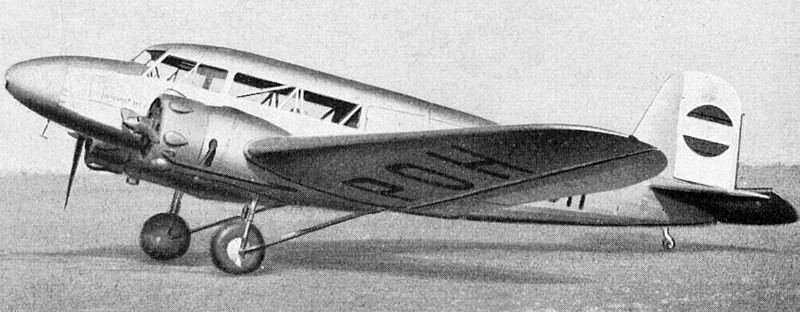
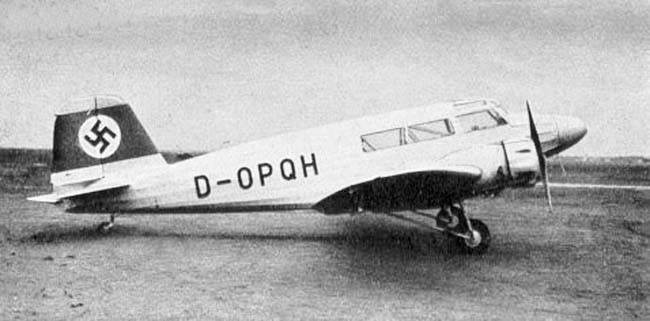
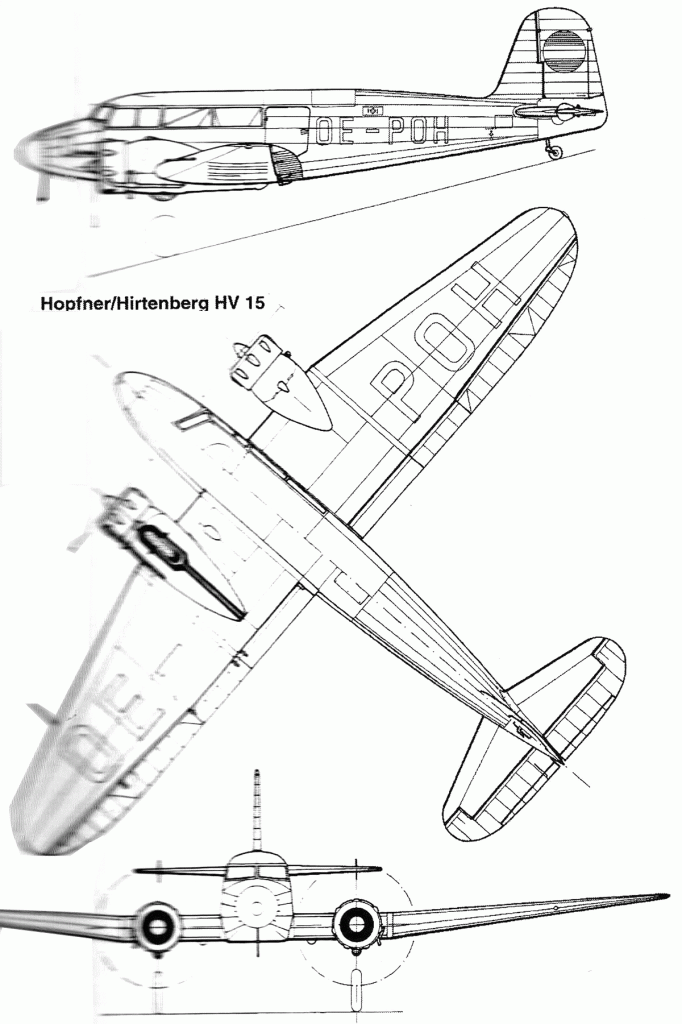
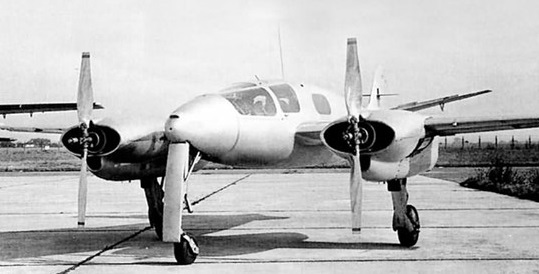
In 1935, the management of the Austrian company Hirtenberger Patronen, Zundhutchen und Metallwarenfabrik AG decided to expand the production of aircraft of its own design and bought the aircraft company Flugzeugbau Hopfner GmbH. The first aircraft, accepted for serial production, was a small twin-engine monoplane, designed for the carriage of passengers or the transport of small loads. The design of the new Hopfner / Hirtenberg HV.15 machine was based on the elements of the previous Hopfner HR.14 / 34 aircraft, developed by the engineer Lumpich in 1934 at Flugzeugbau Hopfner GmbH.
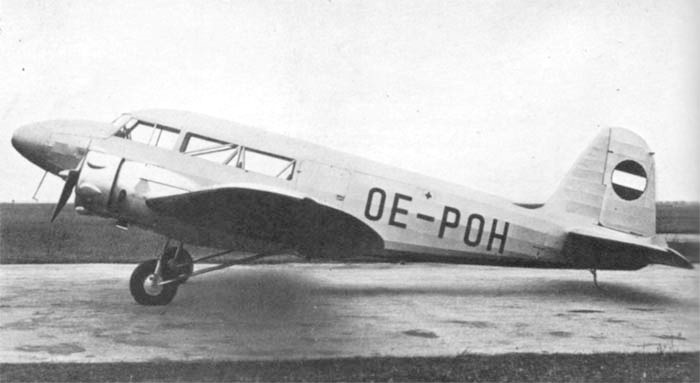
It was a low-wing with a glazed, six-seat, cabin and retractable landing gear. The wing had a wooden structure, and the fuselage was steel tube, fabric covered.
The prototype HV-15 (OE-POH) made its first flight on March 8, 1936. The aircraft was equipped with Austrian-produced Siemens Sh-14a motors (160 hp / 119 kW). Serial production were supposed to get English de Havilland “Gipsy Six” II (204 hp).
Austrian designers planned the release of the military version of NM.15, equipped with French engines of Renault “Bengali Six”, radio navigation equipment and defensive weapons, consisting of 2-3 moving machine guns placed in the fuselage. Suspension of small bombs with a total mass of up to 300 kg was envisaged. The main purpose of NM.15 was the training of pilots and navigators (including for night flights), and also considered the option of using it as a light bomber.
Serial production of HV.15 and NM.15 aircraft did not take place. After the annexation of Austria, its aviation industry underwent a reorganization, and the merger of Hirtenberg became part of the new Wiener-Neustadter Flugzeugwerke GmbH (abbreviated to WNF).
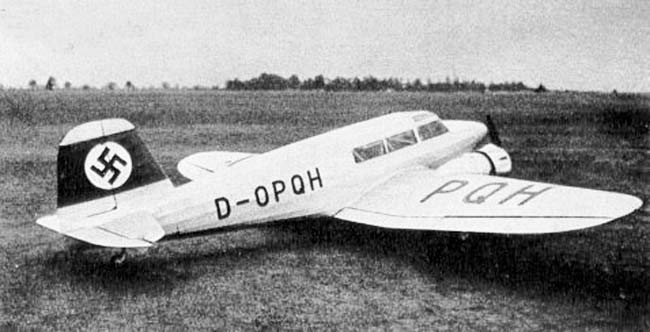
According to the new notation system, HV.15 was renamed to WN-15 (sometimes called WNF 15) and assigned the German registration D-OPQH. The prototype was then transferred to the use of the Austrian police. After flying about three years in Austria, the Wn.15 aircraft was given in 1942/1943 to the German administration of the Croatian Air Force and used some time for transport purposes, bearing a new tactical number 2101. Nothing is known about the future fate of Wn.15.
Engines: 2 × Siemens-Halske Sh 14A, 120 kW (160 hp) each Wingspan: 15 m (49 ft 3 in) Wing area: 33 m2 (360 sq ft) Length: 10.65 m (34 ft 11 in) Height: 2.9 m (9 ft 6 in) Empty weight: 1,550 kg (3,417 lb) Gross weight: 2,200 kg (4,850 lb) Maximum speed: 235 km/h (146 mph; 127 kn) Cruise speed: 198 km/h (123 mph; 107 kn) Range: 900 km (559 mi; 486 nmi) Service ceiling: 5,200 m (17,100 ft) Crew: 2 Capacity: 4 passengers
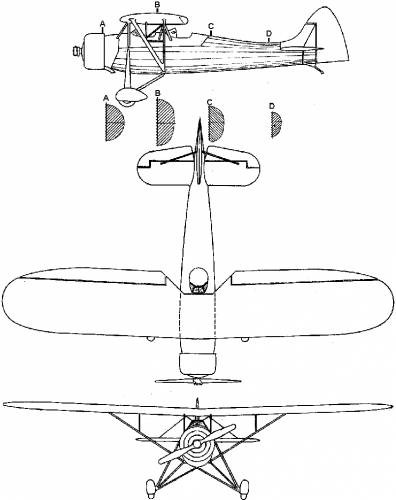
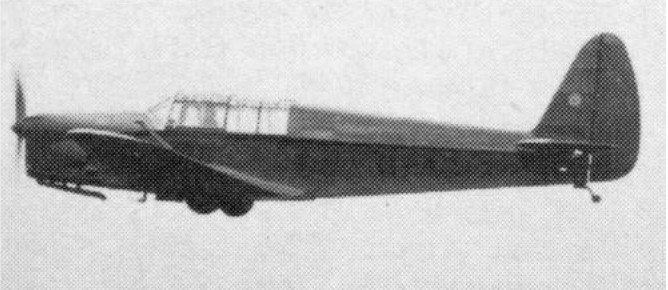
A derivative of the Hopfner HS-5/28 via the Hopfner HS-8/29, the Hirtenberg HS.9 two-seat touring or training aircraft of the late 1920s and early 1930s was an Austrian parasol wing monoplane with a fixed tailskid landing gear and room for two occupants in tandem open cockpits.
Designed by Theodor Hopfner, it had a metal fuselage (front covered with duralumin sheets, the rest – with a cloth) and a wooden wing lined with linen. In the center section there was a fuel tank for 132 liters. The wing consoles, for more convenient storage in the hangar, could be folded along the fuselage.
HS.932
It first flew as the Hopfner HS-9/32 in 1932, powered by a 120 hp de Havilland Gipsy Major I engine. Prototypes HS-9 had civil registration codes A-124 (then changed to OE-ANA) and A-144 (OE-DJH). Later the second prototype was sent to the UK and received the G-AGAK registration there.
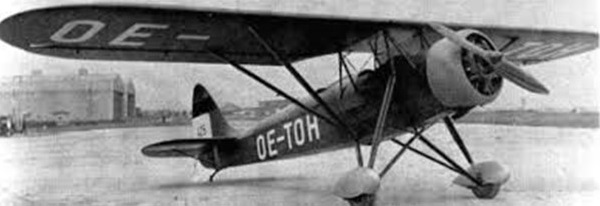
Production versions were produced under the designation HS-9/32 (sometimes called the HS-932) and had 150 hp Siemens Sh 14 engines with NACA cowlings and two-bladed screws. As Hopfner’s production facilities were insufficient, HS-9/32 was produced by Hirtenberg Patronen (Hirtenberg), where 9 aircraft were built.
In 1935, four were transferred to the Austrian Air Force for use as training. They were given military registration codes OE-TOH, OE-TUH, OE-TAO and OE-TEO and numbers (Dienst Nummer, DNr.) 426 – 429.
After the annexation of Austria in 1938, several aircraft were still in service. The Germans included captured aircraft in their own air force and left them on Austrian territory, where they were handed over to Nationalsozialistisches Fliegerkorps (NSFK). As of 1939, Gruppe 17 still had five machines of two types: four HS-9/35 with numbers 425-428 and one HS-9 with number 434. As for HS 8/29 (number 412), this aircraft was destroyed in Zeugamt Erding.
A single example of a refined version with an uncowled 125 hp Siemens engine was flown in 1935 as the Hopfner HS-9/35, shortly before the Hopfner company went bankrupt.
HS.9
When Hopfner’s assets were purchased by Otto Eberhardt Patronenfabrik, production continued of both de Havilland- and Siemens-powered (designated HS-9A) aircraft under the Hirtenberg brand.
Hirtenburg HS.9A
Twelve Hopfner HS.932 (HS.9/32) were built from 1932 (2 prototypes + 10 series), including one aircraft with modified ailerons and undercarriage designated as HS.935 / HS.9/35.
In 1935, a significantly modified version of HS-9 \ 35 then in the Fliegertruppen des Osterreichischen Bundesheeres received the code OE-TAR (DNr. 434). With an uncooled Siemens engine it was flown shortly before the Hopfner company went bankrupt.
About 40 were built in total. They were operated by the Austrian Air Force during 1927-1938.
Variants HS-9/32 – Original version by Hopfner HS-9/35 – developed version of HS-9/32 HS.9 – Production aircraft with a Siemens Sh 14a piston engine. HS.9A – Production aircraft with a de Havilland Gipsy Major piston engine. HS.16 – military trainer version of HS.9
HS.9A Engine: 1 × de Havilland Gipsy Major, 90 kW (120 hp) Length: 8.05 m (26 ft 5 in) Wingspan: 10.972 m (36 ft 0 in) Empty weight: 568.8 kg (1254 lb) Gross weight: 948 kg (2090 lb) Maximum speed: 190 km/h (118 mph) Crew: 2
HS.932 Engine: Siemens Sh 14A, 150 hp Wing span: 10.96 m Length: 8.02 m Height: 2.39 m Wing area: 18.00 sq.m Empty weight: 570 kg Maximum take-off weight: 860 kg Maximum speed: 190 km / h Cruising speed: 170 km / h Practical range: 400 km Service ceiling: 4400 m Crew: 2
Hopfner HS-9\35 Engine: Siemens Sh.9, 150 hp Prop: two-bladed wooden Wingspan: 10.96 m Length: 8,02 m Wing area: 18,00 sq.m Height: 2.39 m Empty weight: 570 kg Takeoff weight: 860 kg Maximum speed: 190 km / h Range: 400 km Ceiling: 4400 m Crew: 2
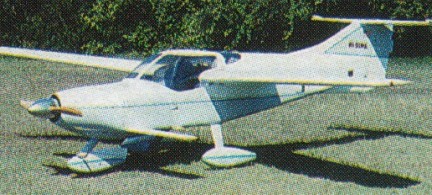
The Hirsch–MAéRC H-100 was a one-off research aircraft designed by Frenchman René Hirsch to test his system to deal with gusts that make for bumpy and uncomfortable flying.
It incorporated a system in which the halves of the horizontal tail moved on chordwise hinges to operate flaps on the wings. The conventional elevators provided not only pitching moments, but moved the tail halves about their chordwise hinges to cause the flaps to move in the direction to provide direct lift control. In this way, the loss of longitudinal control due to the gust-alleviation system was overcome. Of wooden construction, the H-100 incorporated many other ingenious features, including swivelling wingtips for reducing rolling moments due to rolling gusts and lift due to horizontal gusts. The design also incorporated large pneumatic servos operated by dynamic pressure to restore damping in roll and to stabilize the rate of climb or descent.
The single aircraft built was retired after 130 test flying hours and was then donated to the Musée de l’Air et de l’Espace, at Le Bourget, Paris, where it remains on display.
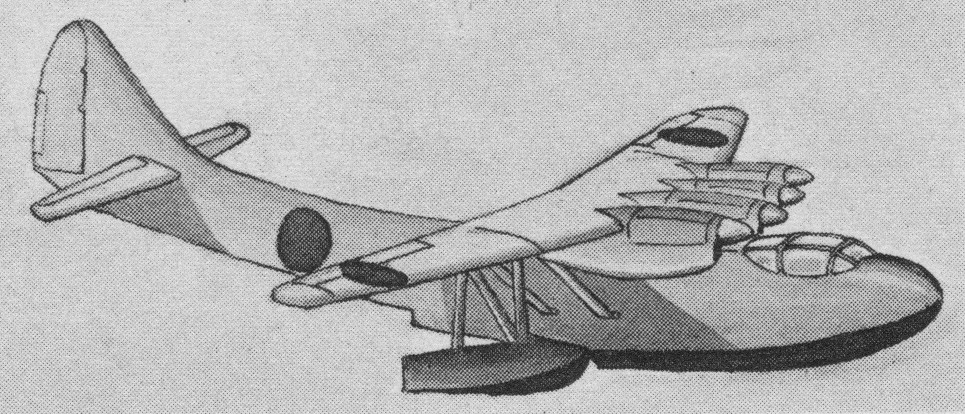
Reports of a copy of the French Leo H-24-6 flying boat led to assignment of the code name ‘Tillie’. The aircraft was actually a Japanese original design powered by Junkers Jumo 205c engines that was dropped in the experimental stages.