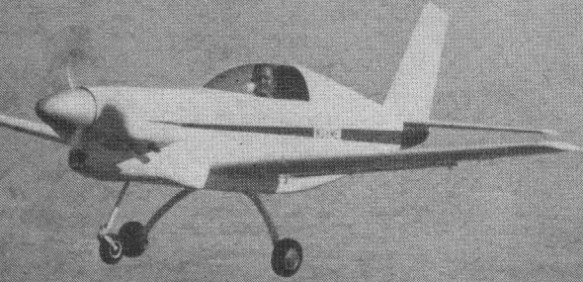
The Model 100 Adventure’s simplicity of operation is equaled only by its simplicity in construction. A modern, high performance, sandwich composite structure was used throughout. The materials and working techniques are descendants of Rutans VariEze technology. The Adventure has a combination of high speed cruise, low stall speeds and good climb performance.
The general configuration is a single-seat, low mid-wing tractor monoplane with fixed tricycle landing gear that may be powered by any of the Con¬tinental Motors A or C series engines of 65 to 85 hp driving a fixed-pitch wooden propeller. The wing is a two-piece assembly to minimize the space required to build and to facilitate its removal from the fuselage. The fuselage is built from flat sheets of half-inch-thick polystyrene foam and constructed from the inside out. The canopy is a single-piece, free-blown unit.
Aileron rolls and one turn spins are the only aerobatics that the Adventure has performed. It is intended to be a utility category aircraft with lots of structural beef and a conservative repertoire of aerobatic maneuvers.
Engine 65 to 100-hp Continen¬tal Gross Wt. 800 lb Empty Wt. 460 lb Fuel capacity 20 USG Wingspan 20’ Length 13’ Wing area: 40 sq.ft Top speed 188 mph Cruise 180 mph Stall mph 57 Climb rate 1600 fpm Takeoff run 800 ft Landing roll 700 ft Range 650 miles Seats: 1.
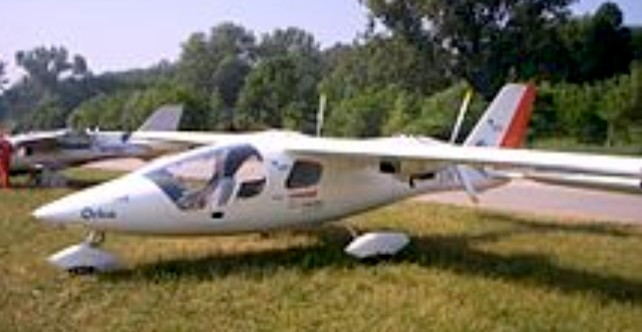
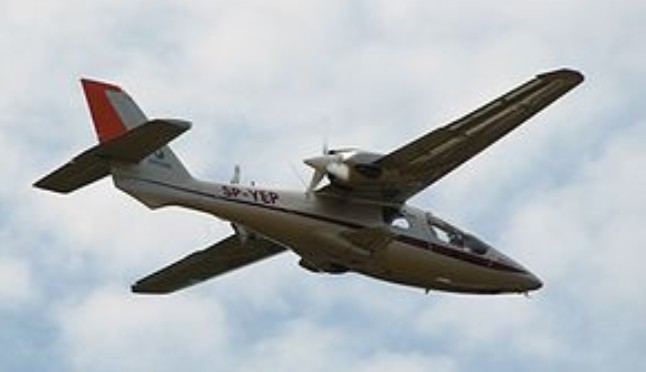
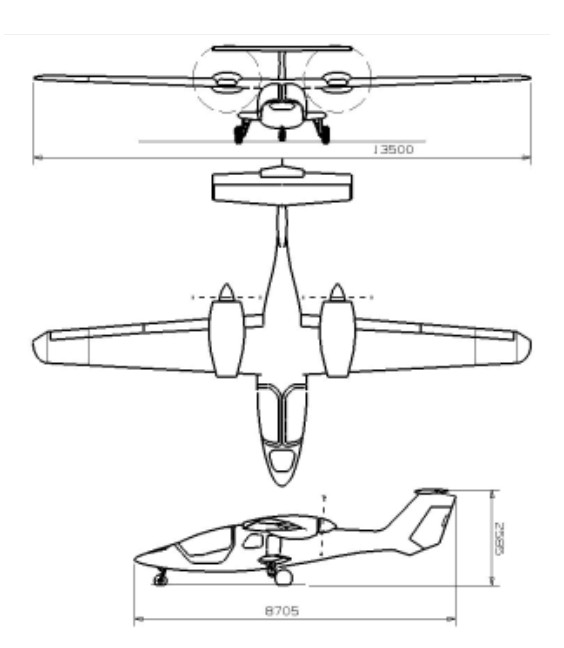
The EM-11 was designed by Edward Margański of Margański & Mysłowski Zakłady Lotnicze (Margański & Mysłowski Aviation Works). Work on this low cost, light utility aircraft, of unorthodox configuration, with slim glider-like fuselage and two pusher engines, started in 2001. The plane was constructed of composite materials with a car-like 4-seat cabin placed low to the ground. Room for cargo was created aft of the rear seats.
A four seater twin-engine aircraft with retractable landing gear, high-wing configuration, the shell structure is all-composite with honeycomb filler. Wings have foldable tips for easier hangaring. Two fuel tanks of 200 litres capacity each are installed in wings. Fuselage has upwards-opening door in the front part and cargo hatch in the central part. Passenger cabin has four separate seats, of which the front ones are reclining and sliding. The seats have 3-point inertial safety belts. Tail plane is in T type. Electrical trimming tabs are mounted on both planes. Flight control systems are controlled by a rigid push-rod transmission system, the rudder is controlled with use of a line. The aircraft is propelled by two counter-rotating engines LYCOMING IO-320 / LIO-320 of 160 hp each at 2,700 RPM. 3-blade constant-speed type MT-Propeller propellers are fitted. Hydraulically retracted landing gear is mounted on fuselage and has gas shock absorbers with hydraulic damping.
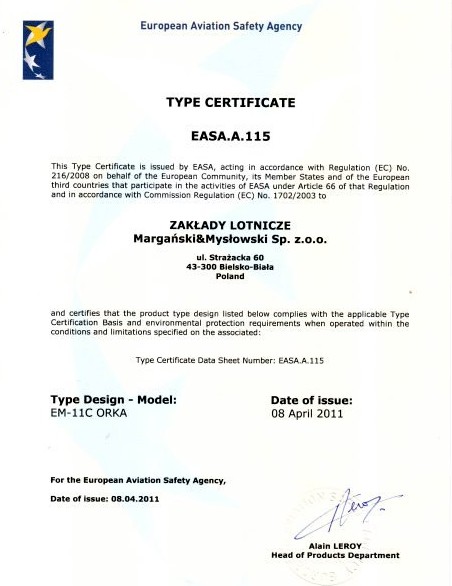
The first prototype EM-11, registered SP-YEN, first flew on August 8, 2003. It has a fixed tricycle landing gear and Rotax 912 (100 hp) engines. The second prototype, registered SP-YEP, being a pattern for serial production variant EM-11C, flew 20 October 2005 with Lycoming IO-320 engines and retractable landing gear. In April 2011 EM-11C Orka was EASA certified and in production. Prior to certification, the prototypes and three further aircraft had been built.
EM-11C Orka (SP-YEP)
Several variants were planned including, a patrol aircraft with an FLIR head, an air ambulance, a cargo plane, and an amphibious version.
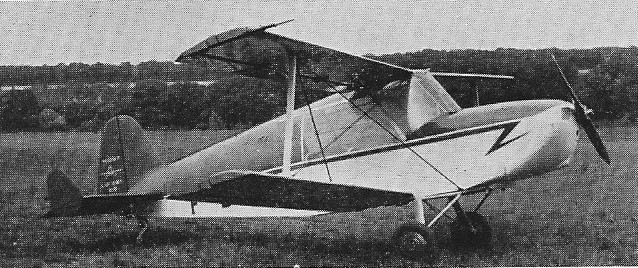
The LD-261 Midgy-Club was a development of the single-seat LD-45 and two-seat LD-46 of 1946-47, and a few were produced by Instruments de Precision M.D.G. The LD-261 are tandem two-seaters of mixed construction.
A sole example of a slightly modified version, known as the Indraero CB-10, was also built.
LD-261 Midgy-Club Engine: Continental A65, 65 hp Wingspan: 22 ft 11.5 in Wing area: 114 sq.ft Length: 17 ft 10.5 in Height: 6 ft 5 in Empty weight: 704 lb Loaded weight: 1190 lb Max speed: 112 mph Cruise: 98 mph ROC: 560 fpm Absolute ceiling: 22,200 ft
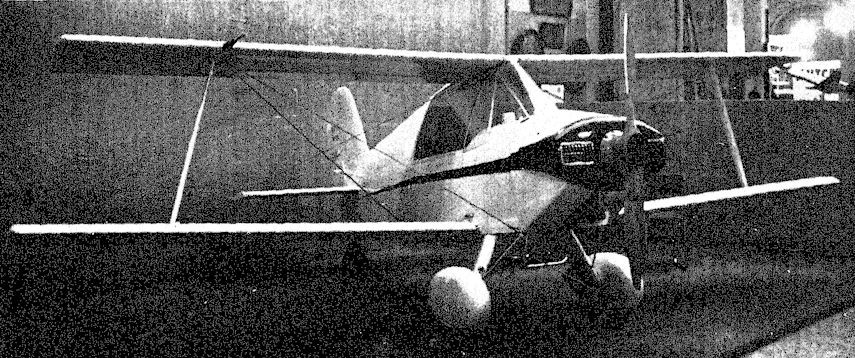
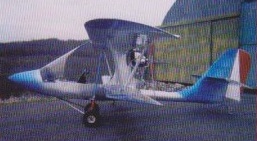
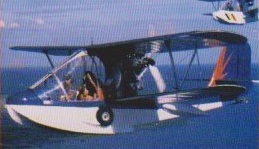
The tandem, two seat MD 03 amphibious pusher biplane has a fuselage of spaceframe and composites, while the wings are the same as on other Delpech models.
Engine: Rotax 582, 64 hp Wing span: 8.60 m Wing area: 18 sq.m MAUW: 450 kg Empty weight: 198 kg Fuel capacity: 45-60 lt Max speed: 160 kph Cruise speed: 130 kph Minimum speed: 60 kph Climb rate: 5 m/s Seats: 2 Fuel consumption: 9-14 lt/hr Kit price (1998): 110 000 Fttc
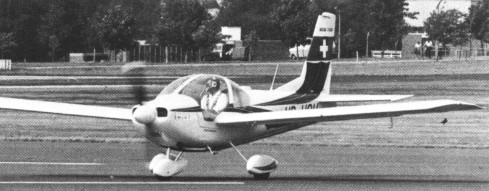
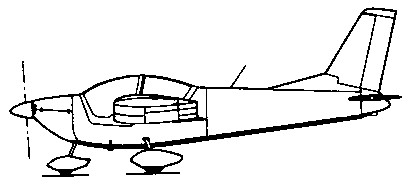
An aerobatic trainer / tourer, the prototype first flying in 1983. MDB Flugtechnik AG was founded 1991 to continue development of the MD3-160, as begun by MDC Max Datwyler AG, which was being manufactured in Malaysia by SME Aviation as the MD3-160 AeroTiga. The first Malaysian-built example in flew 1995.