Melbourne Aircraft Corp MA-2 Mamba

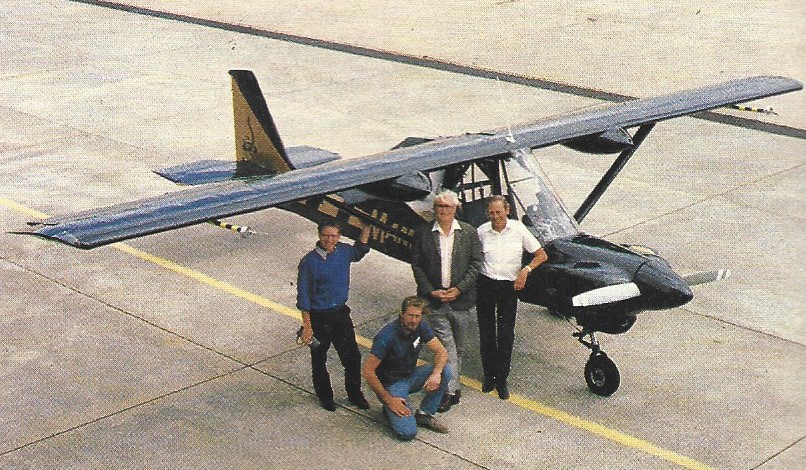
The MAC Mamba, Mamba Range is an Australian two-seat light aircraft designed and built by the Melbourne Aircraft Corporation.

The Mamba is a strut-braced, high-wing monoplane designed over two years and first flown on 25 January 1989. It has fixed tricycle landing gear and is powered by a 116 hp (87 kW) Lycoming O-235 flat-four piston engine. It has an enclosed glazed cabin with side-by-side configuration seating for two. The fuselage is constructed of welded steel tubing with stressed aluminum skin. It was intended to introduce four-seat and military versions of the Mamba.

The military version was built under contract by Australian Aircraft Industries as the AA-2S Mamba powered by an IO-360.

Variants

AA-2
Lycoming O-235-powered prototype built by Melbourne Aircraft Corporation
Powerplant: 1 × Lycoming O-235-N2C, 86 kW (116 hp)
Wingspan: 8.68 m (28 ft 5.75 in)
Wing area: 10.13 m2 (109.04 sq ft)
Length: 7.00 m (22 ft 11.5 in)
Height: 2.38 m (7 ft 9.75 in)
Empty weight: 390 kg (860 lb)
Gross weight: 680 kg (1,499 lb)
Maximum speed: 250 km/h (155 mph, 135 kn)
Endurance: 5 hours 42 minutes
Rate of climb: 7.6 m/s (1,500 ft/min)
Crew: one
Capacity: one

AA-2M
Lycoming IO-360-powered military variant built by Australian Aircraft Industries

AA-2S
Lycoming IO-360-powered civilian under test by Mamba Aircraft Company

AA-4S
Lycoming O-320 four-place under development by Mamba Aircraft Company

Meger Heli-Star

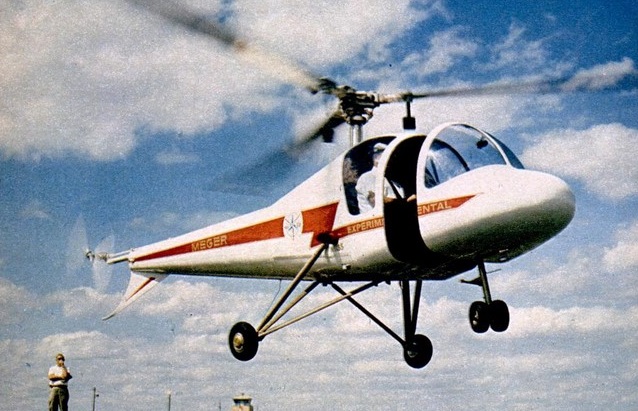
The Heli-star is a two place, homebuilt three rotor helicopter designed by Mike Meger, flight director of Enstrom.

It was equipped with tricycle landing gear, using modified Enstrom F-28 helicopter rotor blades, gearbox and tail boom. Developed in 1969, it was first flown on 25 March 1971.

The helicopter can be flown from either seat with dual controls. The fuselage splits open at the windshield line, sliding forward for access. The helicopter was demonstrated with the front section slid open in flight.

Only the one was built.

Engine: 1 × Lycoming HIO-360-C1A, 205 hp (153 kW)
Main rotor diameter: 3× 29 ft 6 in (8.99 m)
Length: 29 ft (8.8 m)
Height: 8 ft 2 in (2.49 m)
Empty weight: 1,450 lb (658 kg)
Max takeoff weight: 2,100 lb (953 kg)
Maximum speed: 100 kn (115 mph; 185 km/h)
Cruise speed: 78 kn (90 mph; 144 km/h)
Service ceiling: 13,000 ft (4,000 m)
Rate of climb: 1,000 ft/min (5.1 m/s)
Disk loading: 2.1 lb/sq ft (10 kg/m2)
Crew: 1
Capacity: 1 passenger

Meckler-Allen New York hydro-biplane

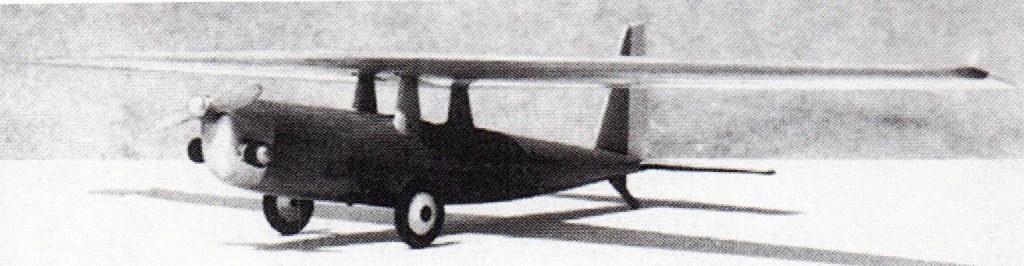
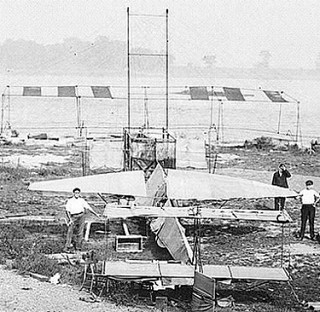
The Meckler-Allen airplane was built by Allen Canton and John J. Meckler in 1912 for an attempt to make a transatlantic flight. At the time it was the largest airplane in the world, measuring 104 ft long, and 76 ft across. It had a long triangular fuselage, an auxiliary wing between the main biplane cell and the biplane tail, twenty-two tanks of gasoline, five engines and miles of rigging wires. It was constructed out in the open, at a place called Clason Point in the South Bronx of New York City, on the waterfront of the East River opposite LaGuardia Airport.

Medway Eclipse / Hybred

Eclipse R

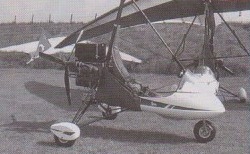
The Eclipse R, new in 1998, had a Jabiru four stroke on the double monopole chassis with a Raven wing.

When equipped with a Rotax 503, the trike is marketed as the Hybred, also with a Raven wing.

Eclipse R
Empty weight: 149 kg
Wing span: 11.0 m
Wing area: 15.0 sq.m
Fuel capacity: 50 lt
Certification: BCAR S
Engine: Jabiru, 80 hp
MAUW: 367 kg
Seats: 2
Max speed: 129 kph
Cruise speed: 100 kph
Minimum speed: 48 kph
Climb rate: 4.1 m/s
Fuel consumption: 9 lt/hr
Price (1998): £18,000

Mecavia Onyx Biplace

Onyx bi 582

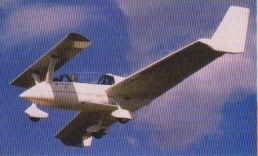
A tandem two-seat composites, built developed from single-seat Piel CP.150 Onyx and featuring rear-mounted wings and high canard. The fuselage is in wood and composites with the kit including all mouldings. The engine is limited to 55 kg for CoG reasons.

Onyx bi 582
Engine: Rotax 582 DCDI, 64 hp
Wing span: 9.20 m
Wing area: 16.07 sq.m
MAUW: 440 kg
Empty weight: 220 kg
Fuel capacity: 50 lt
Max speed: 185 kph
Cruise speed: 150 kph
Minimum speed: 64 kph
Climb rate: 5 m/s
Seats: 2
Fuel consumption: 13 lt/hr
Kit price (1998): 117 800 Fttc

Meadowlark Ultralight Meadowlark

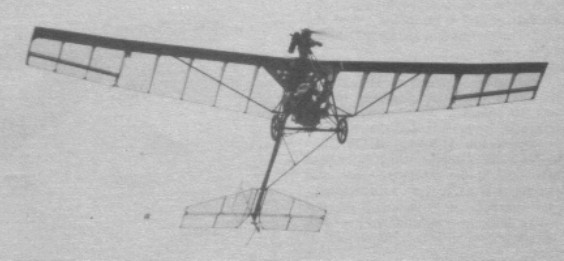
Single seat single engined high wing mono¬plane with conventional three axis control. Wing has unswept leading edge, swept for¬ward trailing edge and tapering chord; cruci¬form tail. Pitch control by elevator on tail; yaw control by fin mounted rudder; roll control by one third span ailerons; control inputs through stick for pitch/roll and pedals for yaw. Wing braced from below by struts; wing profile; double surface. Undercarriage has three wheels in tricycle formation with additional tailskid; steel spring suspension on all main wheels. Push right go right nose¬wheel steering connected to yaw control. Brakes on main wheels. Aluminium tube framework, without pod. Engine mounted above wing driving tractor propeller. Cover¬ing is transparent Mylar; push pull tubes for flight controls.

The prototype of this single seater appeared at the end of 1982 and presented at the March 1983 Sun In’ Fun in Lakeland, Florida, where it enjoyed a certain success. It is certainly one of the better conventional three axis designs on the American market; for instance, the controls are operated by push rods and the wing is supported on struts rather than cables, features which allow one to rig the aircraft in around 20 min. The wings fold parallel to the fuselage allowing easy transport on a trailer without any other derigging.

The Meadowlark was fitted with a Cuyuna 430R engine with Arizona Air Sports reduc¬tion drive and was sold only in ready to fly form, at a price of $6575. Biam floats were available as an option for $975; other options include flight and engine instruments.

Engine: Cuyuna 430R, 30 hp at 5500 rpm
Propeller diameter and pitch 54 x 27 inch, 1.37 x 0.68 m
V belt reduction, ratio 2.0/1
Max static thrust 197 lb, 90 kg
Power per unit area 0.22 hp/sq.ft, 2.4 hp/sq.m
Fuel capacity 3.7 US gal, 3.1 Imp gal, 14.0 litre
Length overall 19.0 ft, 5.79 m
Height overall 7.3ft, 2.21m
Wing span 35.0ft, 10.66m
Chord at root 5.0ft, 1.52m
Chord at tip 3.0ft, 0.91m
Dihedral 3 deg
Sweepback 0 deg
Tailplane span 8.6 ft, 2.59 m
Fin height 3.4 ft, 1.01 m
Total wing area 136 sq.ft, 12.6 sq.m
Total aileron area 12.0 sq.ft, 1.11 sq.m
Fin area 7.5 sq.ft, 0.69 sq.m
Rudder area 5.0 sq.ft, 0.46 sq.m
Tail¬plane area 14.0 sq.ft, 1.30 sq.m
Total elevator area 7.0 sq.ft, 0.65 sq.m
Wing aspect ratio 9.0/1
Wheel track 5.0ft, 1.52 m
Wheelbase 5.0ft, 1.52 m
Nosewheel diameter overall 19 inch, 48 cm
Main wheels diameter overall 23 inch, 58 cm
Optional floats: 11.0 x 23.5ft, 3.35 x 7.13 m
Empty weight 251 lb, 114 kg
Max take off weight 550 lb, 249kg
Payload 299 lb, 136kg
Max wing loading 4.04 lb/sq.ft, 19.7kg/sq.m
Max power loading 18.3 lb/hp, 8.3kg/hp
Load factors +3.8, 1.5 design
Max level speed 55mph, 88kph
Never exceed speed 60mph, 97kph
Max cruising speed 55mph, 88kph
Economic cruising speed 35mph, 56kph
Stalling speed 22 mph, 35 kph
Max climb rate at sea level 1000 ft/min, 5.1 m/s
Min sink rate 400 ft/min at 27 mph, 2.0 m/s at 43 kph
Best glide ratio with power off 8/1 at 30 mph, 48 kph
Take off distance 75 ft, 23 m
Landing distance 100ft, 30m
Range at average cruising speed 90 mile, 145 km