Pentecost Hoppicopter Model 101 / 102 / 103 / 104

Model 103

Model 101, 1946
A second version of the Strap-on with a motor-cycle saddle acting as a seat and a tubular tripod assembly with three wheels as landing gear, and also a hanging stick to control the aircraft was tested later.

Model 102, 1947
Tests of the Model 101 revealed the need for several improvements, so that the 102, while somewhat resembling its predecessor, had a more powerful engine. Besides a directly engaging clutch, there was also a freewheeling device for auto-rotation in case of engine failure.

The two rotors, set at a distance of 2 feet (61 centimetres) from each other, consisted of a 4-foot (1.32-metre) tubular metal section centred at the hub; to these tubular sections the two spruce blades were attached.

The controls included collective, cyclic and differential pitch, the latter being obtained by rotating the stick handle which made the helicopter turn on its vertical axis.

Model 103, 1947
This model was similar to the previous ones, except that the rotor diameter was slightly increased and the distance between the two rotors somewhat greater.

Model 104, 1948
Once again this was an ultra-light single-seater helicopter with two co-axial contra-rotating two-bladed rotors of the same lineage as the firm’s previous products. Model 104 was sent to the United Kingdom, where it remained, to be tested for the British Ministry of Supply under the aegis of a British company, Hoppicopter Ltd.

Hoppicopter Model 103
Engine: 40hp
Rotor diameter: 5.18m
Weight fully loaded: 90kg
Empty weight: 40kg
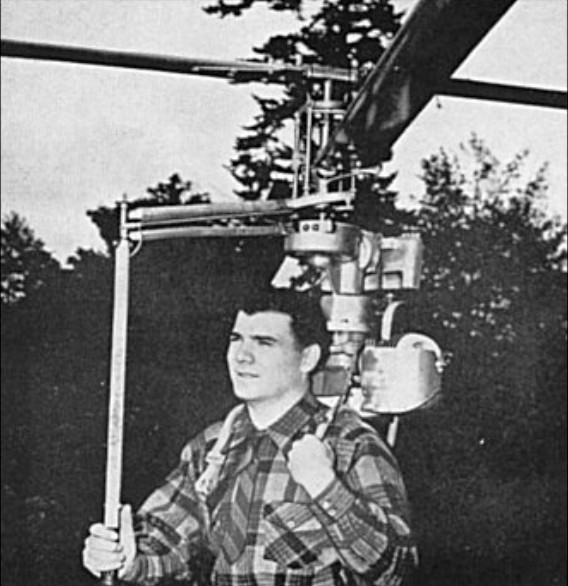
Pentecost CL-1 / Hoppi-Copter / Capital Helicopter Corp C-1L Hoppi-Copter

The Pentecost Hoppi-Copter was a 41kg personal helicopter pack designed to be strapped to an infantryman’s back to make it possible for him to surmount terrain obstacles, but had no landing gear. Conceived by Horace Pentecost, it first flew in 1945, but landing shock problems proved insurmountable.

This ultra-light individual helicopter had two co-axial contra-rotating two-bladed rotors powered by a small two-stroke horizon-tally opposed engine developing about 20 h.p.

The body consisted of a tubular aluminum frame curved to fit over the pilot’s shoulders and attached to the body by harness of the type employed in parachutes; the pilot’s legs were used for landing.

Some twenty hops were made with the use of safety cables attached to the pilot, but this strap-on helicopter ended its career at the Smithsonian Institution in Washington.

Capital Helicopter Corp was established January 1954 for continued development of C-1 Hoppi-Copter, took over the patents in 1954, and flew a Hoppi-Copter with rotor blademounted pulse jets.

Horace Pentecost became President of the Capital Helicopter Corporation, founded in 1954, on leaving the Hoppicopter concern and retaining his rights in his inventions.

A new type of helicopter, powered by small pulse-jet engines at the blade tips, was also developed by Horace Pentecost.

Hoppicopter Strap-On
Engine: 20hp
Rotor diameter: 3.66m
Weight fully loaded: 90kg

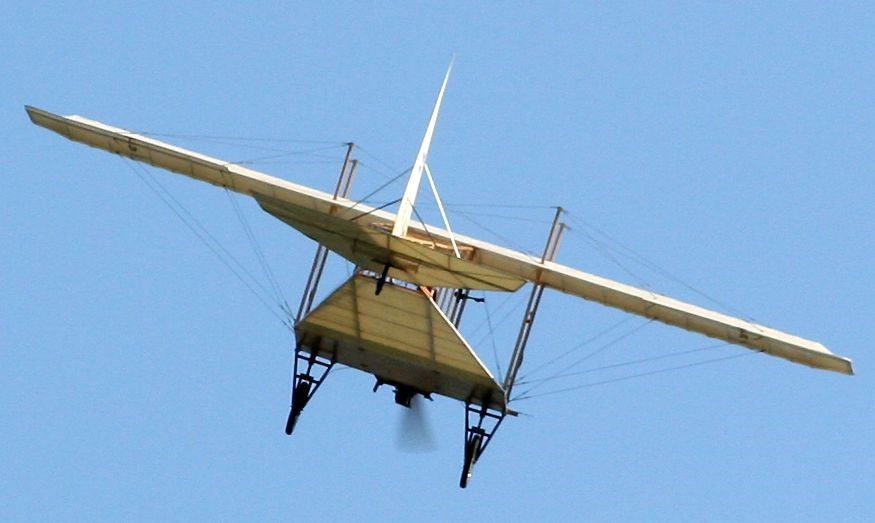
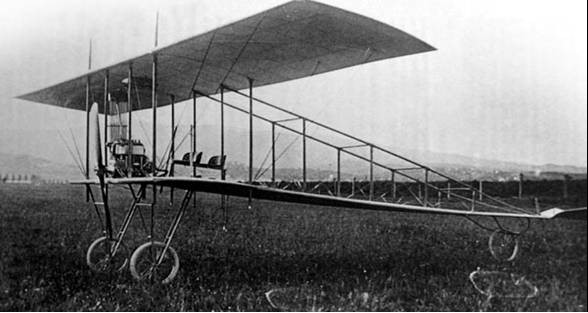
Penkala 1910 Biplane / Leptir / Cvjetkovic CA-10 Penkala

Slavoljub Penkala was interested in flight and decided to buld his own airplane, pretty much making it up as he went along. He patented it in late 1909 and the plane was ready for its first flight by June 1910. The funding came from Penkala’s own income from his pen and pencil factory, and a lot of the work and ideas also came from Dragutin Novak, who joined Penkala earlier the same year.

The Leptir (English: Butterfly)was a single engine, sesquiplane aircraft with conventional landing gear. The open girder fuselage provides an unusually long distance to the tail surfaces, compared to modern aircraft. The flat bottom surface of the fuselage was covered, forming a long thin triangular surface intended to provide lift, which was not functional in level flight. The aircraft was tail heavy with a center of gravity at 70 percent of wing chord.

The first flight occurred on 22 June 1910 with pilot Dragutin Novak. The 1910 Leptir II featured modifications to include skids. The aircraft was crashed several months later.

The CA-10 replica was built in 2010 and known as the Cvjetkovic CA-10 Penkala, bearing the registration of 9A-XCA. It was powered by an 80 hp (60 kW) Rotax 912 with the center of gravity moved forward for safety.

Cvjetkovic CA-10 Penkala

Penkala Biplane
Propeller: 2-blade
Wingspan: 11 m (36 ft 1 in)
Length: 11 m (36 ft 1 in)
Empty weight: 330 kg (728 lb)
Crew: 1

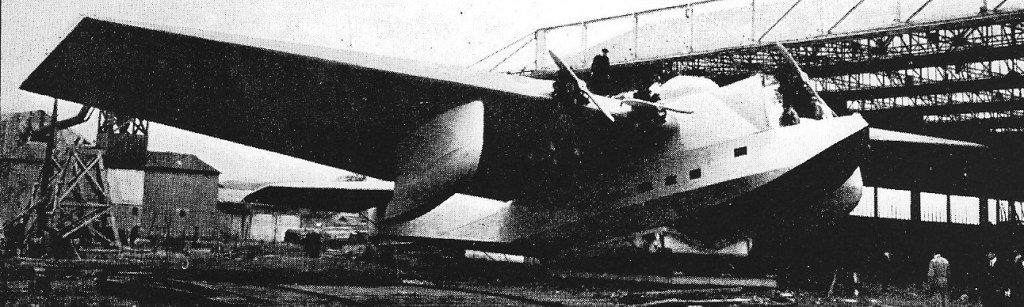
Pena Bilouis Dahu

Peña Dahu

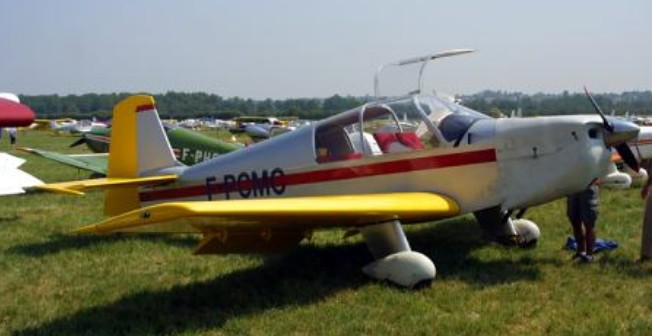
The Peña Dahu, named for the legendary French mountain animal, is a French amateur-built aircraft that was designed by Louis Peña of Dax, Landes and made available in the form of plans for amateur construction.

First flown on 9 May 1996, the Dahu is intended for mountain flying, aero-towing gliders and touring. It features a cantilever low-wing, a four-seat enclosed cockpit, fixed conventional landing gear and a single engine in tractor configuration.

Peña Dahu

The Dahu is made from wood. Its 9 m (29.5 ft) span wing has an area of 15 sq.m (160 sq ft) and mounts flaps. The recommended engines range in power from 120 to 200 hp (89 to 149 kW) and include the 160 hp (119 kW) Lycoming O-320, 180 hp (134 kW) Lycoming O-360 and the fuel-injected 200 hp (149 kW) Lycoming IO-360 four-stroke powerplants. When equipped with a 120 hp (89 kW) engine the gross weight is limited to 900 kg (1,984 lb) instead of 1,200 kg (2,646 lb).

Peña Dahu

Plans were available in 2012, the 2011 price was €600.

Gallery

Engine: 1 × Lycoming O-360, 130 kW (180 hp)
Propeller: 2-bladed metal constant speed propeller
Wingspan: 9 m (29 ft 6 in)
Wing area: 15 sq.m (160 sq ft)
Empty weight: 600 kg (1,323 lb)
Fuel capacity: 200 litres (44 imp gal; 53 US gal)
Maximum speed: 310 km/h (193 mph; 167 kn)
Cruising speed: 230 km/h (143 mph; 124 kn)
Stall speed: 80 km/h (50 mph; 43 kn)
Rate of climb: 6 m/s (1,200 ft/min)
Wing loading: 80.0 kg/m2 (16.4 lb/sq ft)
Crew: one
Capacity: three passengers

Engine: 120 hp (89 kW)
Wingspan: 9 m (29 ft 6 in)
Wing area: 15 sq.m (160 sq ft)
Gross weight: 1,200 kg (2,646 lb) 900 kg (1,984 lb)
Fuel capacity: 200 litres (44 imp gal; 53 US gal)
Crew: one
Capacity: three passengers

Engine: Lycoming O-360, 180 hp
Wing span: 8.6 m
Wing area: 16.1 sq.m
MAUW: 1200 kg
Empty weight: 560 kg
Cruise speed: 200 kph
Seats: 4
Plan price (1998): 4000 F

Pemberton-Billing P.B.29E

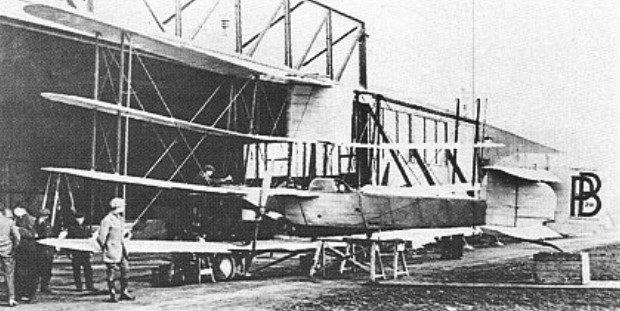
The 1915 P.B.29E twin-engined quadruplane interceptor fighter was conceived as an anti-airship aircraft. Intended to be capable of prolonged cruise at low speeds during the nocturnal hours, and built in seven weeks from beginning of design, the P.B.29E featured high aspect ratio wings with a pair of 90hp Austro-Daimler six-cylinder water-cooled engines underslung from the second mainplane and driving pusher propellers. The entire wing cellule was braced as a two-bay structure, the fuselage being attached to the second wing and accommodating two crew members, and a gunner with a single 7.7mm machine gun occupying a nacelle that filled the gap between the centre sections of the upper mainplanes. The P.B.29E was flown in the winter of 1915-16, and was destroyed comparatively early in its flight test programme, but aroused sufficient interest to warrant development of the P.B.31E of similar concept. No data relating to the P.B.29E are available.

Pemberton-Billing P.B.25 Scout

Known officially as the Scout, the P.B.25 was a development of the P.B.23. The most obvious differences were in the design of the nacelle, which was fabric covered, and in the wing cellule, the mainplanes featuring 11 degrees of sweepback and inversely-tapered ailerons. Twenty P.B.25s were ordered by the Admiralty, all but one of these being powered by the 100hp Gnome Monosoupape, the exception having a 110hp Clerget rotary. Armament comprised a single 7.7mm machine gun mounted on the nacelle. The last P.B.25 was delivered to the RNAS in February 1917, by which time this type had acquired an unenviable reputation, the take-off and landing characteristics being particularly hazardous. Apart from poor flying qualities, its performance was inadequate and, being viewed as something of an anachronism, the Scout was quickly discarded.

Max take-off weight: 699 kg / 1541 lb
Empty weight: 490 kg / 1080 lb
Wingspan: 10.04 m / 33 ft 11 in
Length: 7.34 m / 24 ft 1 in
Height: 3.17 m / 10 ft 5 in
Wing area: 25.73 sq.m / 276.96 sq ft
Max. speed: 143 km/h / 89 mph