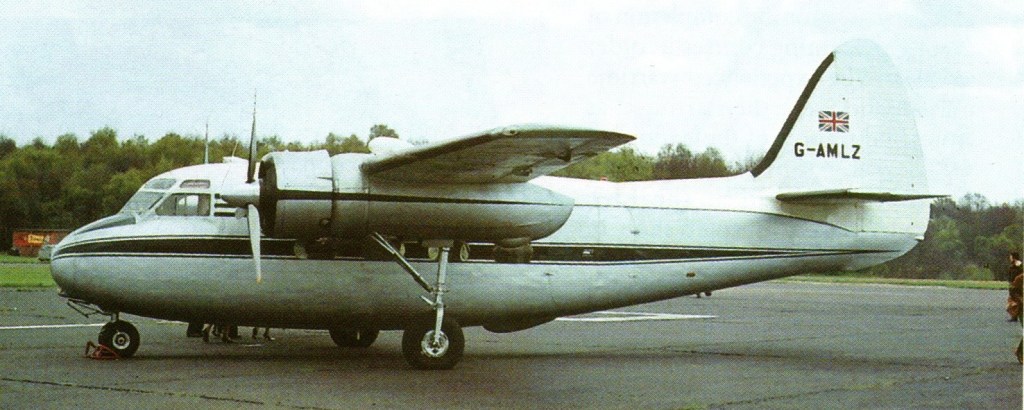
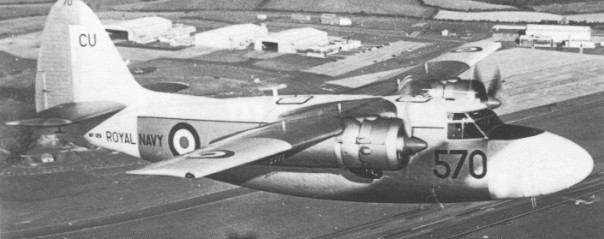
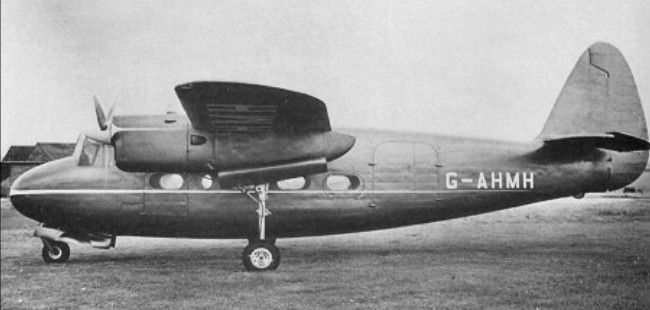
The 1948 Percival Prince was a British light transport of the early post-war period. It was a twin-engine, high-wing, cantilever monoplane of all-metal stressed-skin construction; the undercarriage was of retractable, tricycle type. The design of the Prince followed on from the solitary Merganser.
Further development of the type led to the Survey Prince survey aircraft and the Sea Prince. The official designation of the Naval communications version of the Percival Prince was given as Sea Prince C.2.
August 1950
An improved version of the Prince 3 with an increased wingspan and engine and undercarriage modifications was developed for the Royal Air Force as the Percival Pembroke. The Percival Prince 5 the transport variant of the Pembroke.
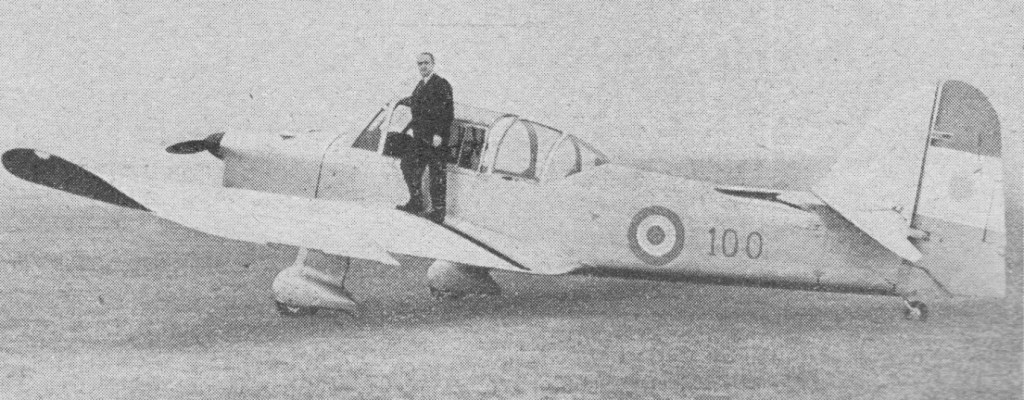
In 1949 Percival celebrated the 100th Prentice for the Argentine Air Force built and tested at Luton. In addition to being the RAF’s standard trainer, they were used by the Indian Air Force and the Lebanese Air Force.
100th Prentice for the Argentine Air Force
The Prentice 3, intended for the Indian Air Force, has a 344 hp Gipsy Queen 70-2 engine. The empty weight is 3427 lb, but the all-up weight remains at 4000 lb aerobatic and 4200 lb normal. The maximum speed is 171 mph at 5000 ft.
During 1958, Aviation Traders obtained a CoA for their four seat touring version of the Prentice.
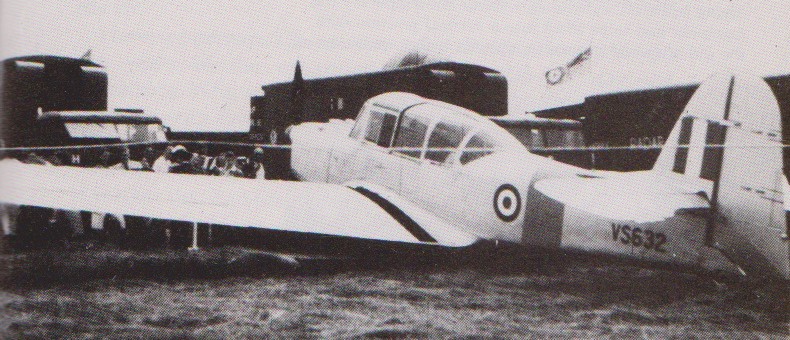
The Prentice T.Mk.I certification is by UK Manufacturer’s Type Record.
Percival Prentice T Mk I VS632
Engine : DH Gipsy Queen 51, 292 hp Length : 31.234 ft / 9.52 m Height : 12.795 ft / 3.9 m Wingspan : 45.997 ft / 14.02 m Max take off weight : 3790.4 lb / 1719.0 kg Max. speed : 134 kt / 249 km/h Service ceiling : 17995 ft / 5485 m Range : 432 nm / 800 km Crew : 2
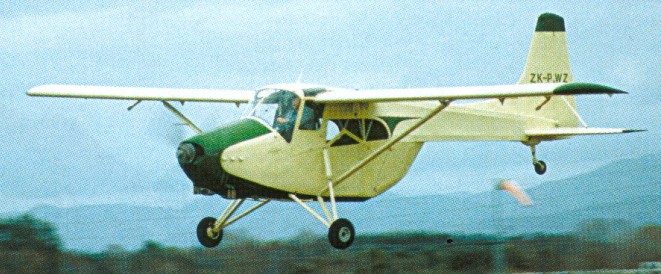
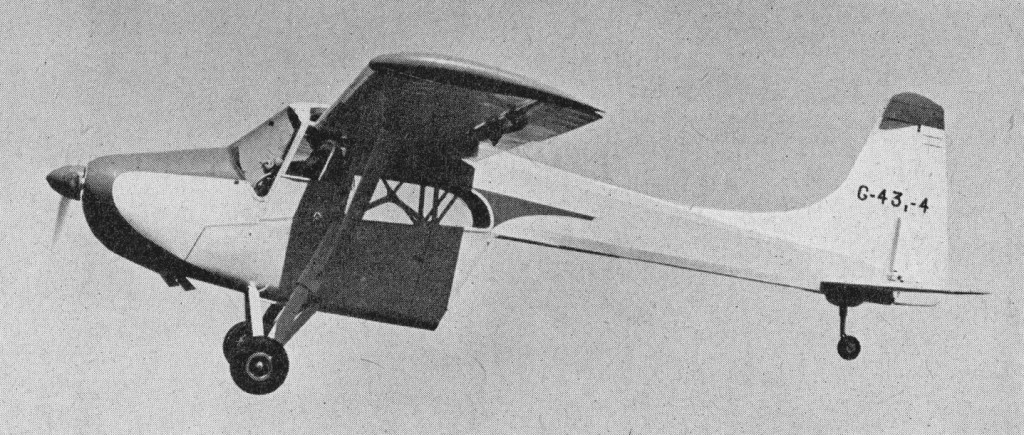
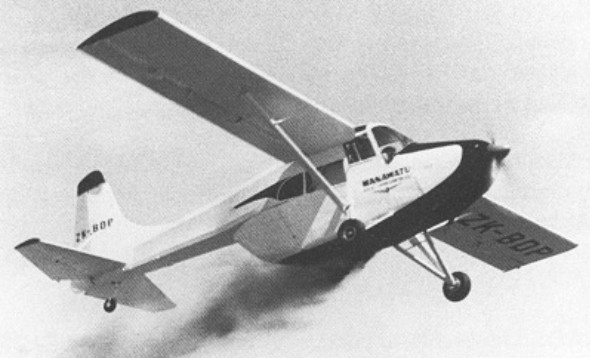
In 1959, Edgar Percival founded Edgar Percival Aircraft Limited at Stapleford in the United Kingdom and built as a private venture a high wing utility aircraft known as the EP 9. It was intended for use as a light transport and top dressing aircraft with a 170 Imp.Gal tank.
The prototype first flew on 21 December 1955 piloted by Edgar Percival, and construction of the first group of twenty aircraft commenced soon after. Edgar Percival built twenty-one EP9s fitted with the 270hp Lycoming GO-480-B engine.
Aircraft were sold to Australia, Canada, France, Tasmania, and a single example to New Zealand.
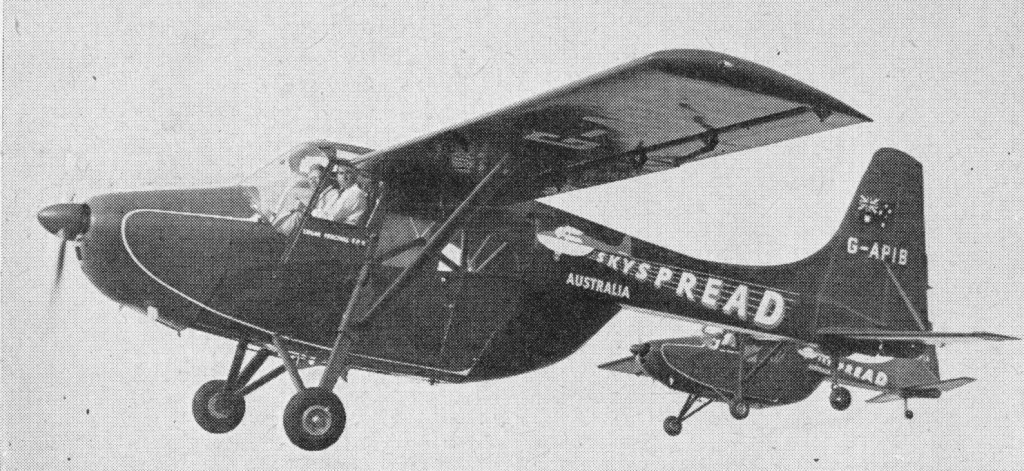
Two Percival EP.9s were delivered at the end of 1957 to Skyspread Pty Ltd in Australia.
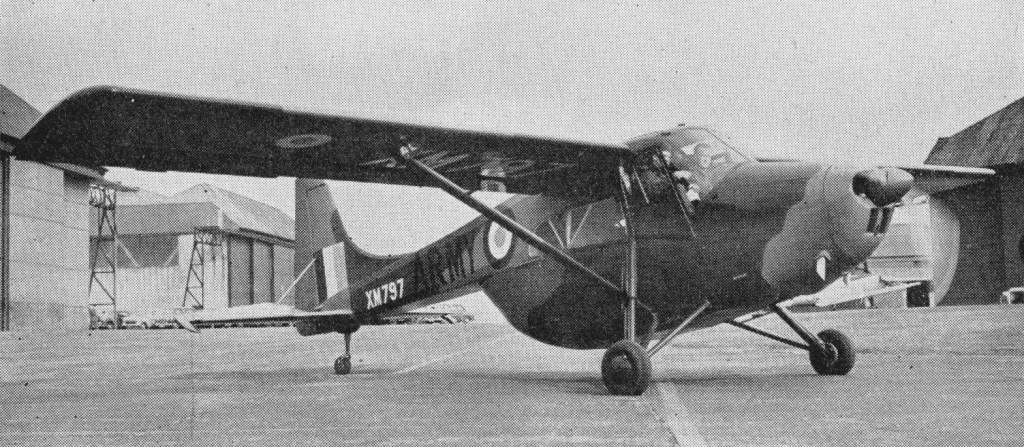
The British Army purchased two in 1958 for evaluation, and they served for several years before being declared surplus and disposed of on the civil market.
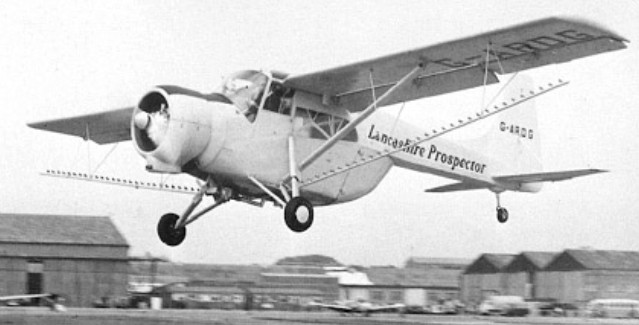
The last aircraft was not com¬pleted by him and was finished by the Lancashire Aircraft Company who then went on to build four more aircraft. The rights for the EP.9 were acquired by Samlesbury Engineering Ltd in 1958, including assembled and partly assembled aircraft. The EP.9 was renamed the Lancashire Prospector EP.9 and three built with Lycoming engines. Lancashire built aircraft standardised on the Lycoming GO-480 295 hp engine.
The first of these was registered G-APWZ on 5-11-1959. It first flew on 23-02-1960 and attained its C of A on 22-04-60. Lancashire named the aircraft the Prospector and five aircraft were fitted with a 295 hp Lycoming GO-480-G1A6 and a three-bladed propeller before production ceased in 1960.
Kingsford Smith Aviation Services in Australia converted a number of aircraft to take the 375 hp Armstrong Siddeley Cheetah 10 during 1961-62.
The last aircraft built (G-ARDG) was fitted with a 375 hp Armstrong Siddeley Cheetah 10 and was dubbed the Prospector 2. In all, only twenty-seven aircraft ever flew.
Certification is by UK Manufacturer’s Type Record.
Engine : 2 x De Havilland Gipsy Six, 202 hp Length : 32.251 ft / 9.83 m Height : 9.744 ft / 2.97 m Wingspan : 46.654 ft / 14.22 m Wing area : 278.034 sq.ft. / 25.83 sq.m Max take off weight : 5501.5 lb / 2495.0 kg Weight empty : 3501.5 lb / 1588.0 kg Max. speed : 170 kt / 314 km/h Cruising speed : 152 kt / 282 km/h Service ceiling : 20997 ft / 6400 m Wing load : 19.89 lb/sq.ft / 97.0 kg/sq.m Range : 652 nm / 1207 km Crew : 2 Payload : 2-4pax
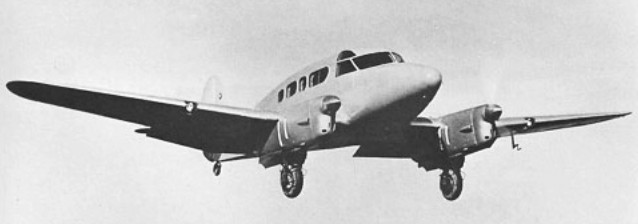
The Percival Merganser was a light, civil transport of the late 1940s. It was a twin-engine, high-wing monoplane of all-metal, stressed skin construction with retractable tricycle undercarriage. The Merganser was designed as a five-passenger, light airliner with an emphasis on “passenger appeal”. To this end, a high-wing configuration and tricycle landing gear were chosen to provide the best view and a low, level floor for easy access. The fuselage, having been completed in November 1946, was shipped by train ferry to Paris to be displayed at the Aero Show. By this time, the Merganser was already doomed, since it was designed to be powered by de Havilland Gipsy Queen engines and neither these nor any suitable substitute were available.
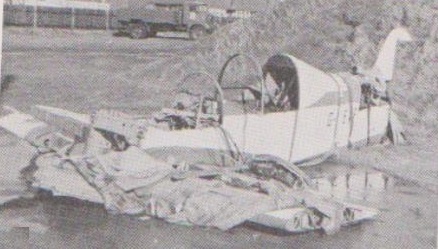
Only one Merganser was flown; when it made its first flight on 9 May 1947 from Luton Airport, the engines were on loan from the Ministry of Supply. The company was able to carry out extensive flight trials and obtain much valuable data. Although it appeared at the SBAC Show at Radlett in September 1947, it was scrapped at Luton in August 1948.
A second Merganser was used as a static and structural test airframe. Although the Merganser never entered production, further development, based on the data gathered from its test programme, would lead to the larger Prince, President and Pembroke series for which a suitable powerplant was available.
The Proctor as a type dates back to 1939, being designed as a radio trainer and light communications machine for the Royal Air Force by A.A.Bage. A development of the pre-war Vega Gull with Percivals incorporating RAF design requirements into the Vega Gull airframe, the Proctor was produced in five versions – Mks I to III being three seaters for the RAF, while Mks 4 and 5 (Arabic mark numbers replaced Roman in 1948) were four seaters, and incorporated folding wings, the last variant being targeted at the immediate post war civil market, a purely post-war civil version of the RAF’s Mk.4.
In all, 246 Mk.1s were built by Percival, at Luton.
The Mks II and IIIs for the Navy had a quick release dingy installed in the wing centre sections.
A total of 200 Mk.2s and 436 Mk.3s were built. All by F.Hills & Sons at Manchester.
Percival P34A Proctor 3 OO-JDB (c/n RAF H211)
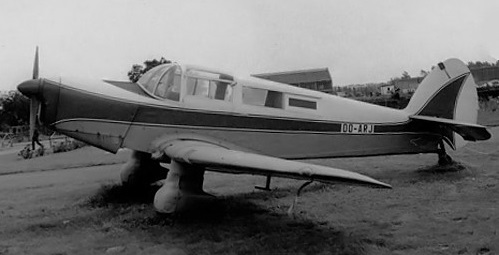
In 1943, the Mk. III fuselage was redesigned and strengthened to accommodate two side-by-side pairs and the windscreen and cabin windows were enlarged. This was originally known as the Preceptor but was renamed Mk.4. The added visibility from the Mk.4 enabled carrier deck landing trials to be undertaken. Eight pre-production aircraft and 250 production aircraft were built by F.Hills & Sons at Manchester.
Percival P31C Proctor IV OO-ARJ (c/n H642)
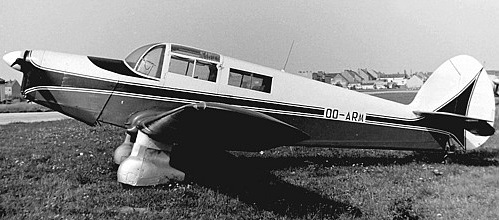
The Proctor V is a civil version of the Proctor IV. The Proctor 5 is a low-wing cantilever monoplane of all-wood construction powered by a six cylinder de Havilland Gipsy Queen II engine driving a two-bladed, variable pitch propellor with constant speed control. The fabric covered wings fold upwards and rearwards to lessen hanger area. Access to the engine is easy with large cowl flaps either side hinging upwards to reveal the whole engine. Fuel is contained in two tanks just outboard of the centre sections and a 5 gallon oil tank is located on the right side in front of the fuel tank. The undercarriage – fixed cantilever with compression springs coupled with oil dampers and recoil springs – is fully covered by “trousers” and most of the wheels by “spats.
Series production of the Mk.V began at Luton in May 1946, with three converted from Mk.4s, and 150 newly built. All were powered by a DH Gipsy Queen II of 208 hp, providing a maximum speed of 160 mph, a cruising range of some 500 miles and a ceiling of 14000 feet.
Percival P.44 Proctor V OO-ARM (c/n AE84)
Of the hundreds built for RAF use, 225 Mk. 1, 2, and 3 found their way onto the civil register to join at least 150 Mk.5s specially made for the civil market at Percival’s Luton plant. Some continued in service with the RAF until 1955.
The one and only Mk.6 was built as a floatplane for the Hudson Bay Trading Company of Toronto, Canada. It was basically a Mk.5 fitted with floats and a Gipsy Queen 32 engine of 250 hp.
More than 1200 Proctors were produced. The airworthiness design standard of the Percival Proctor was A.P. 1208, dated November 1937 for the Proctor III and October 1938 for the Proctor IV. The design organisation with Type Responsibility Authorisation in 2011 was Tenecia Ltd, at Coventry Airport.
Mk.I Engine: De Havilland Gipsy Queen II, 210 hp Wing span: 39 ft 6 in 12.04 m Wing area: 202.04 sq.ft / 18.77 sq.m Length: 25 ft 10 in Height: 7 ft 3 in / 2.21 m Max take off weight: 3501.5 lb / 1588.0 kg Weight empty: 2370.4 lb / 1075.0 kg Max speed: 165 mph Range: 660 miles Cruising speed: 121 kt / 225 km/h Service ceiling: 13993 ft / 4265 m Wing loading: 7.43 lb/sq.ft / 85.0 kg/sq.m Crew: 2
Mk.II Engine: De Havilland Gipsy Queen II, 210 hp Max speed: 165 mph Range: 660 miles Wing span: 39 ft 6 in Length: 25 ft 10 in Height: 7 ft 3 in
Mk.III Engine: De Havilland Gipsy Queen II, 210 hp Max speed: 165 mph Range: 660 miles Wing span: 39 ft 6 in Length: 25 ft 10 in Height: 7 ft 3 in
Mk.4 Engine: De Havilland Gipsy Queen II, 210 hp Max speed: 157 mph Range: 500 miles Wing span: 28 ft 2 in / 8.59 m Length: 25 ft 10 in Height: 7 ft 3 in / 2.21 m Max take-off weight: 1588 kg / 3501 lb Service ceiling: 4265 m / 14000 ft
Mk.5 Engine: De Havilland Gipsy Queen II, 208 hp Max speed: 220 mph Cruise: 124 mph Vne: 200 mph Range: 520 miles Ceiling: 14000 ft Wing span: 38 ft 6 in Length: 38 ft 1 5/8 in Fuel cap: 40 Imp.Gal MAUW: 3500 lb Height: 7 ft 3 in
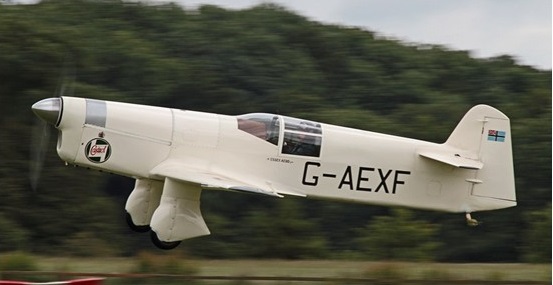
The Percival Mew Gull G-AEXF was designed by Captain Edgar W. Percival and produced in 1936. This clean, low-winged monoplane, with a finely streamlined cockpit cover and a spatted undercarriage, was designed for racing and six were built.
Alex Henshaw exchanged his de Havilland Leopard Moth for a Mew Gull in 1937, and achieved the fastest times in many air races and won the Folkestone Aero Trophy in the same year.
During this period Alex met Jack Cross of Essex Aero Ltd who made mechanical and structural alterations to XF in order to win the 1938 King’s Cup. The effect was a dramatic increase in performance and resulted in winning success in the King’s Cup at a speed of 380.2km/h (236.25mph).
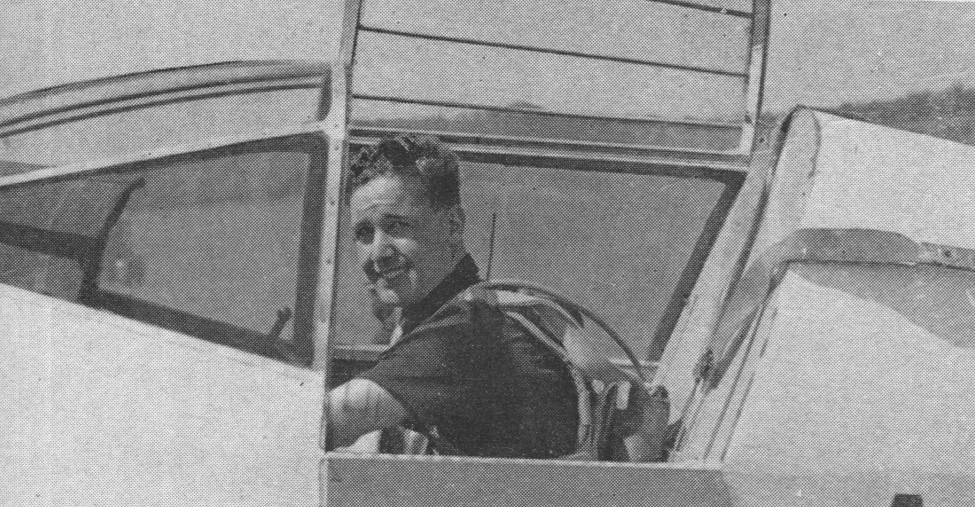
Alex Henshaw in Mew Gull
Alex then decided to attempt the solo records on the England to Cape Town route. He set off from Gravesend on 5 February 1939 and after four days returned having broken all records on this route. They remain unbroken to this day for an aircraft in this class. Each leg took 39 hours 23 minutes at an average speed of approximately 334.7km/h (208mph).
The Mew Gull was sold in the late summer of 1939 to a Frenchman. XF remained hidden from the Germans throughout the Second World War occupation of France. It then passed through a number of different owners before eventually being bought by Robert Fleming in 2002.
Mew Gull G-AEXF ‘displayed’ at Reflectaire Museum at Squires Gate on 20 February 1971, prior to restoration by Tom Storey
In 2008 XF was still operated by The Real Aeroplane Company at Breighton in Yorkshire.
Engine: 165 hp Napier Javelin Length: 18.23 ft (5.56m) Wing span: 24 ft (7.32m) Weight empty: 1,000 lb (450 kg) Max speed: 195 mph (314 kph) Range: 550 miles (885 km) Seats: 1
The prototype Gull G-ABUR flew in 1932 as a 3 seat touring aircraft, all wooden construction, powered by a 130hp Cirrus Hermes IV. The aircraft was designed by Australian Edgar Percival and constructed by Lowe-Wylde British Aircraft Company at a small glider factory Maidstone, Kent. The following year the prototype was re-engined with a Napier Javelin II, and its speed and performance was further improved. Edgar Percival flew it in races in England and it was later written off in Rhodesia during a speed record attempt to the Cape.
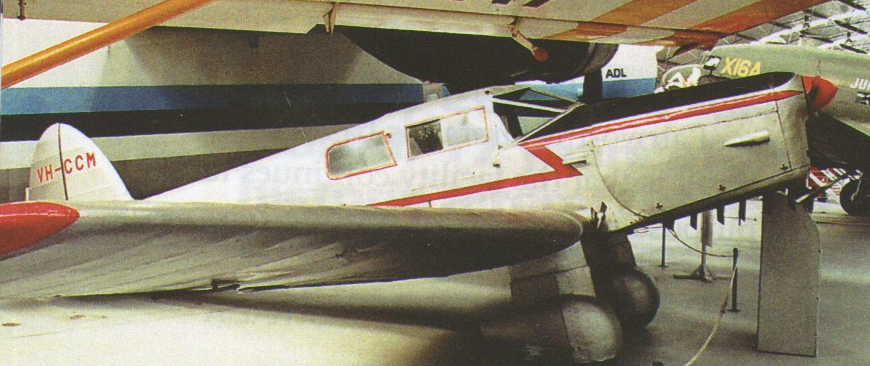
The first production model was the Percival “D” Series Gull, 29 built by George Parnall and Company at their works at Yate, Gloucestershire under contract to Percival Aircraft Co Ltd. They were designated D.1 or D.2 depending on engine installed, top/side hatch cockpit entry and tripod undercarriage legs, but were all called Percival Gull IV. In 1934 Percival Aircraft Co Ltd established its own works at Gravesend Airport, Kent. Here 19 type D.3 Gulls named the Percival Gull VI were built, featuring side opening cockpit doors and single leg undercarriage with spats, powered by a 200hp Gipsy Six.
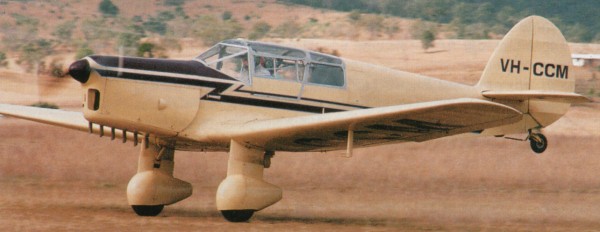
Gull Six VH-CCM
Gull Six Engine: de Havilland Gypsy Six I, 184 hp at 2,100 rpm / 205 hp at 2,350 rpm. for takeoff. Propeller: two-bladed fixed-pitch Wingspan: 36 feet, 2 inches (11.024 meters) Length: 24 feet, 9 inches (7.544 meters) Height: 7 feet, 4½ inches (2.248 meters) Empty weight: 1,170 pounds (530.7 kilograms) Gross weight: 2,050 pounds (929.9 kilograms). Max speed: 178 miles per hour (286.5 kilometers per hour) Service ceiling: 16,000 feet (4,876.8 meters) Range: 700 miles (1,126.5 kilometers). Crew: 1 Passengers: 2
Emile Percevants’ “Metalloplan” pusher canard monoplane bicycle was displayed at the “stand de l’aviette” of the 1913 Salon de la Locomotion Aérienne (Paris). Although the Metalloplan company did not have much luck with aircraft, it seems they made successful business manufacturing bikes and motorbikes, and were active at least into the 1950s.
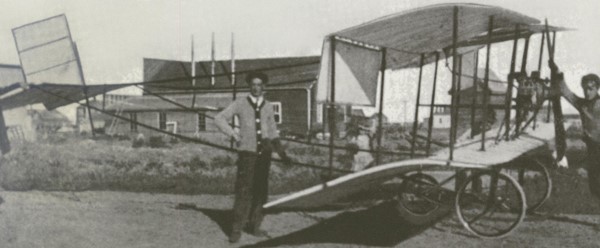
George and Ackley ‘Ace’ Pepper did their flying in Davidson, Saskatchewan, Canada. The machine was built with community support during 1910-11, mainly of wood and bamboo, powered by a 20-30 hp Detroit aero engine. A first flight attempt in July 1911 resulted in a damaged undercarriage and propeller, but another attempt on Aug. 1 was successful, but resulted in a crash.