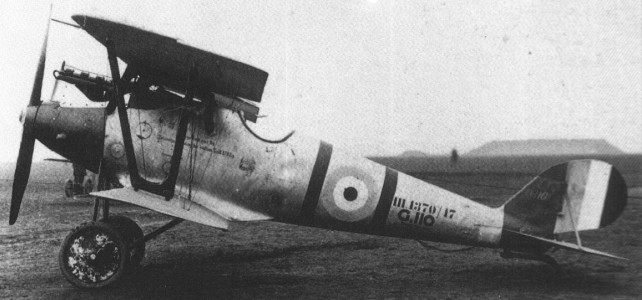
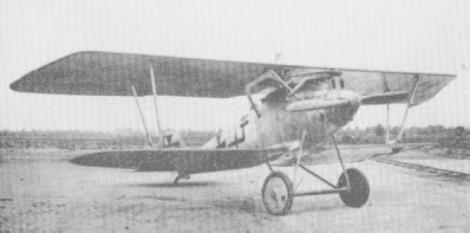
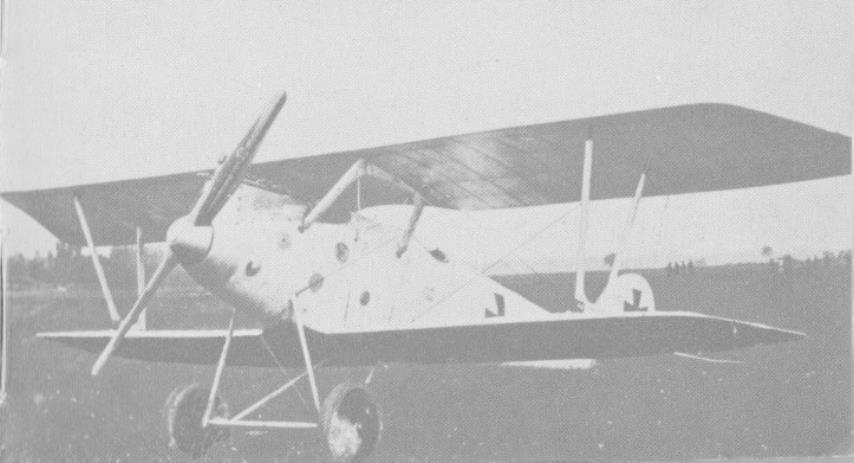
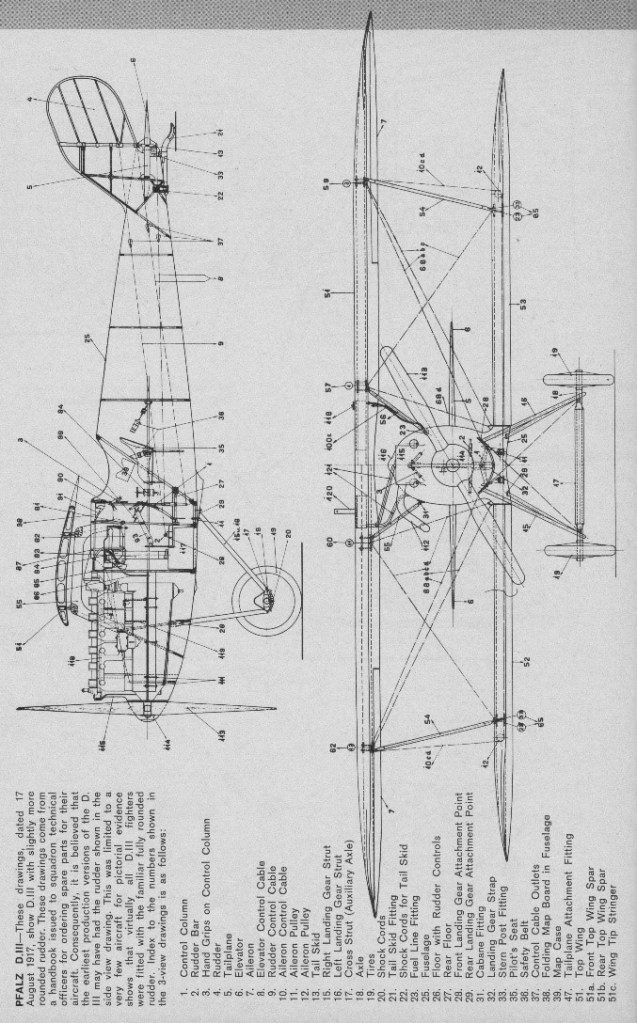
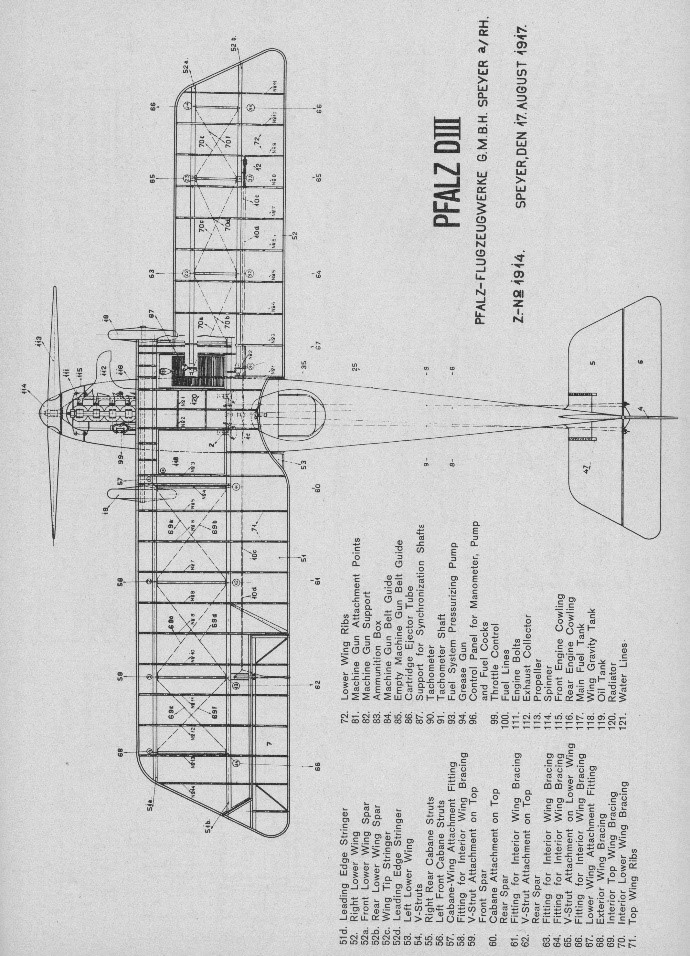
The Pfalz Flugwerke GmbH did not develop a biplane fighter design of its own until the Pfalz D.III prototype appeared in the spring of 1917. It had its roots in the Roland fighters that Pfalz had been building under license until then.
The type was an unequal-span biplane with an almost sesquiplane layout, a fuselage of very clean lines, and a 119-kW (160 hp) Mercedes D.III inline in a commendably low-drag installation. The D III entered service in the autumn of 1917, mainly with Bavarian units, and was complemented from 1918 by the D IIIa with a more powerful engine. By the end of 1917 approximately two hundred and fifty D.IIIs were at the Front. Many Jagdstaffein had mixed equipment at this period and it was not unusual for the new fighter to operate m the same formation with Roland and Albatros machines
Pfalz D.III
Compared with its contemporaries, the Pfalz D.III had a poor rate of climb, a tendency to catch fire rapidly and average manoeuvrability. On the other hand, it was an excellent gun platform thanks to a fuselage-upperwing; gap kept to a minimum to afford a good all-round view from the cockpit. Twin Spandau guns were mounted inside the fuselage with only their muzzles protruding. It also featured a tailplane of inverted aerofoil section, made of ply-covered wood. This resulted in the capacity to dive hard and fast, a factor that led to its extensive use as a balloon-buster. Except for the tailplane, the fuselage was constructed of thin layers of plywood round a wooden frame of longerons and formers, covered with fabric.
The Pfalz D.III was powered by the Mereedes D.III six-cylinder liquid cooled inline 160hp engine. This gave it a maximum speed of 180 km/hr and an endurance of 2.5 hr.
The Pfalz D.III continued to operate until mid-1918. Then it was already looked upon by the Allied fighter pilots as a sitting duck.
Production totaled about 600 machines, including D.IIIa’s with 180 hp Mercedes engines.
About 350 were still operational in August 1918.
Replica: Bellamy Pfalz D.III Personal Plane Services Ltd Pfalz D.III
Pfalz D IIIa Powerplant: l x Mercedes D.III, 160 hp Span upper: 9.40m (30ft 10 in) Span lower: 26 ft 8 in Wing area: 238.5 sq.ft Length: 6.95m (22 ft 9.5 in) Height: 8 ft 9 in Fuel capacity: 21.5 Imp.Gal Empty weight: 1532 lb Max T/O weight: 935 kg (2,061 lb) Max speed: 103 mph at 9,845 ft Operational endurance: 2 hr 30 min Armament: 2 x Spandau mg Crew: 1
Pfalz D IIIa Powerplant: l x Mercedes D.IIIa, 134kW (180 hp) Span: 9.40m (30ft 10 in) Length: 6.95m (22 ft 9.5 in) Armament: 2 x 7.92-mm (0.31 2-in) LMG 08/15 mg Max T/O weight: 935 kg (2,061 lb) Max speed: 103 mph at 9,845 ft Operational endurance: about 2 hr Crew: 1
The Pfalz E-series of monoplane fighters was produced in parallel with the Fokker E-series, and the manufacturer then built the LFG (Roland) D I and D II fighters under licence.
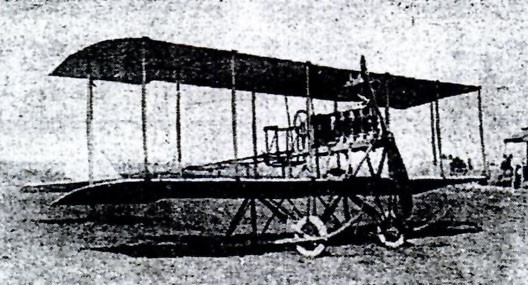
Built and designed by 19-year-old Harry Peyton of Waco, Texas, who made test flights of his biplane at a nearby field, most likely on the Trinity River bottom.
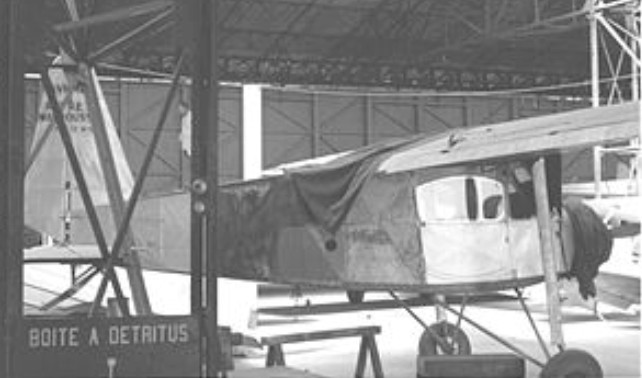
The PM XI was designed by Louis Peyret and Pierre Mauboussin as a Salmson-engined two-seat touring and sporting aircraft of wooden construction. Two examples were built.
The aircraft first flew in 1930. The second aircraft F-AJUL took part in the Challenge International de Tourisme 1930 touring planes’ contest, piloted by Charles Fauvel, but it damaged a landing gear in a compulsory landing. This plane F-AJUL was later flown by Rene Lefevre from Paris to Tananarive, Madagascar, between 1 and 14 December 1931. The total distance flown was 11,000 km at an average speed of 120 km/hour. This aircraft is stored without wings at the Musee Castel-Mauboussin at Cuers-Pierrefeu airfield near Toulon in southern France, and can be viewed by prior permission.
Engine: 1xSalmson 9 Ad 40 h.p. Length: 5.50 m Span: 11.75 m Height: 2.86 m Wing area: 14.7 sq.m Empty weight: 322 kg Loaded weight: 530 kg Maximum speed: 160 km/hour Ceiling: 4,500 m Range: 600 km
A 1928 single/two-seat parasol lightplane, 1 x 12hp Salmson 3-cyl One was built (F-AISQ) as a single seater but often flown with Mde Eric Nessler as passenger.
A 1924 light biplane seaplane trainer designed for Yves le Prieur (of aerial rocket & aqualung design fame) Engine: 1st trials 16 hp 4-cyl Sergant, then replaced by 45 hp Anzani 6
A 1922-23 moto-aviette (very light a/c) with “moteur auxiliaire” of conventional layout. 1 x nose-mounted 16 hp air-cooled upright inline 4-cyl Sergant A The wings folded up on approach, Lympne trials 13 Oct 1923, Alexis Maneyrol killed
In 1935 Tupolev initiated work on a smooth skinned, four engined high altitude bomber which, while developed from the TB 3, was much more modern, with an oval section fuselage, retractable undercarriage and enclosed positions for the crew. Designated TB 7 (ANT 42), it is better known as the Pe 8 after V M Petlyakov, who undertook its further development.
The first prototype flew on 27 December 1936.
Production Pe-8 were well armed, carrying two 7.62mm machine-guns in a spherical nose turret, two machine-guns or a 20mm cannon in a dorsal turret, one hand-operated 12.7mm machine-gun in the rear of each inboard engine nacelle under the wing trailing edge and a 20mm cannon in a tail turret, plus up to 4,000kg of bombs stowed internally.
Initially the Pe-8 was powered by four 820kW M-105 engines and entered service in this form in 1940. The 1941 model had 1,080.5kW Mikulin AM-35A fitted. During the production run (which lasted until 1944) several other engines were installed either experimentally or as a standard type, including the 967kW AM-38, 1,304kW/ 1700 hp M-82 and, appearing in 1943, a 1500 hp M-40F diesel engine.
The Pe-8 had notable features such as defensive gun positions in the rear of the inner engine nacelles and, in the prototypes, a fuselage-mounted engine to drive the massive supercharger that supplied a larger volume of air to all four flight engines.
On the night of 21 July 1941 German bombers attacked Moscow for the first time. As a reprisal Soviet IL-4 bombers made their first attack on Berlin on the night of 7 August. The resulting damage was minimal but it cleared the way for further attacks. In the spring of 1942 the Soviet ADD or Long-Range Aviation was formed, using the Pe-8 as its main component. Pe-8 raids on Germany began in July 1942 with small numbers of aircraft attacking Konigsberg and then Berlin and elsewhere. However these were not very successful and extremely heavy losses were endured. Although Pe-8 remained operational as bombers until the end of the war, a number were converted into transports.
Engines: 4 x Mikulin AM-35A, 880kW / 1450 hp Wingspan: 39.1 m / 128 ft 3 in Length: 23.6 m / 77 ft 5 in Wing area: 188.7 sq.m / 2031.15 sq ft Max take-off weight: 32000 kg / 70548 lb Empty weight: 18000 kg / 39683 lb Max. speed: 440 km/h / 273 mph at 25,000 ft Cruise speed: 340 km/h / 211 mph Ceiling: 11000 m / 36100 ft Range w/max.fuel: 6000 km / 3728 miles Range w/max.payload: 3000 km / 1864 miles Armament: 2 x 20mm ShVAK cannon, 2 x 12.7mm Beresin machine-guns, 2 x 7.62mm ShKAS machine-guns Bombload: 2000-4000kg Crew: 8-12
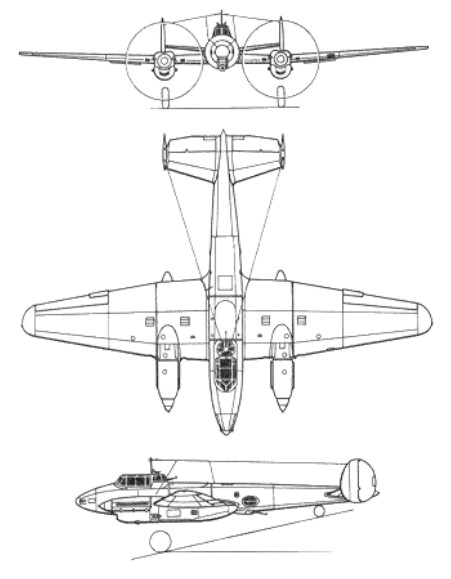
Arriving in small numbers in the ranks of the V-VS to witness the mass devastation of the summer of 1941, the Petlyakov Pe-2 was destined to become the best Soviet light bomber of World War II. The aircraft was derived from V.M. Petlyakov’s VI-100 pressurized high-altitude twin-engined interceptor, which displayed a phenomenal top speed of 623km/h at 10,000m, had a crew of two and was powered by 820kW M-105R V-12 engines.
The VI-100 first flew on 7 May 1939. With the approach of war in Europe the V-VS made urgent requests for dive-bomber aircraft, and to this end the design bureau adapted the VI-100 fighter by removing the TK-3 high-altitude turbo-chargers, fitting standard M-105R engines, lattice type dive-brakes, and giving the tailplane pronounced dihedral to increase stability. Two prototype PB-100 (pikiruyushchn bombardirovshchik, or dive-bomber) aircraft were built with these items installed in addition to an extensively glazed nose and defensive armament. This type became the Petlyakov Pe-2 light bomber and dive-bomber. The crew of three (pilot, bombardier and air-gunner) sat under a long glazed canopy with 9mm armour protection. Initial armament consisted of two fixed 7.62mm ShKAS guns in the nose, one in the dorsal station, and a fourth in the ventral aimed by a 120° vision periscope. The M-105R engines drove three-bladed VISh-61 propellers. The aircraft proved to be fast, highly manoeuvrable, but was guite demanding to novice pilots under asymmetric conditions.
By the time of the German invasion in June 1941 some 458 Pe-2s had been produced from the factories, but it is suspected that deliveries to service units was tardy. Certainly, even by September 1941 the numbers of Pe-2s in front-line units were few. Colonel General I.S. Konev’s Western Front had only five in commission with which to stem the German assault on Moscow, and the establishment of Pe-2s with the Bryansk and Kalinin Fronts was even lower. Although limited in numbers, Pe-2s contributed to the victories of the Soviet winter offensive of 1941-2, and were seen in increasing numbers during the defensive battles at Leningrad, Kharkov, Rostov, and in the Stalingrad campaign.
Late in 1942 came the improved Pe-2FT with 940kW Klimov M-105PF engines, and a 12.7mm UBT machine-gun in a dorsal turret. The Pe-2I and Pe-2M were fighter-bombers, powered by 1208kW VK- 107A engines. The reconnaissance version was the Pe-2R, whilst a dual-control trainer was termed the Pe-2UT. The aircraft saw distinguished service in every major Soviet campaign from 1941 to 1945, including operations in Manchuria against the Japanese in September 1945.
The Pe-3 was produced specificaly for night fighting and reconnaissance. Powered by two 1310 hp M-105PF engines, the Pe-3 featured a solid nose and a shorter cockpit enclosure with a dorsal turret to the rear, and was in service by 1943.
A total of 11,427 Pe-2s and Pe-3s (the fighter version) was produced.
The Pe-2RD was a version of the Petlyakov Pe-2 bomber with an additional Glushko RD-1 rocket engine (3 kN thrust) mounted instead of a fuselage tail cone. This conversion was a task of a special design bureau led by V. Glushko, based in Kazan, and working on rocket powerplants; Korolev’s post there was deputy chief designer of flight tests. Korolev made full aerodynamic calculations for Pe-2 equipped with RD-1; they indicated that maximum speed at sea level will increase by 82 km/h (and reach 542 km/h), while at 7000 m altitude it will increase by 108 km/h (although all this only for short time). The reworking of one production Pe-2 (No.15/185) into Pe-2RD began in 1943 spring. The nitric acid tanks were mounted in the bomb bay, kerosene tanks in the wing roots; full weight of rocket fuel system was 1050 kg. After many ground fire tests, on October 1, 1943 test pilot Alexander Vasilchenko first time fired rocket engine in the air for 2 minutes. During this time, flight speed increased by 92 km/h. On October 2 the rocket engine was fired already for 4 minutes, and next day the first takeoff with RD-1 working was performed. Later RD-1 was replaced by improved RD-1KhZ, with chemical ignition instead of electric. The tests were held until middle 1945; more than 100 fire flights were done. On May 12, 1945 the rocket engine exploded – aircraft’s empennage was seriously damaged, Korolev himself scorched; but Vasilchenko managed to land successfully.
Pe-2 Engines: 2 x VK-105PF, 920kW Max take-off weight: 8520 kg / 18783 lb Empty weight: 5870 kg / 12941 lb Wingspan: 17.2 m / 56 ft 5 in Length: 12.7 m / 42 ft 8 in Height: 4.0 m / 13 ft 1 in Wing area: 45.5 sq.m / 489.76 sq ft Max. speed: 581 km/h / 361 mph Cruise speed: 480 km/h / 298 mph Ceiling: 8800 m / 28850 ft Range w/max.fuel: 1200 km / 746 miles Armament: 3 x 12.7mm machine-guns, 2-4 7.62mm machine-guns Bomb load: 600-1000kg Crew: 2
Pe-2 Engines: 2 x Klimov VK-105R, 1100 hp Wingspan: 56 t 4 in Length: 41 ft 4 in Empty weight: 12,900 lb Loaded weight: 18,730 lb Crew: 2 Max speed: 335 mph at 16,400 ft Service ceiling: 29,520 ft Normal range: 1200 mi Armament: 1 x 12.7mm Beresin mg / 4 x 7.62 mm ShKA5 mg Bombload: 2200 lb
Pe-2RD Wing span: 17.60 m Length: 12.60 m Wing area: 40.50 sq.m Empty weight: 6044 kg Normal takeoff weight: 8200 kg MTOW: 9215 kg (with two 500-kg bombs external Maximum speed: 650 km/h Maximum speed at sea level: 542 km/h Range: 1200 km Service ceiling: 9000 m Takeoff run: 446 m (with RD-1 fired): 70 m shorter than ordinary Pe-2