Pfeifer D-VIII

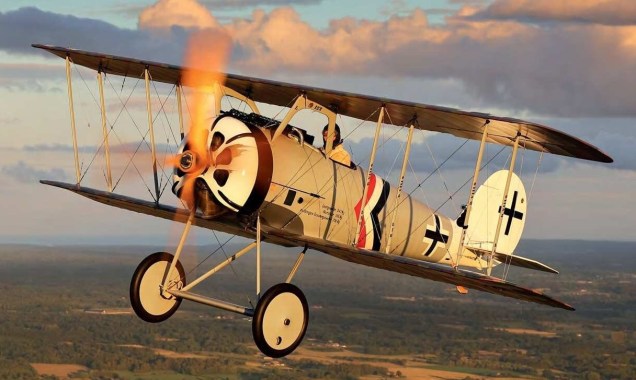
Swedish vintage aircraft builder and pilot Mikael Carlson constructed a Pfalz D.VIII replica.

Carlson Pfalz D.VIII replica

The Pfalz D.VIII is just over five metres long and has 200 horsepower in the nose. This aircraft and its engine, the Siemens-Halske Sh.III, were among the last of their kind.

160 hp Siemens 1918

Pfeifer Sport

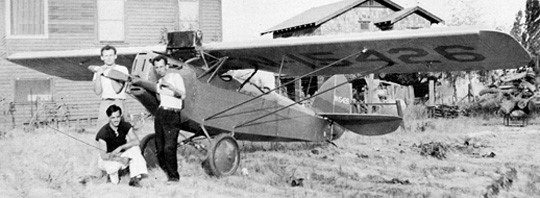
Pfeifer Sport N15426

The 1936 Sport was a two place open cockpit monoplane. Registered N15426 c/n J-4 it was first flown on 6 May 1936 and powered by various motors from 50hp Ford B to 90hp Warner. The original crashed at Santa Susana CA on 9 August 1941 (p: John Toborg) and the registration was cancelled.

Originally a reworked Pietenpol, a version of this plane was built by Pfeifer in 1975 with a 110hp Corvair auto engine and higher parasol wing (span: 30’5″).

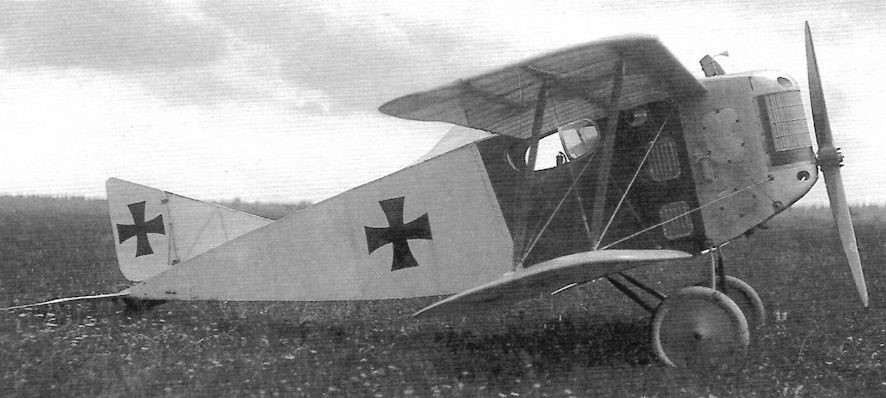
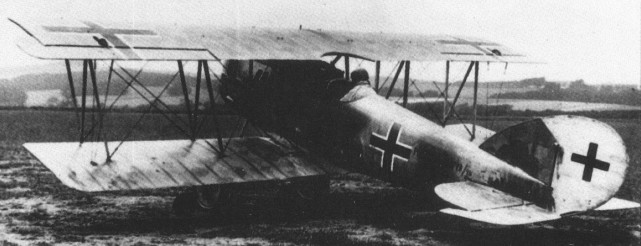
Pfalz D.IV

This aircraft was a biplane version of the E V monoplane. It was to the Walfisch format, with deep gap-filling fuselage and car-type radiator at the nose. Although not confirmed, the engine is thought to have been 100 h.p. Mercedes D I.

The Pfalz D 4 was the first biplane fighter design from Pfalz. With a fuselage resembling the earlier Pfalz E.V, the D 4 was powered by a 150 hp Benz Bz.III engine. The cutouts in the sides of the cockpit gave the pilot better visibility downwards to the front.

The Pfalz D 4 version without fixed fin or headrest is shown here. The exhaust pipe was also longer than that of the version with fixed fin and headrest. Iron crosses are painted on both sides of the elevators like Pfalz E-types.

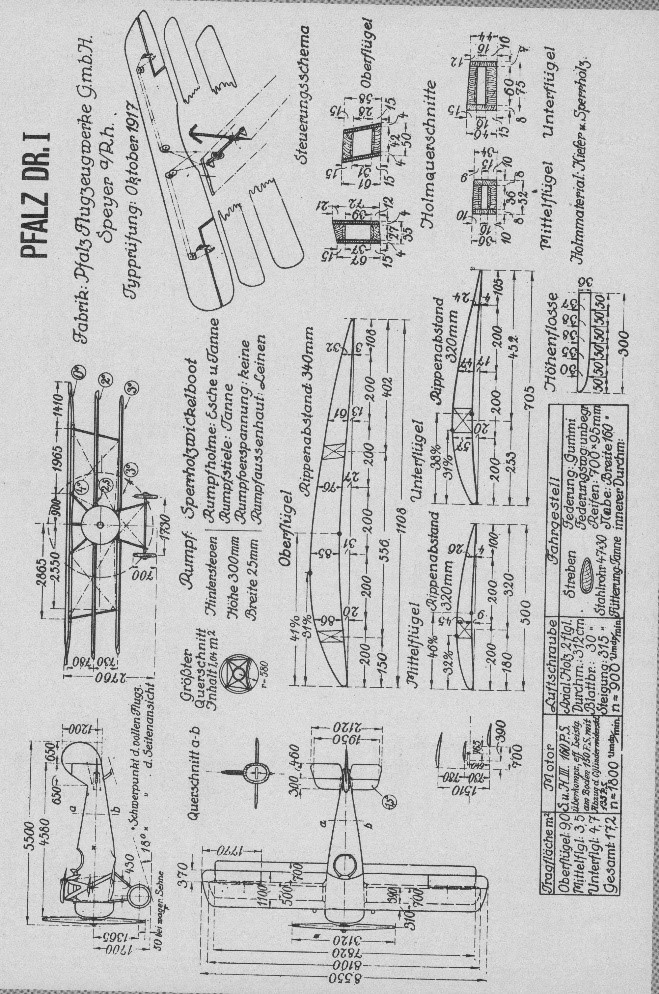
Pfalz Dr.1

The Pfalz Dr.I was a German fighter prototype of World War I. Official interest in the potential of the triplane configuration for single-seat fighters prompted Pfalz to develop the Dr.I. It underwent initial testing in October 1917, and an initial batch of 10 aircraft were shipped to the Front and arrived in April 1918.

Service pilots involved in testing the Dr.I considered it too slow and its Sh III engine too unreliable for frontline use and no further examples were produced. Jasta 73 was equipped with this aircraft in 1918.

Powerplant: 1 × Siemens-Halske Sh.III, 119 kW (160 hp)
Propeller: 2-bladed fixed-pitch
Wingspan: 8.55 m (28 ft 1 in)
Wing area: 17.2 m2 (185 sq ft)
Length: 5.5 m (18 ft 1 in)
Height: 2.76 m (9 ft 1 in)
Empty weight: 510 kg (1,124 lb)
Gross weight: 705 kg (1,554 lb)
Maximum speed: 190 km/h (120 mph, 100 kn) at 4,000 m (13,123 ft)
Service ceiling: 6,000 m (20,000 ft)
Time to 1,000 m (3,281 ft): 1 minutes 42 seconds
Time to 3,000 m (9,843 ft): 6 minutes 12 seconds
Time to 5,000 m (16,404 ft): 13 minutes 30 seconds
Armament: 2 x synchronised LMG 08/15 machine guns
Crew: 1

Pfalz D.XII

The last Pfalz design to be built in numbers was the D XII fighter, a type designed for the second German tighter competition held in May 1918. In layout the type was a sturdy twin-bay biplane with a plywood-covered semi-monocoque tuselage, a large tailplane and horn-balanced control surtaces. The prototype first flew with the Mercedes D.llla inline, but in the competition examples were flown with the Mercedes DIII and BMW Ill engines. The D XII was ordered into production mainly as an insurance against problems with the Fokker D VIII, and was generally used by Bavarian units. After initial disappointment that they had not received the Fokker tighter, these units soon came to appreciate the very real virtues of the Pfalz machine, which were adequate performance, good agility and extreme strength. Production totalled some 200 aircraft.

The two-spar wings, with plywood leading edges, had wire trailing edges, and ailerons on the top wing only. The fin and control surfaces were welded steel tube construction.

Flying the Pfalz D.XII

The D.XII equipped ten frontline squadron in the last three month of the war.

Gallery

Pfalz DXII
Powerplant: l x Mercedes D.IIIa, 134kW (180 hp)
Span: 9m (29ft 6.25 in)
Wing area: 233.6 sq.ft
Length: 6.35m (20ft 10 in)
Height: 8 ft 10.25 in
Empty weight: 1578 lb
Max T/O weight: 900 kg (1984 lb)
Fuel capacity: 18.75 Imp.Gal
Max speed: 106 mph at 10,000ft
Service ceiling: 18,500 ft
Operational endurance: 2 hr 30 min
Armament: 2 x 7.92-mm (0.312-in). Spandau LMG 08/15 mg.
Seats: 1

Pfalz D.VII

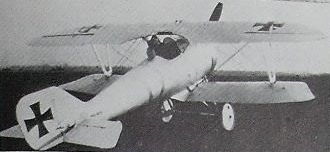
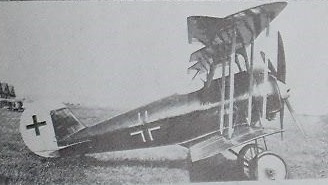
The D.VII was a single-bay biplane with staggered, parallel-chord wings. It had simple parallel interplane struts; the upper centre section was supported on each side by a three-sided rectangular frame, open at the bottom where it was mounted on the upper fuselage. There were externally connected ailerons on both upper and lower planes.

Behind the D.VII’s rotary engine its fuselage was of rounded cross-section, with the single-seat, open cockpit just below the upper wing’s trailing edge, where there was a small cut-out for better upward vision. The horizontal tail was mounted at mid-fuselage; the fin was straight-edged and carried a full, rounded and horn balanced rudder. The D.VII had a simple fixed conventional undercarriage, with mainwheels on a single axle supported at each end by a thin V-form pair of struts. There was a generous tailskid. The D.VII had a pair of fixed LMG 08/15 machine guns, the standard German single-seat fighter armament of the time.

Beginning its flying programme near the end of 1917, the Pfalz was fitted with three types of rotary engines in testing: the 108 kW (145 hp) Oberursel U.III, the Goebel Goe.III and the Siemens-Halske Sh.III, the last two both producing 119 kW (160 hp). These drove both two and four blade propellers. Both balanced and unbalanced ailerons were tried.

The D.VII was one of three Pfalz aircraft which competed at the first D-Type contest held at Adlershof in January and February 1918, the others being the D.VI and the D.VIII. It gained its Type Certificate in February 1918 but did not receive a production order.

Powerplant: 1 × Siemens-Halske Sh.III, 120 kW (160 hp)
Propeller: 2-bladed
Wingspan: 7.52 m (24 ft 8 in)
Wing area: 17.20 m2 (185.1 sq ft)
Length: 5.65 m (18 ft 6 in)
Height: 2.85 m (9 ft 4 in)
Empty weight: 520 kg (1,146 lb)
Gross weight: 715 kg (1,576 lb)
Maximum speed: 190 km/h (120 mph, 100 kn) at 4,000 m (13,215 ft)
Endurance: 1.5 hr
Time to 6,000 m (18,290 ft): 25.25 min
Armament: 2 × LMG 08/15 7.9 mm (0.311 in) Spandau machine guns
Crew: One
Engine: 160 h.p. Oberursel U III
Span: 8.1 m. (26 ft. 7 in.)
Length: 5.55 m. (18 ft. 2 5/8 in.)
Height, 2.7m. (8 ft. 10 1/4 in.)
Wing area: 17.2 sq.m. (186 sq.ft.)
Empty weight: 483.5 kg. (1,064 lb.)
Loaded weight: 738 kg. (1,624 lb.)
Endurance: 1.5 hr
Armament: 2 × LMG 08/15 7.9 mm (0.311 in) Spandau machine guns
Crew: One