Nutley NJ.
USA
In 1930 Robert J Phillips built a single-place, open cockpit monoplane powered by an 18hp Hendee engine: It was registered N932V.
Nutley NJ.
USA
In 1930 Robert J Phillips built a single-place, open cockpit monoplane powered by an 18hp Hendee engine: It was registered N932V.
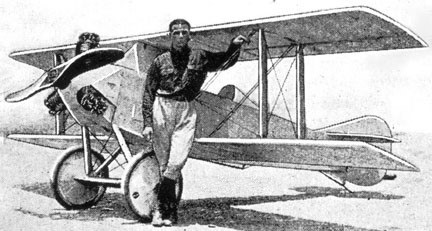
The 1924 single-place Phillips Alouette, or “The Fly”, was a home-built by Lt D B Phillips and members of the Air Service at Kelly Field TX.
Engine: 45hp Lawrance and 60hp Anzani
Wing span: 18’0″
Speed: 115 mph
Range: 500 mi
Seats: 1

The 1942 Phillips-Fleet (ATC 2-562) were Fleet 7 with 120hp Phillips-Martin 333 engines. Two were converted; NC64VA and NC637M.
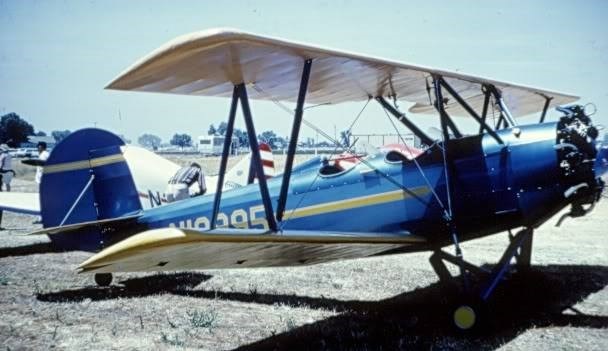
The 1941 Phillips CT-2 Skylark featured an optional sliding cockpit canopy and was priced at $2,500.
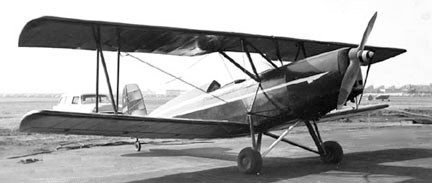
Probably only two were built, N19989 c/n 101 and NC19995 s/n 102.
Engine: 120hp Phillips-Martin D-333
Wingspan: 28’3″
Length: 23’3″
Useful load: 570 lb
Max speed: 124 mph
Cruise: 115 mph
Stall: 45 mph
Range: 315 mi
Seats: 2
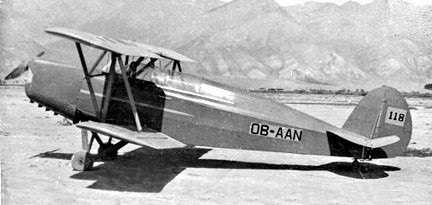
In 1940 Phillips Aviation Co built the CT-1 two-seat biplane (ATC 731) designed by Ivan Driggs. A continuation of the Driggs Skylark, offered with a 95hp Menasco B-4 engine or optional 125hp C-4 and sliding cockpit canopy.
Two or three were built, the prototype being NX18989 c/n 100, and one went to Peru.
CT-1 Skylark
Engine 95hp Menasco B-4
Wingspan: 28’3″
Length: 23’2″
Useful load: 586 lb
Max speed: 114 mph
Cruise: 100 mph
Stall: 45 mph
Range: 340 mi
Seats: 2
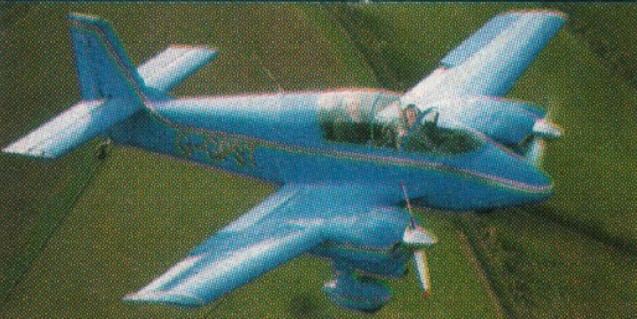
A fully aerobatic light twin, first flown in 1991. Partial and or prefabricated parts were available.
Mk.I
Engine: 2 x Continental O-200, 100 hp
Mk.II
Speed max: 220 mph
Cruise: 200 mph
Range: 1300 sm
Stall: 60 mph
ROC: 3500 fpm
Take-off dist: 600 ft
Landing dist: 600 ft
Service ceiling: 25,000 ft
Engines: 2 x Lycoming IO-320, 160 hp
Fuel cap: 96 USG
Weight empty: 1500 lb
Gross: 2250 lb
Height: 6.83 ft
Length: 22.83 ft
Wing span: 26 ft
Wing area: 120 sq.ft
Seats: 2
Landing gear: tail wheel
The PAF XT-001 Marko 1 was a basic trainer aircraft developed by the Philippine Air Force Self-Reliance Development Wing (PAFSRDW). It was designed and built by the Self-Reliance Development Wing of the Philippine Air Force in 1975 from locally designed jigs and fixtures.
It closely resembles the SIAI-Marchetti SF.260MP trainer, but with modified wingtips and cockpit. The prototype was initially thought to be a modified SF.260MP. Comparison of data with those for the SF.260MP indicates a slight increase in wingspan (though not in gross wing area), a lower empty weight, and (despite a similar powerplant and identical maximum takeoff weight) a slightly reduced performance.
The first test flight was on May 21, 1975.
XT-001 Marko
Engine: 1 × Lycoming O-540-E4A5, 194 kW (260 hp)
Propeller: 2-bladed
Wingspan: 8.4 m (27 ft 7 in)
Height: 2.4 m (7 ft 10 in)
Wing area: 10.10 m2 (108.7 sq ft)
Length: 7.1 m (23 ft 4 in)
Empty weight: 720 kg (1,587 lb)
Max takeoff weight: 1,200 kg (2,646 lb)
Maximum speed: 260 km/h (160 mph, 140 kn)
Stall speed: 120 km/h (75 mph, 65 kn)
Seats: 3
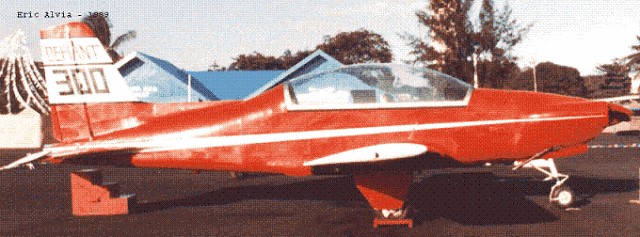
In 1981 Gold Wings Aviation, a private company under Capt. Panfilo Villaruel Jr. (who later became chief of the Air Transportation Office (ATO) and president of the Philippine Aerospace Development Corporation (PADC)), conceived an aircraft research and development undertaking called the Norlindo program, named after one of its first engineers. The program covered a progressive development of a high-performance trainer primarily intended for use by the Philippine Air Force (PAF). The program was launched as an innovative step to build an aircraft of local design and utilizing indigenous materials. Out of these experiences, a single, piston engine trainer aircraft was conceived, designed, built and flown within three years.
The two-seat tandem Defiant prototype (registered as RP-X239) was a technical arrangement of various systems and parts taken from different types of aircraft in the PAF inventory. The landing gears, flight controls and flaps motor were taken from the Beechcraft T-34 Mentor, seats from the Cessna U-17B, rudder and brake pedals from the Boeing-Stearman PT-13 and various instrument items from the Britten-Norman BN-2 Islander, T-34 Mentor, Sikorsky S-76 and SIAI-Marchetti SF.260. The Defiant was powered by a single Lycoming IO-540-K1B5 piston engine on loan from the PADC, the same engine that powers the BN-2 Islander.
The airframe was fabricated from palosapis wood and the skin from tanguile veneer plywood. The engine mount was fabricated from chrome molybdenum steel and a one-piece plastic canopy was fabricated. Fuel tanks were constructed with 5052-H34 aluminum alloys. The development cost about 40 million.
Only one prototype was built, in 1986. The two-seater aircraft made its first flight on 22 February 1988, flying for about an hour.
Based on the successful flights of the prototype, Gold Wings planned to build another prototype of a modified Defiant (appropriately named Defiant 500) with an all-metal airframe and power rating increased to 500 hp. Due to lack of financial support from the government, the plan did not go ahead.
The Defiant 300 went on display in a hangar at the Philippine State College of Aeronautics.
Defiant 300
Engine: 1 × Textron Lycoming IO-540-K1B5, 224 kW (300 hp)
Wingspan: 9.52 m (31 ft 3 in)
Wing area: 12.55 m² (135.1 sq ft)
Airfoil: NACA 2418 (root), NACA 2412 (tip)
Length: 8.51 m (27 ft 11 in)
Height: 3.73 m (12 ft 3 in)
Empty weight: 1,278 kg (2,818 lb)
Max. takeoff weight: 1,583 kg (3,490 lb)
Maximum speed: 357 km/h (222 mph; 193 kn)
Stall speed: 110 km/h (68 mph; 59 kn) (flaps down)
Range: 1,896 km (1,178 mi; 1,024 nmi)
Service ceiling: 7,520 m (24,670 ft)
Rate of climb: 7.8 m/s (1,540 ft/min)
Crew: Two
Eber H Van Valkenberg Aircraft Co began building a three seat monoplane with side-by-side seating in a rear cabin and a forward cockpit that could be open or enclosed. It was sold to Dr Leland E Phelps of Toledo c.1928, who rebuilt and expanded the plane as a four place cabin. Designed by Dimas Ybarra using parts, instruments, etc, of the first plane, they built a new fuselage and wing, and received the same registration of NX4919 c/n 281. The old wing was destroyed and he gave the old fuselage to the Toledo Aviation Club for use in class work. It was never flown when called the Van Valkenberg.
Licensed as Phelps Monoplane #1 and also seen as Phelps Z-281, the registration was canceled on 10 September 1930.
Van Valkenberg
Engine: Ryan-Siemens SH-13, 70hp
Wingspan: 38’7″
Length: 24’7″
Seats: 3
Phelps
Wingspan: 41’6″
Length: 27’3″
Seats: 4
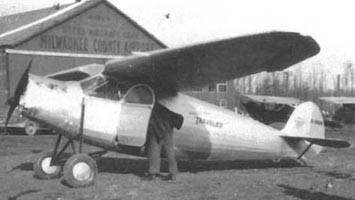
The H-10 Pheasant was followed in 1928 by the Traveler single-seat cabin, high-wing monoplane with a cantilever gull-wing.

Following testing of the prototype NX174N by pilot Steve Wittman, two more Pheasant Travelers were built. One of them was equipped with a four-cylinder Cirrus Hermes engine producing 90 hp.
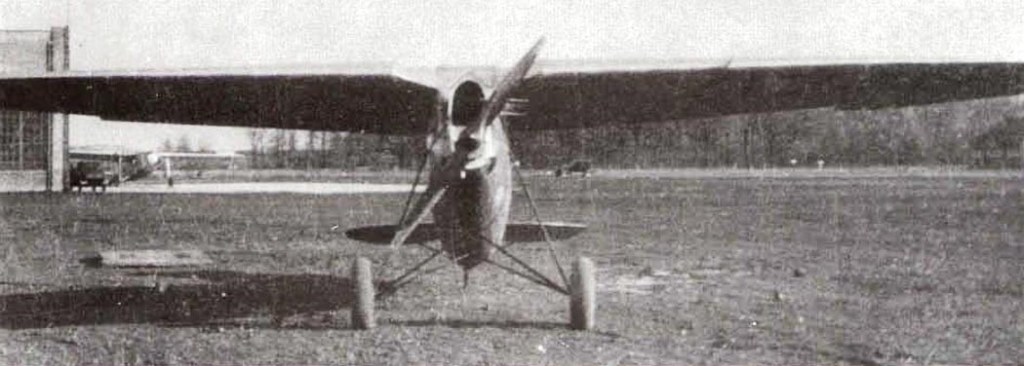
In 1929, Traveler was shown at the Detroit Air Show. In the same year, Steve Wittman participated in various air races in it, although without much success.
Engine: 55hp modified Ford A
Wingspan: 31’0″
Length: 23’6″
Max speed: 100 mph
Cruise: 85 mph
Stall: 35 mph
Seats: 1

