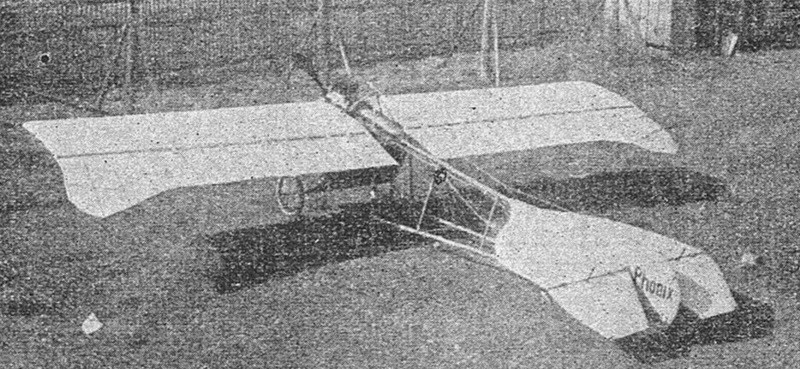
The Phönix Fliegerwerke at Chemnitz, Germany, built an Eindecker around 1911-1912. The machine was first fitted with a 25 hp Schneeweiss engine, later replaced by a 45 hp Riedl engine.
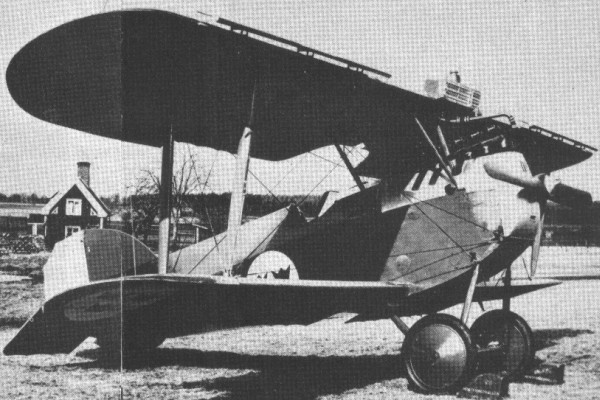
The D.I and D.II were flown during First World War by the Austro-Hungarian Flying Service, a few being fitted with cameras for high-speed aerial photo-reconnaissance work. Seventeen of the final batch of 122 Phonix D.IIs were completed as improved variants and transferred to the Swedish Army Air Service after the war.
Sweden built 15 of the WW1 Phoenix D2 and designated the type J-1.
Powered by a Hiero IV engine and designed by Ing. Hieronymus some were made at Skoda Mlada Boleslav Company in Bohemia.
The aircraft used by the Austrian Air Force for recce duties.
Phoenix C 1 Engine: Hiero, IV 230 hp Span: 11 m Length: 7.5 m Empty weight: 820 kg Loaded weight: 1240 kg Maximum speed: 176 km.p.h Service ceiling: 6 000 m Endurance: 3 hr Armament: one synchronized machine gun plus one flanking the cockpit Seats: Two
The 1936 Phillips P-2 was a single-place, open cockpit biplane built by Howard A Phillips. Powered by a 45hp Szekely engine, it was registered N15775 c/n BB-1.
The 1932 Phillips Play Boy was an aircraft with a 40hp Shebach (Maybach?) engine. Registered N12862 c/n PS-2 on 1 July 1932, but when Phillips reported “not completed for financial reasons,” it was cancelled 31 August 1934.
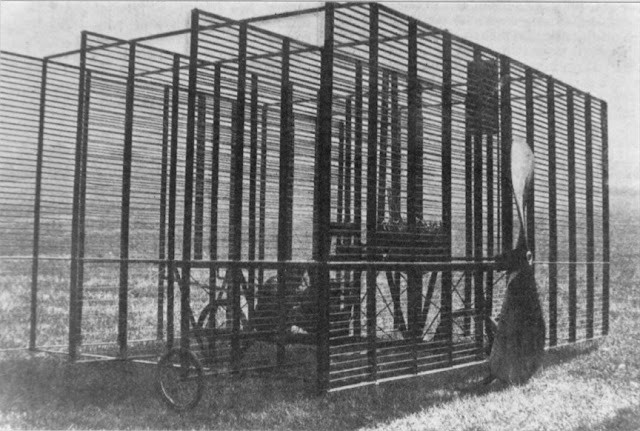
A second version of Horatio Phillips’ 1893 steam powered test-rig study model on its wooden 200 foot diameter circular test-track at Harrow, England, where, tied to a cable fixed on a central mast, its first test was made on June 19th. 9 ft 6 in tall and about 22 feet long, with 40 lifting surfaces arranged like Venetian blinds.
He continued to experiment with wing designs, and built another test rig in 1902, which had 120 wings and was powered by a gasoline engine.
The 1893 machine’s thin profile with one of Horatio Phillips’ sons.
Reaching a speed of 64 km/h with a total weight of 174 Kg, it rose to a height of 90 cm and covered a distance of 600 meters.
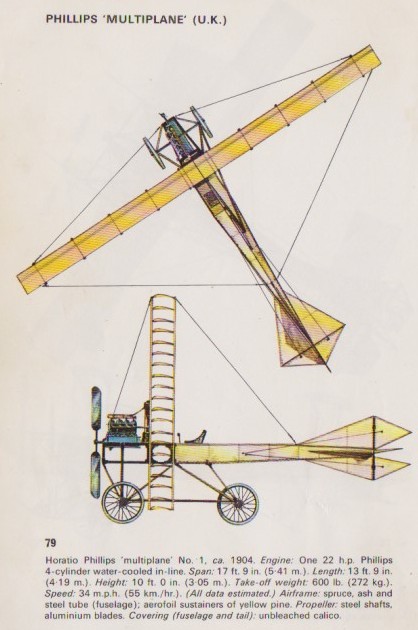
Phillips also built multiplane machines in 1904, 1907 and 1911; his elaborate multiwing approach – 40 double-surface airfoils grace this early example – is often referred to as the “Venetian Blind”.
The 1907 Phillips Multi-Wing Flying machine was designed and built by Horatio Phillips in the UK. It featured 20 rows of aerofoils and flew more than 500 yards.
Phillips built his first man-carrying machine, with 20 lifting surfaces, in 1904, and was able to make at least one short hop of 50 feet. His 1907 machine had four banks of 50 wings each and an eight-foot propeller. In this machine Phillips made a powered, although uncontrolled, flight of about 500 feet.
Philips Multiplane 1907
Engine: Phillips 4-cyl inline, water-cooled, 22 hp Wingspan: 17 ft 9 in / 5.41 m Length: 13 ft 9 in / 4.19 m Height: 10 ft 0 in / 3.05 m TO weight: 600 lb / 272 kg Speed: 34 mph / 55 kph
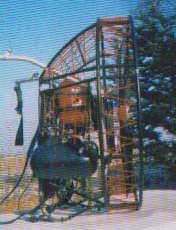
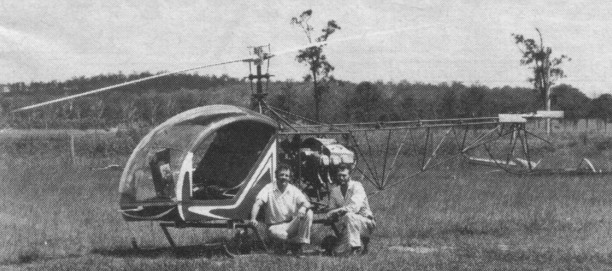
Ten years’ of design and four years’ construction by Mr P. Gerakiteys and Mr D. Phillips went into the Australian two seat ‘Phillicopter” prototype beginning certification trials in 1972. The aircraft is expected to have a cruise speed of 70kt and a range of 200 miles. Powered by a 145 h.p. Continental A 300, it has a 5001b useful load. Eight firm orders had been received by 1972.